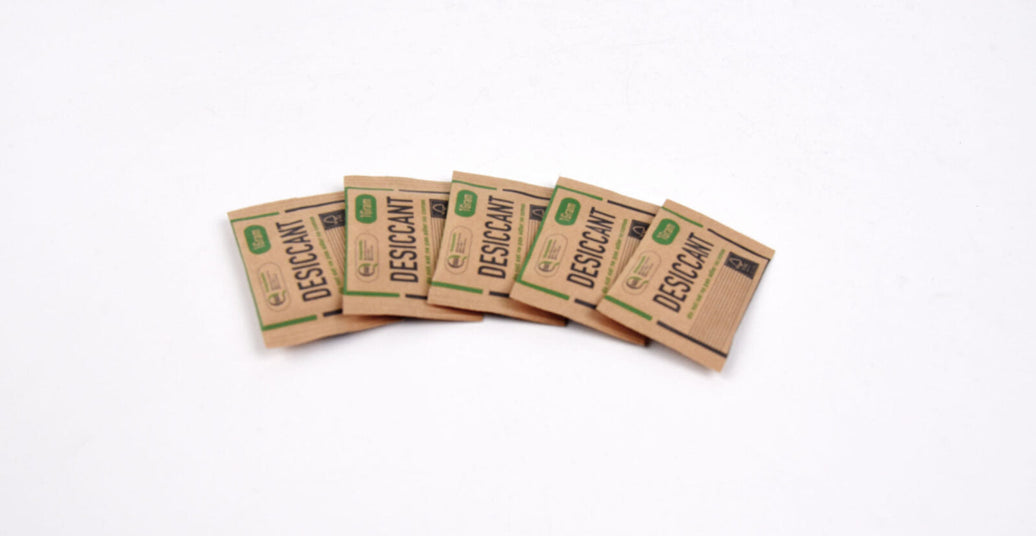
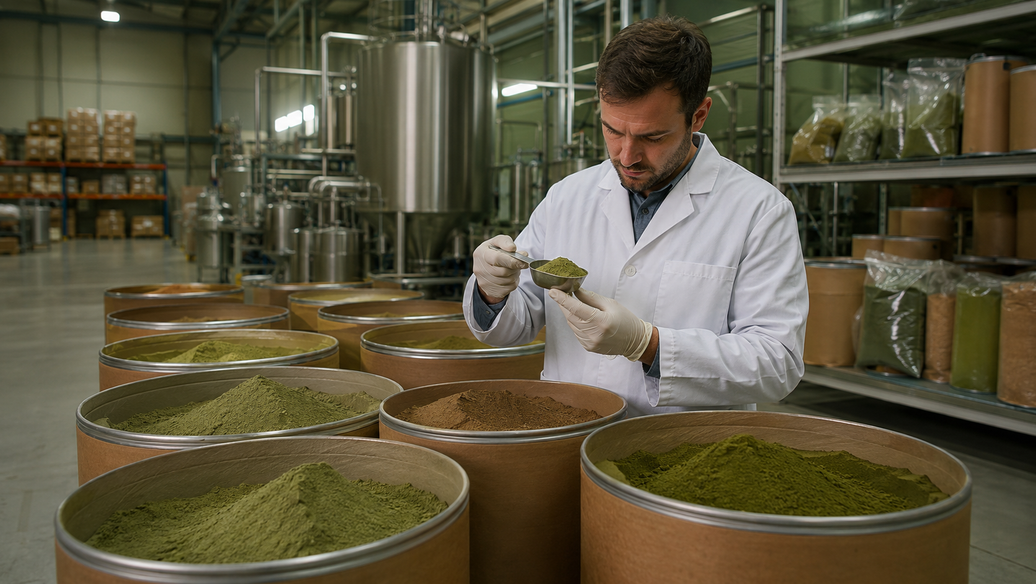
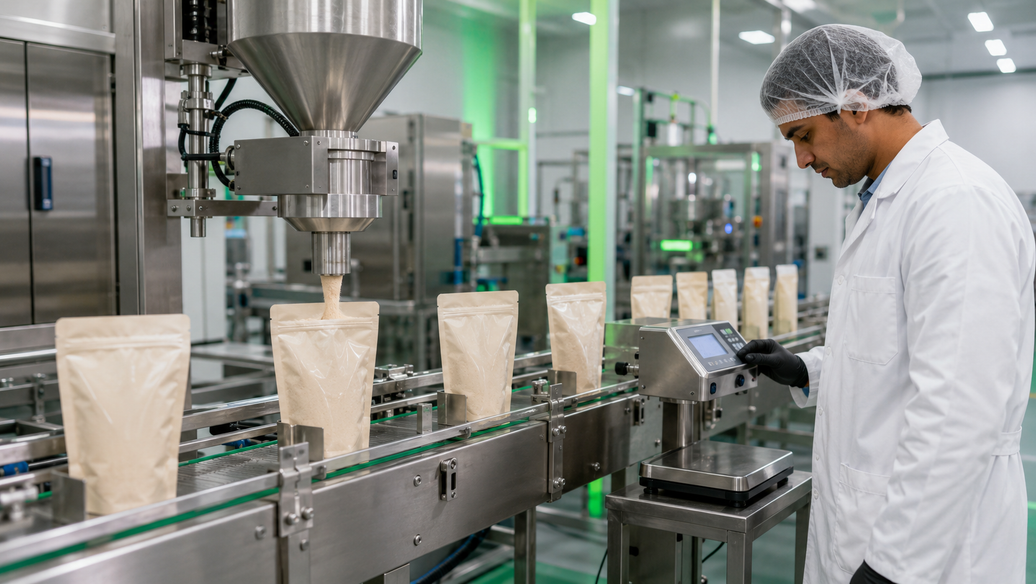
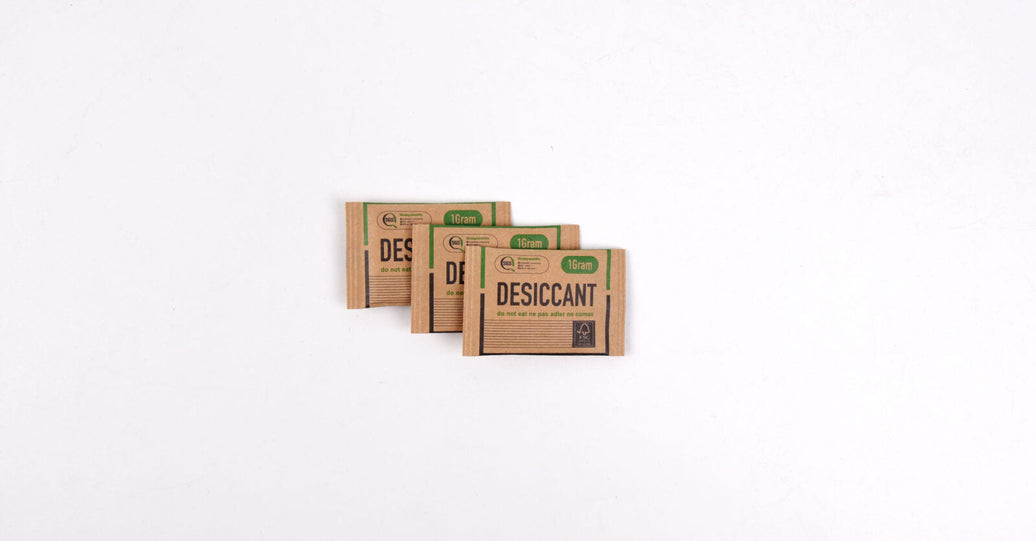
Quick answer: Assemble seven documents before the first export shipment: safety data sheet, certificate of analysis for the shipped lot, country-of-origin declaration, food-contact or material declaration, composition statement, compostability or end-of-life certification where claimed, and packaging material data for extended producer responsibility reporting. Request them at quotation stage rather than at the border — a desiccant is now a documentation item as much as a physical one.
A desiccant weighs a few grams and can hold a container. Not because anyone questions the desiccant itself, but because it is a packaging component that shows up on a customs declaration, in a warehouse receiving check and in a packaging-fee return — three systems that each want paperwork the packaging engineer never thought to request.
The pattern is consistent: the goods clear, the desiccant does not have a declaration, and the shipment waits. Assembling the pack in advance costs an email at quotation stage.

The seven documents
1. Safety data sheet
Requested by warehouses, 3PLs and freight forwarders as a matter of routine, whether or not the material is classified as hazardous. Many desiccants are not hazardous and the SDS says so — which is precisely the statement the receiving warehouse needs on file. Confirm the SDS is issued in the format required for the destination region.
2. Certificate of analysis for the shipped lot
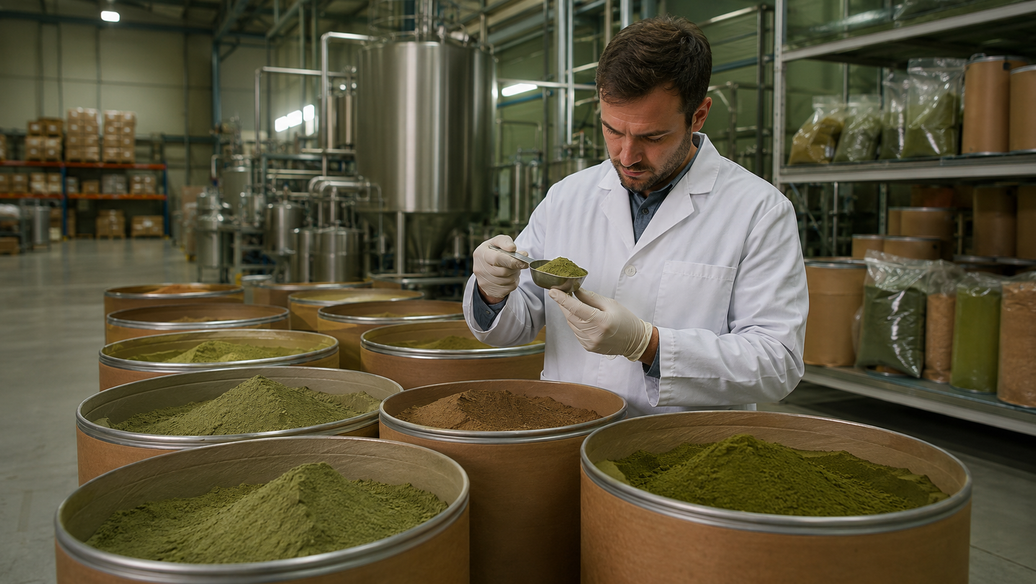
A generic specification sheet is not a COA. A COA reports measured results for the lot you received: adsorption performance at defined humidity points and loss on drying, against stated limits. For fiber desiccant the specification is loss on drying below 10%, with adsorption above 10% at RH 20%, above 35% at RH 50% and above 70% at RH 90% (25°C). Reading a desiccant COA line by line covers how to check one.
3. Country-of-origin declaration
Required for tariff classification and preferential-origin claims. It needs to state the country of manufacture of the desiccant itself, which may differ from where the finished goods were packed. Get it on supplier letterhead with a signature, not as a line in an email.
4. Food-contact or material declaration
Where the desiccant can touch food or pharmaceutical product, the receiving market wants a declaration of compliance. For the US that is the FDA 21 CFR reference; for the EU it is a declaration of compliance under the food-contact framework. Direct versus indirect contact explained covers which applies.
5. Composition statement
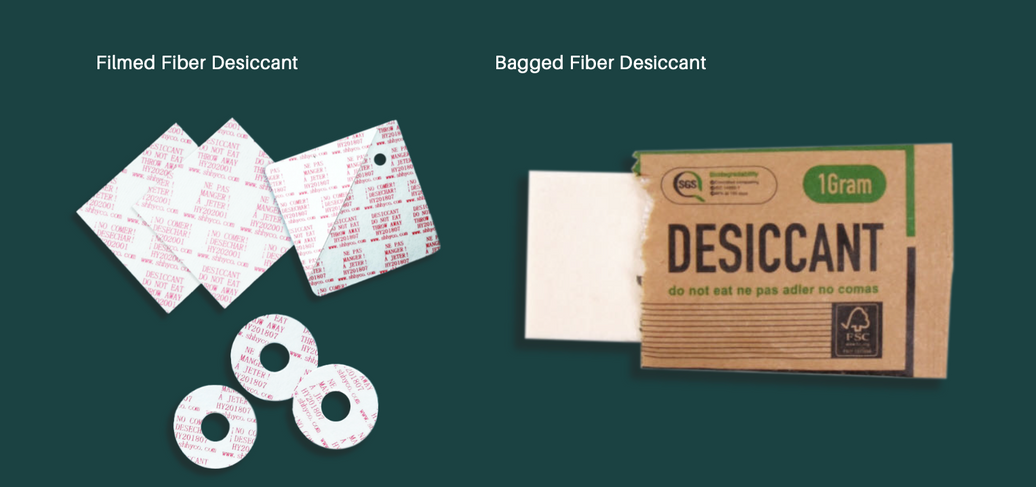
An increasingly common request, driven by substance-restriction screening. It should identify the adsorbing substrate and the wrap materials. Fiber desiccant uses a natural plant fiber substrate; the pouch films comply with ASTM D6400 and EN 13432. A ROHS testing report is also available where electronics customers require substance-restriction evidence.
6. Compostability or end-of-life certification
Only if the claim is being made. If a pack states “compostable”, the certification must exist and match the claim — home versus industrial compostability are different standards and are not interchangeable. Making an unsupported claim is a bigger exposure than making no claim. See which compostability certification your desiccant actually needs and avoiding greenwashing risk.
7. Packaging material data for EPR reporting
The newest item on the list, and the one most often missing. Extended producer responsibility schemes charge fees by material category and weight, and a desiccant insert is packaging. To report it you need material category, weight per unit and recyclability status. Without that data the insert either goes unreported or gets reported in the most expensive default category.
US state schemes and EU rules both apply this logic — US packaging EPR laws and your desiccant covers the state programmes, and the EU PPWR compliance hub covers the European requirements.
Why the material choice changes the fee, not just the footprint
EPR fees scale with weight and material category. Two consequences follow directly:
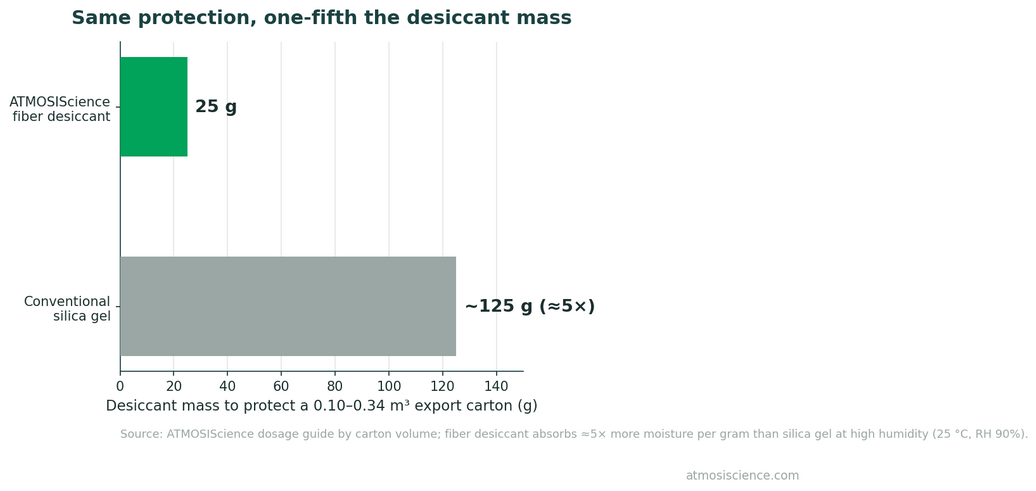
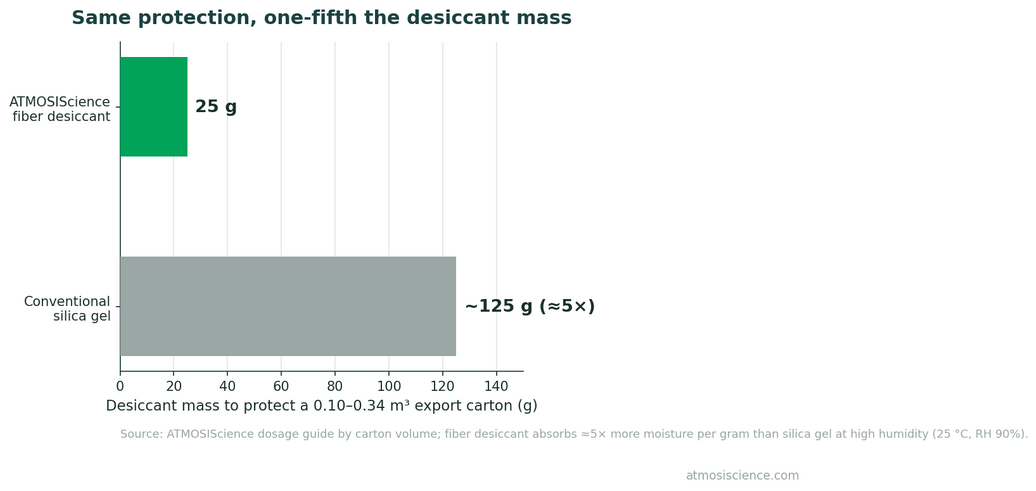
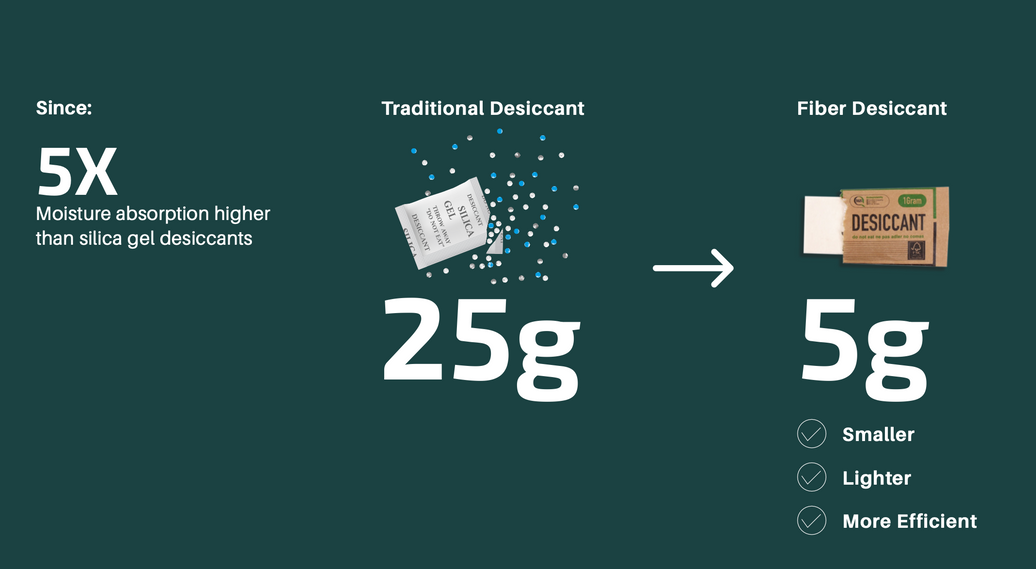
- Fewer grams means a smaller fee. A higher-capacity desiccant needs less mass for the same protection, so the reportable weight falls.
- Fiber-based, mono-material formats sit in more favourable categories than plastic-wrapped composites in most schemes.

The verified figure is 1.44 kg CO₂e per kg for fiber desiccant against 1.89 for silica gel, measured cradle-to-gate under ISO 14067. Sustainability reporting draws on the same dataset as EPR reporting, so one request covers both. The sustainable desiccant guide pulls the certification landscape together.
Warehouse and 3PL receiving checks
Separate from customs, the receiving warehouse runs its own gate. Typical requirements:
- SDS on file before the first receipt
- Product specification with dimensions and unit weight for slotting
- Case and pallet configuration, including units per case and cases per pallet
- Lot and expiry marking scheme, if the desiccant carries a use-by
- Storage condition requirements — and desiccant does have them
That last point causes avoidable loss. Desiccant stored in ambient warehouse air adsorbs moisture before it is ever used, so the receiving location matters. Shelf life, storage and handling before use sets out the conditions to write into the 3PL instruction.
Assembling the pack
- Request all seven documents at quotation, before a purchase order exists
- Store them in the packaging specification file, not in an inbox
- Record the issue date and revision of each — SDS and certifications expire
- Confirm the COA arrives with every lot, not only the first
- Give the 3PL the SDS and specification before the first shipment lands
- Send the material and weight data to whoever files your EPR return
The supplier qualification document pack covers the wider QA file this sits inside.
Frequently asked questions
Is an SDS required if the desiccant is not hazardous?
Not always by regulation, but almost always by the receiving party. Warehouses and forwarders want the document on file precisely to record that the material is not classified.
Can a specification sheet substitute for a COA?
No. A specification states limits; a COA reports measured results for a specific lot. Auditors and customers ask for the second.
Who needs the country-of-origin declaration?
The customs broker, for classification and any preferential-origin claim. It must reference the desiccant’s country of manufacture, which can differ from the finished-goods packing location.
Do we have to report desiccant weight under EPR?
Where a scheme covers packaging components, yes — an insert is packaging. Get material category and unit weight from the supplier so the return uses real data rather than a default category.
What if a customer asks for a non-GMO or allergen statement?
Request it explicitly. These are separate declarations from the food-contact statement and are not implied by it.
Request the full document pack
Tell us the destination markets and whether the desiccant contacts product. ATMOSIScience will send the SDS, specification, origin and material declarations together, with COA supplied per lot.
Prefer email? info@atmosiscience.com