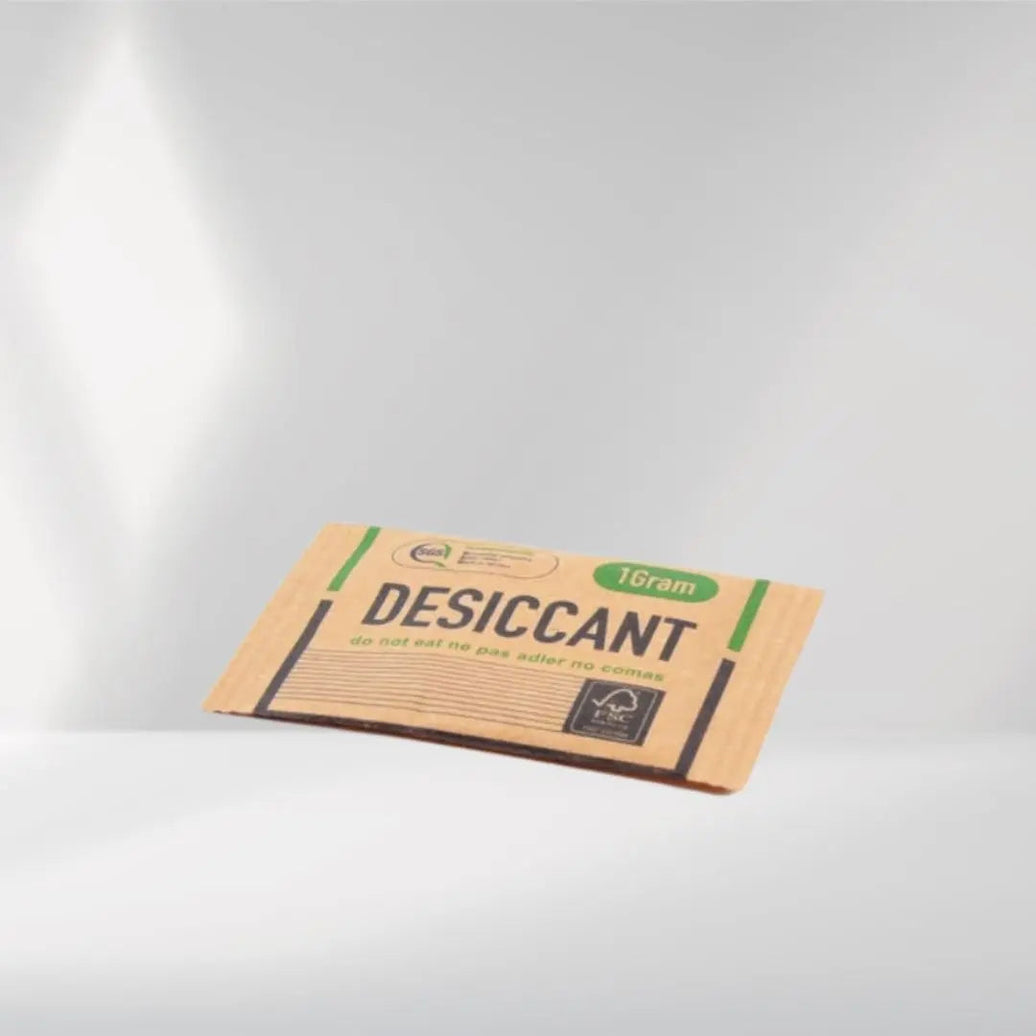
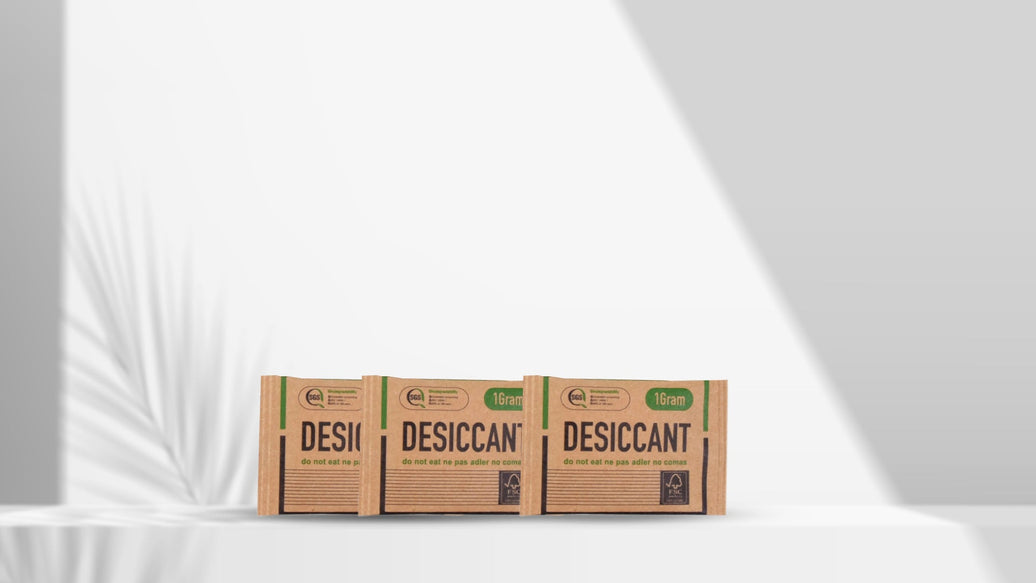
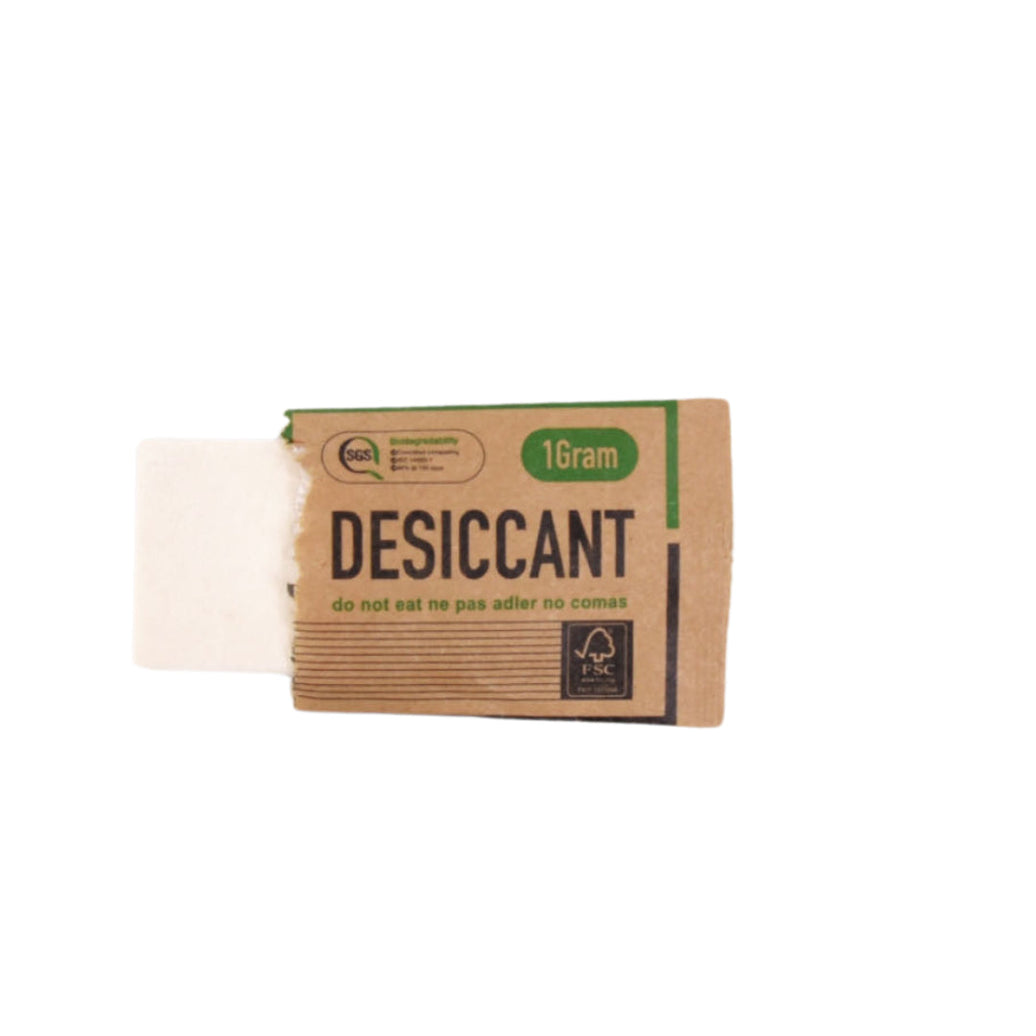
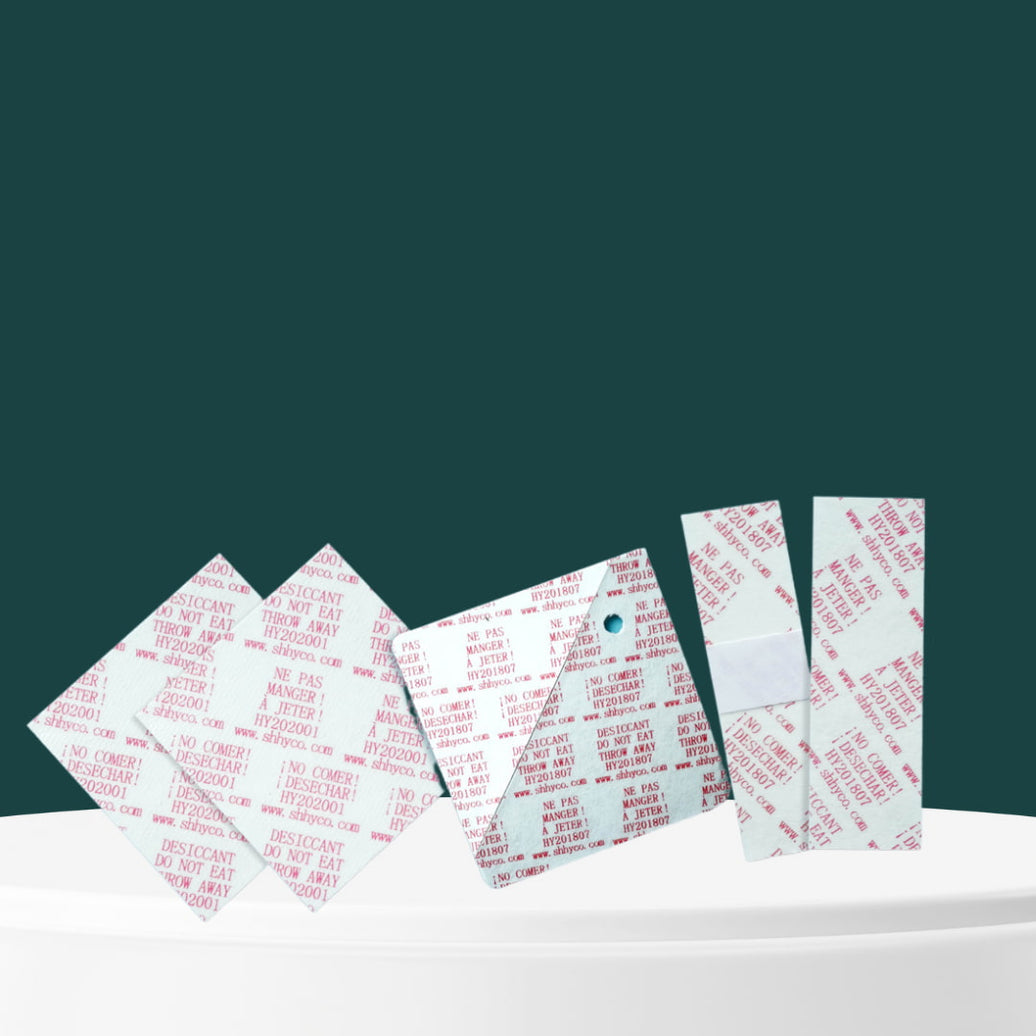
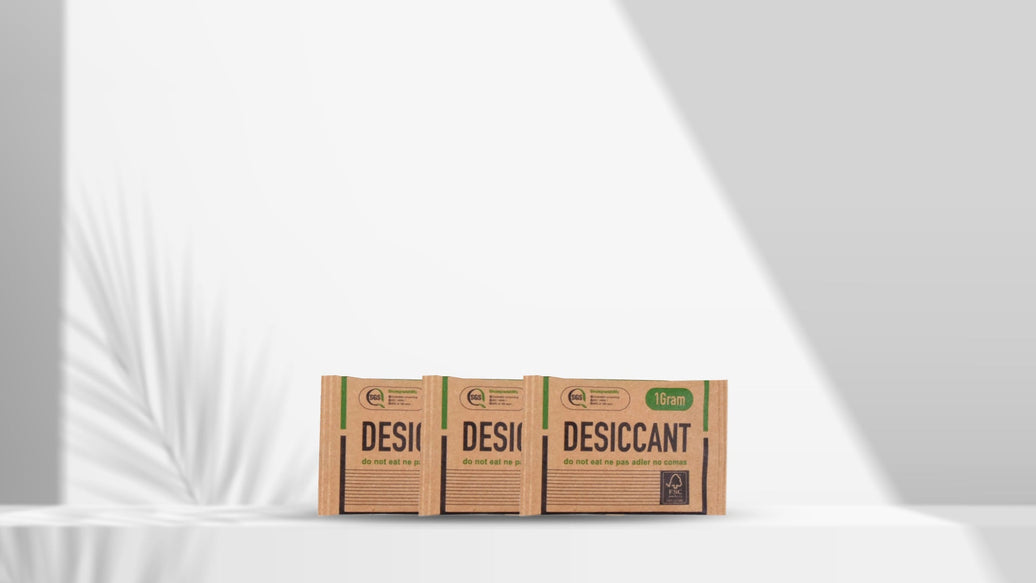
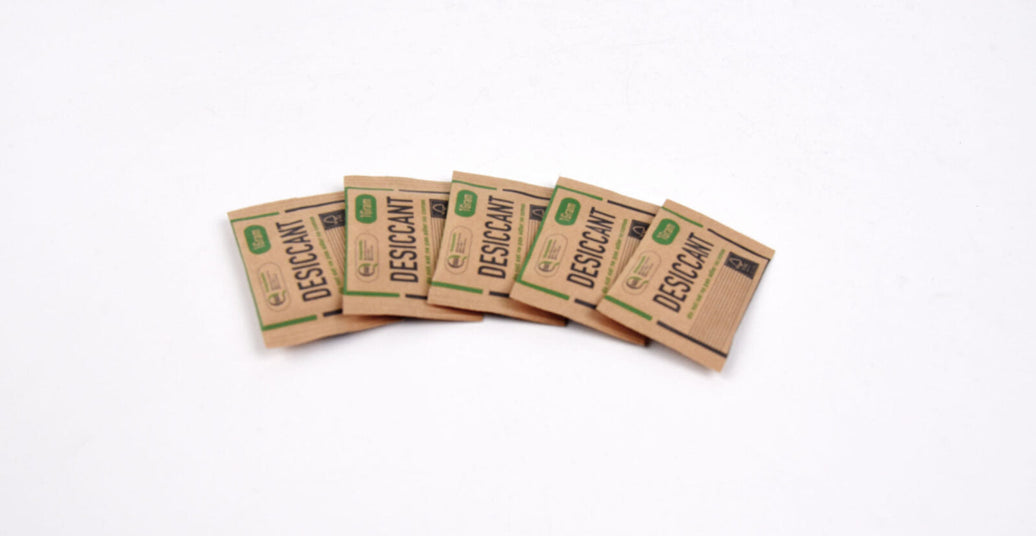
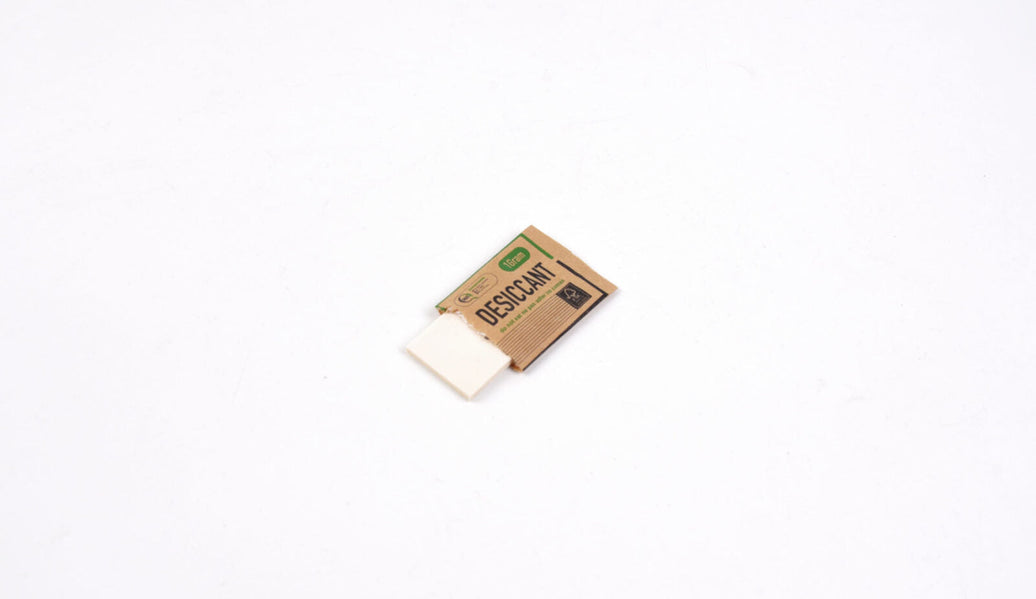
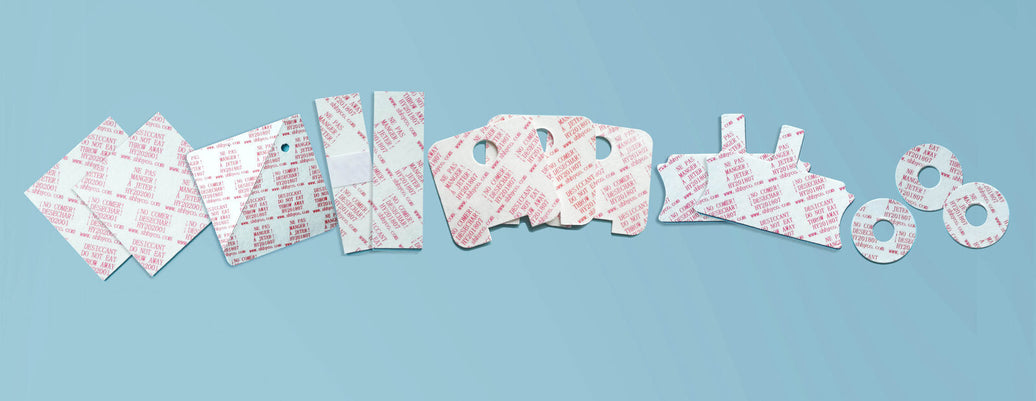
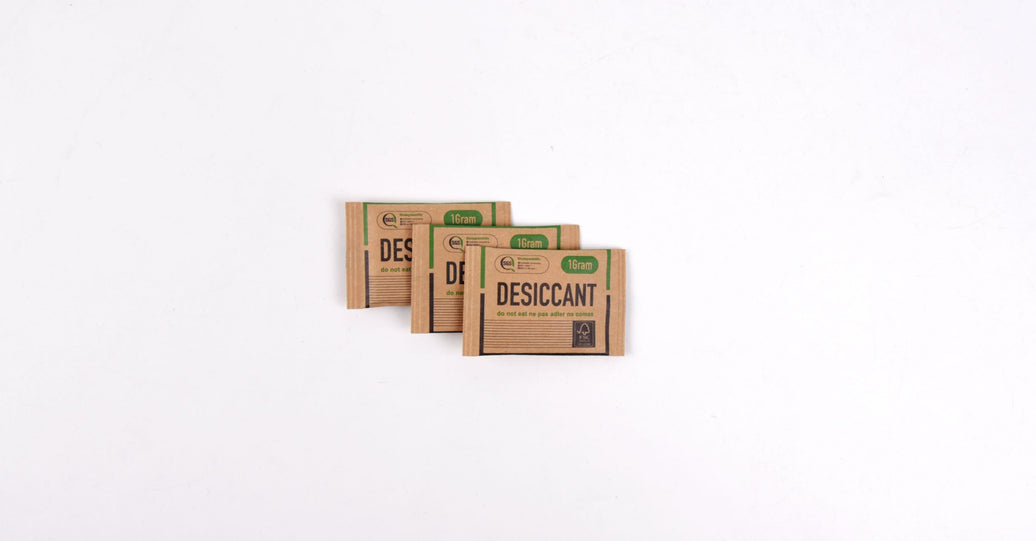
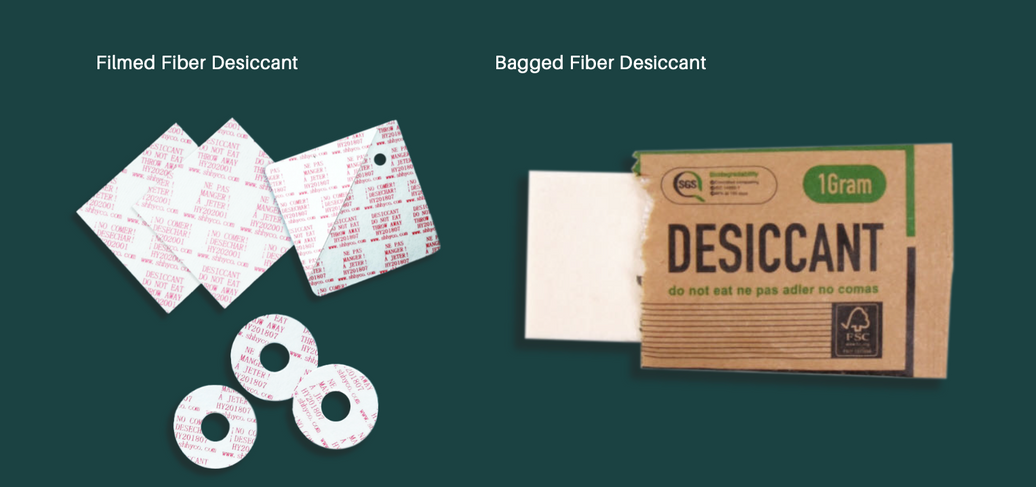
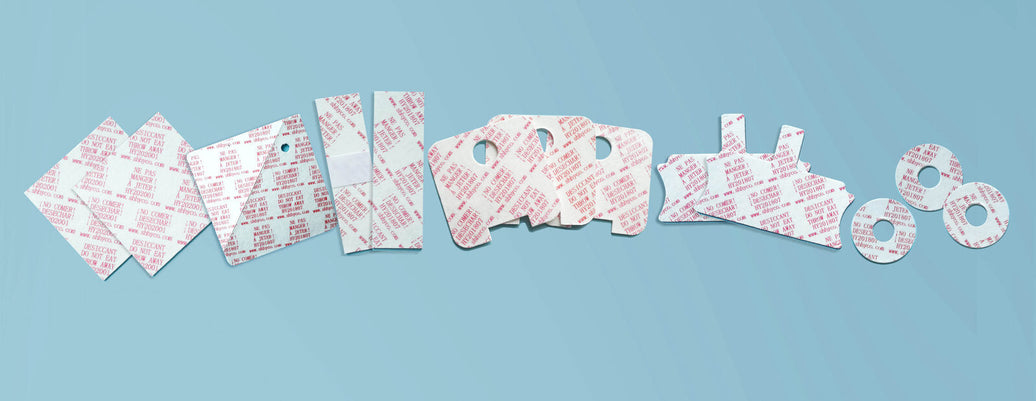
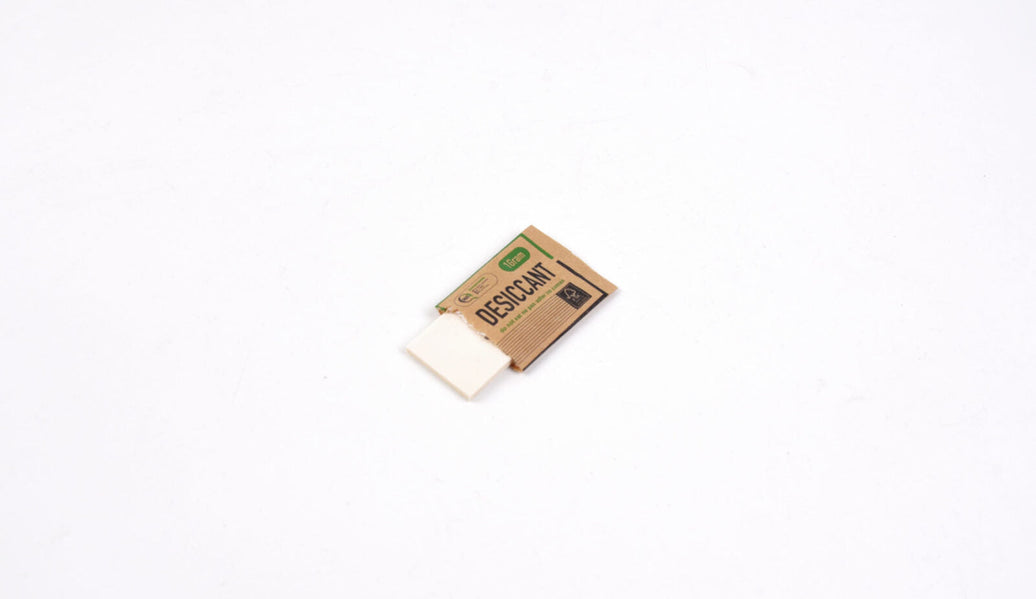
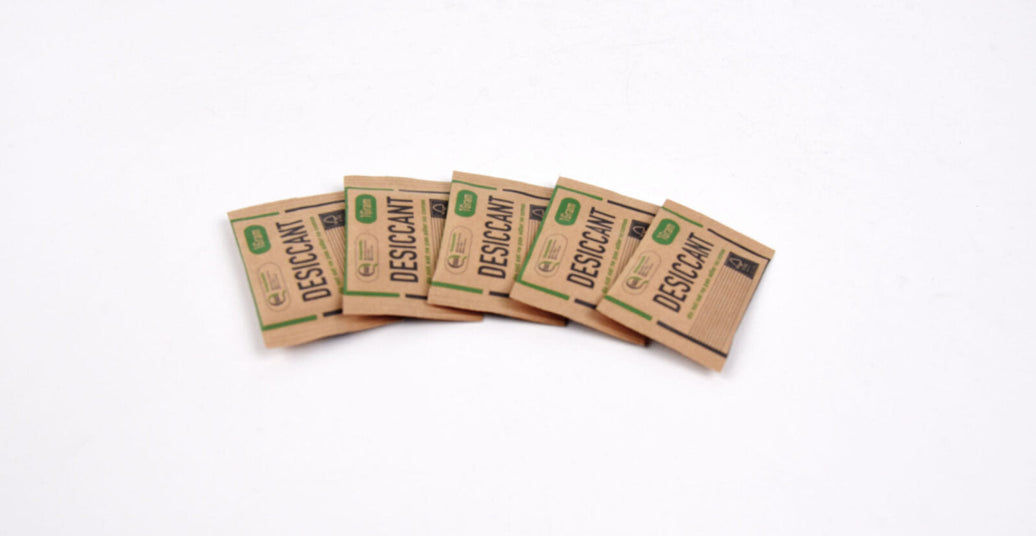
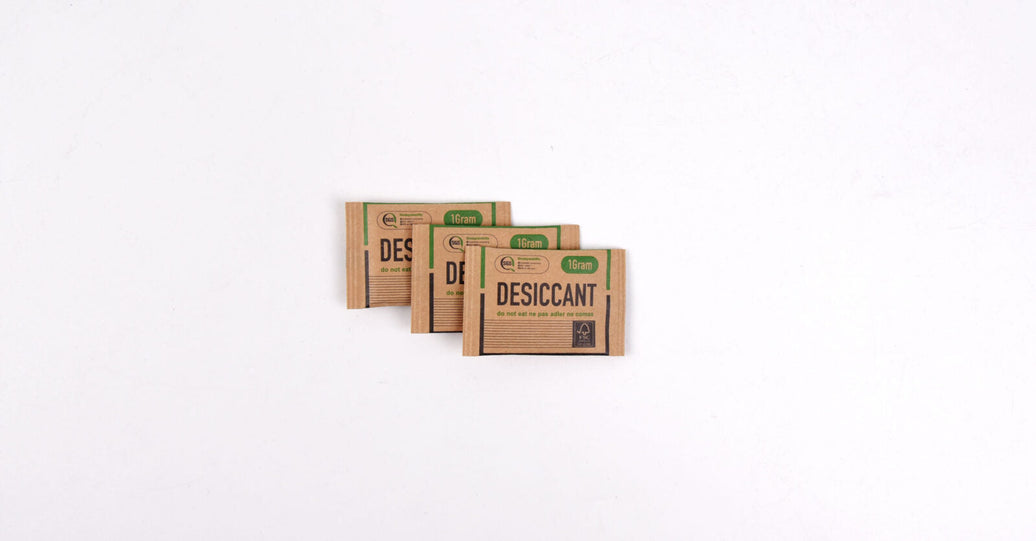
Quick answer: Under Regulation (EU) 2025/40, a desiccant sachet placed inside a pack is treated as a packaging component, not as a separate packaging unit. That matters because packaging components inherit the obligations of the pack they sit in — recyclability assessment, minimisation, substances-of-concern limits and EPR fee liability — but they are not separately labelled or separately registered. The practical consequence is that your desiccant is assessed as part of your primary packaging, and its mass counts toward the pack you report.
This question comes up in almost every PPWR conversation with a supplements or pharma buyer, usually phrased as a hope: the sachet is small, it is functional, surely it is out of scope. It is not out of scope, and understanding exactly how it is in scope is what lets a team size the work correctly rather than either ignoring it or over-engineering it.
The three categories, and why the answer is not "packaging"
PPWR distinguishes between packaging, packaging components and packaging materials. A desiccant sachet is not a packaging unit in its own right when it is placed inside a bottle or pouch — it does not contain, protect or present the product to a consumer on its own. It is a component of the packaging that does.
That distinction has real consequences in both directions.
| Obligation | Applies to the desiccant? | How |
|---|---|---|
| Recyclability (Art 6) | Yes, indirectly | Assessed as part of the packaging unit; a component that disrupts the recycling stream drags the whole unit's grade down |
| Substances of concern (Art 5) | Yes, directly | Applies to packaging and its components; the heavy-metal sum limit of 100 mg/kg is a component-level test in practice |
| Minimisation (Art 10) | Yes | Component mass is part of the pack's weight and volume; excess desiccant mass is excess packaging mass |
| Harmonised labelling (Art 12) | No separate label | The packaging unit carries the label; the component does not get its own pictogram |
| EPR fees | Yes | Reported by material and mass within the pack; every gram is a chargeable gram |
The separability test that most buyers get wrong
Annex I of the Regulation works through examples of what is and is not packaging, and the recurring logic is whether an item is an integral part of the product, is intended to be consumed with it, or performs a packaging function.
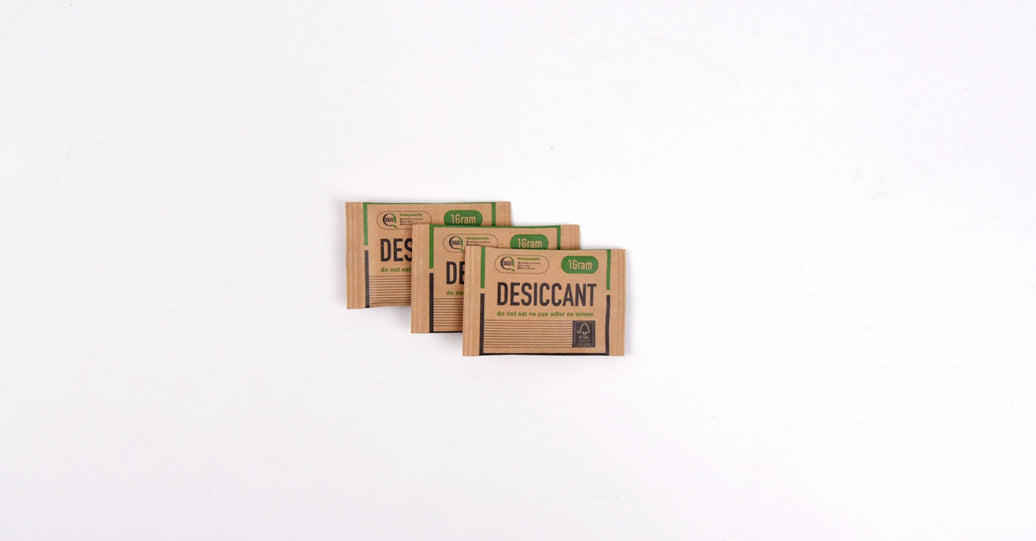
A desiccant fails all three of the routes out. It is not consumed with the product — it carries a do-not-eat warning precisely because it must not be. It is not an integral part of the product; removing it does not change what the consumer bought. And it performs a protective function on behalf of the pack. That is the definition of a packaging component.

Where the classification genuinely changes the answer
Three situations are worth thinking through, because the component classification produces a different result from the intuitive one.
A desiccant built into the closure
A cap liner or an in-cap disc is unambiguously part of the packaging unit. It is not separable by the consumer in normal use, and it is assessed with the closure. Where the disc is a different material from the cap, it becomes a multi-material question for recyclability. Our note on specifying a jar-lid humidity disc covers the physical side of that decision.
A desiccant supplied loose in a bulk carton to a co-packer
At the point of sale from desiccant manufacturer to co-packer, the sachets are goods, not packaging — the carton they arrive in is the packaging. They become a packaging component only when they are placed into the brand's pack. This is why the reporting duty sits with the brand or filler, not the desiccant maker, and why the question of who owns the desiccant spec has a compliance answer as well as a technical one.
A desiccant in transport packaging
Container desiccants hung inside a shipping container are packaging components of transport packaging. They are in scope for substances of concern and for waste handling, but the labelling and consumer-facing provisions do not bite in the same way.
Why the component answer is good news for fibre and bad news for mass
Being a component rather than a standalone packaging unit means the desiccant is never assessed in isolation — it is assessed by what it does to the host pack. A fibre sachet inside a paper-based pack is assessed within the paper stream. A silica sachet in a plastic wrapper inside that same paper pack introduces a foreign material into that stream.
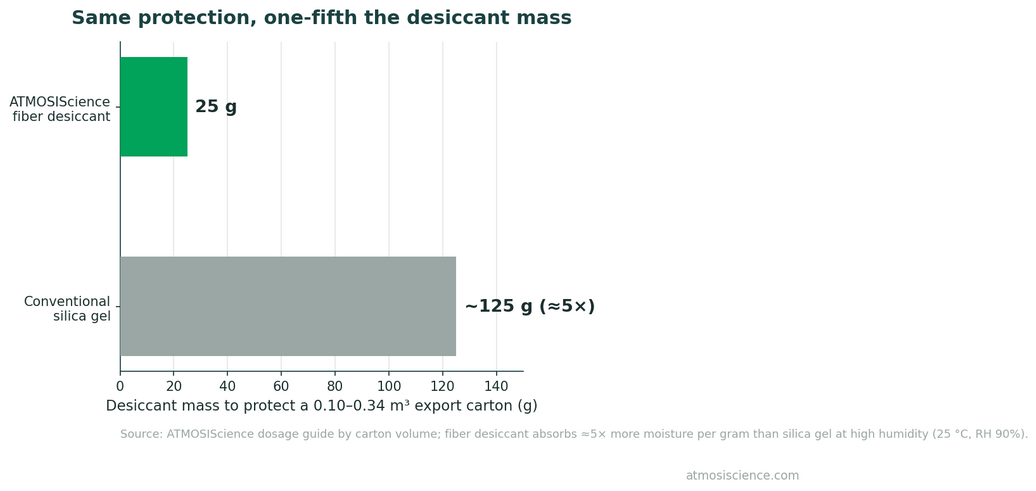
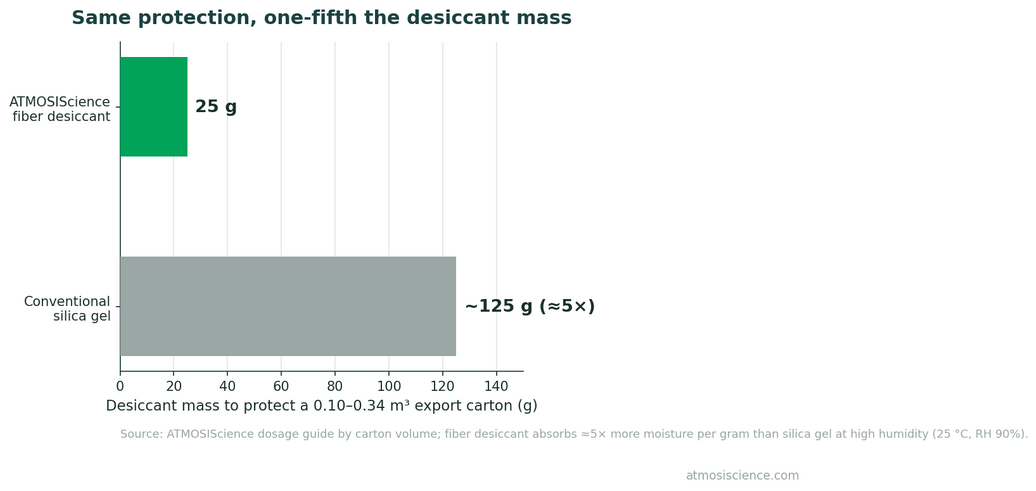
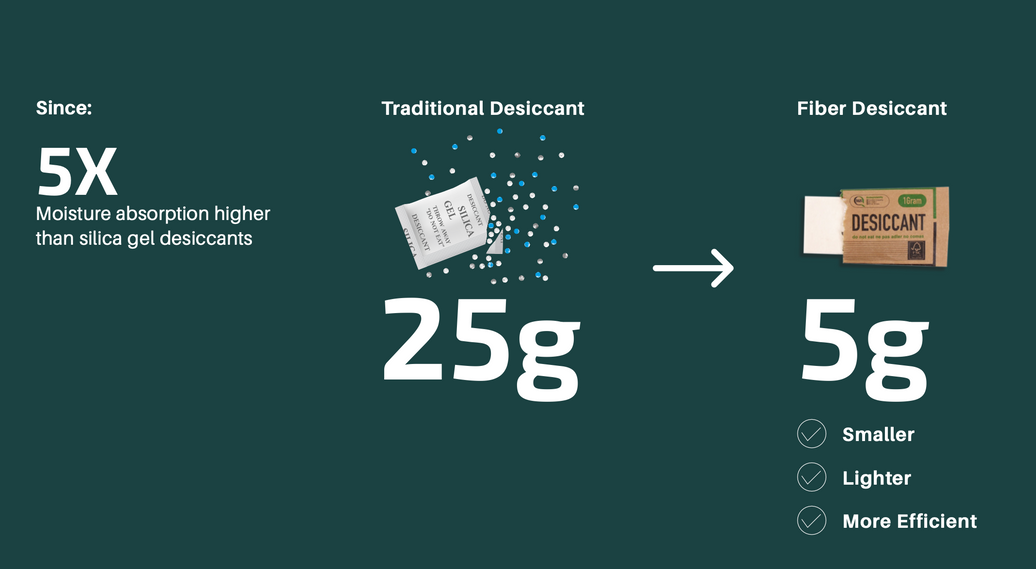
It also means mass is never neutral. Article 10 minimisation looks at the packaging unit, and a heavier desiccant makes the unit heavier. Where a fibre desiccant delivers the same moisture protection at a fraction of the mass of silica gel, that shows up twice — once in the minimisation assessment and once in the EPR invoice. The arithmetic is worked through in the Article 10 and Article 43 minimisation piece, and the substitution ratios in replacing silica gel one-for-one.
What to write in your technical file
When an authority asks how you classified the desiccant, the defensible answer is short and specific. Record: the component's material composition, its mass per packaging unit, the material stream it is designed to enter at end of life, the evidence for substances-of-concern compliance, and the reasoning for why it is a component rather than a separate unit. Five lines, supported by supplier documents.
What you should avoid is silence. A technical file that describes the bottle and the label but never mentions the sachet inside is incomplete, and the ten working days you get to respond to a document request is not enough time to build that evidence from scratch.
Frequently asked questions
Does the desiccant need its own PPWR Declaration of Conformity?
The declaration is issued for the packaging, by the party placing the packaged product on the market. A desiccant supplier issues supporting documentation — composition, test data, compliance statements — that feeds the packer's declaration. See who issues the PPWR Declaration of Conformity.
Do I report desiccant mass separately for EPR?
You report by material category and mass. The desiccant's mass is allocated to the material category it belongs to, within the pack. It is not invisible simply because it is small.
Is a humidity indicator card also a packaging component?
Yes, on the same reasoning — it performs a function on behalf of the pack and is not consumed with the product. Practical specification guidance is in the humidity indicator card article.
What about a desiccant that the consumer is told to keep and reuse?
Instructions for use do not change the classification. What matters is the function performed and whether the item is part of the packaging system at the point of placing on the market.
Where is the compliance timeline for all of this?
The staged dates from 2026 through 2038 are set out in the PPWR timeline for desiccant sachets, and the full obligation map in the PPWR compliance hub.
Get the component documentation for your technical file
Send us your pack format and we will return the composition, mass and compliance evidence you need to classify and record the desiccant correctly.
Prefer email? info@atmosiscience.com