Quick answer: No. There is no general grace period under the EU Packaging and Packaging Waste Regulation (Regulation (EU) 2025/40). From 12 August 2026, non-compliant packaging — including desiccant inserts — cannot be placed on the EU market. Stock already placed on the market before that date may generally be sold through, but sell-through rules vary by Member State. Industry groups have requested a grace period and a postponement of the PFAS deadline; neither has been granted.
“PPWR grace period” and “PPWR delay” are among the most searched phrases in packaging compliance right now, and the search intent behind them is hopeful. The answer is unwelcome but simple: the 18-month transition period was the grace period. It began when the regulation entered into force in February 2025 and it ends on 12 August 2026.
Because PPWR is a regulation rather than a directive, it requires no national transposition. The same rules apply simultaneously and identically in all 27 Member States on the same day. Teams used to managing packaging compliance market by market lose that flexibility entirely.

What the sell-through rule actually allows
This is where most of the confusion sits, and the distinction is worth stating precisely.
- Placing on the market is the regulated act. After 12 August 2026, non-compliant packaging cannot be placed on the EU market. Full stop.
- Selling through stock already placed on the market before that date is generally possible — but the rules governing it are set nationally and differ between Member States.
So a brand cannot assume a uniform sell-through window across the EU. The position of the national authority in each relevant market needs to be verified rather than inferred. For a desiccant buyer the practical consequence is a purchasing decision: inventory of a non-compliant insert bought now may not be usable in every market after August, and cannot be used at all in new packaging placed on the market after that date.
What applies to a desiccant insert from 12 August 2026
Substance restrictions
Two categories bite from the general application date.
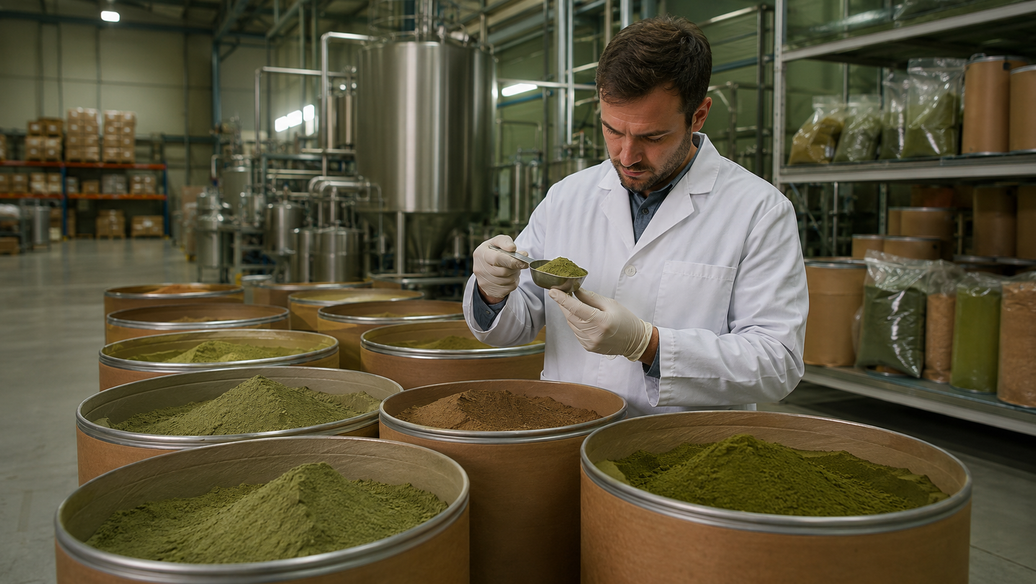
PFAS in food-contact packaging. Three thresholds apply: 25 ppb for any individual PFAS by targeted analysis (polymeric PFAS excluded), 250 ppb for the sum of all PFAS by targeted analysis, and 50 ppm total fluorine. Where total fluorine exceeds 50 mg/kg, the manufacturer or importer must be able to show on request whether that fluorine is of PFAS or non-PFAS origin. A desiccant sachet sitting inside a food pack is food-contact packaging, so the wrap needs test data. PFAS-free desiccants for food-contact packaging under PPWR covers what to request.
Heavy metals. The combined concentration of lead, cadmium, mercury and hexavalent chromium must not exceed 100 mg/kg, and this applies to all packaging, not only food-contact. PPWR carries the limit forward from Directive 94/62/EC, which it repeals and replaces — so companies that already met the old limit need to update their technical documentation to reference Regulation (EU) 2025/40 rather than the Directive.
EU Declaration of Conformity
Every packaging type placed on the EU market must carry a Declaration of Conformity from 12 August 2026, using the model in Annex VIII and confirming that the packaging meets the sustainability requirements in Articles 5–12. Manufacturers issue it; importers collect and verify it.
One trap deserves attention. Under Article 21, if an importer’s name or brand appears on the packaging, that importer becomes the manufacturer for PPWR purposes and must issue the Declaration itself. A brand that puts its own logo on a printed desiccant wrap has therefore taken on the manufacturer’s obligations for that component. Retention is five years for single-use packaging and ten for reusable, and the document must be produced to authorities within ten days of request.
Identification and traceability
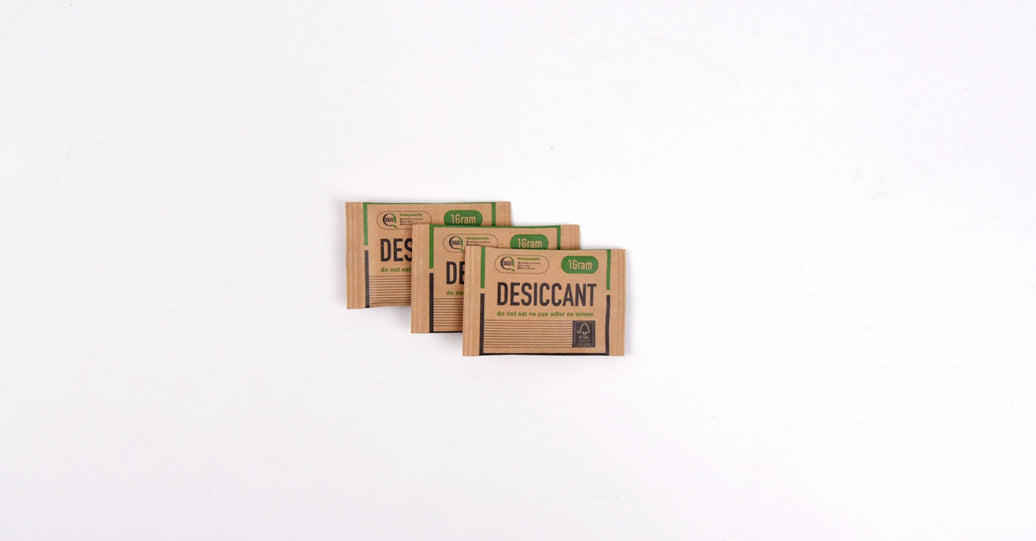
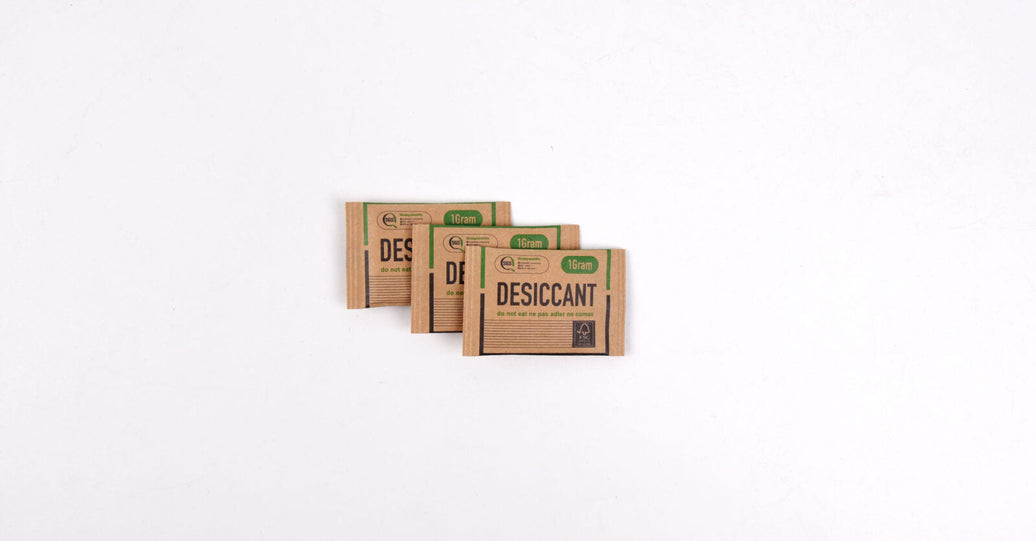
Every packaging unit must carry a traceable identifier — a type, batch or serial number — or include that information in an accompanying document where the size or format makes direct marking impractical. That exemption is the relevant one for a small sachet: a 1 g insert has very little printable area, so the identifier commonly travels in accompanying documentation. Manufacturer name or trademark and postal address must also appear, on the packaging or via a data carrier such as a QR code.
EPR registration
Producers must register with the national extended producer responsibility system in every Member State where they place packaged products on the market. Registration processes and lead times differ by country. A desiccant insert counts toward reported packaging weight, which is why material category and unit weight need to come from the supplier. The export documentation pack covers requesting that data.
The full timeline through 2030
| Date | What lands | Desiccant relevance |
|---|---|---|
| 12 Aug 2026 | PFAS and heavy-metal limits, Declaration of Conformity, identification, EPR registration, reuse systems for existing reusable packaging | Direct — wrap substances and documentation |
| 12 Feb 2027 | HORECA refill obligations | Indirect |
| 1 Jan 2028 | Design-for-Recycling criteria and recyclability grade framework published; compostable packaging requirements begin | Direct — sets the 2030 grading rules |
| 12 Aug 2028 | Harmonised material composition labelling | Direct — needs SKU-level material data |
| 12 Feb 2029 | Reusable packaging QR-code labels | Indirect |
| 1 Jan 2030 | Only recyclability grades A, B or C may be placed on the market; recycled-content minimums; Article 10 functional minimum; 40% transport reuse target | Direct — an insert can downgrade a pack’s grade |
Requirements continue past 2030: a “recycled at scale” criterion, a narrowing to grades A and B only, and a 70% transport reuse target land in 2035, 2038 and 2040.
The 2030 grading problem is a 2027 decision
The deadline that will cost most redesign effort is not August 2026 — it is 1 January 2030, when only packaging graded A, B or C may be placed on the market. Anything below grade C is treated as technically non-recyclable and cannot remain.
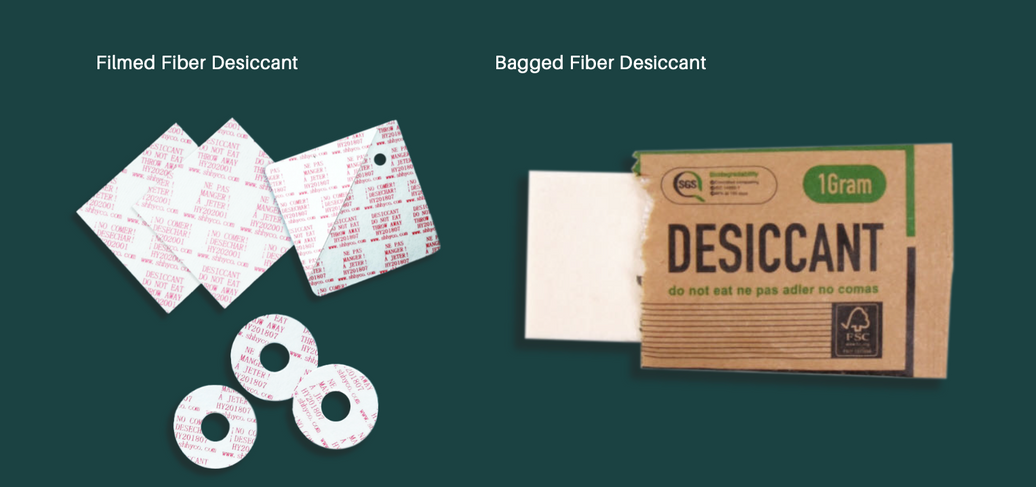
A desiccant insert affects that grade. Where a brand has moved to a fiber-based mono-material pouch to reach a good grade, dropping a plastic-wrapped sachet inside it reintroduces a material stream the recycler has to separate. A fiber-based insert in a fiber pack keeps the stream single. Choosing a mono-material-compatible desiccant works through that interaction.
Because packaging redesign and supplier changes typically need 12–24 months, recyclability assessment work belongs in 2027 at the latest — not 2029.

Where a desiccant helps rather than hinders
PPWR pushes packaging toward minimisation and recyclability, which in practice often means thinner films and mono-material structures. Both raise water-vapour transmission. The barrier gets weaker at the same moment the shelf-life claim stays the same — which is why in-pack moisture control tends to become more important under PPWR, not less. Why weaker packaging barriers mean more desiccant covers the mechanism, and the PPWR and desiccant sachets compliance hub is the working reference for the whole file.
On the claims side, keep certification and language aligned. ASTM D6400 and EN 13432 cover industrial compostability and are not interchangeable with home compostability. Unsupported wording is its own exposure — see the sustainable desiccant guide and avoiding greenwashing risk.
Frequently asked questions
Is there a PPWR grace period?
No general grace period exists. Non-compliant packaging cannot be placed on the EU market after 12 August 2026. The 18-month transition from February 2025 was the preparation window.
Has PPWR been delayed?
Industry groups have asked for a grace period and for the PFAS deadline to be postponed if a harmonised test methodology is not available in time. As of late July 2026 neither request has resulted in a change to the regulation. Plan against 12 August 2026 and treat any relief as a bonus rather than an assumption.
Can we sell existing stock after August 2026?
Stock placed on the market before that date may generally be sold through, but the rules are national and vary. Verify each relevant Member State rather than assuming a uniform window.
Does PPWR apply to companies outside the EU?
Yes. Any company placing packaged goods on the EU market is in scope regardless of where it is based. Non-EU companies generally need an EU authorised representative unless an EU importer contractually assumes the obligations.
Does a small desiccant sachet need its own marking?
A traceable identifier is required, but where size or format makes direct marking impractical the information may travel in an accompanying document. Confirm the arrangement with your supplier and record it.
Do we need a Declaration of Conformity for the desiccant specifically?
The Declaration covers the packaging type. Where the insert is part of that packaging, its compliance has to be substantiated within the file — which means obtaining the substance and material data from the desiccant supplier.
Close the desiccant gap in your PPWR file
Tell us which EU markets you supply and the pack structure. ATMOSIScience will send the substance, material and certification data your Declaration of Conformity and EPR return need.
Prefer email? info@atmosiscience.com