Quick answer: The EU Packaging and Packaging Waste Regulation (Regulation (EU) 2025/40) applies from 12 August 2026. Its recyclability rules push brands away from multilayer plastic toward mono-material and fiber-based packaging — which have weaker moisture barriers. For hygroscopic powders, a weaker barrier means the pack needs more, not less, in-pack moisture control. Compostable fiber desiccant (ASTM D6400 and EN 13432, FDA food-contact) is one of the few options that raises moisture protection without adding a non-recyclable component.
For years the packaging conversation and the moisture-control conversation ran on separate tracks. The EU Packaging and Packaging Waste Regulation brings them together. As brands re-engineer packs to meet the new recyclability rules, many are trading away the very barrier properties that used to keep powders dry — and that changes how much in-pack desiccant a product needs.
What PPWR changes, and when
Regulation (EU) 2025/40 entered into force in February 2025 and applies across all EU member states from 12 August 2026, replacing the previous Packaging Directive (European Commission). From that date, packaging placed on the EU market must meet recyclability and substance-minimisation requirements and carry a Declaration of Conformity, with no grace period for existing stock. Penalties are set by individual member states and can be significant, alongside the risk of losing EU market access.
The barrier trade-off nobody budgeted for
Two PPWR pressures push packaging toward materials that breathe more. Recyclability rules favour mono-material and fiber-based structures over the multilayer plastic laminates that deliver the best moisture barriers, and minimisation rules discourage the extra layers those laminates rely on. The result: many compliant packs have a higher water-vapour transmission rate than the packs they replace.

For a shelf-stable powder that permeation path is not academic. A weaker wall lets more vapour in over the pack’s life, so the humidity the product sees creeps up — and hygroscopic powders cake, brown or lose potency when it does.
Weaker barrier means more moisture control, not less
Here is the counter-intuitive part: sustainable packaging can increase the need for in-pack desiccant. If the wall lets in more vapour, something inside has to absorb it. The real question becomes which desiccant does that job without re-introducing the problem PPWR is trying to solve.

Why compostable fiber desiccant fits the PPWR world
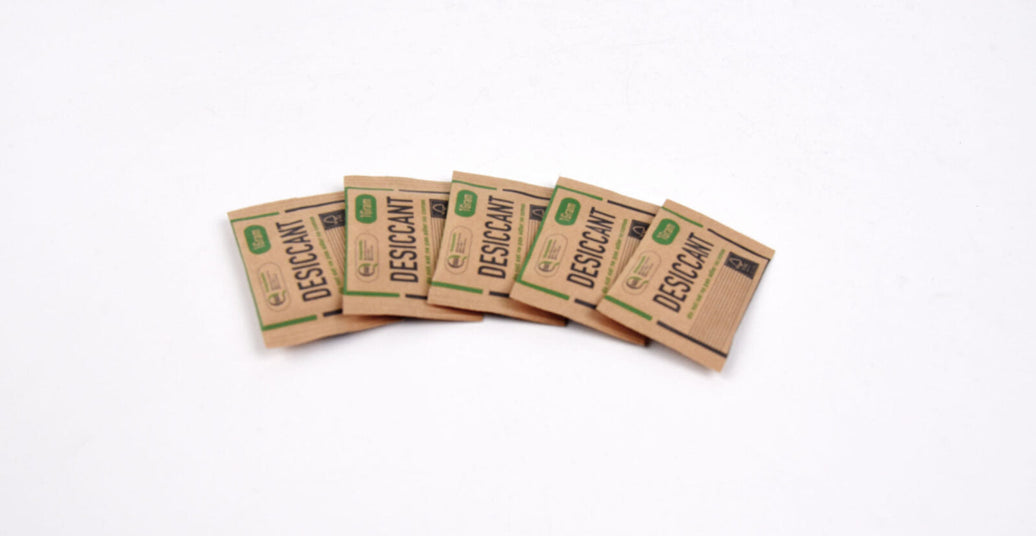
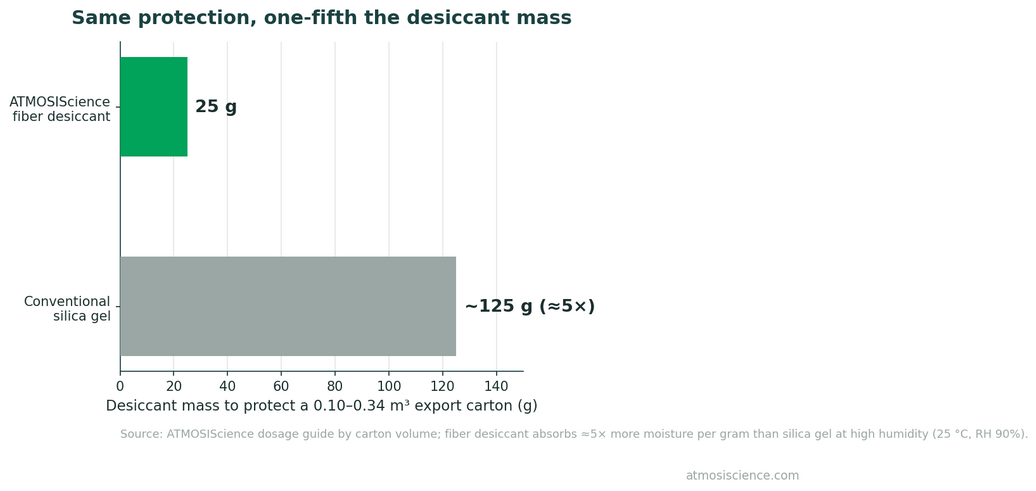
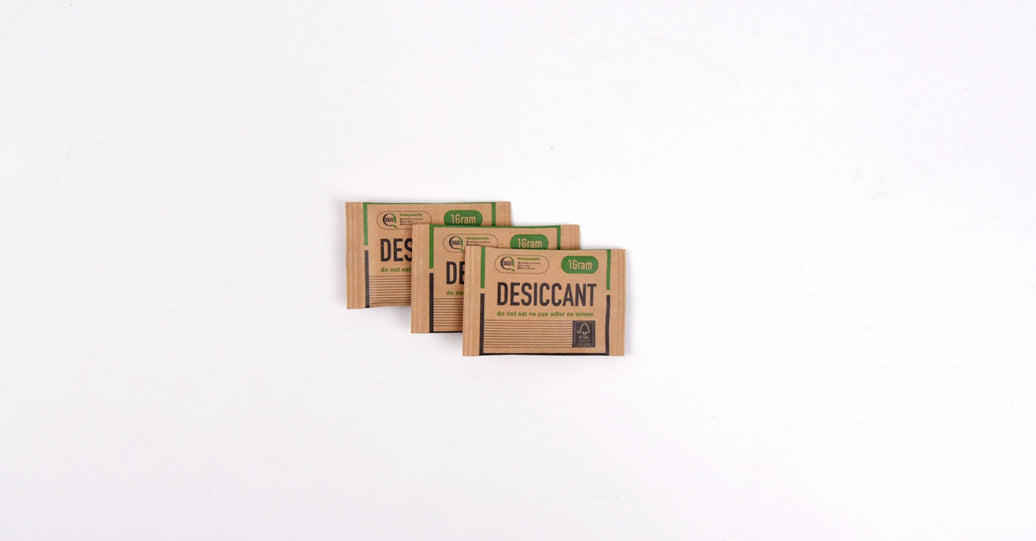
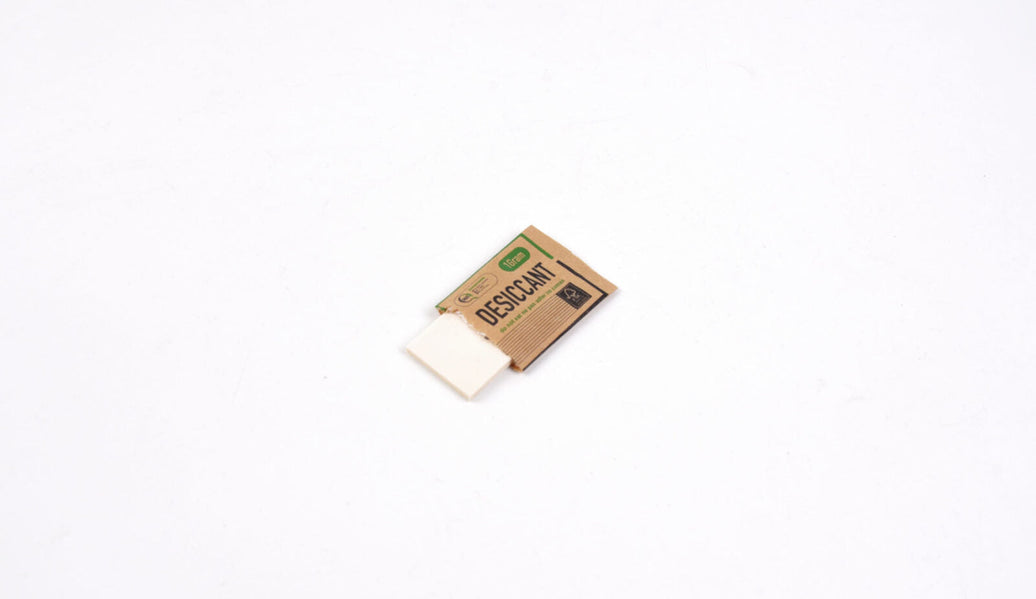
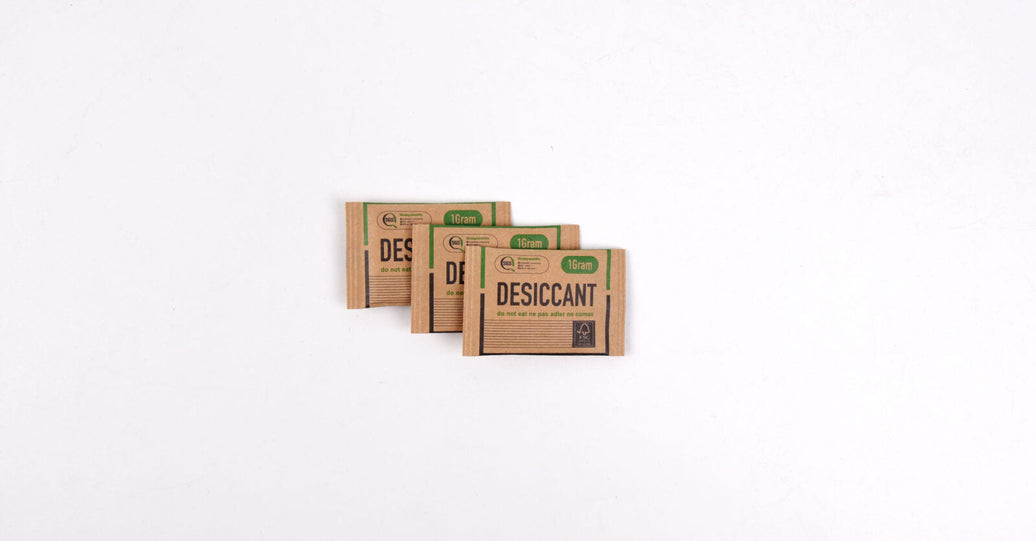
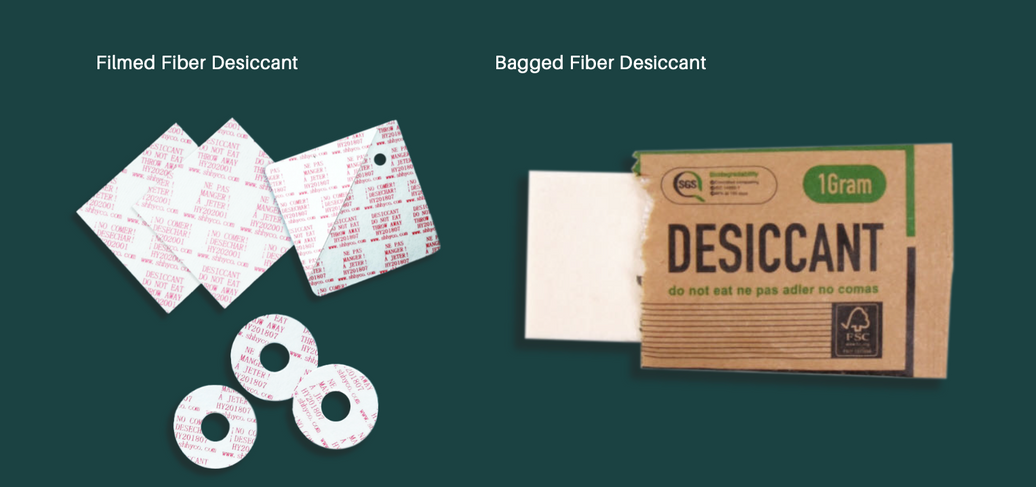
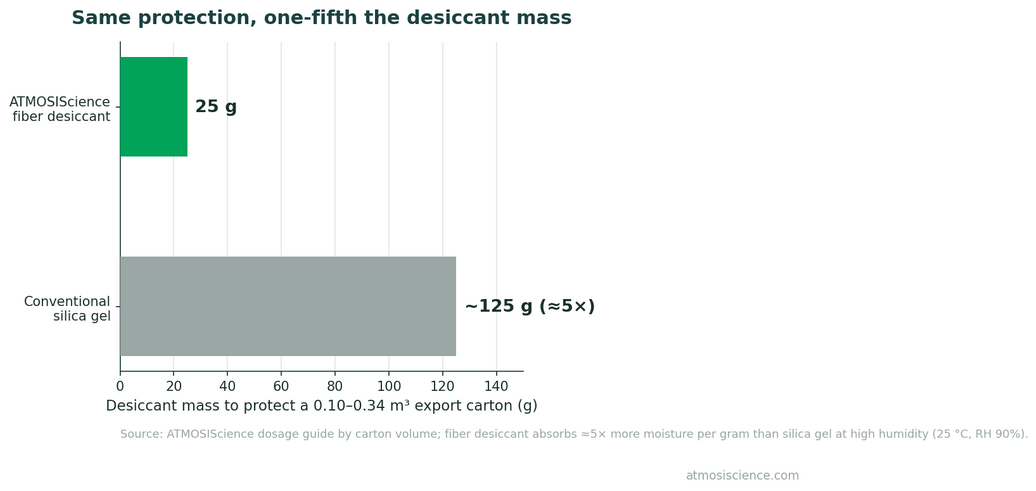
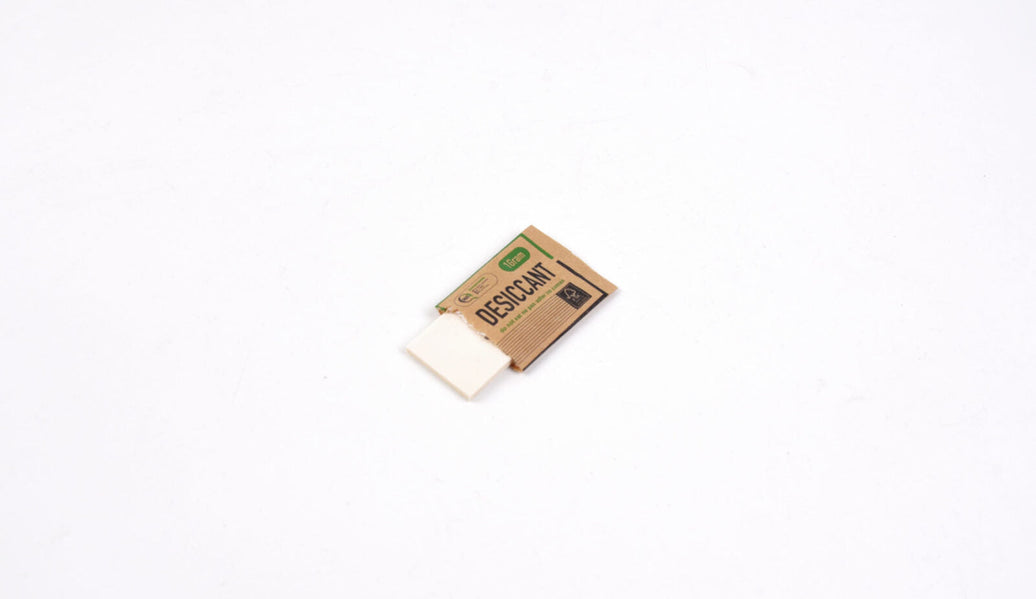
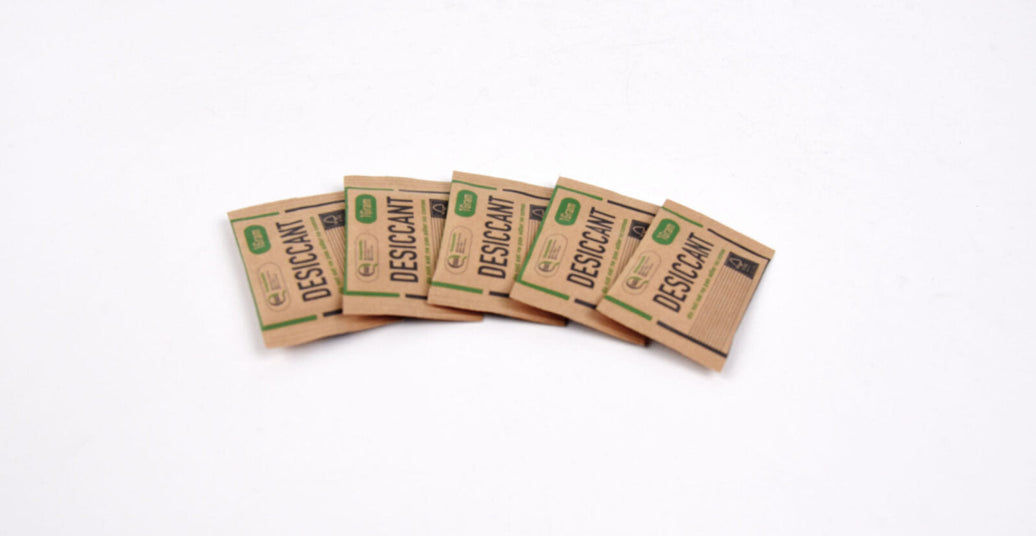
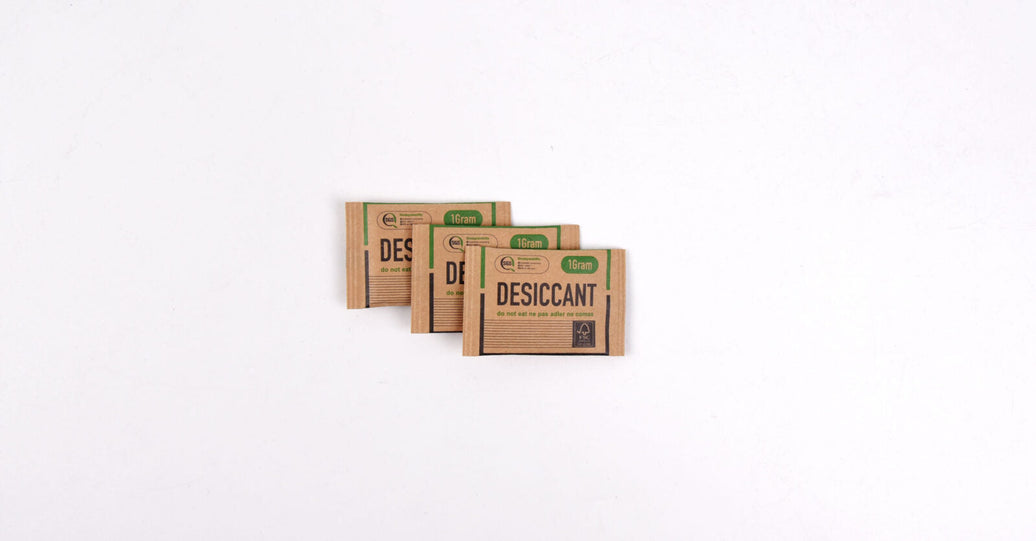
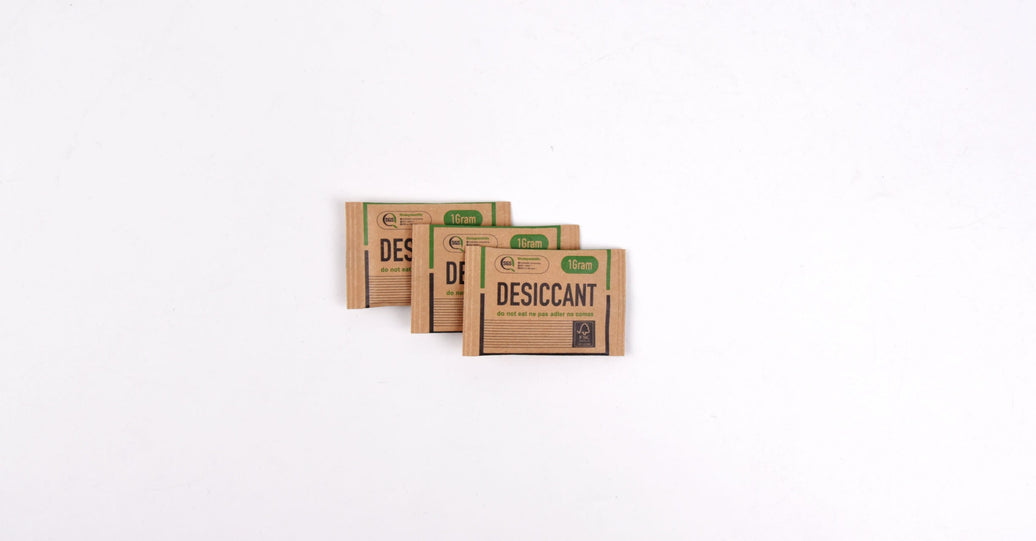
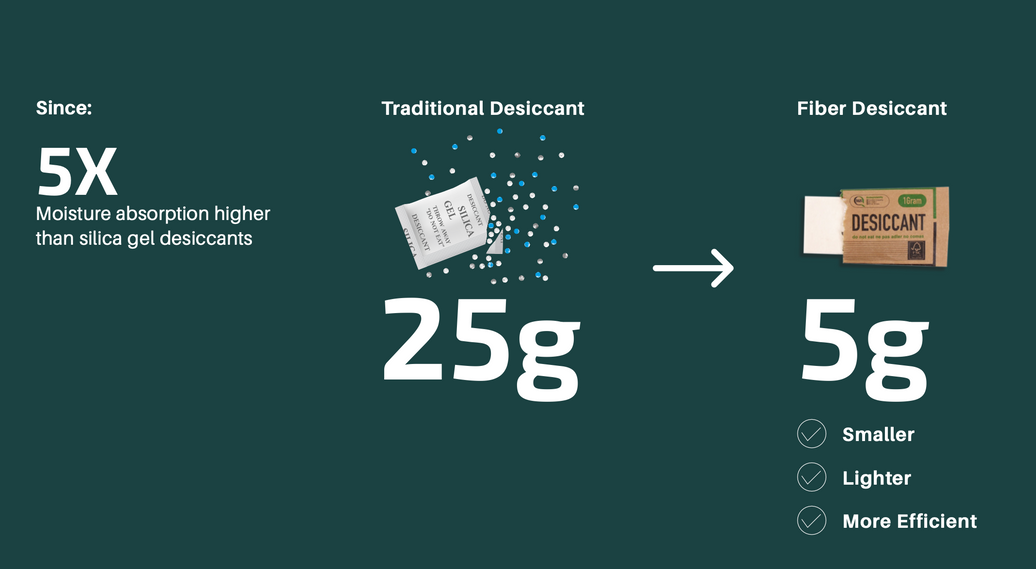
A conventional plastic-wrapped silica sachet dropped into a fiber pouch can compromise the recyclability a brand just engineered in. ATMOSIScience fiber desiccant is built for the opposite outcome: the substrate is natural plant fiber, the sachet is certified compostable to ASTM D6400 and EN 13432, and the material is FDA food-contact grade. It adds moisture protection without adding a fossil-plastic component — and its high capacity (more than 70% of its weight at RH90 versus about 30% for silica) means less desiccant mass to reach the same protection.
What to do before August 2026
Brands shipping powders to the EU should map which SKUs are moving to mono-material or fiber packs, re-test moisture ingress on the new structure, and re-size in-pack desiccant to the new, weaker barrier rather than carrying over the old dose. Pairing a recyclable pack with a compostable desiccant keeps both the sustainability claim and the shelf life intact.
Frequently asked questions
Does PPWR ban desiccant sachets? No — it regulates the packaging’s recyclability and substances. A compostable fiber desiccant supports the goal; a plastic-wrapped one can work against a recyclable-pack claim.
When does PPWR apply? From 12 August 2026 across the EU, with no grandfathering for existing stock.
Will fiber packaging really need more desiccant? Often yes — mono-material and fiber structures typically transmit more moisture than multilayer plastic, so the in-pack dose should be re-checked, not copied over.
Related reading: what brands shipping to the EU must do before August 2026, compostable desiccant and the Green Claims Directive, and US packaging EPR laws and your desiccant. Browse the fiber desiccant range.
Re-engineering packs for PPWR?
Tell us which powders are moving to fiber or mono-material packaging. ATMOSIScience will help re-size a compostable fiber desiccant to the new barrier and send a free sample.