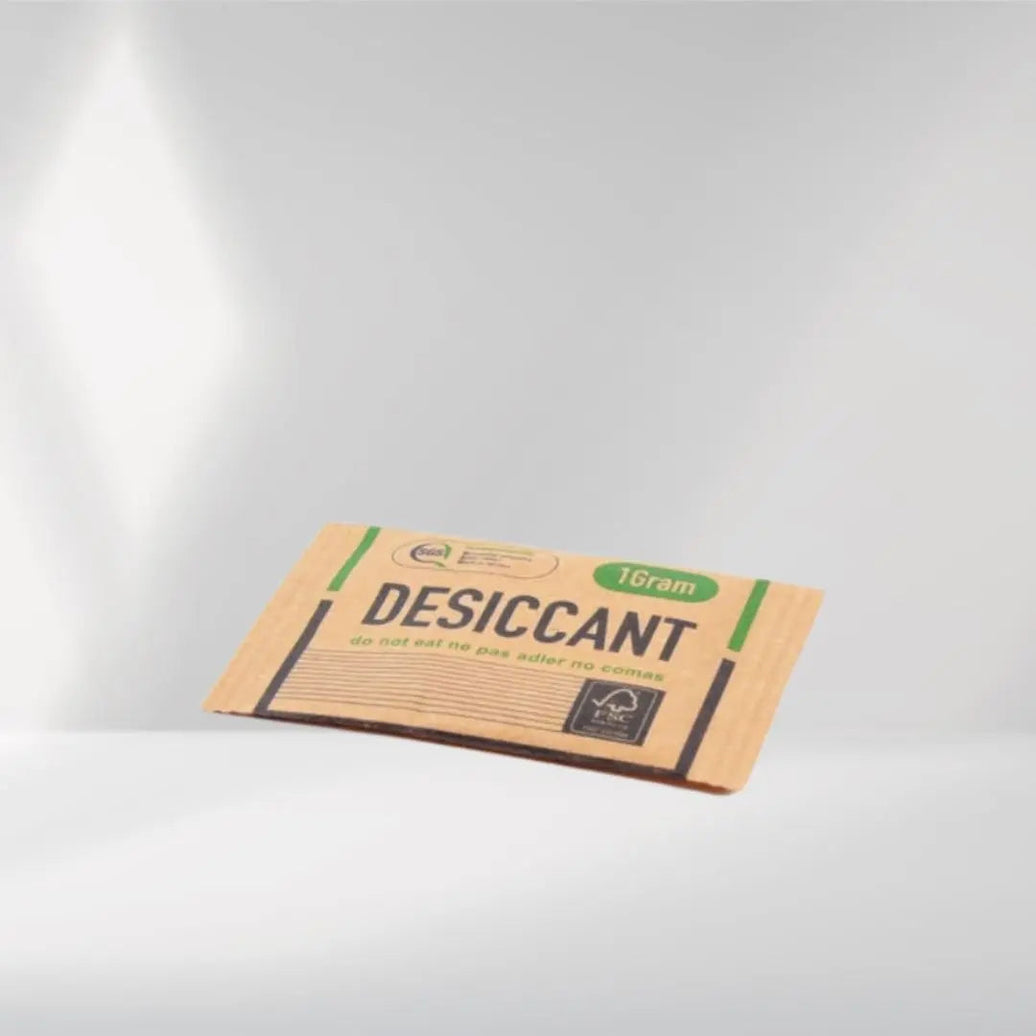
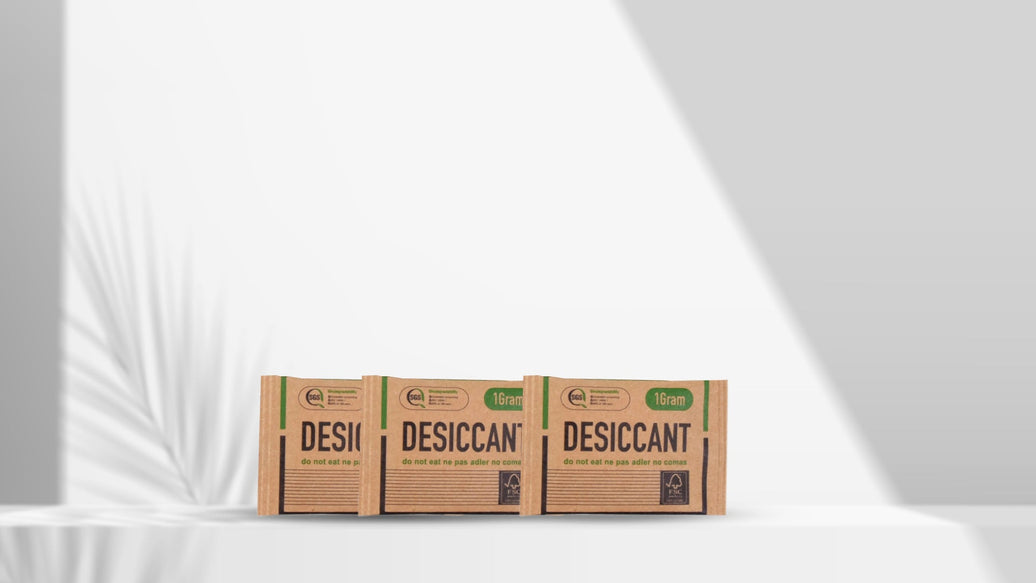
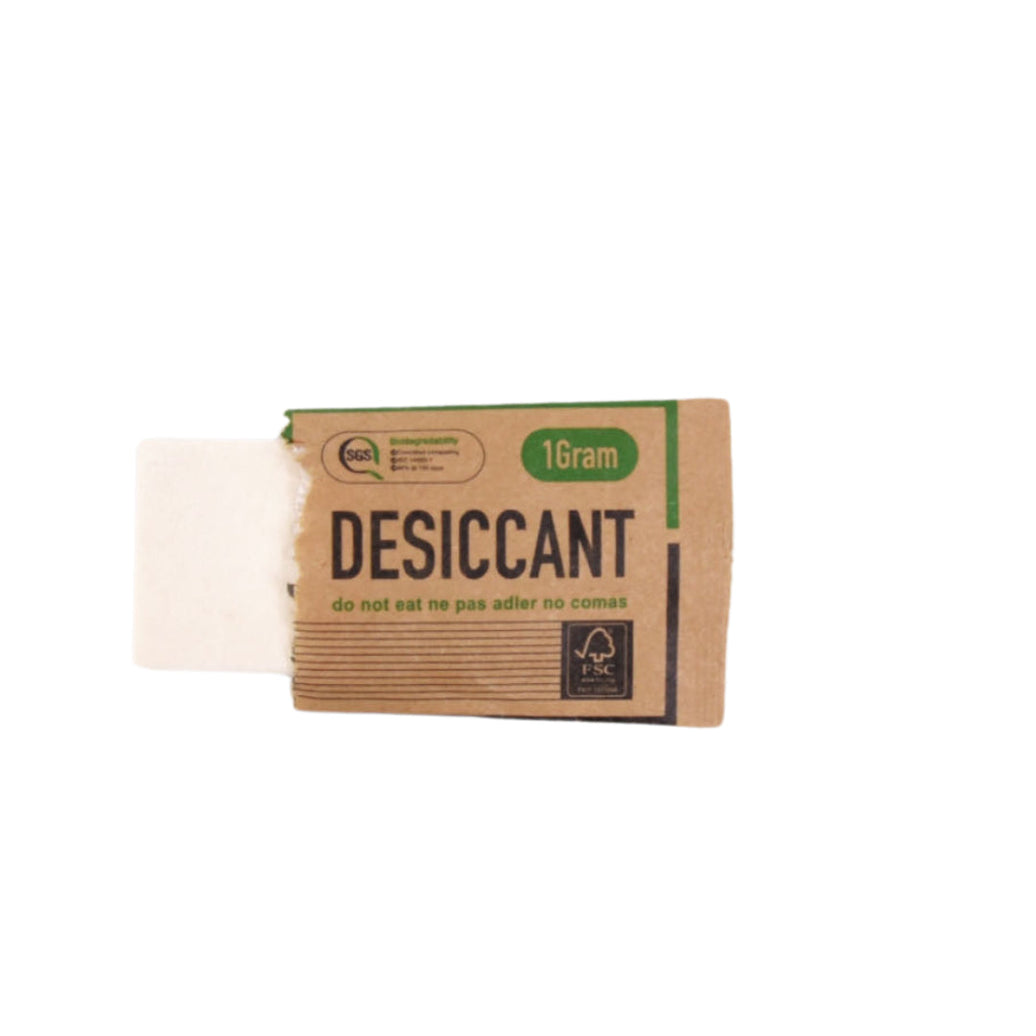
Almost every serious first enquiry we receive contains the same short list: send samples, quote the MOQ, quote the lead time, send the price tiers, send a technical datasheet, can you do a custom size, and what is the shelf life of the unopened product with recommended storage conditions. It is a reasonable list. Written in that order, it is also the slowest possible route to a working part.
The reason is structural. A sample sent before the function is agreed tests the wrong thing, and a price quoted before the format is defined is a number for a part nobody has specified. This article sets out the five-stage sequence we see working — define the function, characterise the pack, size then sample, run the right stability study, lock the specification — and what determines how long each one takes.
The one-line version: ask for the sample your sizing calculation produced, not the sample from the catalogue — a trial run on an arbitrary size tells you nothing you can transfer into a purchase order.
Related: Fiber desiccant · Fiber technology
Stage 1 — Define the function before the format
The first question is not which desiccant. It is whether you want a desiccant at all. A one-way desiccant removes water until it saturates — it drives the pack dry. A two-way element holds an enclosure at a set point, giving moisture back when the space is drier than target and taking it up when it is wetter. Picking wrongly is the most expensive error at this stage: a powder that cakes needs the headspace driven dry and a buffer will never do it, while dried botanicals, leaf and wooden goods are damaged by a one-way desiccant. The distinction is set out in two-way humidity liner vs desiccant.
Once that is settled, three answers decide everything downstream. The target: a water activity or moisture content, or a headspace RH, always with the temperature it applies at. The failure attribute: caking, hardness change, dissolution time, potency loss, sensory change, corrosion, condensation. Who measured it: a target inherited from a previous supplier's datasheet is not a measurement.
The input that makes everything else possible is a sorption isotherm on your actual formulation — not on a similar product, not on the base powder before the actives went in. This matters more in blends than most buyers expect. Every soluble salt has a deliquescence RH above which it dissolves in the water it has adsorbed, and in a mixture the blend's deliquescence RH is lower than any single component's. Sodium chloride alone deliquesces at 75.29% RH; a measured sodium chloride / sodium sulfate / sodium nitrate blend deliquesces at 66.61%, nearly nine points lower. You cannot predict a formulation's critical RH from its worst single ingredient.
Stage 2 — Characterise the pack, not the desiccant
We are often sent a desiccant requirement with no pack data at all, followed by the question of how many months it will last. That cannot be answered from the desiccant. Service life is capacity divided by ingress, and ingress belongs to the pack.
| What to gather | How to state it | Why it decides the answer |
|---|---|---|
| WVTR of the pack | Value plus the test standard and conditions — ASTM F1249, ASTM E96 or ASTM D7709, at a named temperature and RH | The ingress term. Without it, service life is guessed rather than calculated. |
| Internal surface area | cm² or in² of barrier exposed to the headspace | Ingress scales with area, not with pack volume. |
| Headspace volume | mL, at the fill level actually used | Sets the moisture load trapped at seal. |
| Closure type and torque | Finish designation, liner type, application torque in inch-pounds | On bottles and jars the closure often leaks more than the wall. Removal torque falls to roughly half of application torque within 24 hours. |
| Fill temperature and humidity | °C and % RH on the filling line | Warm, humid filling seals moisture in before the pack ships. |
| Distribution profile | Transit climate, warehouse conditions, expected shelf period | A pack that survives a temperate warehouse can fail on a tropical transit leg at the same WVTR. |
Why this stage cannot be skipped: take a single 2.0 g fibre desiccant card holding roughly 0.9 g of usable water. Unchanged, it gives entirely different answers depending only on what surrounds it.
| Barrier | Indicative ingress | Service life of the same 2.0 g card |
|---|---|---|
| Foil laminate | ~0.1 mg/day | Comfortably past 36 months — 36 months requires under 0.82 mg/day |
| Metallised PET | ~6 mg/day | Around 5 months |
| HDPE bottle | Varies with wall, closure and liner | 3 to 15 months |
The 0.9 g figure is the card's usable capacity up to an interior ceiling of roughly 45% RH. If the pack has to be held below 10% RH — a moisture-barrier bag for electronics, for example — the same card carries closer to 0.2 g and the months figures fall accordingly. Capacity is always quoted against a humidity ceiling; a service-life figure quoted without one is not a specification.
Same desiccant, same capacity, a seven-fold spread in outcome. That is why we will not put a months figure in writing without your WVTR, and why a supplier who does is quoting a number with no basis. The arithmetic, including the JEDEC J-STD-033 formula, is worked through in desiccant sizing calculation.
Stage 3 — Size it, then sample it
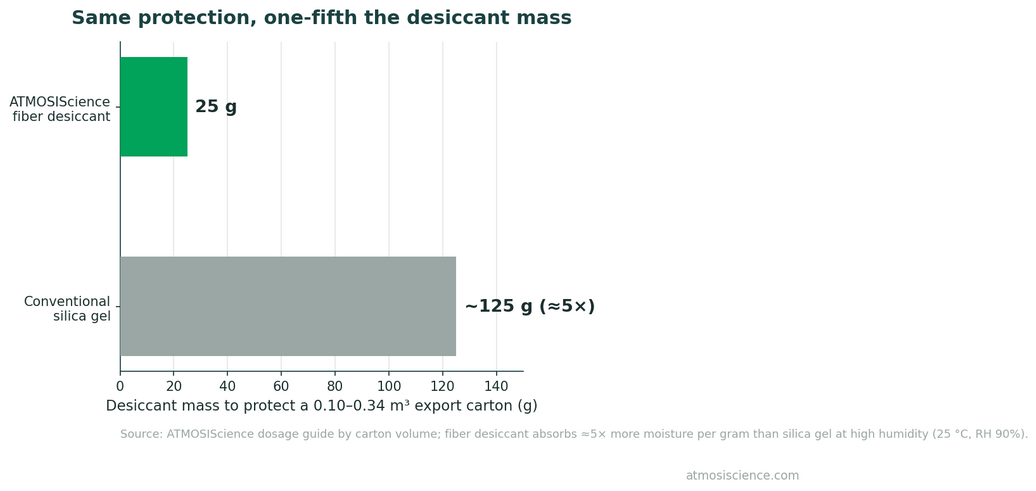
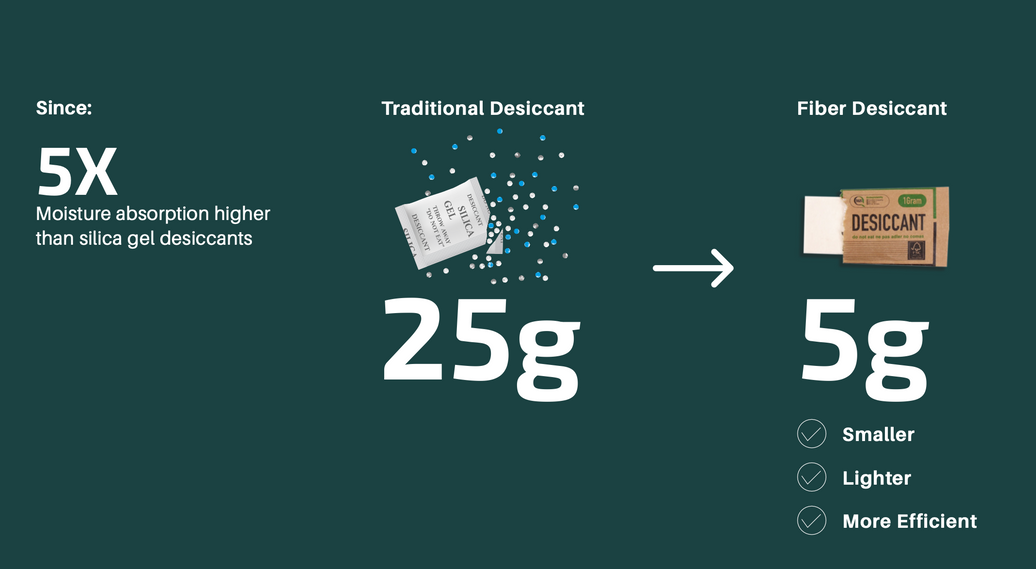
With the isotherm and the pack data in hand the calculation is straightforward: water entering over the intended shelf life, plus what is trapped at seal, against the capacity of the material at the RH and temperature the pack will actually live at. On a standards basis the comparison currency is the MIL-D-3464E desiccant unit — 18 g of fibre, 30 g of silica gel or 35 g of clay deliver one unit — which converts a requirement between materials without arguing about percentages.
The output is a number: this many grams, or this die-cut area at this thickness. That is the sample to request. A catalogue sample in a convenient size tells you whether the material suits your product and survives your line, which is worth knowing — but not whether the size is right, and a pass on the wrong size cannot be transferred into a specification.
| A useful sample request states | What we need to hear |
|---|---|
| Quantity | Tens of pieces for bench work; enough to run at line speed without stopping for a line trial |
| Format | Bagged sachet, die-cut sheet or strip stock — and for a line trial, how it is presented to the machine |
| Thickness | 0.5 mm ultra-thin or 1.0 mm maximum capacity for sheet; substrate thickness for bagged. It changes capacity and feeder behaviour |
| Dimensions | The calculated size, with the tolerance you can live with |
| Purpose | Bench evaluation (compatibility, sorption, dust, sensory) or line trial (feeding, sealing, detection, throughput) — they need different things |
We ship samples. What we do not publish are MOQ, lead time and price tiers — deliberate rather than evasive, because all three are properties of a defined part. Format, die tooling, print, bag material and packing configuration each move them, so a published tier would be a number for a part that is not yours. Quoted against the Stage 5 specification, they become real. The cost drivers are broken down in desiccant unit cost at volume.
Stage 4 — Run the right stability study
Two kinds of study do two different jobs, and confusing them wastes months. Real-time study at the intended storage condition is the only evidence that supports a shelf-life claim outright, and there is no substitute for it. Accelerated study narrows the design space fast: which candidate size is obviously wrong, whether the barrier is the problem rather than the desiccant, whether a formulation change made things worse. We offer accelerated shelf-life testing for exactly this. Run both — accelerated to fix the design, real-time to support the claim.
| What to measure | Time points (months) | Why it is on the list |
|---|---|---|
| Product moisture content or water activity | 0, 1, 3, 6, 12 | The primary variable. Month 1 catches a pack that was wrong from the seal. |
| The failure attribute — caking, hardness, dissolution, potency, sensory | 0, 3, 6, 12 | Moisture that never produces the failure is not a failure. This is what the customer sees. |
| Pack integrity — seal strength, closure removal torque, visible damage | 0, 6, 12 | Separates an undersized desiccant from a pack that leaked. |
| Desiccant remaining capacity | 0, 3, 6, 12 | The step almost everyone skips, and the only one that tells you whether you over- or under-sized. |
That last row deserves emphasis. A study ending with a passing product and no measurement of the desiccant tells you the design worked, not why. At 20% of capacity at month 12 you are paying for material you never use; at 95% you have no margin for a hot warehouse or a slow retail turn. Pulling one desiccant per time point converts a pass into a design you can defend, and often cost down.
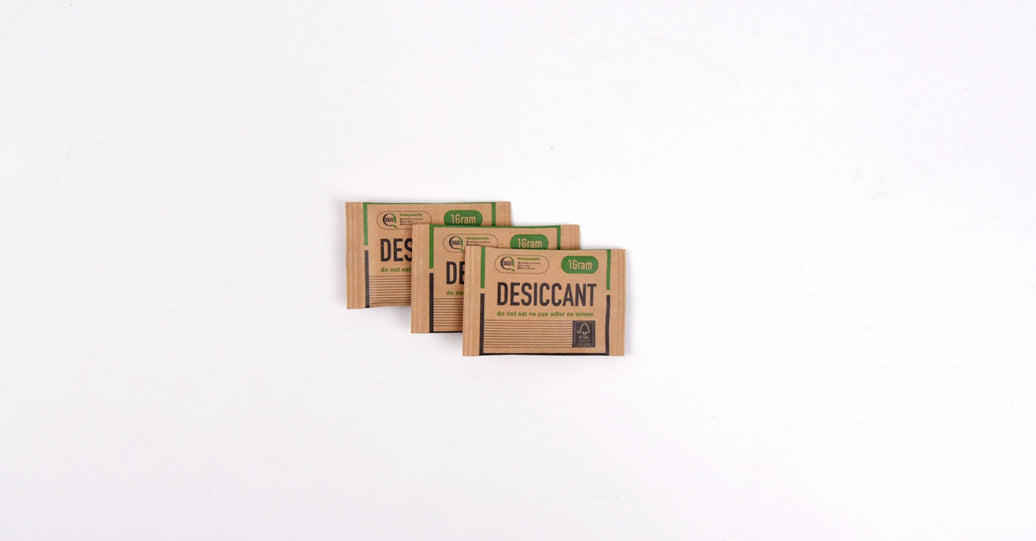
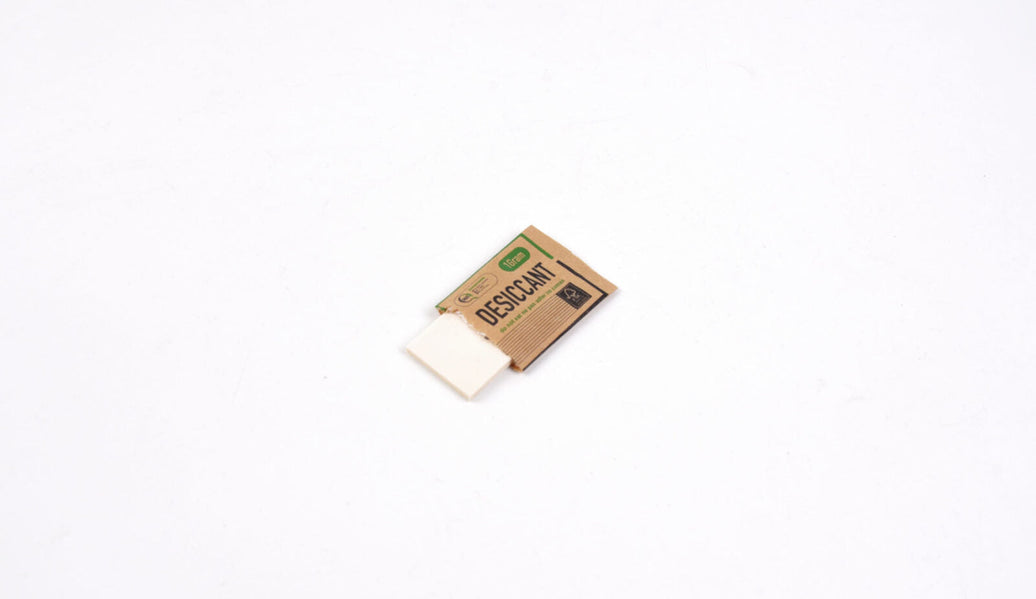
Two shelf-life numbers are in play and they are not the same. The product's shelf life is what the study establishes. The desiccant's own shelf life is separate: our bagged fibre desiccant carries a minimum 12 months from bag seal date, and that assumes storage conditions agreed and written into the specification — sealed outer, ambient, away from humidity sources and direct sun. Unopened stock kept badly is spent stock, and it fails silently.
Stage 5 — Lock the specification
The purchase order references a specification, or it references nothing. This is the document that makes the second lot the same as the first.
| Specification item | What to write down |
|---|---|
| Material composition | Active composition and substrate, and the wrap or film separately — different materials, different certificates |
| Format, dimensions and tolerances | Nominal dimensions plus agreed tolerances. No die-cut liner tolerance is published anywhere in the industry, so this must be negotiated and stated rather than assumed |
| Capacity | Grams of water absorbed at a named RH and temperature — a capacity without conditions is not a specification |
| Food contact | The regulation cited, e.g. FDA 21 CFR 175.300, and which component it covers |
| Compostability | Standard, issuing body, certificate number, exact scope, expiry date |
| Per-lot COA | Required with each lot, with the test method named — not a type-test report reissued |
| Lot coding and traceability | Code format, where it is printed, what it resolves back to |
| Packaging and storage | Inner and outer packing, and storage conditions for unopened stock |
| Change control | Any change of active, wrap, substrate thickness or manufacturing site is notifiable, with the notice period stated |
The scope and expiry lines matter more than they look. A certificate covering a fibre core does not automatically cover the film laminated to it, and certificates lapse. How to read them is covered in desiccant certificates: scope and validity.
What actually determines the duration
We are asked for a timeline and will not promise one, because almost all of the elapsed time sits on your side of the table or inside a test. What we can do is name what drives each stage.
| Stage | Effort | What sets the duration |
|---|---|---|
| 1 — Define the function | Short, if the data exists | Whether a sorption isotherm on the real formulation already exists. Commissioning one is the pacing item. |
| 2 — Characterise the pack | Short | Whether the pack converter will release WVTR with standard and conditions named. Chasing this is the most common quiet delay. |
| 3 — Size and sample | Short to moderate | Standard formats ship from stock. A new die-cut shape needs tooling — the step buyers forget to start early. |
| 4 — Stability study | Long — the pacing item | Accelerated compresses it; real-time cannot be compressed. Twelve months is twelve months. |
| 5 — Lock the specification | Short | Internal review and change-control sign-off, which in regulated packs is a queue rather than a task. |
The useful consequence: Stages 1 to 3 can run in weeks if the data is gathered in parallel, and Stage 4 starts the moment a correctly sized sample exists. Every week spent asking for price before the function is defined is a week Stage 4 has not started.
The four things that stall a qualification
- Asking for price before function. A price for an undefined part is meaningless or, worse, anchoring — it gets compared against a competitor's price for a different undefined part, and the cheaper wrong answer wins.
- Sending a diameter instead of a cap sample. On lid liners especially, a nominal closure size does not determine the disc that fits it, because no public standard maps closure designation to liner diameter. Two physical caps in the post settle in a day what a fortnight of drawings will not.
- Skipping the WVTR. Nothing can be sized without it. Projects sit for months on this single missing number while everything else is ready.
- Treating a desiccant change in a regulated pack as a purchasing decision. Substituting the moisture-control component of a qualified pack is a change control event with a documentation trail, not a line on a cost-down list. Discovering that after the order is placed is expensive.
Frequently asked questions
Can you send samples before we have decided the size?
Yes, and we do. Treat it as material familiarisation — compatibility, dust, sorption behaviour, handling — rather than qualification. The size-specific trial should wait for the calculation, or it will be repeated.
Why will you not publish MOQ, lead time and price tiers?
All three are properties of a defined part rather than of a product line. Format, thickness, die tooling, printing and packing each move them. Once the specification exists, we quote all three against it.
What is the shelf life of the unopened desiccant, and how should we store it?
Minimum 12 months from bag seal date for our bagged fibre desiccant. Keep it in the sealed outer at ambient temperature, away from humidity sources and direct sun, and write those conditions into the specification so the receiving warehouse is bound by them.
Do we have to run real-time stability, or is accelerated enough?
Accelerated is enough to choose a design and rule things out quickly, and we offer accelerated shelf-life testing. It is not enough on its own to support a shelf-life claim — only real-time data at the intended storage condition does that.
We have an incumbent supplier and want a like-for-like quote. Is that not faster?
Only if the incumbent part is correctly sized. A like-for-like swap inherits every sizing error in the original, and skips the isotherm — the one document that makes every future change cheap.
Send the pack, not just the part number
Tell us what you are packing, the pack format, the barrier data and the shelf-life target, and we will come back with a sizing calculation, the matching format and the certificate pack — and we will say so if a desiccant is the wrong answer. Range at fiber desiccant, or write to info@atmosiscience.com.
This article is general information, not legal advice. Verify current obligations against your own products and counsel.
Related reading: Desiccant sizing calculation: JEDEC and the isotherm · Eight questions that separate a supplier from a reseller
Tell us the product, not just the part number
Send us what you are packing, the pack format and the humidity or shelf-life target. We will come back with a sizing calculation, the matching format and the certificate pack.