Quick answer: Inactive desiccant paper is shipped carrying normal room moisture and must be heat-activated, then sealed into the pack quickly, before it can protect anything. Active desiccant paper is dried by the supplier and shipped sealed, so it works on arrival but starts loading the moment the bag is opened. A plant-fiber desiccant card is the third option: produced and sealed at source, placed straight from the bag, with no activation step on your line. For reference, ATMOSIScience measures its 1.0 mm fiber card at three times the moisture uptake of silica gel at 25 °C and 90% RH, and about two times across the drier 20 to 40% RH band.
Search for desiccant paper in the US and the first thing you see is two prices for what looks like the same sheet: one labelled active, one labelled inactive. The cheaper one is not a lower grade. It is the same paper with the drying step left to you. Choosing between them is really a decision about who controls the moisture the sheet picks up before it reaches your product.
What "inactive" and "active" actually mean
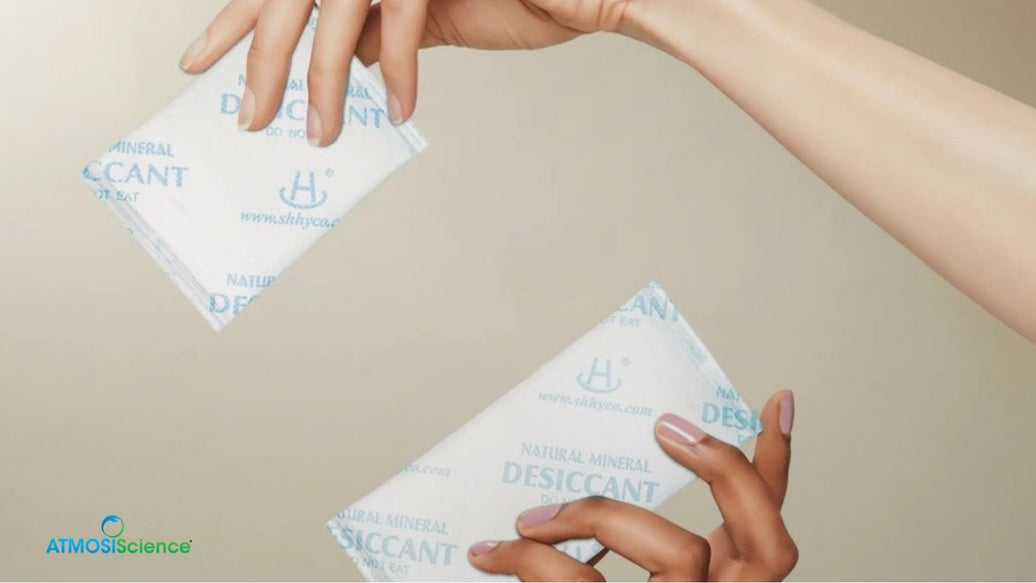
Most desiccant paper sold in the US is a cellulose sheet carrying silica gel particles. Silica gel takes up water from the air until it reaches equilibrium with its surroundings. A sheet stored in an ordinary warehouse will therefore already hold a share of its capacity in water when it arrives.
- Inactive desiccant paper is sold in that equilibrated state. Before use it is heated to drive the water off (the supplier's datasheet sets the time and temperature), cooled in a dry space, and sealed into the package before it reloads from room air.
- Active desiccant paper has been dried by the supplier and packed in a moisture barrier. It is ready on arrival, but every minute it spends open in room air uses capacity your product will never get.
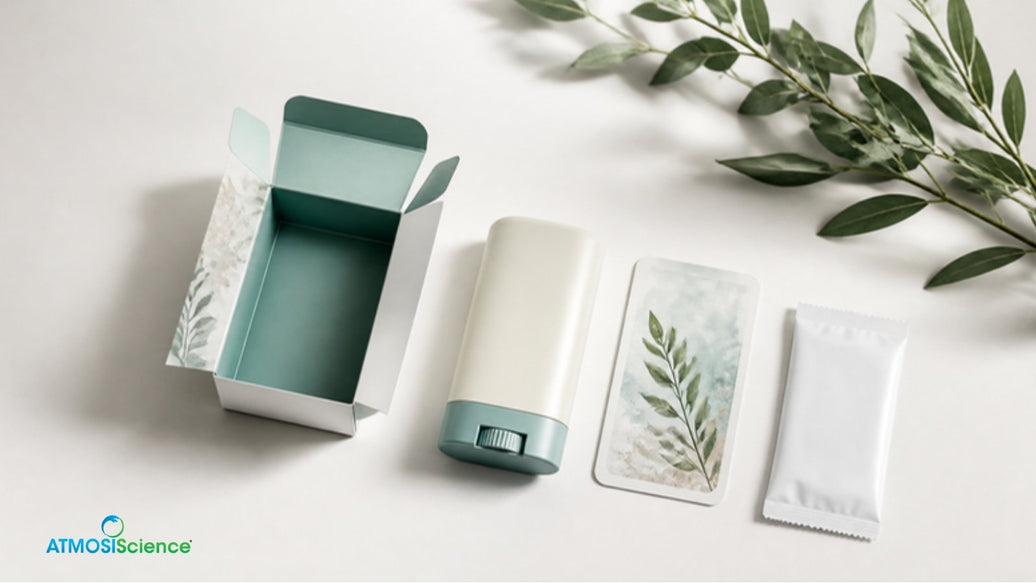
- A sealed fiber desiccant card is produced and packed dry at source. There is no oven step on your line: the card goes from its sealed bag into the product pack. See the Fiber Card spec guide for sizes.

When inactive paper makes sense
Inactive sheets suit operations that already run a controlled drying step: an electronics or optics site with a dry cabinet and a bake oven, a lab that cuts small custom shapes in low volume, or a conservation studio that activates and seals in one sitting. If you have the oven, the dry cooling space and a documented time limit between activation and sealing, inactive paper is a reasonable way to buy capacity cheaply.
It is a poor fit for a co-packer or a supplement filling line. Few powder lines have an activation oven next to the filler, and the time between the oven and the sealed pouch is rarely controlled. The result is a sheet that looks right, passes visual inspection, and has already used part of its capacity on the factory air.
When active paper or a sealed card makes sense
Any line without a drying step should buy desiccant that arrives dry and sealed. The rules that matter then are about exposure, not activation:
- Open the supplier bag only at the point of use, and reseal partial bags at once.
- Set a maximum open time per bag and write it into the work instruction. Our note on open-bag exposure on a filling line covers how to set it.
- Store unopened bags sealed, away from heat and humid areas, and use them in date order. Fiber desiccant cards carry a 12-month shelf life from the manufacturing date when unopened and sealed.
How to tell if a desiccant sheet is already saturated
Saturated desiccant paper often feels exactly like fresh paper. Touch and appearance are not a test. Three checks are:
| Check | How | What it tells you |
|---|---|---|
| Weight gain | Weigh a sample straight from a fresh sealed bag, then a sample from the bag in use | How much capacity has already been spent on room air |
| Loss on drying | Oven or moisture-analyser LOD against the supplier's limit | Incoming quality, lot by lot. See LOD as an incoming QC test |
| Indicator card in the pack | A humidity indicator card sealed in a test pack | Whether the finished pack actually holds the target RH |
For ATMOSIScience fiber desiccant the incoming limit is loss on drying below 10%. If you receive any desiccant without an LOD figure on the certificate of analysis, ask for one before the first production run.
Capacity is a condition, not a number
Comparing active paper, inactive paper and fiber cards only works if every figure is read at the same temperature and humidity. A silica gel sheet and a fiber card can look similar at one humidity and very different at another.

The measured curve shows why the condition matters. At 20% RH the fiber material takes up about 1.8 times what silica gel does; at 40% RH about 2.0 times; at 90% RH about 3.1 times. The approved product statement for the card is the 90% RH figure with its condition attached: at 1.0 mm thickness, the Fiber Desiccant Card absorbs three times as much moisture as silica gel under the same test conditions (25 °C / 90% RH). For dry storage, size on the 20 to 40% RH figures. The four datasheet fields that reveal what a paper desiccant contains and the cost-per-package comparison walk through the rest.
A simple decision rule
- You have an activation oven, a dry cooling space and a timed seal step: inactive paper can work.
- You have none of those, or a co-packer fills for you: buy desiccant that arrives dry and sealed, active paper or a fiber card, and control open time.
- You want silica-free material in a paper-like format: a plant-fiber card. It carries calcium chloride in a plant-fiber matrix and contains no silica gel. Start with what a paper desiccant is.
To size the card for a specific pack, use the desiccant sizing calculator or send the pack details through the form below.
Frequently asked questions
What is inactive desiccant paper?
Desiccant paper sold in an equilibrated state, carrying ordinary room moisture. It must be heat-activated according to the supplier's instructions and sealed into the pack before it protects the product.
Can I reactivate desiccant paper after it is saturated?
Silica-based papers can usually be re-dried by heating, within the limits the supplier sets. Whether regeneration suits your process, and what it does to a fiber product, is covered in reusing and recharging desiccant.
How long can active desiccant paper stay open?
As short a time as your process allows. Capacity starts loading as soon as the barrier bag is opened, faster in humid rooms. Set a written limit per bag and reseal partial bags.
Does a fiber desiccant card need activation?
No activation step is part of the standard workflow. Cards are supplied sealed and placed directly from the bag. Keep unopened bags sealed and use them within the 12-month shelf life from the manufacturing date.
Is desiccant paper the same as a fiber desiccant card?
Not usually. Most US desiccant paper is cellulose carrying silica gel. A fiber desiccant card is a plant-fiber matrix carrying calcium chloride, with no silica gel.
Skip the activation oven
Tell ATMOSIScience your pack size, product and line setup. We will recommend a ready-to-place fiber card size and send samples sealed, so you can test without an activation step.
Prefer email? info@atmosiscience.com