Quick answer: Loose silica gel can be dried out in a low oven and reused a limited number of times — fine for camera bags, gun safes and toolboxes. In commercial packaging, reuse almost never survives the math: collection, re-drying energy, re-verification and liability cost more than new units, and no QA team can certify the remaining capacity of a returned sachet. The sustainable alternative that actually scales is not reuse — it is single-use desiccant that composts instead of persisting.
“Can I recharge silica gel?” is one of the most repeated desiccant questions in hobby and storage communities, and the enthusiasm is understandable: throwing away a “spent” sachet feels wasteful. ATMOSIScience gets the professional version of the same question from cost-conscious packaging buyers. The answer splits cleanly by context.
What recharging actually is
Adsorbents hold water physically, so heat drives it back out. Dry loose silica beads at a low oven temperature for a few hours and most capacity returns; indicating types show the color shift back. Each cycle is a little less kind — packet materials degrade, beads fracture, and incomplete re-drying is the classic reason “recharged” silica disappoints. Forum threads blaming reused silica usually describe exactly that: partial regeneration mistaken for product failure.
Where reuse genuinely makes sense
Closed loops the owner controls: equipment cases, safes, dehumidifier tubs, lab cabinets, seasonal storage. One party owns the desiccant, sees its condition, bears the consequences, and the “line” being protected is a hobby shelf. Regeneration there is free capacity — use it.
Why packaging lines don't reuse — and shouldn't
No return path. The sachet ships inside the product; it does not come back.
No per-piece verification. Remaining capacity after an unknown exposure history cannot be certified piece by piece — and a desiccant of unknown state inside a food or supplement pack is a QA finding, not a saving. (How capacity is specified and verified: the spec-sheet guide.)
The energy bill flips the eco-story. Hours of oven time per batch, plus collection logistics, is not a smaller footprint than a fiber unit produced at 1.44 kg CO₂e/kg — the ISO 14067-verified number unpacked in the carbon-footprint article.
The labor math. Desiccant costs cents per unit. Any process that touches each piece twice — collect, inspect, re-dry, re-verify, re-pack — costs more than the piece.

The disposal guilt is real — aim it at the right target
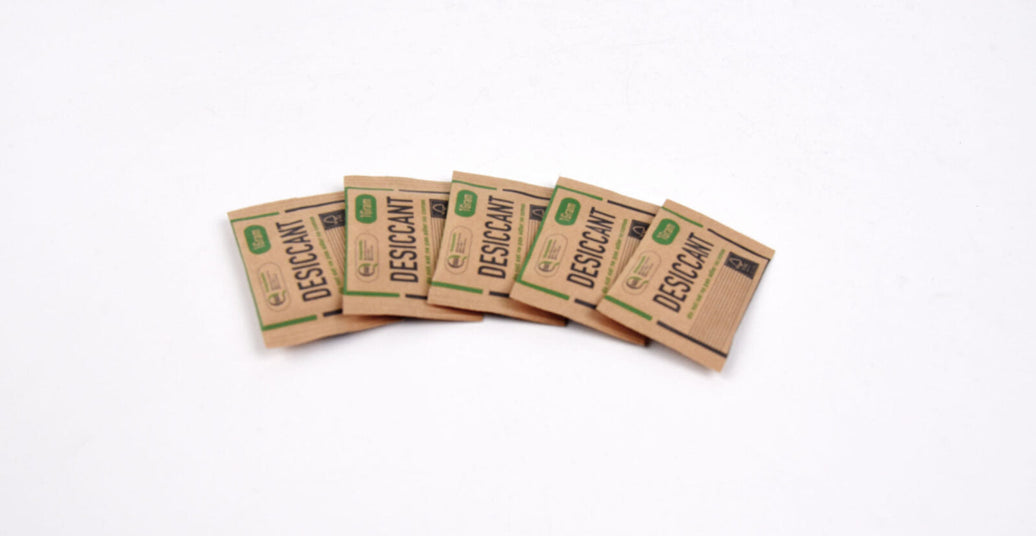
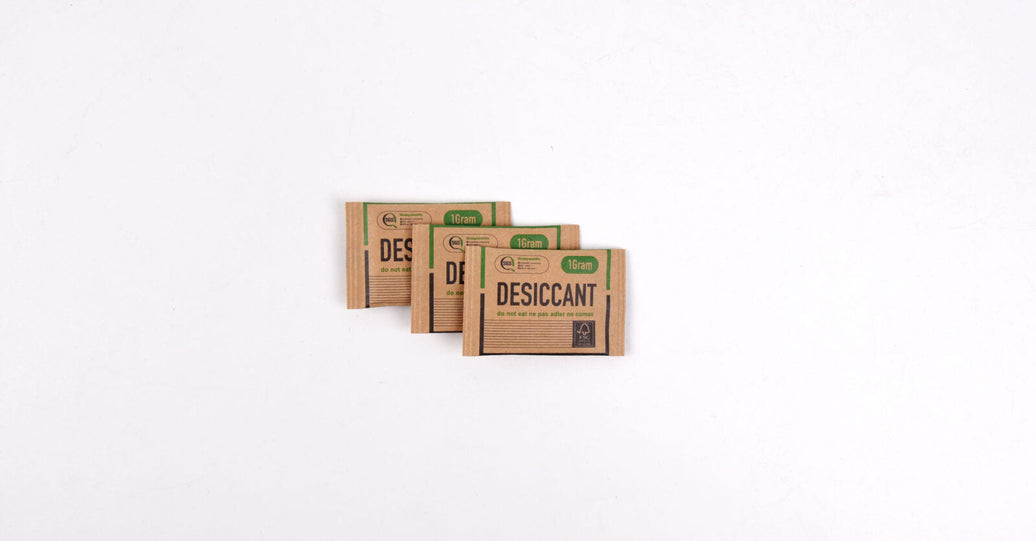
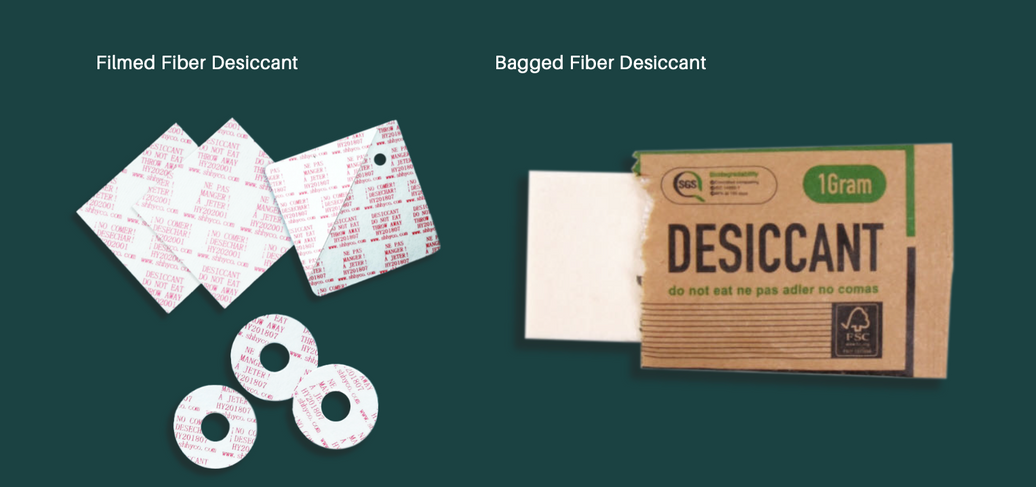
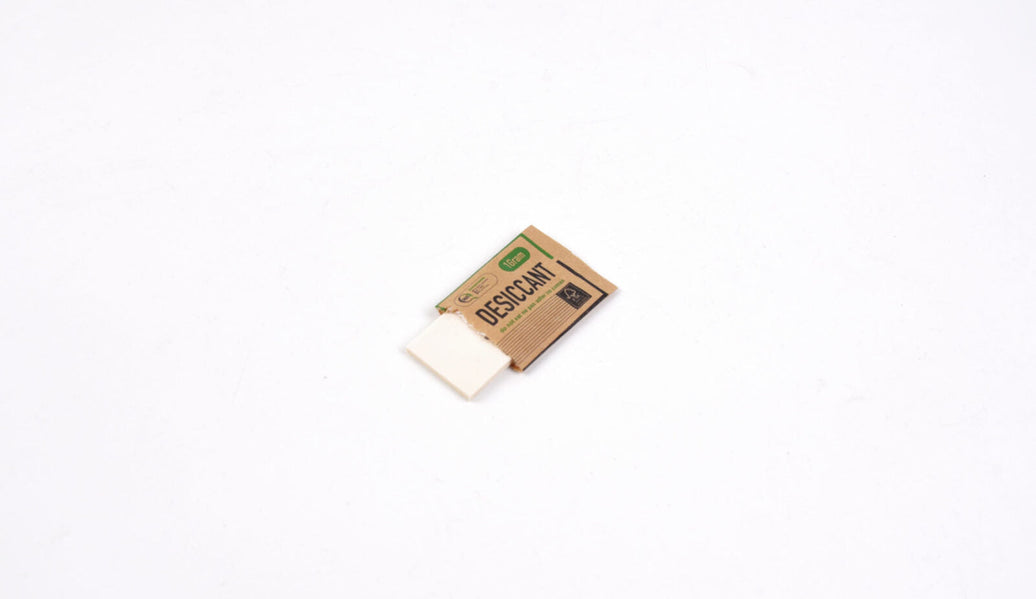
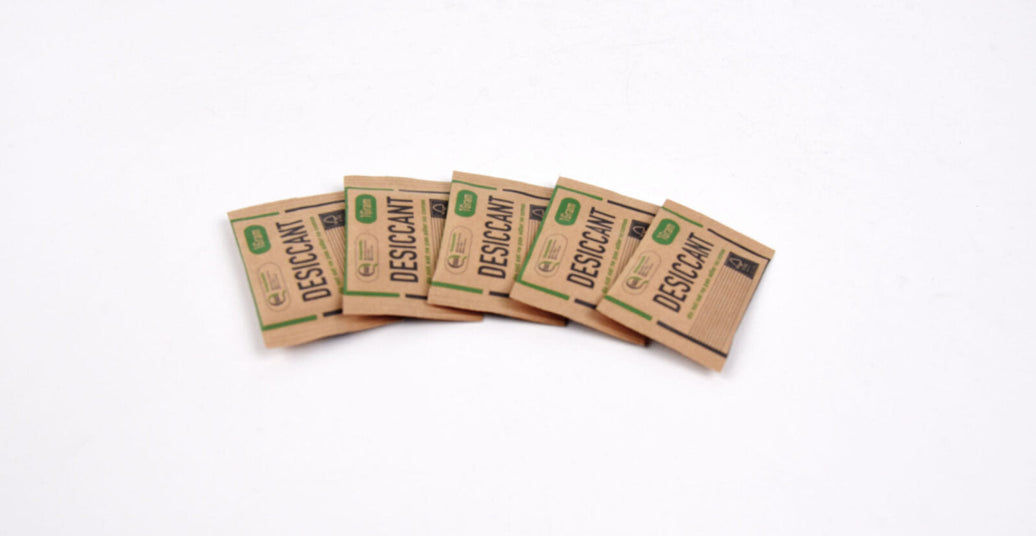
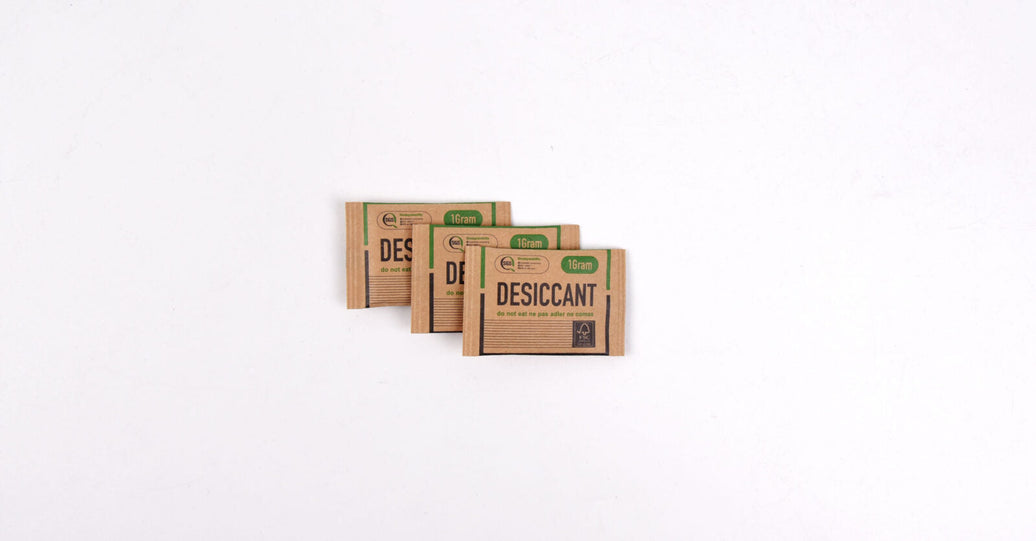
The instinct behind the reuse question is sound: single-use silica in a plastic-film packet persists after one use. But the fix that scales is changing what the single-use unit is made of. ATMOSIScience fiber desiccant is plant-based, and its pouch films carry ASTM D6400 and EN 13432 compostability certification — the sachet is designed to be spent once and returned to soil, not landfilled as plastic. Which certificates actually apply, and where home versus industrial composting draws the line, is covered in the compostability certification guide, and the material taxonomy in Natural Desiccants Compared.
Honest note: fiber desiccant is not the rechargeable option
One-way fiber desiccant is engineered for a single service life and an end-of-life in compost — ATMOSIScience does not position it for oven regeneration. If a buyer's use case is a closed loop with in-house regeneration, reusable silica in durable canisters is the right tool and the team will say so. Matching tool to job — not maximal claims — is the difference between a desiccant supplier and a desiccant partner.
FAQ
How do you recharge silica gel?
Loose beads: spread thin and hold at a low oven temperature for several hours until indicating beads shift color back. Sachets in paper or Tyvek-class packets tolerate this poorly — packet degradation, not bead chemistry, usually ends their reuse life.
How many times can silica gel be reused?
A limited number of cycles — capacity and packet integrity decline each round. Treat regenerated silica as reduced-capacity and oversize accordingly.
Can clay or calcium chloride desiccants be recharged?
Clay partially, with the same caveats. Calcium chloride cannot — it deliquesces into brine as it absorbs; once liquid, it is spent.
Is single-use desiccant wasteful?
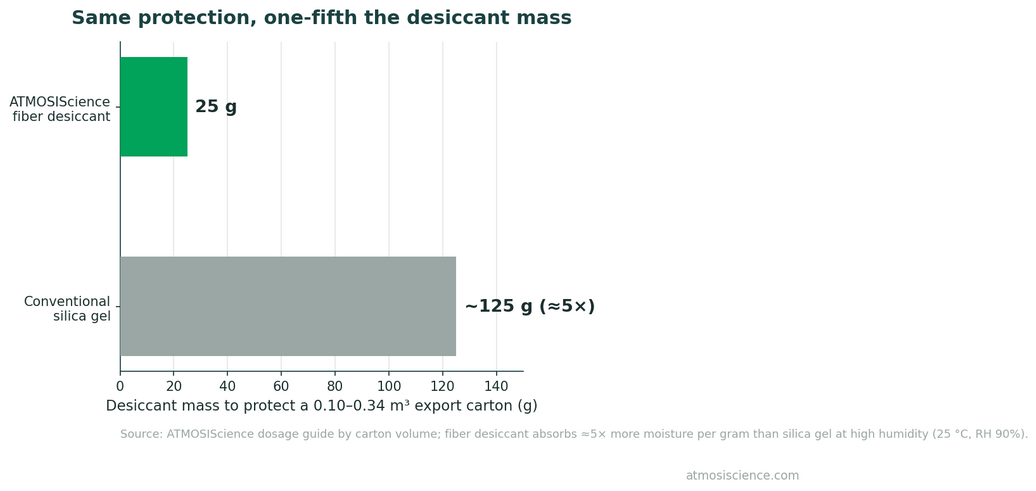
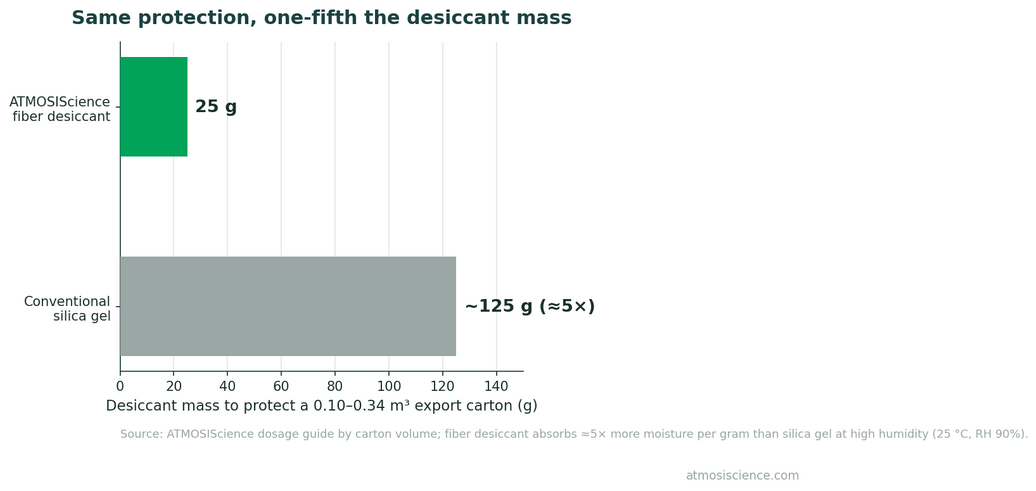
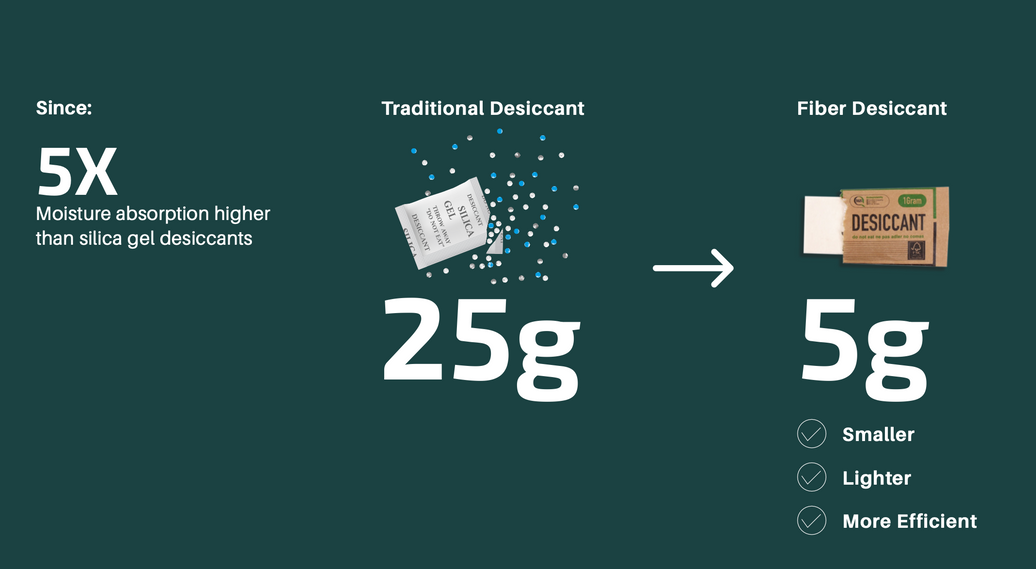
Single-use plastic-packaged desiccant, arguably. A compostable-certified fiber unit is consumed, not wasted — and per-package material drops further when dosage is right-sized (18 g fiber class replacing 30 g silica class per carton).
Run the reuse-vs-replace math for your line
Send your current desiccant spend, format and volumes. The team returns a side-by-side: regeneration loop cost vs right-sized compostable single-use — with the assumptions shown, so procurement can check every line.