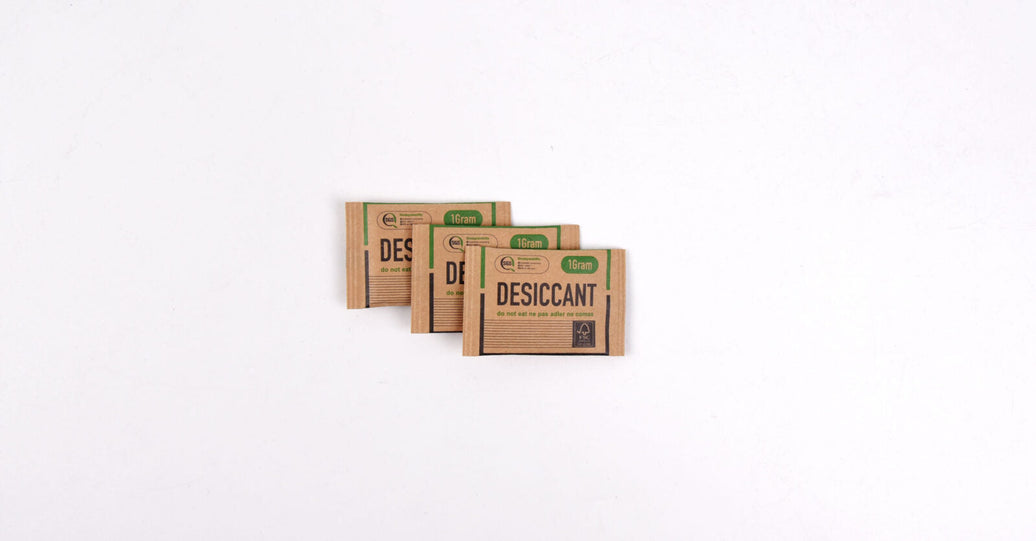
Quick answer: Place desiccant inside the sealed moisture barrier, in the headspace, not buried in product and not touching a wet surface. A desiccant only protects the air it shares a sealed volume with. Outside the barrier — taped to a box, dropped in an outer shipper around sealed bags — it dries the warehouse, not the product. Placement plus seal quality decides more performance than the desiccant brand does.
“Where should the desiccant actually go?” is one of the most-asked moisture questions on packaging forums, and misplacement is one of the most common root causes ATMOSIScience finds when a customer reports that a desiccant “did nothing.” The physics is simple; the execution on real lines is where programs fail.
The one rule everything follows
A desiccant equilibrates with the air inside its sealed enclosure. So the question is never “where in the box” — it is “which sealed volume needs drying?” Identify the barrier that actually blocks water vapor (the foil pouch, the lined tub, the sealed pail — not the corrugated carton), and the desiccant goes inside that barrier. Everything else is fine-tuning.

Placement by package type
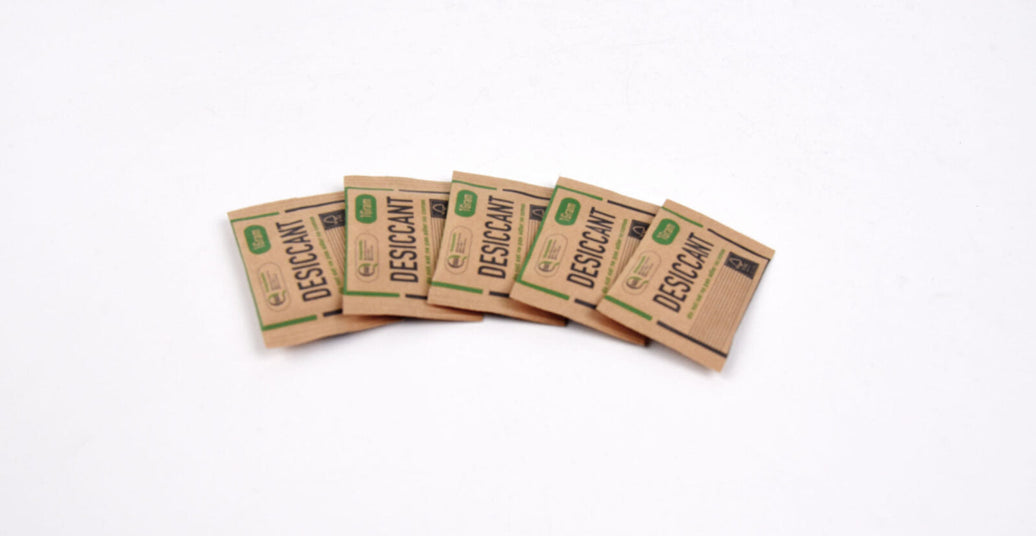
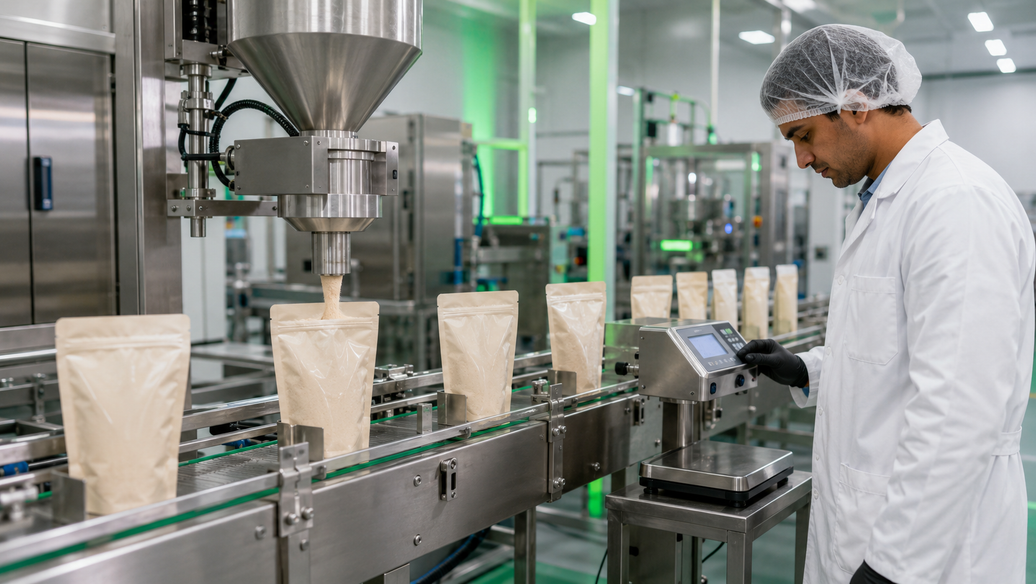
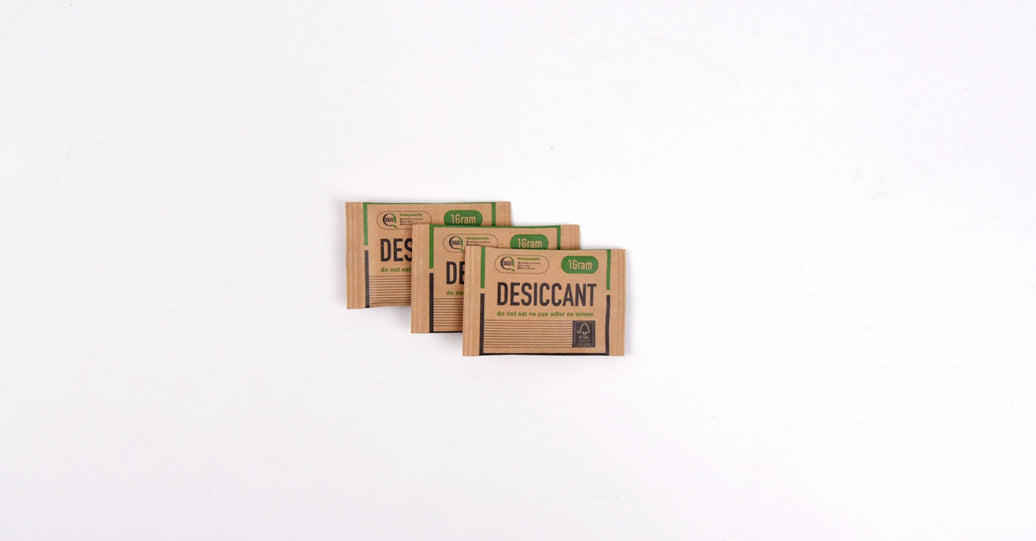
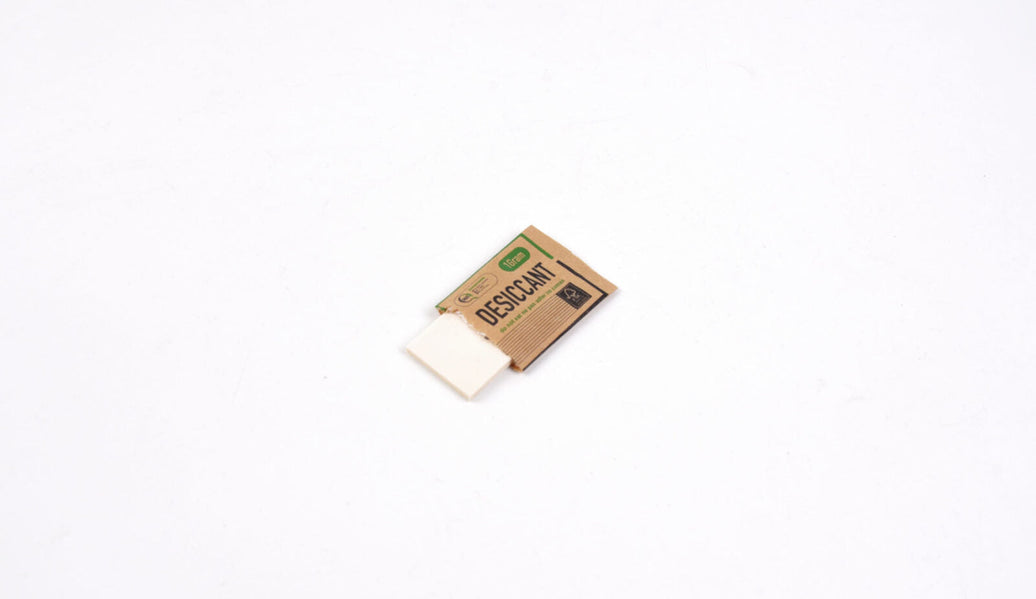
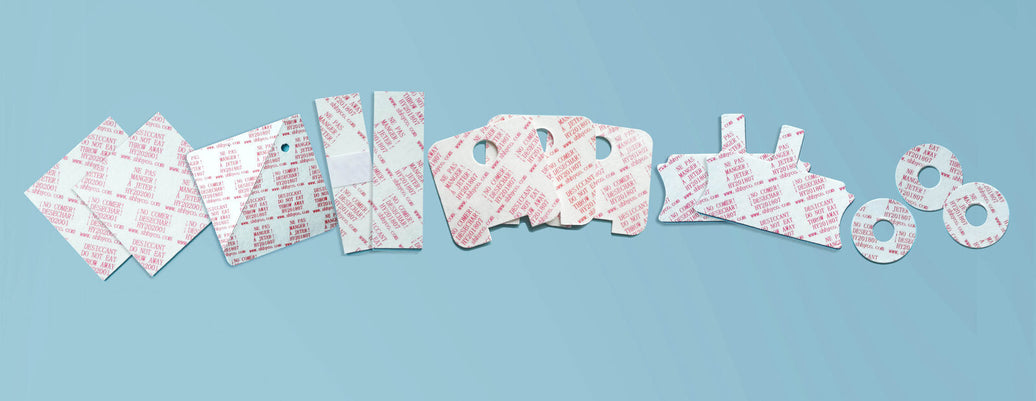
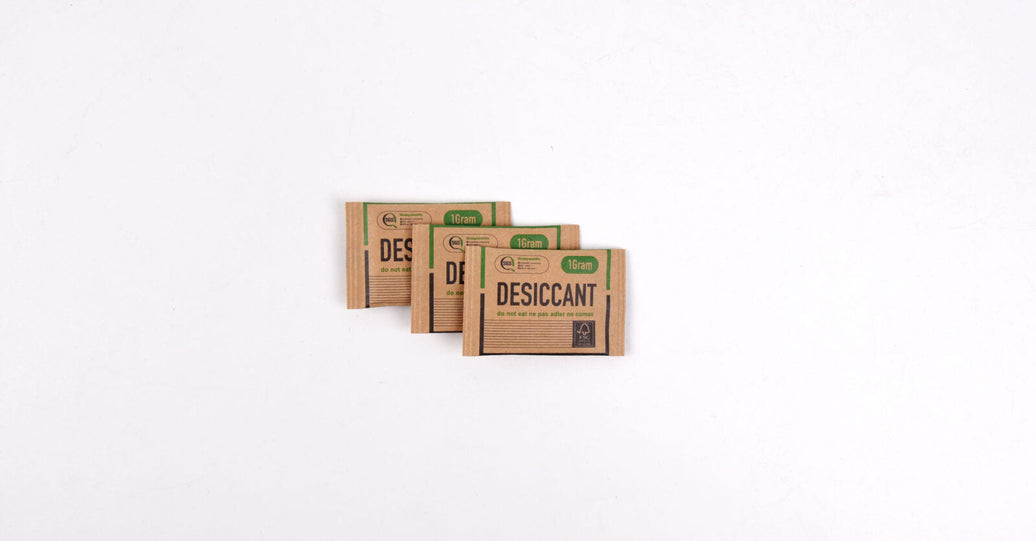
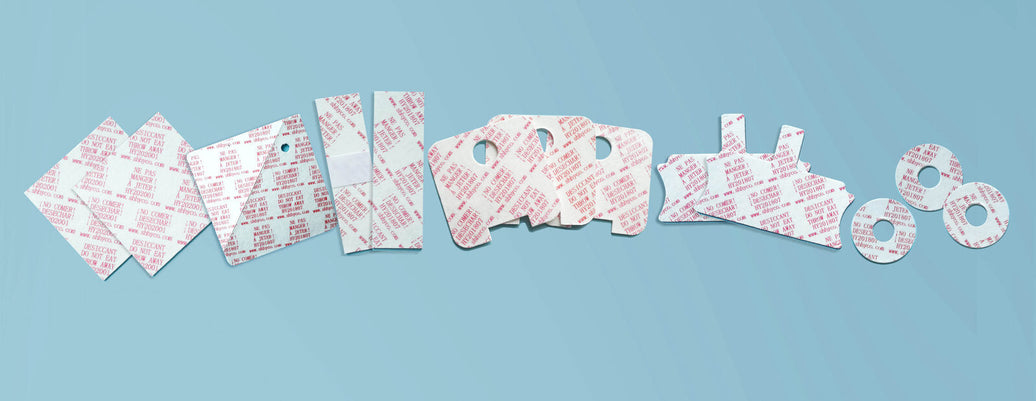
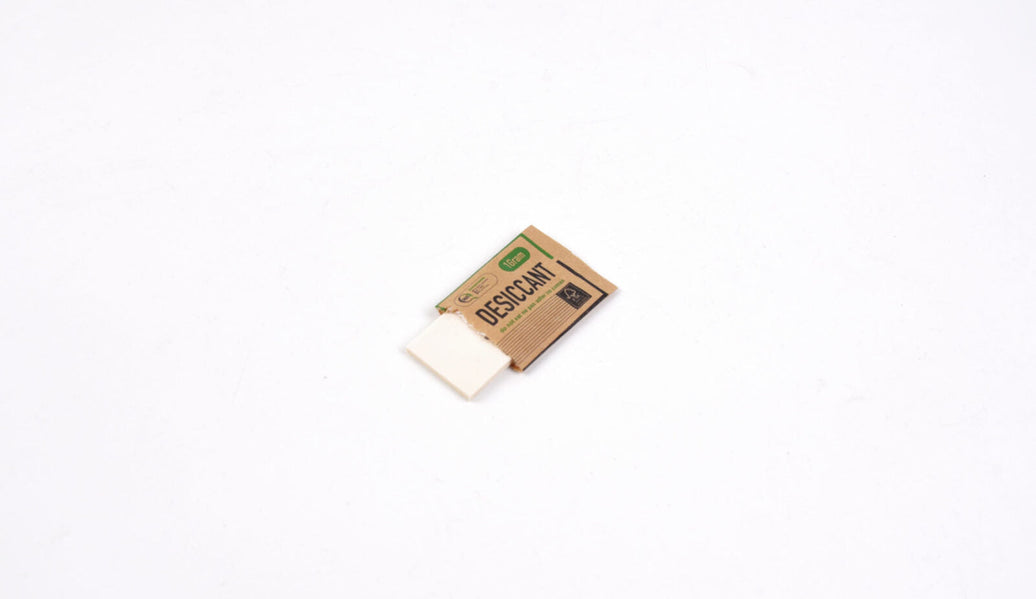
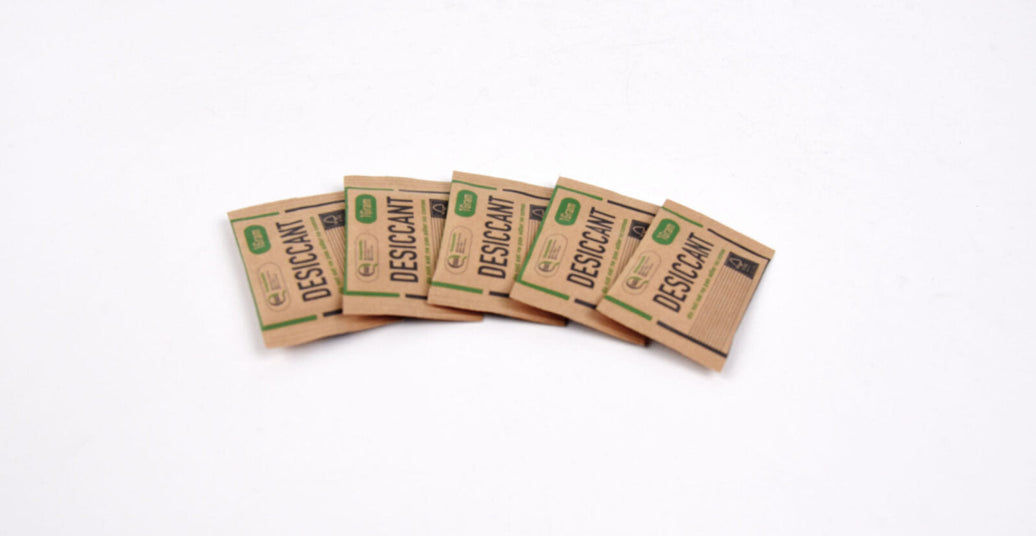
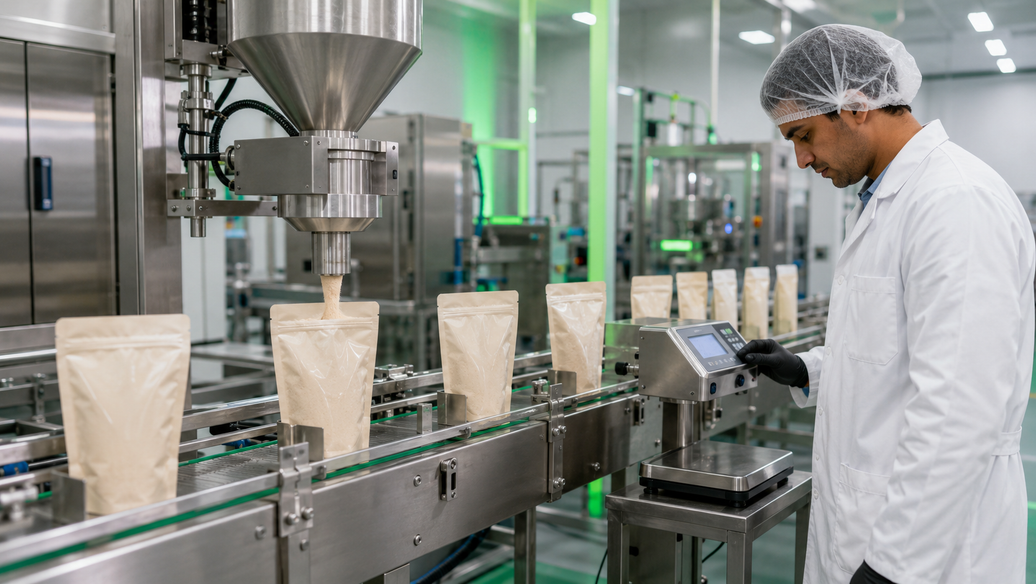
Stand-up pouches and bags: in the headspace above the fill, added just before sealing. For powders, a sachet resting on top of the fill is standard; a film desiccant card can also be inserted flat against the inner wall so it never gets scooped out with product.
Jars, tubs and canisters: under the lid is the working zone. A film card sized to the lid diameter, or a cap-integrated insert, keeps the desiccant in the headspace across hundreds of opening cycles and out of the customer's scoop path — the format logic covered in the format chooser.
Bottles (tablets, capsules, effervescents): dropped-in sachet or cap insert. Cap inserts survive consumer handling better because they cannot be discarded on first opening.
Drums and pails with liners: inside the liner, on top of the product, before the liner is tied or heat-sealed. Desiccant between liner and drum wall protects nothing.
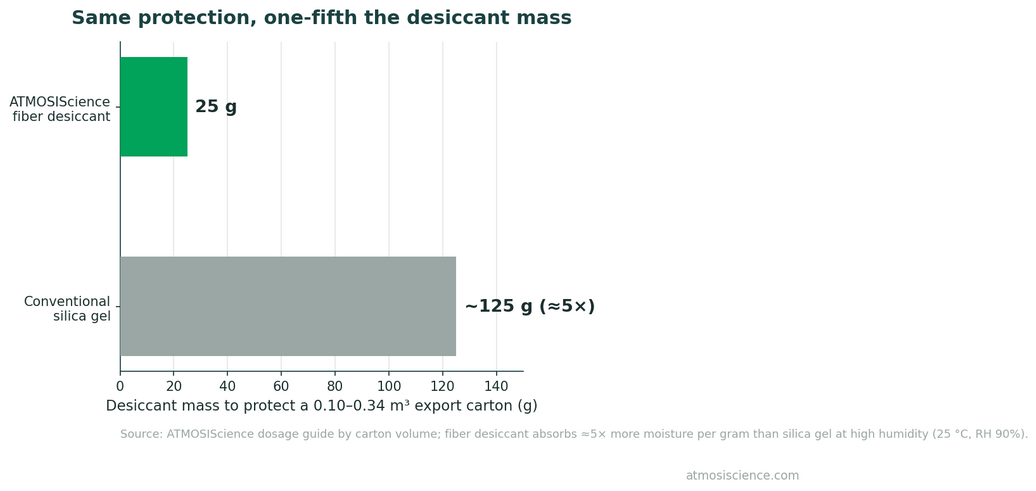
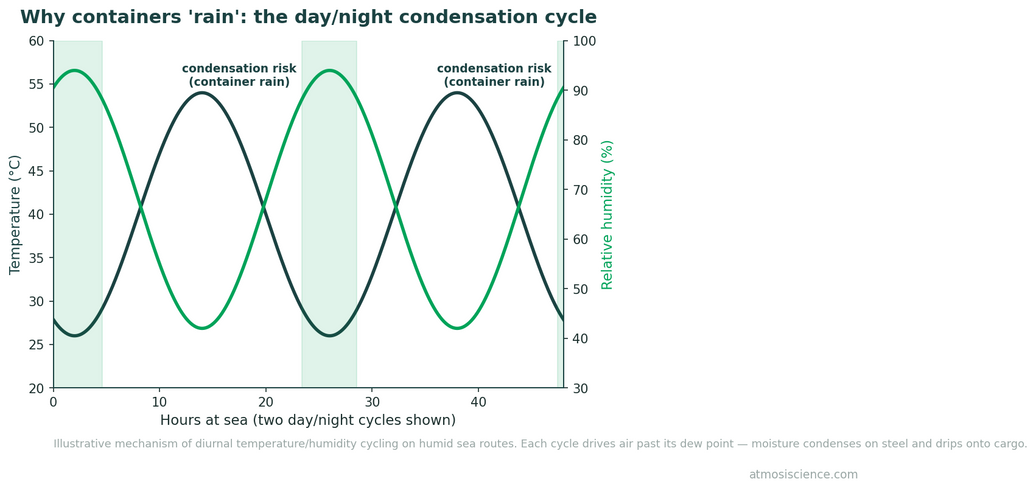
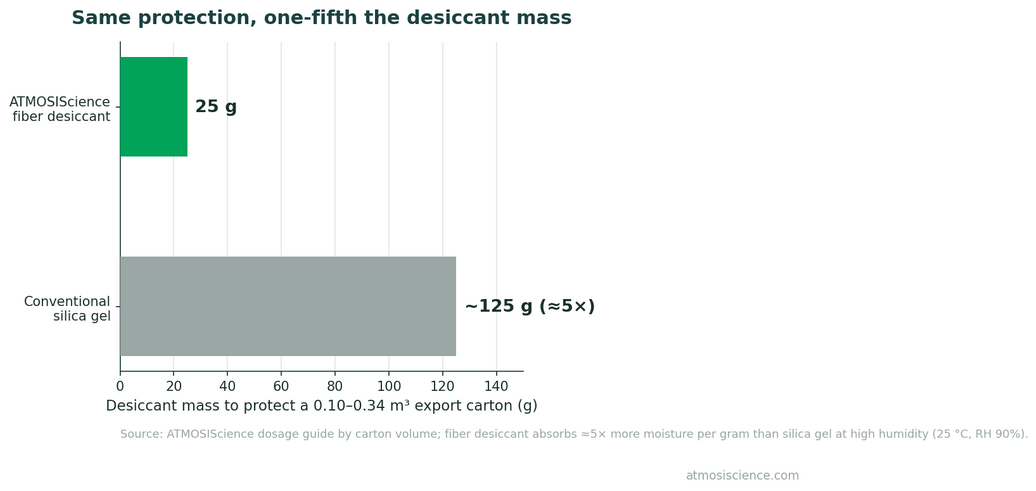
Export cartons and containers: this is a different job — protecting goods from container rain requires container-grade units placed with airflow access, sized by route and season as covered in the sea-freight sizing guide. Carton-level desiccant complements, never replaces, in-pack protection.
Why placement fails on real lines
Failure 1 — outside the barrier. The desiccant sits between the sealed bag and the carton. It saturates on warehouse air within days and the product never benefits.
Failure 2 — buried in product. A sachet deep in powder only dries the powder it touches; the headspace above stays humid, and every opening exchanges that headspace with room air. Headspace placement wins because moisture migrates through air far faster than through a packed bed.
Failure 3 — added too early. Sachets staged open on the line for a shift have already spent part of their capacity before sealing. Master bags should stay sealed until the hopper needs refilling — the same discipline covered in the pre-use storage rules (see the FAQ below).
Failure 4 — right place, wrong seal. If the zipper or heat seal leaks, ingress outruns any reasonably sized desiccant. Diagnosing that pattern is covered in Desiccant Not Working? 7 Failure Modes.

How many, and how big?
Placement answers “where”; dosing answers “how much.” Dosage scales with sealed volume, film permeability and shelf-life target — the working numbers are in the dosage-by-volume guide. As a placement principle: one correctly sized unit in the headspace beats several small units scattered through the fill.
FAQ
Should desiccant touch the product?
Contact is acceptable for dry products when the desiccant carries food-contact documentation (FDA 21 CFR 175.300 class). Avoid contact with wet or oily surfaces, which can blind the sachet face and waste capacity.
Top of the package or bottom?
Headspace — which in practice means on top of the fill or against the upper inner wall. Moisture equalizes through air quickly, and top placement also keeps sachets out of dispensing scoops.
Can one big desiccant in the shipper protect all inner units?
Only if the inner units are not individually sealed. Sealed inner bags isolate their own air volume — each needs its own protection.
Does placement matter for two-way humidity control?
Yes, same rule: a two-way pack holds its target band only within the sealed volume it lives in.
Send your package layout for a placement review
Share the package construction (film, closure, fill, headspace) and the team will return a marked-up placement and sizing recommendation — typically within one business day.