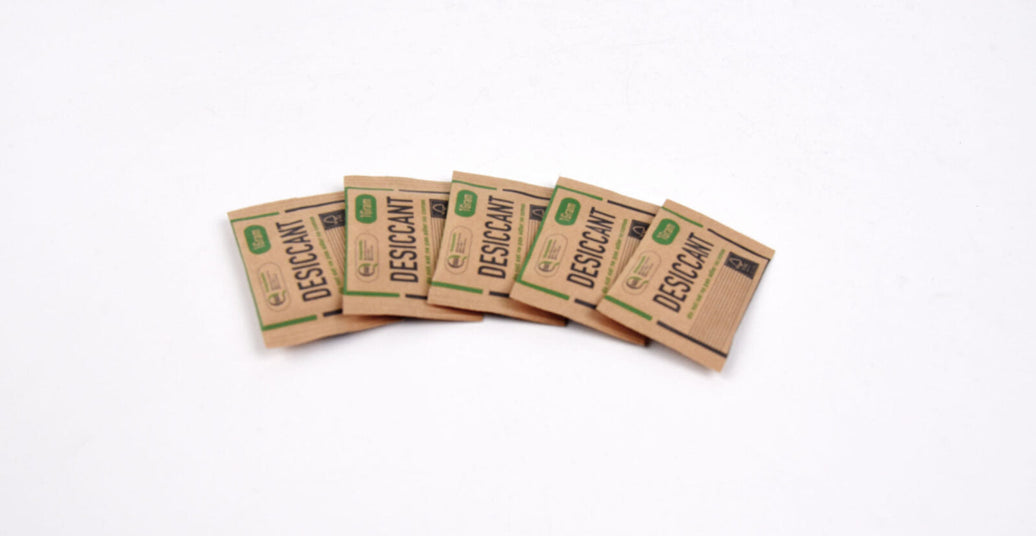
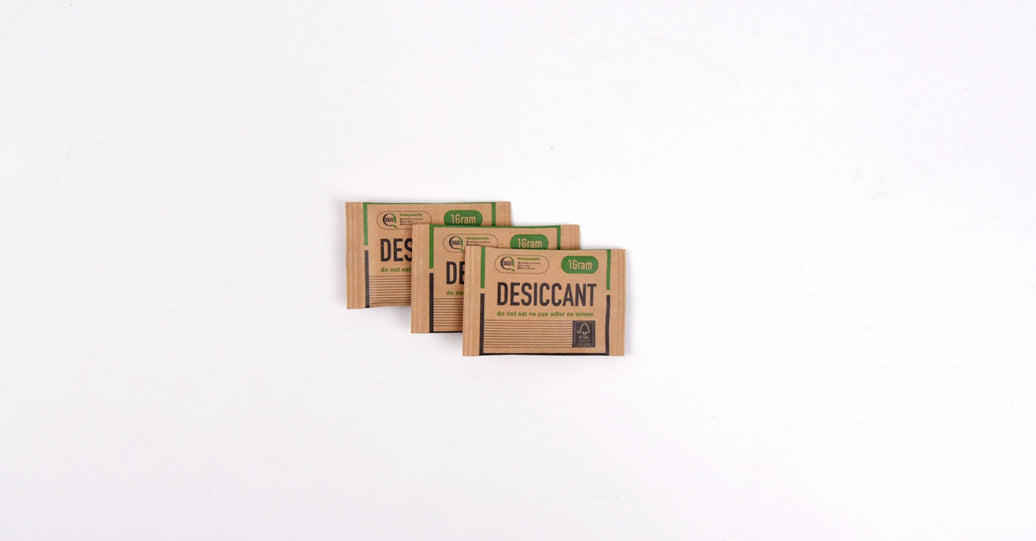
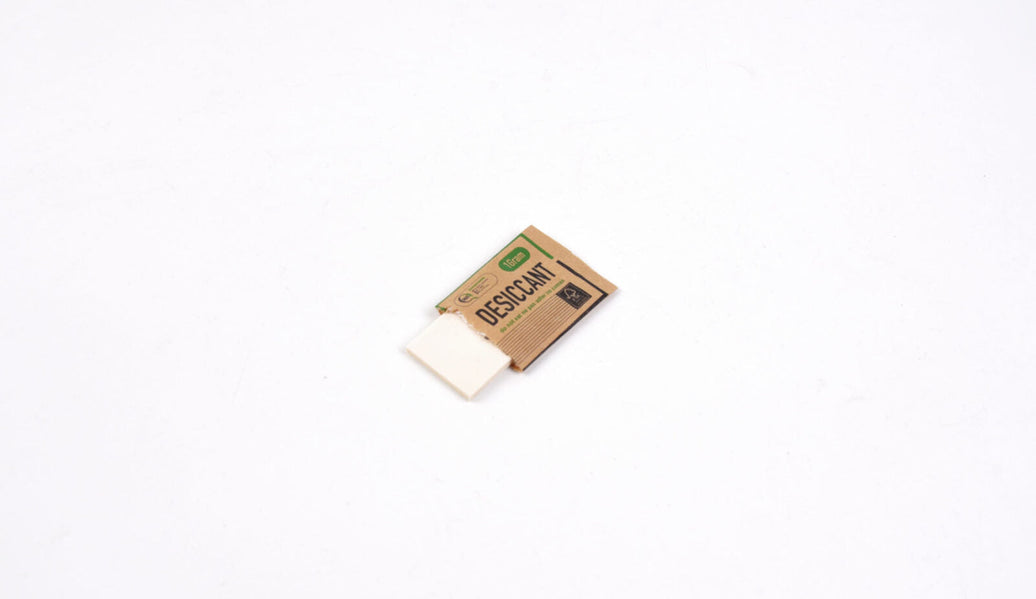
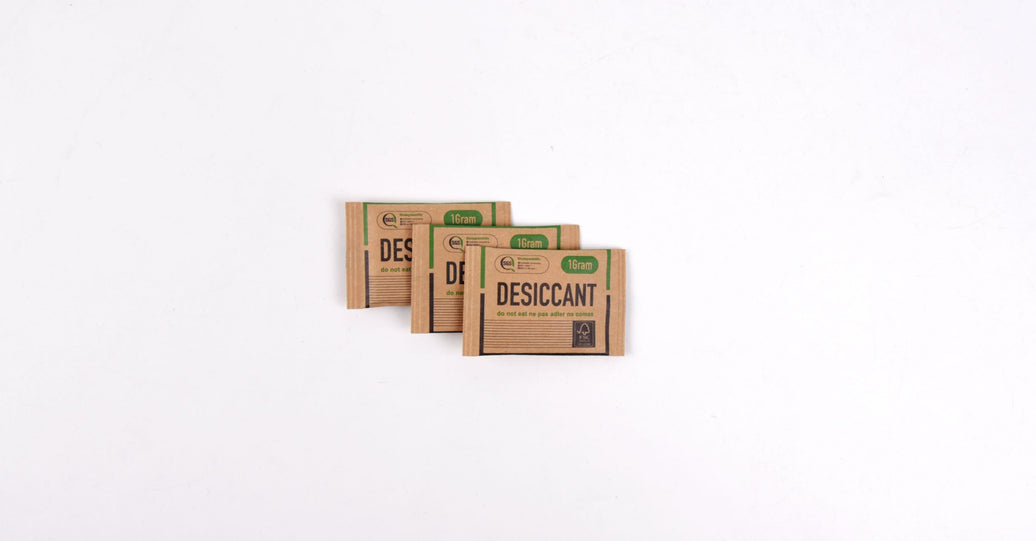
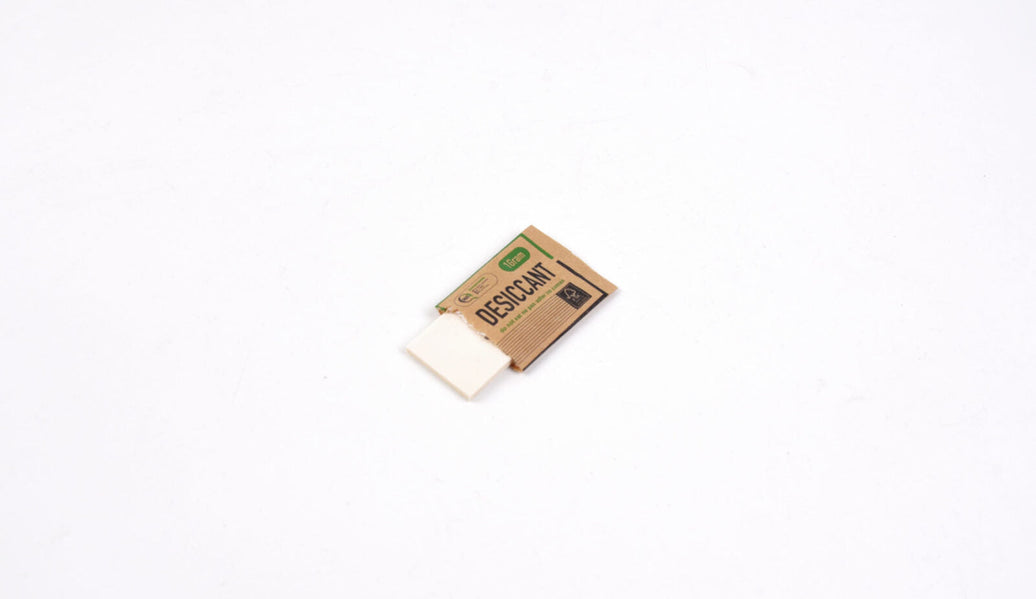
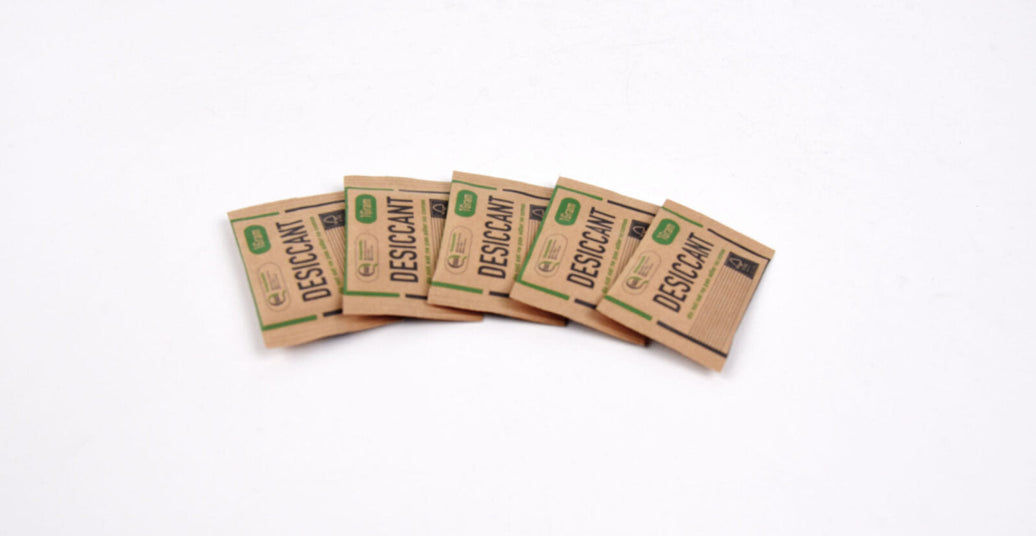
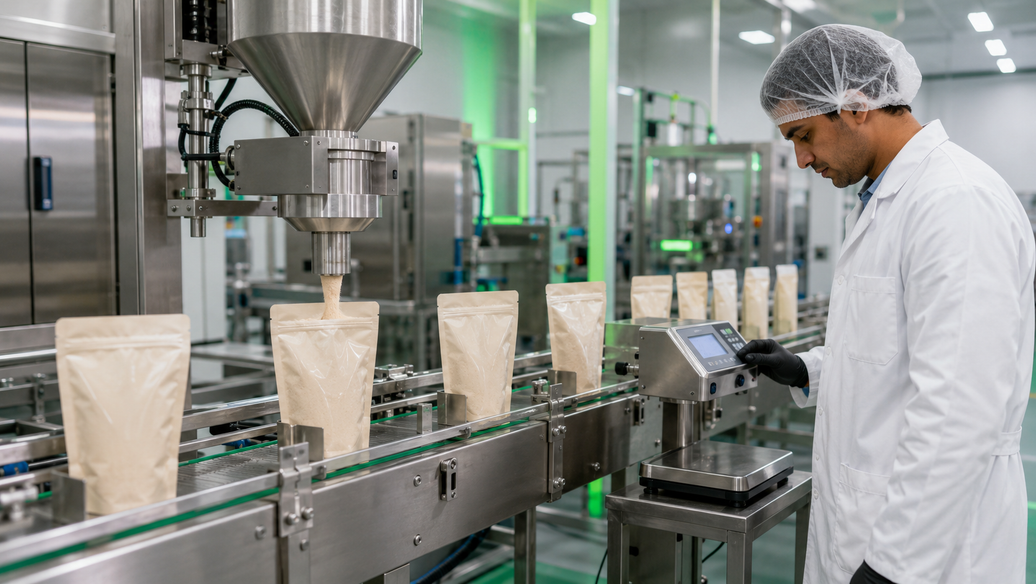
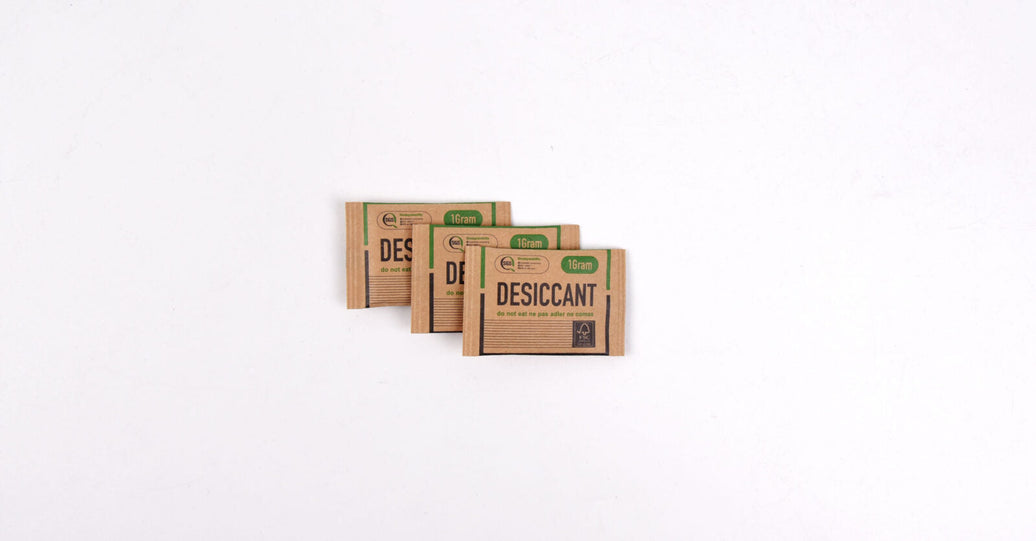
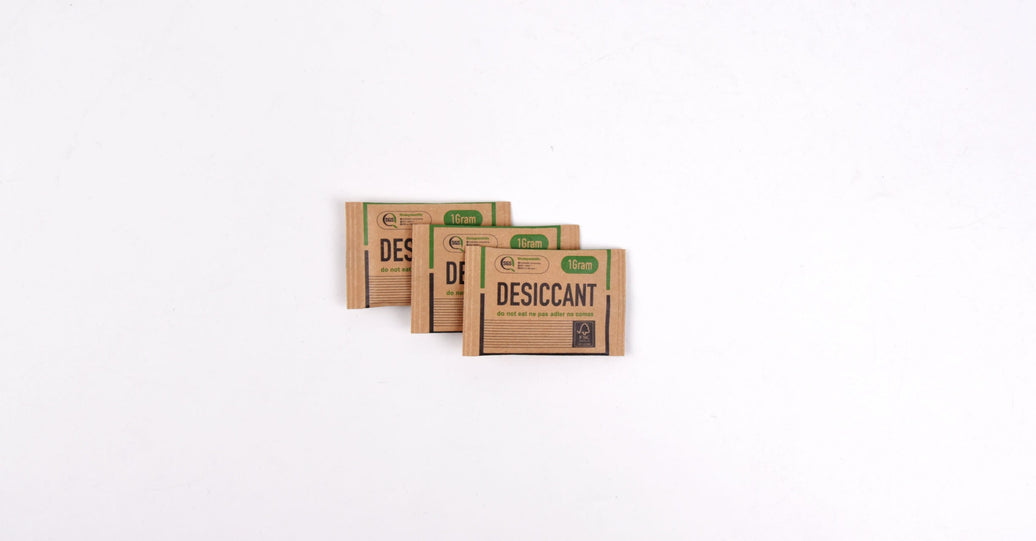
Quick answer: Ask for MOQ per SKU (not per order), the lead time for a repeat order versus a first custom order, and whether stock is held locally. Custom size or printed wrap usually adds tooling and artwork approval time on top of production. ATMOSIScience fiber pouches run from 1 g to 1,000 g per pouch and are made to the size you specify, so the MOQ conversation should start with your pack geometry, not a catalogue part number.
Desiccant is almost always the last line on a packaging bill of materials and the first item to stall a fill. It costs a fraction of the film, the carton or the closure, so it gets specified late, ordered late, and reordered only when a warehouse count comes up short. Procurement teams then discover that the part they treated as a commodity has a minimum order quantity, an artwork approval step and a six-week production window.
The questions below are the ones that decide whether a desiccant supply keeps a line running. They come from the same RFQ language buyers use across supplement, food, pharma and electronics packaging: What is your MOQ per SKU? What is the standard lead time? Can you support urgent orders? Do you hold local stock?

1. MOQ per SKU, not MOQ per order
A single MOQ figure means very little on its own. The number that matters is how the minimum is applied:
- Per SKU — each distinct size, wrap material or print counts separately. Running three pouch weights means three minimums.
- Per order — the minimum applies to the combined order, so several sizes can share one minimum. This is the more forgiving structure for brands with a wide format range.
- Per print or per die — a printed wrap or a die-cut shape carries its own minimum, independent of the desiccant weight inside it.
Ask which of the three applies before comparing unit prices between suppliers. A lower unit price against a per-SKU minimum can cost more in committed inventory than a higher price against a per-order minimum.
2. Separate first-order lead time from repeat lead time
These are two different numbers and quoting them as one is the most common source of schedule surprise. A first order for a custom format carries steps a repeat order does not:
- Size and shape confirmation against the pack drawing
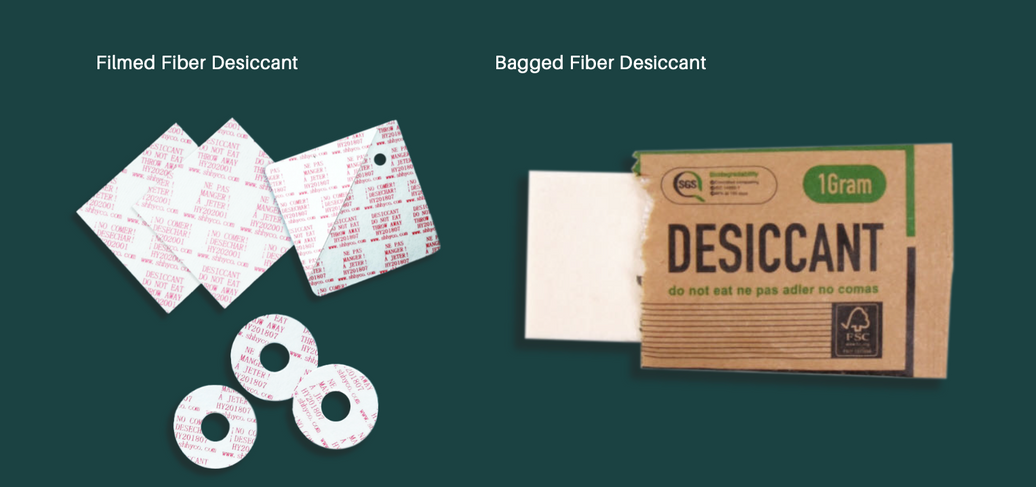
- Wrap material selection — paper-wrapped, laminated, printed
- Artwork proofing and sign-off if the wrap is printed
- Die tooling for non-rectangular shapes
- Documentation assembly — specification sheet, food-contact declaration, certificates of analysis
Repeat orders against an approved specification skip all of that. When a supplier quotes “four to six weeks”, establish which scenario that covers. For a launch schedule, the documentation step matters as much as production: a QA team that cannot close a supplier file will hold the release even when the desiccant is physically on the dock. The supplier qualification document pack lists what to request in parallel with the first purchase order rather than after it.
3. Ask what a sample order actually is
Sample quantities usually sit outside the MOQ structure, and that creates a trap. A hand-assembled sample can differ from production output in seal quality, wrap tension and dimensional tolerance. Two things to confirm:
- Whether samples come from a production run or are made to order
- Whether the sample specification is the one that will be locked for production
Run the sample against your own worst case rather than a lab jar. The worst-case sample test protocol covers the conditions to hold and the data to record so the evaluation is defensible later.
4. Stock strategy: who holds the buffer
Three arrangements cover most B2B desiccant supply:
| Arrangement | Who carries inventory | Best when |
|---|---|---|
| Order to order | You | Stable, predictable volume |
| Blanket PO with scheduled releases | Supplier, against your commitment | Known annual volume, uneven monthly draw |
| Local or 3PL-held stock | Supplier or your 3PL | Short-notice co-packing, seasonal peaks |
A blanket purchase order with scheduled releases is usually the practical answer for a growing brand: it clears the MOQ once, then draws against it. Confirm how long the supplier holds released-but-uncollected stock, and whether the desiccant has a storage requirement of its own. It does — unopened desiccant left in ambient warehouse air loses capacity before it ever reaches a pack. Storage and handling before use sets out the conditions.
5. Volume and freight change the arithmetic
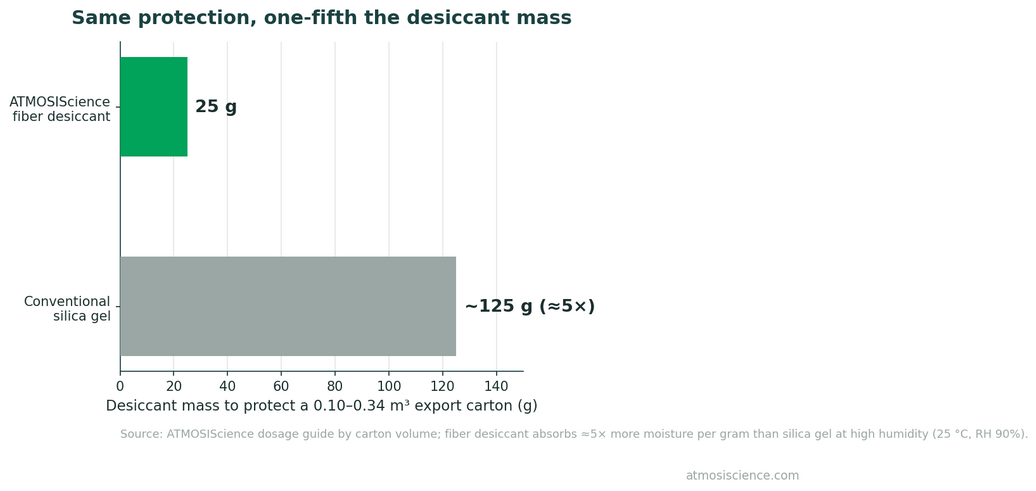
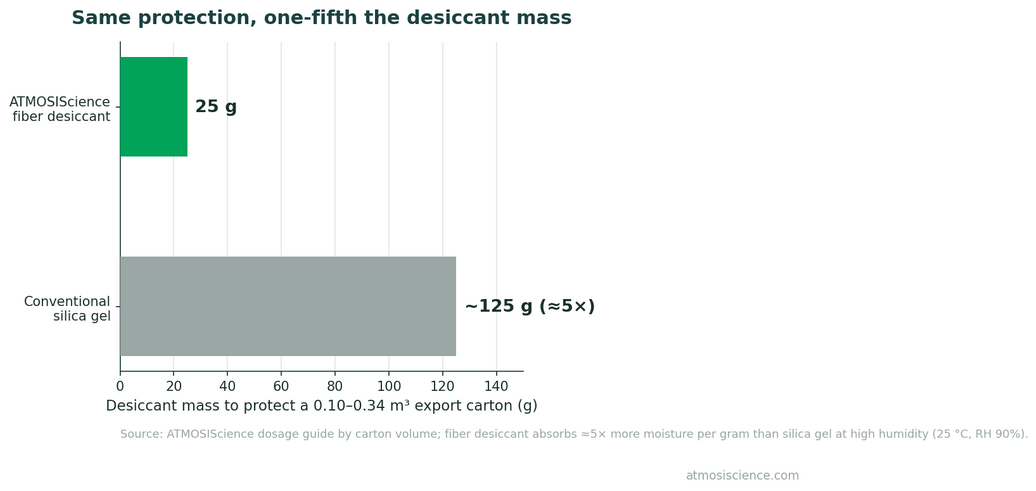
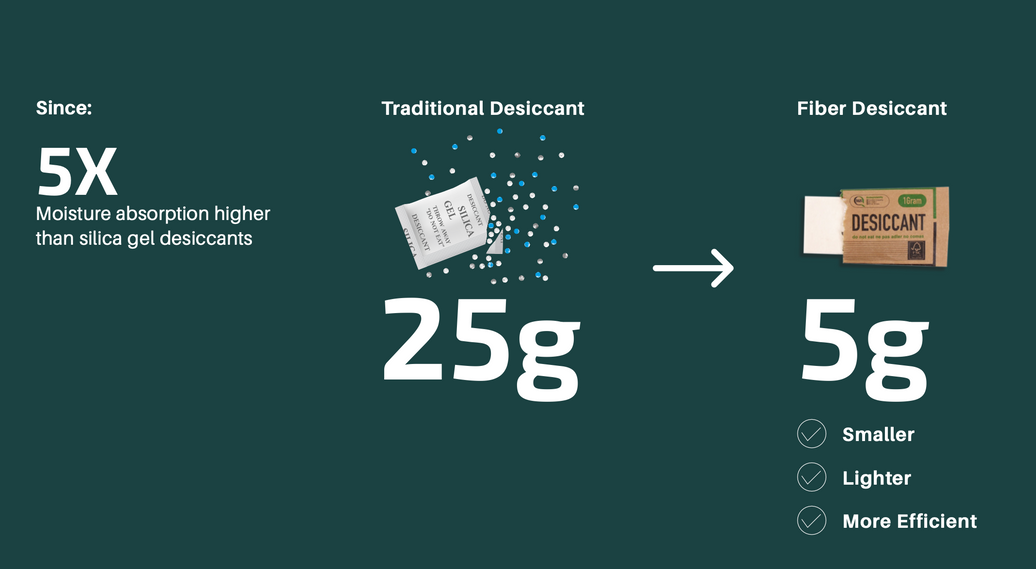
MOQ is normally quoted in pieces, but the constraint that bites is often volume, not piece count. A minimum expressed in pieces converts into pallet positions, container space and warehouse racking. Desiccant type drives that conversion directly, because different chemistries need different masses to do the same job.

Fiber desiccant adsorbs more than 35% of its own weight at RH 50% and more than 70% at RH 90% (25°C), and saturated capacity exceeds 100% of its own weight. Because the mass per protected unit is lower, the same minimum order occupies less storage and less freight. For teams comparing quotes across chemistries, the silica gel equivalency calculation converts a like-for-like piece count into a like-for-like protection level.
The RFQ block to paste into your next enquiry
- Is MOQ applied per SKU, per order, or per print/die?
- What is the lead time for (a) a first custom order and (b) a repeat against an approved specification?
- Which documents ship with the first order, and which are available before the order?
- Are samples production output or made to order, and is the sample specification the locked one?
- Do you support a blanket PO with scheduled releases? For how long is released stock held?
- Is stock held locally or at a 3PL, and what is the call-off notice period?
- What is the packed volume per thousand units, and what are the pallet and carton dimensions?
- What capacity is reserved for monthly repeat orders, and what is the expedite path?
Frequently asked questions
Is there a standard desiccant MOQ across the industry?
No. Minimums vary with format, wrap material and whether the wrap is printed. A plain paper-wrapped pouch in a standard weight generally carries the lowest minimum; a printed, die-cut film card carries the highest because of tooling and artwork setup.
Can a desiccant order be expedited?
Repeat orders against an approved specification can usually be accelerated, because the qualification and artwork steps are already closed. First custom orders are harder to compress — the approval steps, not production, set the floor.
Does a custom pouch size raise the minimum?
Fiber pouches are produced from 1 g to 1,000 g to the specified size, so a custom weight is normal rather than exceptional. What raises the minimum is a custom shape requiring a die, or a printed wrap requiring plates.
How much safety stock is reasonable?
Cover the full replenishment lead time plus your own qualification window for an incoming lot. If incoming lots are checked against a certificate of analysis before release, that inspection time belongs in the buffer. Reading a desiccant COA covers what that check involves.
What happens if the desiccant arrives but the paperwork does not?
In regulated categories the shipment is effectively unusable until the file is complete. Treat documentation as part of the delivery, with the same due date as the goods.
Get MOQ, lead time and documentation in one reply
Send the pack format and monthly volume. ATMOSIScience returns minimum order quantity, lead time for first and repeat orders, and the document list — together, not in stages.
Prefer email? info@atmosiscience.com