“What’s the silica-gel equivalency?” is one of the first questions a packaging engineer asks when evaluating a switch — and rightly so. Every current spec, dosage table, and stability file is written in grams of silica. To change desiccant without re-opening all of that, a QA or packaging team needs to convert the existing silica dosage into the new format. This guide explains how equivalency actually works, why it is not one fixed number, and how to convert your dosage correctly.
Start with capacity, not unit count
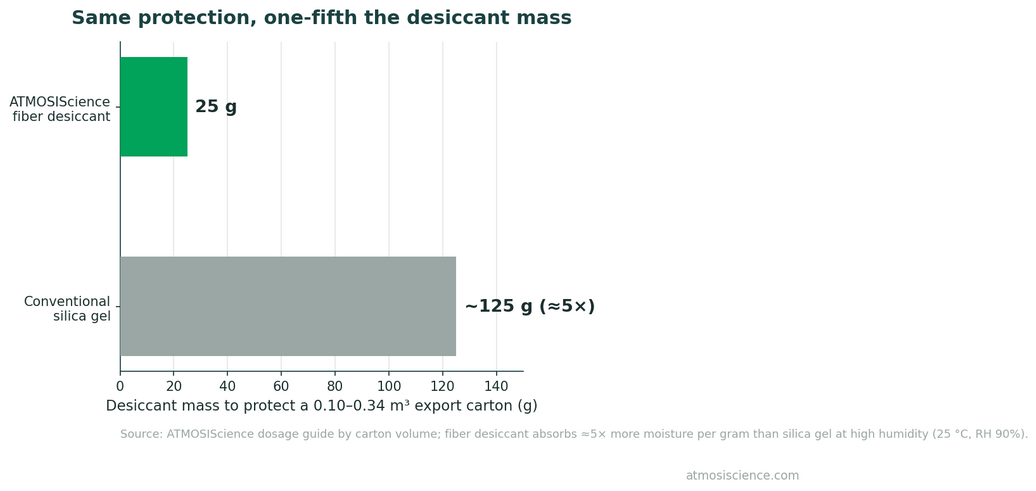
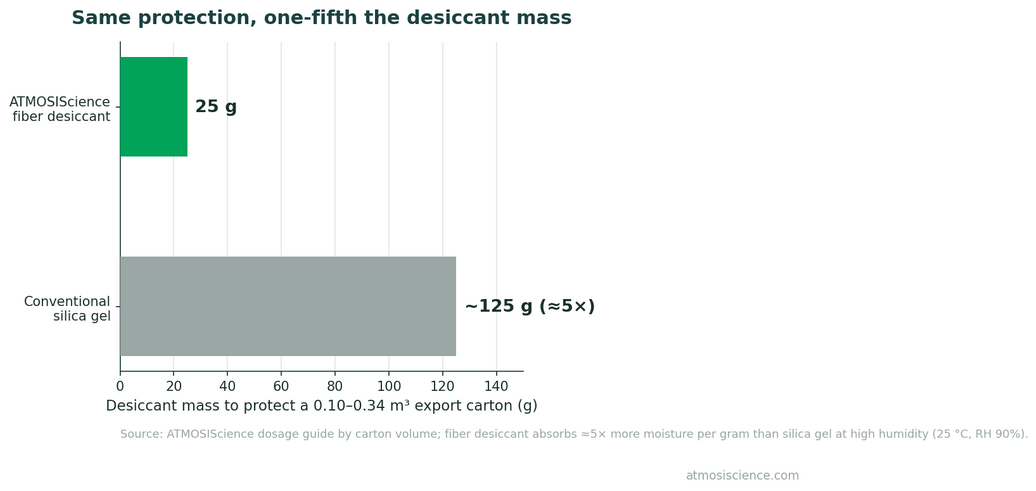
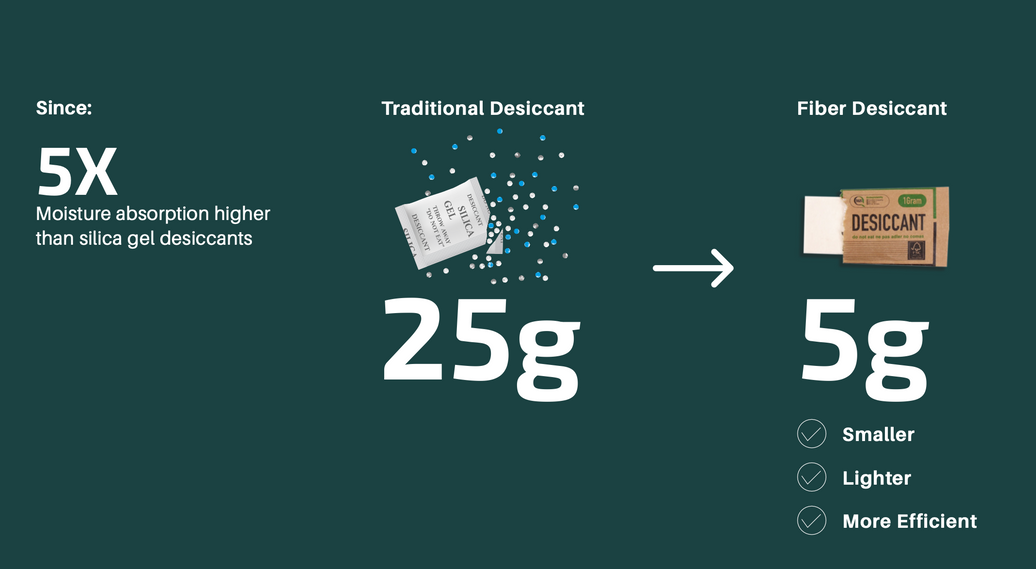
Equivalency is a capacity comparison, not a piece-for-piece swap. The meaningful figure is grams of water held per gram of desiccant at the conditions your pack actually sees. In side-by-side testing at 25°C and 90% RH, fiber desiccant absorbs over 70% of its own weight, where conventional silica gel holds roughly 30%. On that basis one gram of fiber desiccant does the moisture work of roughly two to two-and-a-half grams of silica at high humidity — and at the pack-system level, accounting for two-way control and real re-opening conditions, about 25 g of fiber desiccant protects the same standard 0.10–0.34 m³ carton that would otherwise need roughly 5x the weight in silica.
Why equivalency depends on your target RH
Here is the nuance most equivalency charts hide: the ratio changes with humidity. Silica gel is comparatively strong at low humidity — it grabs the first moisture eagerly — but its capacity plateaus as RH rises. Calcium-chloride-based fiber desiccant is the opposite: its capacity climbs steeply at high RH, exactly where hygroscopic and deliquescent powders fail. So:
At a low target RH (dry electronics, some APIs), the capacity gap narrows and silica is more competitive per gram. At a high target RH — the 60–90% conditions that cake protein, collagen, electrolytes, and sugar powders — fiber desiccant’s advantage is largest. Equivalency should therefore be computed at your product’s actual target humidity, not from a generic multiplier. The full chemistry-by-chemistry behavior is in our calcium chloride vs. silica gel vs. fiber comparison.
Worked example
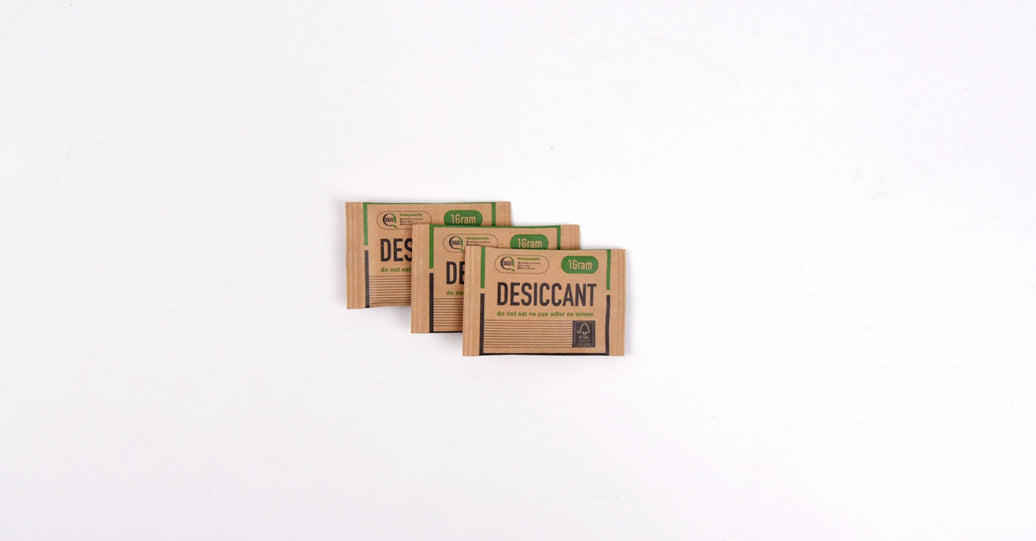
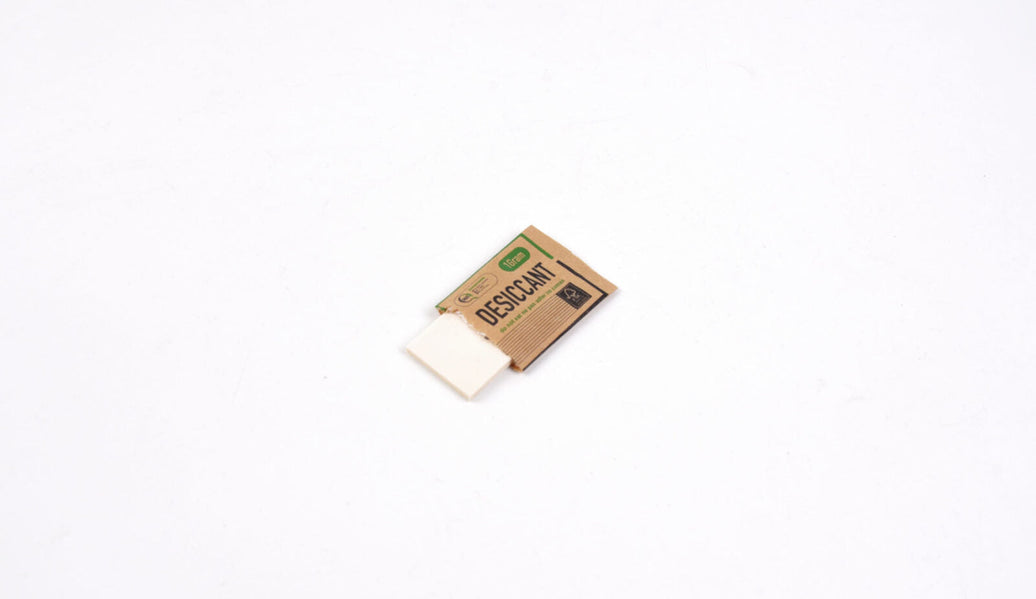
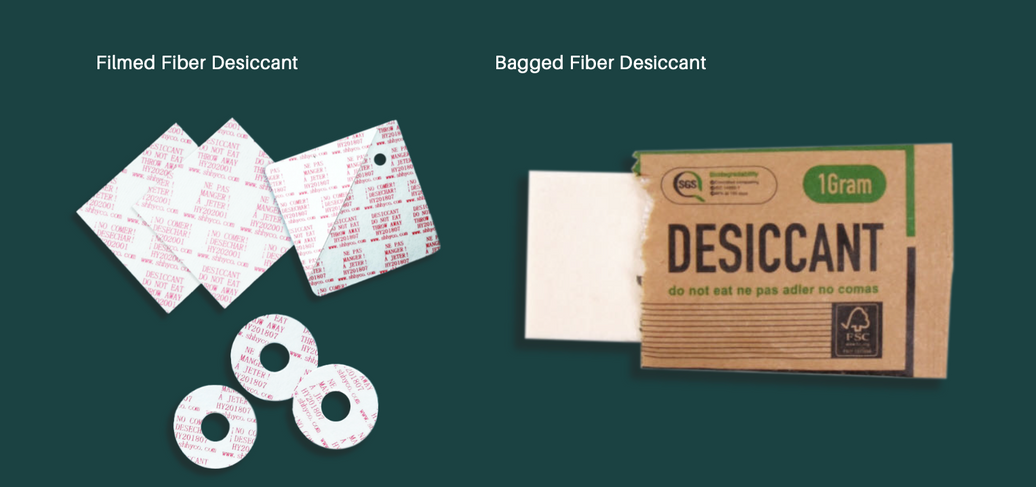
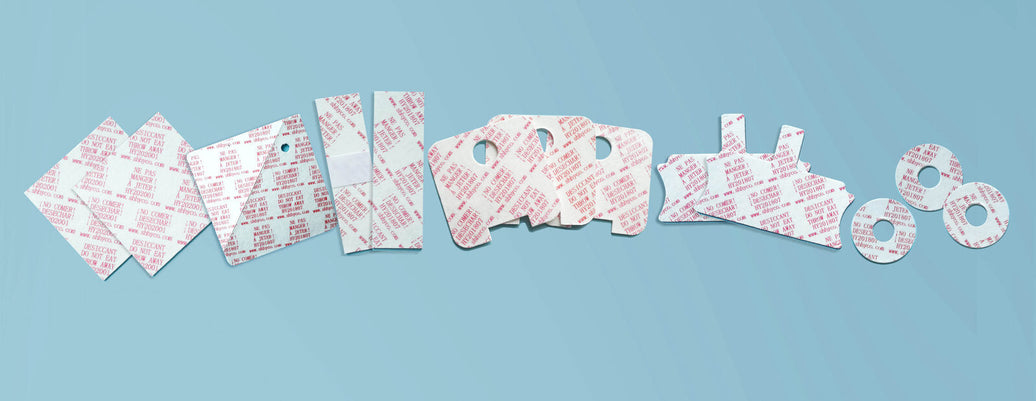
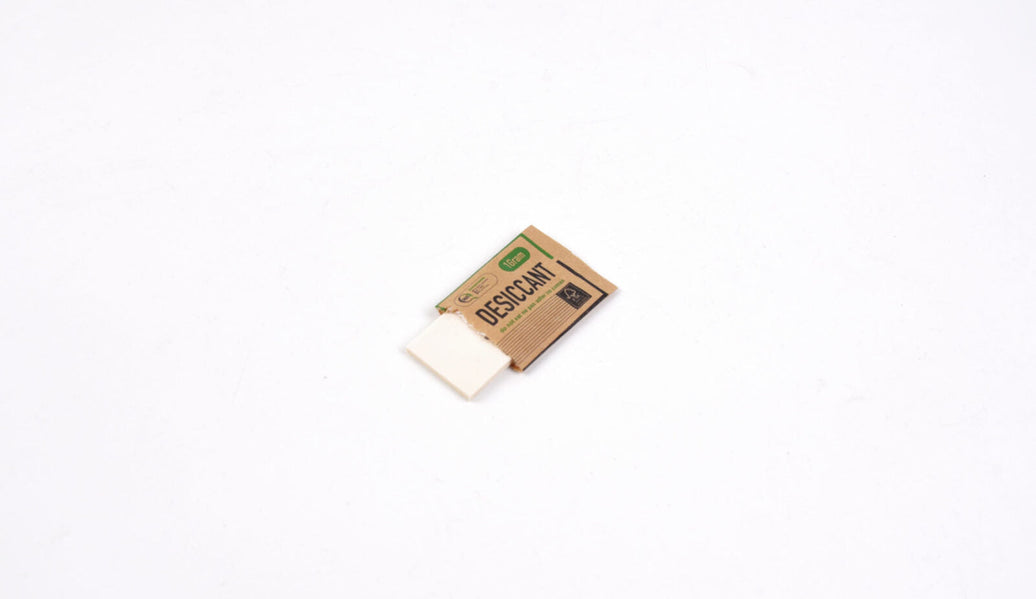
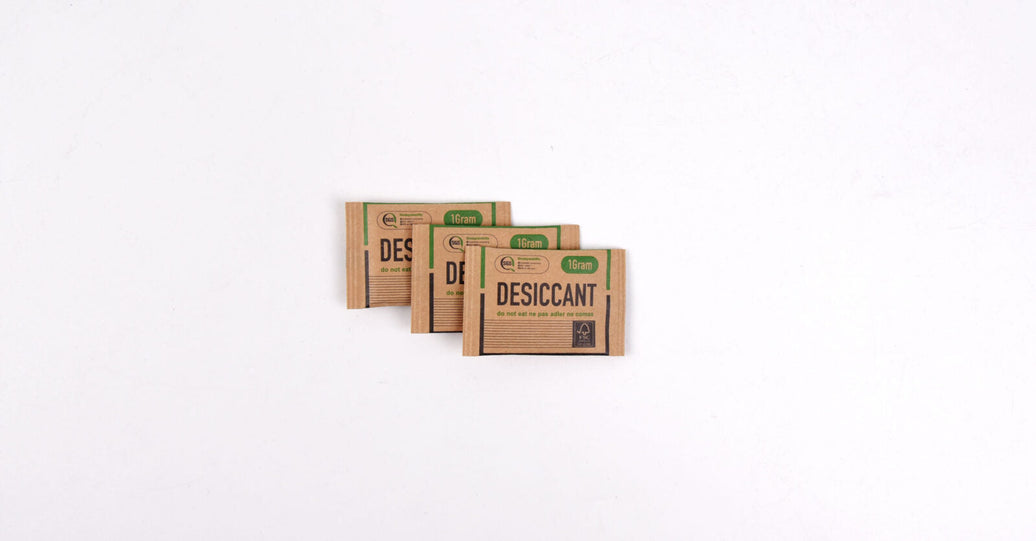
Suppose a supplement pouch currently uses a 1 g silica sachet and the QA target is to hold the headspace under 45% RH across shelf life. Because the failure humidity is moderate-to-high, the capacity ratio favors fiber. A single small fiber unit — for instance a 1 mm film desiccant disc — can carry the equivalent of roughly 8–9 g of silica-gel capacity in that window, which is why one dust-free disc often replaces several silica sachets while removing the loose-bead risk. That figure is illustrative: the exact per-unit equivalency for a given fiber SKU is provided on its technical data sheet, validated at your target RH.
How to convert your current dosage in four steps
1. State your target internal RH and shelf life — the humidity window is the single biggest driver of equivalency.
2. Record your current silica dosage per pack (grams and unit count) and the container headspace volume.
3. Convert to required water capacity at your target RH, then divide by the fiber desiccant’s rated capacity at that RH to get the fiber weight.
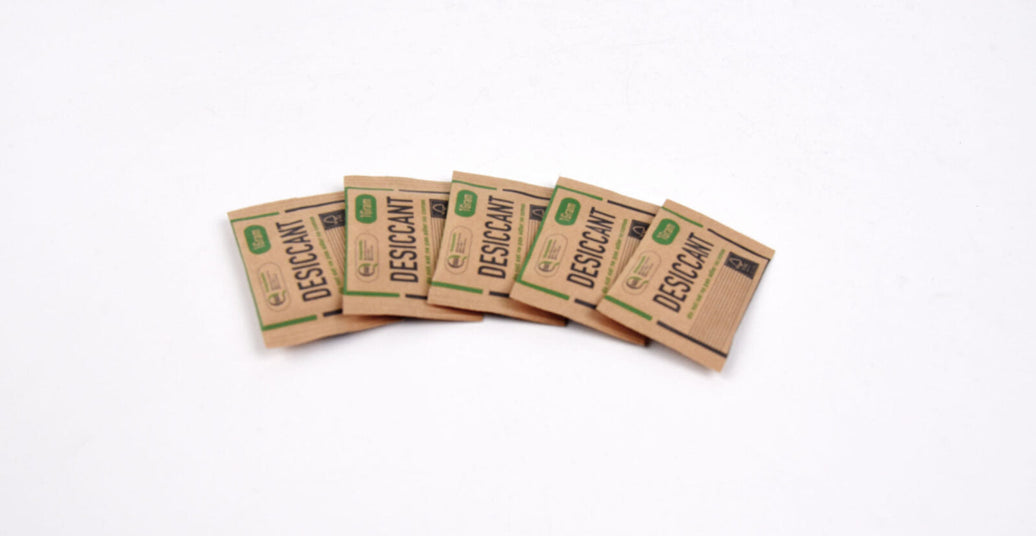
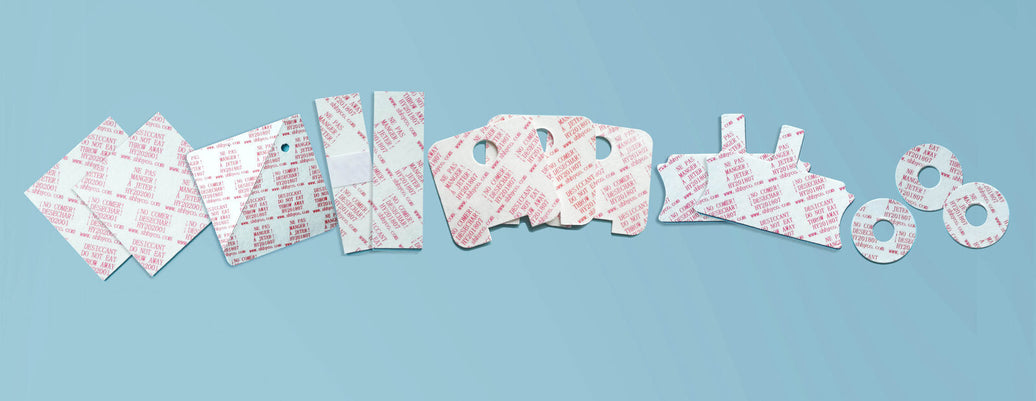
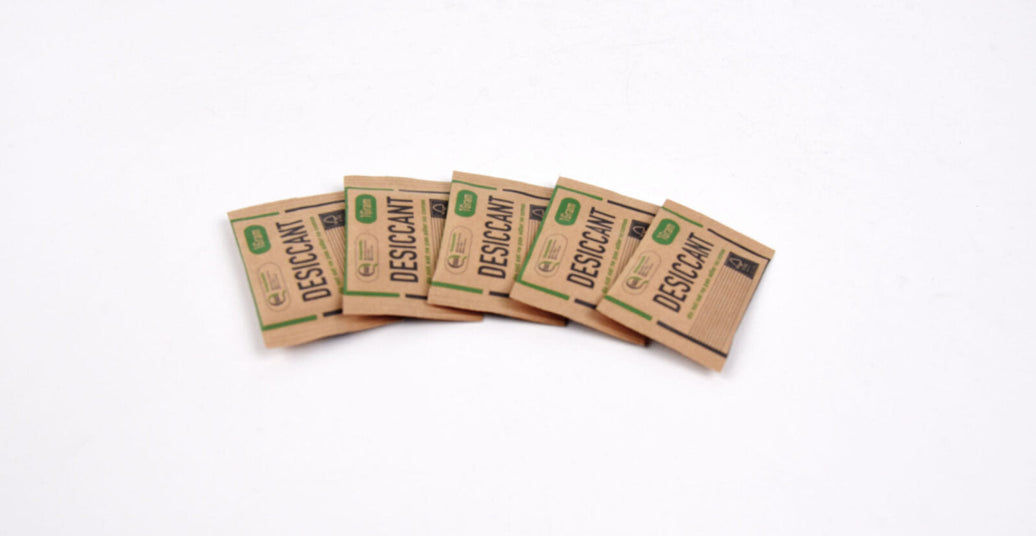
4. Choose a format — sachet or film card — that delivers that weight and fits your dispenser. The volumetric method is detailed in our dosage-by-volume guide.
Why brands switch even at parity
Equivalency is the entry question, but rarely the deciding one. Even where the gram count is similar, teams move to fiber desiccant to remove loose-bead foreign-matter risk, to gain a printable format, and to replace a plastic sachet with a compostable, paper-wrapped one. The freight and footprint case for carrying less desiccant mass is in our guide on cutting desiccant mass.
Frequently asked questions
Is there a single silica-to-fiber conversion factor?
No — any honest factor is stated at a specific RH. At high humidity, roughly 2–2.5x by capacity per gram (more at the pack-system level); at low humidity the gap narrows. Compute at your target RH.
Can I keep my existing sachet count?
Often you can reduce it, because each fiber unit carries more high-RH capacity. Validate with a stability run before changing the spec.
Do you provide a per-SKU equivalency table?
Yes — request the technical data sheet for the format you’re considering and our team will compute the equivalency at your target RH.
Get your exact equivalency
Send your current silica spec and target RH, and ATMOSIScience will return the fiber-desiccant equivalency and a drop-in format recommendation. Explore ATMOSIScience desiccant solutions, request a sample of the Fiber Desiccant, or contact our team for a worked equivalency and a bulk quote.
Related reading: Replace Silica Gel 1-for-1 · How Much Desiccant Per Package · Running a Desiccant Sample Evaluation
Get your silica-to-fiber equivalency calculated
Send your current silica dosage, container headspace, and target RH — our team returns the fiber-desiccant equivalency and a drop-in format that fits your line.