Quick answer: Moisture content is how much water a powder contains, expressed as a percentage of mass. Water activity (aw) is how much of that water is chemically available — free to migrate, react, or support microbial growth. Two powders can have identical moisture content and completely different water activity. Moisture content tells you what you dried out; water activity tells you what will happen next. Shelf life, caking and microbial risk track water activity, not moisture content.
The confusion is expensive because it is invisible on the certificate of analysis. A batch passes loss on drying at 4.2%, ships, and cakes solid in a distributor's warehouse eight weeks later. Nobody falsified anything. The specification simply measured the wrong property.
What each number actually measures
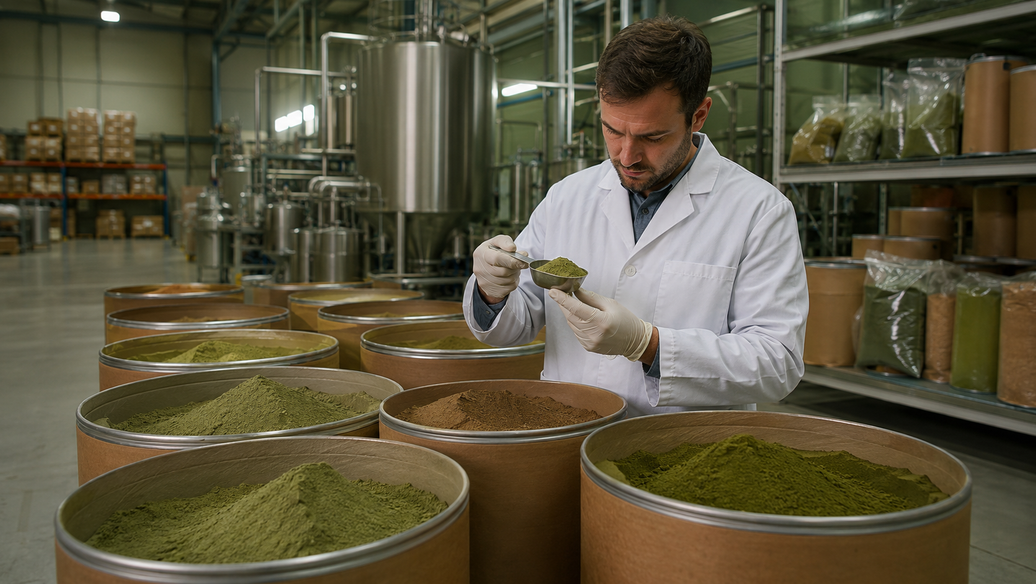
Moisture content is a mass measurement. Loss on drying heats a sample and weighs what evaporated. Karl Fischer titration measures water chemically. Either way the output is total water as a percentage of sample mass — bound water, free water and everything in between, added together.
Water activity is an equilibrium measurement, expressed from 0.00 to 1.00. It is the ratio of the vapour pressure of water in the product to the vapour pressure of pure water at the same temperature. Practically: seal a sample in a chamber, let it reach equilibrium, and measure the headspace relative humidity. A powder that equilibrates its headspace to 55% RH has a water activity of 0.55.
That last equivalence is the useful one. Water activity and relative humidity are the same scale expressed differently, which is precisely why desiccant selection is a water-activity conversation. Companion piece: water activity vs. relative humidity.
Why two powders at 5% moisture behave differently
Water binds to different substrates with different strength. In a whey protein isolate, much of the water is associated with protein structure and is relatively unavailable. In a maltodextrin-heavy drink mix, a similar total water content sits far more loosely and is readily available to move.
The consequences of available water are what QA actually cares about:
- Migration. Free water moves toward whatever is drier — including the deliquescent ingredient sitting next to it in a blend.
- Caking. Available water dissolves surface material at particle contact points; when conditions shift, it recrystallises and welds particles together.
- Microbial growth. Most bacteria stop below roughly 0.90 aw, most yeasts below about 0.87, most moulds below about 0.80. Below 0.60 essentially nothing grows. These thresholds are water activity thresholds — they cannot be expressed in moisture content.
- Reaction rate. Vitamin degradation, lipid oxidation and non-enzymatic browning all vary with water activity in ways that do not track total moisture.

The bridge between them: the sorption isotherm
The relationship between moisture content and water activity is not universal — it is specific to each formulation, and it is captured by a moisture sorption isotherm. Plot moisture content on the vertical axis and water activity on the horizontal, hold temperature constant, and the resulting curve is the single most useful document a powder QA team can own.
The curve tells you three things a specification cannot. Where the slope turns steep — the point at which a small humidity rise causes a large moisture gain. Where the caking threshold sits for that specific blend. And how much moisture the product can absorb before it crosses the line, which is the number that sizes a desiccant. Method: how to read a moisture sorption isotherm.
Which number to write into a specification
Both, doing different jobs.
| Use case | Measure |
|---|---|
| Incoming raw material release | Moisture content (fast, cheap, comparable) |
| Process control during drying | Moisture content |
| Shelf-life prediction | Water activity |
| Microbial safety justification | Water activity |
| Caking risk and desiccant sizing | Water activity plus isotherm |
| Blend compatibility screening | Water activity of each component |
That last row deserves emphasis. When two ingredients with different water activities are blended, water migrates from the higher to the lower until they equilibrate — regardless of what either one's moisture content says. This is the mechanism behind most "the blend caked but neither ingredient did" investigations.
Where the desiccant fits
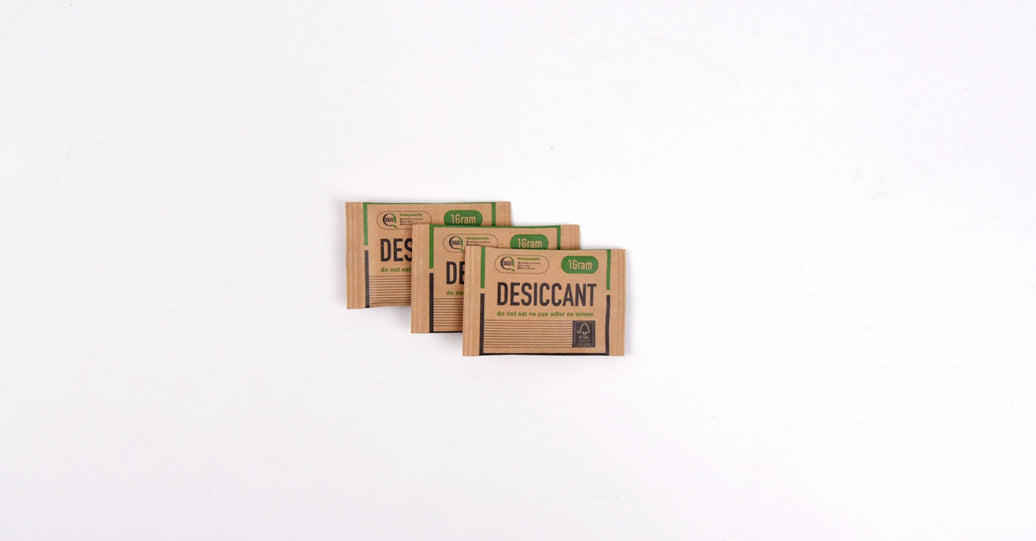
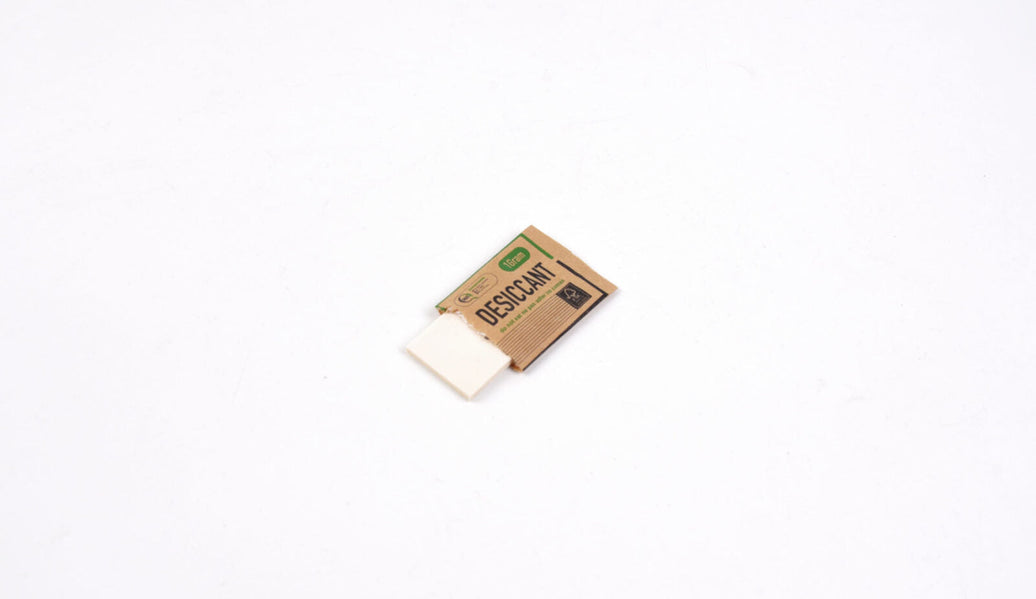
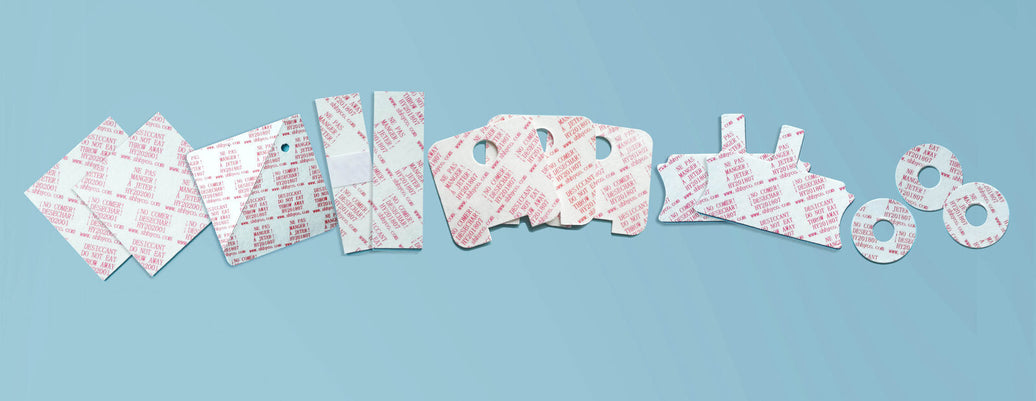
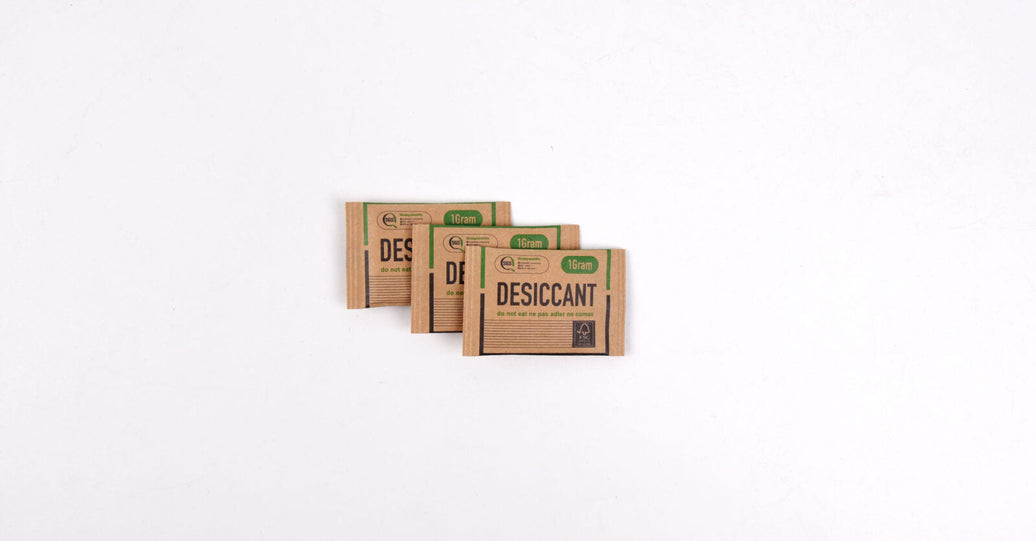
A desiccant does not change the powder's moisture content directly. It controls the relative humidity of the headspace, and the powder then equilibrates toward that humidity. Set the headspace correctly and the water activity holds; set it wrongly in either direction and the product moves.
Over-drying is a real failure mode, not a theoretical one. Drive a powder far below its target water activity and you get dusting, static, altered dissolution and — in products with a hydrated crystalline form — physical change. This is why a two-way material that holds a band is often the better specification than a one-way material that drives toward zero. Principle: why "drier is better" is wrong.
Targets by product category are collected here: the RH reference table.
Frequently asked questions
Can water activity be calculated from moisture content?
Only if you have the sorption isotherm for that exact formulation at that temperature. There is no general conversion. Change the formulation, the particle size or the temperature and the relationship shifts.
Is loss on drying the same as moisture content?
Close but not identical. Loss on drying measures everything volatile at the test temperature, which can include solvents, some flavour compounds and volatile actives. Karl Fischer measures water specifically. For most powders the difference is small; for flavoured or botanical products it can be material.
What water activity should a powder target?
It depends on the failure mode being defended against. Microbial safety generally needs below 0.60. Caking thresholds are formulation-specific and usually sit between 0.35 and 0.55 for hygroscopic powders. Chemical stability sometimes prefers a mid-range value rather than the lowest achievable.
Does the desiccant change the water activity reading?
It changes the equilibrium the product moves toward. Measure water activity on product taken from a pack that has been sealed long enough to equilibrate — measuring at fill gives you the filling room, not the package.
Why did a batch pass moisture content and still cake?
Because moisture content does not say where the water is. A batch can sit within specification on total water while carrying enough available water — or enough water-activity mismatch between blend components — to cake. Diagnostic sequence: why powders cake.
Size a desiccant against your water-activity target
Send the target aw, pack format and shelf life. ATMOSIScience returns a dosage recommendation and a sample for equilibrium testing.
Prefer email? info@atmosiscience.com