Every powder manufacturer has seen the same support ticket: the product left the line free-flowing and arrived as a brick. Caked protein, clumped seasoning, a drink mix that will not dissolve. The root cause is almost never the formula. It is moisture — and moisture follows physics that can be engineered against.
This guide covers why powders cake, the humidity thresholds that matter for the most common powder categories, and a practical method for specifying desiccant protection that holds through shelf life — written for packaging engineers, QA leads, and procurement teams at US powder producers.

The caking cascade: how a free-flowing powder becomes a brick
Caking is not a single event. It is a four-stage cascade, and each stage is harder to reverse than the last.
1. Surface adsorption. Powder particles have enormous surface area relative to their mass. When headspace humidity rises above the powder's critical RH, water molecules adsorb onto particle surfaces within hours.
2. Liquid bridging. Adsorbed moisture migrates to the contact points between particles and forms liquid bridges. The powder is now "soft caked" — it clumps, but the clumps still break apart.
3. Dissolution and recrystallization. Soluble components (salts, sugars, acids) dissolve into the liquid bridges. When humidity or temperature swings back down, they recrystallize as solid bridges between particles.
4. Hard caking. The solid bridges fuse the powder into a mass that no amount of shaking restores. For amorphous ingredients like spray-dried lactose or instant coffee, moisture also lowers the glass-transition temperature, causing particles to turn sticky and collapse into each other.
The operational takeaway: protection has to start at stage 1. Once a product reaches stage 3, the damage is chemically locked in.
Critical RH: the number that defines your risk
Every hygroscopic powder has a critical relative humidity — the headspace RH above which it begins pulling moisture rapidly. Deliquescent ingredients are the most aggressive: above their threshold they do not just adsorb moisture, they dissolve in it. Garlic and onion powder, citric and malic acid blends, electrolyte salts, and many seasoning systems fall into this group, which is why those categories generate the most caking complaints.
Two structural facts make modern powder packaging riskier than the datasheet suggests:
Every opening is a humidity event. A consumer tub of protein or drink mix is opened 30–90 times over its use life. Each scoop exchanges the protected headspace with ambient air — in much of the US, 50–80% RH air. The desiccant has to keep working across every one of those exchanges, not just survive the sealed journey from the line to the shelf.
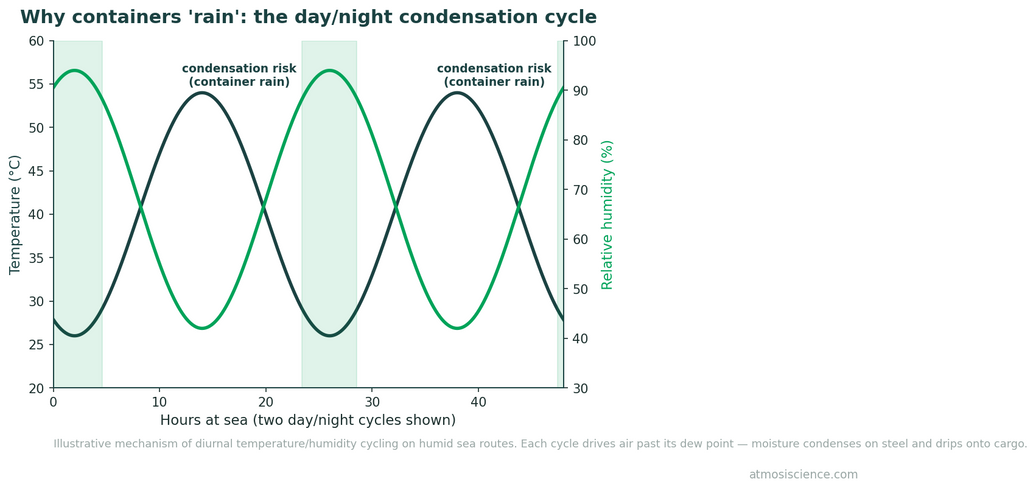
Distribution is hotter and wetter than the lab. A container crossing through Gulf Coast distribution in summer sees sustained heat and humidity that a 25°C/50% RH stability protocol never models. Specifying desiccant against best-case conditions is how products that passed stability still cake in the field.
How to spec desiccant for a powder product: a 4-step method
Step 1 — Define the target headspace RH
Set the target below the most sensitive ingredient's critical RH, with margin. For most powder systems that means holding the headspace meaningfully below the point where the formula's most deliquescent component activates.
Step 2 — Quantify the moisture load
Moisture enters from three sources: the air sealed in at filling, permeation through the package wall over shelf life, and — for consumer formats — repeated opening. The third source usually dominates for tubs and jars, and it is the one most desiccant calculations ignore.
Step 3 — Match capacity at your real RH, not the datasheet ideal
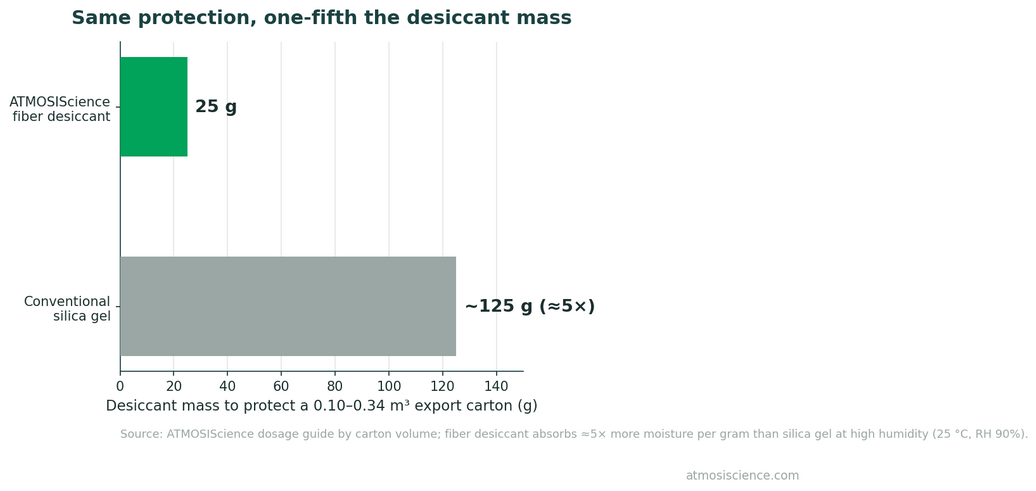
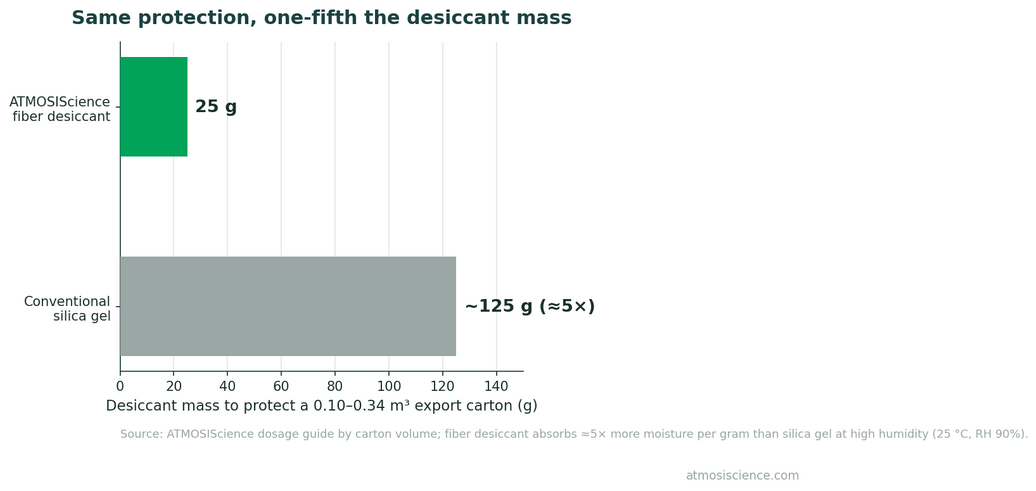
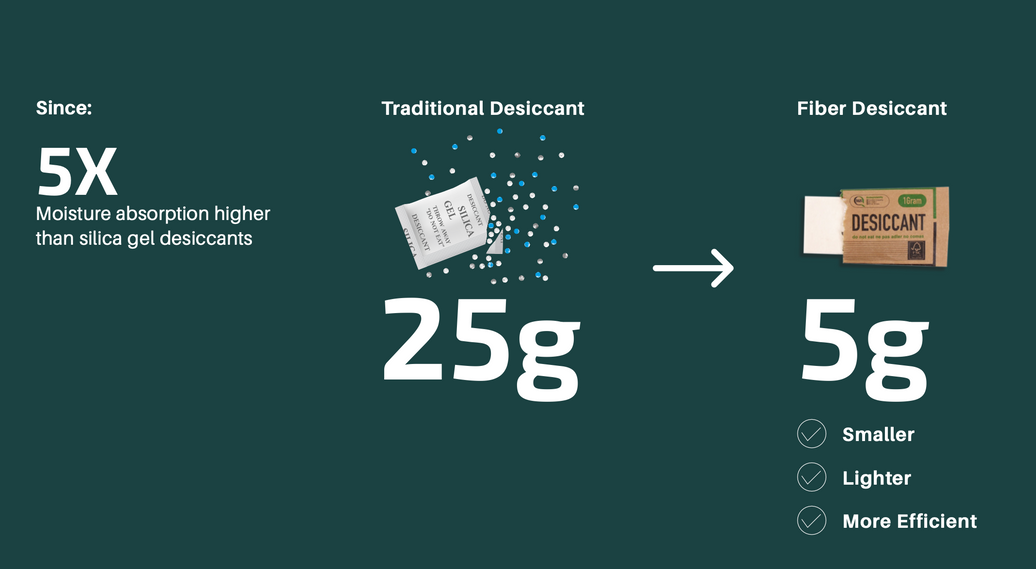
Adsorption capacity is only meaningful at a stated RH and temperature. In side-by-side testing, fiber desiccant absorbs over 70% of its own weight at 25°C and RH 90%, where conventional silica gel holds roughly 30% under the same conditions. That capacity gap means less desiccant mass per package — for a standard 0.10–0.34 m³ carton, about 25 g of fiber desiccant does the work of roughly 5x that weight in silica gel. The full dosage math is in our dosage guide by carton volume.
Step 4 — Choose a format that survives the powder environment
This is where powder products differ from everything else. A loose sachet dropped into a powder bed gets buried, scooped, and — worst case — torn. The format question matters as much as the capacity question:
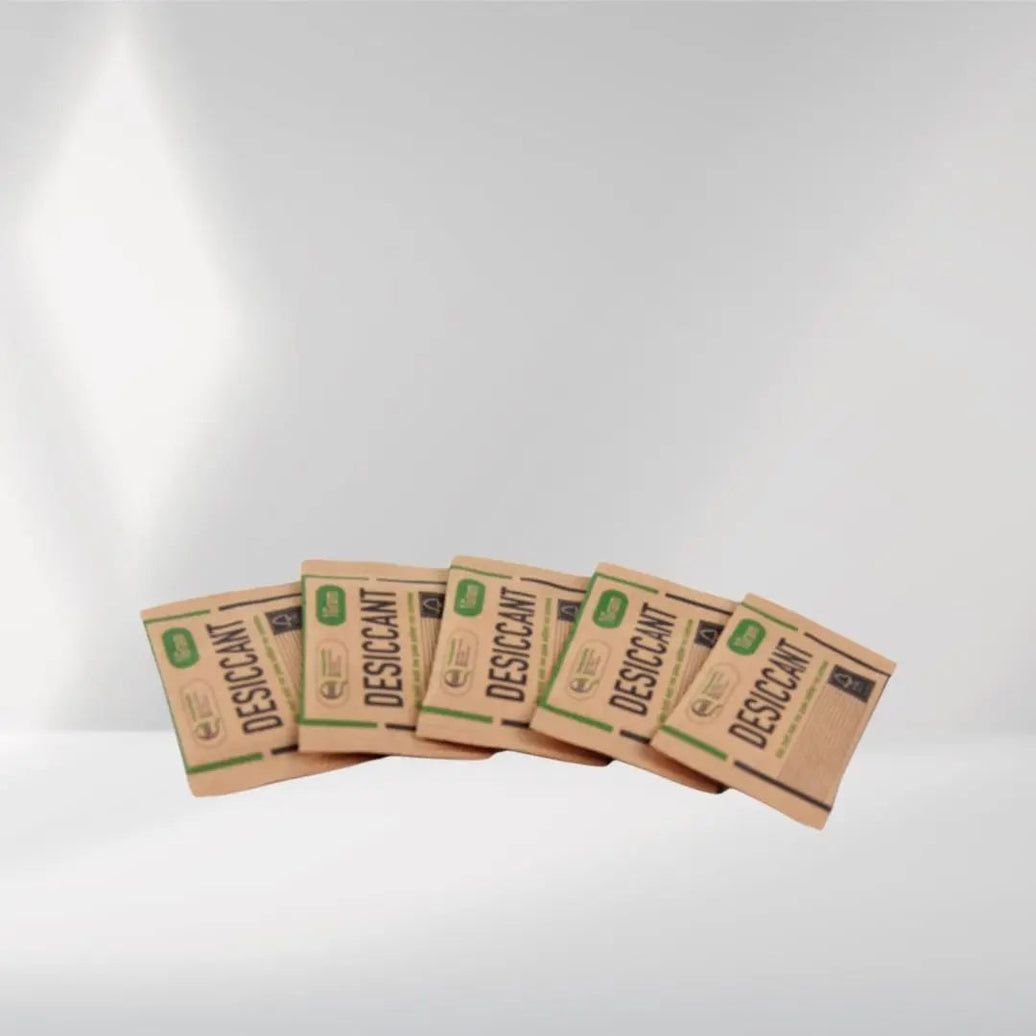
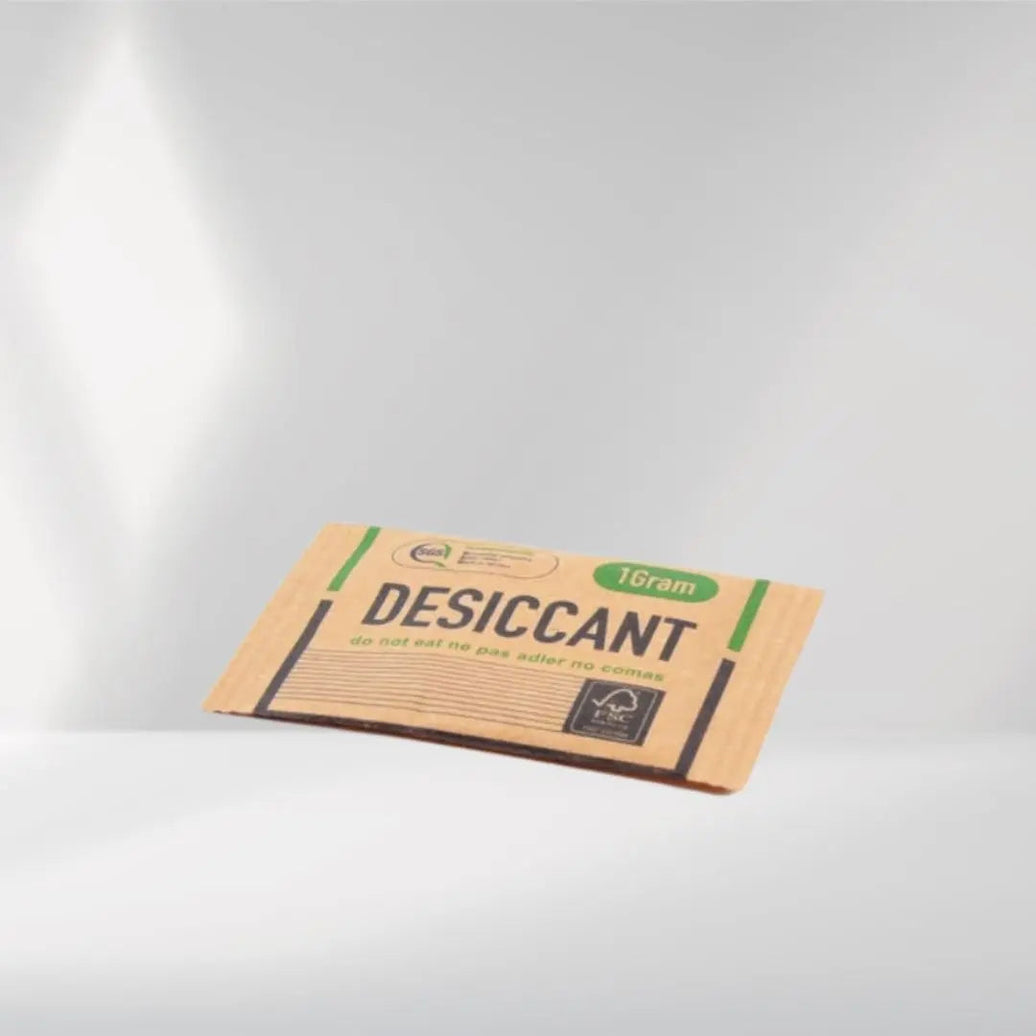
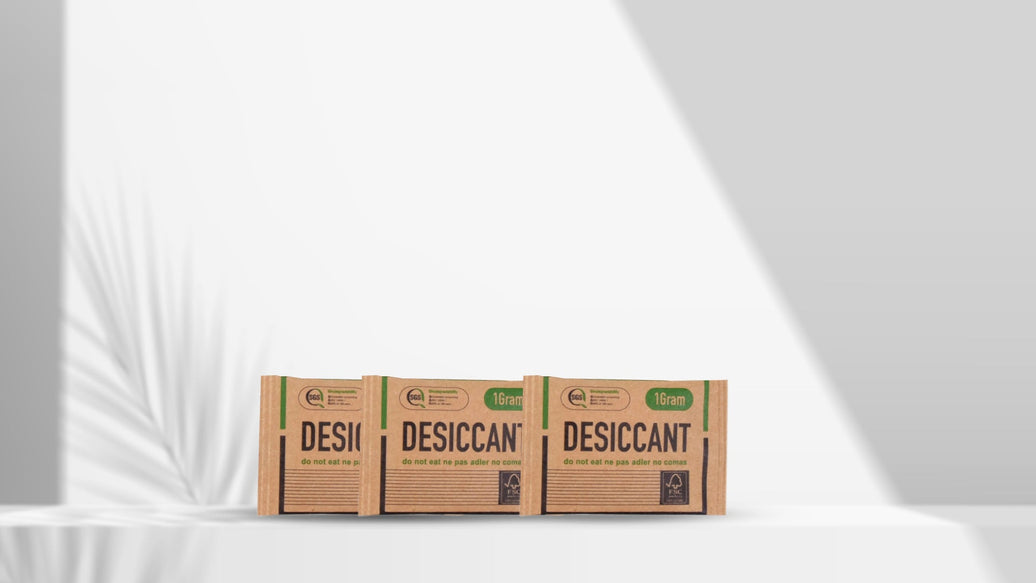
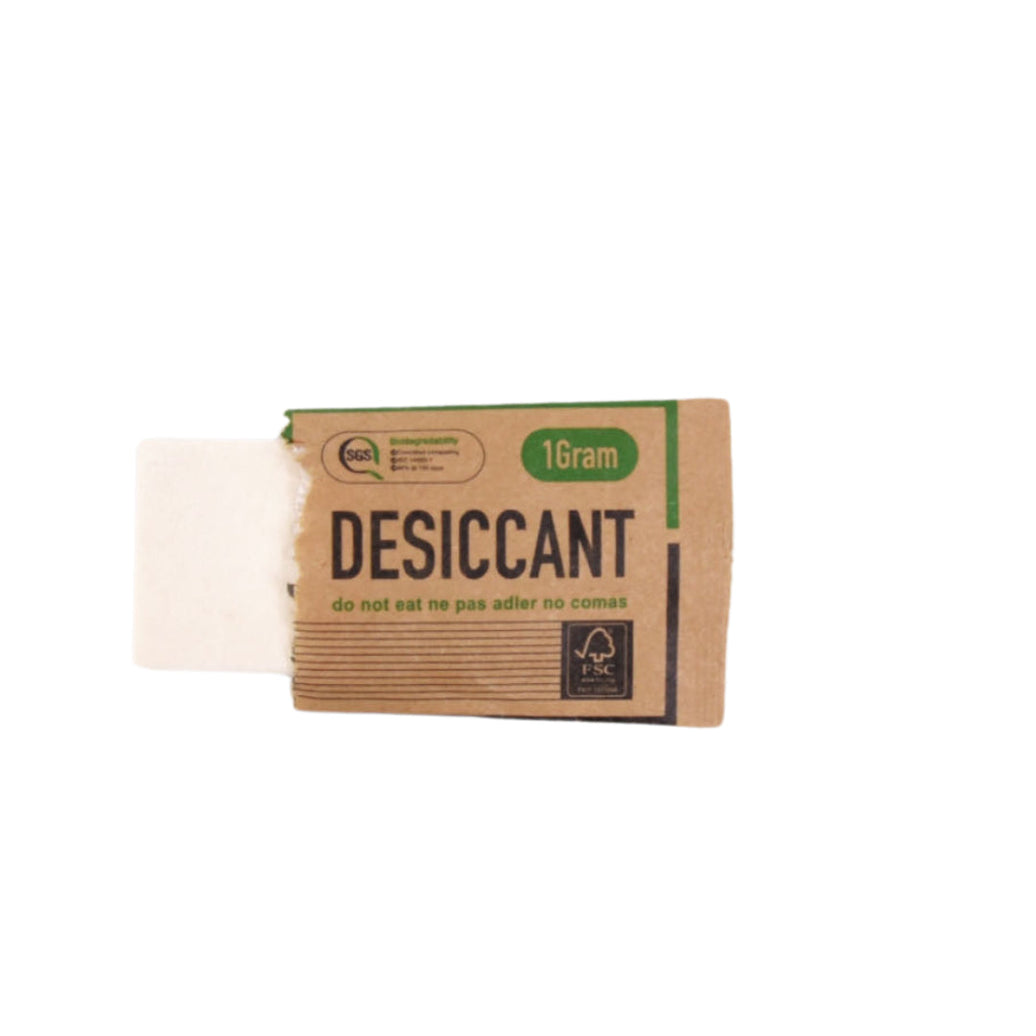
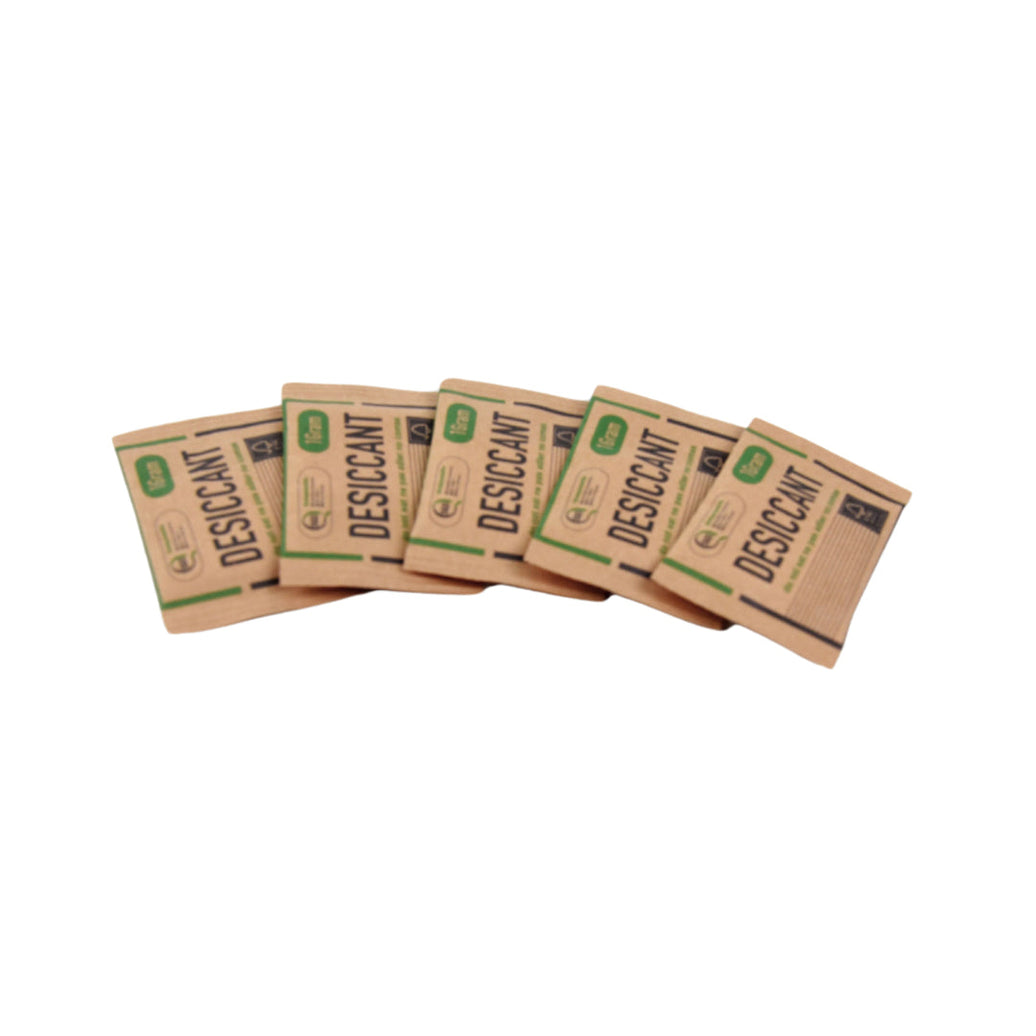
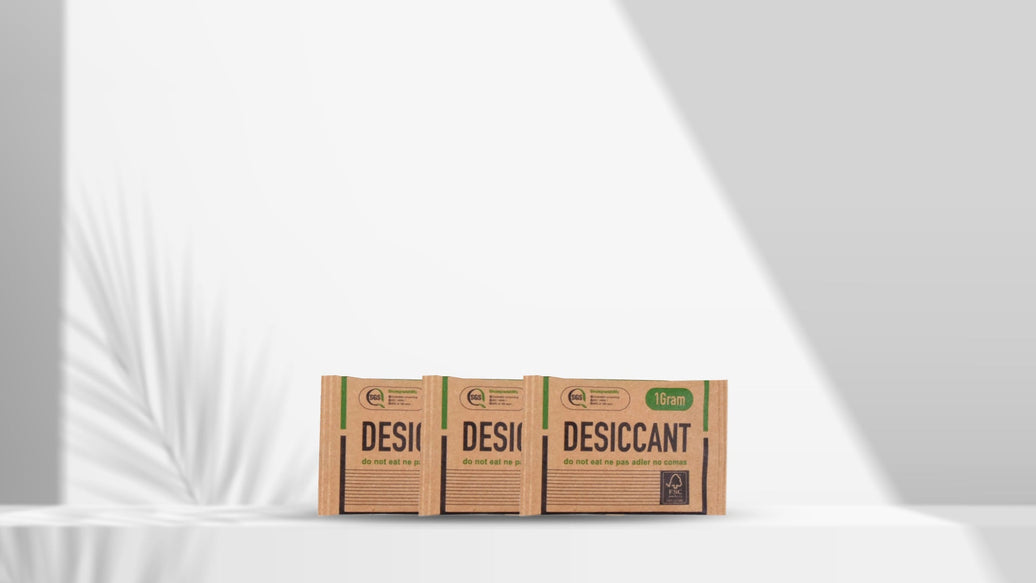
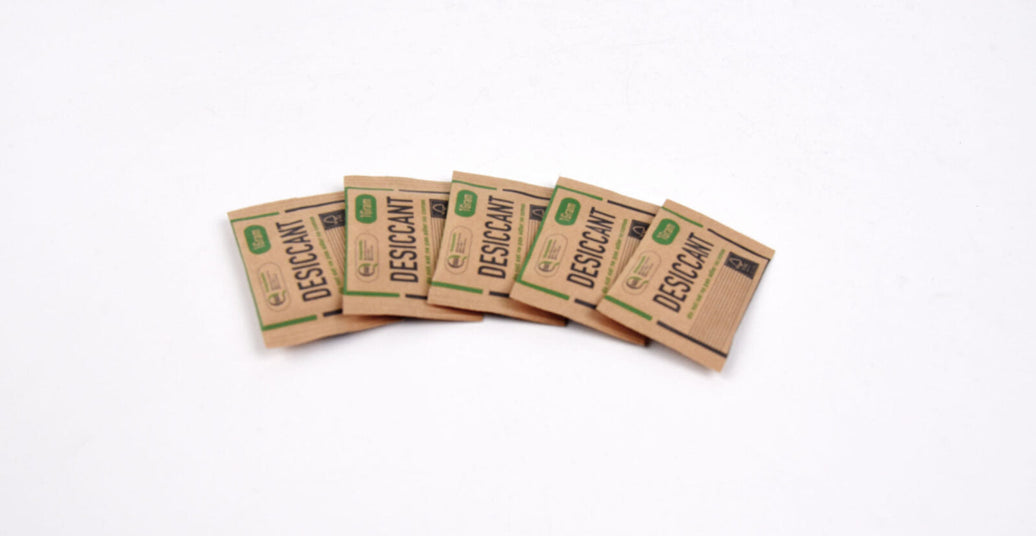
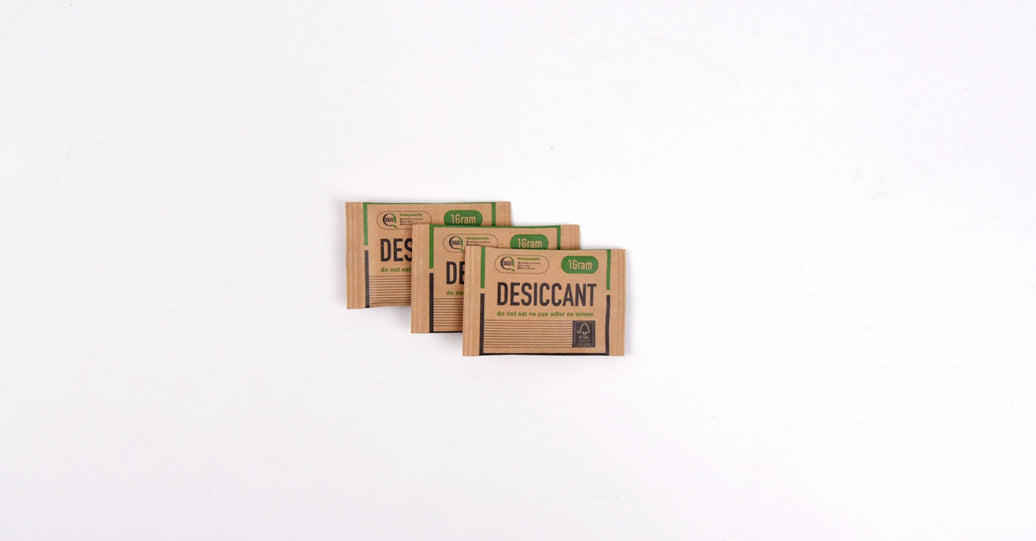
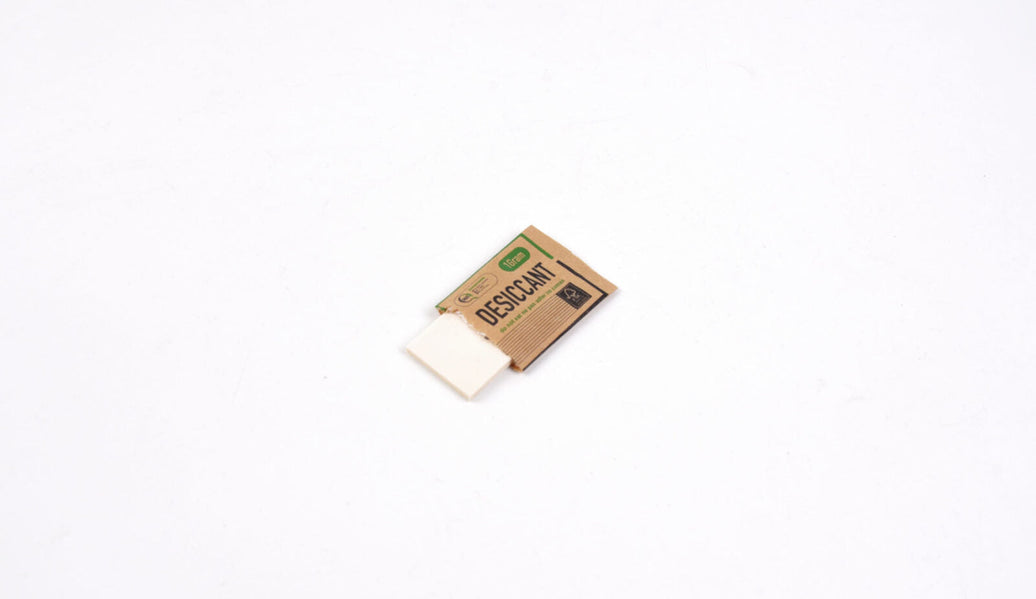
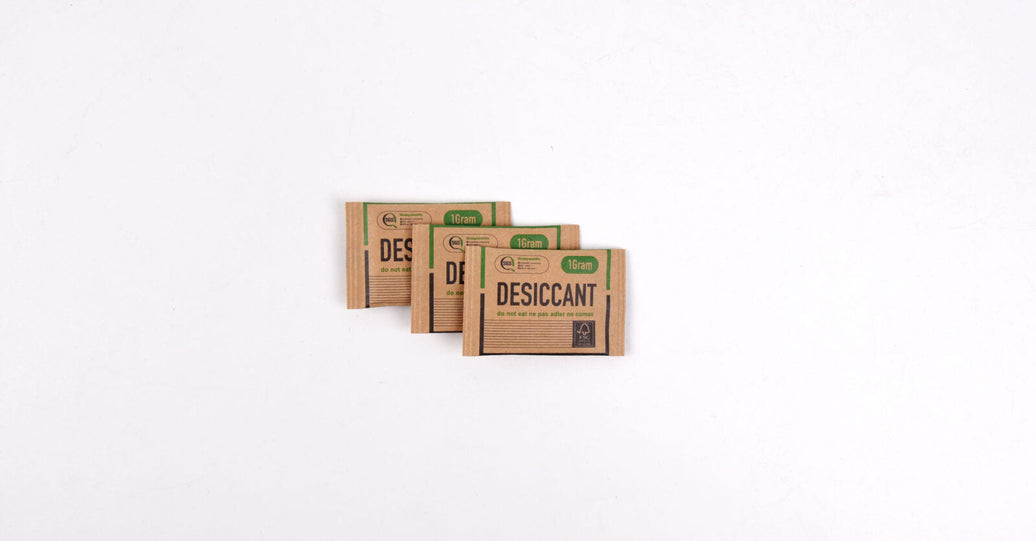
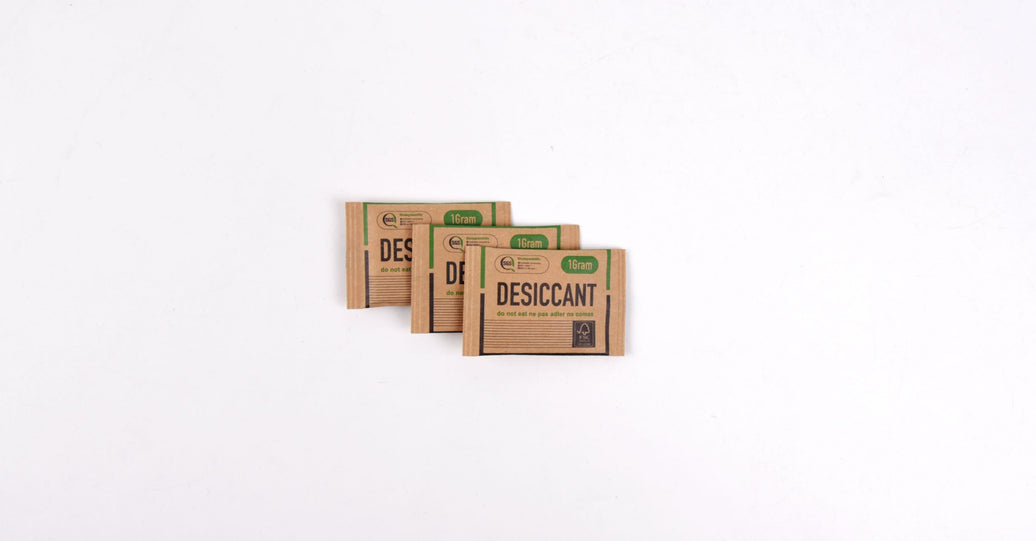
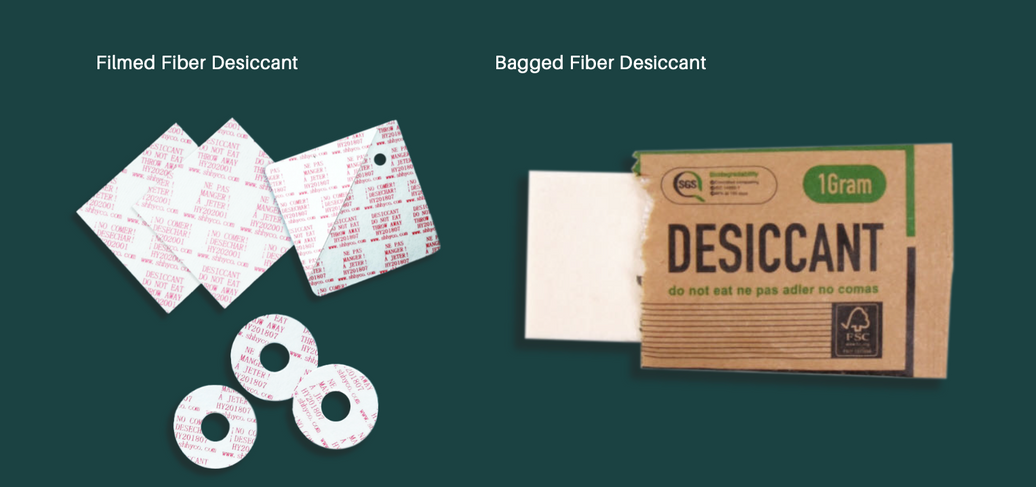
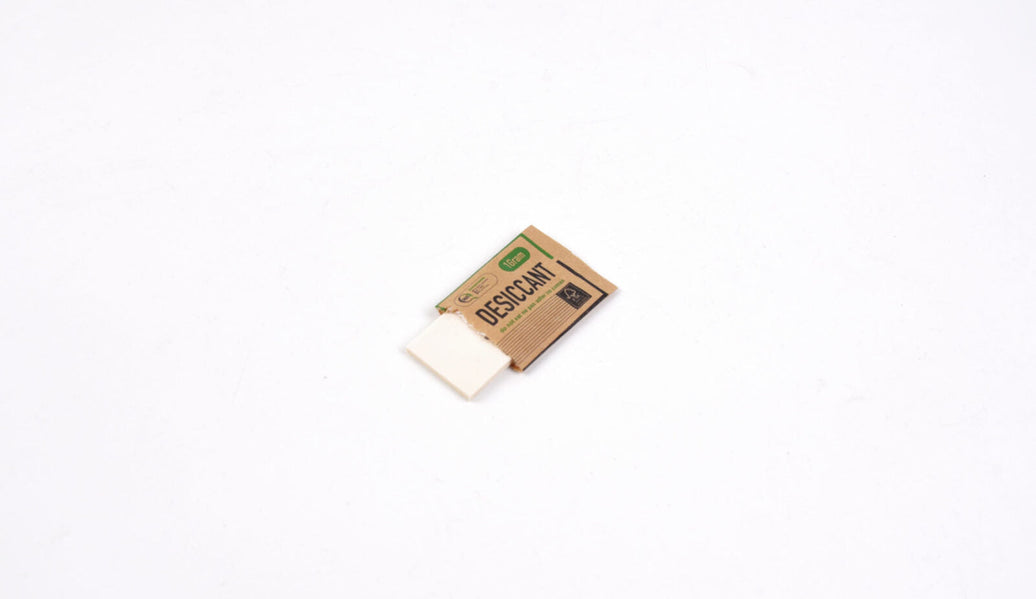
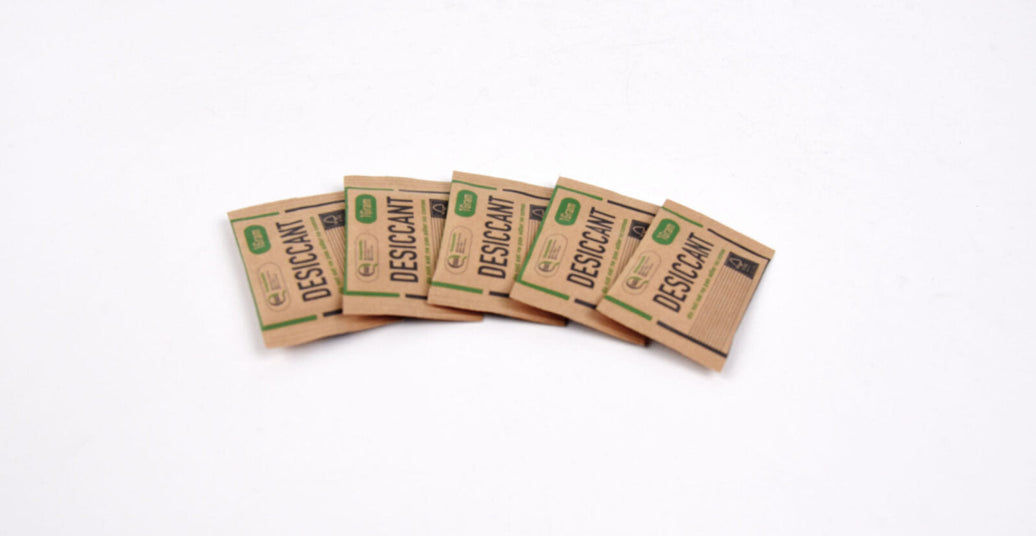
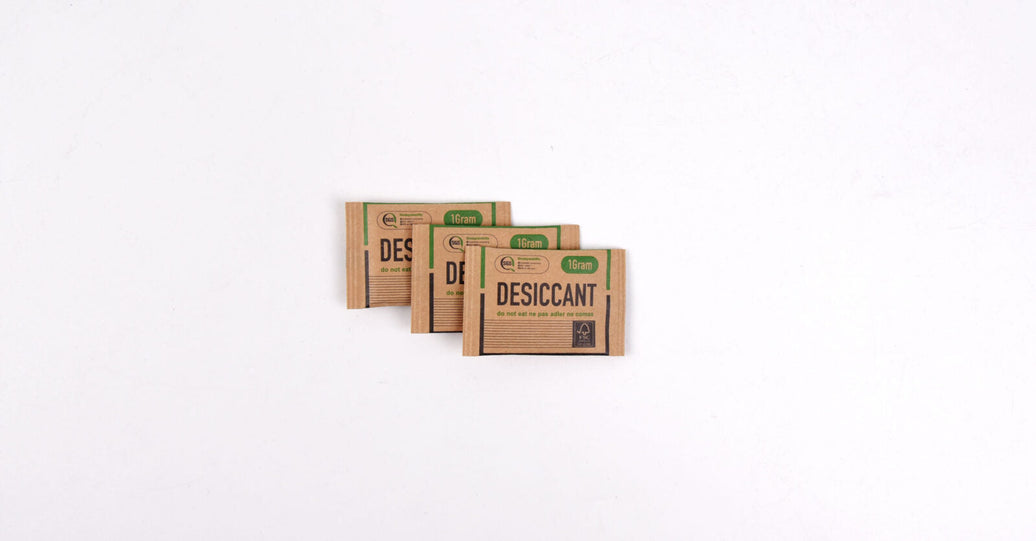
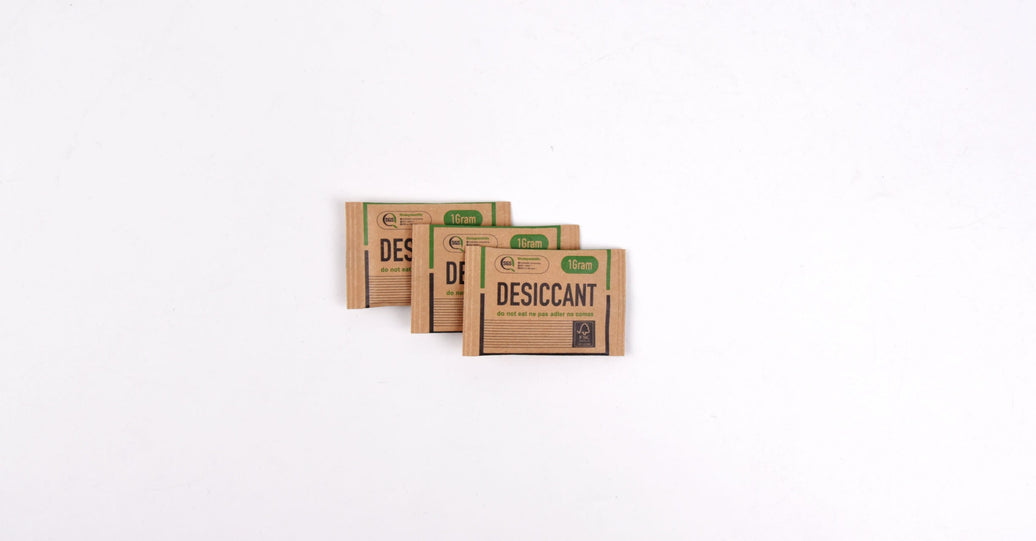
Bagged fiber sachets (1 g to 60 g and custom weights) suit drums, bulk liners, and sealed pouches where the desiccant stays separated from the product.
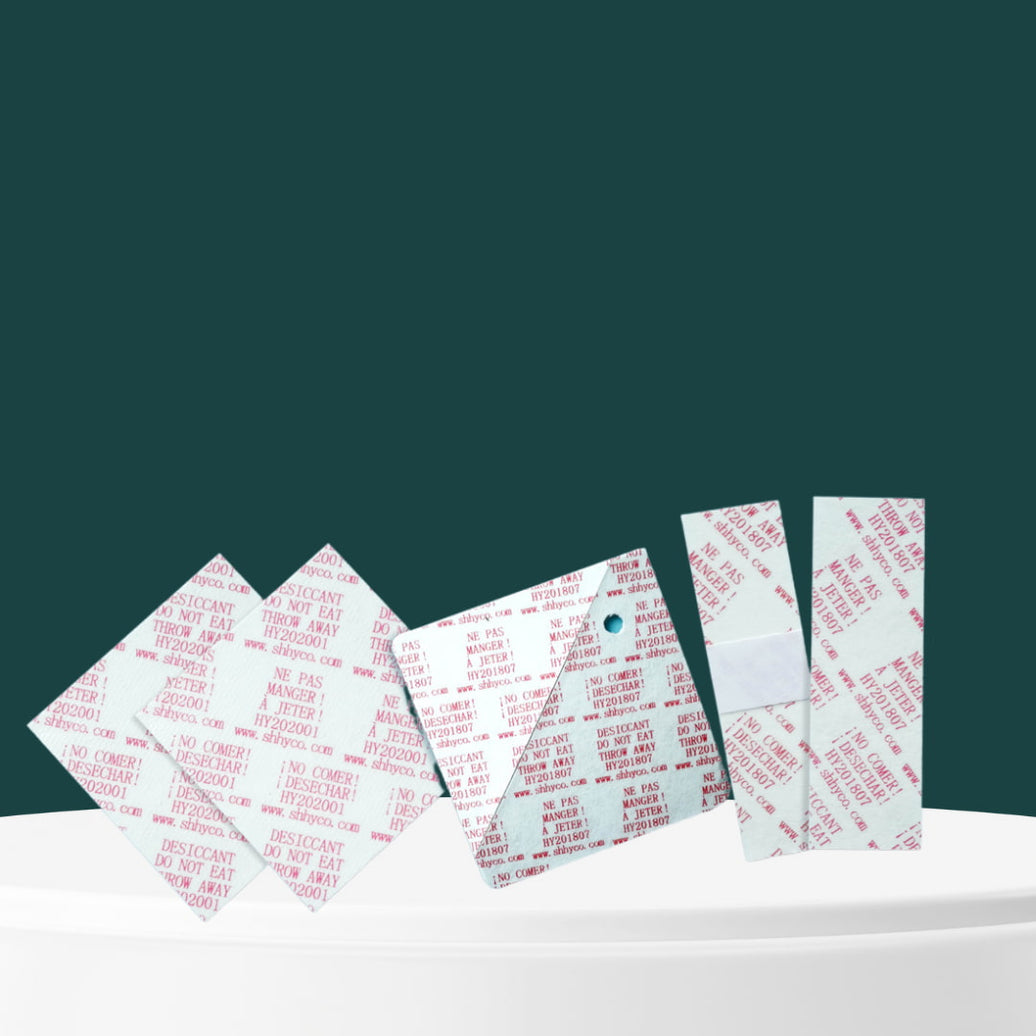
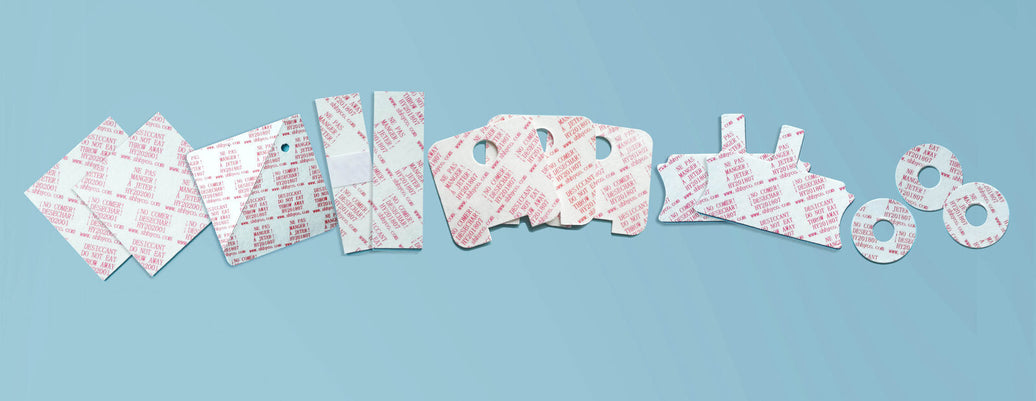
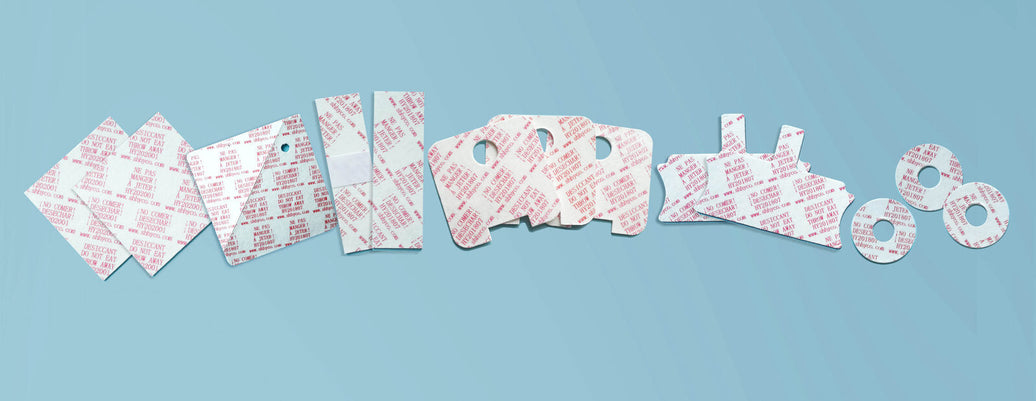
Film desiccant cards suit consumer tubs, jars, and canisters. ATMOSIScience film desiccant is a rigid card — stiffer than some credit cards — wrapped in paper rather than plastic, so it sits flat under the lid or against the seal, never flops into the powder bed, and is easy for the consumer to spot and remove. It can be die-cut to size and printed with a full-color logo in the center, turning a protective component into a branded one. Full details in our film desiccant guide.
Whichever format, for food-contact powders the desiccant itself must be documented: ATMOSIScience fiber desiccant is manufactured under SGS ISO 9001 (Cert. CN05/31171) and is dust-free by construction — no loose beads or clay fines to migrate into the product, a failure mode covered in our article on loose-fill desiccant risks in food packaging.
What caking actually costs
The economics justify the engineering. A caked product drives returns and replacement shipments, one-star reviews that suppress the listing long after the batch is gone, retailer chargebacks and delisting risk, and rework or write-off of finished inventory. Against that, headspace desiccant is one of the cheapest insurance lines in the BOM — typically a low single-digit cent addition when specified by capacity rather than by habit.
Frequently asked questions
What humidity should powder products be kept below?
It depends on the formula's most sensitive ingredient. The working rule is to hold headspace RH safely below the critical RH of the most deliquescent component — and to verify with a logger inside real packaging, not just chamber data.
Can anti-caking agents replace desiccant?
They address different stages. Anti-caking agents coat particles to slow liquid bridging; desiccant removes the moisture that drives the entire cascade. Controlling headspace RH can reduce the anti-caking load needed — relevant for clean-label reformulation.
Is silica gel safe in food powder packaging?
Silica gel itself is inert, but bead-filled sachets in a scooped powder are a foreign-matter risk if torn. A dust-free, food-contact-documented format — fiber sachet or rigid film card — removes that failure mode.
How is desiccant amount calculated for a powder tub?
From three inputs: sealed-in headspace moisture, wall permeation over shelf life, and opening frequency. For consumer tubs the opening term dominates. Our team runs this calculation against your package spec as part of a quote.
Engineer the headspace, not just the formula
ATMOSIScience supplies food-grade fiber desiccant in bagged and film-card formats at B2B scale, with SGS ISO 9001 manufacturing and compostability certified under ASTM D6400 and EN 13432.
Test it against your own powder first. Order the Fiber Desiccant, or request bulk pricing and certificates through our desiccant solutions page or contact our team.
Related reading: Desiccant for Protein Powder & Sports Nutrition · Desiccant for Spices & Seasoning Blends · Desiccant for Powdered Drink Mixes
Get a desiccant spec & bulk quote for your powder product
Tell us about your powder, package format, and shelf-life target — our team will respond with a capacity calculation, format recommendation, certificates, and bulk pricing.