Quick answer: The most expensive desiccant mistakes come from assumptions, not products. Silica gel is not automatically the standard, more sachets are not automatically safer, "food grade" is not a guarantee without documentation, and a cheaper unit price often hides higher freight and compliance costs. Testing each belief against data usually cuts both moisture failures and spend at the same time.
Desiccant decisions are often inherited rather than made — "we've always used silica," "the last co-packer put two in." Inherited assumptions are where money quietly leaks. Here are seven that ATMOSIScience runs into most, each paired with what the data actually says.
Myth 1 — "Silica gel is the industry standard, so it's the safe choice"
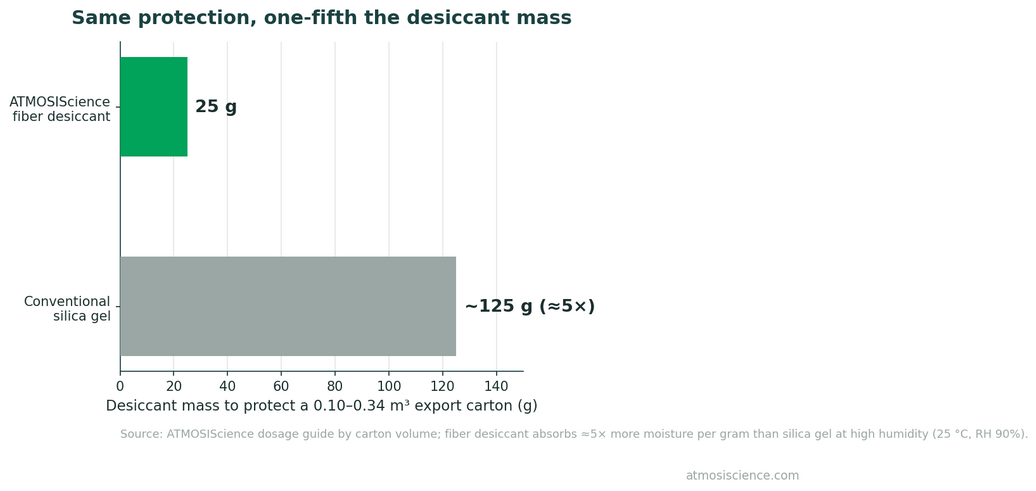
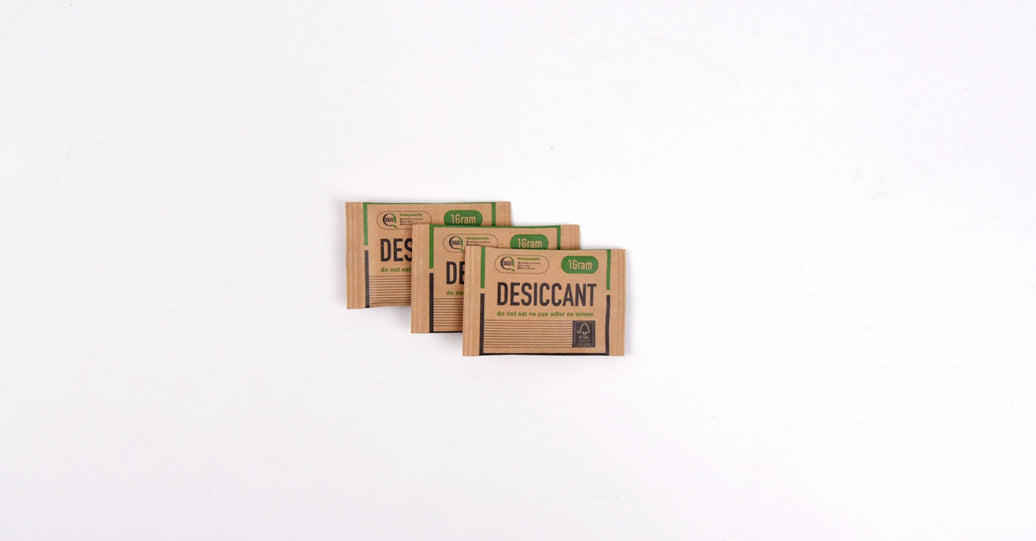
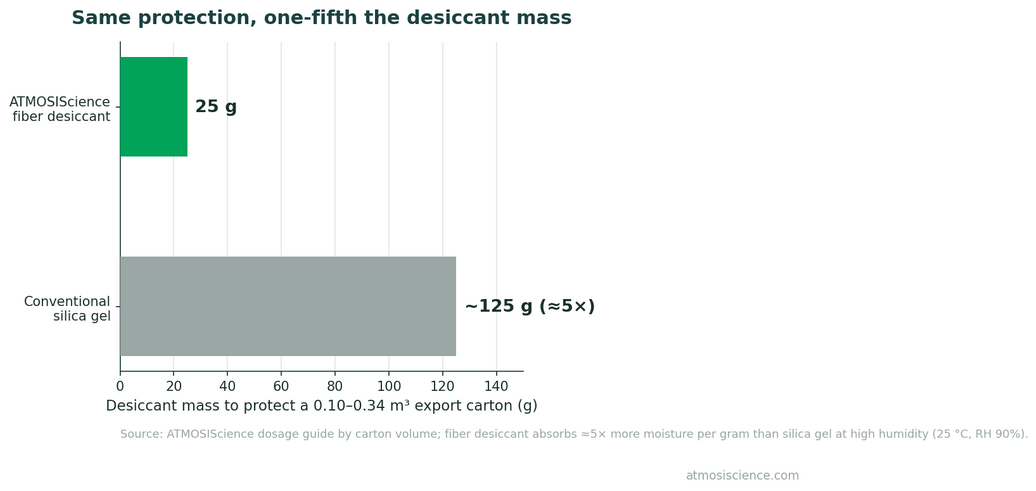
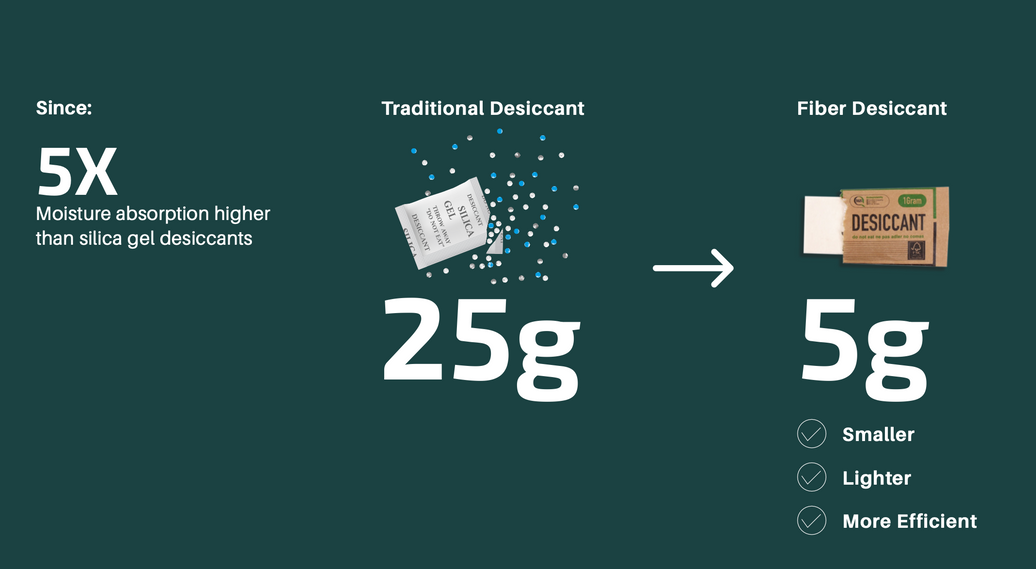
Reality: silica is common, which is not the same as optimal. It adsorbs roughly 30% of its weight at high RH; fiber desiccant exceeds 70% at 90% RH (25°C). "Standard" often just means "never re-evaluated." The gram-for-gram comparison is in calcium chloride vs. silica gel vs. fiber desiccant.
Myth 2 — "More desiccant is always safer"
Reality: beyond the amount needed for headspace and permeation, extra units add cost, not protection — and can over-dry sensitive products or jam automated lines. Correct dosage is a calculation, not a maximum; the method is in the dosage guide.
Myth 3 — "All desiccants are food-safe"
Reality: food safety is a documentation status, not a default. Without FDA 21 CFR 175.300 food-contact documentation on file, "food grade" is a marketing word. What to verify is in food-contact desiccants and FDA 21 CFR.
Myth 4 — "The cheapest unit price is the cheapest desiccant"
Reality: unit price ignores freight (heavier, lower-capacity units ship more mass), EPR fees per material, and failure cost. Total landed cost frequently inverts the ranking — itemized in the true cost of silica gel.
Myth 5 — "A desiccant fixes any moisture problem"
Reality: desiccants remove moisture; they don't undo oxidation, fat bloom or static clumping. Diagnosing the mechanism first prevents specifying the wrong tool — the decision tree is in desiccant vs. oxygen absorbers vs. nitrogen flush.
Myth 6 — "Desiccant is dusty, so it can't touch product"
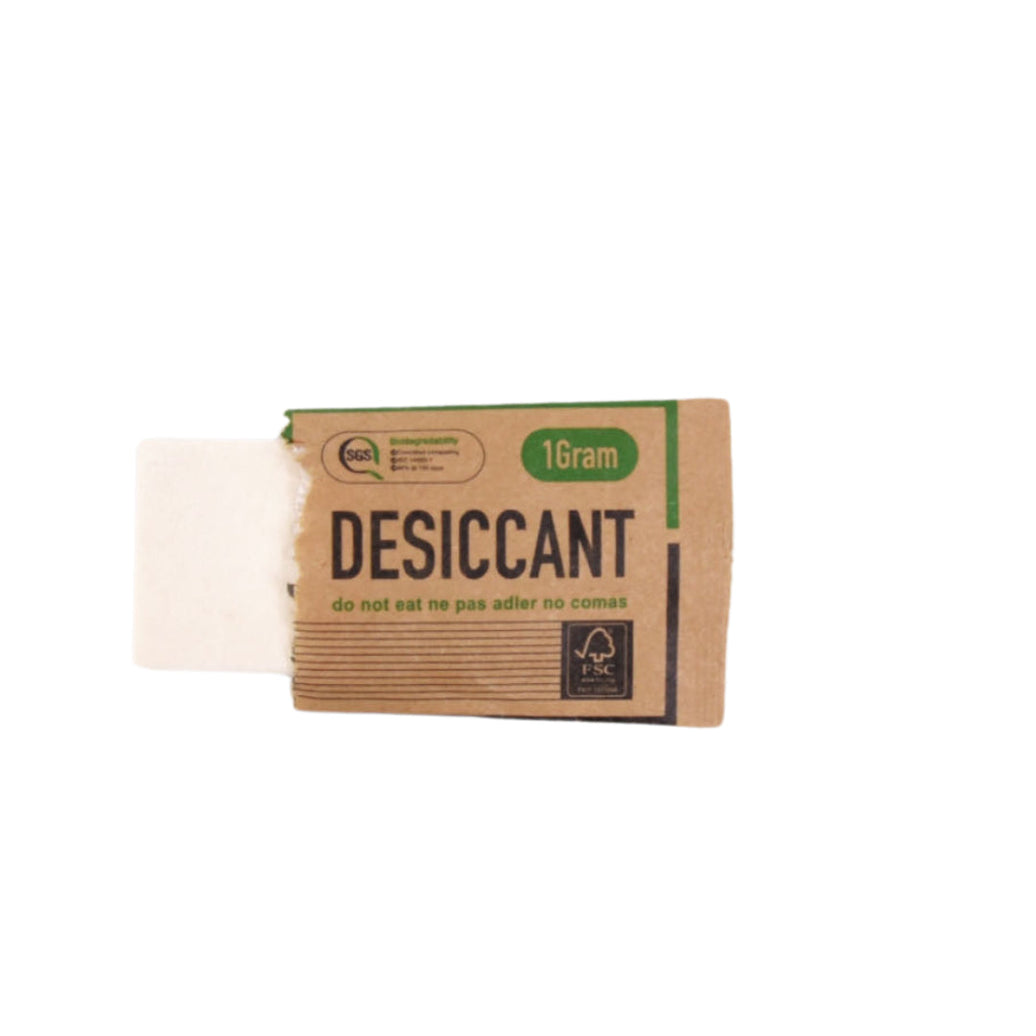
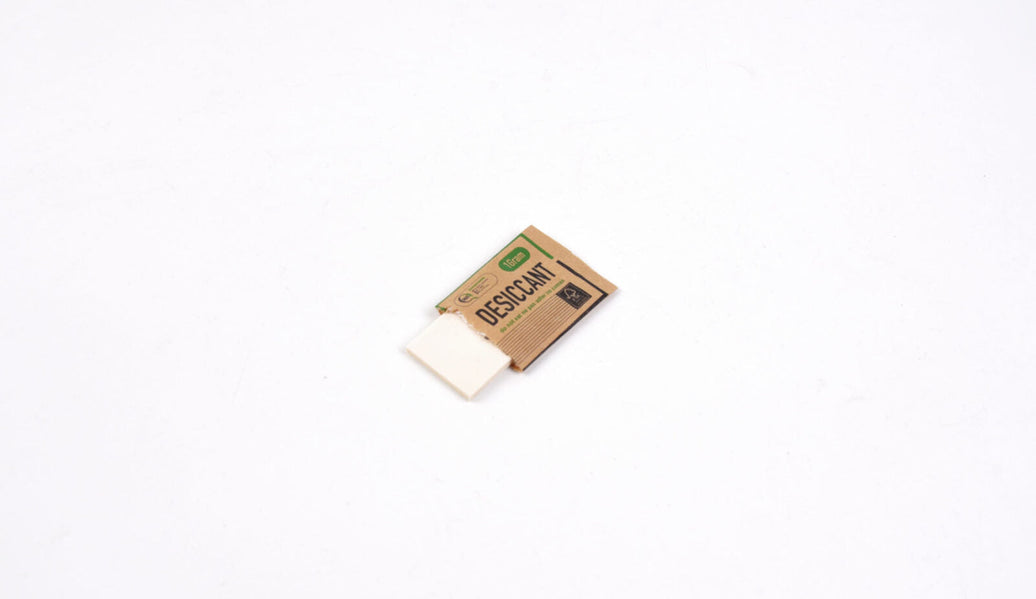
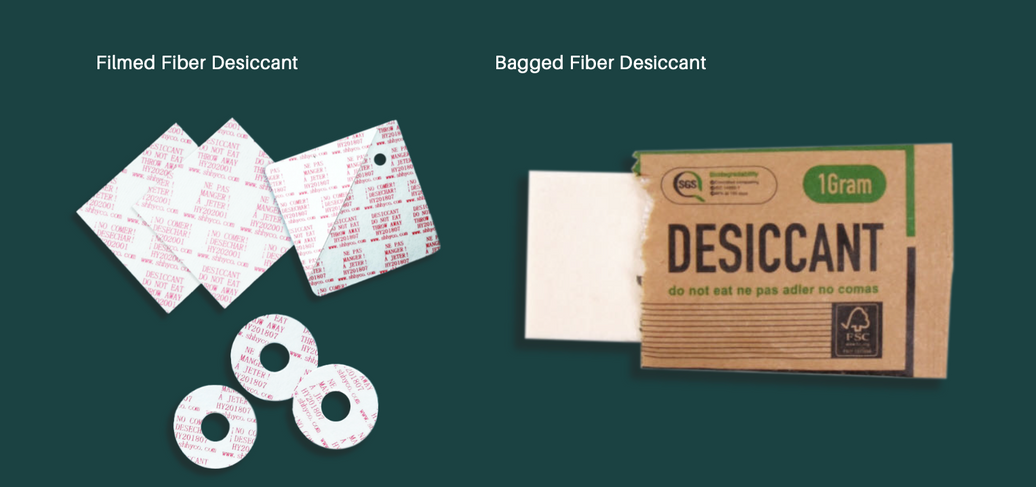
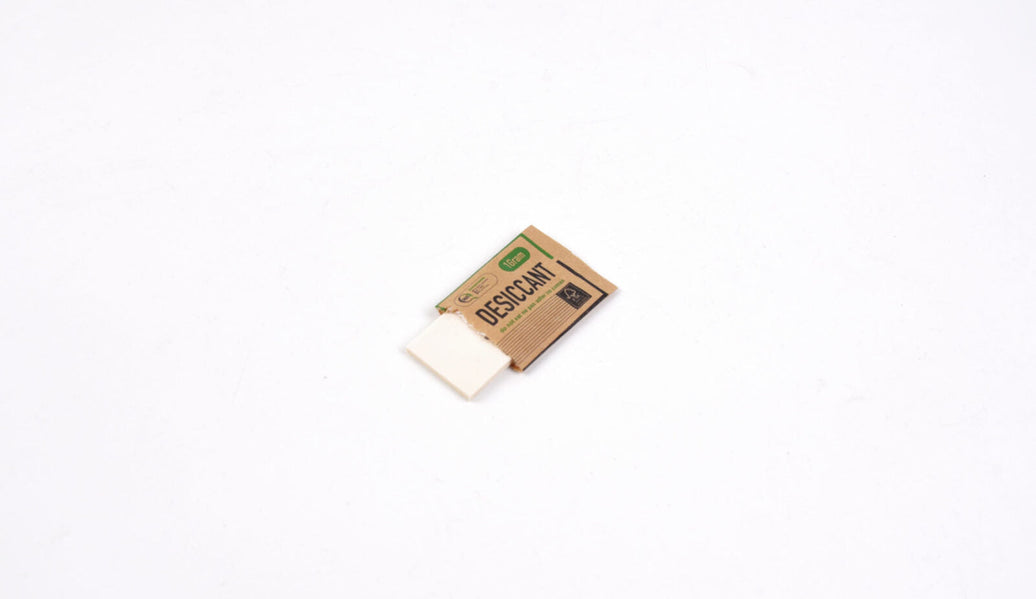
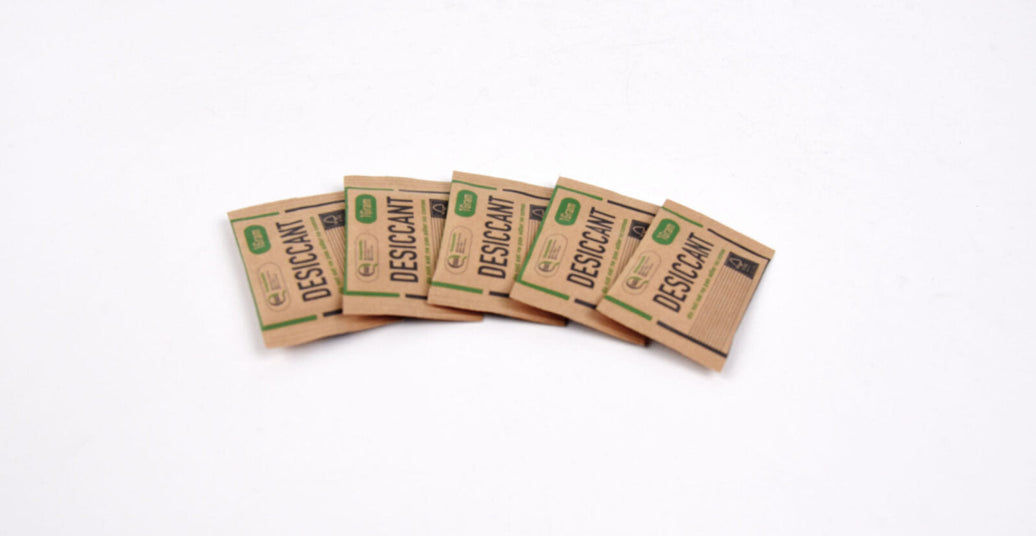
Reality: loose-fill silica and clay can shed particles — a legitimate contamination concern. But fiber desiccant is a bagged or paper-wrapped substrate that is dust-free by construction. The distinction matters for open-powder contact and is covered in powder & loose-fill desiccant risks.
Myth 7 — "Sustainable desiccants underperform"
Reality: the assumption that "green means weaker" fails against the data — the compostable fiber platform is a high-capacity performer, not a compromise. Where genuine trade-offs exist (e.g. bentonite clay), they're specific, not universal — examined in bentonite clay vs. fiber desiccant.

The pattern behind all seven
Every myth here substitutes a habit for a measurement. The corrective is the same each time: ask for the number — capacity at defined RH, dosage from headspace, documentation on file, landed cost not unit cost. Suppliers who can answer with data tend to save buyers money in both directions.
FAQ
Is silica gel ever the right choice?
Yes — for some ultra-low-RH industrial needs and where existing validated processes depend on it. The point is to choose it on data, not inherit it by default.
How do I know if I'm over-dosing?
If spent units come out far from saturation at end of shelf life, capacity is being paid for and not used. Weigh a few and compare against stated capacity.
Does "compostable" require its own proof?
Yes — look for ASTM D6400 / EN 13432 for the film and appropriate compost certification. The claim types are compared in compostability certifications.
What's the single most costly myth?
Usually Myth 4 — buying on unit price. It scales with volume and hides in freight and fee accounts where packaging buyers rarely look.
Not sure which myth is costing you?
Send your current desiccant spec and package — ATMOSIScience will return a data-based read on capacity, dosage and landed cost, and flag any assumption worth re-testing.