Quick answer: For most dry products, shelf life is a moisture number in disguise. Water activity drives the three failures that end a powder's usable life — caking, potency/quality loss, and microbial growth — and every one of them accelerates as moisture rises. A correctly sized desiccant holds the package below the product's critical water-activity threshold for longer, which is why moisture control translates directly into documented extra months of shelf life.
"How long does it last?" is really three questions — when does it cake, when does it lose potency or quality, and when does microbial risk cross the line — and moisture sits underneath all three. Understanding that connection is what lets a brand turn a desiccant from an insurance packet into a shelf-life lever.
The three ways moisture ends shelf life
1. Physical: caking and flow loss
Above a product's critical water activity, particles bridge and the powder cakes, clumps or stops flowing — the failure customers see and return. The threshold is readable from the product's isotherm; how to find it is in how to read a moisture sorption isotherm.
2. Chemical: potency and quality loss
Water is a reactant. It accelerates degradation of moisture-sensitive actives — vitamin C, probiotics, botanical compounds — and drives color, aroma and flavor change. Lower water activity slows these reactions, extending the window where the product still meets label claim.
3. Microbial: the safety line
Below roughly 0.6 water activity, most microbial growth is suppressed — which is why dry products are shelf-stable at all. Let moisture push aw upward and that protection erodes. Keeping the package dry keeps the product on the safe side of the line.
Why water activity, not moisture content, is the spec
Two powders at the same moisture content can behave completely differently — what governs caking, reaction rate and microbial risk is available water, i.e. water activity. Specifying and testing to aw is the shelf-life-relevant choice; the distinction is explained in water activity vs. relative humidity.

How the desiccant buys time
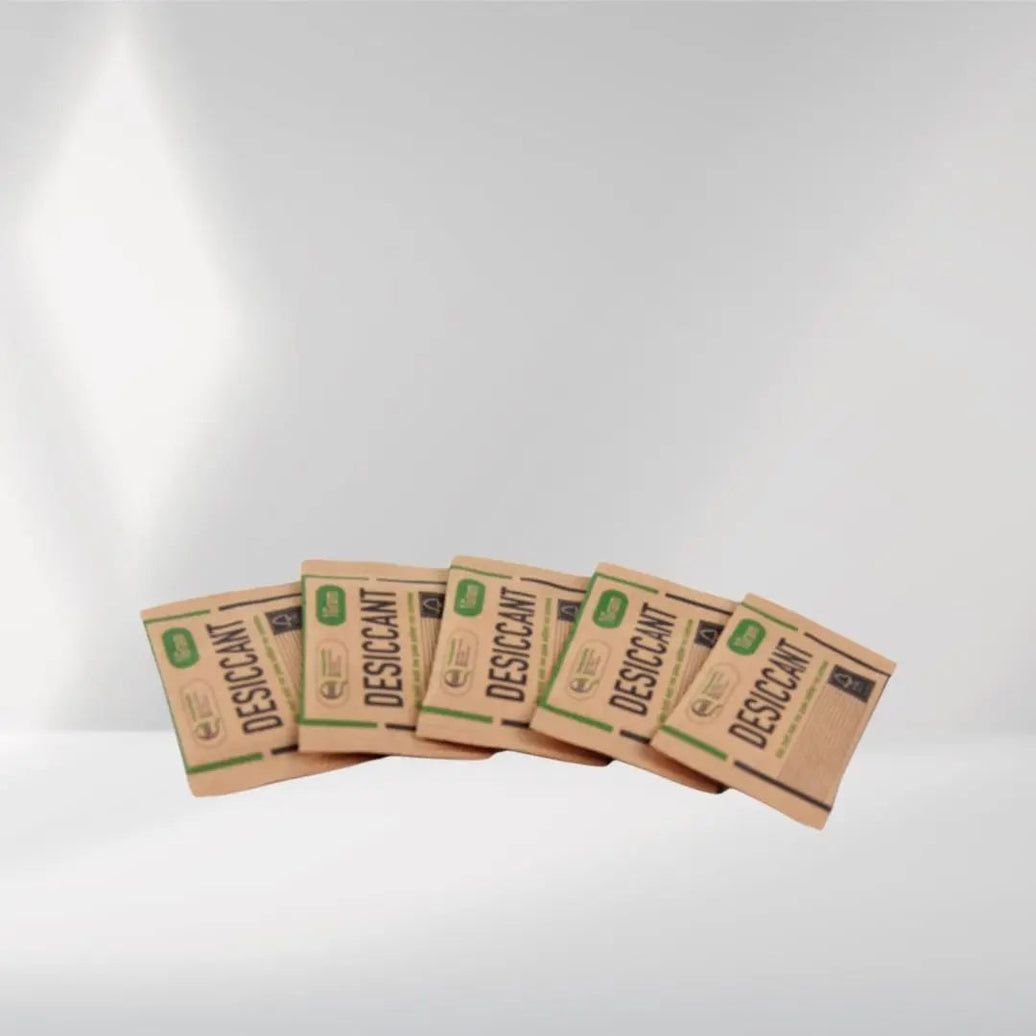
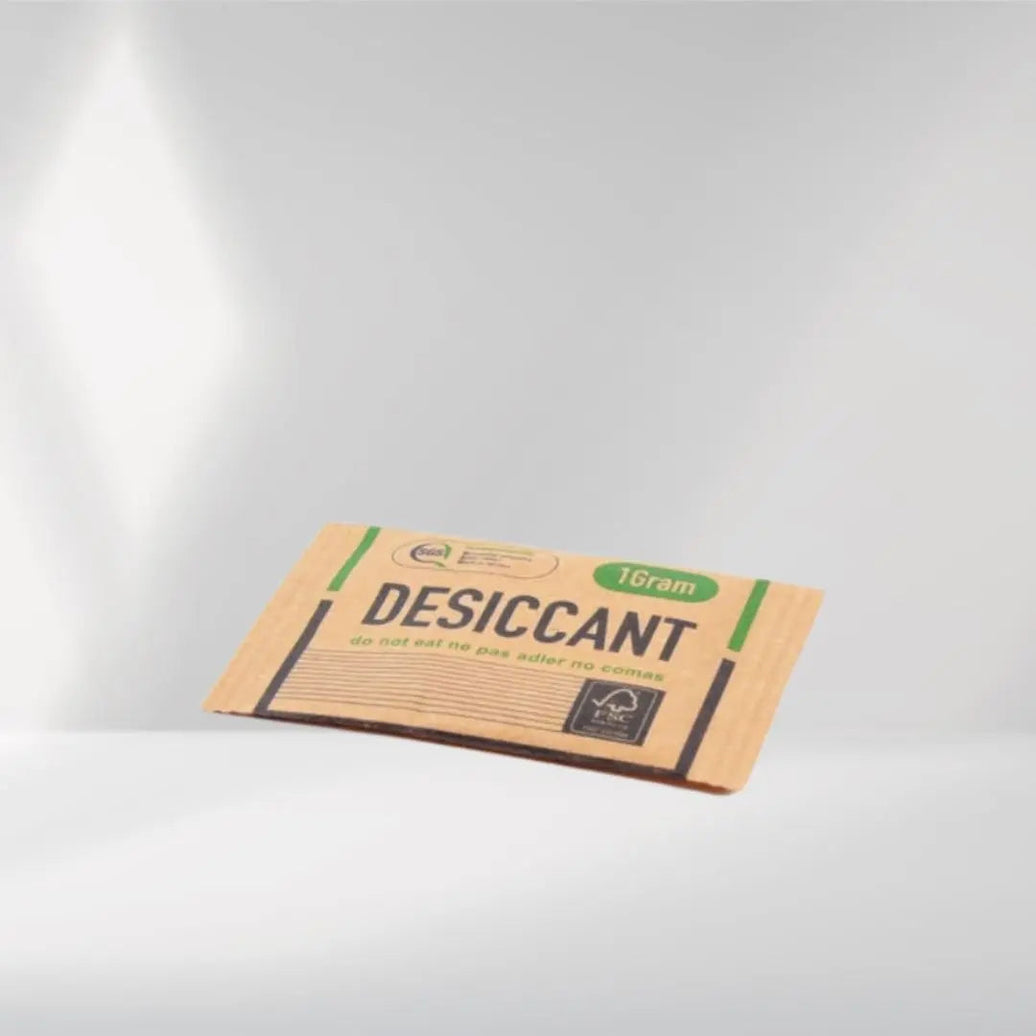
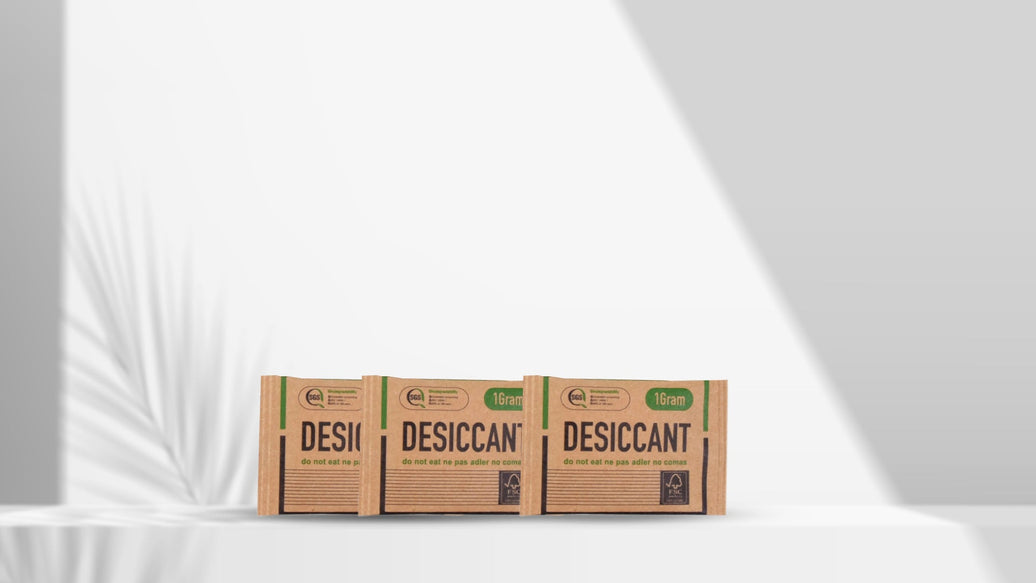
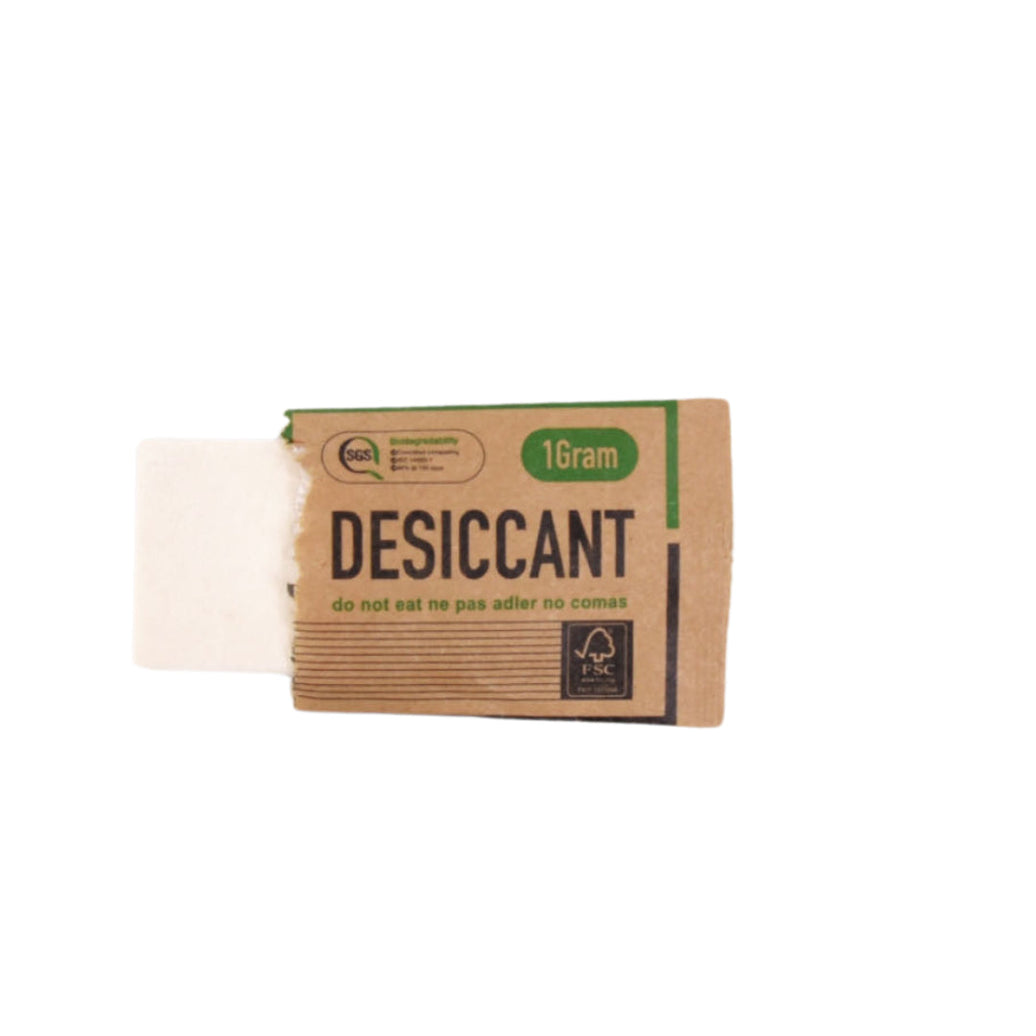
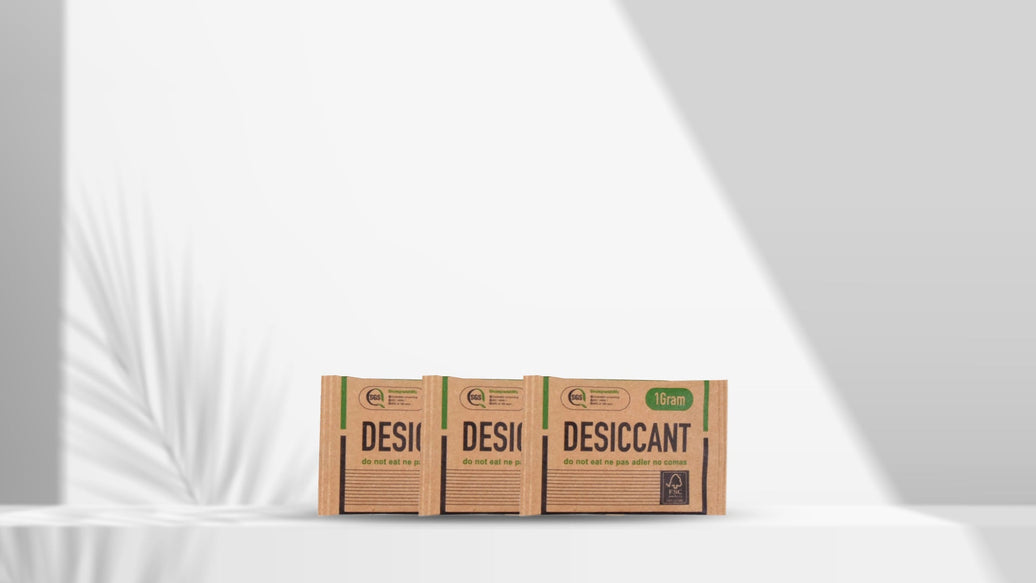
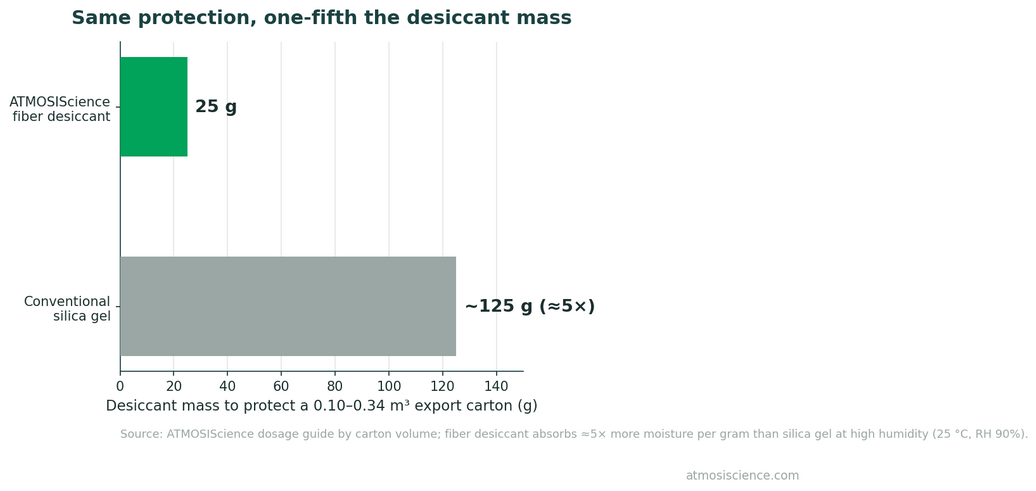
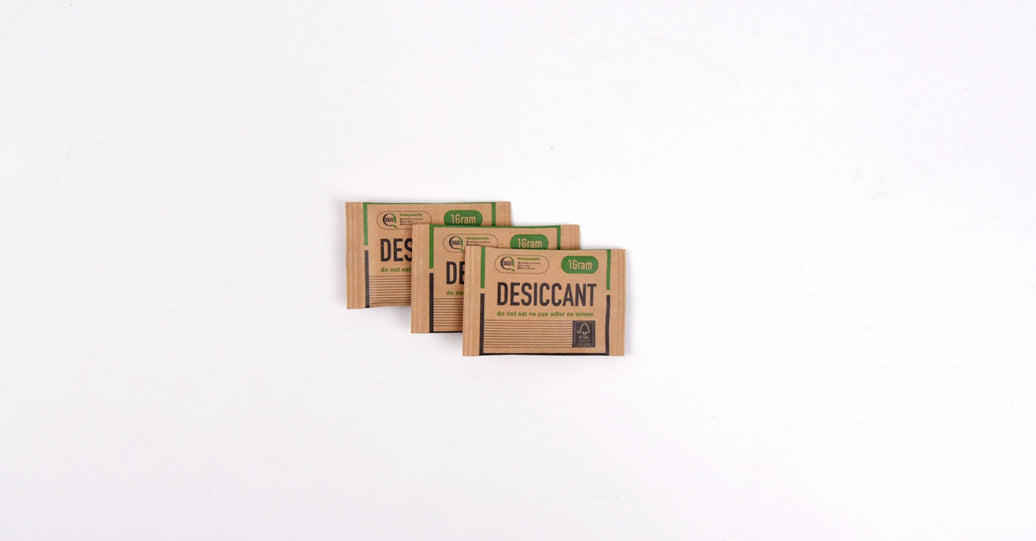
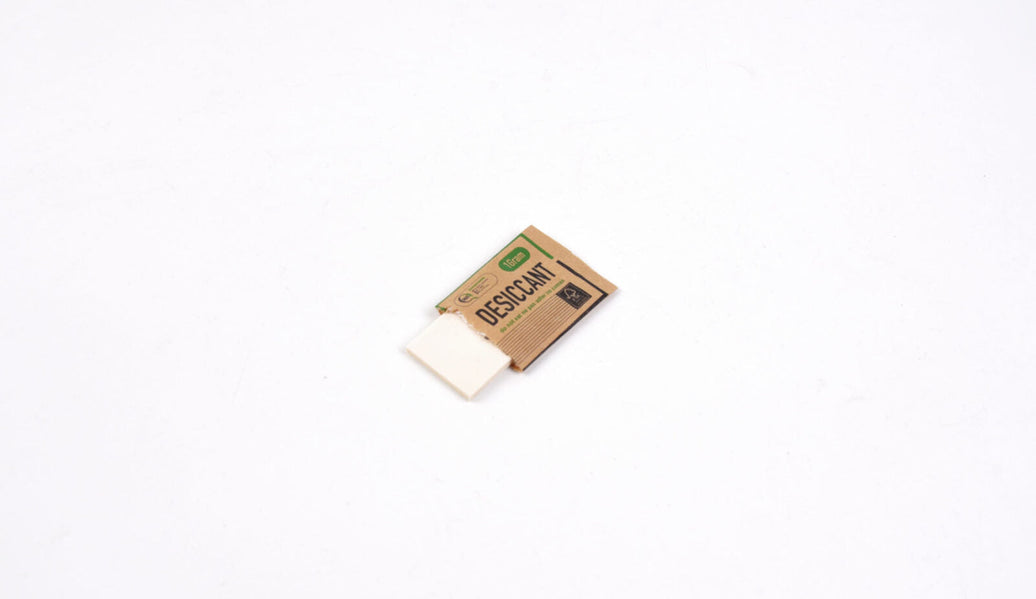
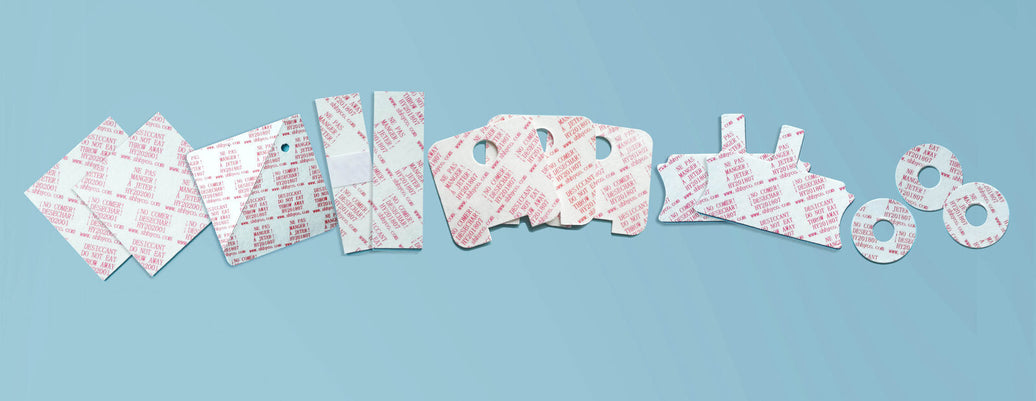
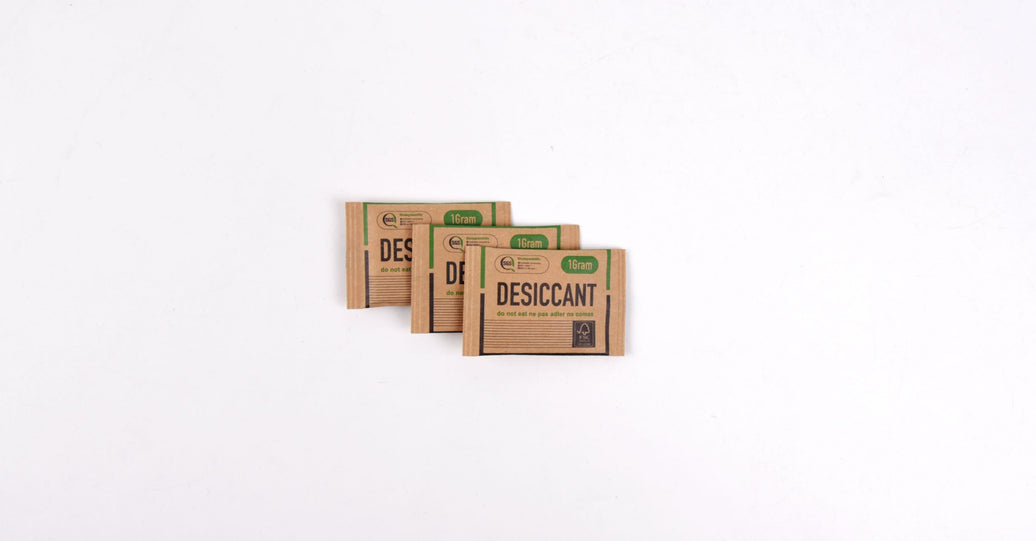
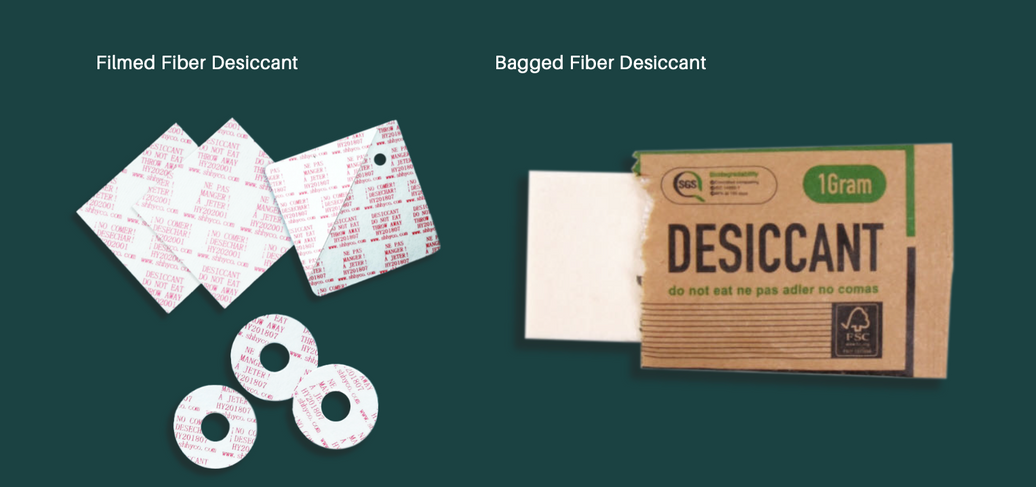
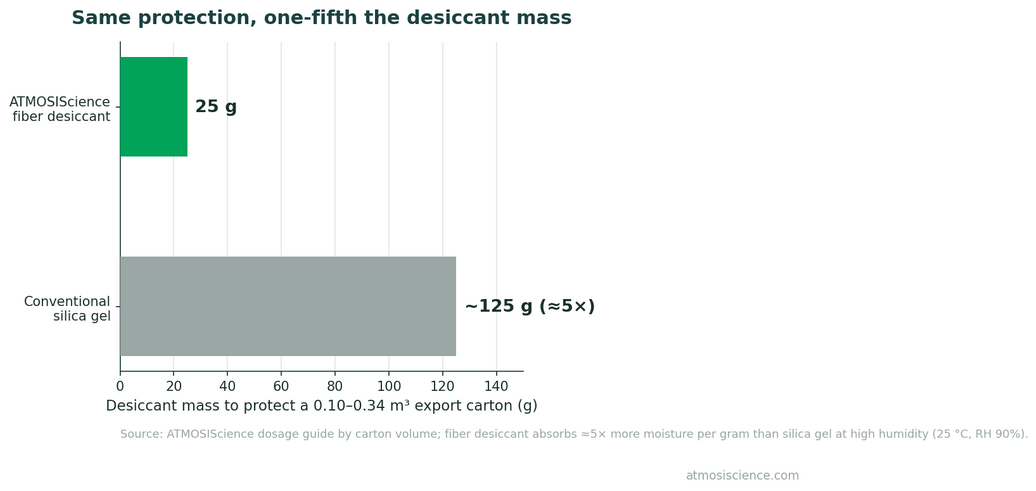
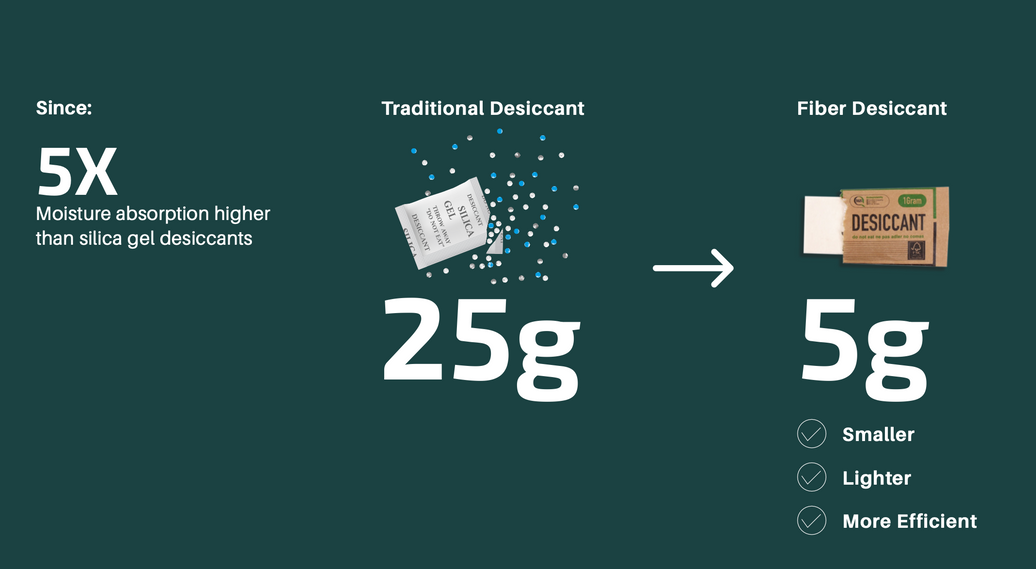
A correctly sized desiccant does two jobs: it removes the moisture sealed into the headspace at packing, and it absorbs what permeates through the film over the product's life — holding aw below the caking/degradation/microbial thresholds for longer than an unprotected package would. The lever is capacity: a unit that holds more than 70% of its own weight at 90% RH (25°C) sustains protection deeper into the shelf-life window. Sizing it to the headspace and shelf-life target is the dosage calculation; proving the extension is the worst-case sample evaluation.
Turning it into a documented claim
Shelf-life extension only counts if it's demonstrated. Accelerated stability testing at defined temperature/RH, with water activity tracked over time and a humidity indicator card for verification, produces the data QA and regulatory need — and folds neatly into a HACCP moisture-control point, as in adding desiccants to your HACCP plan. The result is a shelf-life number backed by evidence rather than hope.
FAQ
Can a desiccant extend shelf life indefinitely?
No — it extends the moisture-limited portion of shelf life. If a product is limited by oxidation or light instead, a desiccant helps less; diagnose the limiting mechanism first via desiccant vs. oxygen absorbers vs. nitrogen flush.
How much extra shelf life is realistic?
It depends entirely on the product, package and conditions — which is why it's measured, not promised. Accelerated testing on the actual package gives the honest number.
Does over-drying hurt shelf life?
For some products, yes — over-dried powders can dust or, for products with a target moisture (like some chews), degrade. Aim for the band the isotherm defines, not zero.
What's the first step to use moisture for shelf-life gain?
Establish the product's critical water activity, then size a desiccant to hold below it across the target shelf life. Those two numbers convert "add a packet" into a designed claim.
Want extra shelf life you can document?
Send your product, package and current shelf-life target — ATMOSIScience will size a desiccant to a critical-water-activity threshold and outline the accelerated test that turns it into a defensible claim. Samples available for the study.