Quick answer: When a desiccant "doesn't work," the desiccant is rarely defective. In most investigated cases the cause is one of seven failure modes: it was undersized for the headspace, saturated before it ever reached the package, defeated by a leaking barrier, mismatched to the package format, placed where air couldn't reach it, overwhelmed by repeated opening cycles, or expected to fix a problem that isn't moisture. Each has a specific test and a specific fix.
The desiccant was in the box. The powder still caked. That sentence starts a large share of the technical conversations ATMOSIScience has with new buyers — usually after the complaint, the deduction and the awkward internal meeting. What follows is the checklist used to find out what actually happened, in the order worth checking.
1. It was undersized for the job
Symptom: protection worked for days or weeks, then stopped.
Test: weigh the spent desiccant against its stated capacity — a fully loaded unit at end of life means it did its job and simply ran out.
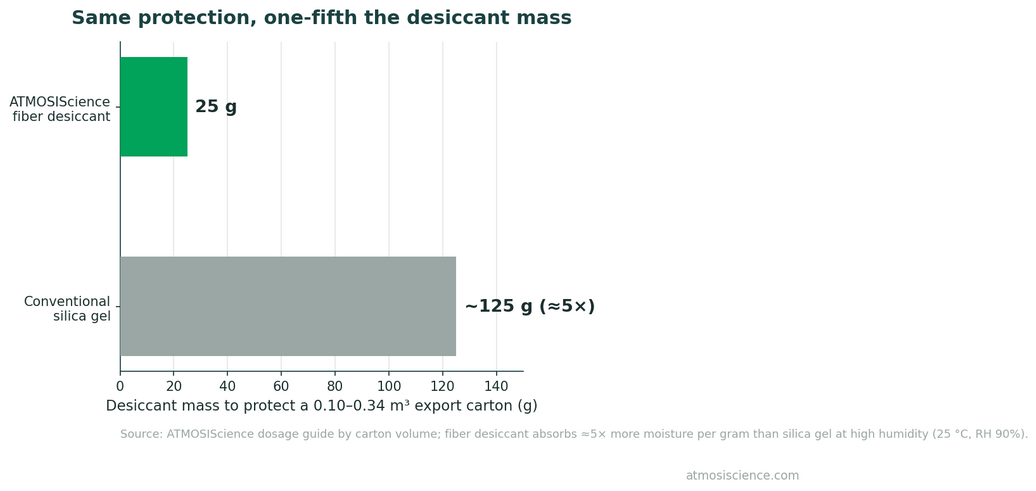
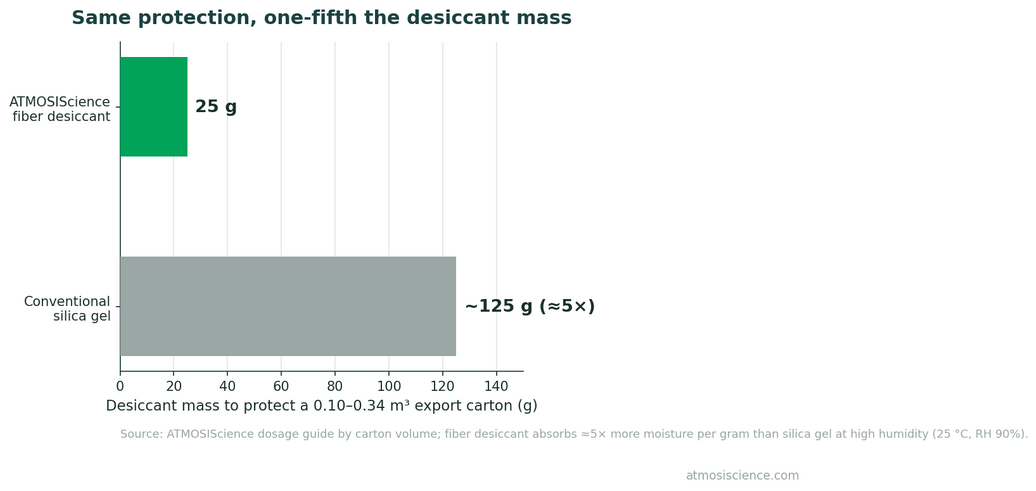
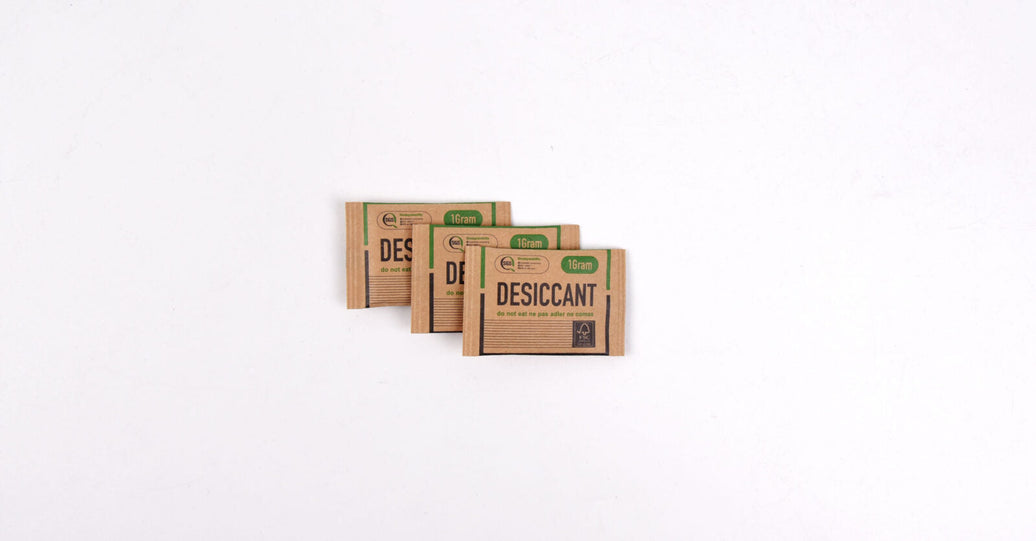
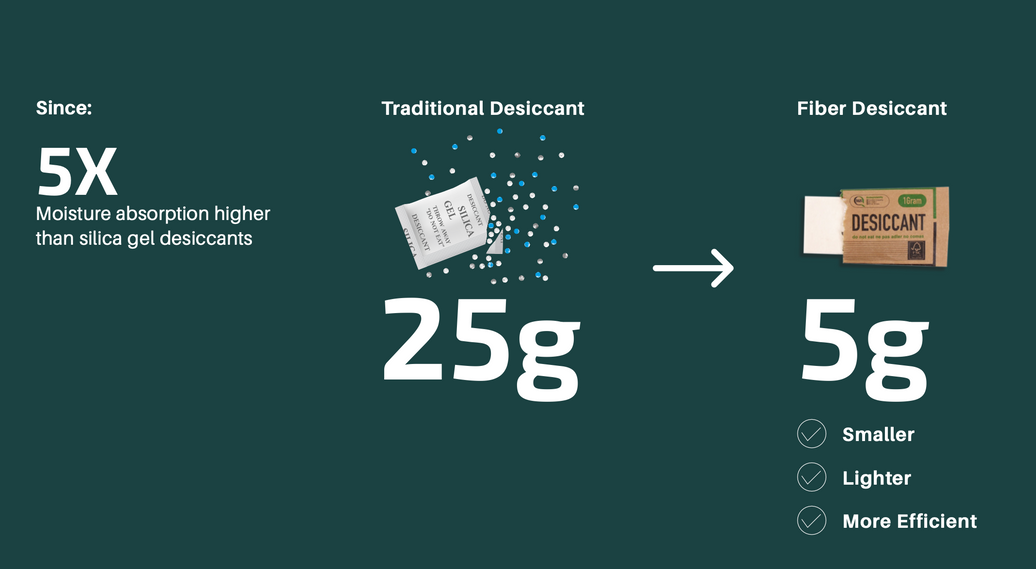
Fix: size from headspace volume, film permeability and shelf-life target, not from habit. The method is in the dosage guide. Fiber desiccant holds more than 70% of its own weight at 90% RH (25°C), which is why a smaller unit can replace a larger silica one — see silica gel equivalency.
2. It was saturated before it entered the package
Symptom: zero apparent protection from day one.
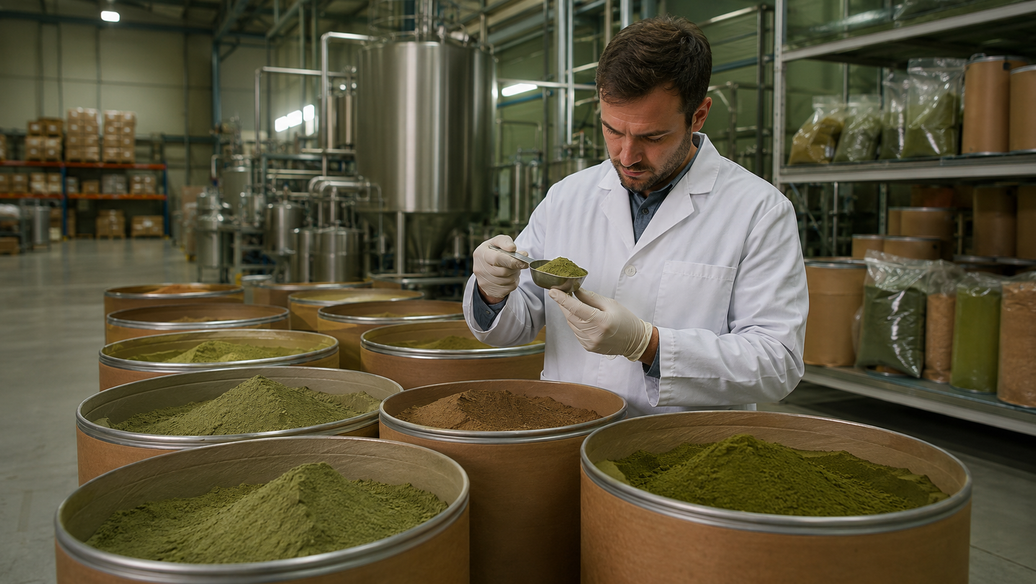
Test: weigh unused units from the same carton against nominal dry weight; check loss-on-drying (spec: LOD below 10% at dispatch).
Fix: desiccants left in an open warehouse bag adsorb warehouse air. Keep units in their sealed barrier bag until the moment of insertion and add a reseal rule to the line SOP.
3. The package leaked around it
Symptom: product moisture rises steadily regardless of desiccant size.
Test: gross-leak check the seal area and closure torque; inspect gussets and zipper ends.
Fix: no desiccant outruns a compromised barrier. Fix the seal first, then re-dose. A desiccant covers the moisture sealed in at packing plus slow permeation — not an open door.
4. Wrong format for the package
Symptom: the desiccant physically interferes — jams dosing scoops, blocks caps, or gets discarded by annoyed customers.
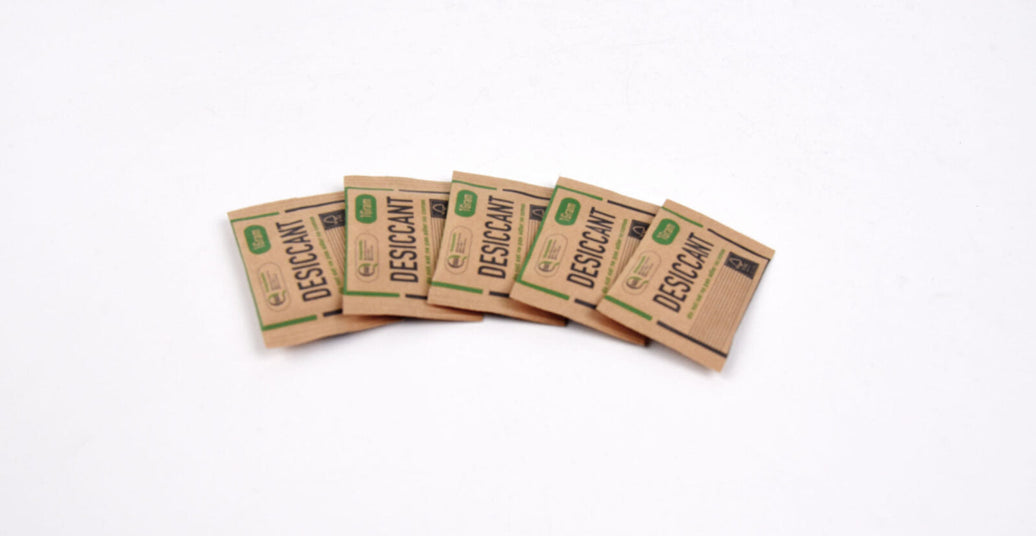
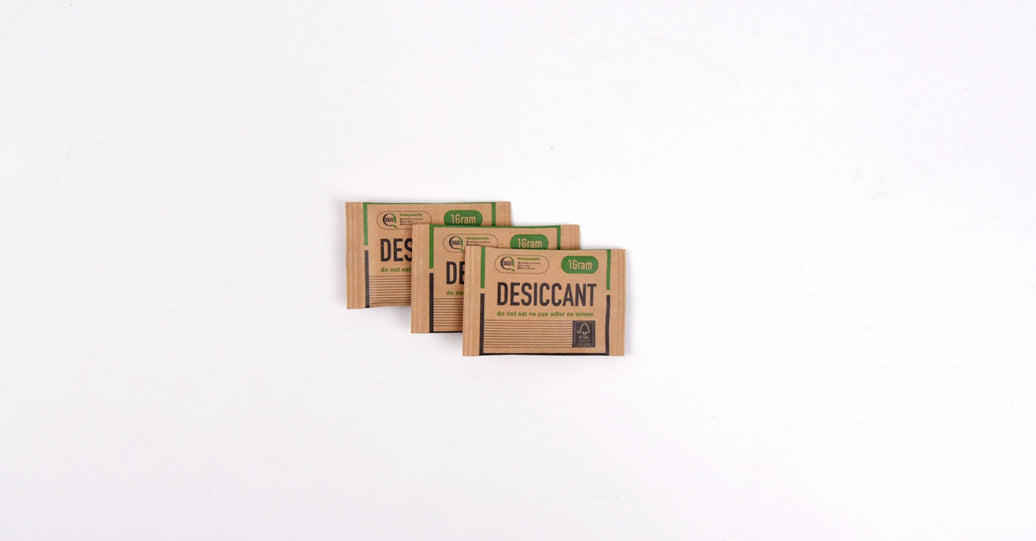
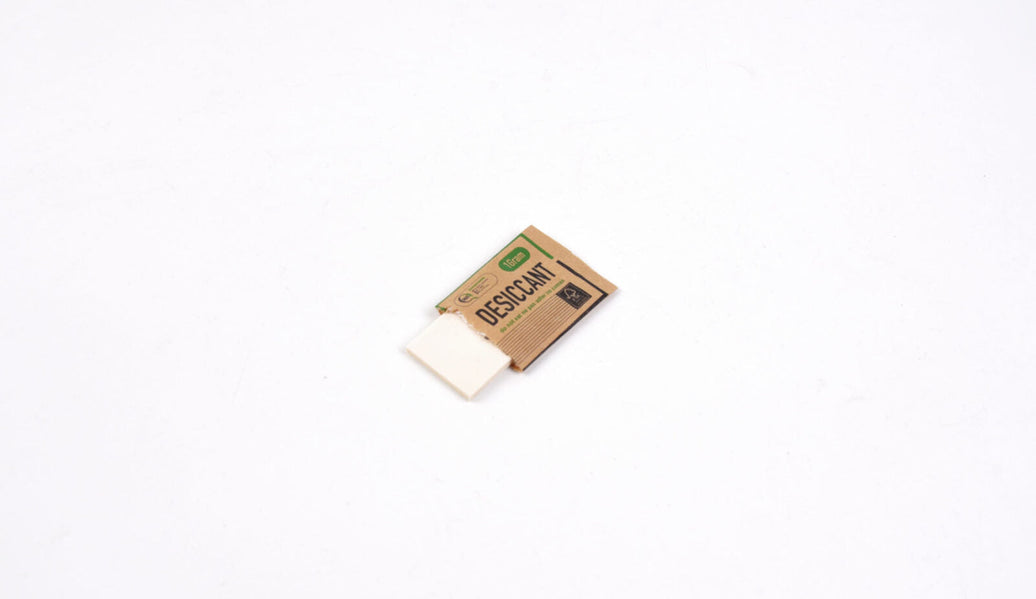
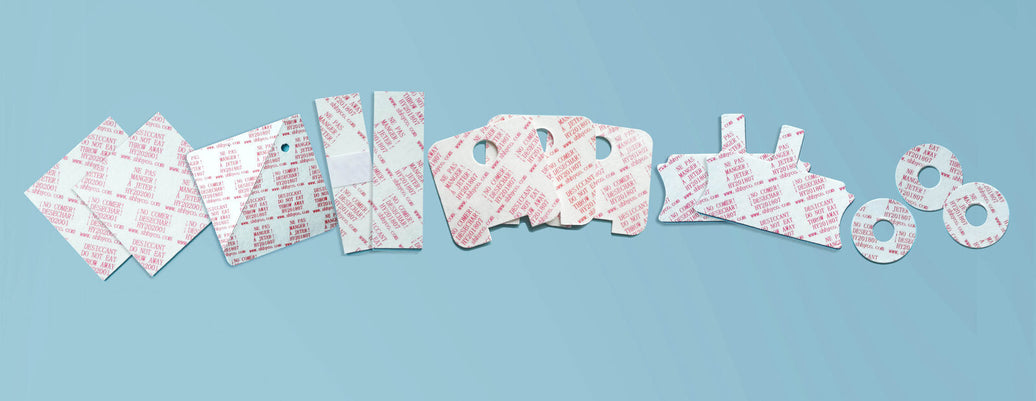
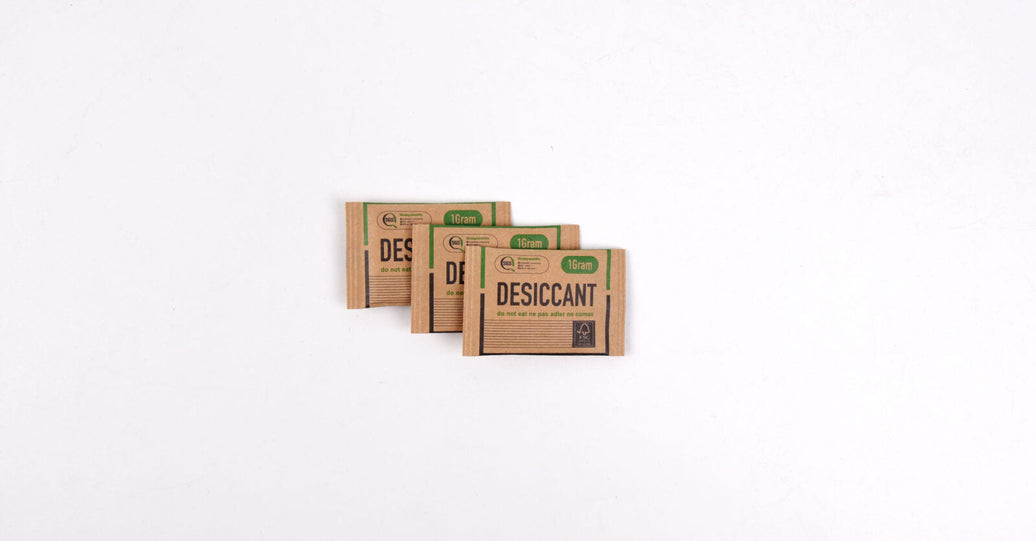
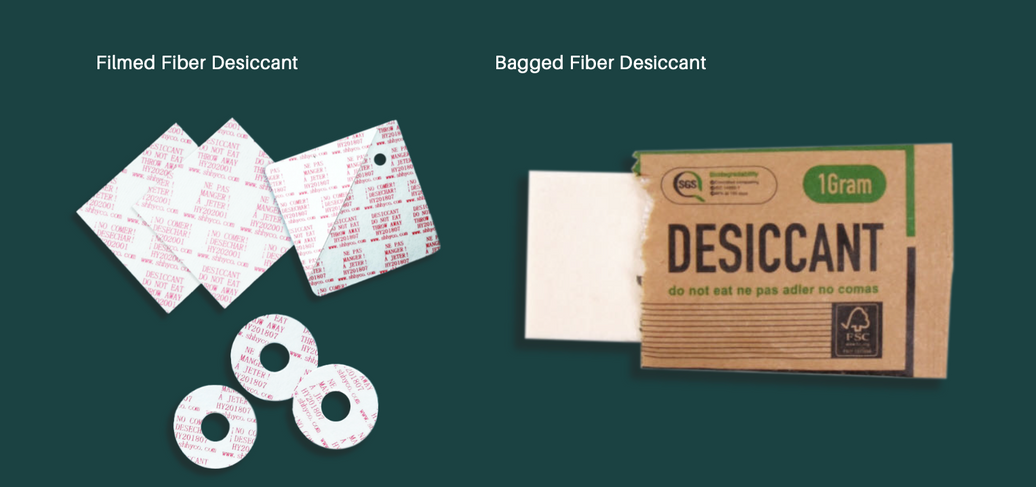
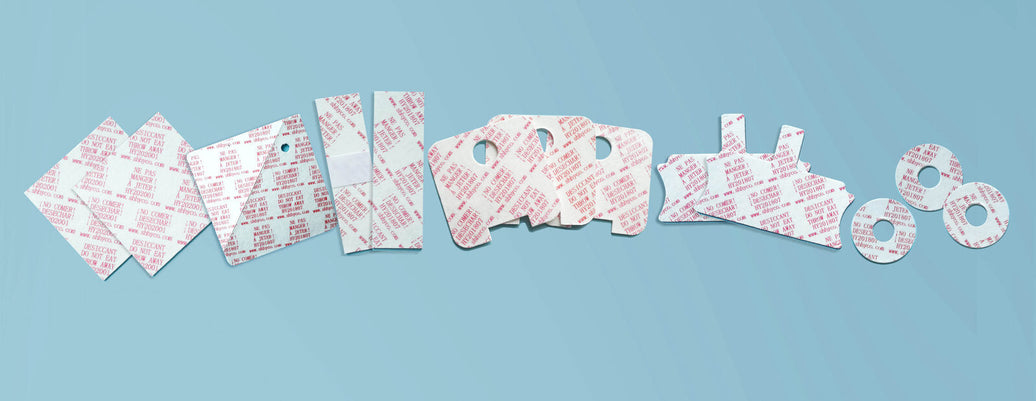
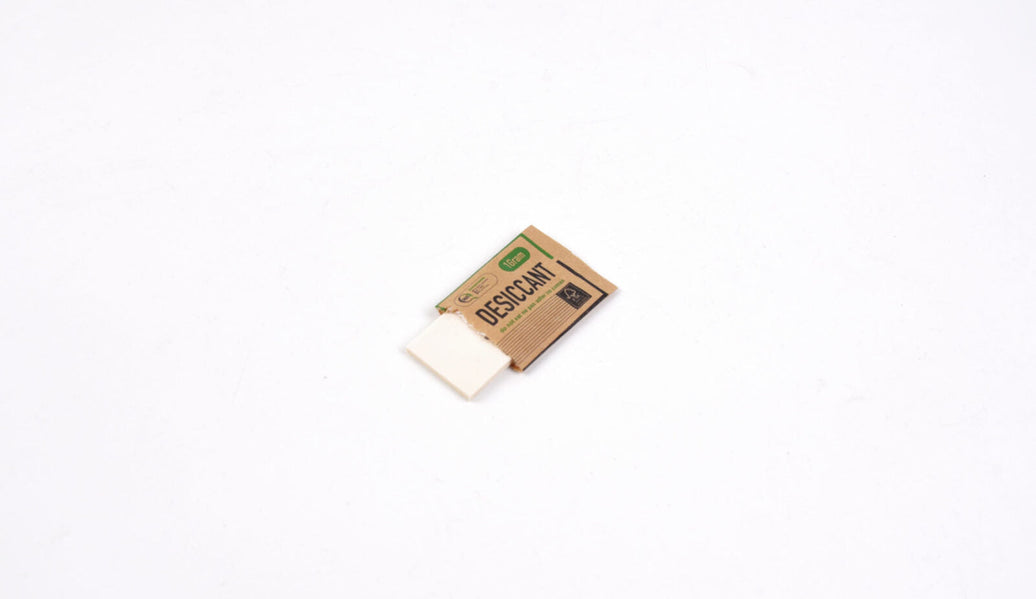
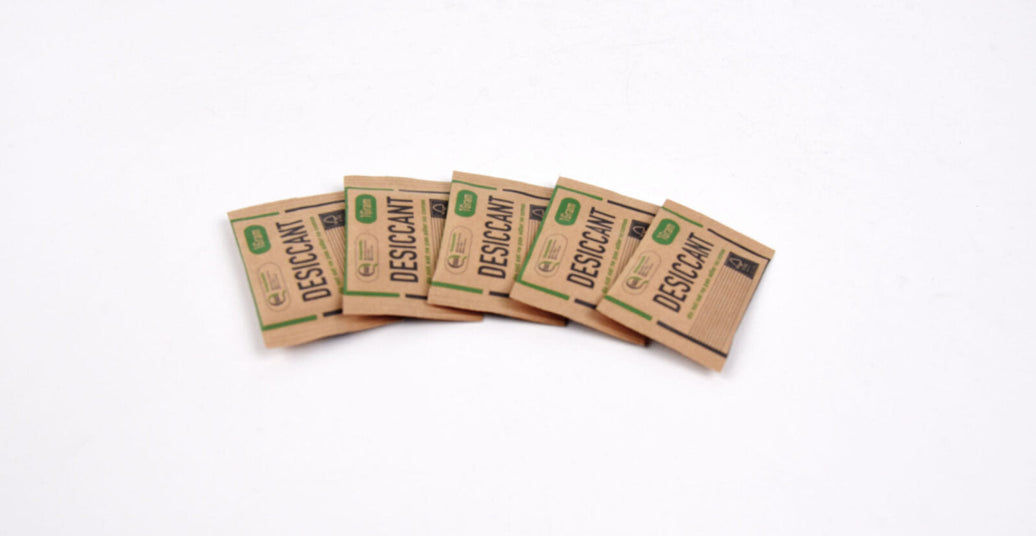
Fix: match format to geometry: sachets (1–1,000 g) for cartons and drums, thin film cards (0.5 or 1.0 mm) for pouches and kits, cap inserts for bottles — compared in bottle-cap desiccant inserts.
5. Placed where air can't reach it
Symptom: caking at the bottom of the container while the desiccant sits dry at the top of a dense powder bed.
Fix: desiccants condition the air around them, not the bulk they're buried in. Place units in the headspace or against the largest air path, and split large doses into multiple units for large cartons.
6. Opening cycles overwhelmed the budget
Symptom: a 90-serving tub is fine for the first month, then cakes.
Fix: every opening exchanges the headspace air. Multi-serve containers need capacity budgeted per expected opening, or a two-way system that also releases moisture — the mechanism difference is explained in the science of fiber desiccant.
7. The problem was never moisture
Symptom: "caking" that turns out to be fat bloom, electrostatic clumping, or oxidation-driven color change.
Test: water activity of the complained product vs. retained samples. Flat aw with visible change points away from moisture — an oxygen absorber or nitrogen flush may be the right tool; the decision tree is in desiccant vs. oxygen absorbers vs. nitrogen flush.

Run the diagnosis in this order
Check saturation-before-use first (fastest test), then barrier integrity, then sizing math, then format and placement, and only then question whether moisture is the mechanism at all. Investigations that start at #1 and stop at the first confirmed failure resolve most cases in a single pass.
FAQ
Can a desiccant be "dead on arrival" from the factory?
It is rare with documented suppliers — dispatch specs like LOD below 10% exist precisely to catch it. A certificate of analysis states the batch values; how to read one is covered in the desiccant COA guide.
How can saturation be checked without lab equipment?
A scale. Compare unit weight against nominal dry weight from the spec sheet — significant weight gain means the unit has already been working.
Does doubling the desiccant fix an unknown failure?
Usually not. Doubling helps only failure modes 1 and 6. For modes 2, 3, 4, 5 and 7 it doubles cost while the root cause continues.
What data should be collected before contacting a supplier?
Package type and volume, desiccant type and grams used, storage/transit conditions, time to failure, and — ideally — spent-unit weight. With those five, a specialist can usually identify the failure mode in one exchange.
Stuck on a failure that doesn't fit the list?
Describe the symptom and the package — an ATMOSIScience technical specialist will run the diagnosis with you and reply with the failure mode and the fix, not a catalog PDF.