Quick answer: Three forces are reshaping desiccant buying in 2026: sustainability regulation (the EU's PPWR applies from 12 August 2026, and US state EPR fees now price packaging by material), a shift from commodity sachets toward documented, validated moisture-control programs, and growing demand from high-spec segments like batteries, diagnostics and powder foods. Buyers are responding by asking for proof — adsorption data, food-contact files, compostability certificates — before price.
For decades the desiccant conversation started and ended with "how many silica sachets, and how cheap." The inquiries reaching ATMOSIScience in 2026 read differently: they cite regulations by name, ask for adsorption curves, and put documentation requests in the first email. That shift is measurable across the market — here is what's driving it.
Trend 1 — Regulation is repricing the humble sachet
The EU Packaging and Packaging Waste Regulation entered into force on 11 February 2025 and applies generally from 12 August 2026, pushing recyclability, packaging minimization and material documentation onto everything in the box — including the desiccant. In the US, state EPR programs in California, Oregon, Colorado, Washington and Maine now attach per-material fees to packaging components. A plastic-wrapped desiccant is no longer a rounding error; it is a line item. The compliance details are covered in EU PPWR & desiccant sachets and US packaging EPR laws.
Trend 2 — From commodity to validated system
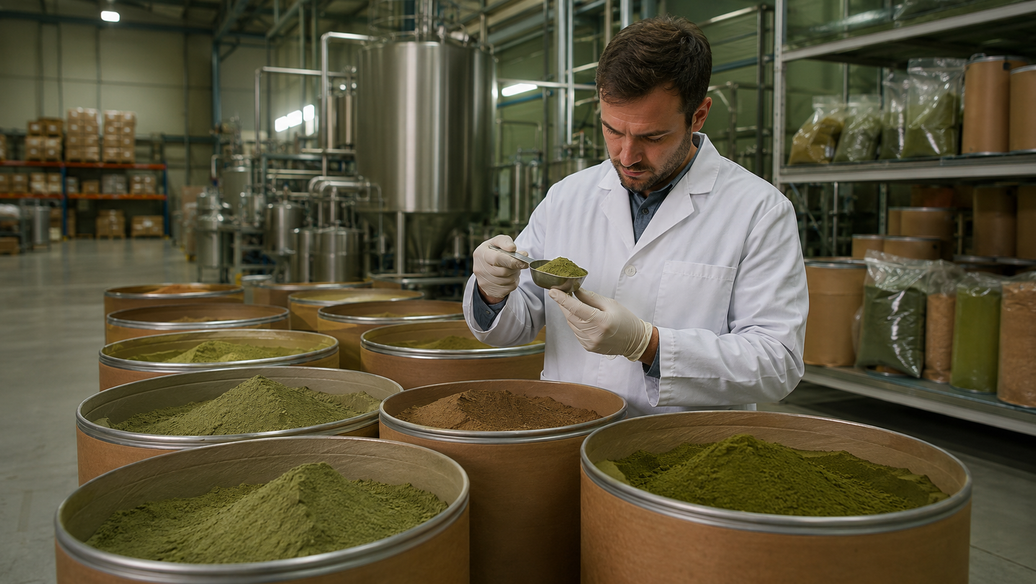
Industry analysis describes the same movement suppliers see in inquiries: one 2026 market study projects the desiccant market growing from roughly $1.2 billion in 2025 toward $1.9 billion by 2034, with growth concentrated where moisture control is validated and documented — pharma, electronics, battery materials and powder foods — rather than in generic sachets. In practice, "validated" means buyers now expect what QA teams have always wanted: a certificate of analysis per batch, published capacity at defined RH points, and a sample protocol. ATMOSIScience publishes the full checklist in the supplier qualification pack.
Trend 3 — Smart dry chains raise the proof bar
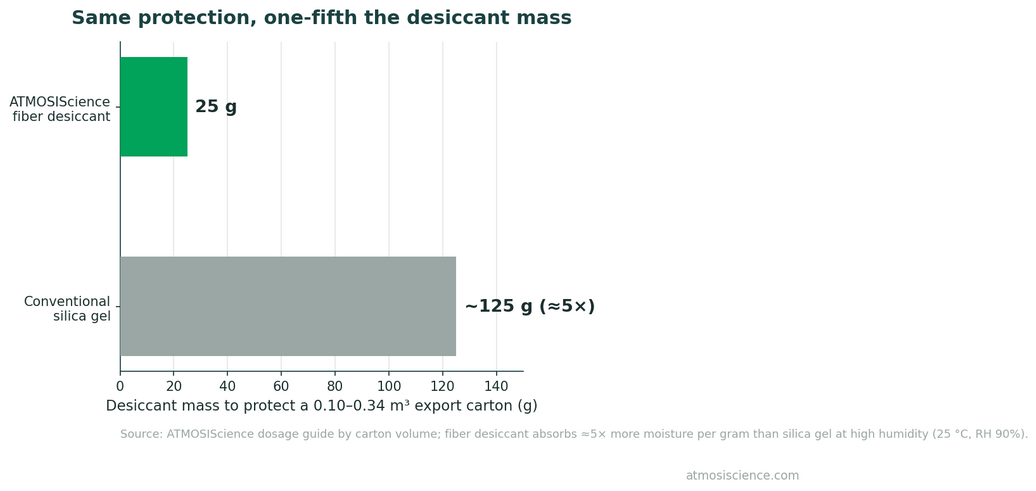
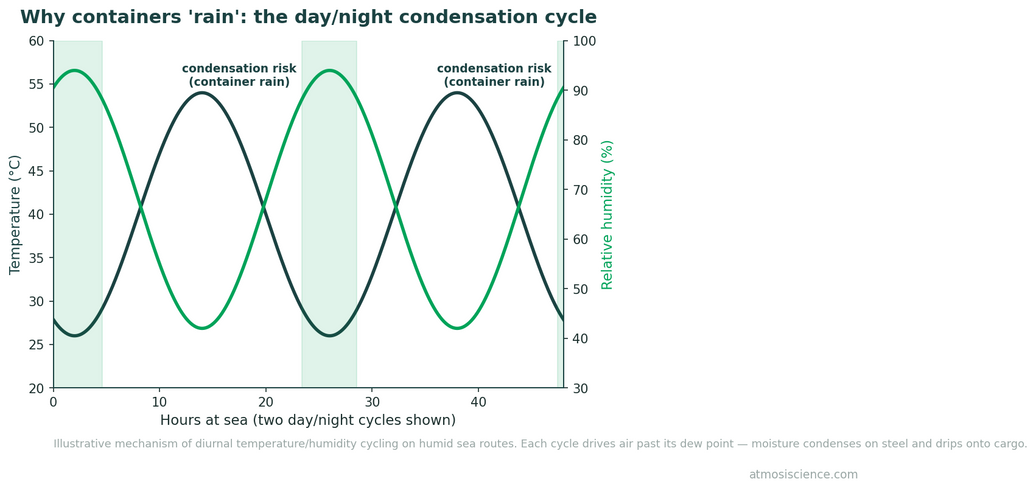
Sensor-verified "dry chain" logistics — RH monitored from factory to destination — is moving from pharma into food and industrial shipping. Its side effect: desiccant performance is now visible. A sachet that quietly saturated mid-ocean used to be undetectable; a logged RH curve shows exactly when protection ran out. Sizing against real capacity data stops being optional — the math is in the dosage guide, and the sea-freight-specific failure pattern in why desiccants fail in sea freight.

Trend 4 — Sustainable desiccants move from nice-to-have to spec line
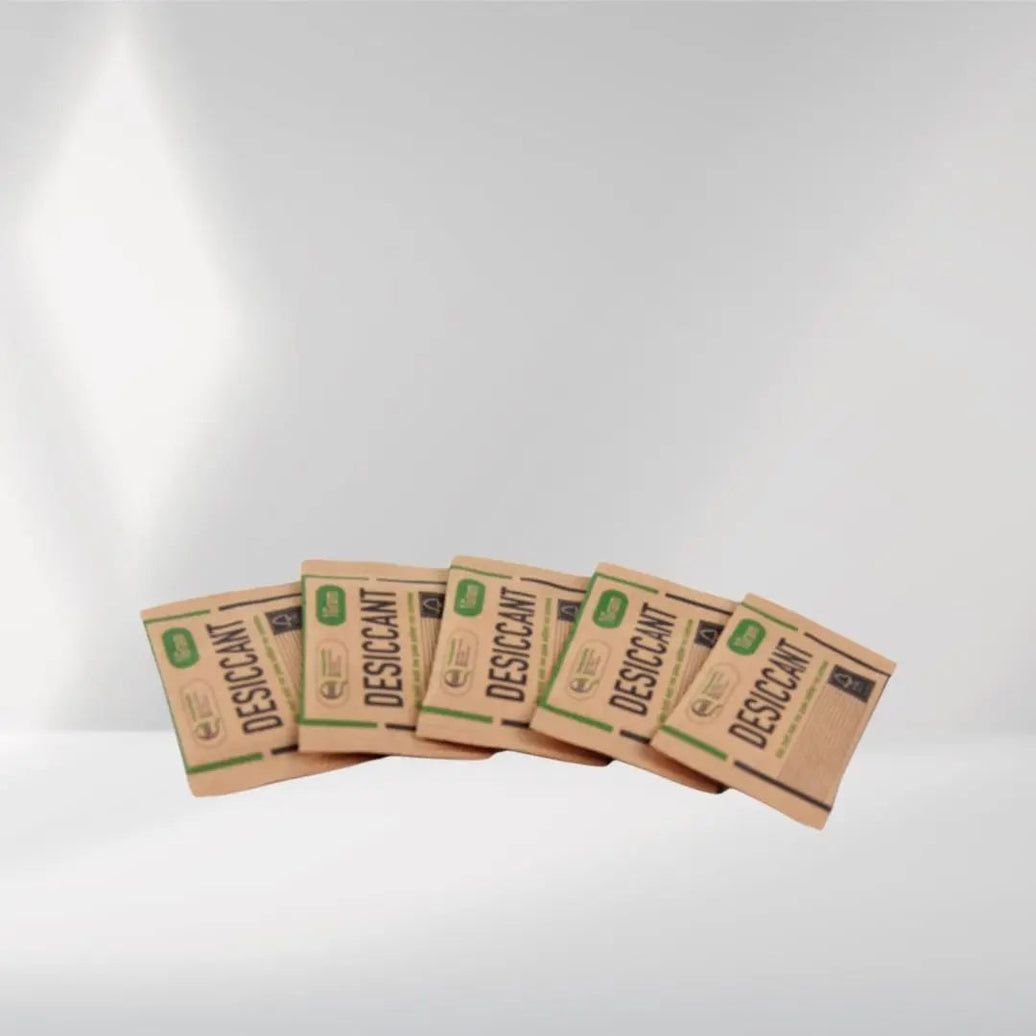
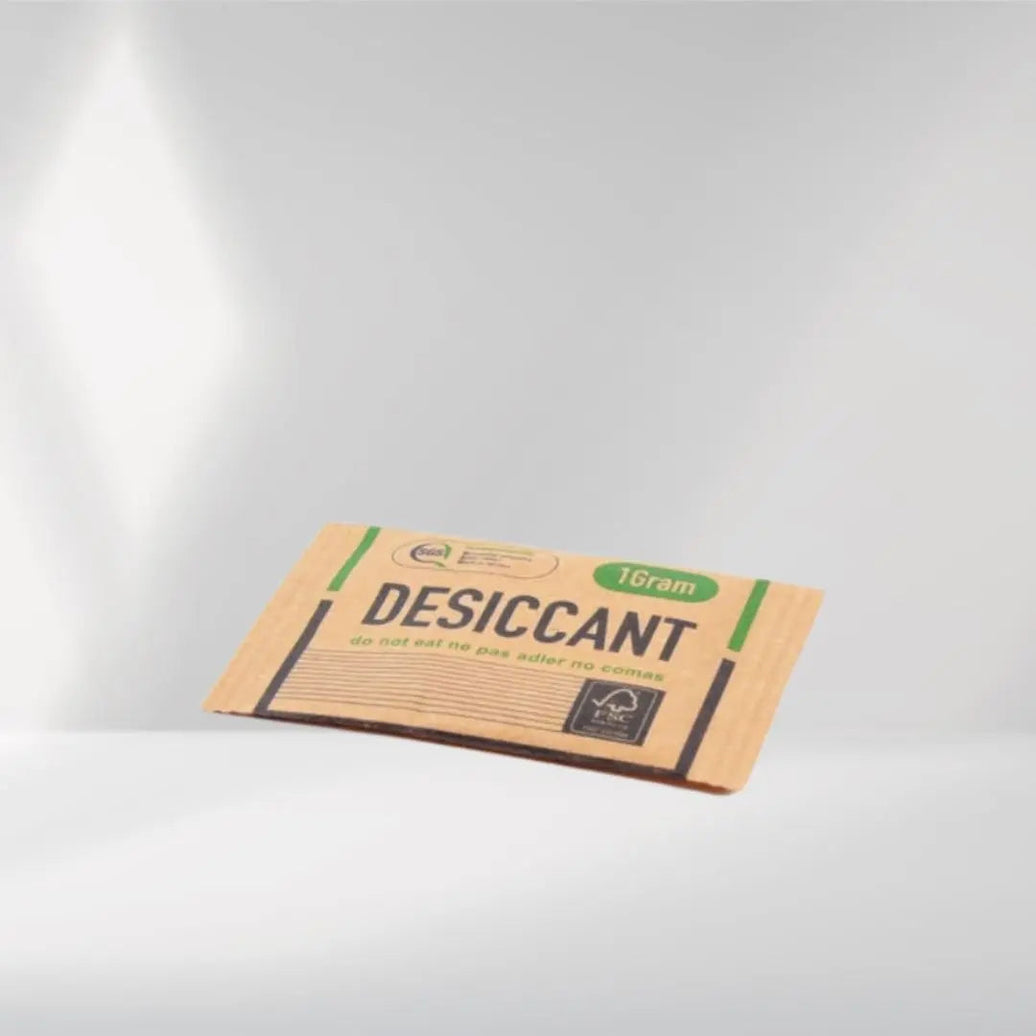
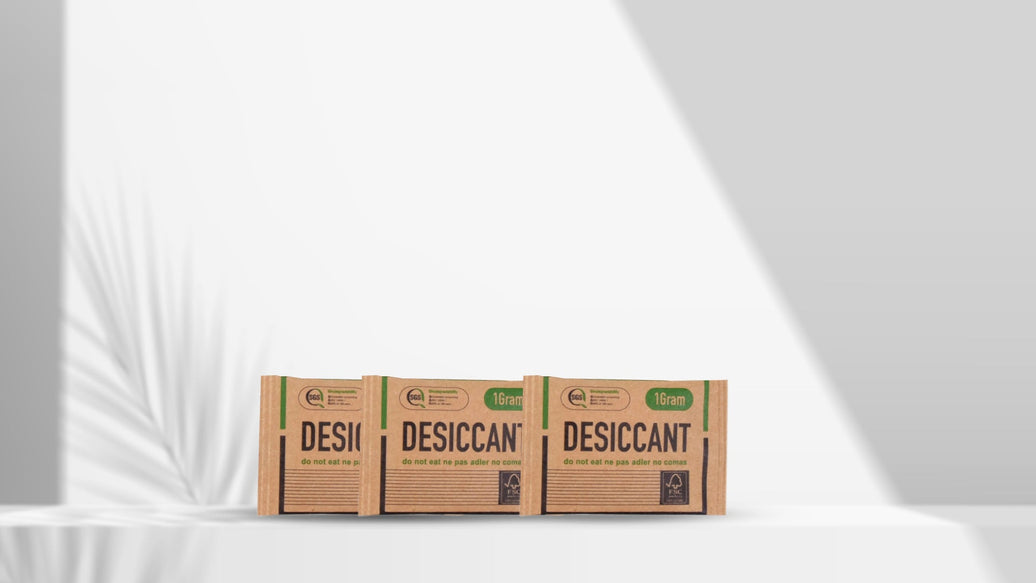
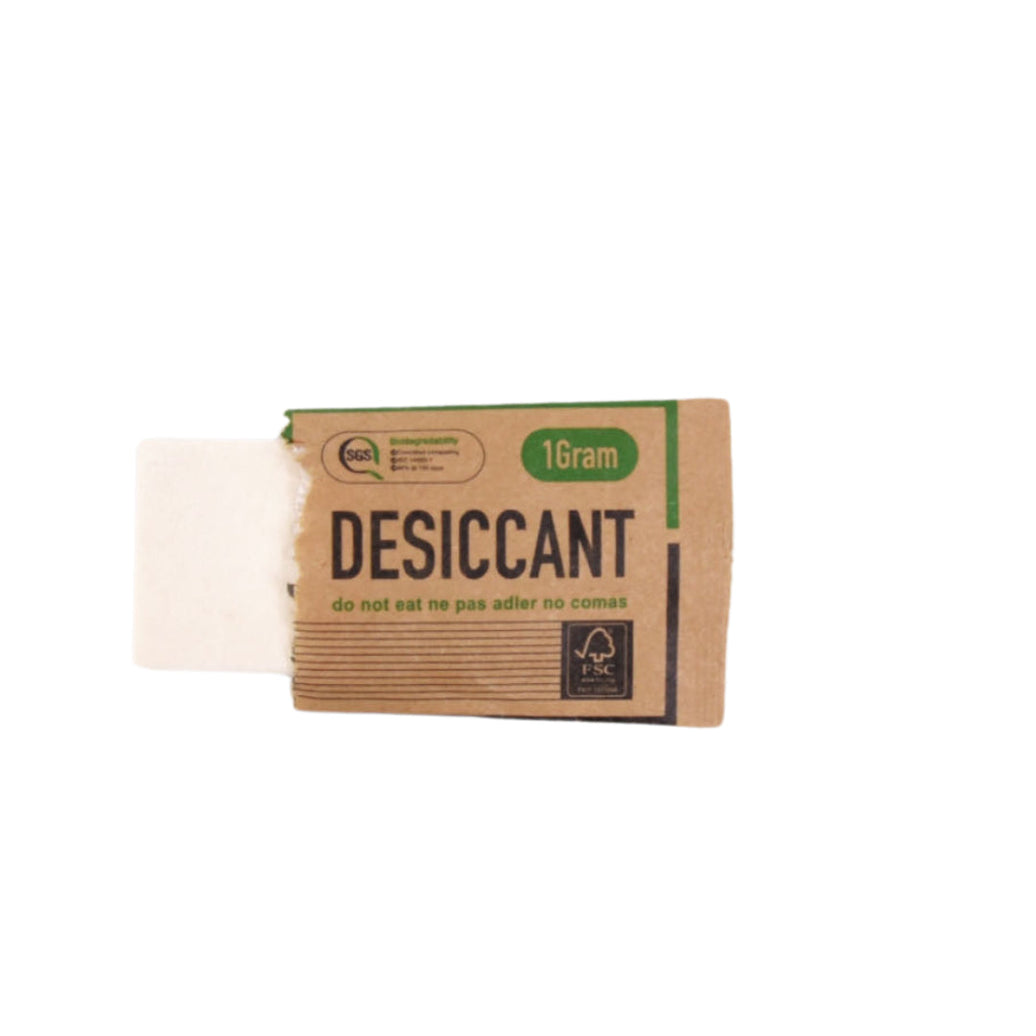
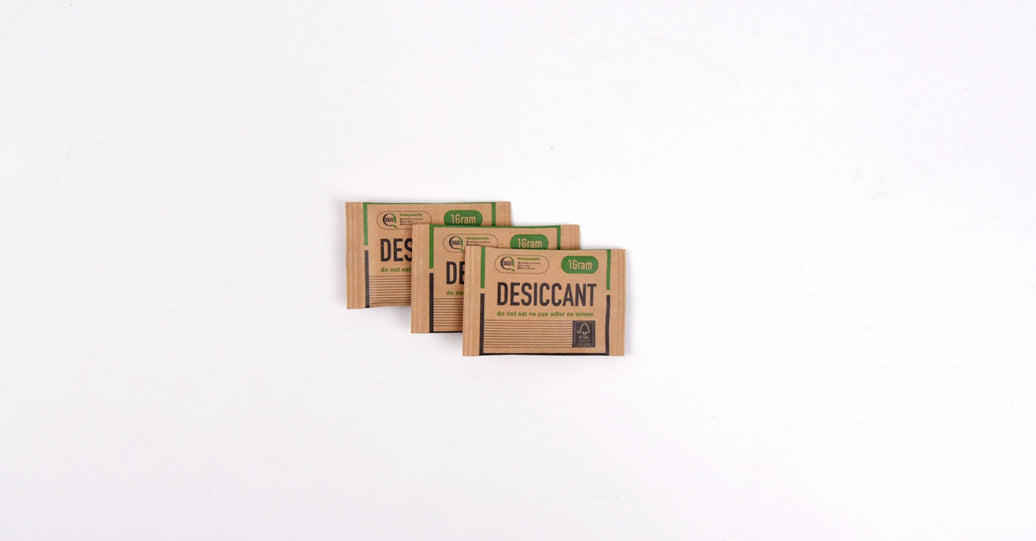
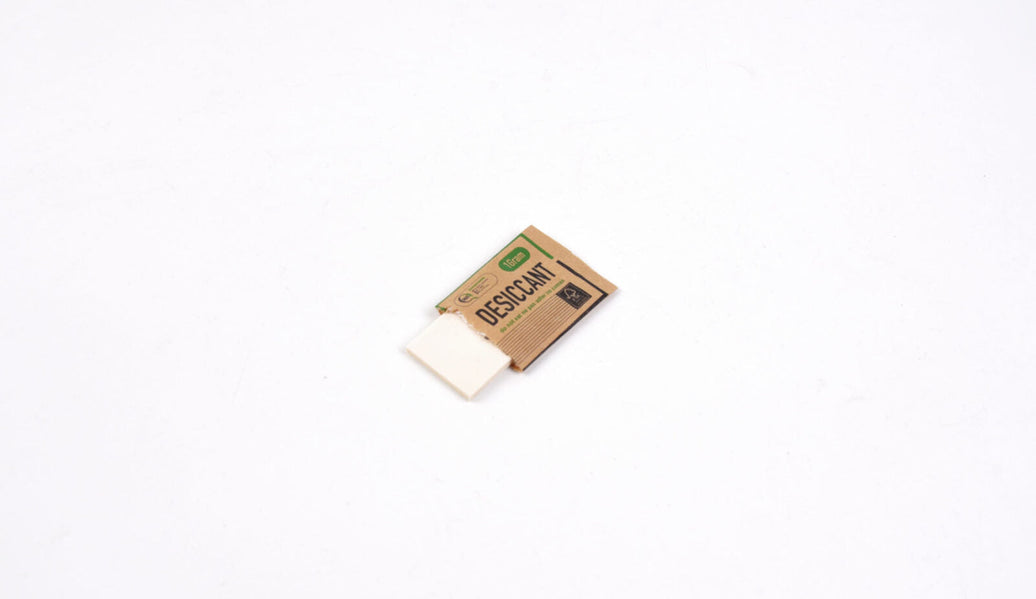
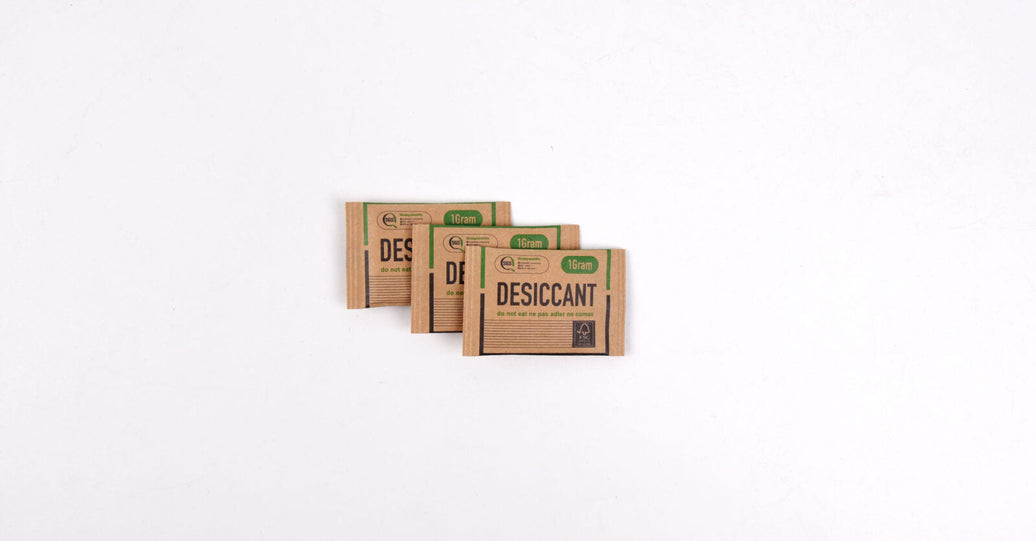
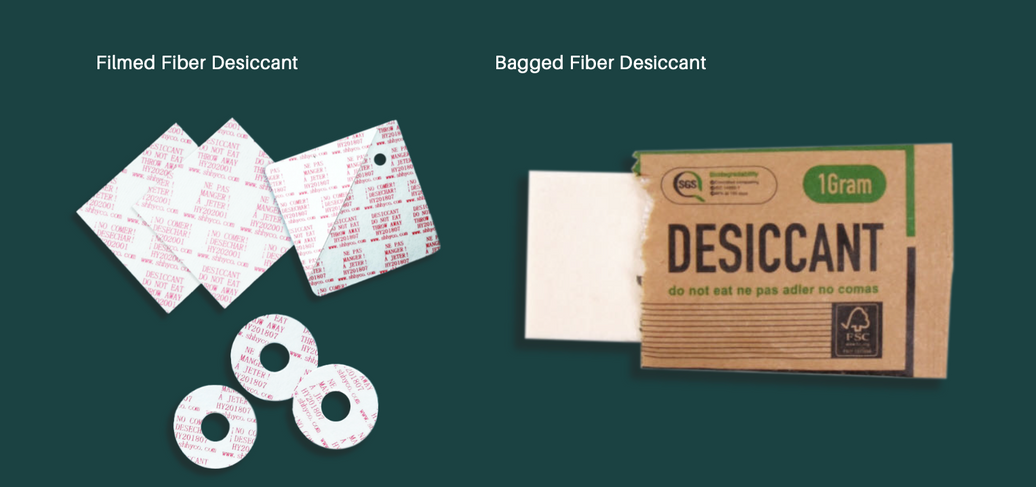
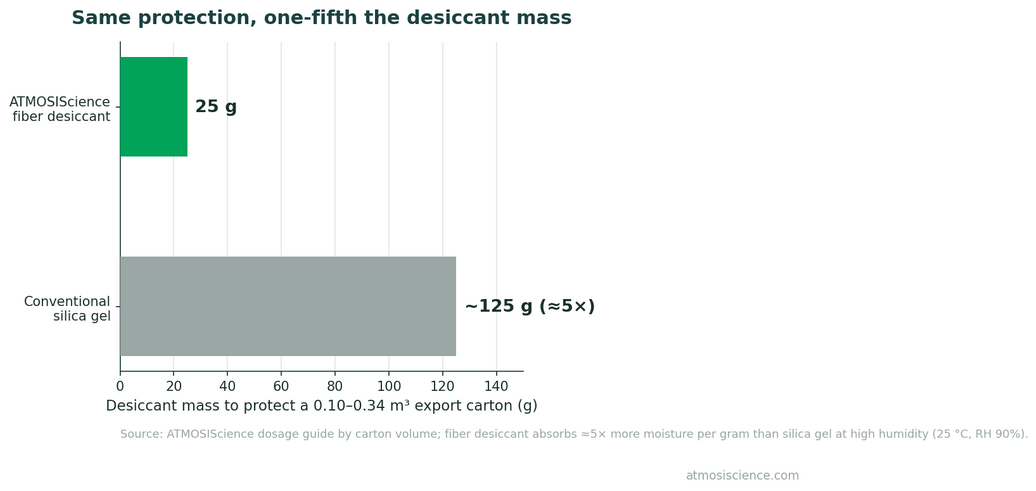
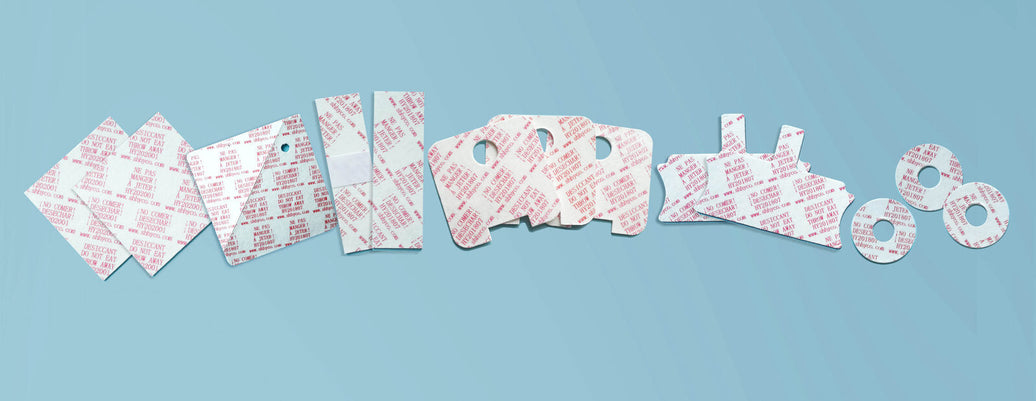
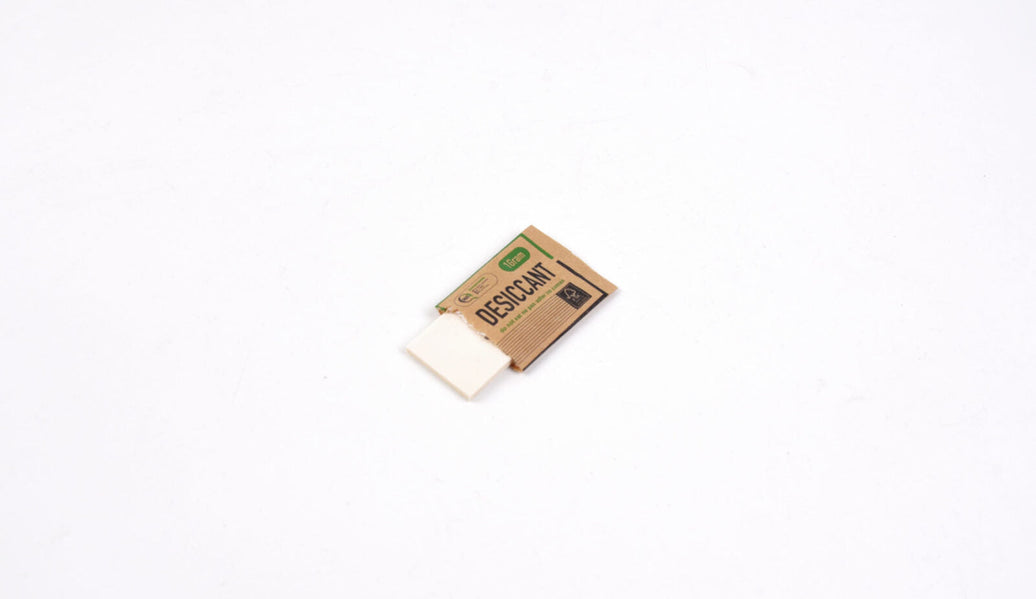
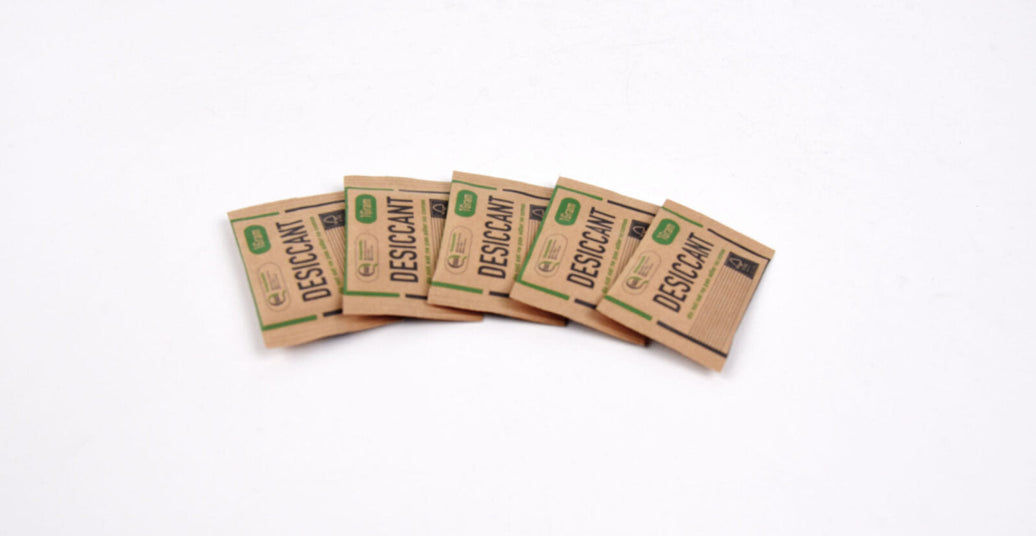
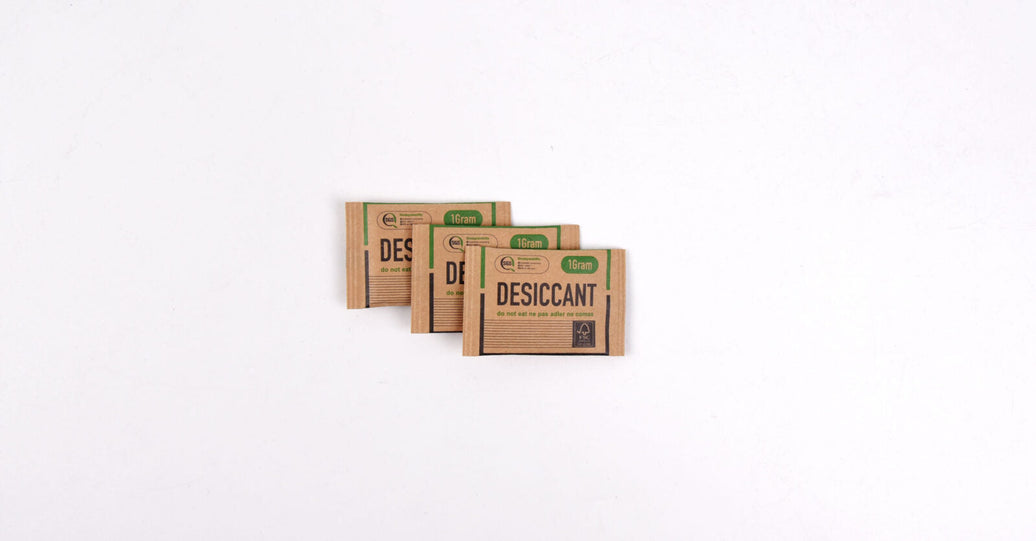
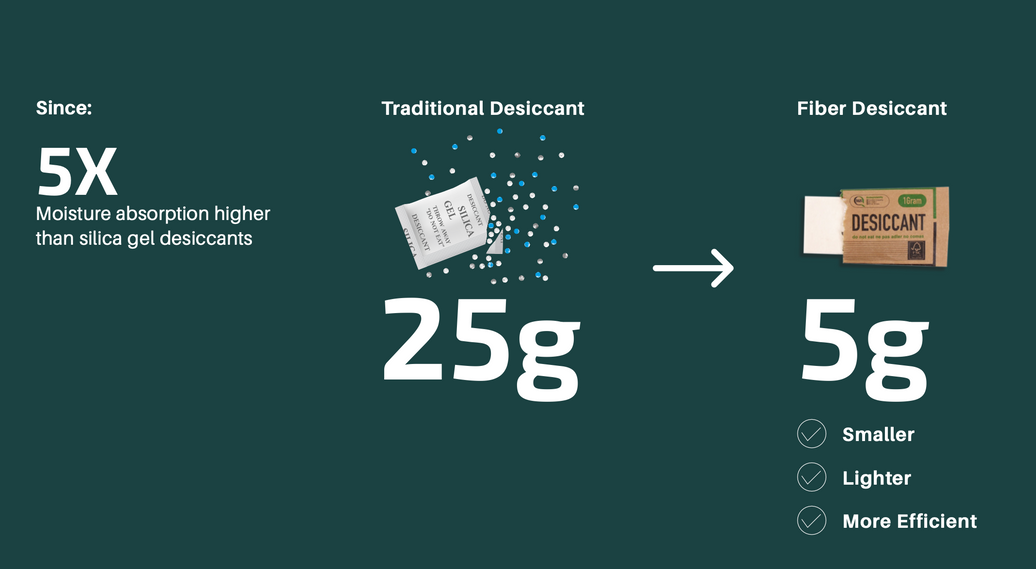
"Sustainable desiccant" has become a standing search category, and buyer emails increasingly specify it. What holds up under audit: natural plant-fiber substrate, compostable wrap films meeting ASTM D6400 and EN 13432, and marketing claims that match certificates — the greenwashing risk is real and regulated, as covered in compostable desiccant & the Green Claims Directive. The cost side has shifted too: when freight, carbon accounting and EPR fees are added, heavier mineral desiccants carry costs a lighter, higher-capacity unit avoids — itemized in the true cost of silica gel.
What to do with this in 2026
Three moves, in order: audit the desiccant currently in the box against PPWR/EPR exposure (material, weight, documentation); request adsorption data at defined RH points from every supplier on the list and compare like-for-like; and trial a high-capacity fiber alternative sized by headspace, not habit. Each step is reversible — and each produces documentation that procurement, QA and sustainability teams all need anyway.
FAQ
Does PPWR apply to a desiccant inside the package?
The regulation's scope covers packaging and packaging components broadly — which is why brands shipping to the EU are auditing inserts now rather than after August 2026. Specifics are in the PPWR guide.
Are "smart" desiccants with sensors necessary?
For most powder and consumer applications, no — a correctly sized desiccant plus a low-cost humidity indicator card achieves verification at a fraction of the cost. Sensors earn their keep on high-value pharma and electronics lanes.
Is fiber desiccant a 2026 novelty?
No — the fiber platform is an established technology with US patents and SGS-certified ISO 9001 manufacturing. What's new is that regulation now rewards its properties: high capacity per gram, compostable materials, dust-free construction.
What single question best tests a supplier in 2026?
"Send the adsorption data at 20%, 50% and 90% RH, with test temperature." A supplier who answers precisely can usually also produce the rest of the documentation stack.
Audit your current desiccant against 2026 rules
Send what's in the box today — material, grams, destination markets — and ATMOSIScience will return a like-for-like comparison: capacity, documentation, compostability status and EPR exposure. Request the comparison →