Quick answer: Silica gel is cheap, familiar and accepted almost everywhere, but plateaus at about 30 to 36% of its weight above 60% RH. Raw calcium chloride holds the most water but liquefies as it works, so it belongs in container desiccants, not near product. Fiber desiccant binds calcium chloride inside a plant-fiber matrix: on our measured curve it holds 2 to 3 times what silica gel holds across the humidity range, about 2 times in the dry 20 to 40% RH band and about 3 times at high humidity, with no dust or leakage. The flat Fiber Card format is documented at more than 70% of its weight at 25 °C and 90% RH against about 30% for silica, about 2.3 times. Choose on your product, humidity target and documents, not on a headline multiple.
Every desiccant decision trades capacity against contact safety, cleanliness, documentation, cost and disposal. The materials procurement teams weigh most often are silica gel, clay, calcium chloride and fiber desiccant. Each wins on different axes. This comparison sets out the numbers we stand behind, including where our own material is not the right answer.
The materials at a glance
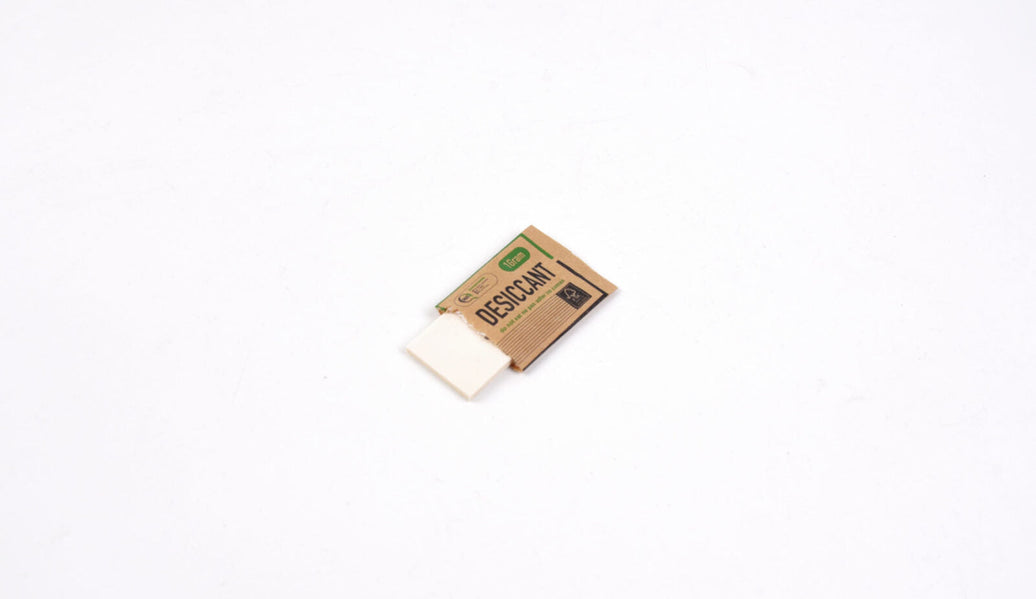
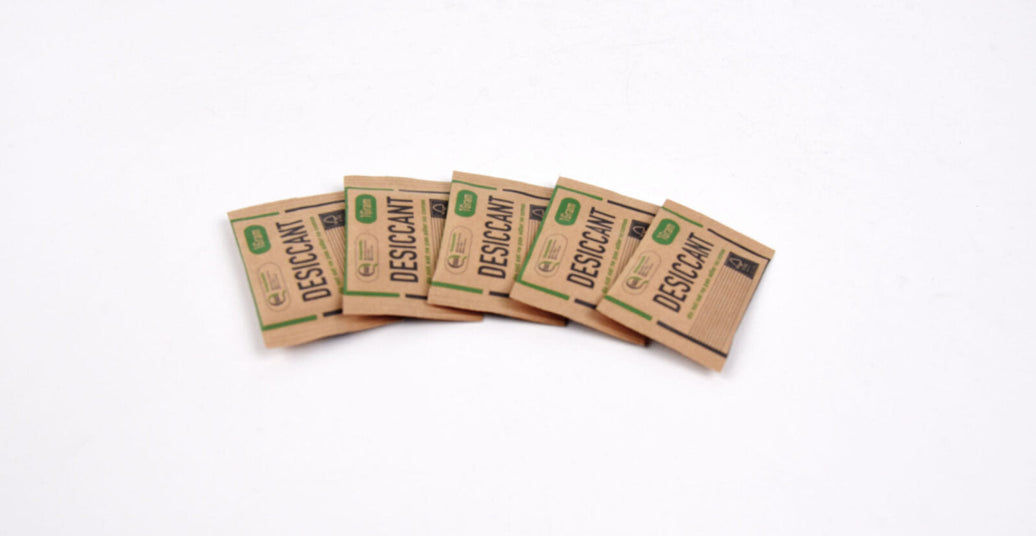
- Silica gel: porous beads that adsorb water on a large internal surface. Inexpensive, long history in food and pharma. Supplied as beads in a sachet or canister.
- Clay (bentonite, montmorillonite): low-cost mineral granules. Lower capacity than silica and can shed dust.
- Calcium chloride (raw or container grade): deliquescent salt that takes up several times its own weight and turns to liquid or gel as it does. Used in shipping-container desiccants.
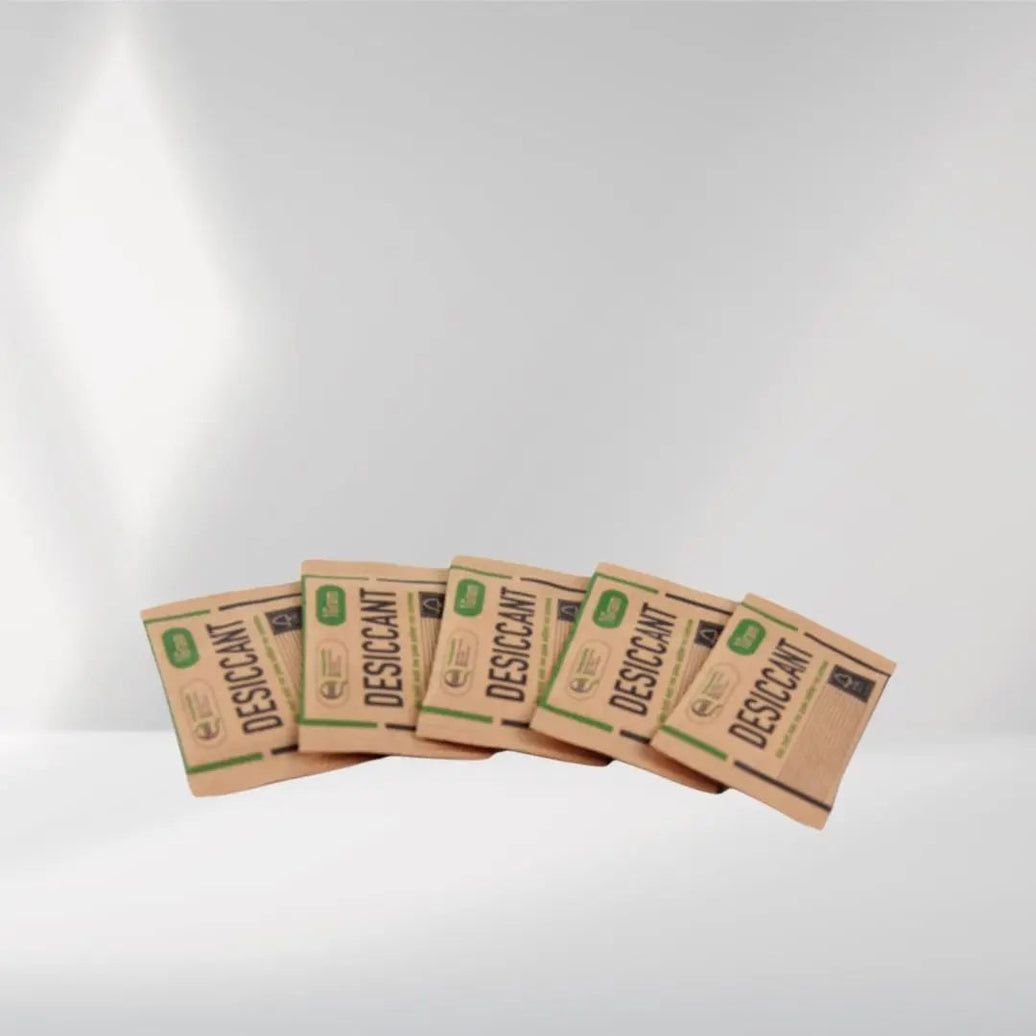
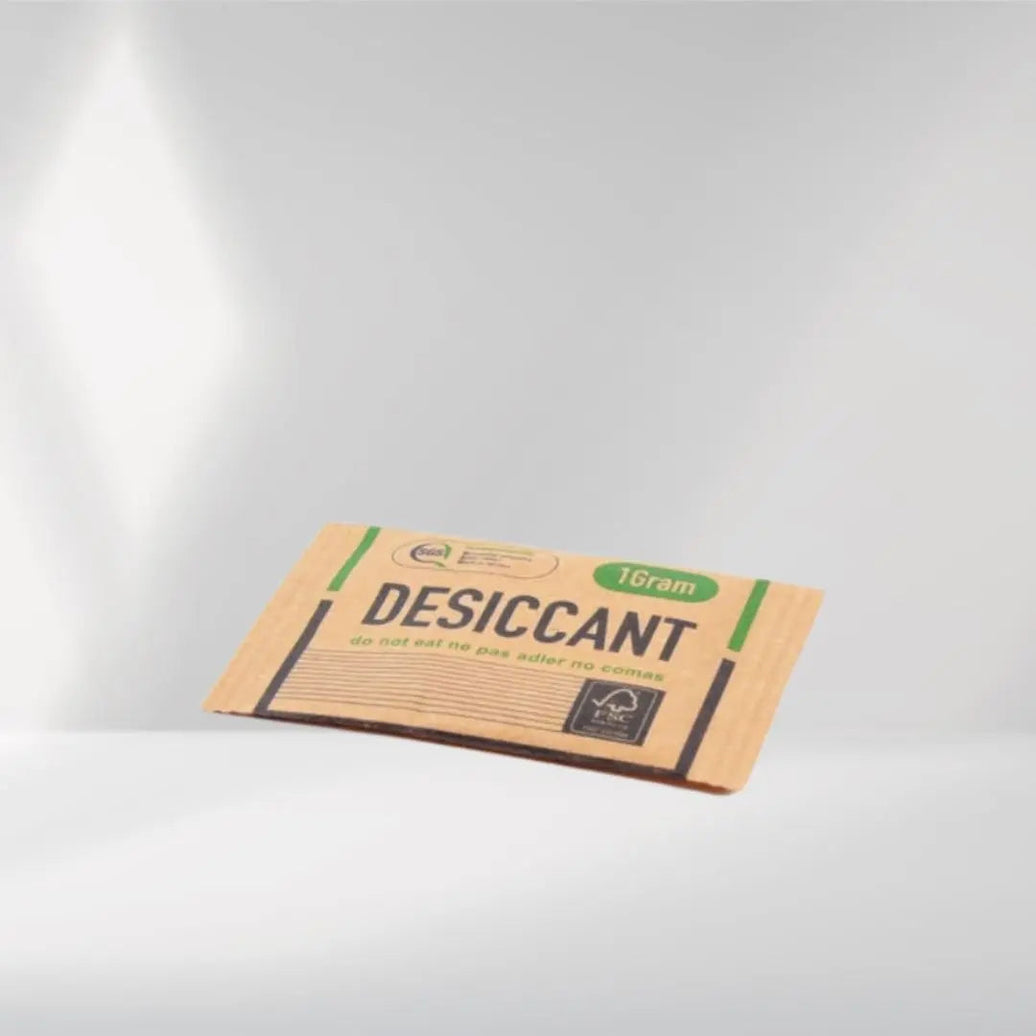
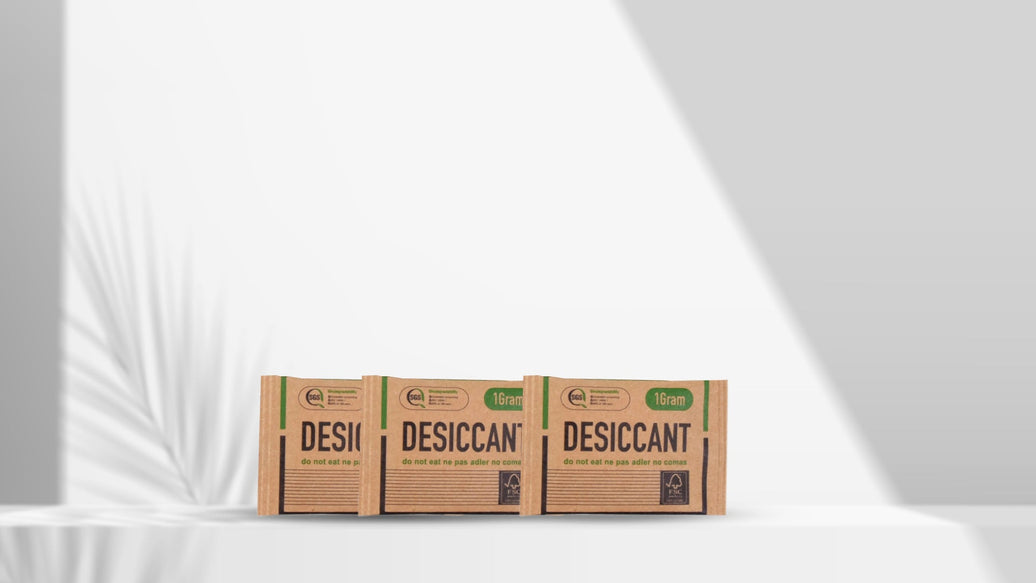
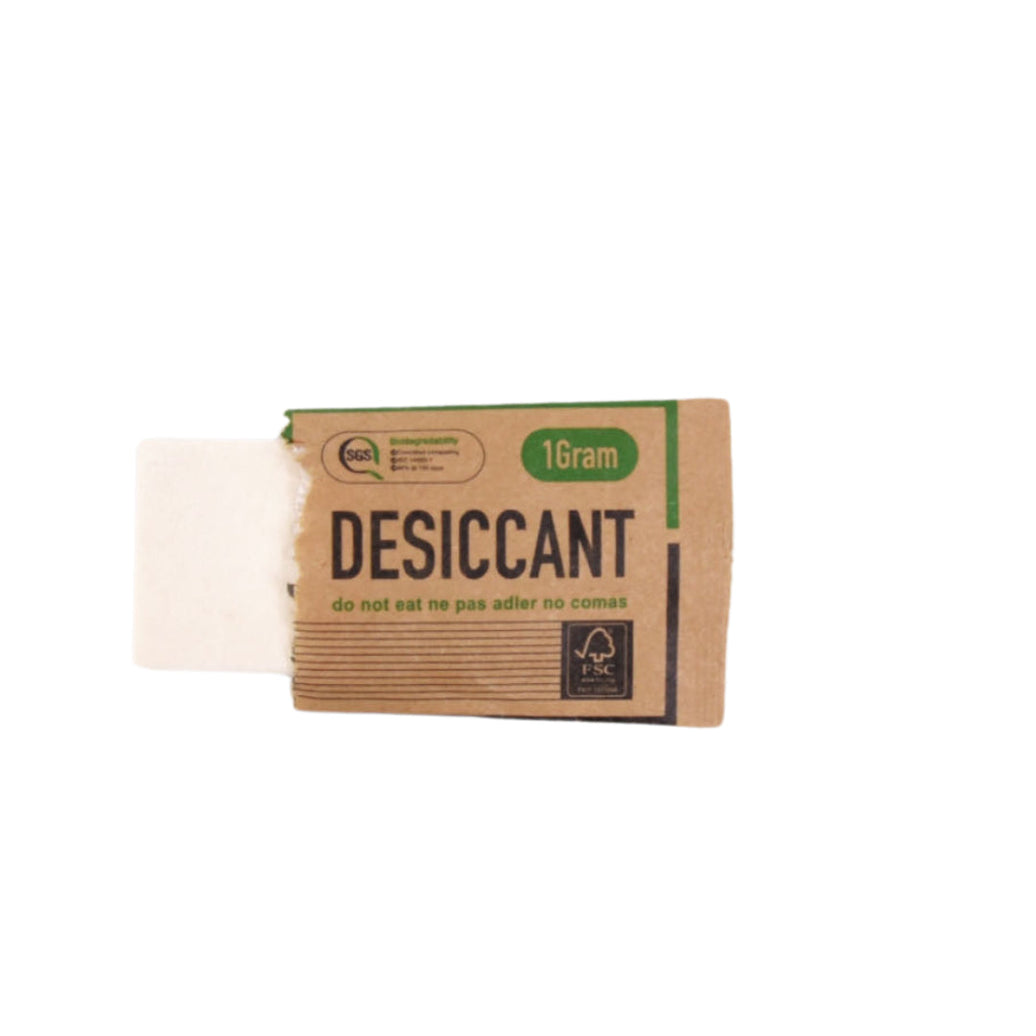
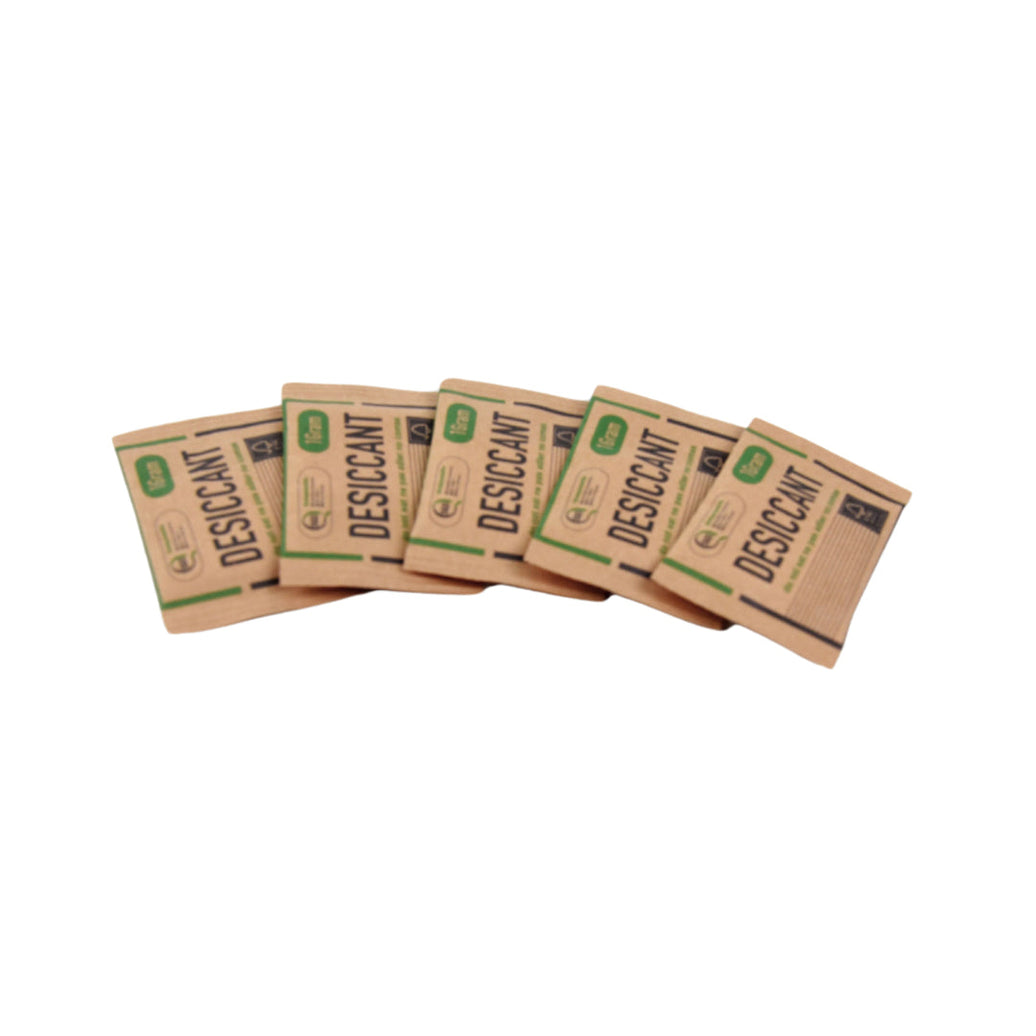
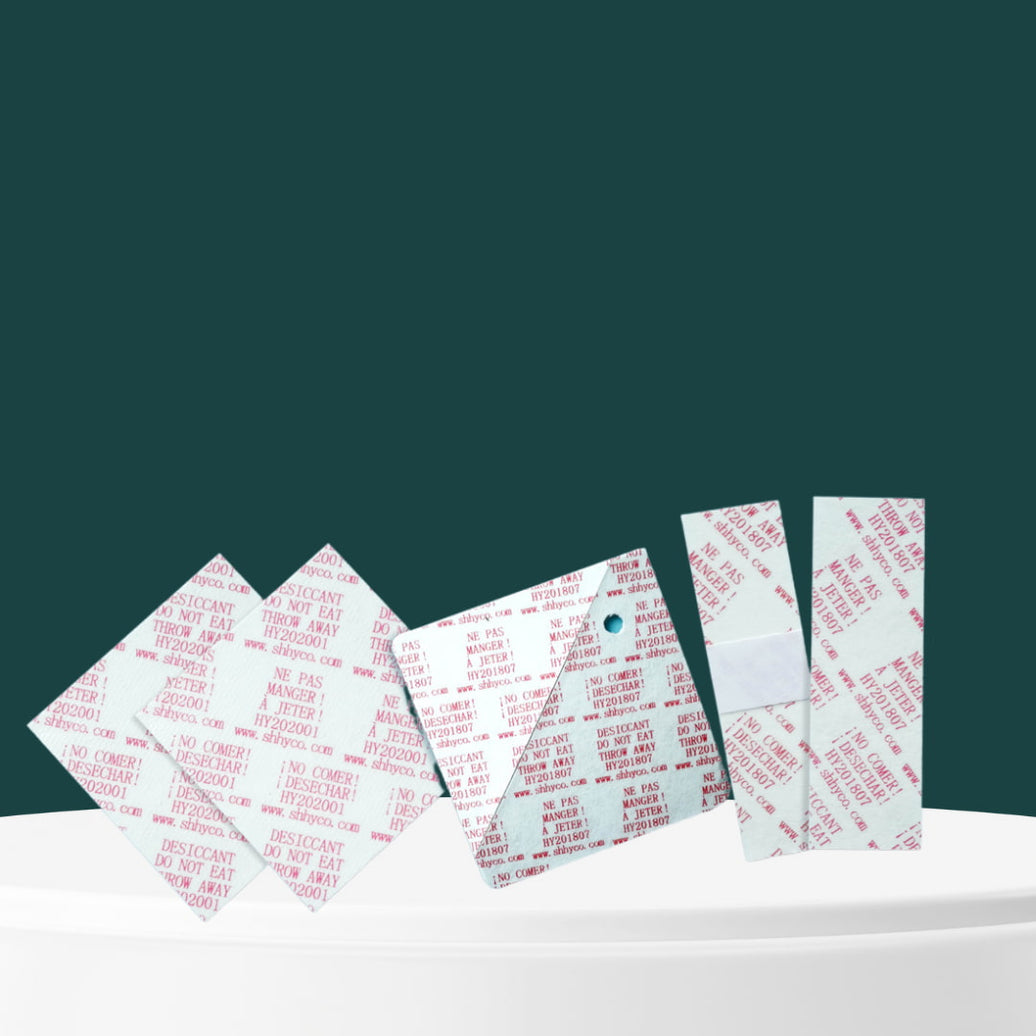
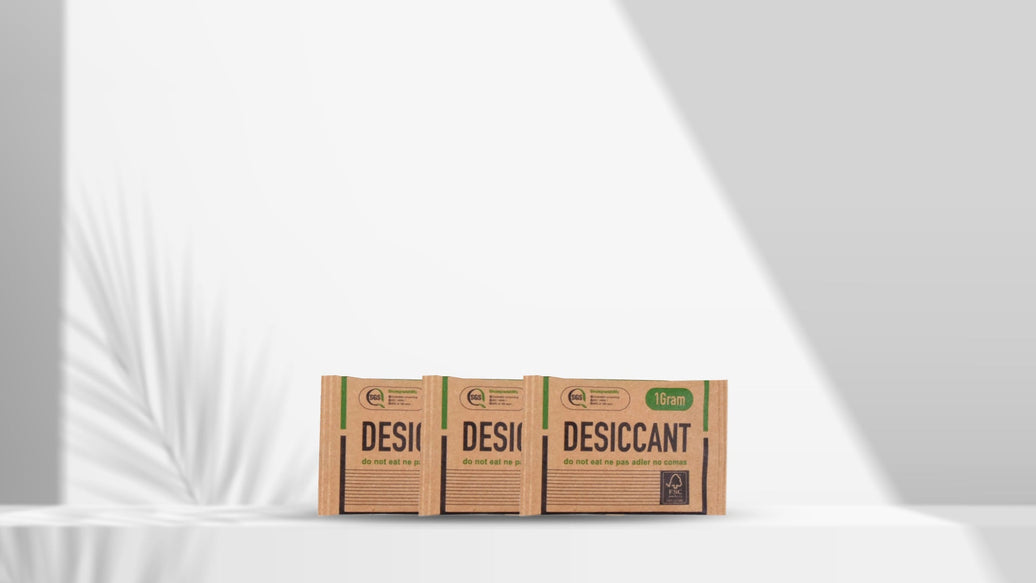
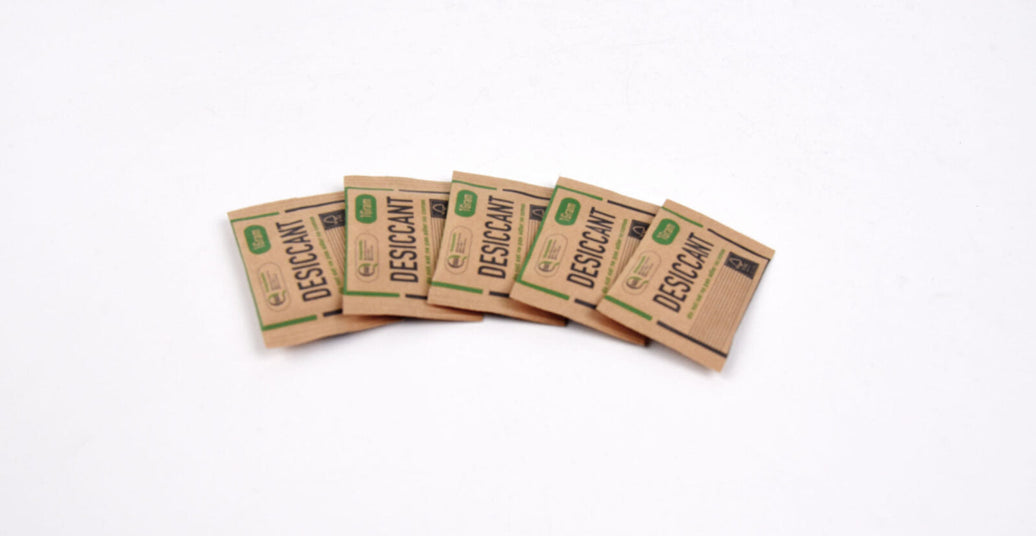
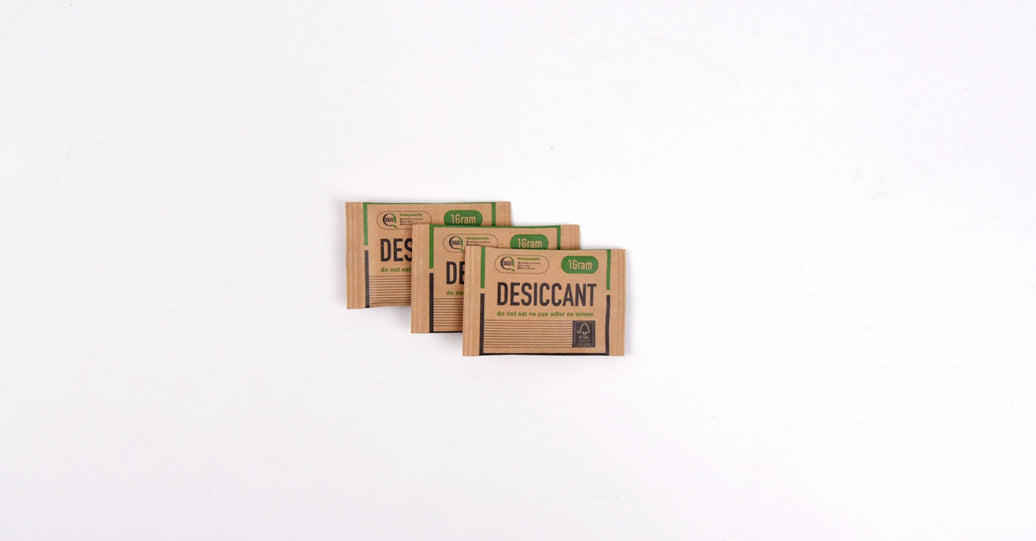
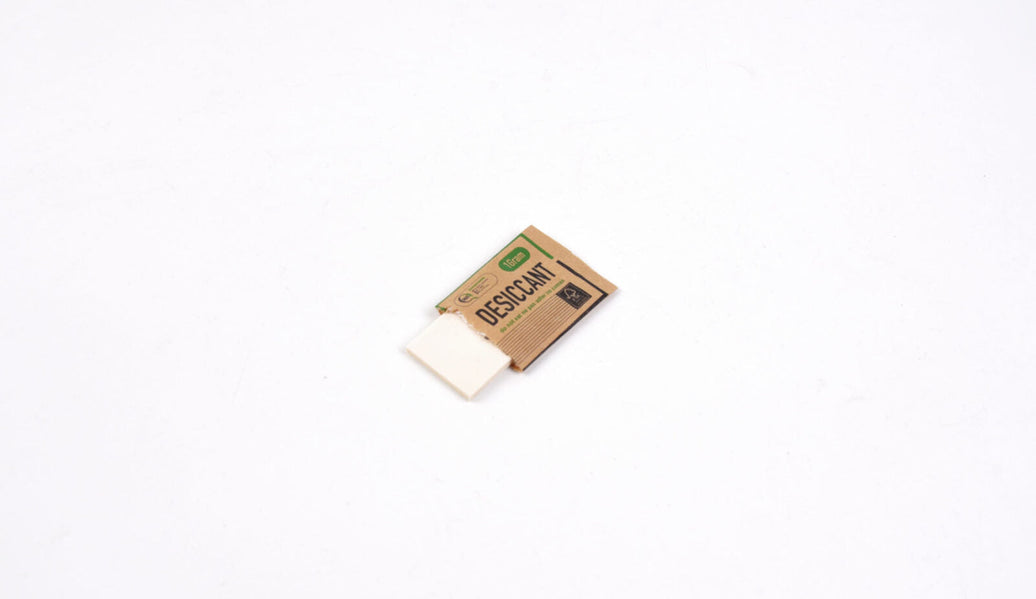
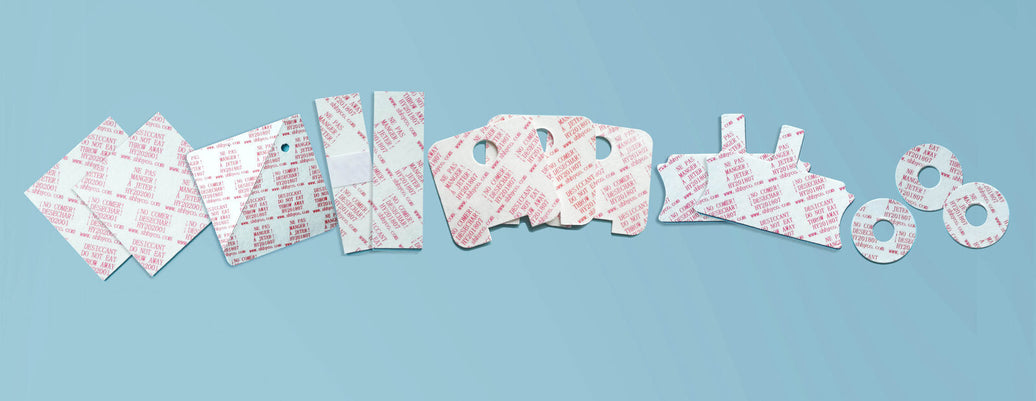
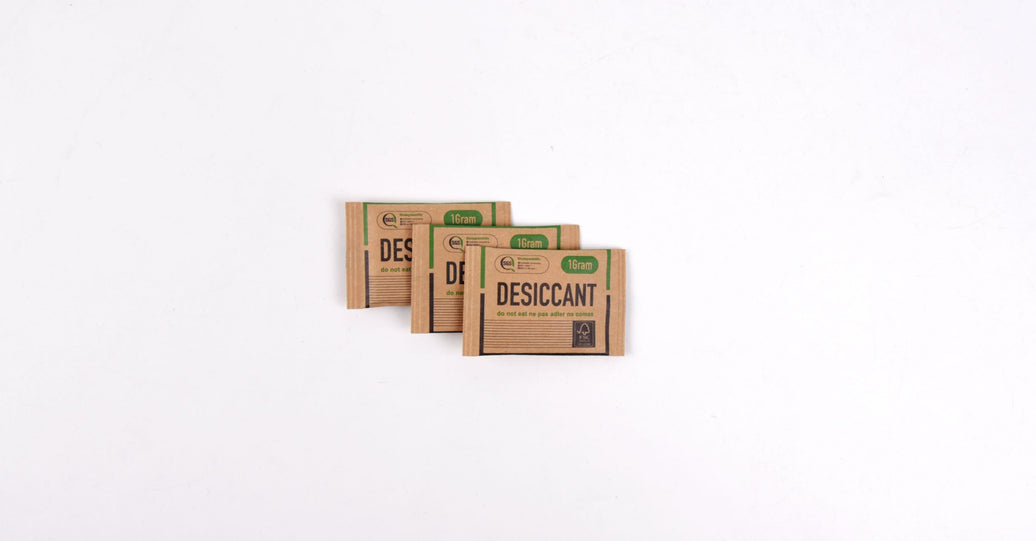
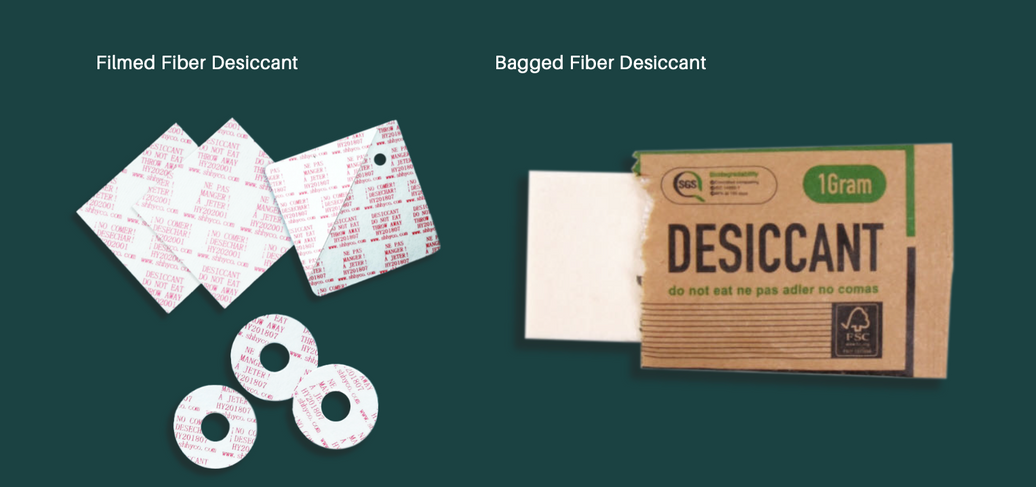
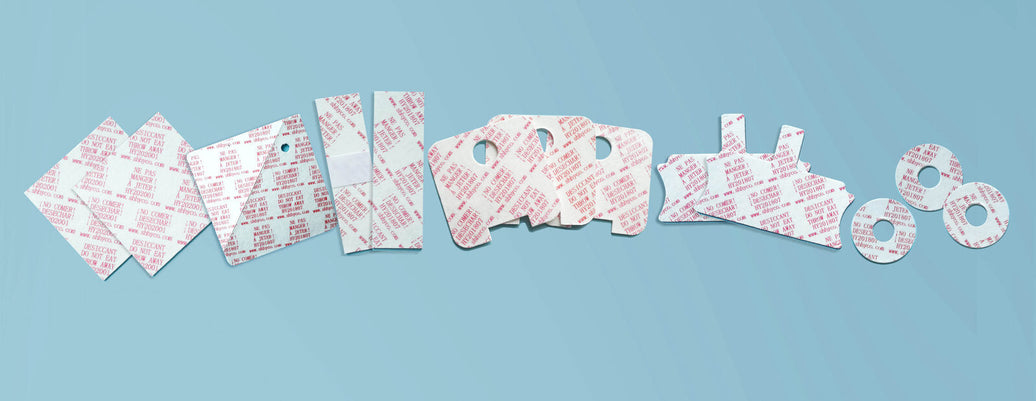
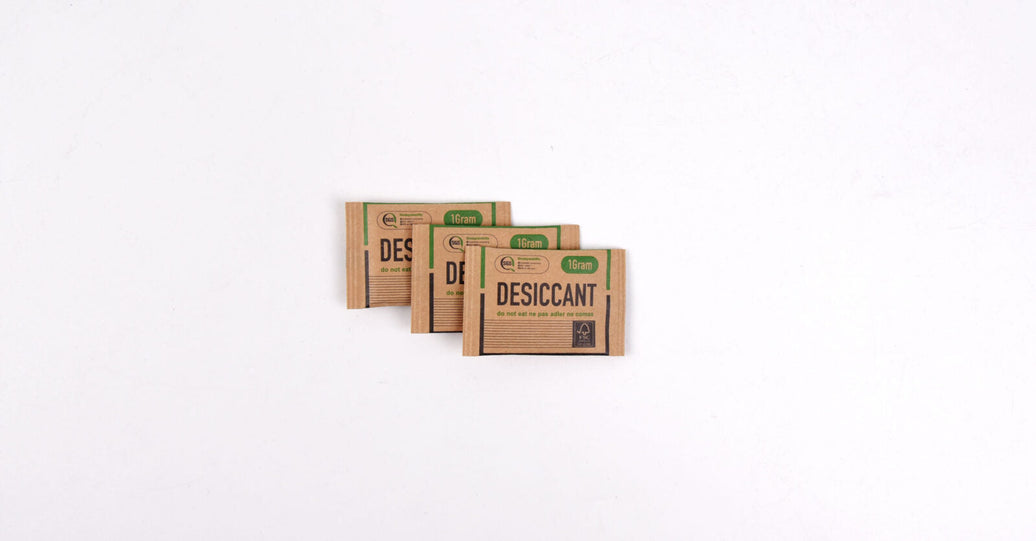
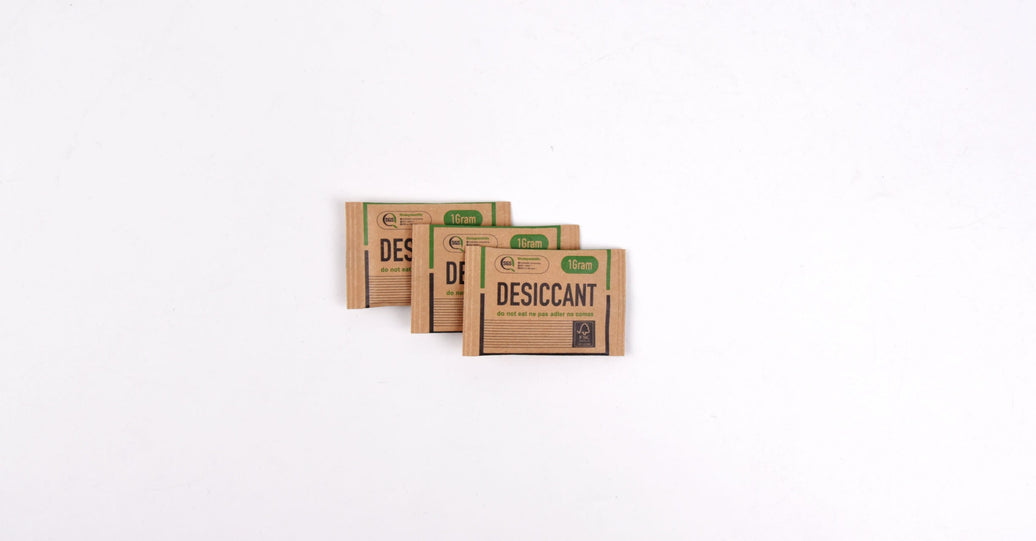
- Fiber desiccant: calcium chloride bound inside a natural lignocellulose fiber matrix, supplied as a bagged sheet or as Fiber Card, a flat paper desiccant card. The fiber keeps the high capacity while removing leakage and dust.
Fiber desiccant is not an exotic fourth material. It is a way to use calcium chloride’s capacity in a format that is clean and documented for packaging use. Composition is covered in what is inside a fiber desiccant.
Capacity: the curve, not the headline
Capacity means nothing without a humidity. Here is our measured adsorption curve for bagged fiber desiccant against silica gel at 25 °C, as a percentage of each material’s own dry weight:
| RH | Fiber (bagged) | Silica gel | Ratio |
|---|---|---|---|
| 10% | 10 | 4.5 | 2.2× |
| 20% | 17 | 9.2 | 1.9× |
| 30% | 29 | 13.8 | 2.1× |
| 40% | 39 | 19.5 | 2.0× |
| 50% | 60 | 25.0 | 2.4× |
| 60% | 71 | 30.2 | 2.4× |
| 70% | 81 | 32.5 | 2.5× |
| 80% | 102 | 33.8 | 3.0× |
| 90% | 108 | 35.3 | 3.1× |
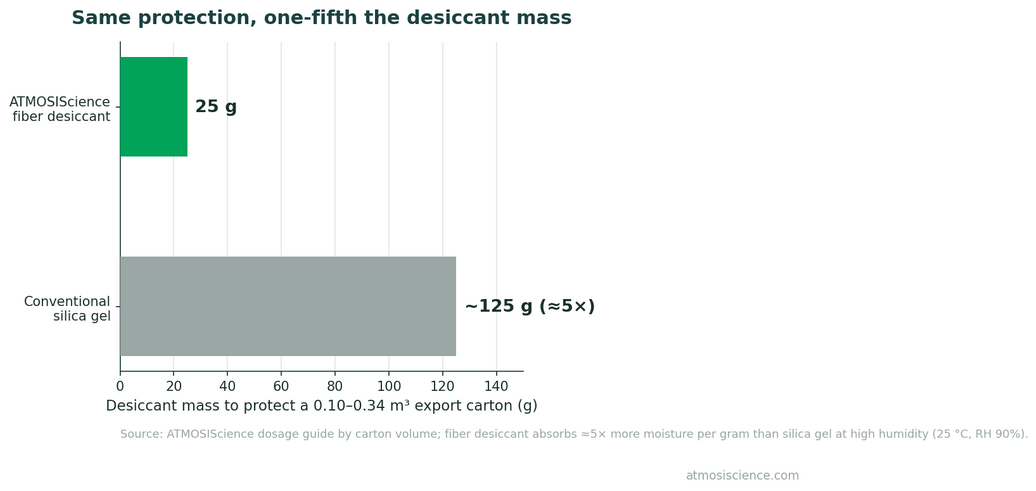
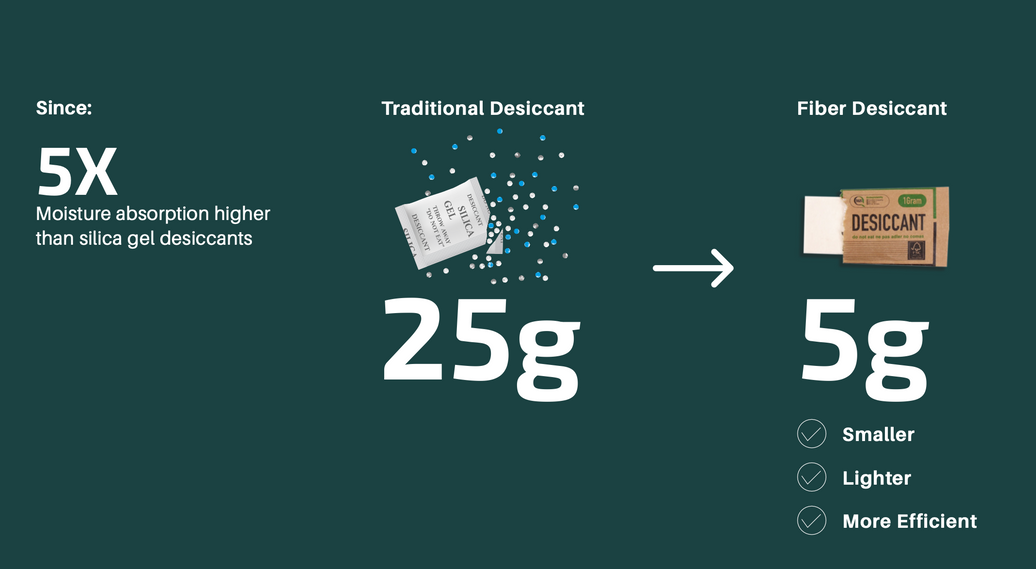
Two readings matter. In favour of fiber: silica gel stops gaining above 60% RH, while fiber keeps climbing, so the gap widens in humid supply chains. Against overselling it: in the dry 20 to 40% band, where electronics and many pharmaceutical packs operate, the ratio is about 2 times. A five-times claim usually comes from dividing a fiber best case by a silica figure at a different condition. We use 2 to 3 times for bagged fiber, and about 2.3 times for Fiber Card, whose documented figures are more than 10% at 20% RH, more than 35% at 50% RH and more than 70% at 90% RH. Card specifics are on our fiber desiccant page.
A standards-based comparison: desiccant units
MIL-D-3464E defines a desiccant unit as the quantity that adsorbs at least 3.00 g of water at 20% RH and at least 6.00 g at 40% RH, at equilibrium at 25 °C. The mass needed to deliver one unit is a comparison that does not depend on anyone’s marketing:

That is the dry-band number that feeds a JEDEC J-STD-033 sizing calculation; see how to size a desiccant and silica gel equivalency in grams.
Head-to-head on the other criteria
| Criterion | Silica gel | Clay | Calcium chloride (raw) | Fiber desiccant |
|---|---|---|---|---|
| Dust or leakage | Bead dust possible; beads spread if torn | Dusty granules | Liquefies; leak risk | Bonded sheet; no loose media |
| Behaviour when warmed | Gives moisture back more readily | Gives moisture back | Holds as brine or gel | Bound in the fiber matrix |
| Format | Sachet, canister | Sachet, bag | Container bags, poles | Bagged sheet, die-cut printable card |
| End of life | Inert mineral; landfill in practice | Mineral | Varies by bag | Certified industrially compostable |
| Carbon footprint | Varies by source | Varies by source | Varies | 1.44 kg CO₂e/kg (ISO 14067) |
The warming row is the one experienced packaging engineers notice: a desiccant that releases water when a container crosses the equator or a warehouse heats up in July works against you at the worst moment. The dusting row matters because a ruptured bead sachet in a pill bottle or powder tub is a contamination event, not just a missing desiccant. See loose-fill desiccant risks. For carbon comparisons, check that system boundaries match; see why the functional unit decides the carbon number.
Where each one wins
Silica gel wins on familiarity, unit price and regulatory acceptance. For low-value goods, short shelf life and dry distribution, there is often no reason to change.
Clay wins on lowest unit cost for non-contact, low-risk uses where dust is acceptable.
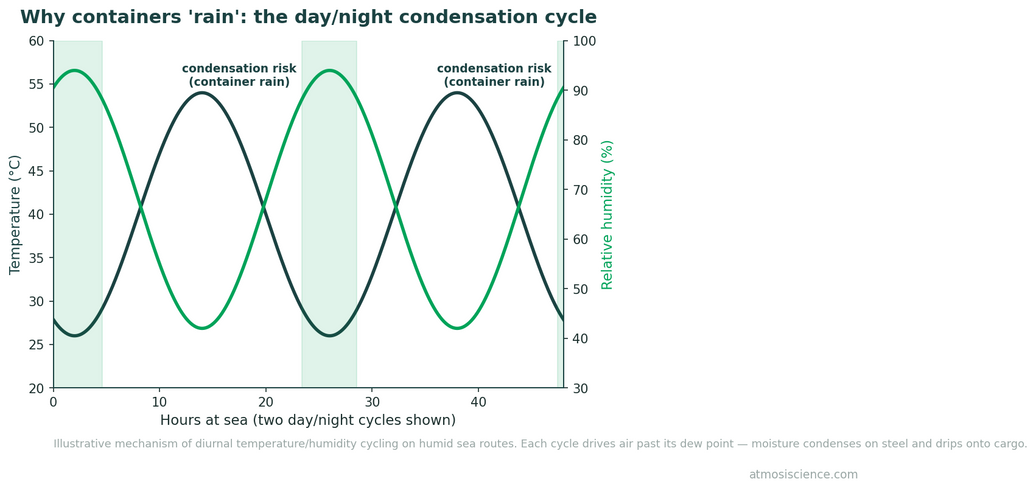
Calcium chloride container desiccant wins on raw capacity for ocean containers. Some container specifications require more than 200% of weight at 25 °C and 80% RH, which bagged fiber does not meet. Do not let anyone pitch a sheet desiccant for a 40-foot container. See desiccant for container shipping.
Fiber desiccant wins on the combination for product packaging: high capacity per gram, no dust or leakage, flat and printable formats, food-contact documentation and a compostability story.
Honest limits of fiber
- Pharmacopoeial listing. USP 670 names bentonite, calcium chloride, calcium oxide, molecular sieves and silica gel. It does not name cellulose or fiber. A pharmaceutical QA reviewer will notice, whatever the performance data. See USP 670 and USP 671.
- Very low humidity targets. Below about 10% RH, molecular sieve is usually the better tool. See molecular sieve vs silica gel vs fiber.
- It is one-way. It removes moisture and holds it. Products that must not be over-dried need a sized dose or two-way control.
Swapping in a pack you already have
- Check space and geometry. 18 g of fiber in sheet form occupies a different shape than 30 g of beads. Often that is the reason to switch.
- Check insertion equipment. Sachet dispensers are built for pillows; cards may need a different feed. See automated desiccant insertion.
- Treat it as a change control. Plan a stability bridge, not a same-day swap. See switching desiccant suppliers.
Check any supplier’s claim in ten minutes
- Ask for the temperature and RH behind every capacity number.
- Ask for the full isotherm, not a single point.
- Ask what the comparison material was, and at what condition.
- Convert to desiccant units.
- Ask for a per-lot certificate of analysis with the test method named. See how to compare desiccant spec sheets.
Frequently asked questions
Is calcium chloride a better desiccant than silica gel?
Raw calcium chloride holds far more water, but it liquefies as it works, so it suits container cargo rather than product packs. Bound in a fiber matrix, it can be used near product without leaking.
How much better is fiber desiccant than silica gel?
On our measured curve, 2 to 3 times by weight across the humidity range: about 2 times in the dry band and about 3 times at high humidity. Fiber Card is documented at about 2.3 times at 90% RH.
Why do some suppliers claim five times?
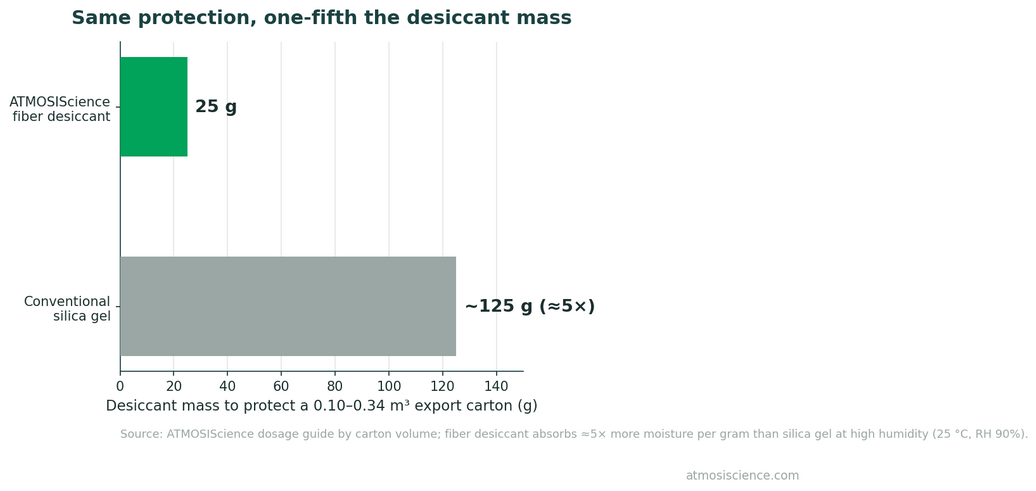
Usually by dividing a best-case fiber figure by a silica figure at a different condition. A single measured curve does not support it.
Which desiccant is safest for food and supplement packs?
One with food-contact documentation and no loose media. Raw calcium chloride is generally unsuitable for direct contact.
Can fiber desiccant be reused?
It can be air-dried for non-food reuse or evaluation work. In production packaging, size it as single-use for the whole shelf life.
Compare it against your own numbers
Send your pack, product and humidity target. ATMOSIScience will size both silica gel and fiber for your application so you can see the difference in grams, not in a brochure.
Prefer email? info@atmosiscience.com