Cargo can leave the factory dry and arrive soaked without a single drop of rain touching it. The culprit is “container rain” — condensation that forms inside a shipping container as it crosses climate zones, then drips back onto the goods. For exporters, it shows up as rusted parts, mold-stained textiles, collapsed cartons, and rejected shipments. The fix starts with the right desiccant, correctly dosed.
This guide covers what causes container rain, how to size a desiccant for container shipping and logistics, and why dust-free fiber desiccant suits long ocean transit.

What causes container rain
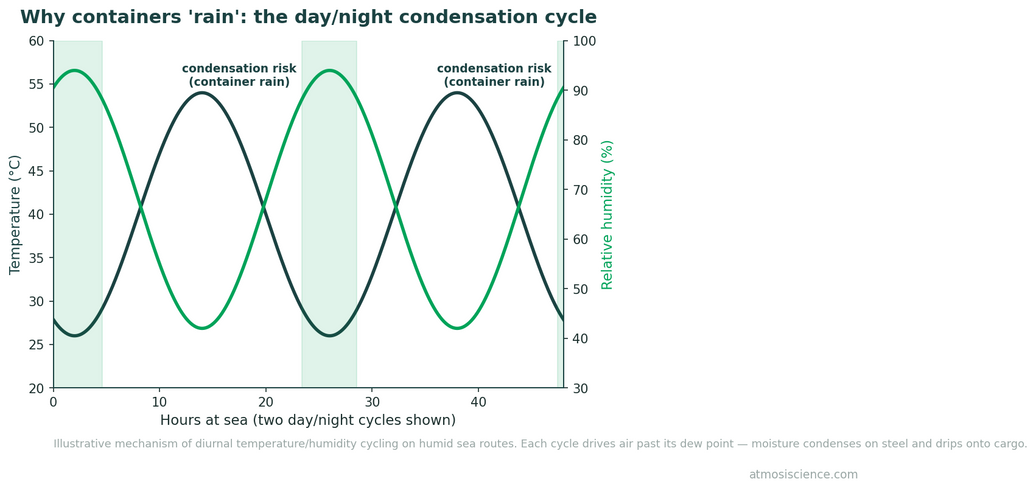
A sealed container is a closed climate. As it travels — a humid origin port, hot days, cold nights at sea, a cooler destination — the air inside cycles through temperature swings while carrying moisture from the cargo, pallets, packaging, and the air sealed in at loading.
When the container roof cools below the dew point at night, that moisture condenses on the ceiling and walls. By morning it drips onto the cargo. Over a multi-week voyage this repeats daily, and the cumulative water load is far higher than most shippers expect. Wood pallets and cardboard alone can release liters of moisture into the container atmosphere.
Why ocean transit punishes the wrong desiccant
Container shipping is the harshest desiccant duty there is: high moisture load, long duration, and wide temperature cycling. Two desiccant weaknesses get exposed.
Low capacity. A desiccant that holds only ~30% of its weight (typical silica gel) saturates early and then does nothing for the rest of the voyage. The cargo is unprotected for the worst stretch.
Leaking at saturation. Raw calcium chloride container desiccants absorb heavily but liquefy as they do, requiring catch-bag designs and creating a leak hazard if a bag fails — itself a source of cargo damage.
The ideal is high absorption capacity with no liquid release and no dust — the combination a fiber composite is engineered to provide.
What to specify for shipping protection
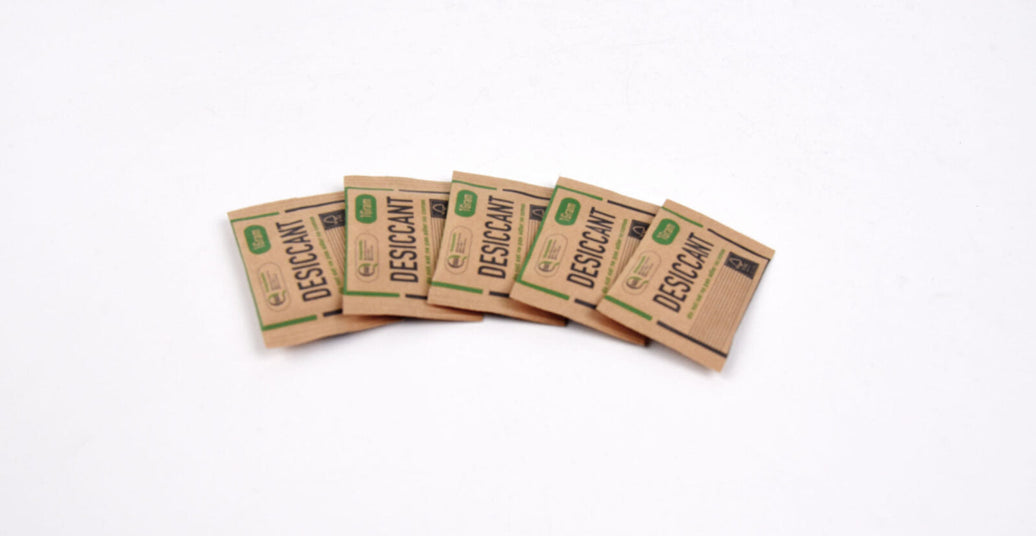
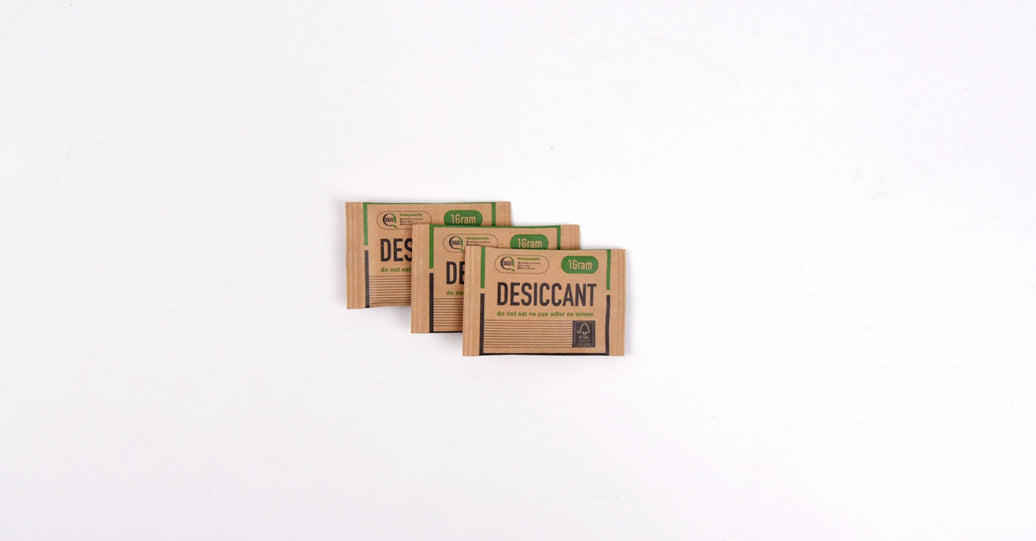
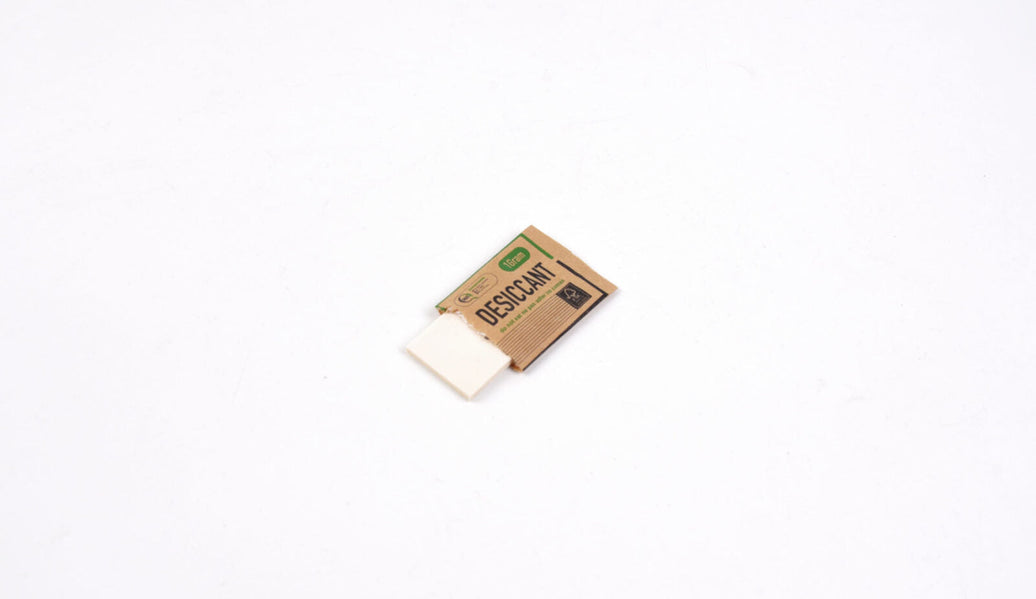
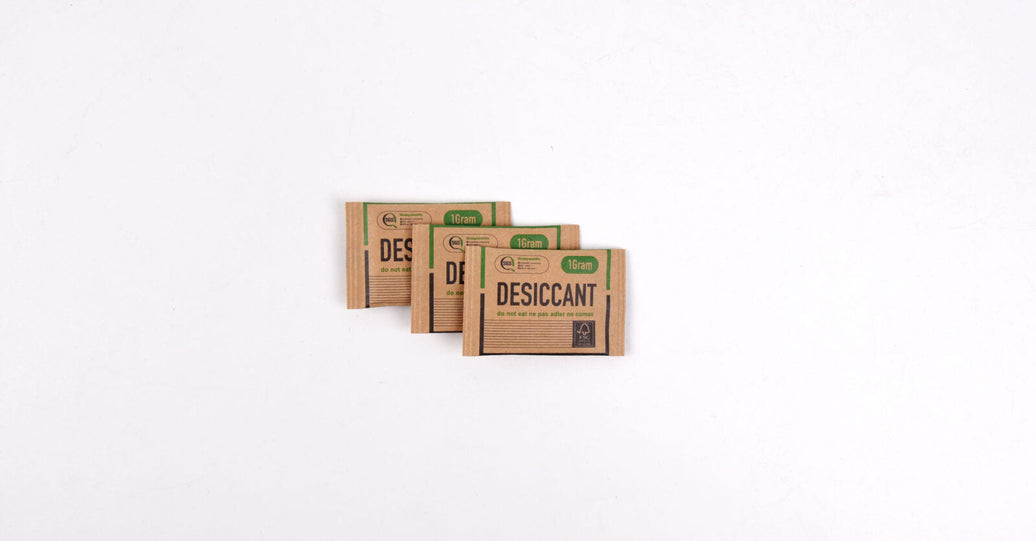
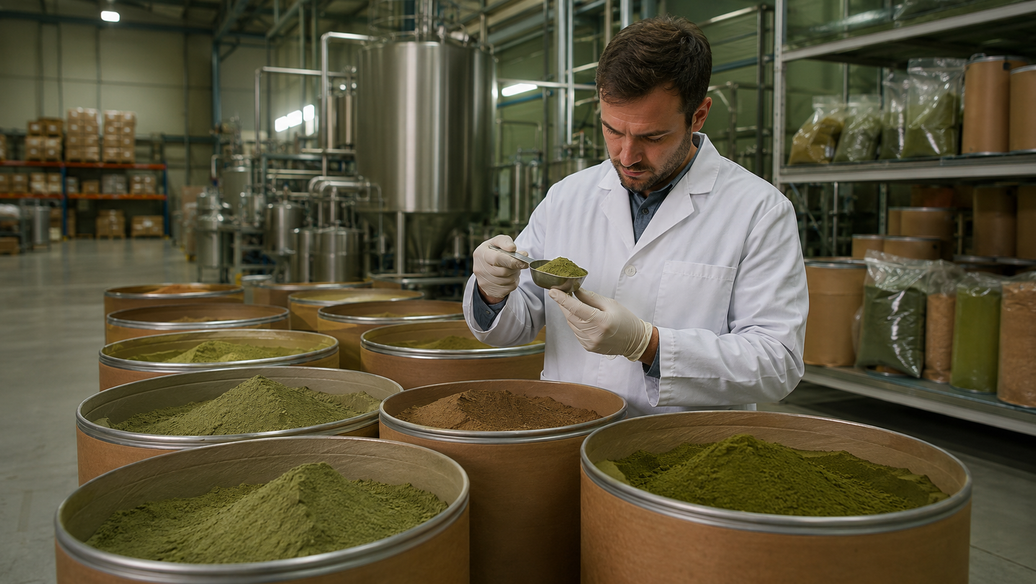
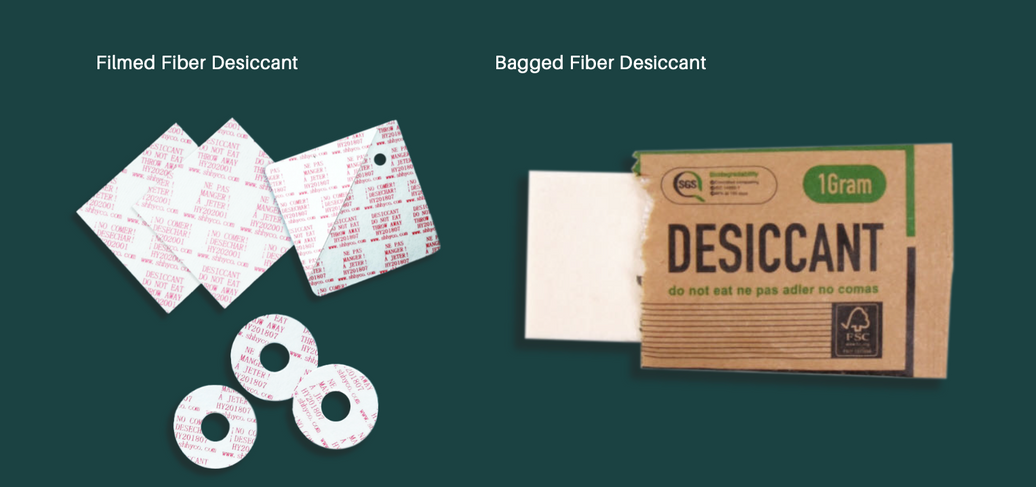
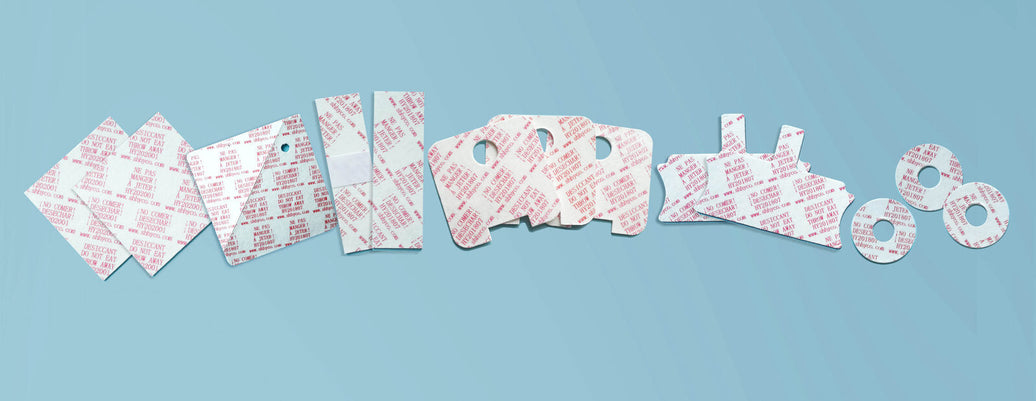
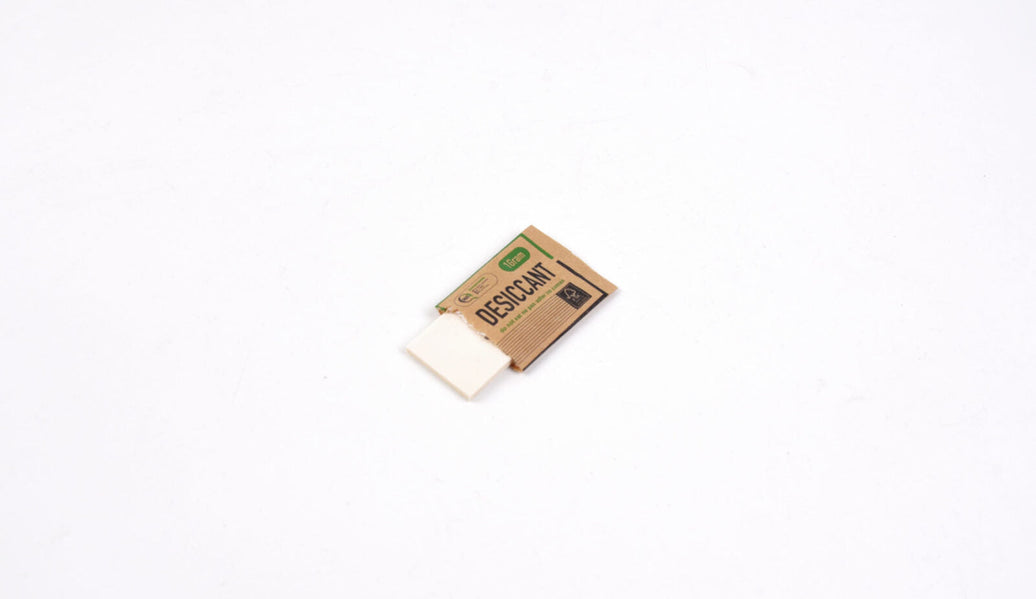
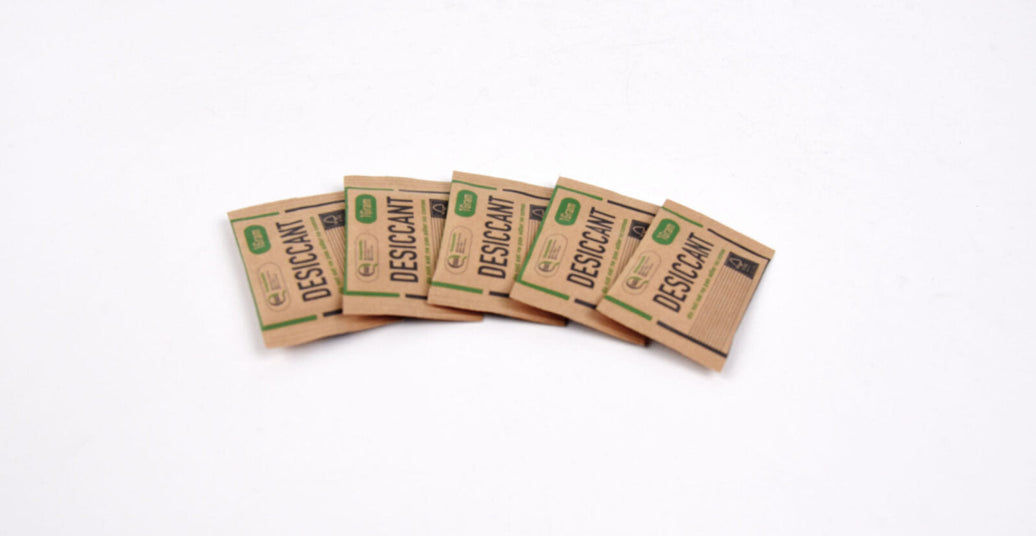
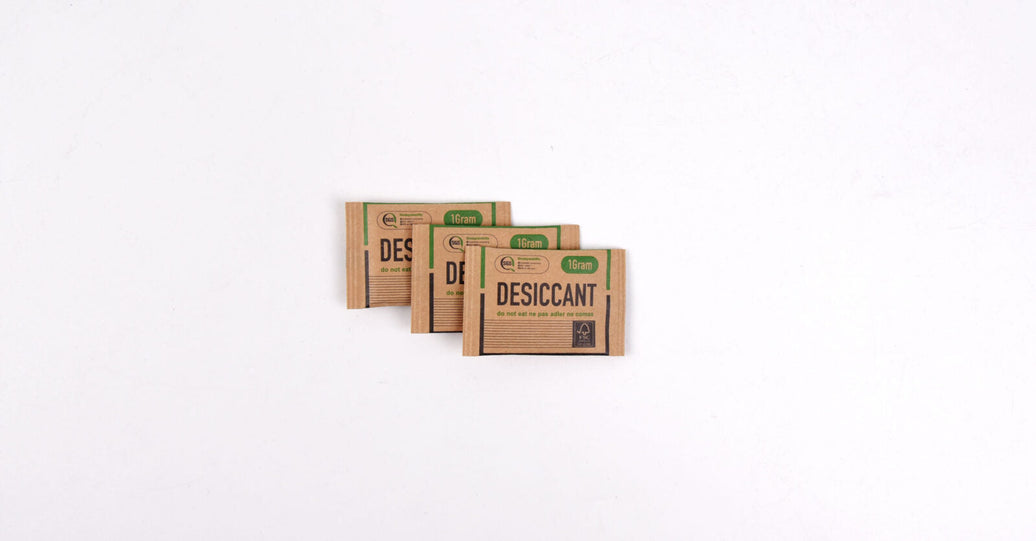
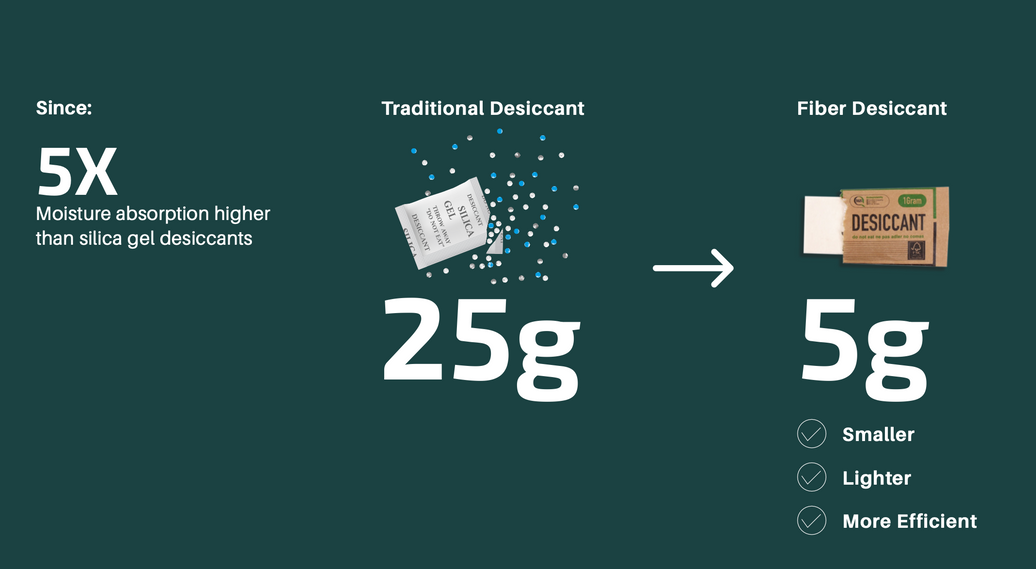
ATMOSIScience fiber desiccant binds its absorbent — including calcium chloride — in a lignocellulose fiber matrix, capturing high absorption capacity while staying dust-free and non-leaking even when saturated. The bagged FPH-1 format reaches over 100% of its own weight at saturation, around three times silica gel under the same conditions, so it keeps working through a long voyage instead of quitting early.
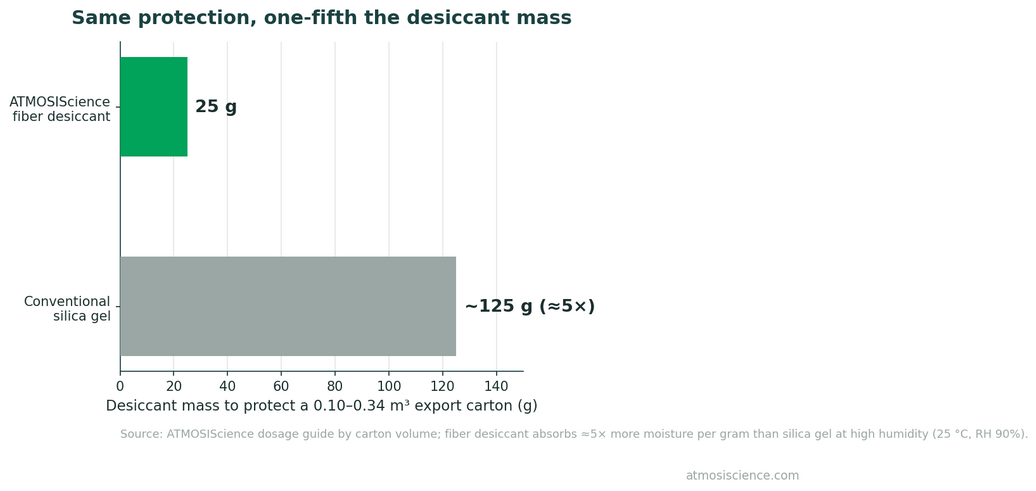
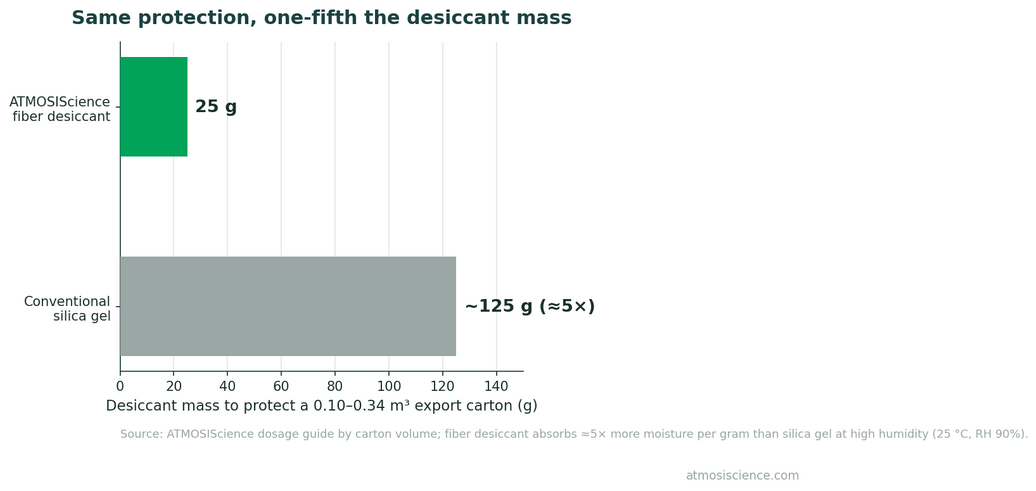
Because it absorbs roughly 5x more moisture per gram than silica gel, a shipment needs less desiccant by weight and volume — meaningful when every kilogram and cubic centimeter in a container has a freight cost. And because it does not leak, there is no catch-bag failure mode to manage.
How much desiccant for a carton or container
Dose by enclosed air volume, then scale up for the severity of the route. For carton-level protection, the baseline table is a clean starting point:
| Enclosed volume (m³) | Fiber desiccant (g) |
|---|---|
| 0.10 – 0.34 | 25 |
| 0.35 – 0.59 | 50 |
| 0.60 – 0.79 | 75 |
| 0.80 – 1.0 | 100 |
For a full container, total the volume and the moisture load (cargo + pallets + packaging + sealed-in humidity), then increase the dose for a long, hot, humid route and a long shelf life. Wet wood pallets and cardboard substantially raise the requirement. When in doubt, validate with humidity indicator cards placed at the top and bottom of a trial load before standardizing the spec.
The sustainability and customs advantage
Export shipments also carry documentation and disposal expectations. A biodegradable, compostable desiccant — certified under ASTM D6400 and EN 13432, with a Product Carbon Footprint of 1.44 kg CO₂e/kg — reduces packaging-waste liability at the destination and supports ESG reporting, while full material disclosure (lignocellulose, calcium chloride, PLA, food-grade paper) pre-empts customs questions about undocumented contents.
Frequently asked questions
What is container rain and how do I prevent it?
Container rain is condensation that forms inside a shipping container during temperature cycling, then drips onto cargo. Prevent it by sealing in less moisture and adding sufficient high-capacity desiccant dosed to the container's volume and route.
How much desiccant do I need for a shipping container?
Total the enclosed volume and moisture load (cargo, pallets, packaging, sealed-in air), then dose to that — increasing for long, hot, humid routes. At carton level, ~25 g of fiber desiccant protects 0.10–0.34 m³. Validate with indicator cards.
Is fiber desiccant better than calcium chloride container packs?
Fiber desiccant captures calcium chloride's high absorption inside a matrix, so it does not liquefy or leak and produces no catch-bag failure risk — while staying dust-free and biodegradable.
Why does silica gel underperform in ocean shipping?
It saturates at roughly 30% of its weight, then stops absorbing — leaving cargo unprotected for much of a multi-week voyage. Higher-capacity fiber desiccant keeps working longer.

Protect your next shipment
ATMOSIScience supplies high-capacity, dust-free, non-leaking fiber desiccant for container and export packaging, in a full weight range with compostability and material documentation.
Request bulk pricing and a route-specific dosage recommendation through our desiccant solutions page or contact our team, or evaluate the material with the Fiber Desiccant.
Get a desiccant spec & bulk quote for your product
Tell us about your packaging needs, and our sales team will respond with a customized fiber-desiccant solution, supporting certificates and competitive bulk pricing.