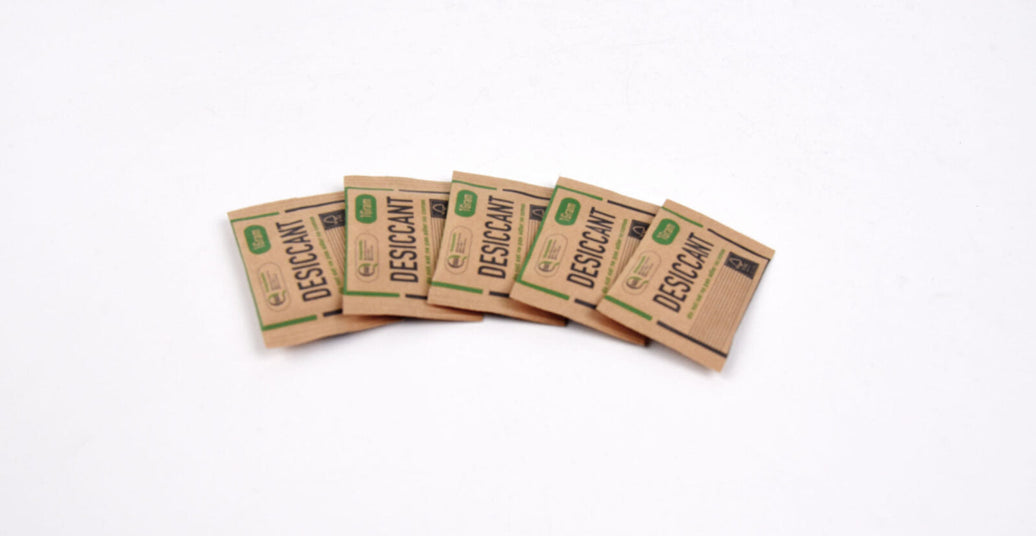
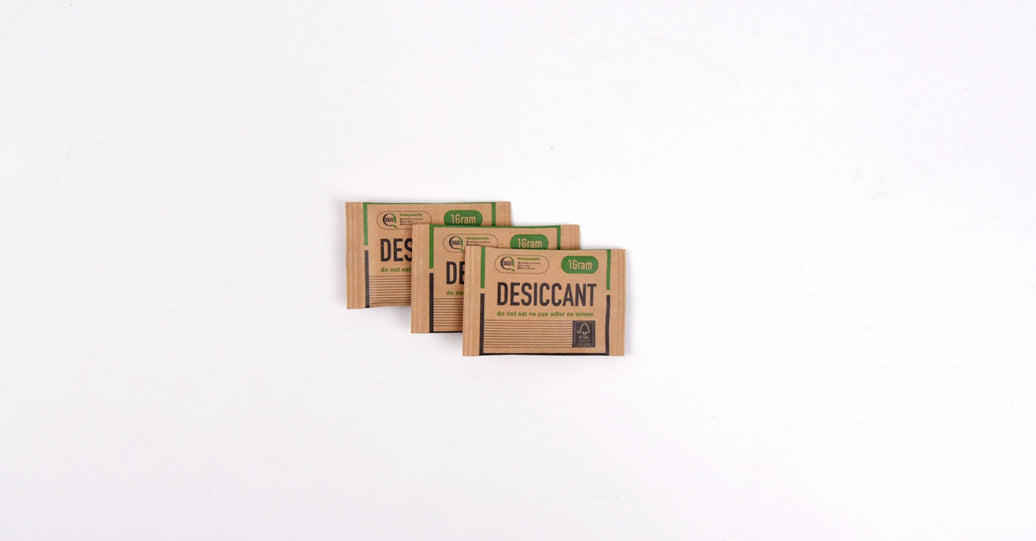
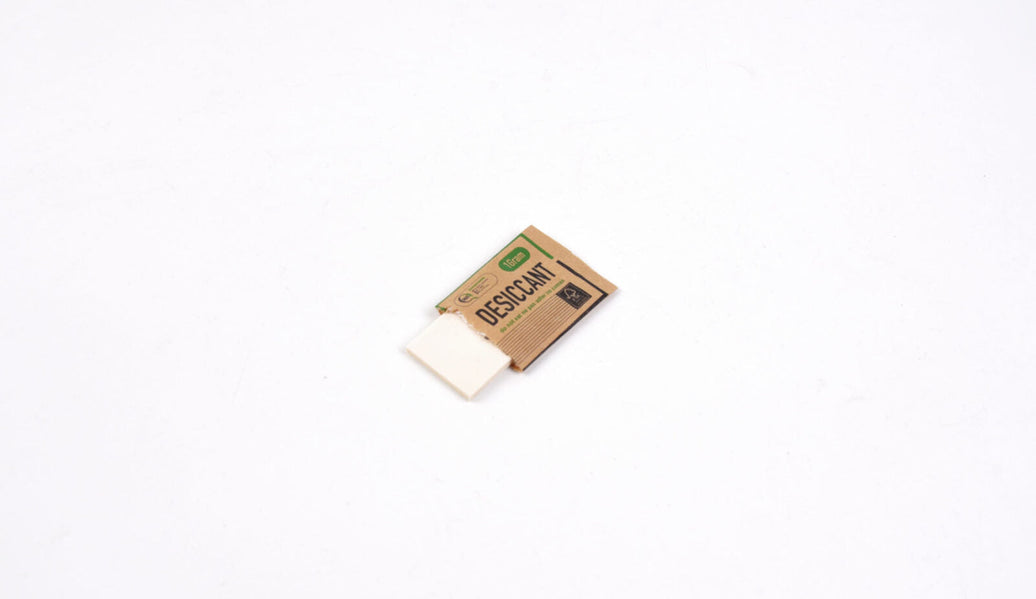
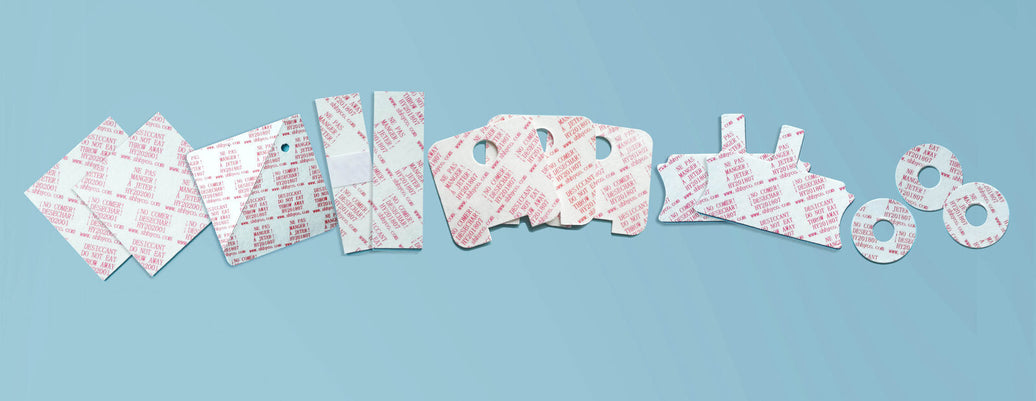
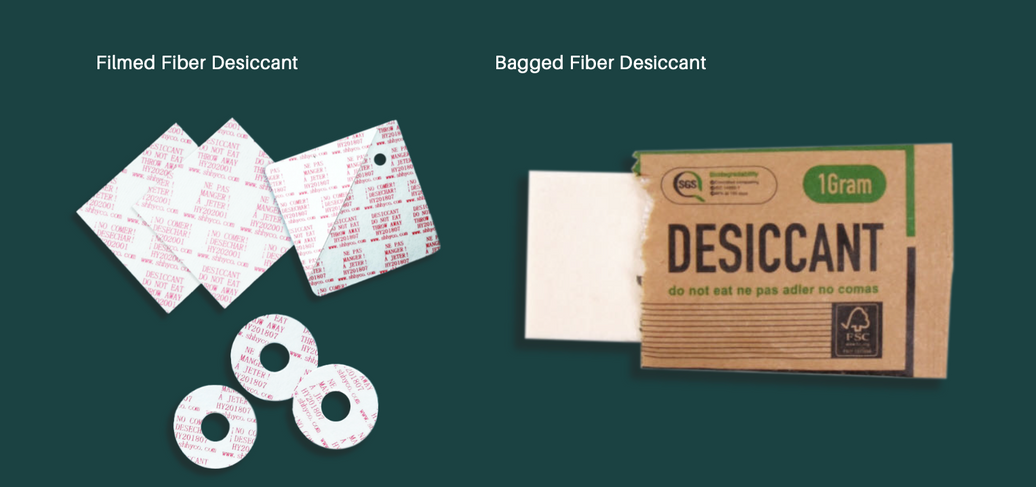
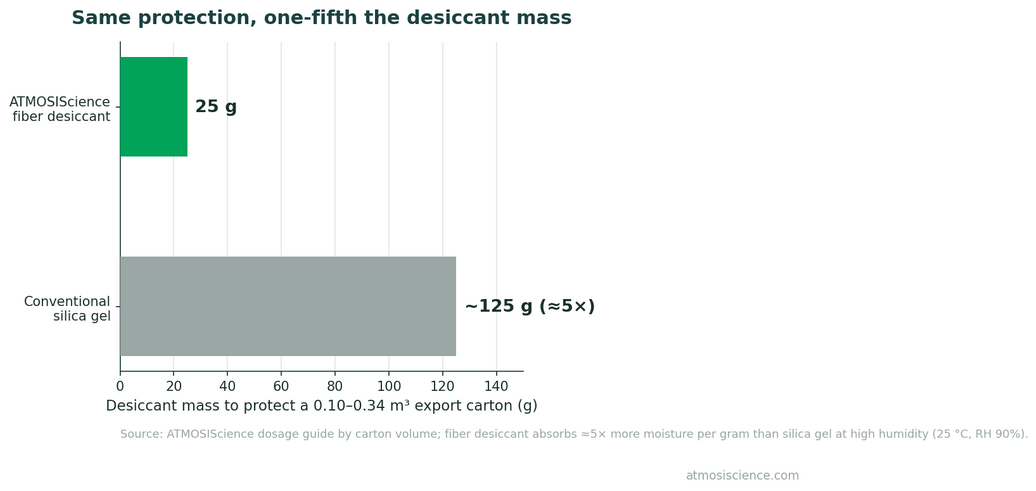
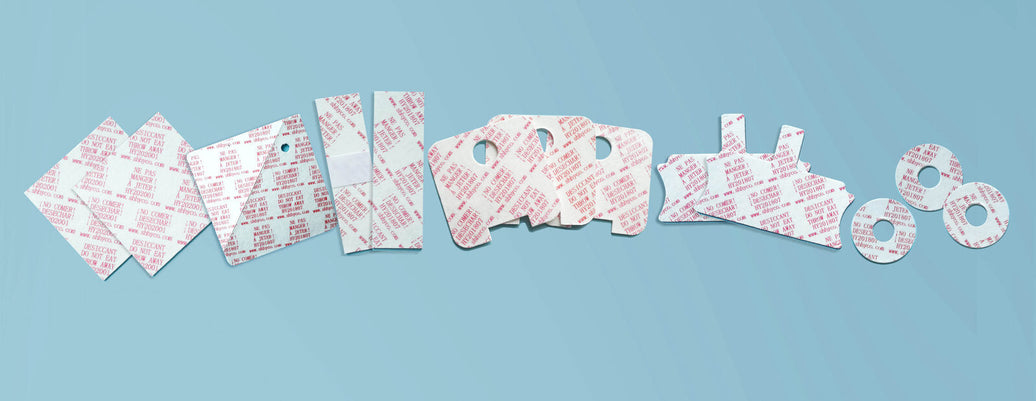
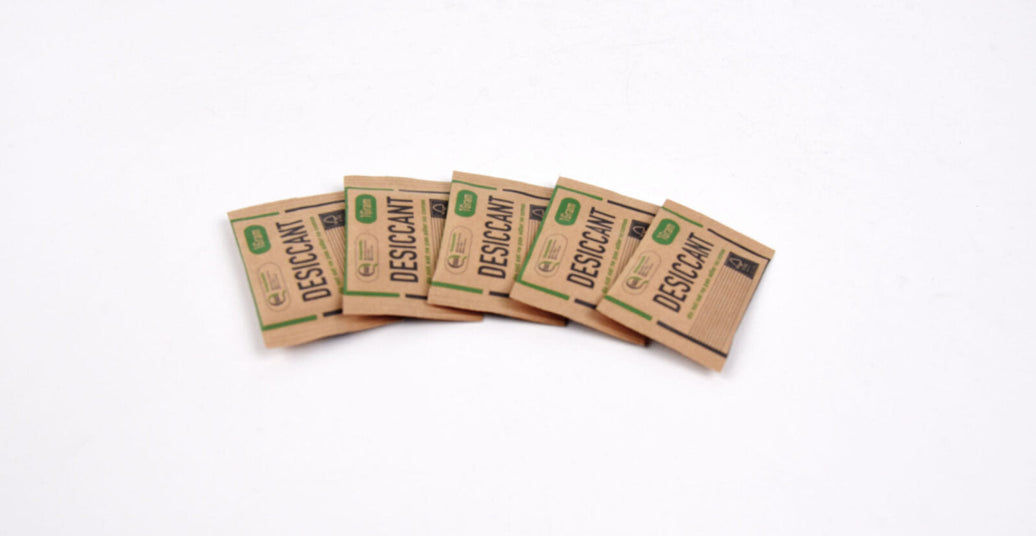
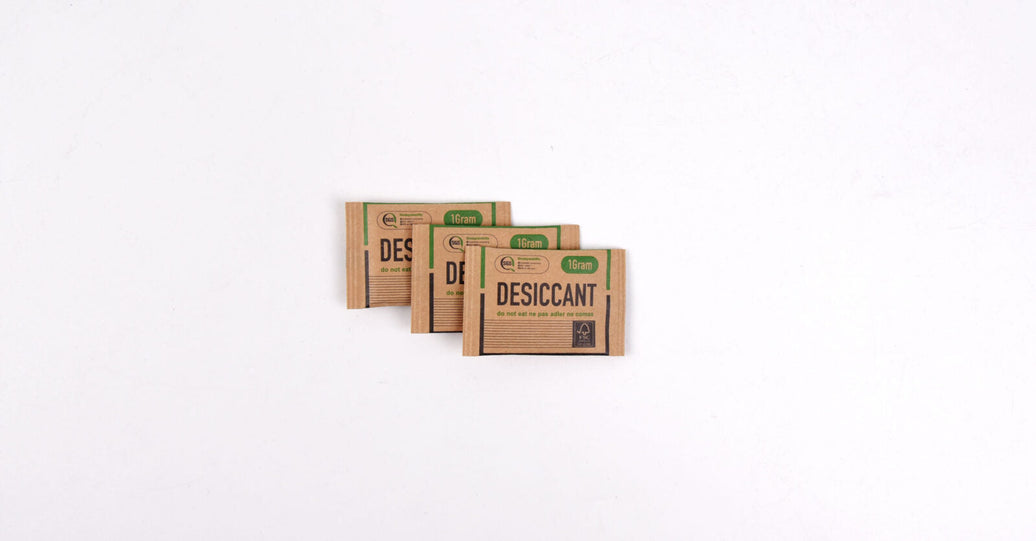
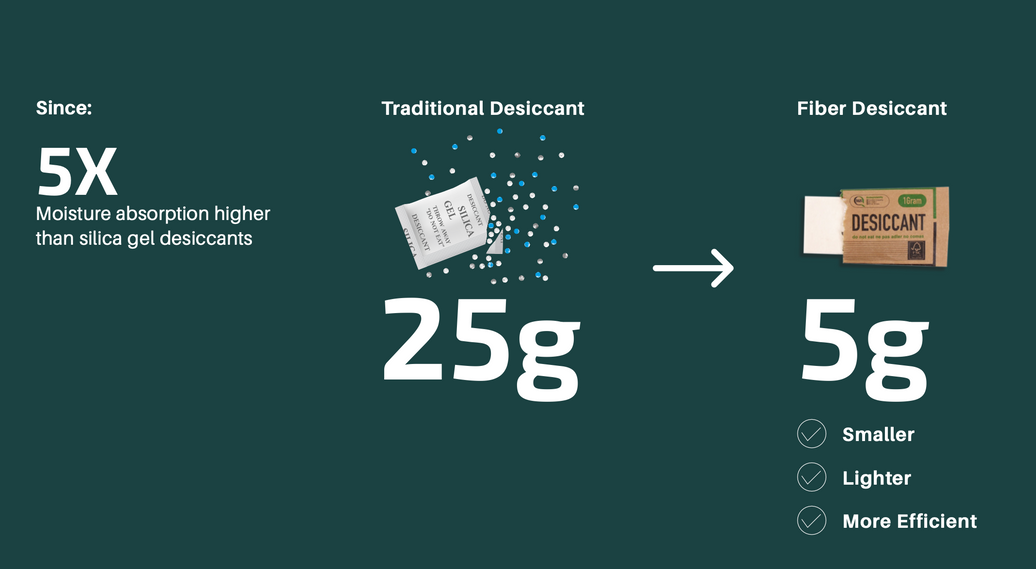
Quick answer: A single-serve stick pack rarely has room for an in-pack desiccant, and a loose inner sachet inside a stick creates seal and fill-weight risk. The practical answers are a thin die-cut film card inside a secondary pouch or canister, or protecting the whole retail unit at the shipper level. Fiber Card paper desiccants run 0.5 mm and 1.0 mm thick and are cut to shape, which is what makes single-serve architectures workable at all.
Stick packs and single-serve sachets are the tightest packaging format a powder brand can choose. Fill tolerance is a fraction of a gram, seal windows are narrow, and the film web moves fast. Everything added to that architecture has to earn its space. Which is why the question packaging engineers actually ask is not “which desiccant?” but “can this format carry a desiccant at all, and if not, where does the moisture protection go instead?”
Why a stick pack resists an in-pack desiccant
Three constraints stack up:
- Headspace. A stick pack is sized to the dose. There is very little free volume, and what exists is what the powder needs to flow when the consumer tears the top.
- Seal path. A stick is sealed along a back fin and across two ends. Anything that drifts into the seal jaw — a sachet corner, a card edge — contaminates the seal and creates a leaker.
- Fill accuracy. Auger and volumetric fillers dose to weight or volume. An object inside the cavity changes the volume the powder occupies and interacts with checkweigher tolerances.
An in-pack desiccant is also a consumer-experience problem in single serve. A loose sachet inside a stick will be torn open with the stick and end up in the drink. That is not a labelling problem you want to solve with a bigger warning — it is a format problem.

Sachet-in-sachet: when it works and when it fails
“Sachet-in-sachet” covers two very different designs, and conflating them is where projects go wrong.
Design A — desiccant inside the product sachet
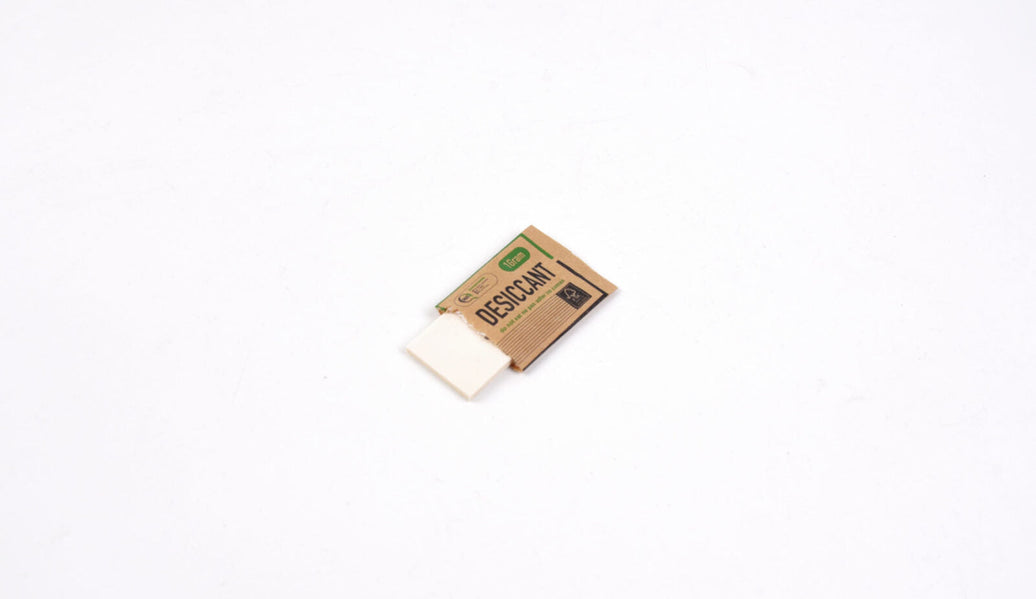
A small desiccant unit sits loose in the same cavity as the powder. This is the risky one. It puts a foreign object in the consumer’s dose path, it competes for headspace, and it can reach the seal. It is workable only where the outer unit is a multi-dose pouch large enough that the desiccant cannot migrate into the seal area, and where the pack carries clear do-not-eat marking. The do-not-eat labelling and child-safety requirements apply in full.
Design B — desiccant in the secondary pack, outside the sticks
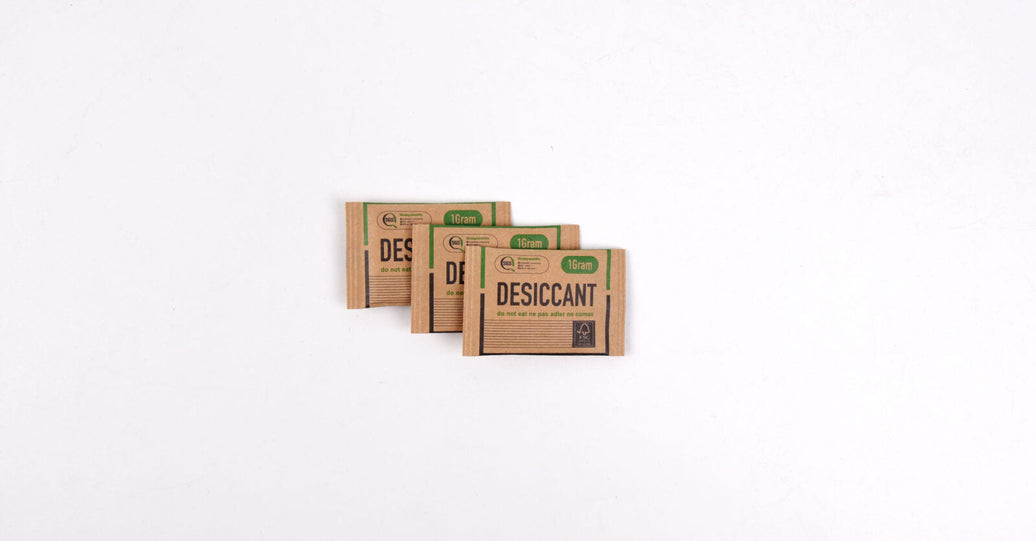
The sticks stay clean. A film card or pouch sits in the carton, canister or foil overwrap that holds the sticks. This is almost always the better answer. It protects every stick in the unit, it never touches the dose, it does not interact with the stick sealing jaws, and it can be sized to the real moisture load instead of squeezed to fit a cavity.
If the sticks themselves are the retail unit with no secondary pack, the decision moves up a level again — to the shipper. That works when the film has a decent barrier and the exposure risk is transit and warehouse humidity rather than long shelf life on an open shelf.
Sizing to headspace, not to carton count
Buyers frequently ask to be quoted “per carton”. That is a purchasing unit, not an engineering one. Moisture load is driven by three inputs, none of which is carton count:
- Sealed-in air. The free volume inside the pack at the moment of sealing, at whatever room humidity the line runs.
- Permeation through the walls. The film’s water-vapour transmission rate multiplied by surface area and shelf life.
- Opening cycles. Only relevant to reclosable multi-dose packs. A stick has none — single use, single opening.

For single serve this simplifies usefully. With no opening cycles, the load is sealed-in air plus permeation over the claimed shelf life. That is a calculable number, and it is usually small — which is why a thin card in the secondary pack often covers a whole box of sticks. The service-life calculation walks through the arithmetic.
Line-side questions to settle before trials
- Where does the desiccant enter — upstream of the stick former, or downstream at cartoning? Downstream is simpler and safer.
- Can the placement device handle the format at line speed? Card stiffness, not adhesive, usually decides this. See dispenser compatibility for automated lines.
- Will the unit shed anything into the powder stream? A bound fiber pad inside a sealed wrap does not dust; loose-fill formats can.
- Does the addition change the checkweigher window or metal-detection setup?
- Does the inner wrap need food-contact documentation? If it can touch product, yes.
Deliquescent powders raise the stakes
Electrolyte blends, amino acids and some sweetener systems are deliquescent: above a critical humidity they do not merely cake, they dissolve into a syrup. In a stick pack this shows up as a stuck, discoloured dose that will not pour. These formulas are the ones where protecting at the secondary level is not optional. Taming deliquescent salts in stick packs covers the formulation side, and pre-workout and amino acid powders covers the actives most often involved.
Frequently asked questions
Can desiccant be integrated into a stick pack line?
Into the stick itself, rarely — headspace and seal risk usually rule it out. Into the secondary pack on the same line, yes, and that is the normal implementation. Placement happens at cartoning rather than at the stick former.
Will an extra sachet affect seal integrity?
It can, if it sits in the same cavity as the powder and can reach the seal jaw. Keeping the desiccant outside the sealed product cavity removes the risk entirely rather than managing it.
Does the inner unit need to be food-contact compliant?
If it shares a cavity with food, yes. ATMOSIScience fiber desiccant is documented against FDA 21 CFR 175.300 for food-contact use; the direct versus indirect contact explainer sets out which declaration your case needs.
Can the desiccant be sized for headspace instead of carton count?
Yes, and it should be. Provide free volume at seal, film water-vapour transmission rate, pack surface area, target shelf life and the room humidity your line runs at.
What thickness fits a single-serve secondary pack?
Film cards are available at 0.5 mm and 1.0 mm and can be cut square, round or to a custom outline, so they can be laid flat against a carton wall or a canister lid rather than occupying dose space.
Have a stick pack or single-serve format reviewed
Send the dose weight, film structure and shelf-life target. ATMOSIScience will indicate whether protection belongs in the stick, the secondary pack or the shipper — and the format that fits.
Prefer email? info@atmosiscience.com