Electrolyte and hydration powders are among the hardest products in the supplement aisle to keep dry. The reason is chemistry, not packaging luck: the active salts are deliquescent. Above a critical humidity, they do not merely adsorb moisture — they dissolve in the water they attract, then re-solidify into a rock. Any brand that has seen a stick pack turn to a brick, or a tub fuse into a single mass, has met deliquescence.
This guide explains the deliquescence mechanism, why hydration formats fail differently, and how to spec desiccant protection for stick packs, tubs, and bulk without shedding dust into a consumed product.
Deliquescence: why electrolyte powders don't just clump, they liquefy
Every soluble salt has a deliquescence relative humidity (DRH) — the ambient RH above which it spontaneously absorbs enough water to form a saturated solution. Below the DRH it stays a dry powder; a few points above it, it starts to wet.
Hydration blends stack several low-DRH ingredients together, and a mixture's DRH is lower than any single component:
Sodium and potassium salts. Potassium chloride and sodium citrate carry moderate DRH values, but in blends they drop.
Magnesium salts. Magnesium citrate and chloride are strongly hygroscopic — magnesium citrate can take up 12–18% of its weight in water at 75% RH within 48 hours.
Acid systems. Citric and malic acid, used for tartness and effervescence, are deliquescent and pull the blend DRH down further.
The practical result: a formula that is stable at 40% RH can be actively wetting at 60% RH — an ordinary US indoor humidity. The goal is to hold internal pack RH below the blend's DRH for the whole shelf life. The four-stage cascade is covered in our pillar on why powders cake; deliquescence is its most aggressive form.
Format decides the moisture load
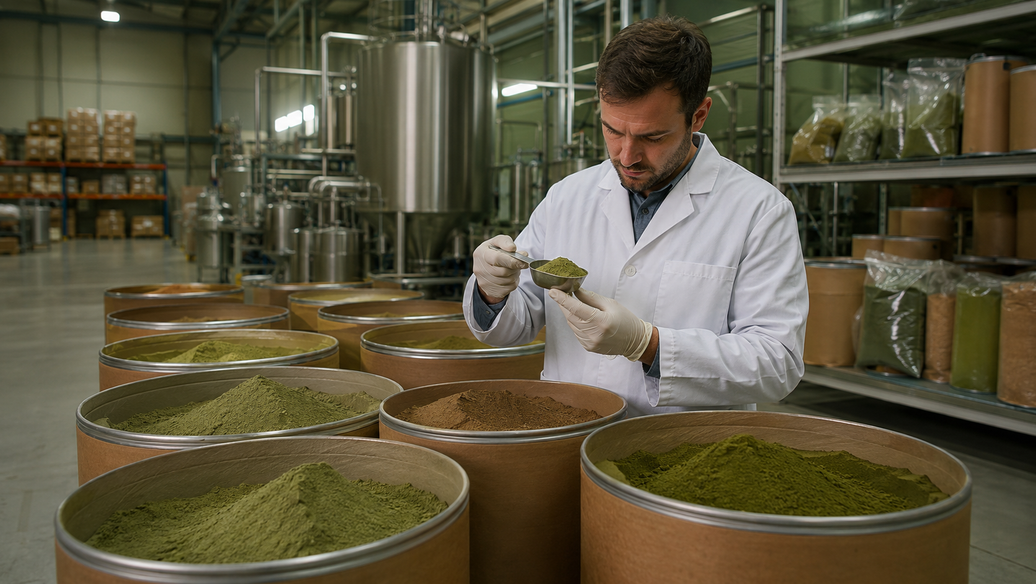
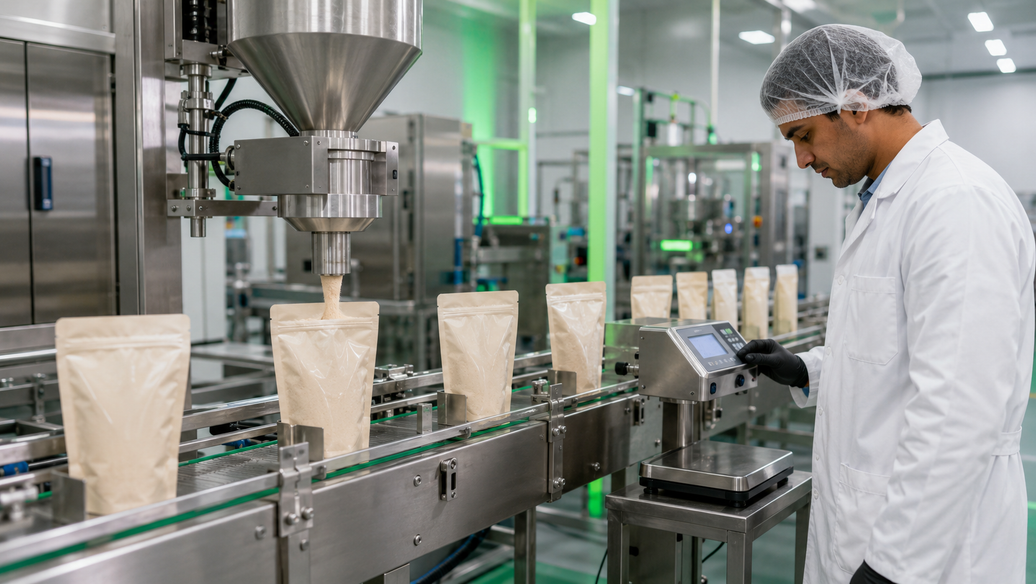
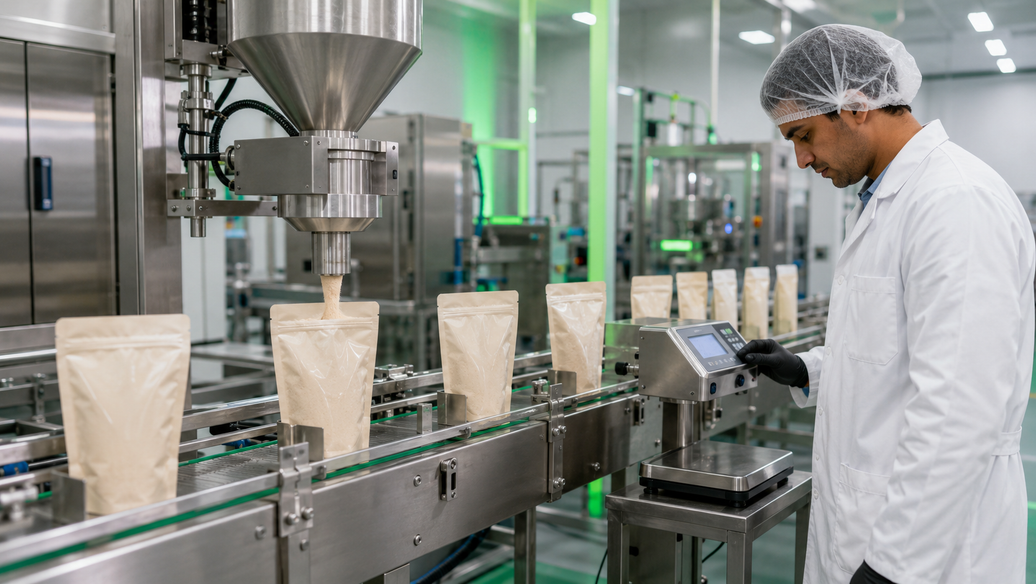
Single-serve stick packs. A well-sealed multi-layer foil stick usually needs no desiccant — the barrier is the protection. The risk is upstream: open totes on the filling floor. Bulk powder waiting to be stick-packed can absorb enough moisture in a humid plant to fail before it is even sealed. Desiccant belongs in the bulk liner, not the stick.
Tubs and canisters. This is where hydration brands see the worst reviews. A multi-serve tub is re-opened 30–60 times, often in a kitchen or gym bag, and each opening lets humid air in. Here an in-pack desiccant is essential, and capacity per gram decides whether it lasts to the final scoop.
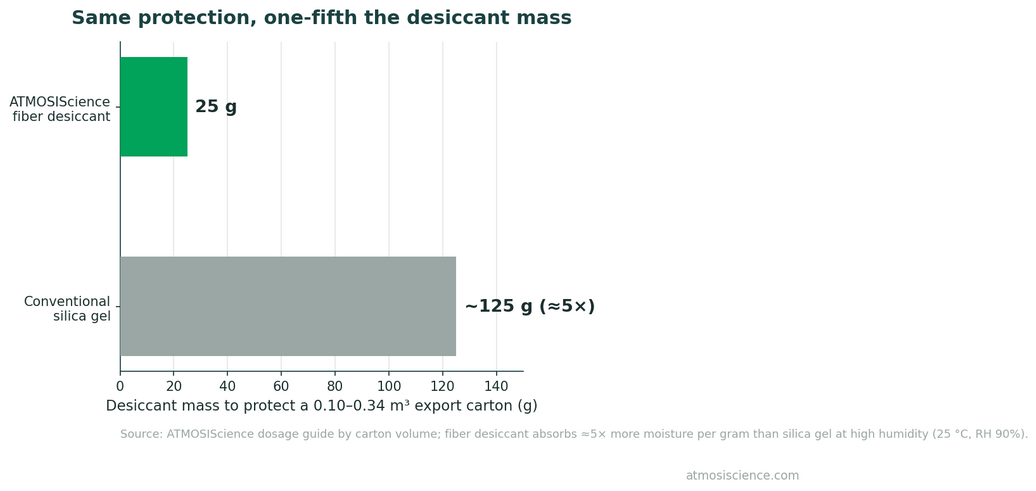
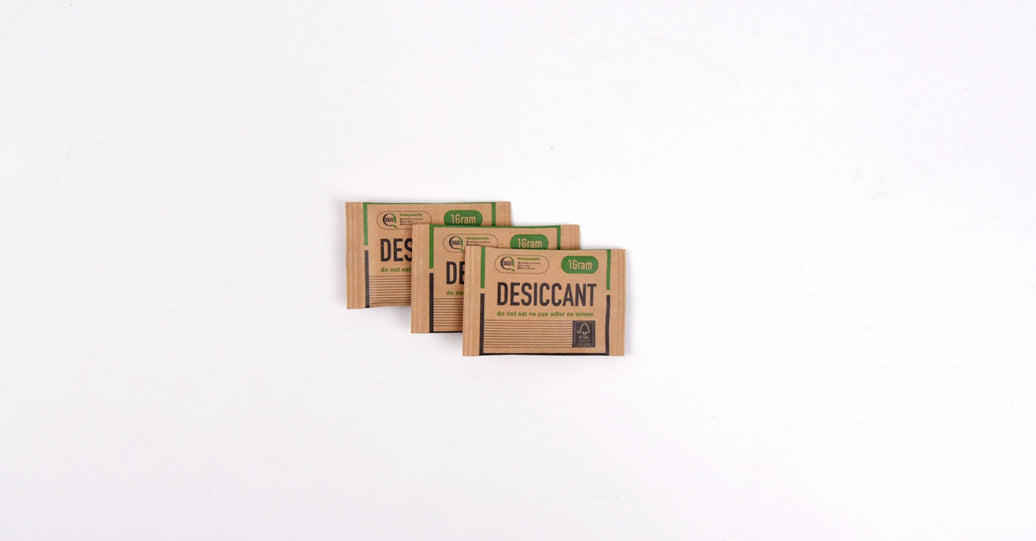
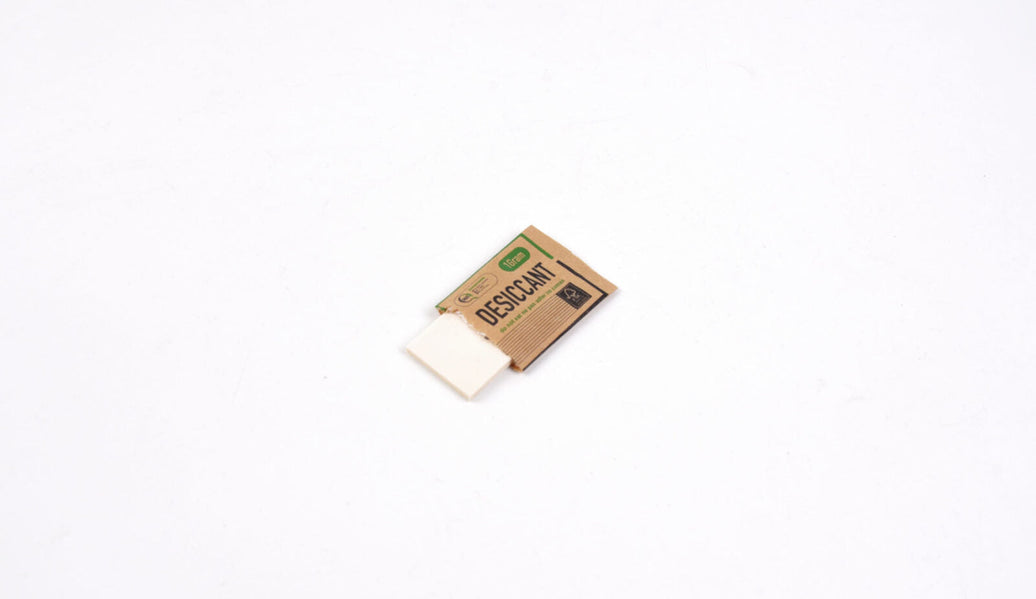
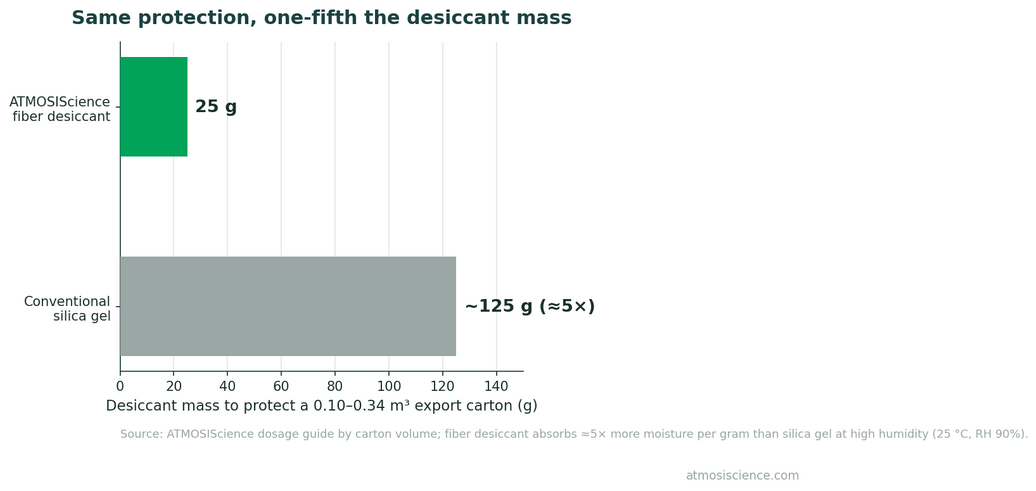
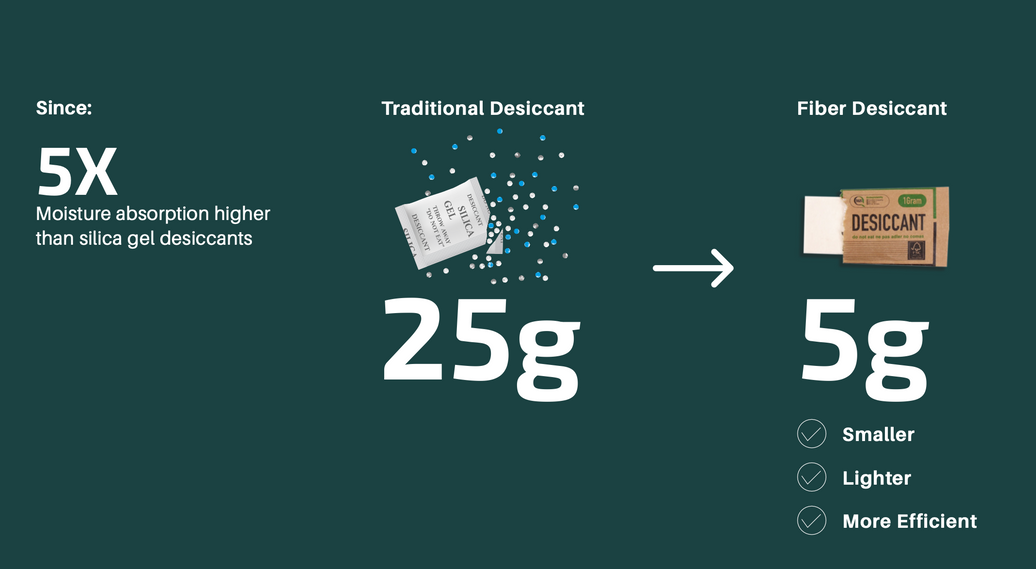
Bulk drums and totes (co-packers). High-capacity sachets in the liner protect powder between manufacture and fill. Roughly 25 g of fiber desiccant protects a standard 0.10–0.34 m³ carton — about 5x the efficiency of silica gel by weight.
Why capacity beats everything for deliquescent powders
Against a deliquescent salt, a desiccant is in a race: it must keep headspace RH under the DRH faster than the salt can pull water in. A low-capacity desiccant saturates and stalls, and once RH creeps above the DRH the powder wets regardless. Fiber desiccant absorbs over 70% of its own weight at 25°C and 90% RH, versus roughly 30% for silica gel — so it holds the headspace under the threshold longer and through more openings. The full chemistry-by-chemistry comparison, including calcium chloride systems, is in our procurement comparison.
The dust problem — acute in a drink powder
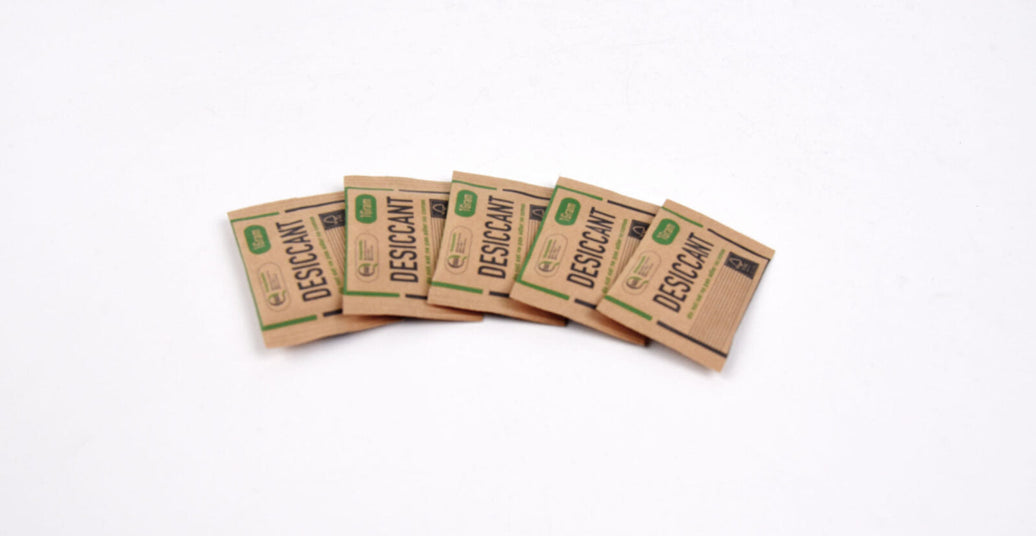
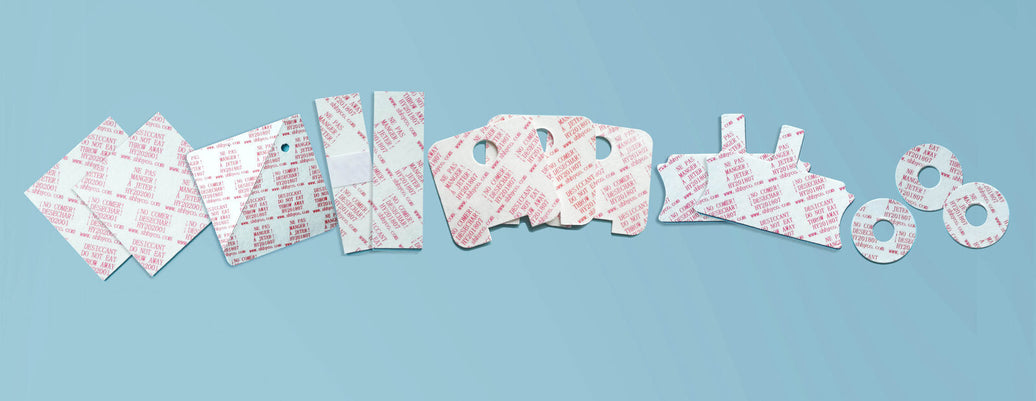
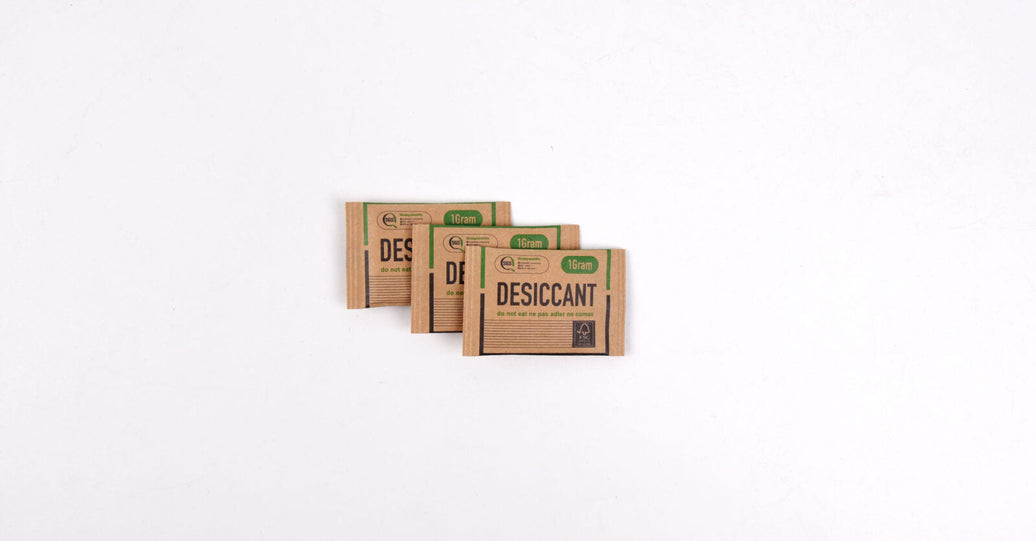
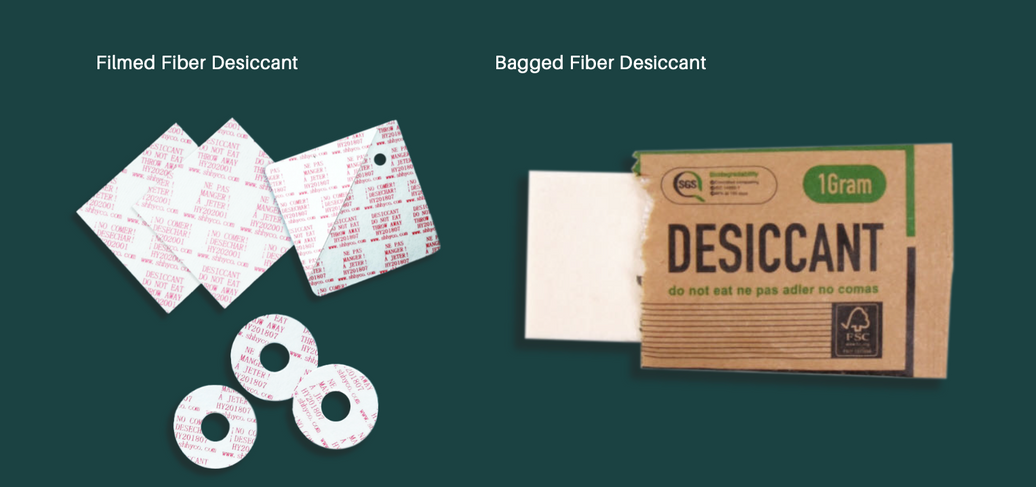
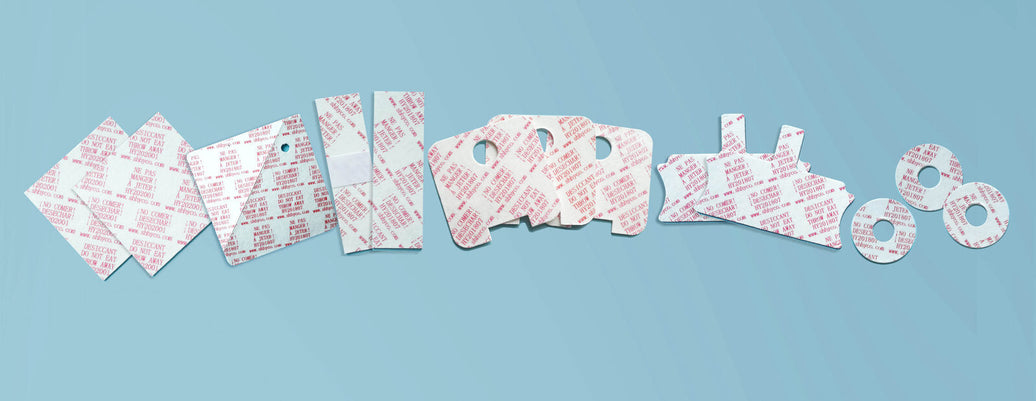
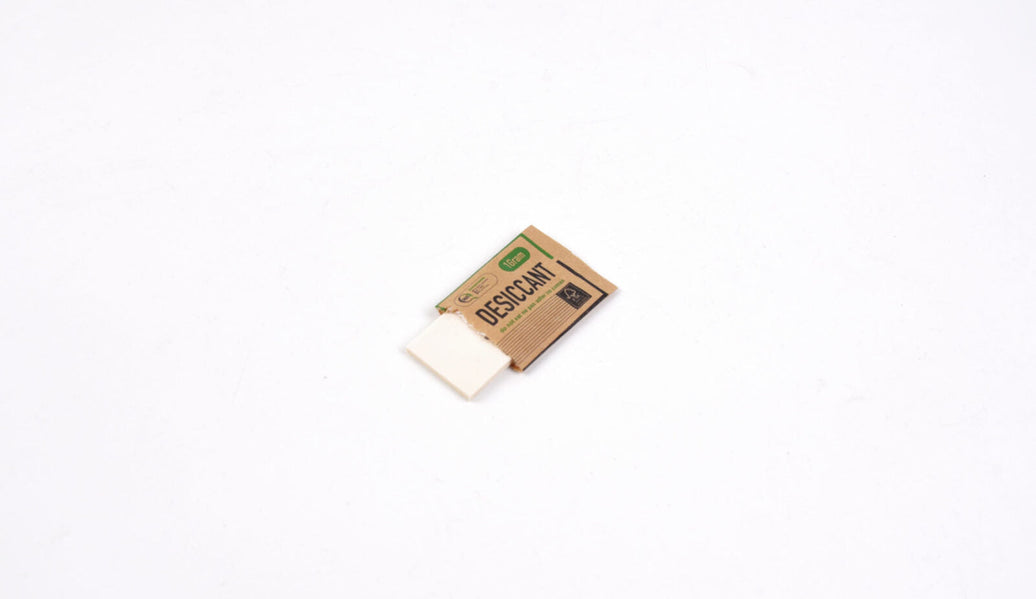
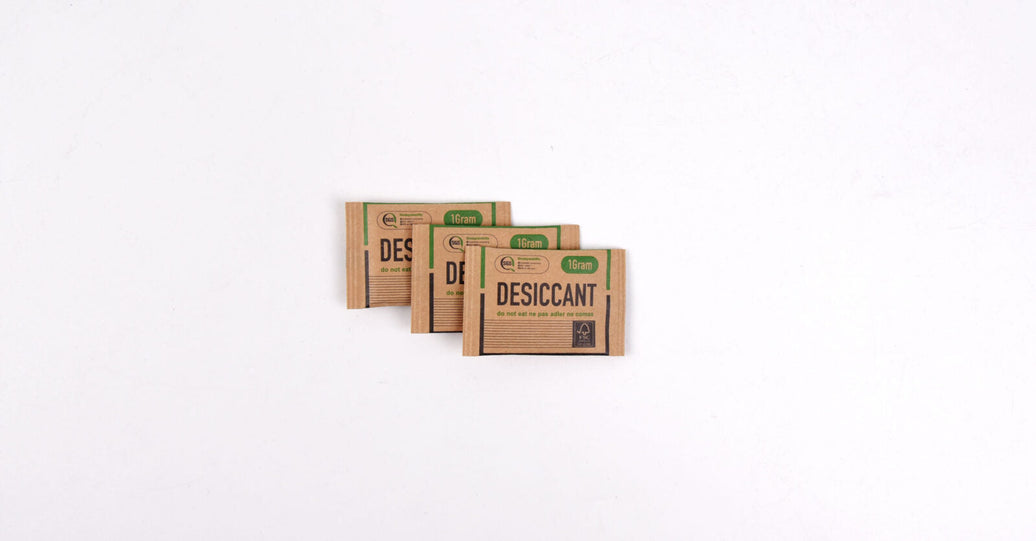
Loose silica beads or clay fines in an electrolyte powder that gets stirred into water is a foreign-matter and consumer-trust failure. A torn sachet in a scooped tub is a recall risk, detailed in our guide to loose-fill desiccant risks. ATMOSIScience fiber desiccant is dust-free by construction — the active is bound into a plant-fiber matrix, with nothing to leak if punctured. For tubs, a rigid film desiccant card stays visible on the powder bed and prints with your logo.
Documentation for a hydration QA team
Hydration powders sold as supplements fall under 21 CFR Part 111. ATMOSIScience fiber desiccant ships with FDA 21CFR175.300 food-contact documentation, SGS ISO 9001 manufacturing (Cert. CN05/31171), full raw-material disclosure, and ASTM D6400 / EN 13432 compostability certificates — the pack a supplier questionnaire expects, listed in our supplier qualification guide.
Frequently asked questions
What is the difference between hygroscopic and deliquescent?
Hygroscopic powders adsorb moisture and clump. Deliquescent powders adsorb until they dissolve into a solution above their critical humidity, then re-harden. Electrolyte salts are the deliquescent case, so RH control has to be tighter.
Do single-serve sticks need a desiccant?
Usually not, if the foil barrier is adequate. Protect the bulk powder before it is sticked instead — that is where deliquescent loss usually happens.
How do we find our blend's critical humidity?
A moisture sorption isotherm identifies the RH where uptake accelerates. We explain reading one in our isotherm guide.
Keep the powder pouring
ATMOSIScience supplies high-capacity fiber and film-card desiccant for deliquescent hydration formulas, with full food-contact and compostability documentation. Explore ATMOSIScience desiccant solutions, request a sample of the Fiber Desiccant, or contact our team for a spec, certificates, and a bulk quote for your hydration line.
Related reading: Desiccant for Effervescent Tablets & Powders · Desiccant for Powdered Drink Mixes · Water Activity vs. RH
Get a desiccant spec & bulk quote for your hydration line
Send us your salt system, format, and shelf-life target — we respond with the critical-humidity math, a capacity calculation, certificates, and bulk pricing.