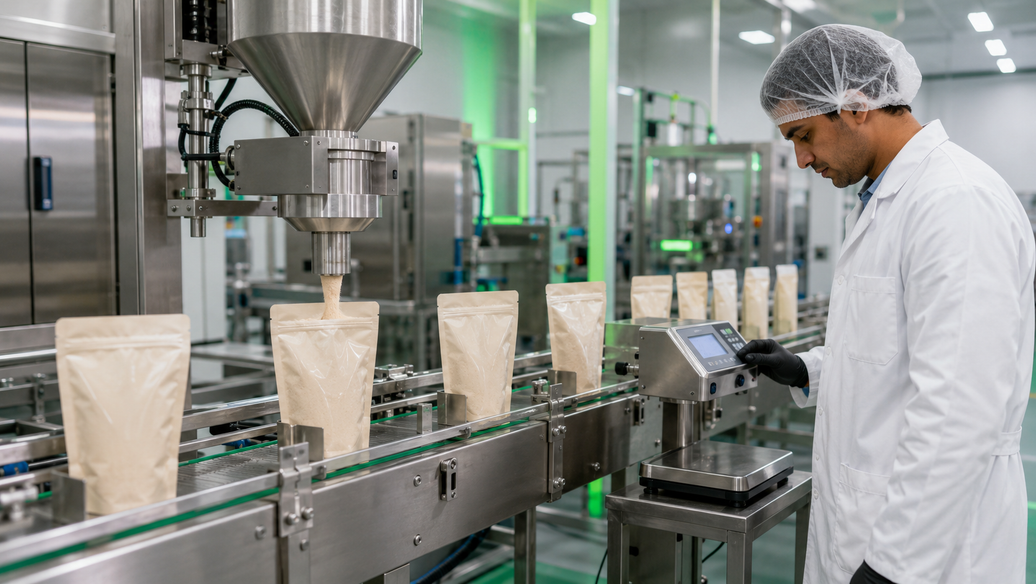
Loose-fill and powder-form desiccants are still common in food and supplement packaging because they are cheap and easy to source. They are also one of the more underrated sources of contamination findings, line stoppages, and consumer complaints. The moment a desiccant sheds particulate or leaks its absorbent into a food package, it stops being a protective component and becomes a hazard.
This article lays out the real risks of powder desiccant in food packaging, why they keep surfacing in QA reviews, and the dust-free fiber alternative that removes the problem at the source.

Why "powder" desiccant is a packaging liability
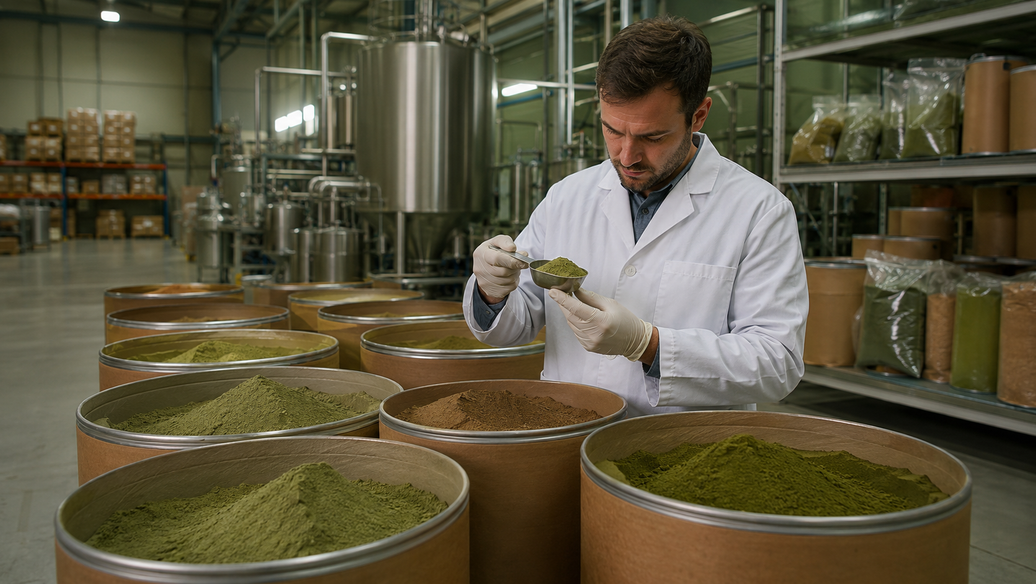
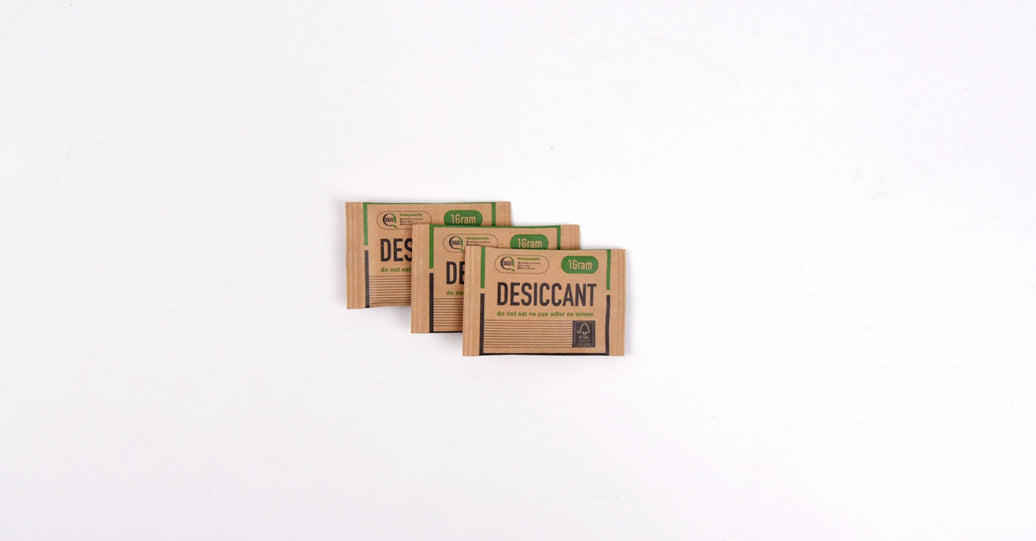
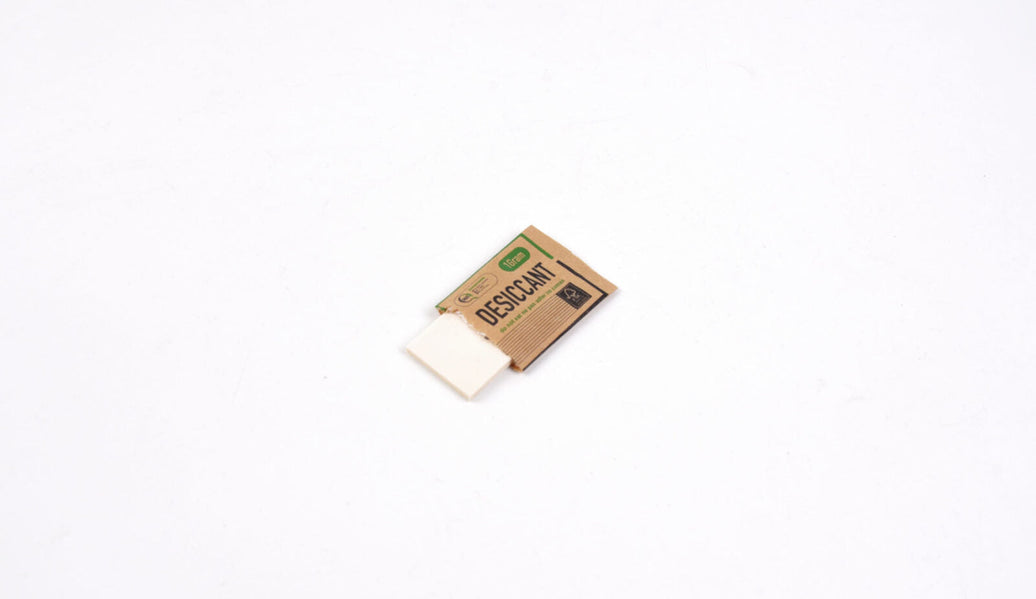
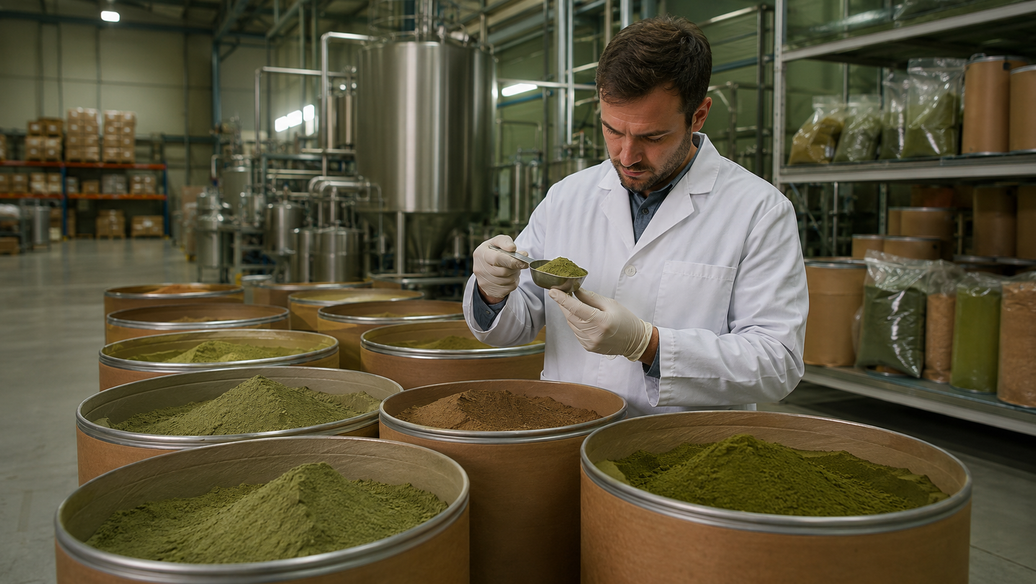
The term "powder desiccant" usually covers two things buyers lump together: genuinely powdered absorbents, and loose-fill bead formats (like silica gel or clay beads) that behave like powder once a sachet abrades or tears. Both share the same failure mode — uncontained particulate inside a food package.
The risks are concrete. Sachet seams can fail under vibration in transit, releasing beads or powder directly onto the product. Fine dust migrates through permeable sachet walls and settles on food. A consumer who finds particulate, or worse a torn sachet, in a food package files a complaint — and a single viral photo of "white powder in my snacks" is a brand-safety event no procurement saving justifies.
For supplements and powdered foods especially, where the product itself is a powder, distinguishing desiccant contamination from product is nearly impossible once it happens. The cleanup is a recall conversation, not a line note.
The four hidden costs procurement underestimates
Powder and loose-fill formats look cheap on a per-unit basis. The full cost shows up downstream.
Contamination and recall exposure. A foreign-particle finding can trigger a hold, an investigation, and in the worst case a recall. The cost dwarfs any per-sachet savings.
Line inefficiency. Dusty or leak-prone sachets foul filling equipment, require more careful handling, and slow throughput. Operators spend time managing a component that should be invisible.
QA and audit burden. Every loose-fill format is a recurring item on the contamination-risk register — something QA must monitor, document, and defend at every audit. A dust-free format retires that line item.
Consumer trust. The brand damage from a visible contamination complaint is the hardest cost to quantify and the slowest to recover. It is also the easiest to avoid.
What "dust-free" actually requires
Marketing language is loose here, so define the requirement precisely. A genuinely dust-free, food-appropriate desiccant should hold its absorbent in a bound matrix rather than as free beads or powder, resist leaking even as it saturates, carry documented food-contact standing, and survive transit vibration without seam failure.
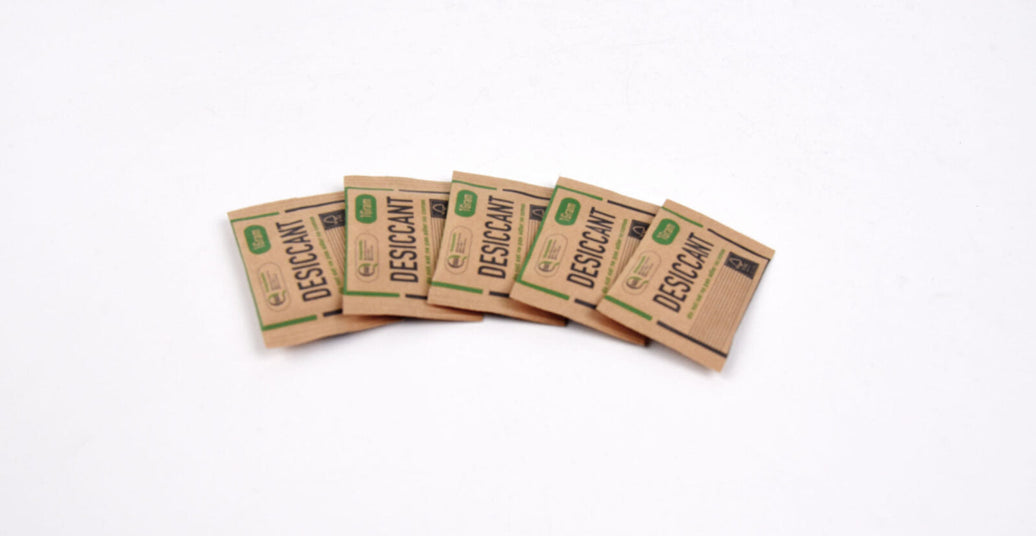
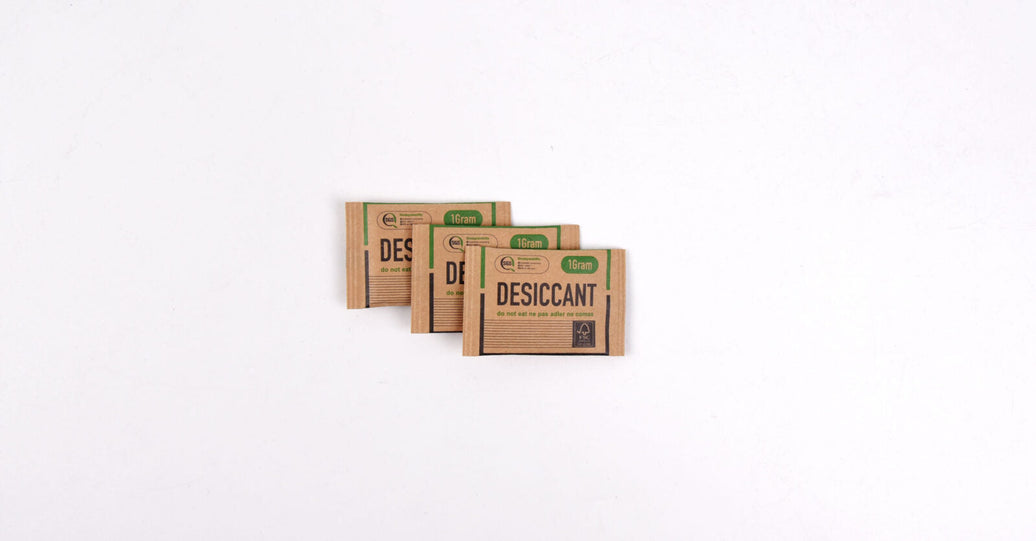
ATMOSIScience Fiber Desiccant is engineered against exactly these requirements. It binds its absorbent — including calcium chloride — within a natural lignocellulose fiber matrix, so there is nothing loose to shed and nothing liquid to leak. The result is a desiccant described on its specification as dust-free and non-leaking, and manufactured under SGS ISO 9001.
How fiber desiccant removes the powder problem
The difference is structural, not cosmetic. In a loose-fill format, the absorbent and the package are one tear away from mixing. In a fiber composite, the absorbent is locked into the fiber substrate and overwrap from the start.
That construction delivers three things food packaging teams care about. There is no particulate to migrate onto the product, removing the contamination vector entirely. There is no liquefaction as the desiccant saturates — unlike raw calcium chloride, the bound form does not leak. And the format is more robust in transit, because there are no free beads to abrade a seam.
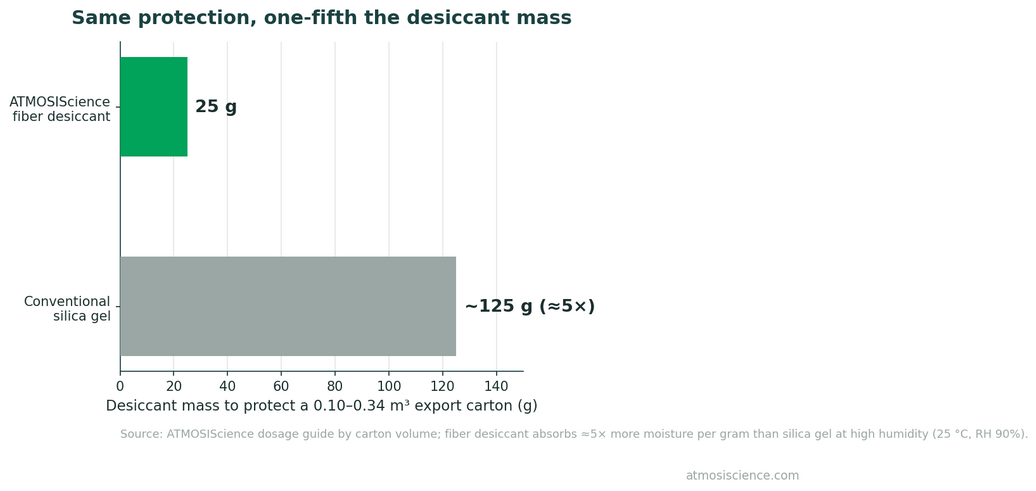
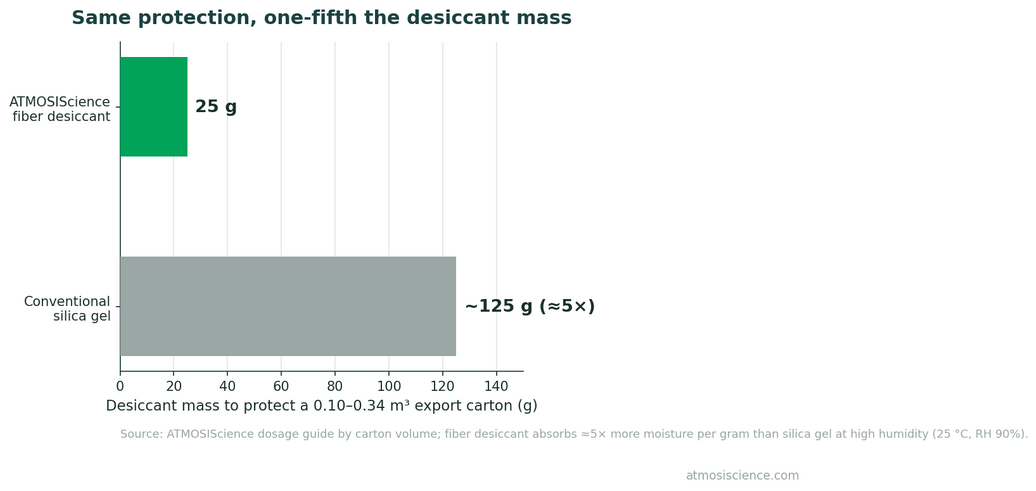
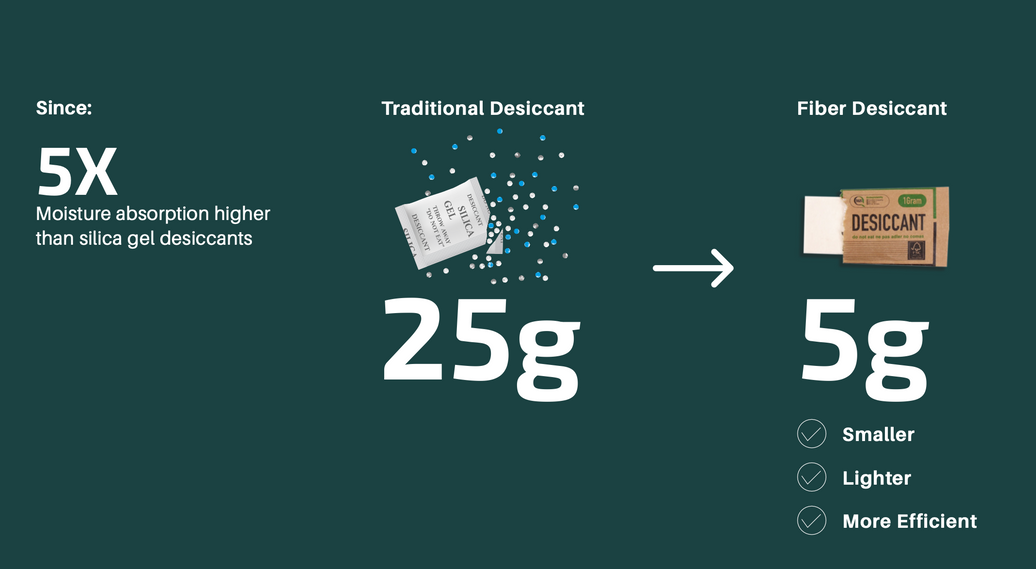
It also outperforms on the metric that justified the loose-fill format in the first place. Fiber desiccant absorbs over 70% of its own weight at RH90% and 25°C, against roughly 30% for silica gel — so a package needs less of it, not more, even after the contamination risk is removed.
Format options that fit food and supplement lines
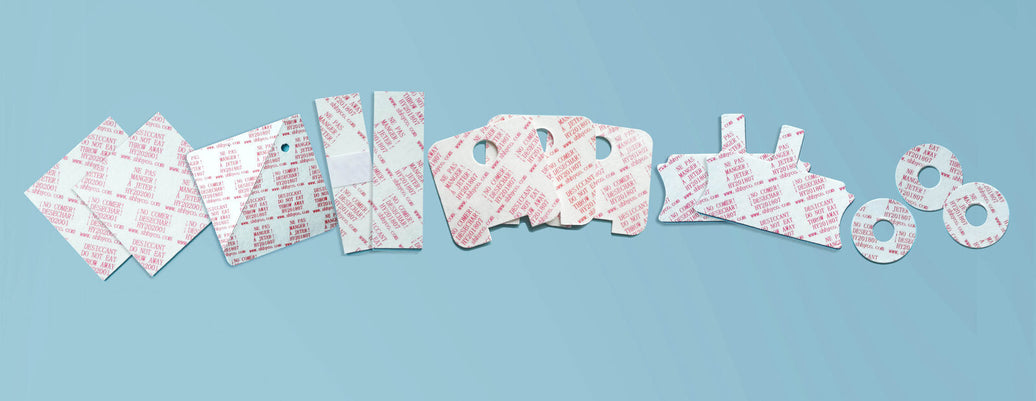
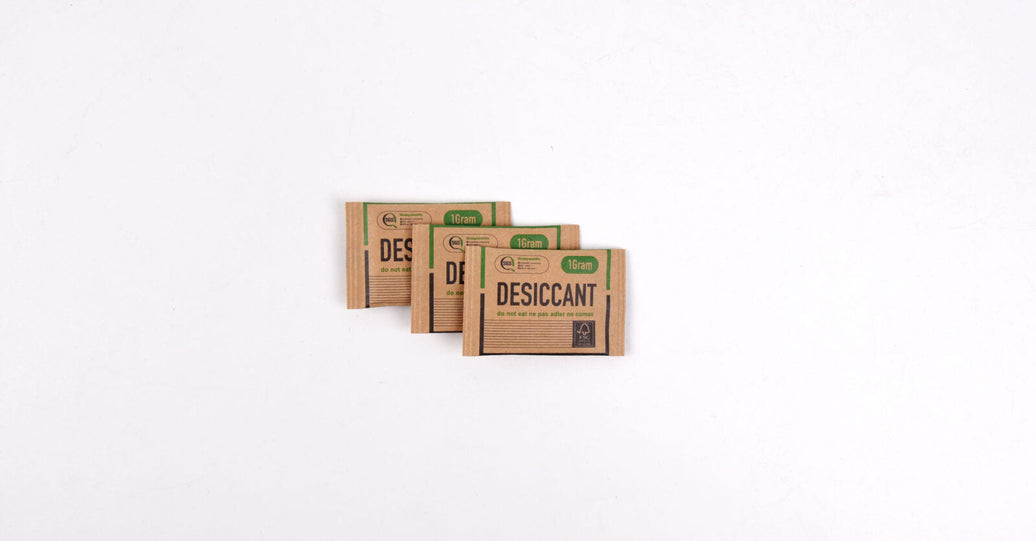
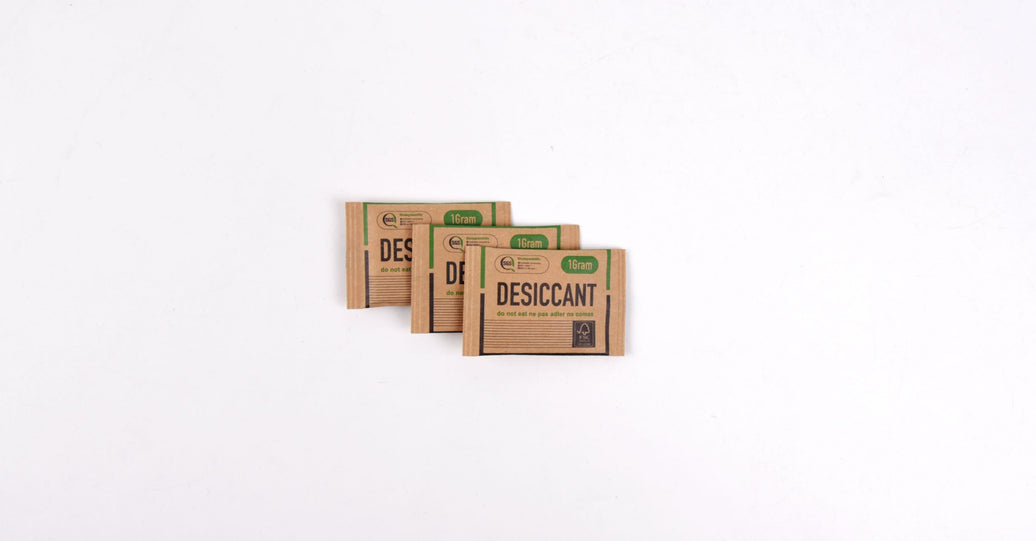
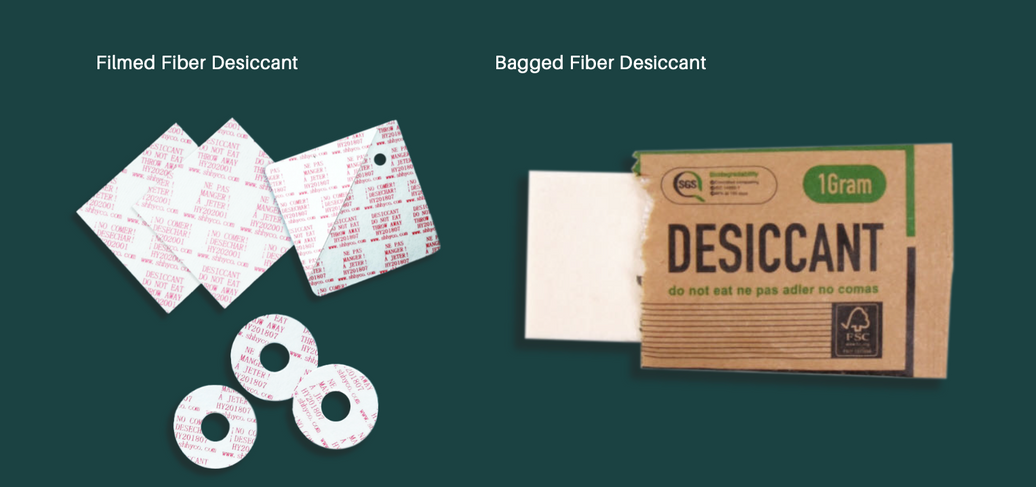
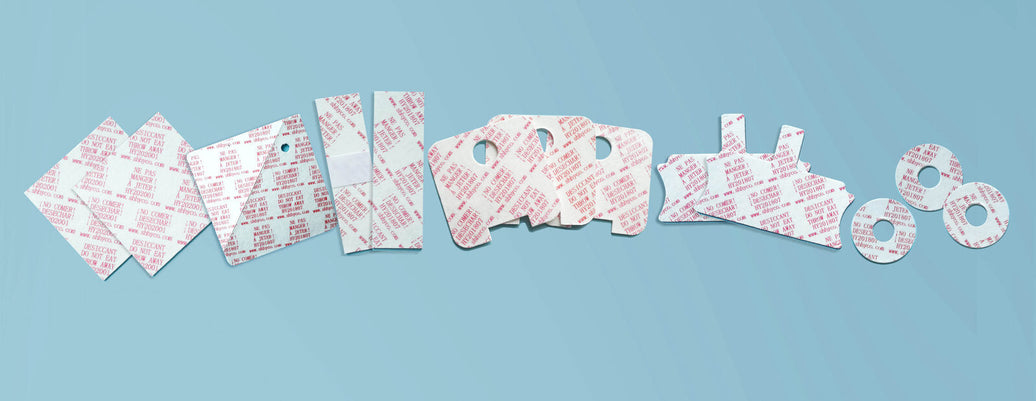
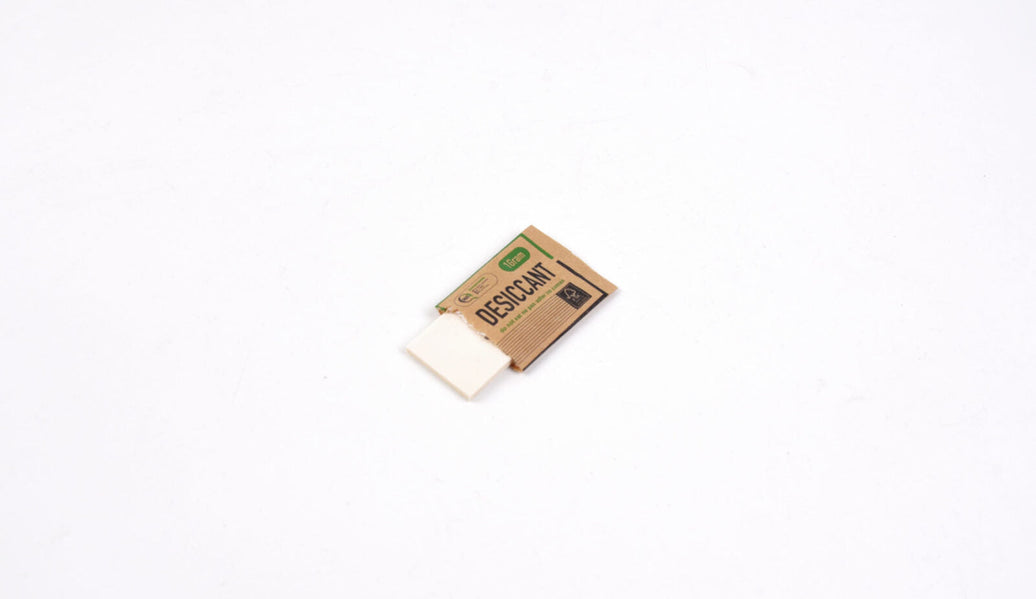
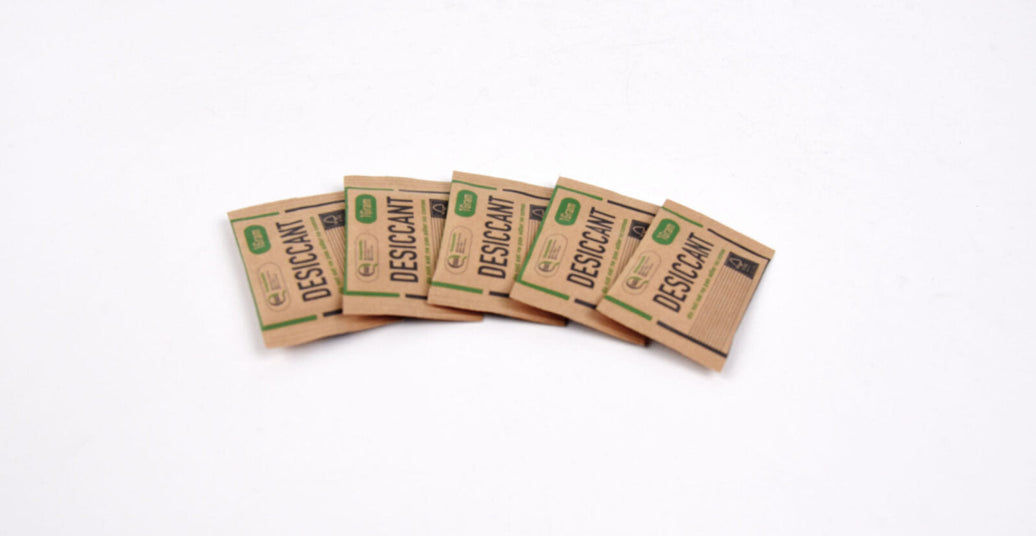
Removing the powder risk does not mean redesigning the package. Fiber desiccant comes in formats built for food and supplement applications: filmed pads that die-cut into squares, circles, or custom shapes at 0.5 mm or 1.0 mm for bottle caps and pouches; bagged sachets across a wide weight range for cartons and jars; and printable laminated, compostable film for branded inserts. Bag and overwrap materials are specified per SKU as compostable nonwoven or food-safe Tyvek®.
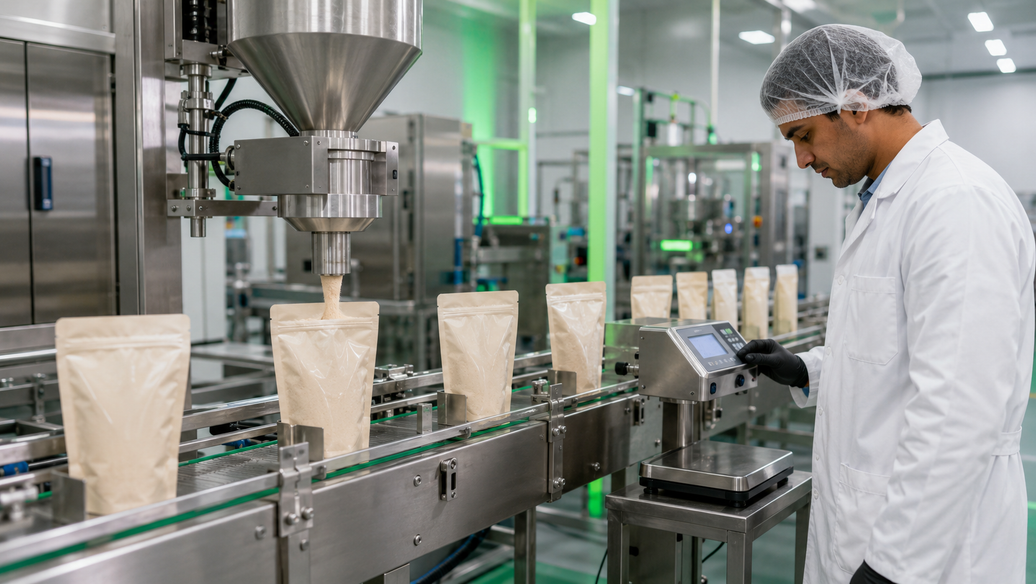
The line keeps its geometry. The contamination risk leaves with the loose-fill.
A sustainability bonus, not a trade-off
Food and supplement brands moving away from powder formats often assume cleaner means costlier or less sustainable. The opposite holds here. Fiber desiccant is biodegradable and compostable under ASTM D6400 and EN 13432, regenerates by air-drying without heat, and carries a Product Carbon Footprint of 1.44 kg CO₂e/kg — about 31% lower than silica gel. The dust-free upgrade and the sustainability upgrade are the same decision.
Frequently asked questions
Why are powder and loose-fill desiccants risky in food packaging?
They can shed particulate through sachet walls or leak if a seam fails, contaminating the product. For powdered foods and supplements, telling desiccant from product becomes nearly impossible — a contamination and recall risk.
What makes a desiccant "dust-free"?
The absorbent is held in a bound matrix rather than as free beads or powder, so it cannot shed particulate or leak as it saturates. Fiber desiccant binds its absorbent in a lignocellulose fiber matrix for this reason.
Is fiber desiccant safe for direct food contact?
ATMOSIScience fiber desiccant is manufactured under SGS ISO 9001. Verify the certificate for the specific SKU before approval.
Does switching from powder desiccant mean redesigning my packaging?
No. Fiber desiccant comes in die-cut filmed pads and bagged formats that fit existing bottle caps, pouches, jars, and cartons, so the package geometry stays the same.
Retire the contamination risk from your packaging
ATMOSIScience supplies dust-free, non-leaking fiber desiccant in food- and supplement-ready formats — documented under ISO 9001, and biodegradable by certification.
Swap out loose-fill for good. Request food-safe samples and bulk pricing through our desiccant solutions page or contact our team, or evaluate the format with the Fiber Desiccant.
Related reading: Calcium Chloride vs. Silica Gel vs. Fiber Desiccant: A Procurement Comparison · Desiccant for Dietary Supplements & Nutraceuticals
Get a desiccant spec & bulk quote for your product
Tell us about your packaging needs, and our sales team will respond with a customized fiber-desiccant solution, supporting certificates and competitive bulk pricing.