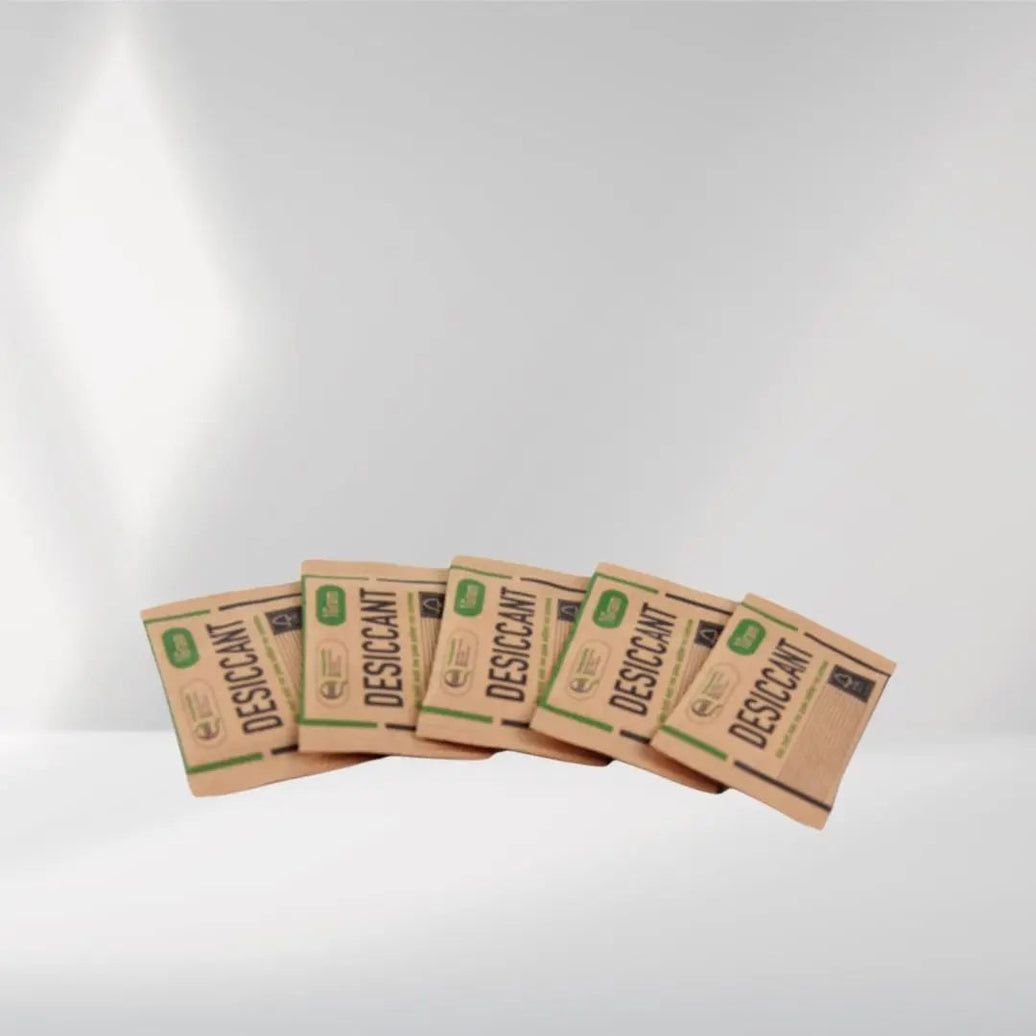
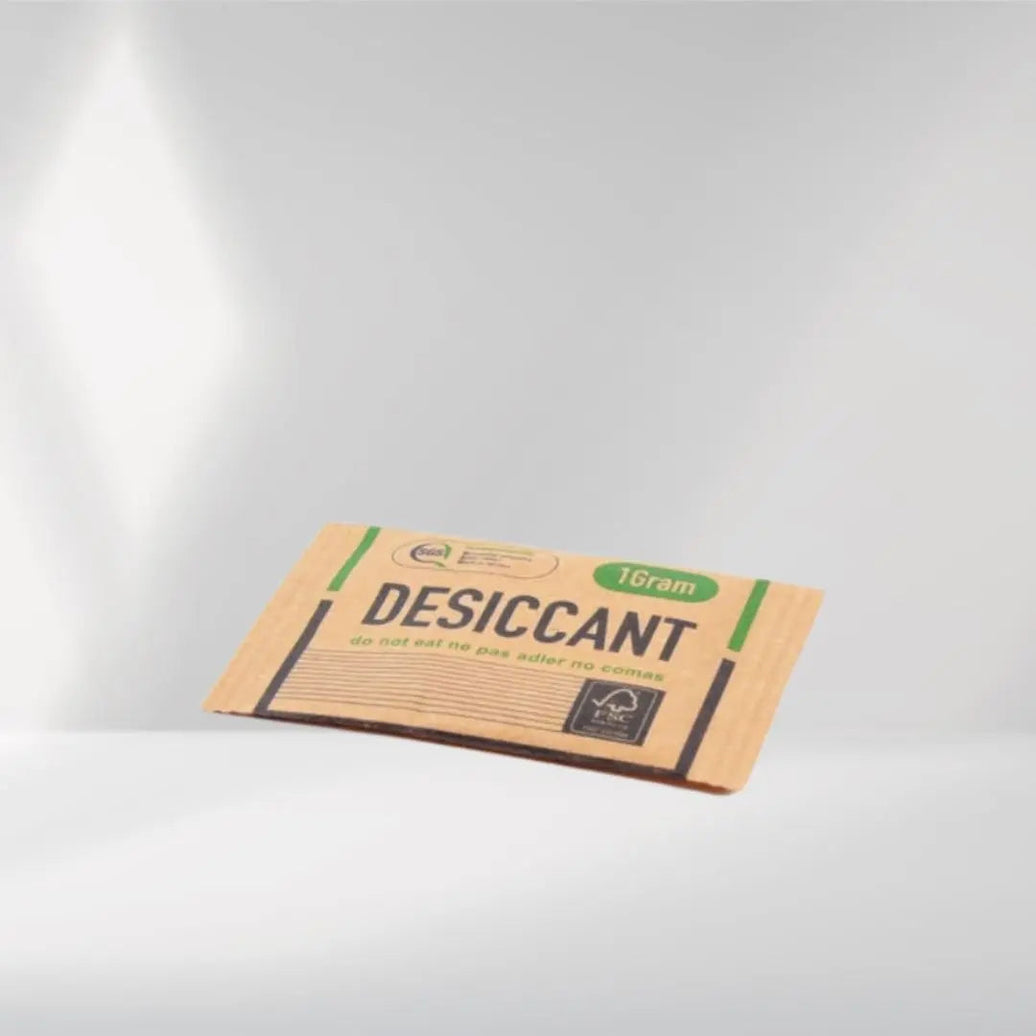
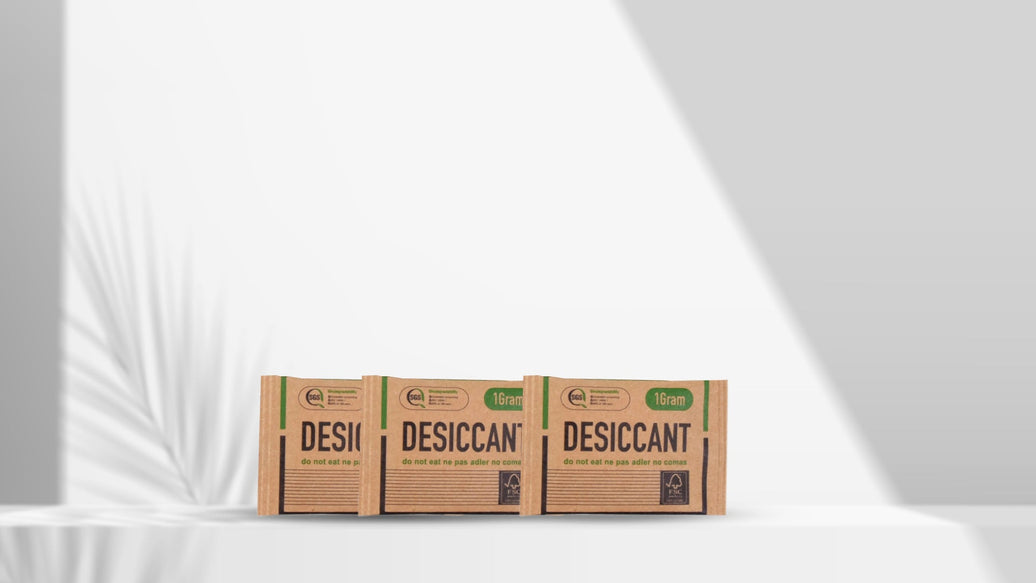
Quick answer: Lyophilized and peptide products are protected by their low residual moisture, which makes them powerfully hygroscopic — they will pull water from anything available, including the air sealed into the pouch with them. The two failure points are permeation over a long cold-chain hold and condensation at each temperature transition. Protection means a low-permeation secondary pouch plus a desiccant sized for sealed-in headspace and the number of temperature excursions, not just for shelf life.
Freeze-drying removes water to make a product stable. The result is a material with a very large internal surface area and very little water in it — a structure that is thermodynamically eager to reabsorb moisture. The stability that lyophilisation buys is conditional on keeping that water out, and the packaging is what keeps that promise after the process is done.
Why residual moisture is the whole specification
For lyophilized pharmaceuticals, residual moisture is a release-critical attribute. Small absolute gains matter: a shift of one or two percentage points can alter reconstitution behaviour, physical cake structure and degradation rate over the stated shelf life.
Peptides compound the problem. Many are hygroscopic in their own right, several are supplied as acetate or trifluoroacetate salts that attract water strongly, and hydrolysis and aggregation both accelerate in the presence of available water. A peptide that is stable dry is not stable slightly damp.
The relevant measurement here is water activity rather than total moisture, for the reasons set out in water activity vs. moisture content.
Three moisture paths into a cold-chain pouch
Sealed-in air. Whatever humidity was in the filling room is now inside the pouch permanently. In a low-headspace format this is small; in a pouch with a lyophilized cake and a dose card it is not. Sealing in a controlled-humidity environment is the cheapest available improvement.
Wall permeation. Every barrier film has a water vapour transmission rate above zero. Over a shelf life measured in years, held at a humidity differential, permeation accumulates. Cold-chain storage does not eliminate this; a refrigerator interior is a humid environment.
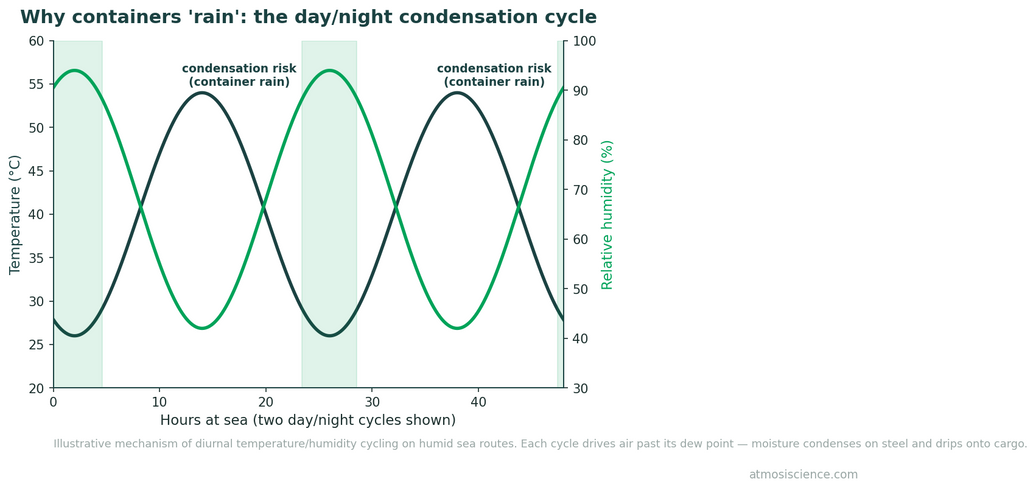
Temperature transitions. This is the one that surprises teams. Each move between 2–8°C storage and ambient handling drives the sealed-in air through its dew point. Water leaves the vapour phase and lands on the coldest available surface. If that surface is the product, the product has taken on liquid water regardless of how good the barrier film is. Mechanism: why products sweat after cold storage.

Sizing the desiccant for this format
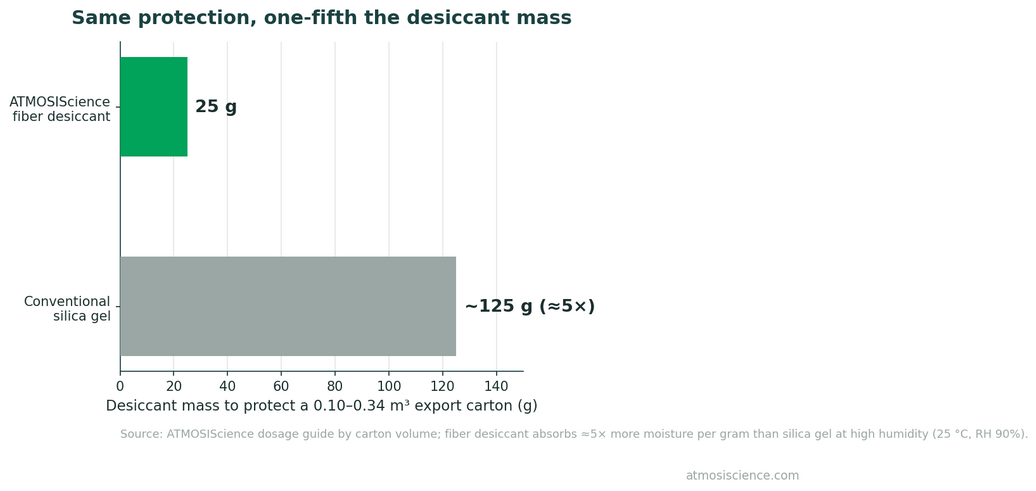
Standard dosage guidance assumes shelf life and permeation. Cold-chain products need two additional terms.
- Sealed-in load. Headspace volume multiplied by the absolute humidity of the filling environment. Reducing filling-room RH reduces this term directly.
- Permeation load. Film WVTR multiplied by surface area, humidity differential and duration.
- Excursion load. The number of expected temperature transitions across the product's life, each of which mobilises the sealed-in water again. A product that ships cold, warms at a distribution centre, re-chills at a pharmacy and warms again at the patient has four.
- Safety factor. Applied to the total, then validated by test rather than assumed.
The general method is set out in the service-life math. Validate against the worst realistic lane using the worst-case test protocol.
Format matters more than usual here
Cold-chain pouches are typically low-headspace, often small, and frequently handled by clinicians or patients rather than warehouse staff. That rules several formats out.
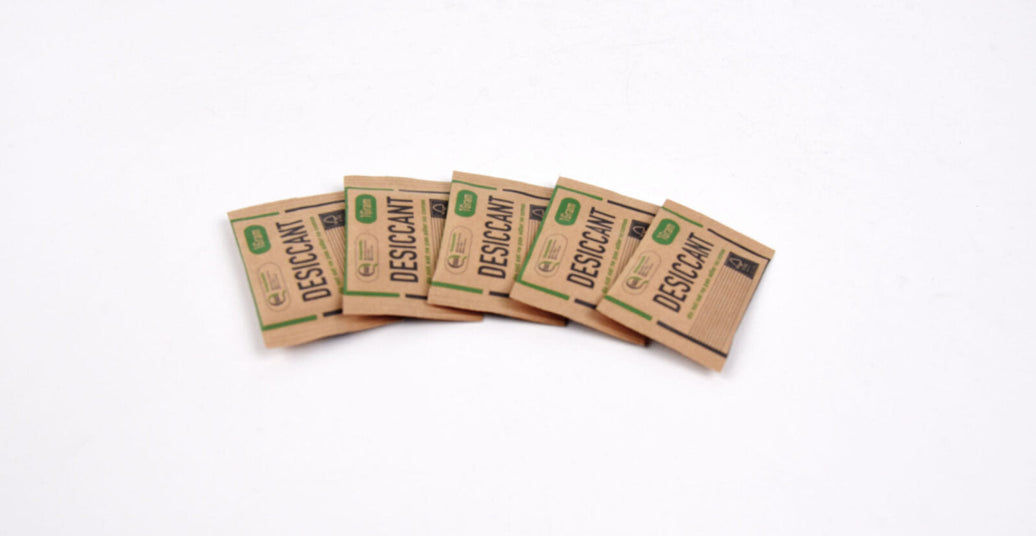
- Loose-fill sachets carry a particulate risk that is difficult to defend in a parenteral or sterile-adjacent context.
- Deliquescent chemistries that liquefy as they load are not appropriate next to a sterile product.
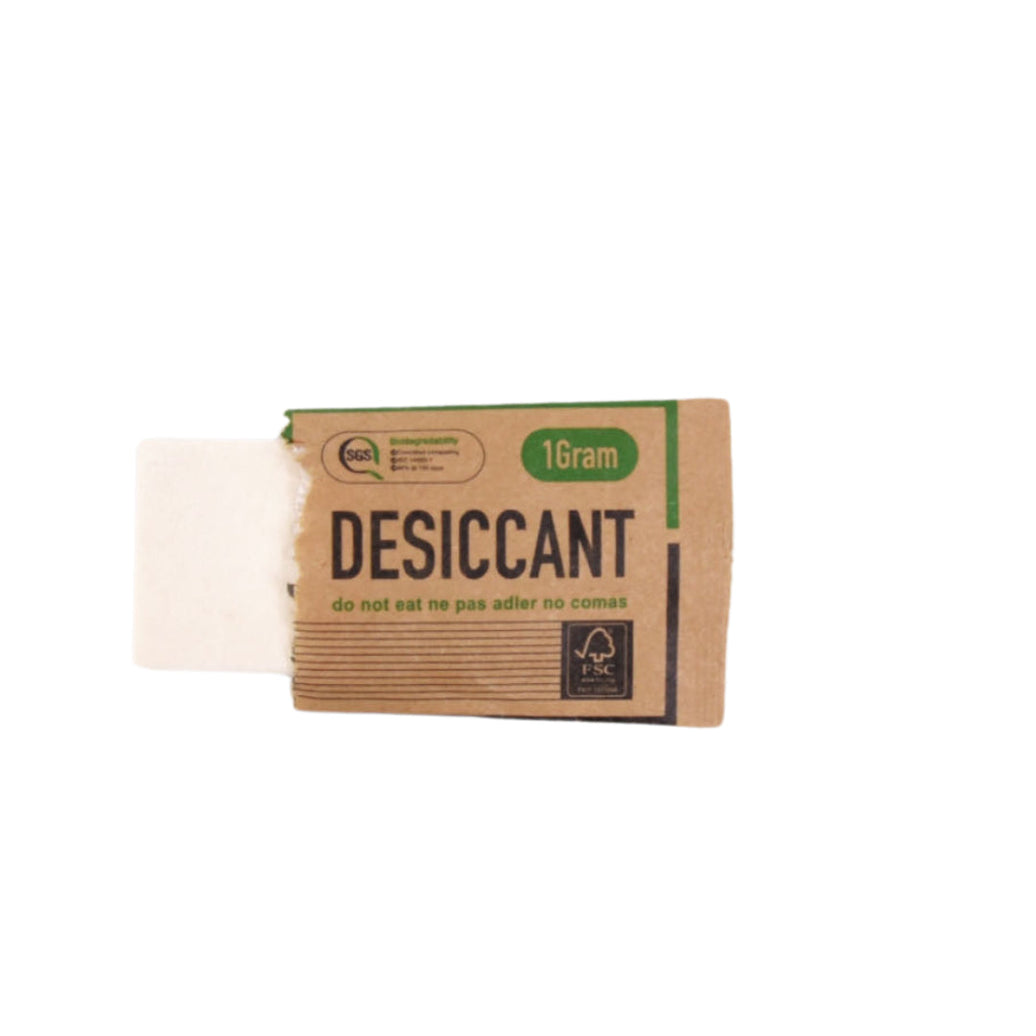
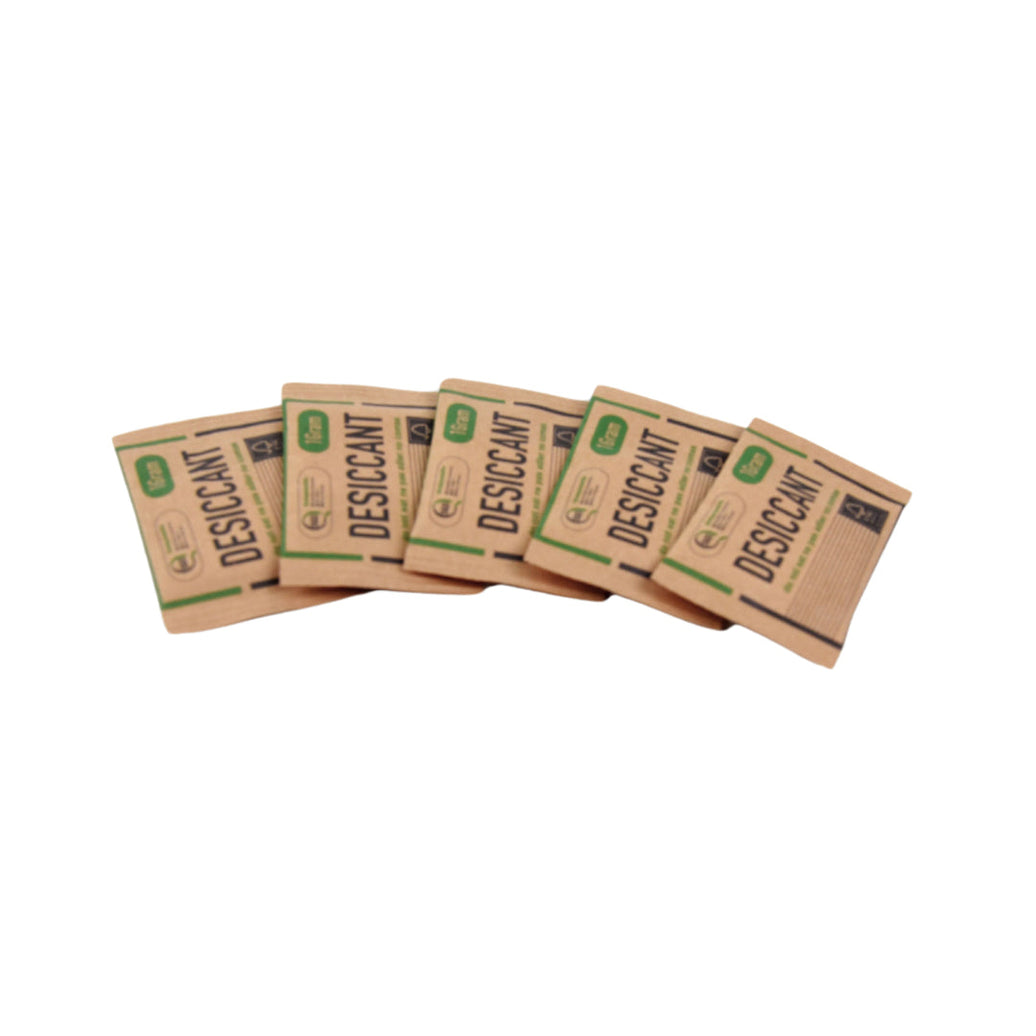
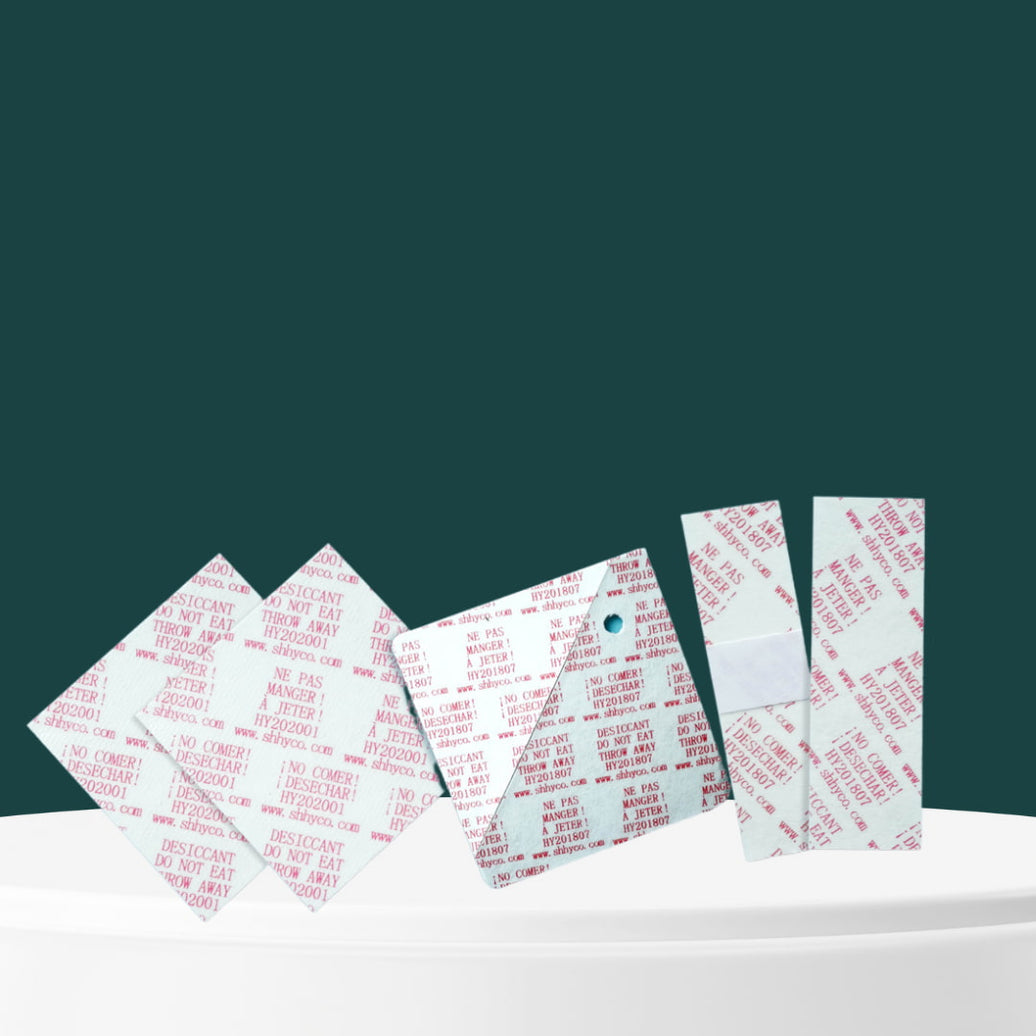
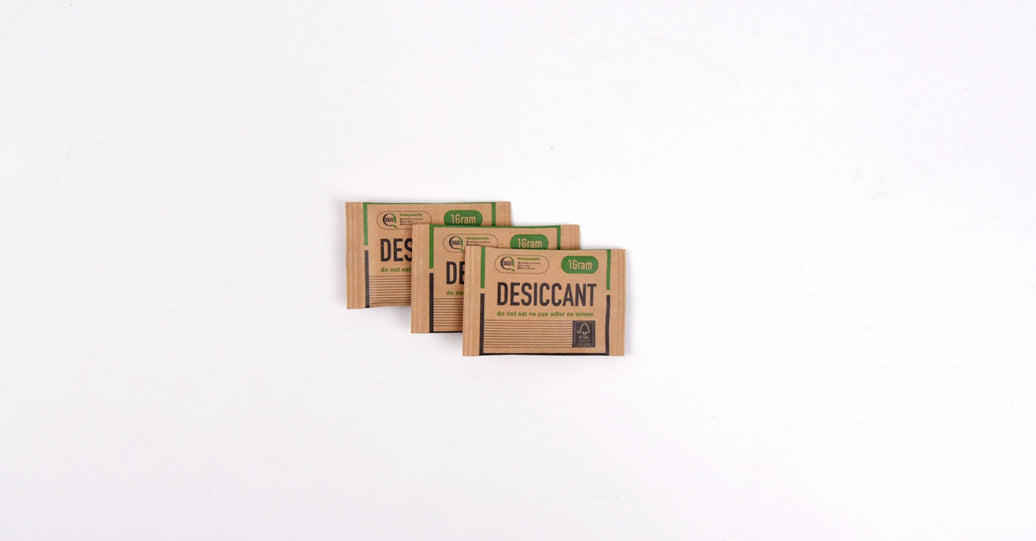
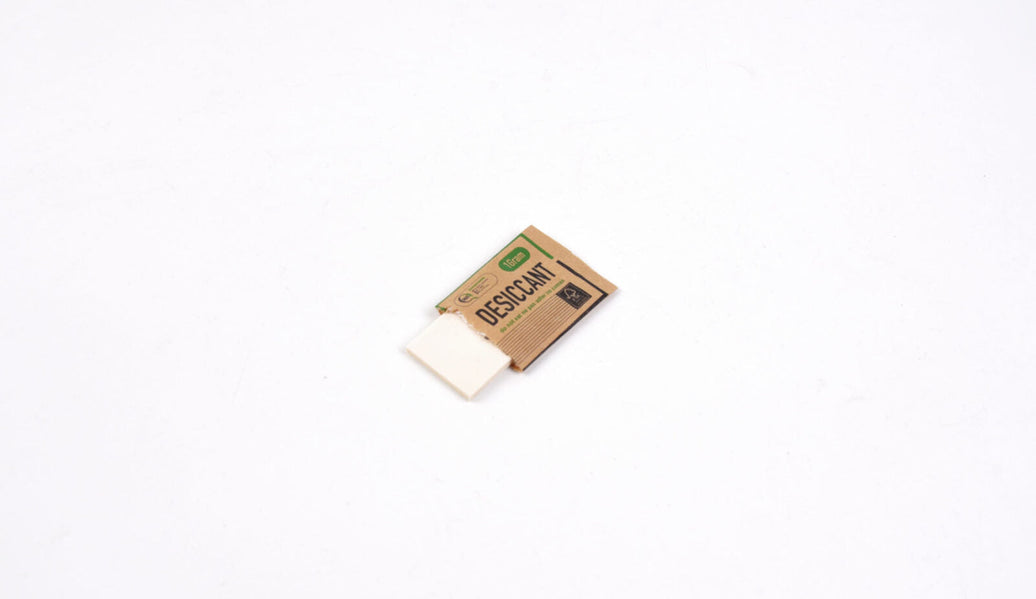
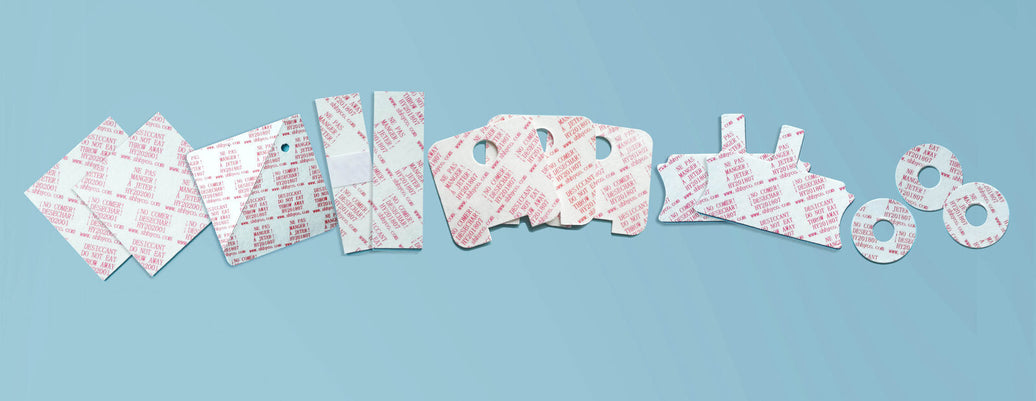
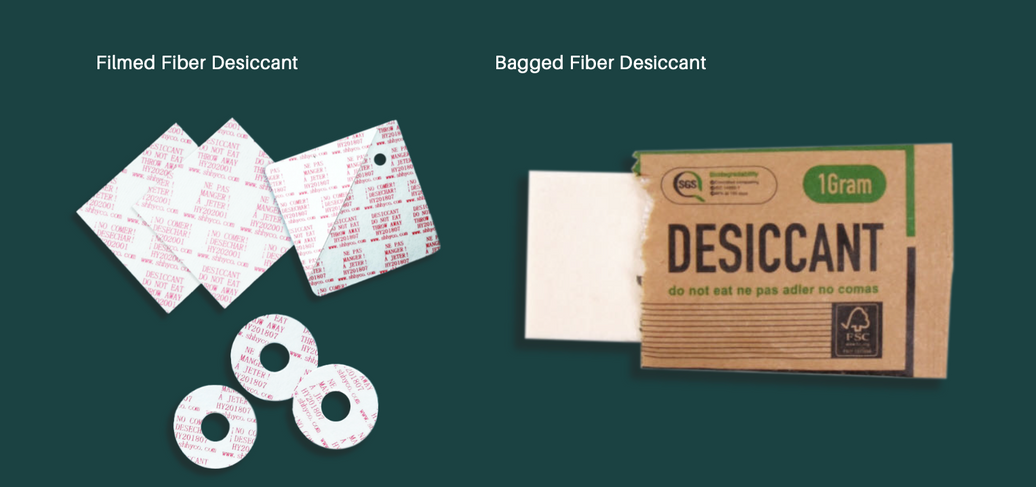
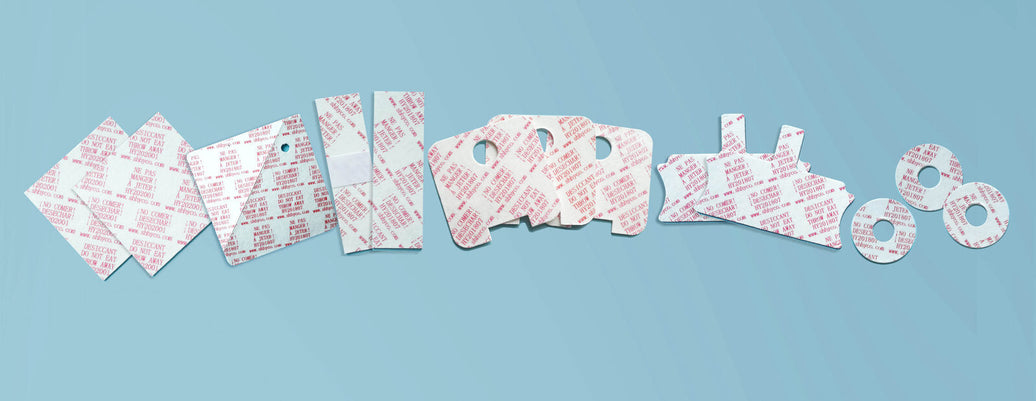
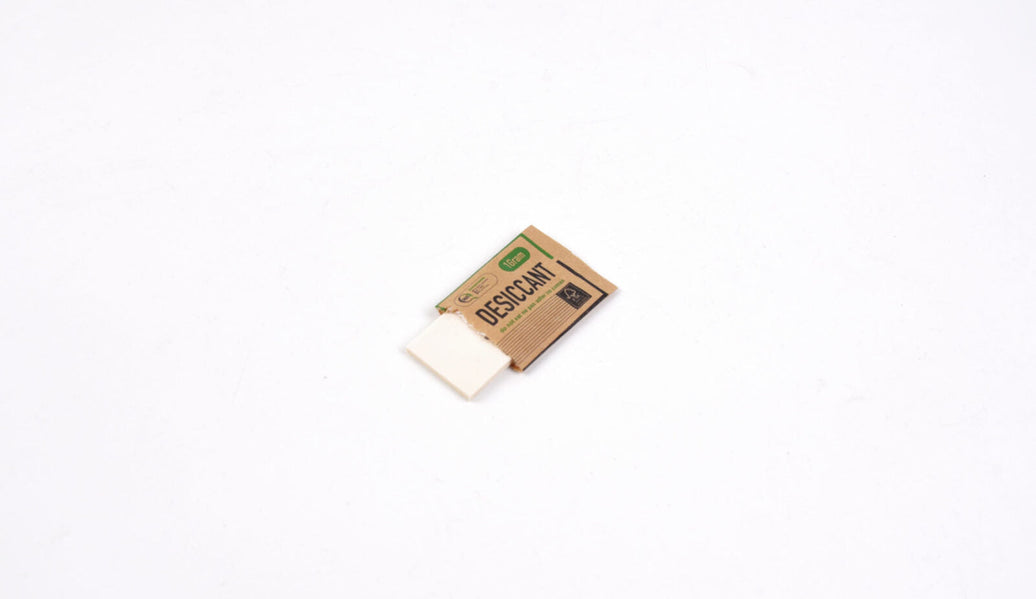
- Die-cut filmed pads suit the format well: 0.5 mm or 1.0 mm thickness, cut to square or circular shapes to match the pouch or cap geometry, with no loose fill to shed. Format comparison: sachet, film card or cap insert.
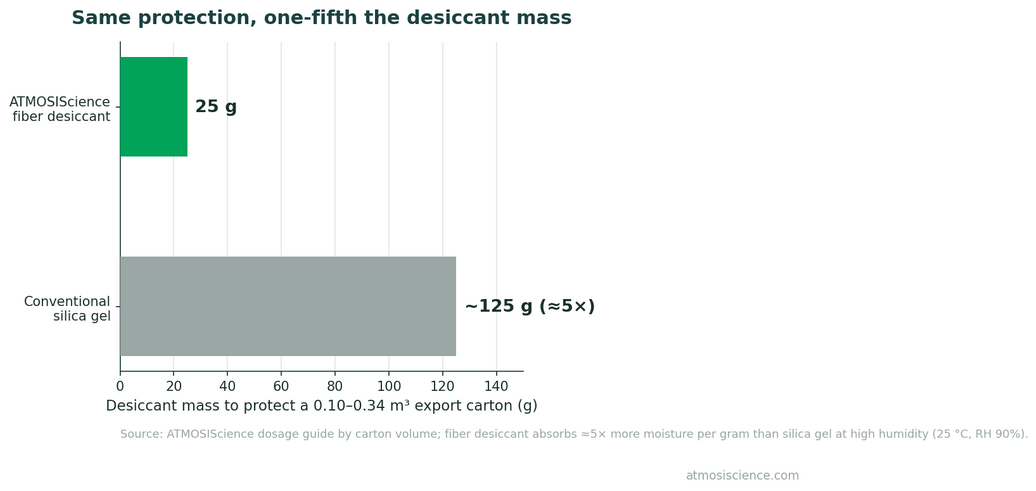
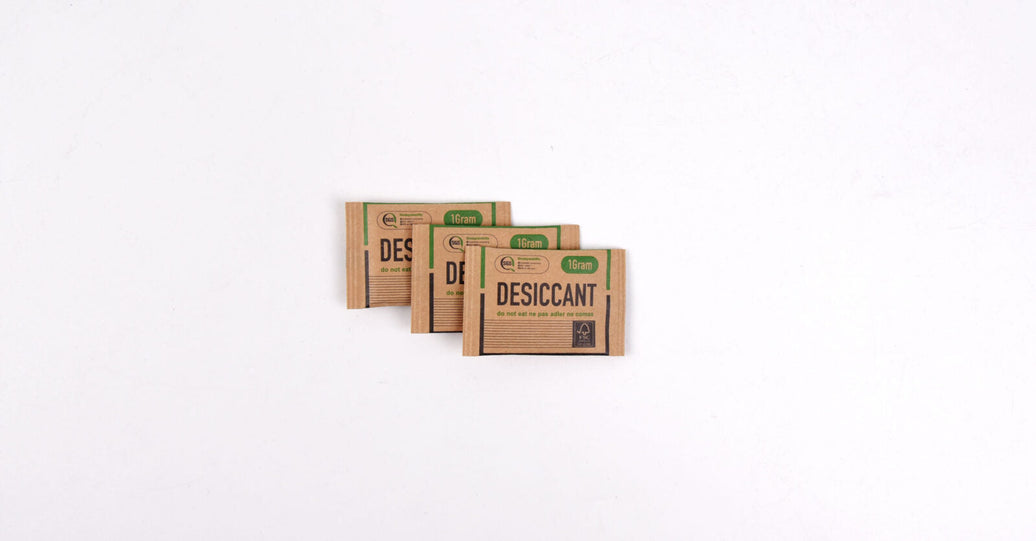
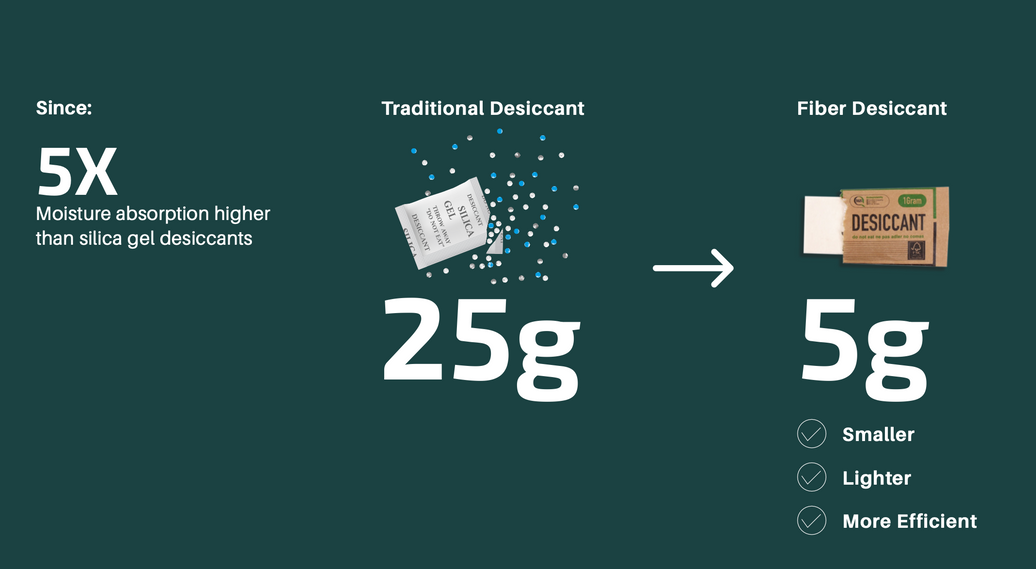
The relevant fiber platform specifications: loss on drying below 10%, adsorption above 10% of own weight at RH20, above 35% at RH50 and above 70% at RH90 at 25°C, with an SGS ISO 9001 manufacturing base available for qualification.
The over-drying question
Not every lyophilized product wants the lowest achievable humidity. Some protein formulations are destabilised below a residual moisture floor; certain crystalline forms depend on hydration. Where a floor exists, a one-way desiccant driving toward zero is the wrong tool, and a two-way material that holds a band is the right one. Reasoning: the certain-humidity principle.
Where the specification genuinely calls for ultra-low humidity with no floor, molecular sieve remains the correct choice — covered in molecular sieve vs. silica gel vs. fiber.
Frequently asked questions
Does a desiccant belong inside a lyophilized vial?
Not inside the vial itself in most sterile presentations. It belongs in the secondary pouch or the shipper, protecting the vial's closure system and any co-packed components. Direct-contact decisions are formulation and regulatory questions, not packaging preferences.
Do refrigerated products need desiccant at all?
Frequently yes. Cold storage lowers absolute humidity but a refrigerator interior sits at high relative humidity, and every removal event is a condensation event. Cold does not equal dry.
How many temperature excursions should be assumed?
Map the real distribution route rather than assuming a number. Each documented handoff where the product changes temperature environment counts as one, and the count feeds directly into dosage.
Can the same desiccant be used for frozen products?
Adsorption kinetics slow substantially at frozen temperatures, so the desiccant does most of its work during the warming phases rather than in storage. Size for the transitions, and test at the transition rather than at steady state.
What documentation will a pharmaceutical QA team ask for?
A certificate of analysis, food-contact or drug-contact documentation as applicable, manufacturing quality-system evidence, extractables information and batch traceability. Full list: the supplier qualification pack.
Spec a desiccant for a cold-chain pouch
Send the pouch dimensions, film WVTR, storage condition and expected number of temperature transitions. ATMOSIScience returns a die-cut format and dosage for validation.
Prefer email? info@atmosiscience.com