Quick answer: PPWR Article 7 requires minimum post-consumer recycled content in plastic packaging from 1 January 2030 — 30% for contact-sensitive PET, 10% for contact-sensitive plastics other than PET. The obligation bites once plastic reaches at least 5% of the packaging unit's total weight, and each part of a multi-material pack is assessed against that threshold. A desiccant sachet's plastic wrapper is usually well under 5% of the pack it sits in, so it rarely triggers Article 7 on its own. What it does affect is the pack's overall plastic fraction — which is where a laminated sachet in an otherwise fibre pack can quietly push a pack across a line.
Article 7 is the PPWR provision most likely to be dismissed too early by buyers of small components. The reasoning goes: the sachet weighs a gram, the pack weighs a hundred, the film is a fraction of the gram, so Article 7 cannot possibly apply. That reasoning is usually right about the sachet in isolation and usually wrong about what the buyer should do next.
What Article 7 actually requires
From 1 January 2030, plastic packaging placed on the EU market must contain a minimum share of post-consumer recycled plastic. Only post-consumer material counts — collected after use by households, businesses or institutions. Pre-consumer production scrap does not.
| Category | Minimum PCR from 1 Jan 2030 |
|---|---|
| Single-use plastic beverage bottles | 30% |
| Contact-sensitive plastic packaging, mainly PET | 30% |
| Contact-sensitive plastic packaging, plastics other than PET | 10% |
"Contact-sensitive" is the category most powder, supplement and pharma packs fall into, and it is also the category where recycled feedstock is hardest to source, because food-contact-grade recyclate is constrained.
The 5% threshold and how to apply it honestly
Article 7 applies once plastic reaches at least 5% of a pack's total weight, and each part of a multi-material product is assessed separately against that threshold. That is the sentence that removes most desiccant sachets from direct obligation.
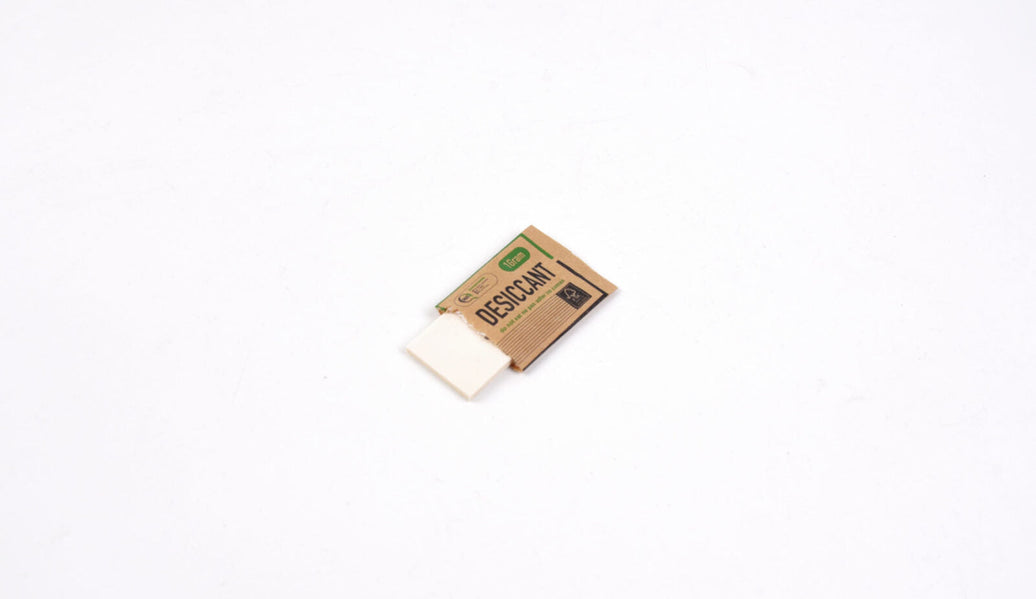
Run the arithmetic on a typical case. A 250 g supplement tub with a 1 g desiccant sachet, where the sachet's wrapper is a small fraction of that gram, produces a plastic contribution from the desiccant in the hundredths of a percent. It is not close to the line.
But two things make the threshold worth checking rather than assuming.
Lightweight packs invert the ratio. A 10 g stick pack or a 5 g sample sachet with a desiccant inside is a very different calculation from a 250 g tub. Where the pack is small, the component is proportionally large.
Multiple components accumulate. A pack rarely has only one plastic element. Wrapper film, induction seal liner, label facestock, tamper band and desiccant wrapper together can cross 5% in a fibre-based pack that the team thinks of as "paper".

Why the answer is not "so ignore it"
A component below the Article 7 threshold still carries weight in three other places, and this is the part that gets lost when a team files the sachet under "exempt".
Recyclability. Article 6 does not have a 5% de minimis in the same shape. A small plastic element in a fibre pack can affect the design-for-recycling assessment out of proportion to its mass, because the question is contamination of a stream rather than percentage composition.
Minimisation. Article 10 looks at weight and volume of the packaging unit. Component mass counts. Detail in the minimisation article.
EPR fees. National EPR schemes charge by material and mass, and plastic is typically charged at a far higher rate per unit mass than fibre. A small plastic wrapper on a heavy silica sachet is charged twice over — once for the mass, once for the material class. Worked numbers in what a 3-gram desiccant actually costs you.
How to evidence your position
If you conclude the desiccant does not trigger Article 7, that conclusion belongs in the technical file with its working shown. Record the packaging unit's total mass, the mass of each plastic element including the desiccant wrapper, the resulting percentage, and the source of each figure. It is a table, not an essay.
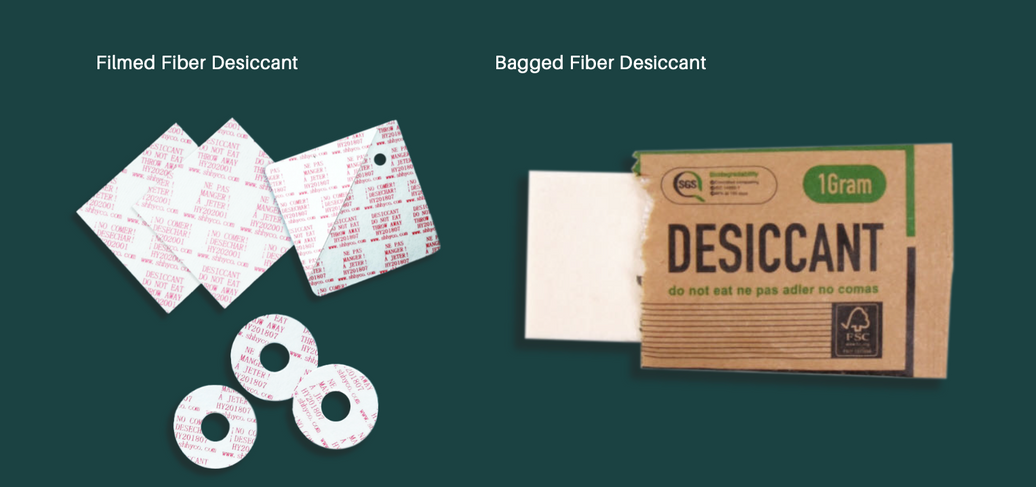
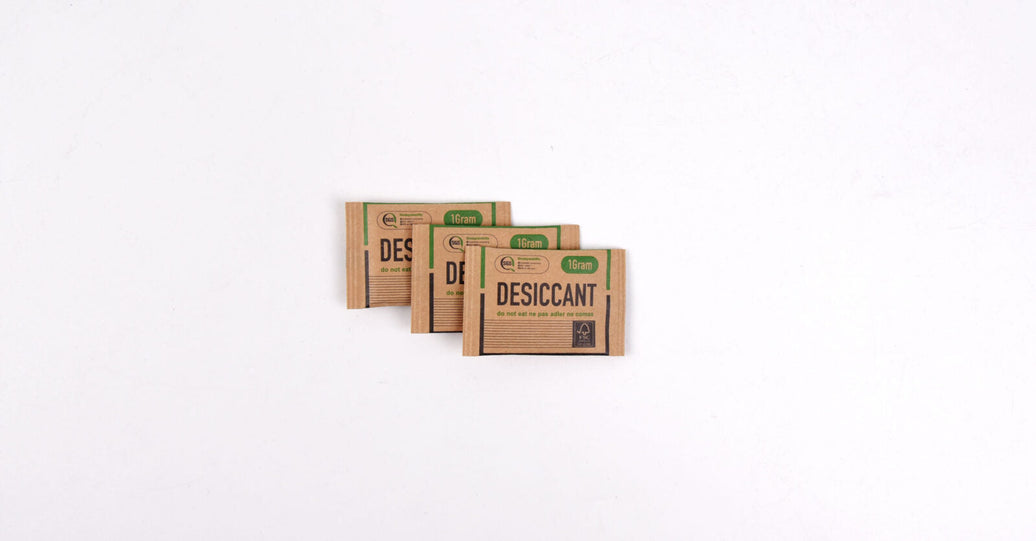
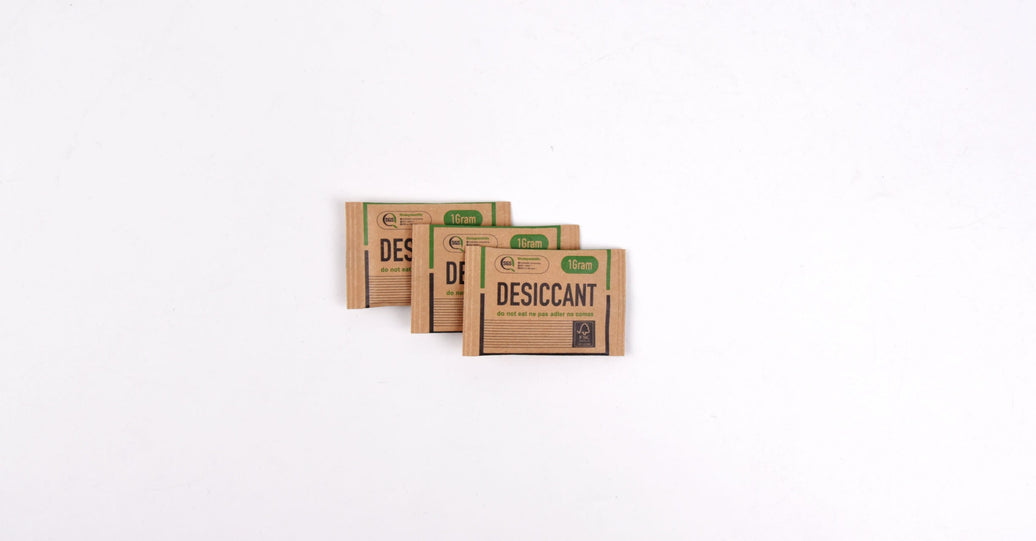
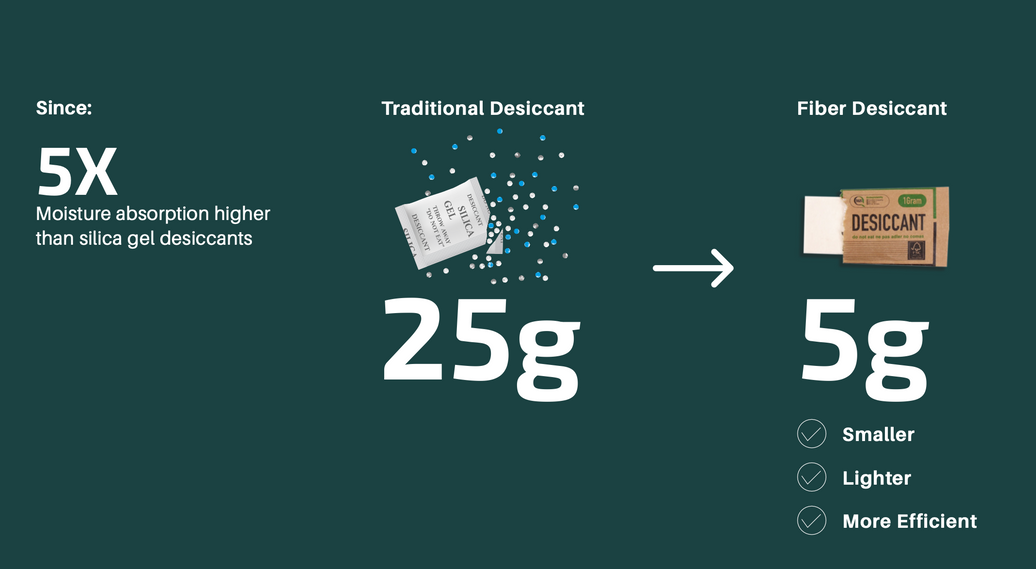
If you conclude that your pack does cross 5% in aggregate, the questions change: which elements can be converted to fibre, and which must remain plastic for barrier reasons? A desiccant wrapper is often one of the easier ones to convert, because paper-wrapped formats exist and perform. What matters is that the change is validated rather than assumed — see the IQ, OQ and PQ protocol for a desiccant change and how the wrapper decides performance.
Frequently asked questions
Does the desiccant's adsorbent core count as plastic?
It depends entirely on the chemistry. Silica gel and clay are minerals. A plant-fibre core is not plastic. A desiccant polymer or a PLA-containing element is plastic — PPWR treats biobased and biodegradable polymers as plastics, and names PLA explicitly in its recyclability annex. That last point catches teams out regularly.
Can recycled content be averaged across a product range?
Article 7 sets targets that are calculated as an average per plant and per year for the relevant categories, rather than requiring every individual unit to hit the number. Confirm the calculation basis with your compliance adviser for your specific category.
Is there recycled-content-grade film available for food-contact desiccant wrappers?
Supply of food-contact-grade post-consumer recyclate is the constraint across the whole sector, not a desiccant-specific problem. For contact-sensitive applications, moving the wrapper to paper is frequently a more available route than sourcing compliant recyclate.
Does a paper-wrapped desiccant remove the Article 7 question entirely?
For that component, largely yes — there is no plastic fraction to carry a recycled-content obligation. It does introduce a fibre-sourcing question instead, covered in EUDR and your fiber desiccant.
Where do I find the rest of the PPWR obligations?
The PPWR compliance hub for desiccant sachets maps every article that touches a moisture-control component.
Check your pack's plastic fraction with us
Send your pack build and we will return the desiccant's material and mass contribution so you can calculate the Article 7 threshold with real numbers.
Prefer email? info@atmosiscience.com