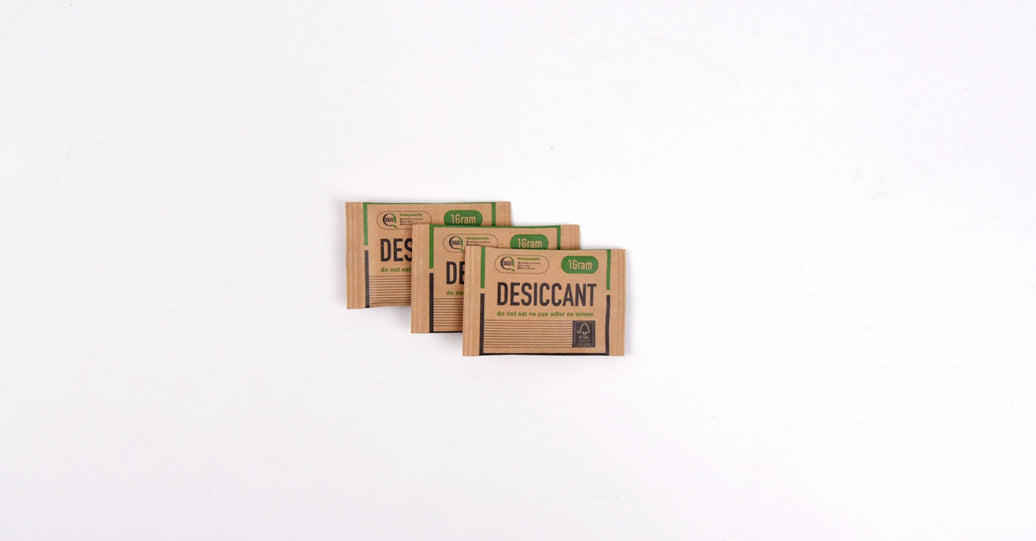
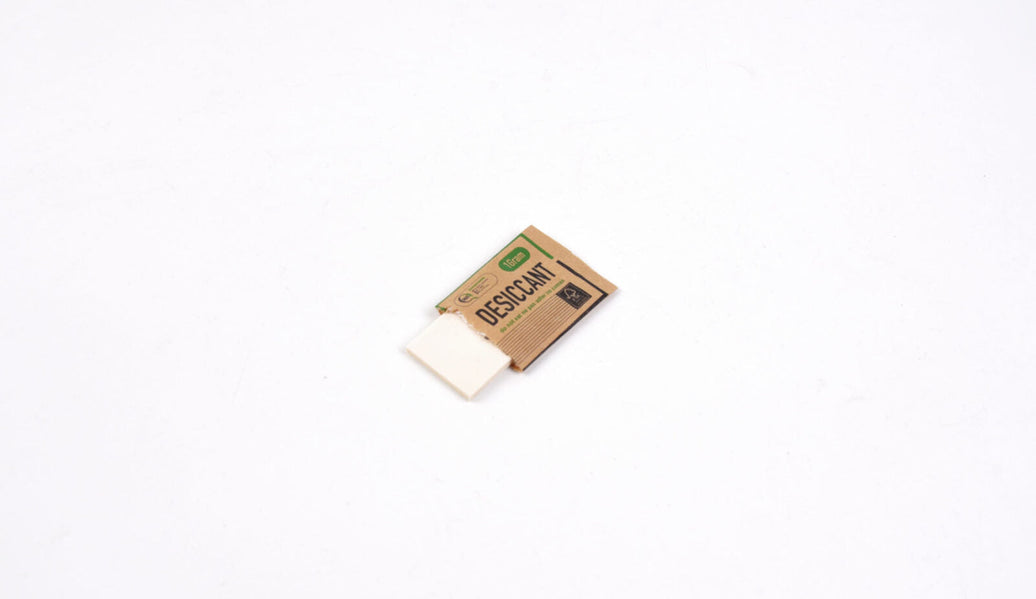
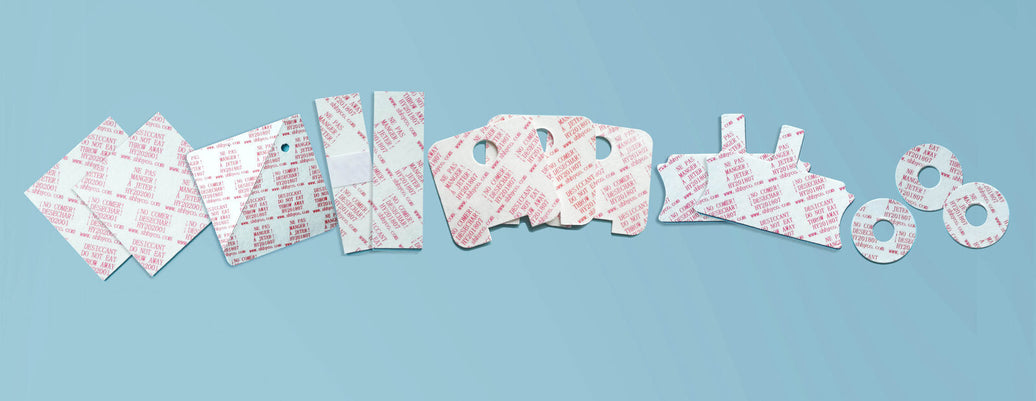
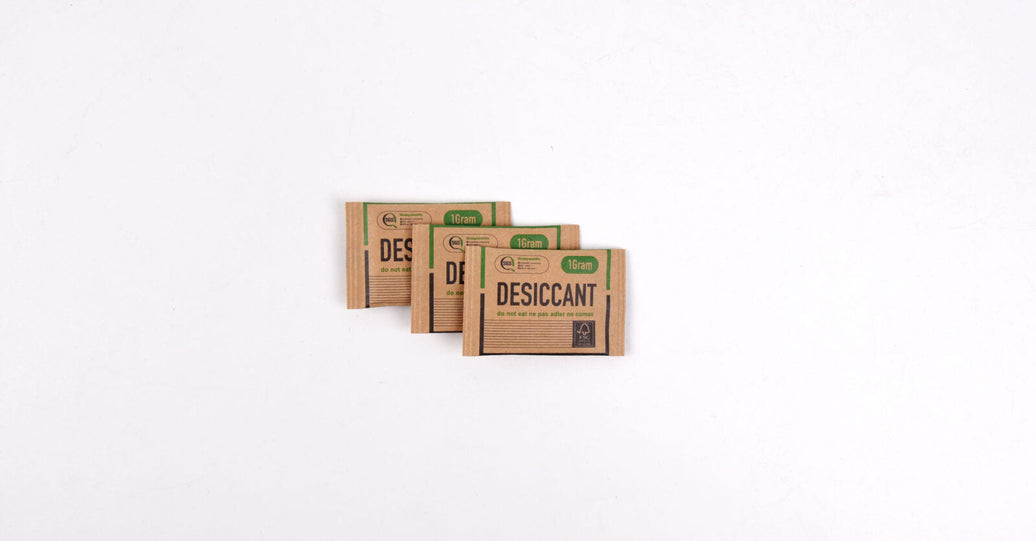
Quick answer: US packaging EPR fees are charged on the weight of covered packaging placed on the market, so a 3-gram desiccant costs fractions of a cent per unit. At Oregon's indicative rates, 3 g of corrugated-class material is about US$0.0006 and 3 g of multilayer laminate is about US$0.0074 — roughly twelve times more for the same weight. Across a million units that is about US$600 versus US$7,400. Oregon has been invoicing since 1 July 2025, Colorado since January 2026, and California published a 2026 early fee schedule on 20 July 2026. Material classification, not grams, is what moves the number.
Packaging EPR arrives as a line item long before it arrives as a strategy. The first invoice usually prompts two questions: does the desiccant count, and how much is it costing us? The answers are yes, almost certainly, and less than you feared per unit — but with a spread between material classes that is worth designing around.
Where the programmes actually stand
The picture as compiled by EPR Atlas and checked on 20 August 2026:
| State | Status | Rate basis |
|---|---|---|
| Oregon | Fees live from 1 July 2025; invoicing active in 2026 | Corrugated $0.09/lb; PP $0.42/lb; LDPE and mono-PE film $0.47/lb; multilayer laminate $1.12/lb |
| Colorado | Fees live from January 2026 | Eco-modulated; 2026 examples include glass about 4.0¢/lb and coloured or foamed PS about 172¢/lb |
| California | 2026 early fee schedule published 20 July 2026; per-material schedule from 2027 | Paper and fibre 0.4¢/lb; glass and ceramics 0.3¢/lb; metal 0.8¢/lb; rigid plastic 1.3¢/lb; flexible plastic 2.5¢/lb; wood and other organics 0.8¢/lb |
| Maine | Expected late 2026, pending stewardship-organisation selection | No ordinary per-material rate yet; low-volume producers may use a simplified process at $500/ton |
| Maryland, Minnesota, Washington | Not yet live | Maryland 2028 or later; Minnesota cost-share from 1 February 2029; Washington expected 2029–2030 |
The per-unit arithmetic
Three grams is 0.006614 lb. Multiply by the rate and the numbers are small enough to look irrelevant — until they are multiplied by an annual volume.

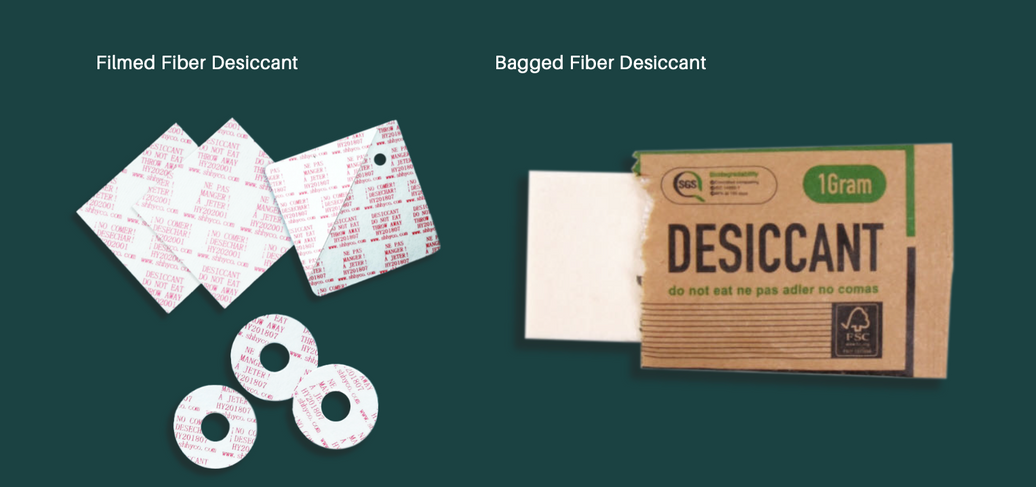
The pattern that matters for a desiccant buyer: at the same 3 grams, the fibre-class figure and the multilayer-laminate figure differ by roughly an order of magnitude. A sachet whose wrapper is a laminate lands in the expensive column even though the mass is trivial. Reducing dosage saves less than reclassifying the wrapper.
Four things that change your actual bill
- Who is the producer. The obligation attaches to a defined producer role, which may be the brand, the importer or in some cases a distributor. If your co-packer supplies the desiccant, check which of you is reporting it.
- Whether the component is covered. Definitions of covered packaging vary by state. An in-pack desiccant is normally treated as part of the packaging rather than as product.
- Eco-modulation. Colorado's schedule applies modulation, and the spread between a well-classified material and a poorly-classified one is much wider than the base rate suggests.
- Small-producer exemptions. EPR Atlas lists Oregon's exemption as under 1 ton or under $5 million global revenue, and Colorado's as under 1 ton or approximately $5.63 million revenue, subject to state rules and CPI adjustment. Many mid-size supplement and speciality food brands sit near these lines.
What to ask your desiccant supplier
EPR reporting needs one number your supplier may never have given you: component mass broken down by material class. Not "a 2 g sachet" but "1.7 g fibre substrate, 0.3 g paper wrapper, coating and ink". That breakdown is the same data the EU technical file needs, which is why it is worth requesting once and reusing — see our note on the PPWR technical file.

Frequently asked questions
Is EPR really worth optimising for at these numbers?
On its own, rarely. The fee is small relative to the desiccant's unit cost. It becomes worth acting on when the same decision also improves recyclability evidence for the EU, reduces freight mass, and simplifies the material declaration — which it usually does. Our piece on the true cost of silica gel works through the combined picture.
Do these rates apply to the outer carton too?
Yes — all covered packaging placed on the market in the state is in scope, and the carton is usually a far bigger line than the desiccant.
How accurate are the per-unit figures above?
They are weight-based illustrations from published indicative rates, not quotes. Actual treatment depends on coverage, producer definition, classification, eco-modulation, reporting thresholds and exemptions in each state.
What if we ship to all fifty states?
Only the live programmes bill today. The practical approach is to build the mass-by-material dataset once, then apply each state's schedule as it comes online.
Where can I see the wider US EPR picture?
Our earlier overview of US packaging EPR laws and the hidden desiccant fee covers the statutory background; this article updates the rate figures for 2026.
Get your component mass by material class
Tell us which desiccant format you use and ATMOSIScience will return the mass breakdown by material for EPR reporting, plus the substance documentation that usually gets asked for in the same email.
Prefer email? info@atmosiscience.com