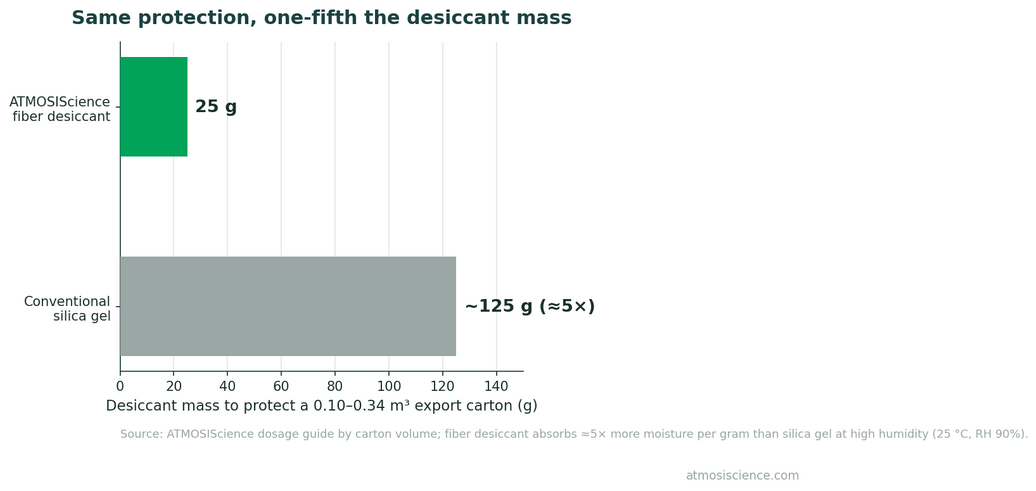
Quick answer: PPWR Article 24 caps empty space in e-commerce, grouped and transport packaging at 50% from 1 January 2030, and filling materials such as air cushions, bubble wrap, paper cuttings and foam count as empty space rather than as filling. The general duty to minimise packaging weight and volume already applies from 12 August 2026. For moisture control this cuts two ways: a right-sized box seals in less humid air, which reduces the moisture load, but it also removes the void fill that used to buffer temperature swings and absorb incidental moisture. Net effect for most shippers is a smaller required desiccant dose but a tighter tolerance for getting it wrong.
Article 24 is usually filed under logistics cost, and rightly — the operational work is cartonisation, box-size rationalisation and warehouse layout. It also quietly changes a moisture-engineering assumption that most packaging teams have never made explicit: that the air inside a shipping box is a buffer.
What the rule says
E-commerce, grouped and transport packaging may contain a maximum of 50% empty space, measured from 1 January 2030. The definition of empty space is the part that surprises people. Filling materials — paper cuttings, air cushions, bubble wrap, sponge and foam fillers, wood wool, polystyrene or Styrofoam chips — are counted as empty space, not as content. Filling a void does not make it stop being a void.
Separately, the broader minimisation duty under Article 10 applies from 12 August 2026 and requires that packaging weight and volume be reduced to the minimum adequate for functionality. That one is already live, and it is the provision under which desiccant mass is assessable today. We work through that in the Article 10 and Article 43 minimisation article.
What right-sizing does to the moisture balance
Three of the moisture sources in a shipped package change when the box shrinks.
| Moisture source | Effect of a smaller box |
|---|---|
| Air sealed in at packing | Falls in proportion to volume — less air, less water carried in it |
| Permeation through walls | Falls with surface area, but less than proportionally — small boxes have more surface per unit volume |
| Moisture in fibre-based void fill | Removed entirely — paper void fill carries its own equilibrium moisture and releases it into the box |
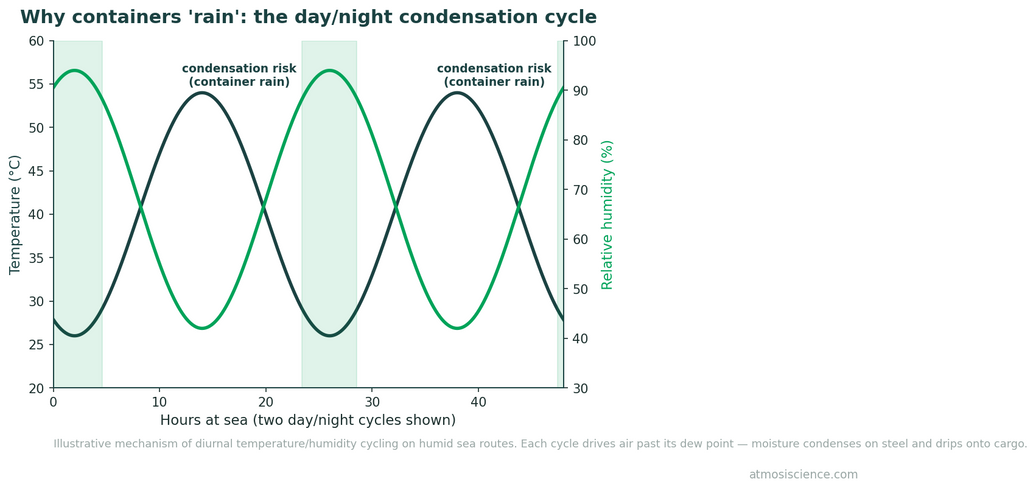
| Thermal buffering | Reduced — less air and less fill means the contents track ambient temperature faster, so dew point events reach the product sooner |
That last row is the one worth pausing on. Void fill was never specified as thermal mass, but it behaved as some. A tightly packed, right-sized carton reaches the condensation point faster on a cold-to-warm transition. For products already sensitive to that transition — anything coming out of chilled storage, or arriving by air into a humid climate — the risk profile shifts even though the total moisture in the box went down.

Paper void fill has a hidden moisture cost
Many brands have already replaced plastic air pillows with kraft paper as a sustainability move. It is a good move for recyclability. It is a moisture liability that few people quantify.
Paper at typical warehouse conditions holds a meaningful equilibrium moisture content. Stuff a box with it, seal it, and ship it somewhere colder, and that water redistributes — often onto the coldest surface, which is the product. Where a brand has both a moisture-sensitive product and paper void fill, an in-pack desiccant is doing work that would not have been necessary with the same product in a right-sized box with no fill.
Article 24 pushes toward removing the fill. That is a genuine moisture improvement, and it is unusual to find a regulation that helps a technical problem rather than complicating it.
What to change in your specification
The sequence that works is to re-size first and re-dose second, not the other way around.
- Cartonise properly. Establish the real box sizes you will use post-2030 rather than dosing against today's oversized cartons.
- Recalculate sealed-in air. Headspace volume times ambient humidity at your packing location gives the moisture you seal in on day one. A drier packing hall changes this more cheaply than more desiccant does — see humidity mapping a warehouse and filling room.
- Re-derive the permeation term from the actual film and the actual transit duration, using the MVTR method.
- Re-test the cold-to-warm transition without void fill. This is the step teams skip, and it is where the reduced thermal buffering shows up.
- Reduce the dose only after testing confirms it. A smaller calculated load is a reason to re-validate, not a reason to cut on paper.
The B2C and 3PL wrinkle
Where fulfilment is outsourced, the party doing the cartonisation is not the party carrying the moisture risk. A 3PL optimising for box count and dimensional weight will right-size aggressively and has no visibility of your product's moisture sensitivity. The specification has to travel with the SKU, in writing, and it has to state the desiccant requirement in terms the fulfilment operator can execute — one unit of a named SKU per shipper, placed in a defined position.
The warehouse-side moisture issues are covered in desiccant for Amazon FBA and 3PL inventory, and the ownership question in who owns the desiccant spec.
Frequently asked questions
Does a desiccant sachet count as empty space?
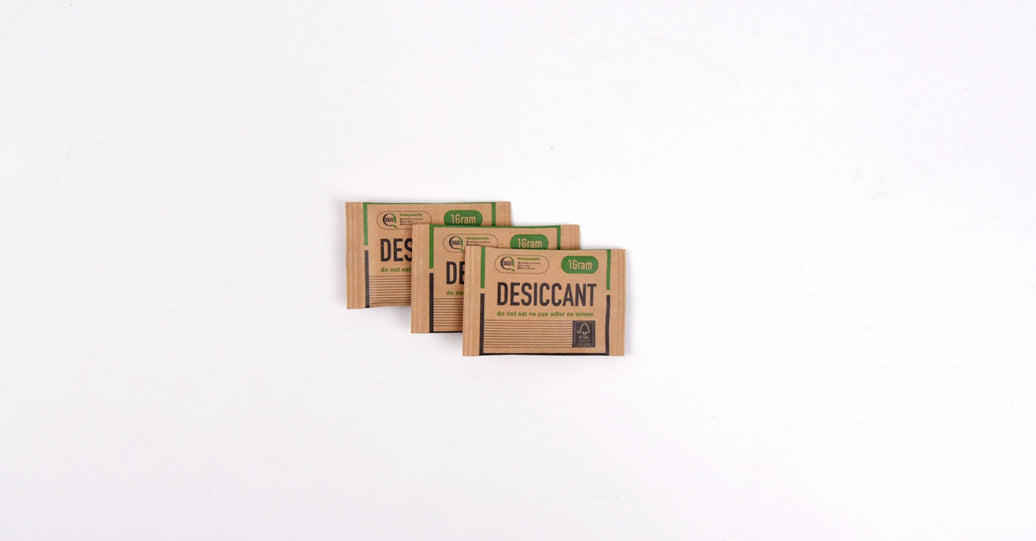
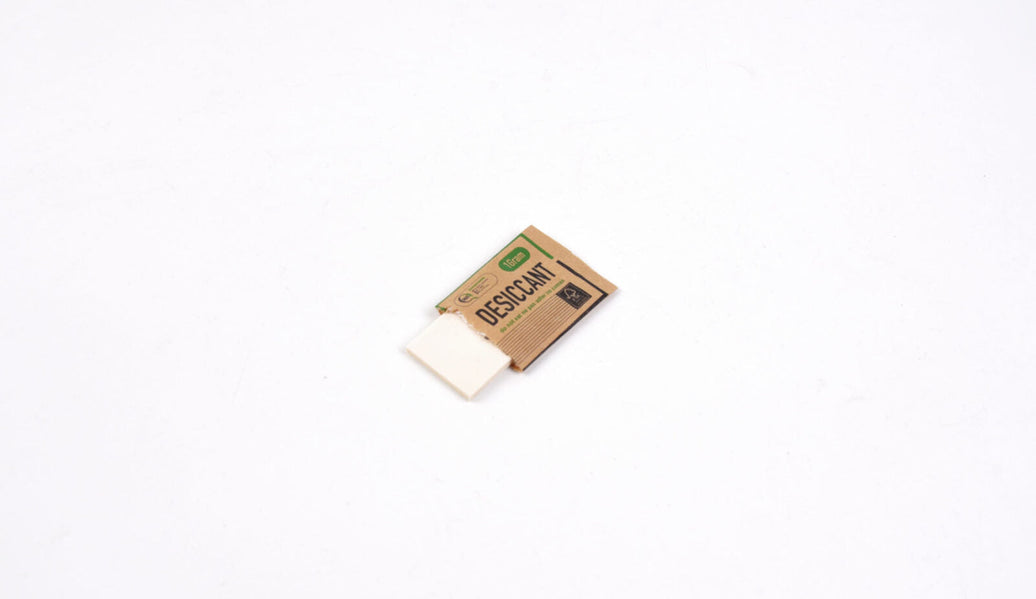
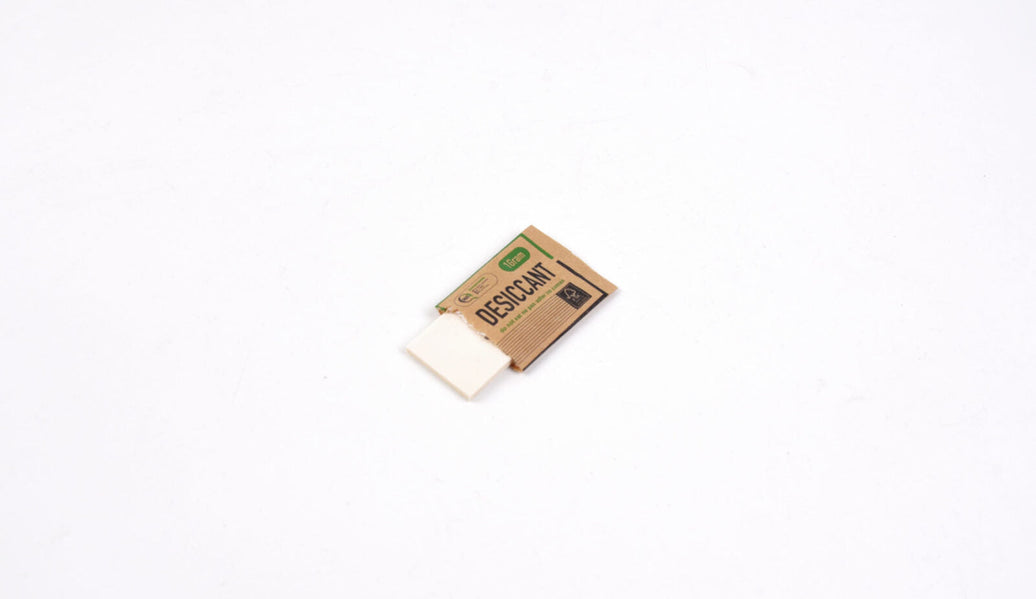
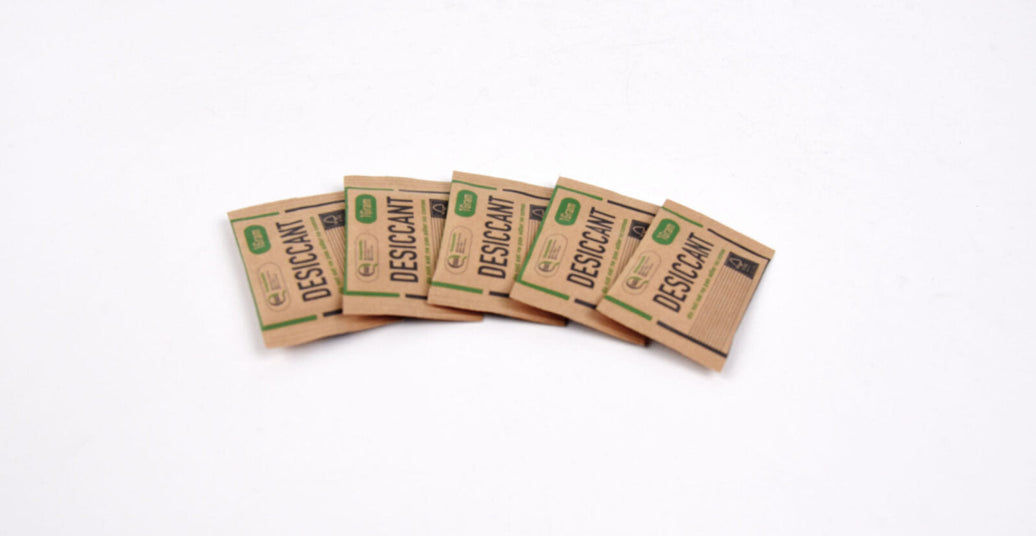
It is a packaging component performing a protective function, not a filling material listed in the empty-space definition. It is not void fill. Its mass does count toward the pack under Article 10 minimisation, which is a different test — the classification reasoning is in is a desiccant sachet packaging under PPWR.
Is the 50% measured by volume?
It is an empty space ratio for the packaging, with filling materials counted as empty space. Confirm the calculation methodology for your format against the applicable standards and any implementing guidance before committing to a box programme.
Does the rule apply to grouped and transport packaging as well as e-commerce?
Yes — e-commerce, grouped and transport packaging are all named. It is not a consumer-facing-only rule.
Will less air in the box mean I can use a smaller desiccant?
Often yes, for the sealed-in-air term. But permeation and opening cycles do not scale with box volume, so the reduction is smaller than a naive calculation suggests. Validate before reducing.
Where does this sit in the overall PPWR timeline?
Minimisation from August 2026, labelling from 2028, and empty space ratio, recyclability grades and reuse targets from January 2030. Full map in the PPWR compliance timeline and the compliance hub.
Re-dose your right-sized carton with us
Send your new box dimensions and pack format and we will recalculate the moisture load and recommend a dose you can validate.
Prefer email? info@atmosiscience.com