Quick answer: A Grade D cleanroom is the environmental classification most commonly applied to packaging-component manufacturing that feeds food and pharmaceutical supply chains. In the ATMOSIScience fiber desiccant plant, an independent environmental test report (No. 20200266, Shanghai Food and Drug Packaging Material Control Center) recorded 1,432 airborne particles at or above 0.5 µm per cubic metre in the production workshop, against a Grade D ceiling of 3,500,000 per cubic metre. Air changes ran at 24 per hour against a 15 per hour minimum, and settled microbial counts came back below 10 CFU per plate in every area tested.
Most desiccant conversations start and end with adsorption curves. Buyers compare grams, they compare percentages at 90% RH, and they compare price per thousand. Very few ask the question that matters most for a food or pharmaceutical pack: what kind of room was this made in?
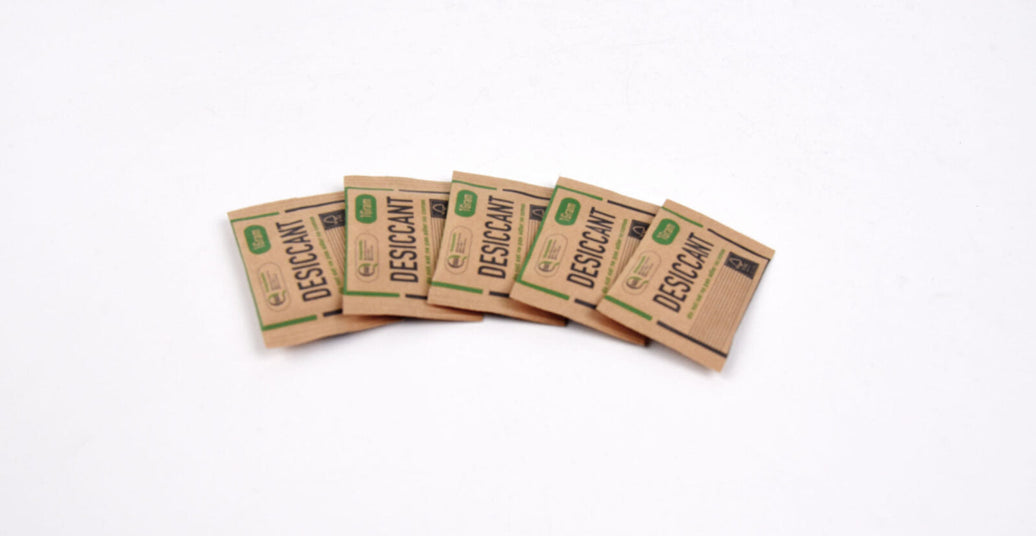
A desiccant sachet goes inside the primary package. It sits against the product for the whole shelf life. If it was assembled in an uncontrolled room, it carries whatever that room contained — dust, fibres, viable organisms — straight into a package that a QA team has otherwise spent years validating.
This article walks through a real environmental test report line by line, so that a packaging or quality buyer can read one and know what to ask for.
What Grade D actually means
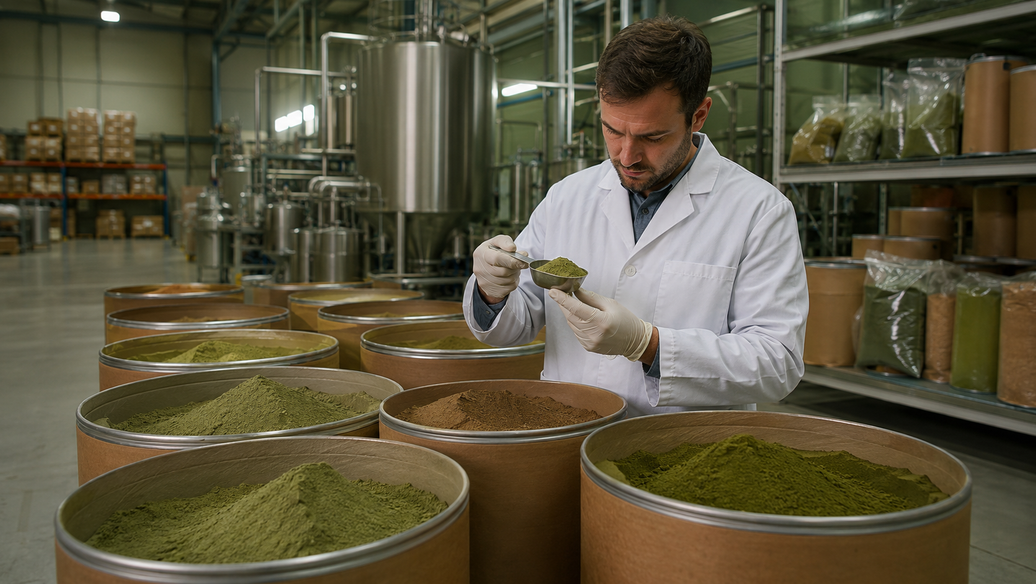
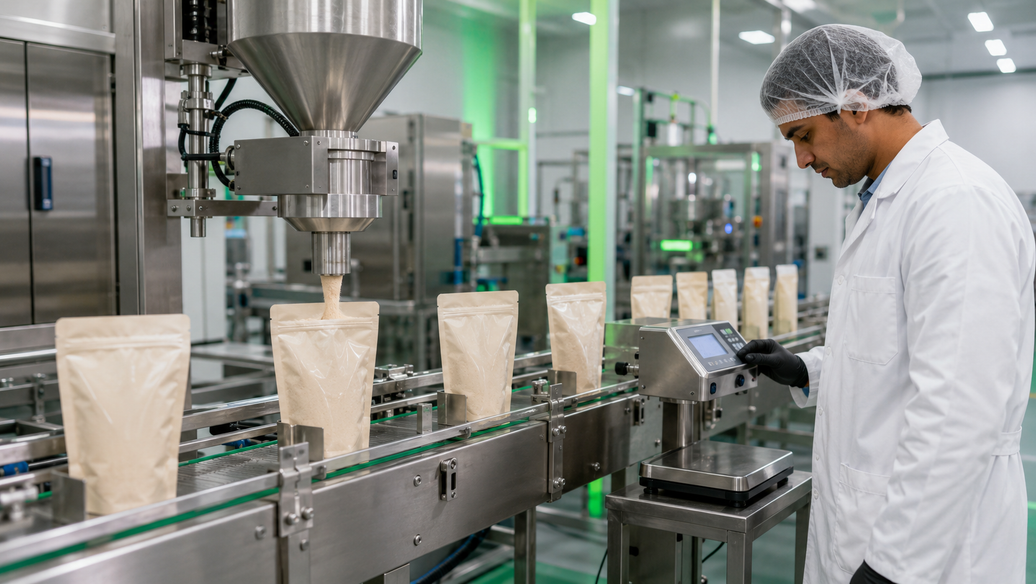
Cleanliness grades describe how much airborne particulate a room is permitted to contain, plus the airflow and pressure regime used to keep it that way. Grade D is the least stringent of the classified grades — it is the background environment for less critical stages of manufacturing, not an aseptic filling suite. That is the appropriate classification for a desiccant plant. The point is not sterility; the point is a controlled, monitored, documented environment rather than an ordinary factory floor.
The report covers ten areas across two pages: shoe change, four gowning rooms, a buffer and hand-sanitising area, the production workshop itself, a cleaning-equipment room, an inner packaging room, and an inner packaging material store. Every one is classified Grade D with non-unidirectional airflow, and every one returned a conclusion of conforming.

The number worth sitting with is the production workshop: 1,432 particles at or above 0.5 µm per cubic metre, where the permitted maximum is 3,500,000. That is roughly four hundredths of one percent of the allowance. At the 5 µm size band the workshop recorded 36 against a limit of 20,000.
Note the pattern across the other rooms. The inner packaging material store measured 173,569 and the inner packaging room 156,944 — both comfortably inside the limit, but two orders of magnitude above the workshop. That is exactly what you would expect: rooms holding incoming packaging materials carry more particulate than the room where the product is actually formed. A report where every room returns a suspiciously similar number is a report worth questioning.
Air changes, pressure and the things people skip
Particle counts are a snapshot. Air change rate is what keeps the snapshot true between tests.

The specification calls for at least 15 air changes per hour. Measured values ran 16 to 25 across the production areas, and 17 to 21 across the gowning suite. Differential pressures between same-grade rooms were recorded at 15 to 34 Pa in magnitude, with signs indicating the intended cascade direction, and the shoe-change area held 66 Pa against the unclassified zone — well above the greater-than-5 Pa requirement.
Two more measurements matter and are routinely ignored by buyers:
- Settled microbes. Every area returned fewer than 10 CFU per settle plate against a limit of 10. For a desiccant destined for a food or supplement pack, this is the line that connects the room to the product.
- Illumination. 337 to 566 lux across production areas. This sounds cosmetic. It is not — visual inspection of sachet seals and print is only as good as the light the operator has.
The humidity irony
A detail worth noticing: the rooms themselves were measured at 50–52% relative humidity and 22–23 °C. A desiccant is, by design, hungry for moisture. Every hour it spends exposed in a humid room is capacity spent before it ever reaches a customer’s package.
This is the operational reason the safety data sheet instructs that packed material must not be left in an open state, and why loss on drying is specified at 10% or less. A controlled production environment and a tight loss-on-drying figure are the same claim, measured two different ways.
What to ask a desiccant supplier for
Five requests, in order of how much they reveal:
- The environmental report itself, with a report number and an issuing body. Not a marketing page that says “cleanroom produced”. A numbered document from a named testing organisation.
- Which rooms were tested. If the gowning rooms were tested but the production workshop was not, that is a different claim entirely.
- The date. Environmental classification is a point-in-time measurement. Ask when the current report was issued and what the requalification interval is.
- Air change rate, not just particle count. Particle counts can be taken at rest. Air changes describe the system that maintains the condition.
- Settled microbial data. Especially if your product is a food, supplement or diagnostic.
These sit alongside the paperwork most buyers already collect — see the supplier qualification document pack and how to read a desiccant certificate of analysis.
The honest caveat
The report discussed here carries report number 20200266 and reflects conditions measured at the time of that assessment. It is evidence of a controlled production environment; it is not a perpetual guarantee, and no environmental report from any supplier should be read as one. Ask for the current version. Ask how often it is renewed. A supplier that resists either question has answered you.
Frequently asked questions
Is a desiccant required to be made in a cleanroom?
No regulation universally requires it. But when the desiccant sits inside a primary food or pharmaceutical package, the production environment becomes part of your own contamination-control argument. Auditors increasingly ask.
What is the difference between Grade D and ISO Class 8?
They are different classification schemes with different at-rest and in-operation conventions. They are broadly comparable in stringency but not interchangeable on paper. If your customer specifies one, ask your supplier to state which scheme their report uses rather than assuming an equivalence.
Does cleanroom production change the desiccant’s performance?
Not its adsorption capacity, which is a property of the material. It changes what else is in the sachet — particulate and viable organisms — and how much moisture the product has already taken up before it is sealed.
Our product is industrial, not food. Does this matter?
Less, but not zero. Electronics and optics assemblies are sensitive to particulate for entirely different reasons. A room that keeps a workshop at 1,432 particles per cubic metre is also a room that is not shedding fibres into your enclosure.
Can we audit the plant ourselves?
On-site audits are the strongest form of verification. Where travel is not practical, a numbered third-party environmental report plus a documented requalification schedule is the reasonable substitute.
Request the environmental and quality document pack
Tell us the market and product category you are packing for, and the ATMOSIScience team will send the relevant environmental, safety and specification documentation.
Prefer email? info@atmosiscience.com