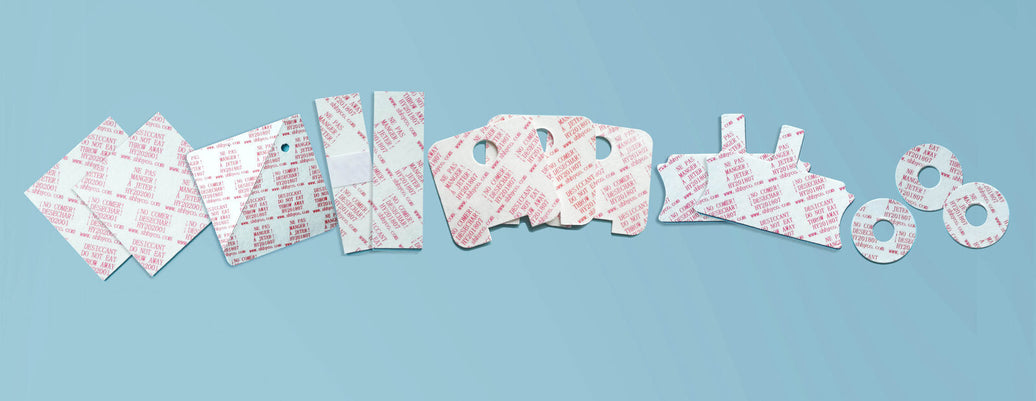
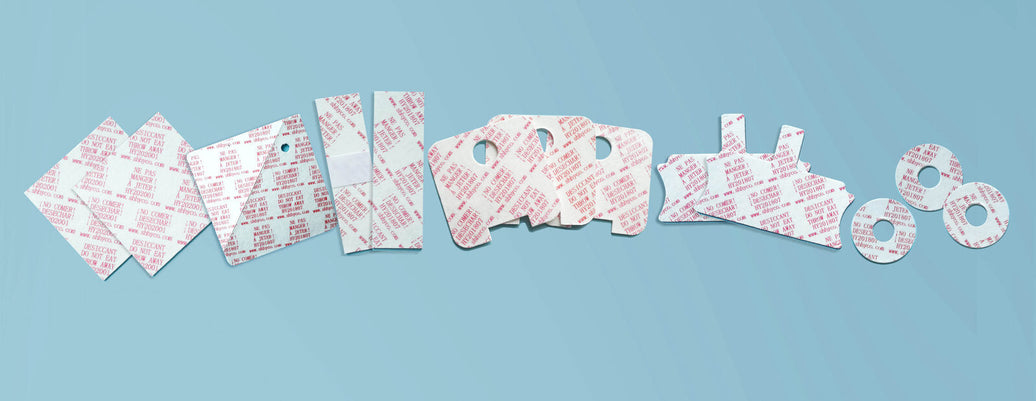
Quick answer: A desiccant card is a flat, rigid moisture absorber used where a sachet or canister does not fit or is not wanted. The term covers three kinds of absorber: paper or fiber desiccant cards, molded polymer cards with desiccant mixed into the plastic, and desiccant-loaded board. People also use it for humidity indicator cards, which only show humidity and absorb almost nothing. To size a desiccant card, multiply its mass by its adsorption at your pack humidity: a 1.0 g Fiber Card that adsorbs more than 35% of its weight at 50% RH holds more than 0.35 g of water at that condition.
Buyers usually arrive at desiccant cards because a sachet has failed them. It would not fit under the cap, it jammed the feeder, or customers kept throwing it away. A card solves those problems, but the word card hides very different products. Choosing the wrong one costs either capacity or a sustainability claim.
Four products called a desiccant card
| Type | What it is | Absorbs moisture? |
|---|---|---|
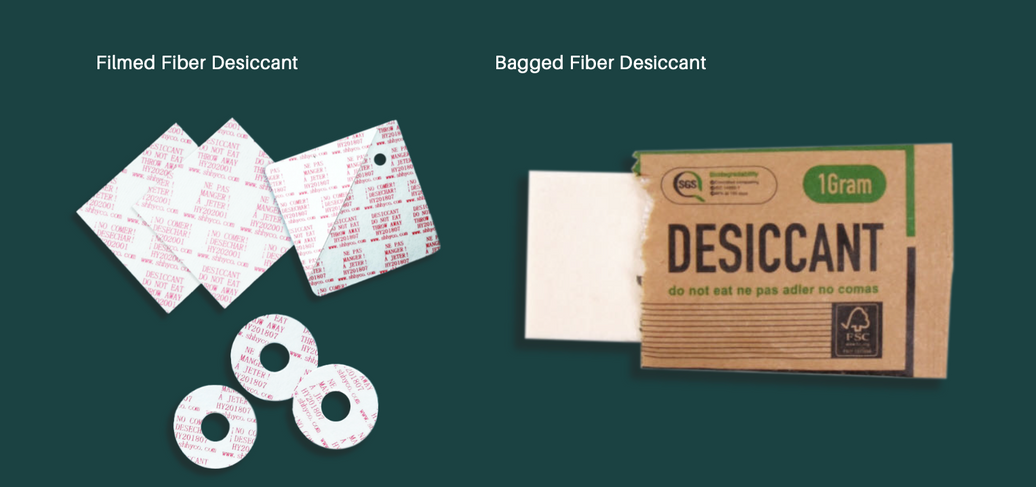
| Paper or fiber desiccant card | A bonded sheet of plant fiber with the adsorbent built in, usually wrapped in a printable outer paper | Yes |
| Molded polymer desiccant card | Desiccant powder mixed into a plastic and molded or extruded into a rigid card | Yes |
| Desiccant-loaded board | A thicker paperboard with adsorbent, used as a liner or divider | Yes |
| Humidity indicator card | A printed card with spots that change colour at set humidity levels | No. It reads humidity; it does not control it |
Humidity indicator cards are not desiccants
The most common mix-up. A humidity indicator card, often packed alongside a desiccant in electronics and pharmaceutical shipments, tells you whether the humidity inside the pack has gone above set points such as 10%, 30% or 60% RH. It does not hold any meaningful amount of water. If you need protection, you need a desiccant; if you need proof, you add an indicator. How to choose indicator points and avoid cobalt chloride is covered in humidity indicator cards and SOPs.
Molded polymer desiccant cards
These are made by mixing a desiccant powder, often silica gel or molecular sieve, into a plastic and forming it into a rigid shape. Their strengths are dimensional precision, very low dust and the ability to be molded into features such as clips or ribs. They are common in diagnostics and some healthcare packs.
Trade-offs to check: capacity depends on how much desiccant is loaded into the plastic, the plastic itself adds no capacity, and the finished card is a plastic part for end-of-life purposes. A side-by-side with fiber is in fiber desiccant vs desiccant polymer.
Paper and fiber desiccant cards
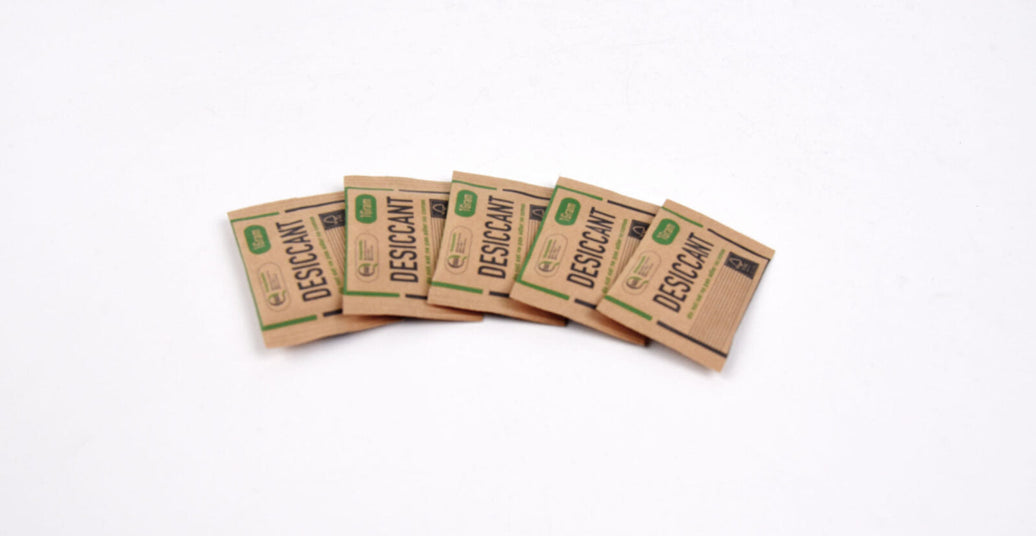
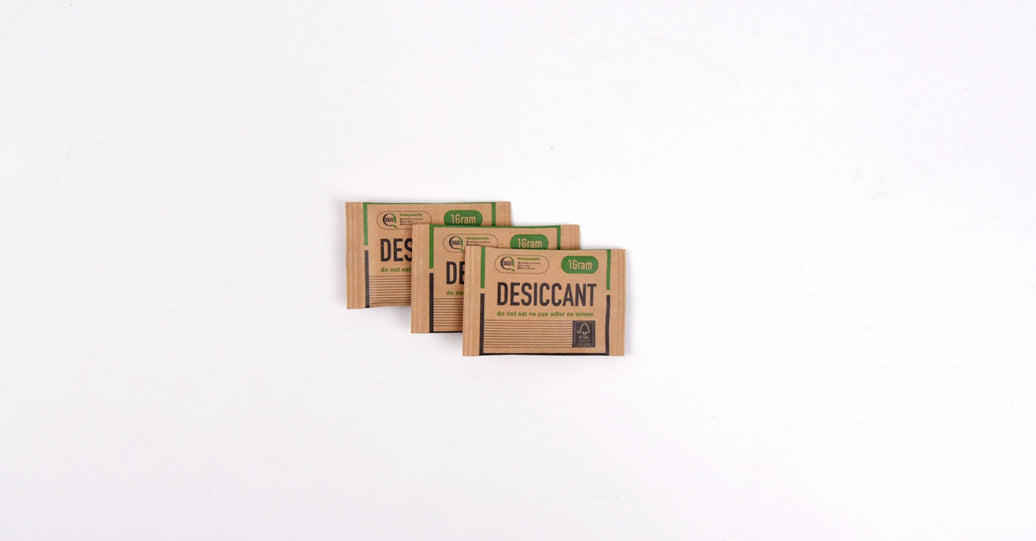
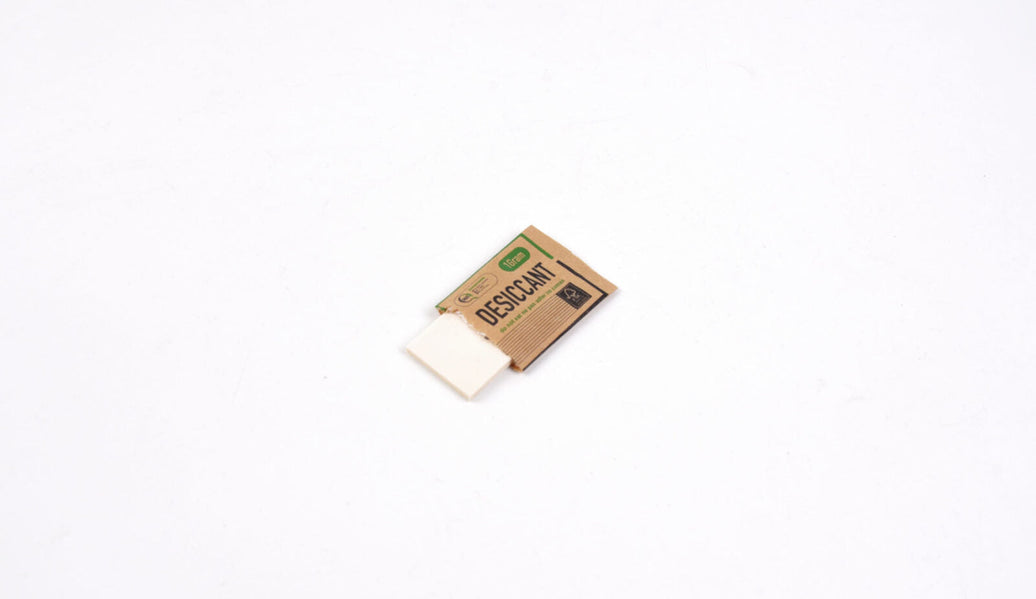
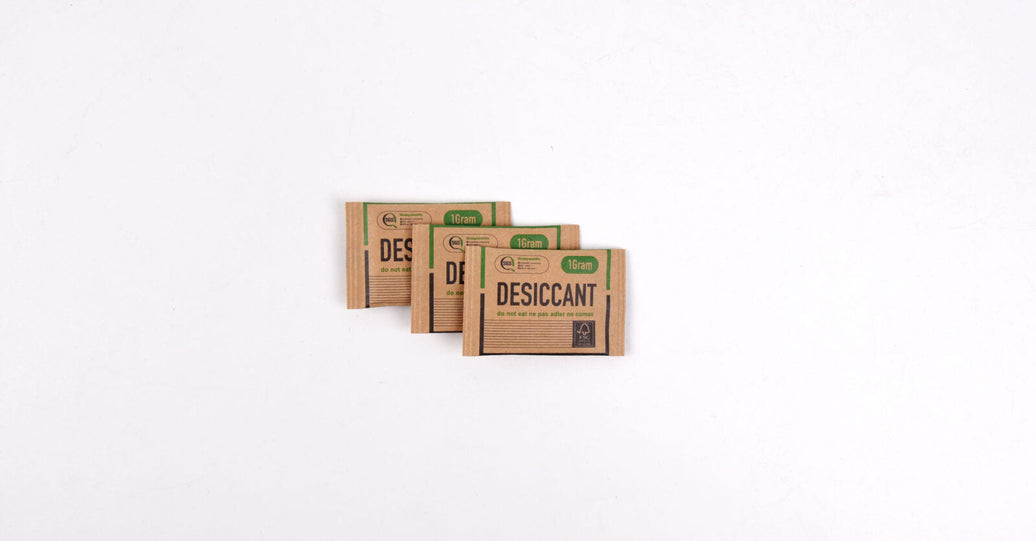
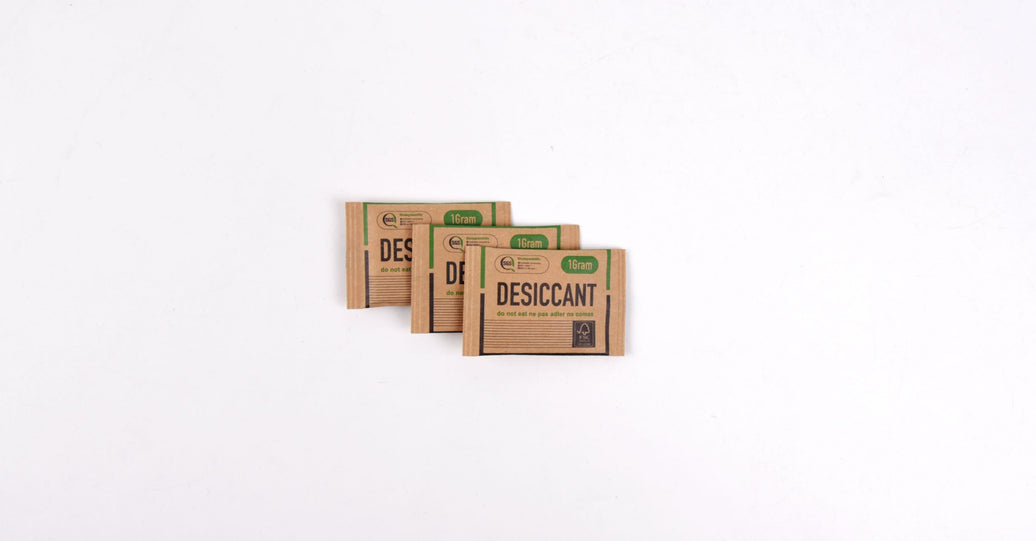
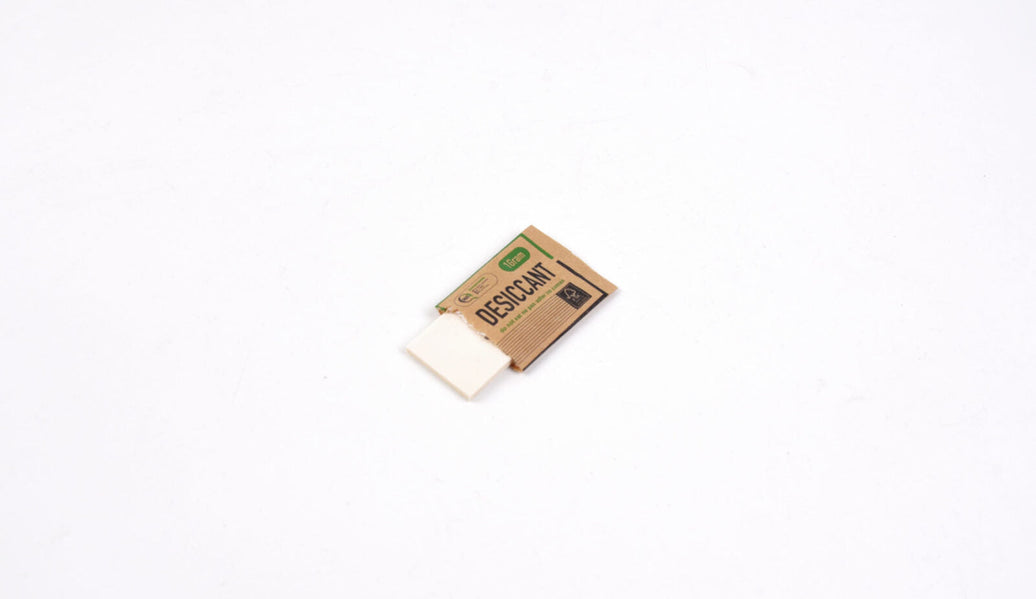
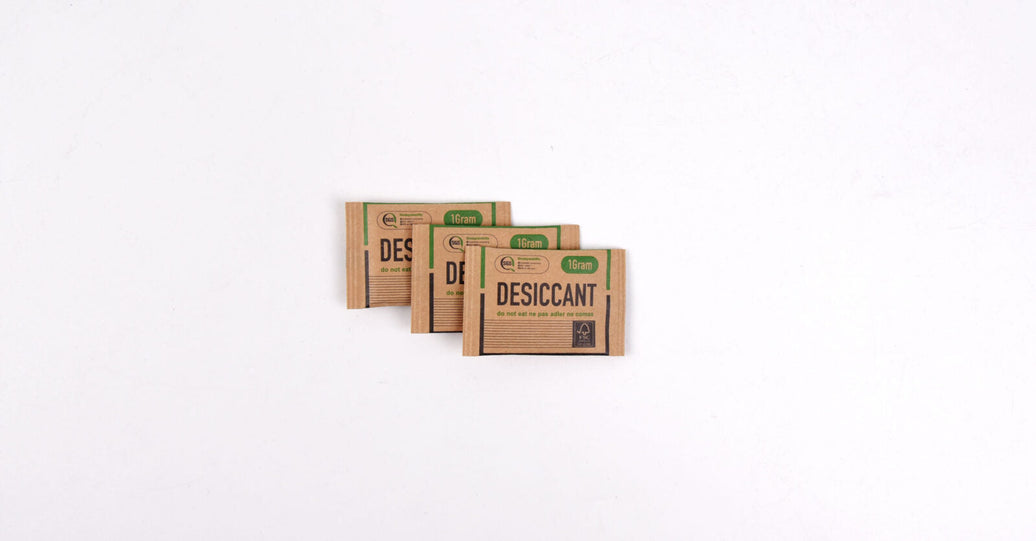
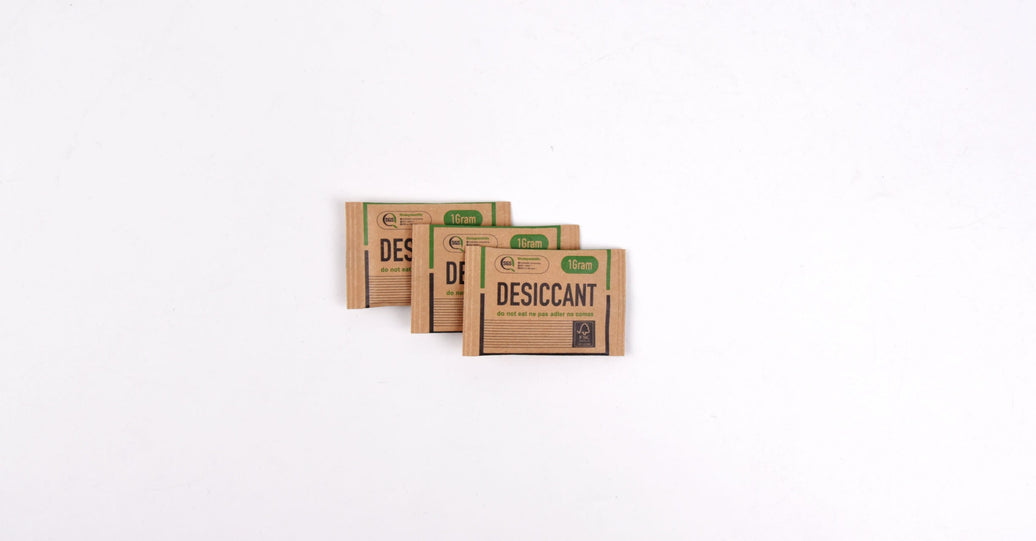
Here the adsorbent is built into a sheet of plant fiber rather than a plastic. ATMOSIScience Fiber Card combines porous plant fibers with calcium chloride bound inside the fiber matrix, enclosed in a breathable outer layer that can be printable compostable paper. It is rigid enough to feed on a line, has no loose media, and can carry a logo or a do-not-eat line. The full construction is in the Fiber Card spec guide and the category is explained in what a paper desiccant is.
How much water can a desiccant card hold?
Every card has two numbers that matter: its mass and its adsorption at your pack humidity. Multiply them.
Worked example: Fiber Card FF-15 (60 × 25 × 1 mm, about 1.0 g)
At 20% RH: more than 10% of 1.0 g, so more than 0.10 g of water
At 50% RH: more than 35%, so more than 0.35 g
At 90% RH: more than 70%, so more than 0.70 g
All at 25 °C, from the ATMOSIScience fiber desiccant technical criteria.
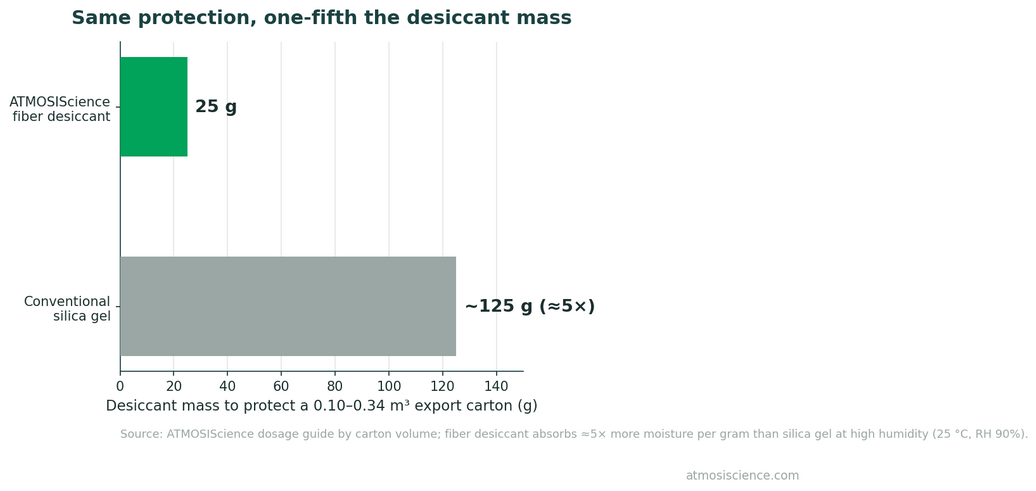
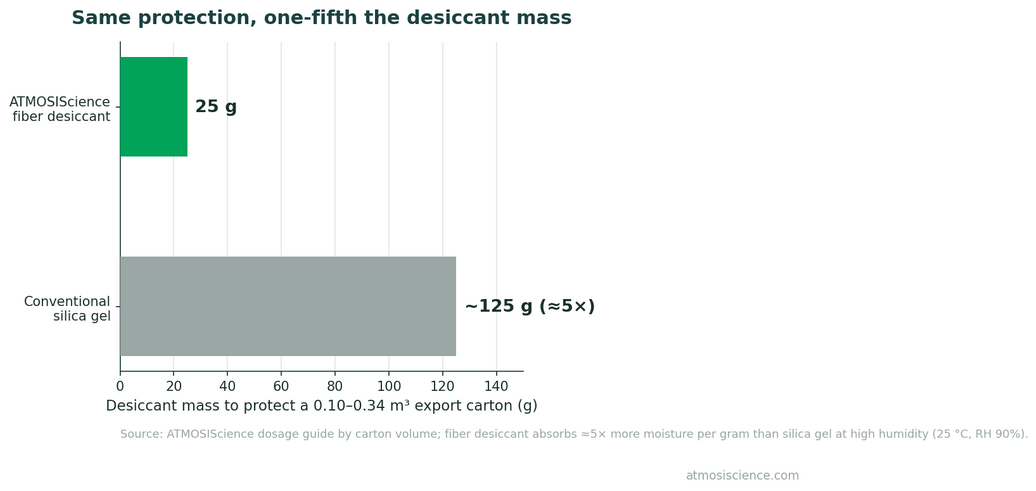
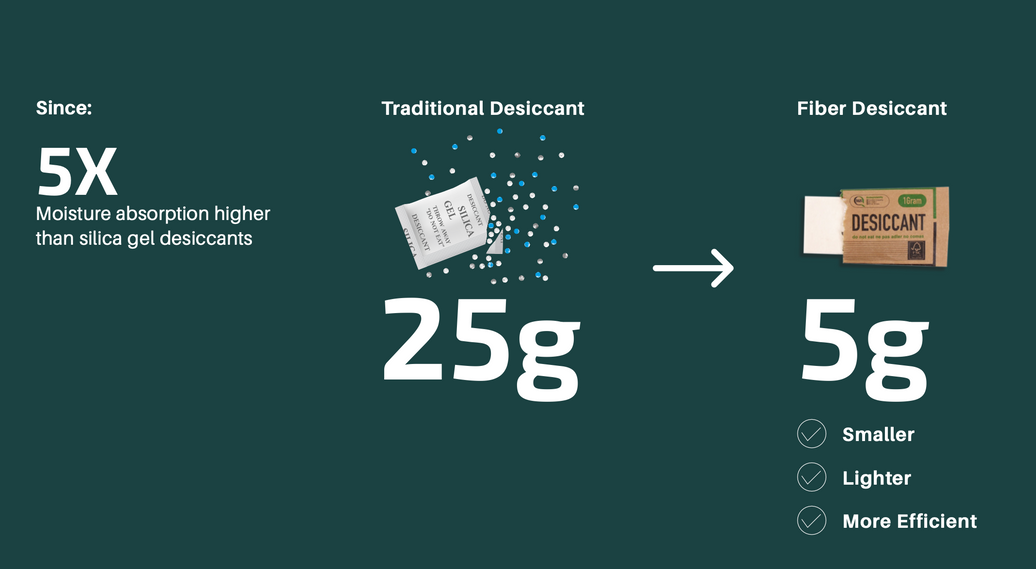
For comparison, common silica gel adsorbs about 30% of its own weight at 90% RH, so at that condition the fiber card holds roughly 2.3 times as much per gram. On the spec sheet, the FF-15 card is rated as equivalent to 2.5 g of silica gel.
The humidity you design for decides which row applies. A supplement bottle aiming to stay below 30% RH should be sized on the lower rows, not the 90% figure. That distinction is explained in moisture capacity is not adsorption rate and how to compare desiccant spec sheets.
Card, sachet or canister?
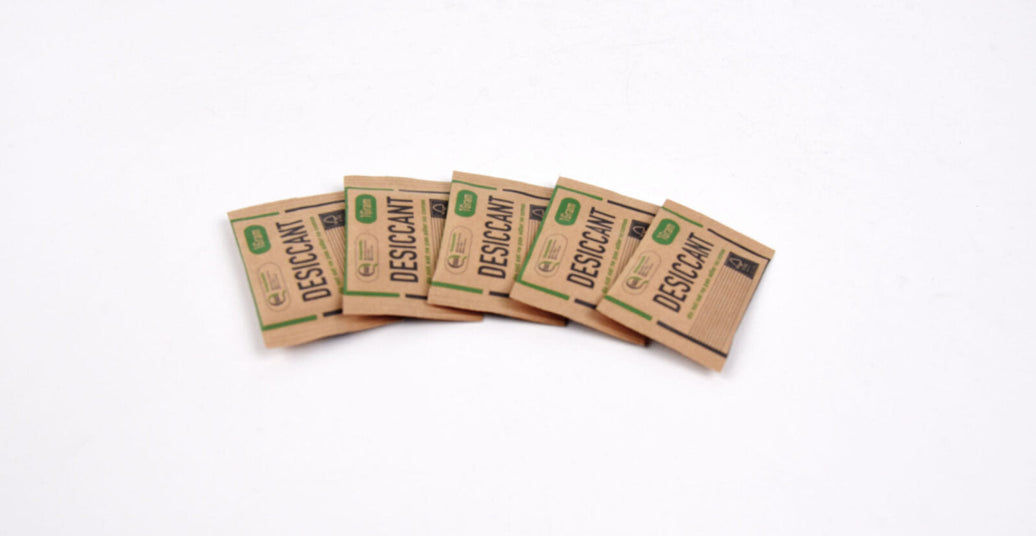
A card is not always the right format. Sachets are cheap and flexible for cartons and large pouches. Canisters are traditional in pharmaceutical bottles and drop easily on bottle lines. Cards win where the space is thin, where the desiccant should stay fixed in one place, where a machine has to place it precisely, or where the surface should carry print. If the moisture load is large, such as a bulk bag or a carton of finished goods, a bagged desiccant will usually be more practical than many cards. The full format comparison is in sachet, card or cap insert: how to choose.
How to choose a desiccant card
| If your priority is | Look for |
|---|---|
| Most water held per gram | Adsorption data at your RH, not just 90% |
| Precise molded features | Molded polymer card |
| A printable surface for brand and safety text | Paper or fiber card with a printable outer layer |
| A plastic-free or compostable pack | Fiber card with a compostability certificate that covers the finished construction |
| Automated insertion | Consistent stiffness and flatness; test on your feeder |
| Direct contact with food or supplements | Food-contact documentation for every layer, and no loose media |
Line feeding is covered in the co-packer guide to automated insertion, and food-contact paperwork in food-contact desiccants and FDA 21 CFR.
Where desiccant cards are used in wellness and powder packs
- Under the cap of a supplement bottle, where it does not take up headspace. See bottle-cap desiccant inserts.
- Against the wall of a resealable pouch, where it stays put through 30 openings.
- Inside a tub lid, printed with a short note asking the customer to leave it in place.
- In a blister cavity or diagnostic kit, where space is measured in millimetres. See desiccant for diagnostic test kits.
- In a stick pack or sachet-in-sachet, as a thin flat piece. See desiccant in stick packs.
Frequently asked questions
What is the difference between a desiccant card and a humidity indicator card?
A desiccant card absorbs moisture. A humidity indicator card shows the humidity level with colour-changing spots and absorbs almost nothing. Many packs use both.
What size desiccant card do I need?
It depends on the pack volume, barrier, how often it is opened, shelf life and the humidity your product can tolerate. Start from the moisture load, then pick the card mass that covers it at your design RH, with a margin.
Are desiccant cards food safe?
They can be, when every layer has food-contact documentation and the card is marked as not edible. Ask which certificate covers the finished card, including print.
Can a desiccant card be reused?
Some can be dried and reused for non-food purposes. A card that has been in a food or supplement pack should not be moved into another food pack.
Can I print my logo on a desiccant card?
On paper and fiber cards, usually yes. See custom-printed desiccant cards.
Find the right desiccant card for your pack
Send ATMOSIScience the space, the product and the shelf life. We will recommend a Fiber Card size and send samples to test.
Prefer email? info@atmosiscience.com