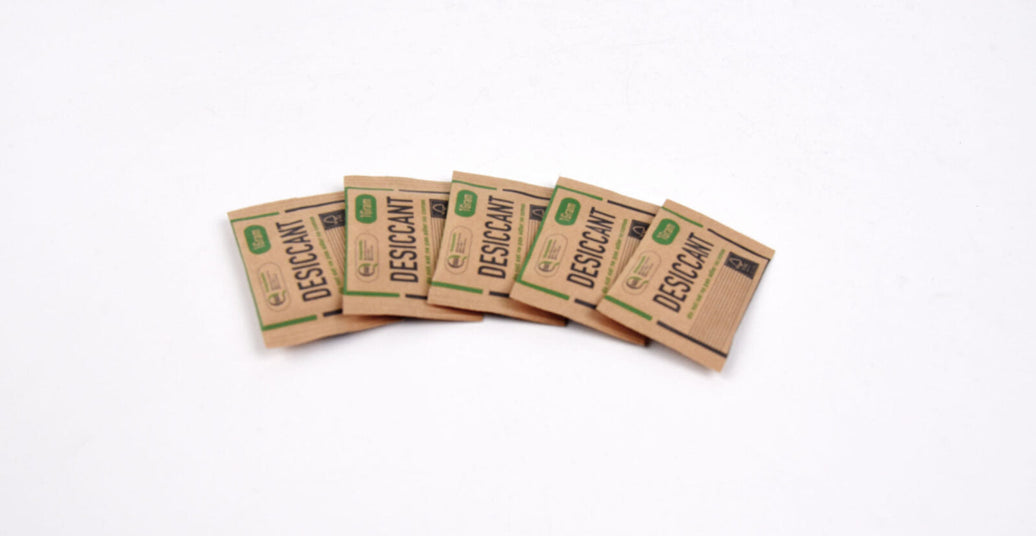
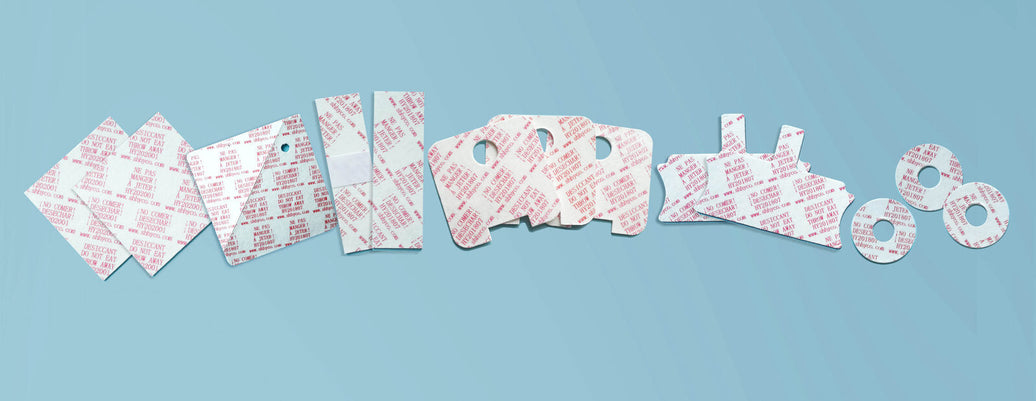
Quick answer: Desiccant wrapping paper is paper loaded with a moisture adsorbent, used to wrap items such as tools, metal parts, leather goods or electronics. It only works inside a closed pack, and a thin sheet holds little water, so it buys time rather than giving lasting protection. It is often confused with VCI paper, which protects metal with a corrosion-inhibiting vapour rather than by drying, and with plain kraft or tissue packing paper, which barely controls humidity at all. For food and supplement packs, a sized desiccant card or sachet in a sealed pack is more reliable than wrapping.
People search for desiccant wrapping paper and desiccant packing paper for very different jobs: keeping silverware bright, stopping rust on spare parts, protecting leather in storage, or keeping a product dry in transit. The right answer depends on the job, and often it is not a wrapping paper at all.
Four papers that get mixed up
| Paper | How it protects | Absorbs moisture? |
|---|---|---|
| Desiccant paper | Adsorbs water vapour from the air in a closed pack | Yes, up to its capacity |
| VCI paper | Releases a corrosion-inhibiting vapour that forms a protective layer on metal | Not its main job |
| Anti-tarnish paper | Treated to slow tarnish on silver and similar metals | Not its main job |
| Plain kraft or tissue | Cushions and separates items | A little, and it can give it back later |
If your problem is rust on steel parts, VCI is often the better first tool, sometimes combined with a desiccant. The trade-offs are covered in VCI or desiccant for metal parts.
How much moisture can a wrapping sheet hold?
Every desiccant has a capacity: its mass multiplied by how much water it adsorbs at a given humidity. A thin wrapping sheet weighs only a few grams, so even a good adsorbent in it holds a modest amount of water. That is fine inside a small, closed box. It will not dry an open drawer, a cupboard or a room, because the air there is constantly replaced.
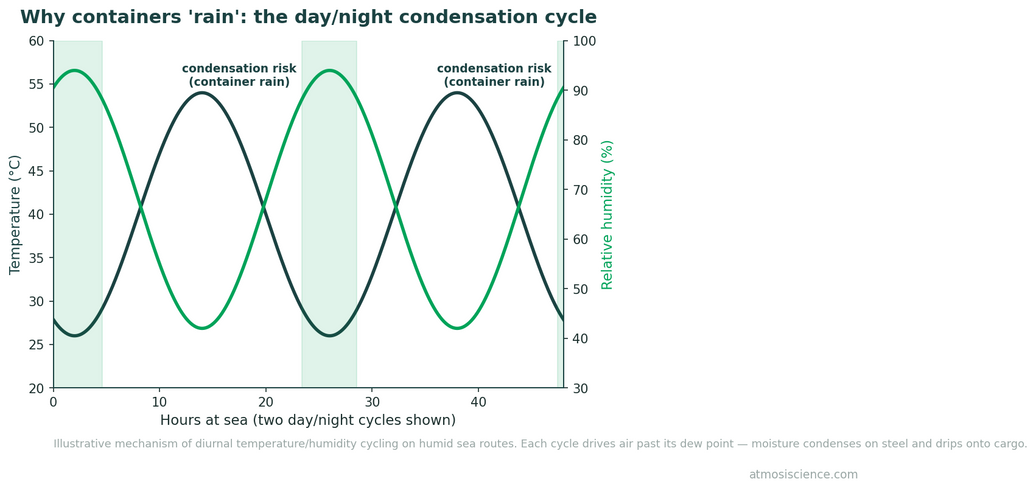
Plain packing paper adds another twist. Paper fibers take up some moisture when the air is damp and release it when the air warms or dries. In a sealed carton that moves between a cold warehouse and a warm truck, that can work against you, contributing to condensation on the product. See condensation after cold storage.
When wrapping makes sense
- Small items in a closed box, where the wrap also separates and cushions them.
- Short storage or transit, where you need protection for weeks, not years.
- Items that should not touch a sachet, such as polished surfaces that could be marked by a loose packet.
When an insert works better
- Long shelf life. A sized card or sachet can carry far more capacity than a wrapping sheet.
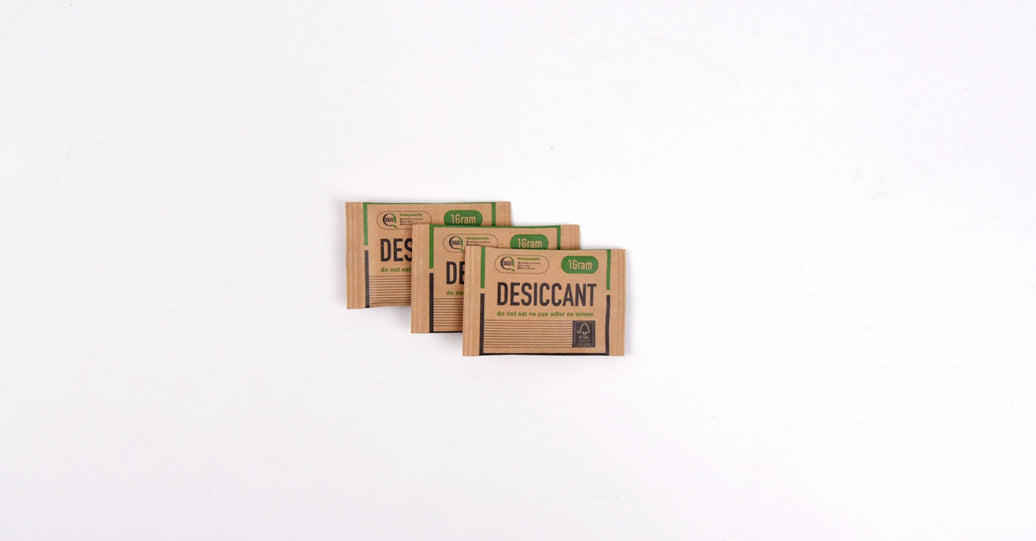
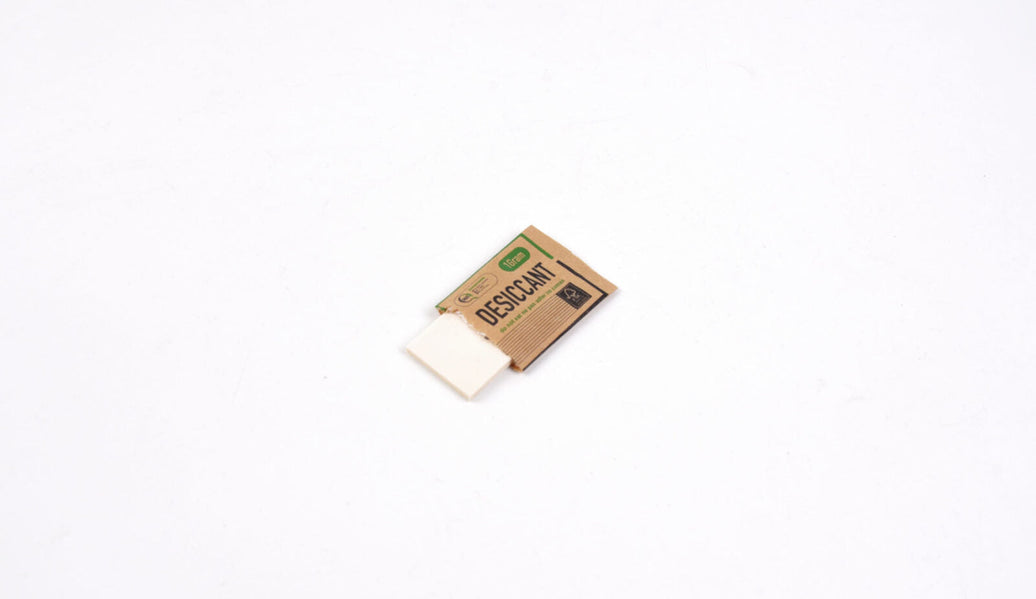
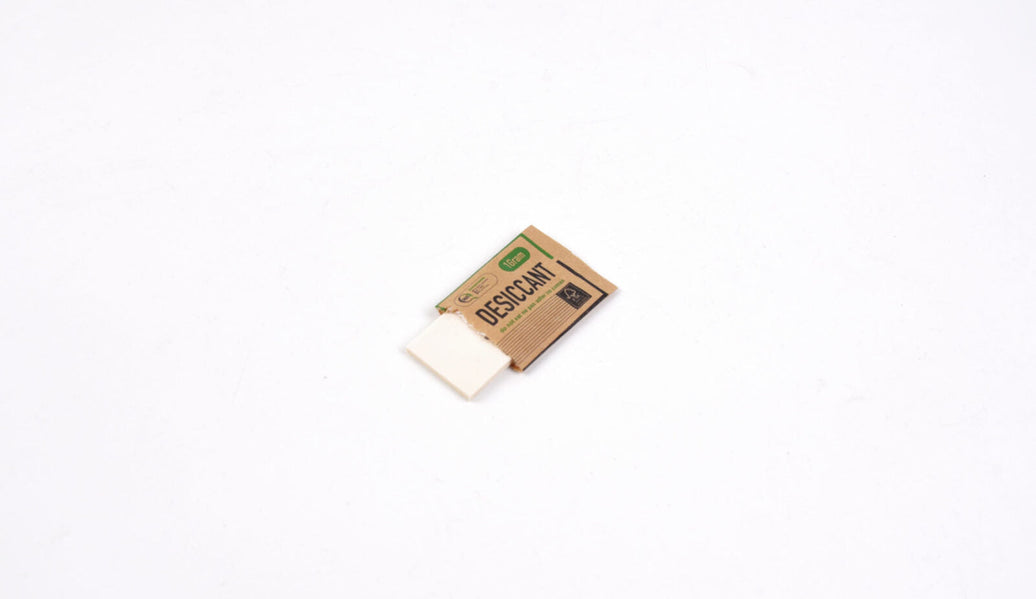
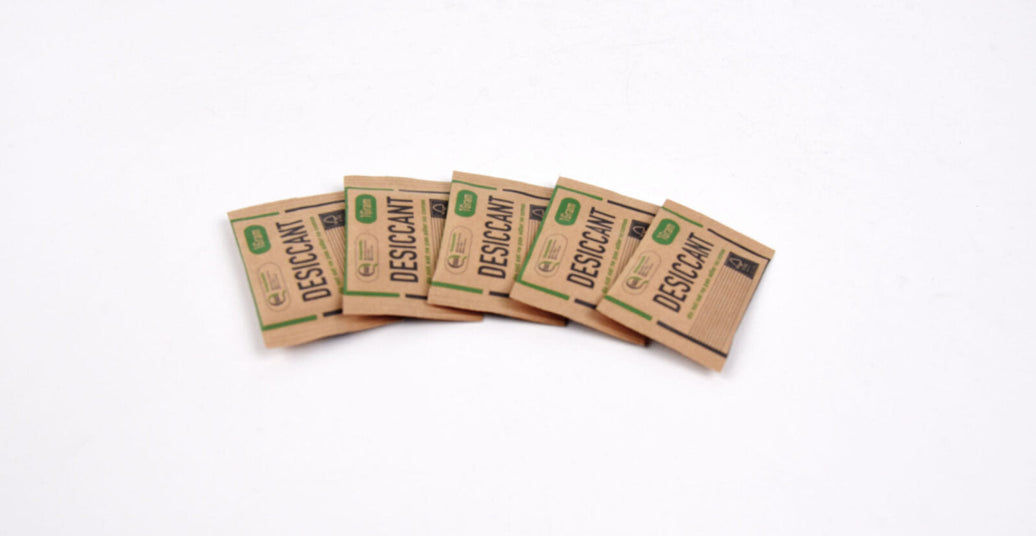
- Food and supplements. You do not wrap a powder or a capsule. Moisture control goes in the pack as a card, sachet or canister with food-contact documentation. See what a paper desiccant is and what is a desiccant card.
- Export shipping. Sea freight brings large humidity and temperature swings; size by route, as explained in air freight or sea freight desiccant sizing.
- Branded retail packs. A printed card can carry your logo and a one-line explanation. See custom-printed desiccant cards.
Better options by use
| Use | Usually works better |
|---|---|
| Steel tools and spare parts | VCI wrap, plus a desiccant in long or humid transit |
| Silverware and jewellery | Anti-tarnish paper or pouch in a closed box |
| Leather goods and footwear | Desiccant insert in the box; see desiccant for garments, footwear and leather |
| Electronics | Sized desiccant and humidity indicator in a barrier bag; see desiccant units and dry packs |
| Supplements and food powders | A food-contact desiccant card or sachet in a sealed pack, sized for openings |
Paper desiccant inserts for retail and wellness packs
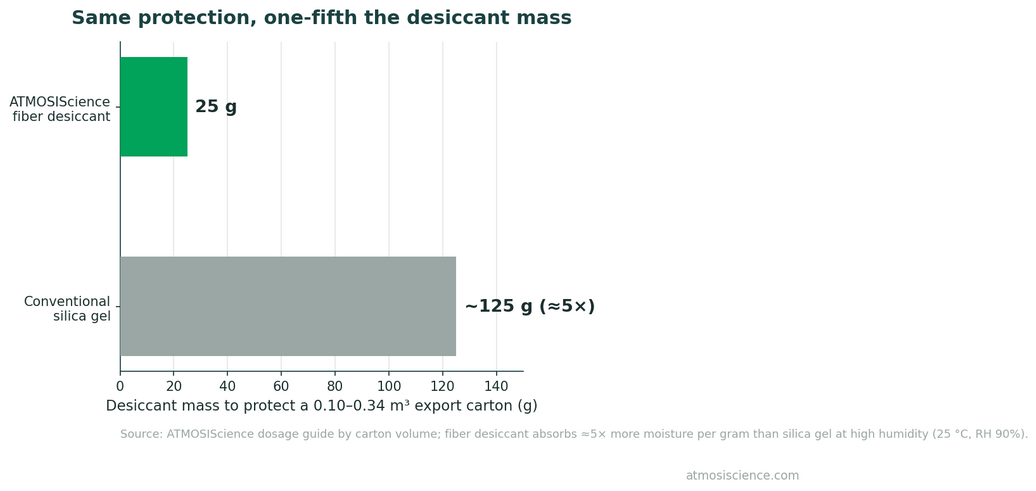
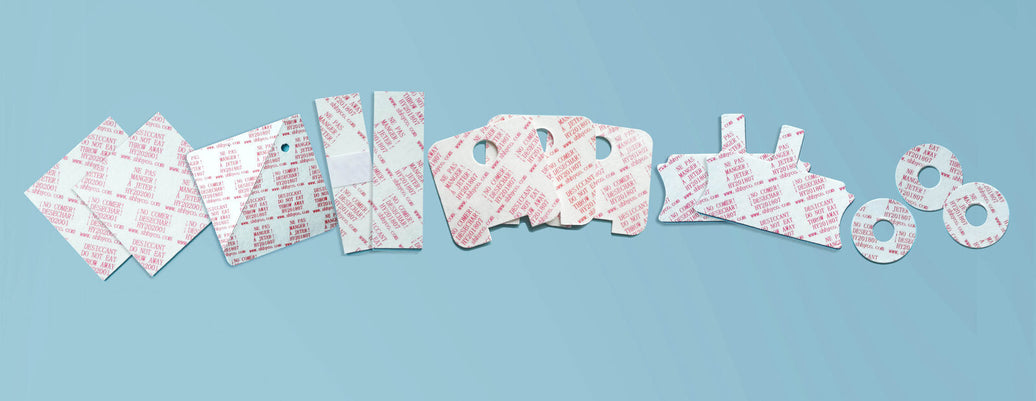
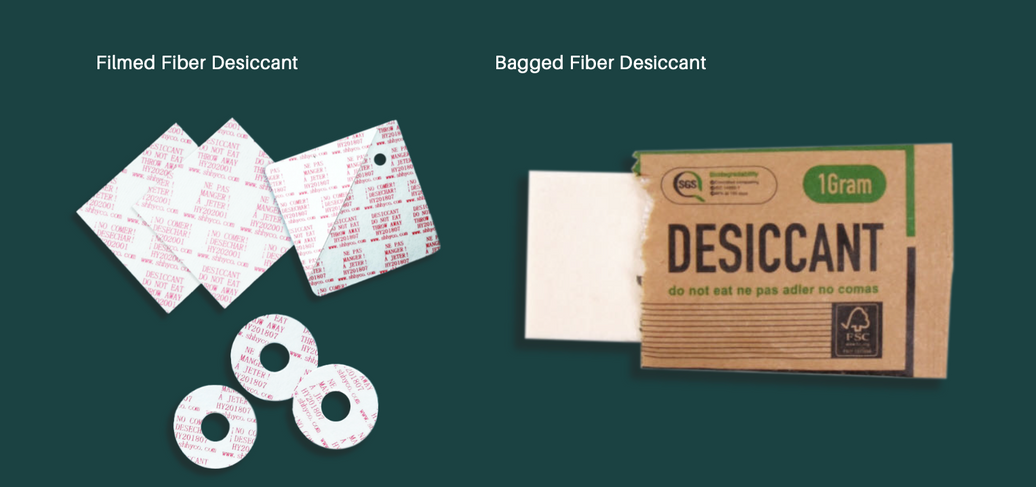
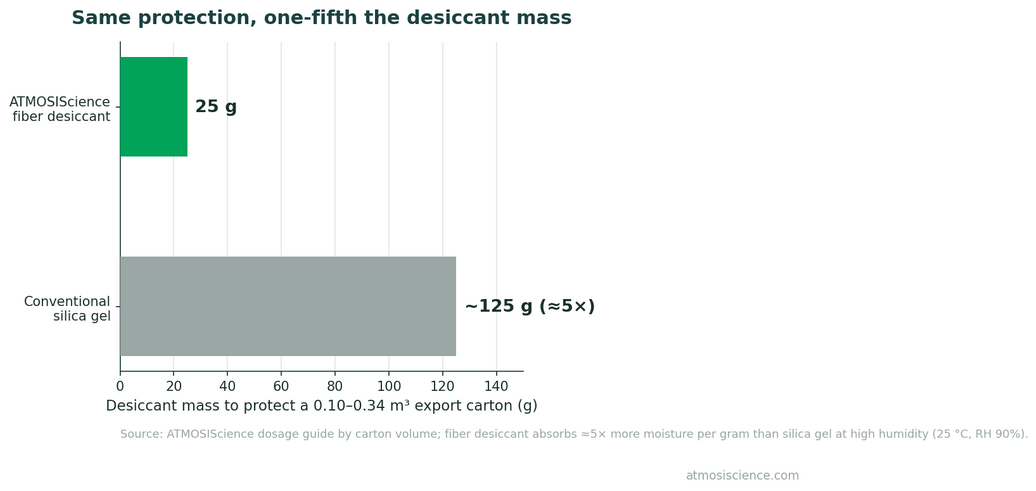
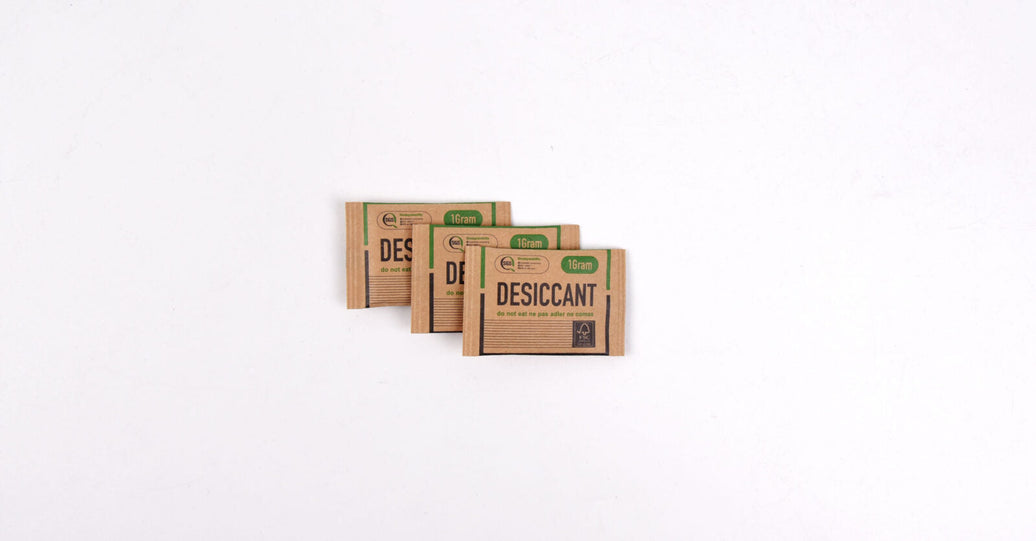
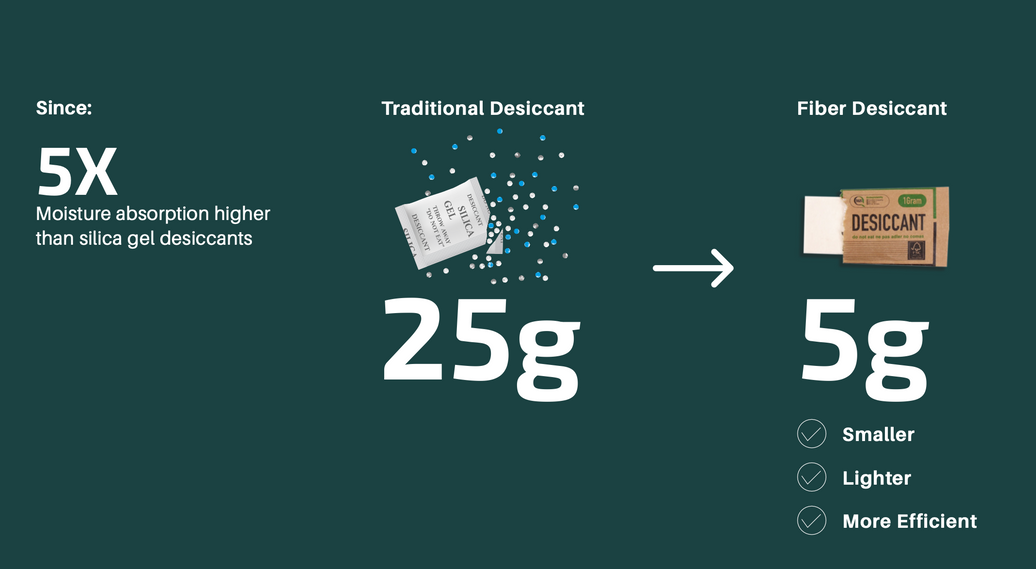
For brands that like the look and feel of paper, a flat paper desiccant card gives the same aesthetic as a wrap with much more capacity in a known place. ATMOSIScience Fiber Card has a plant-fiber core with calcium chloride bound in the fibers and a printable outer layer. At 25 °C it adsorbs more than 35% of its own weight at 50% RH and more than 70% at 90% RH, about 2.3 times common silica gel at 90% RH. Sizes and documents are in the Fiber Card spec guide, and flat formats are compared in desiccant sheets, rolls or die-cut cards.
Frequently asked questions
Is VCI paper a desiccant?
No. VCI paper protects metal with a corrosion-inhibiting vapour. It does not set out to absorb moisture. Many export packs use both.
Does tissue paper absorb moisture?
A little, but it can release it again when conditions change. It is a cushion, not humidity control.
Can I wrap food in desiccant paper?
Only with a product made and documented for food contact, and usually there are better options. In food and supplement packs, moisture control normally sits beside the product, not around it.
Is desiccant wrapping paper reusable?
Some can be dried and reused for non-food items. Follow the maker’s instructions; never reuse anything from a food pack for food.
Will desiccant paper protect items in an open drawer?
Not for long. A desiccant needs a closed space. In an open space it saturates quickly from room air.
Not sure if you need a wrap or an insert?
Tell ATMOSIScience what you pack, how it ships and how long it must last. We will recommend a format and send samples.
Prefer email? info@atmosiscience.com