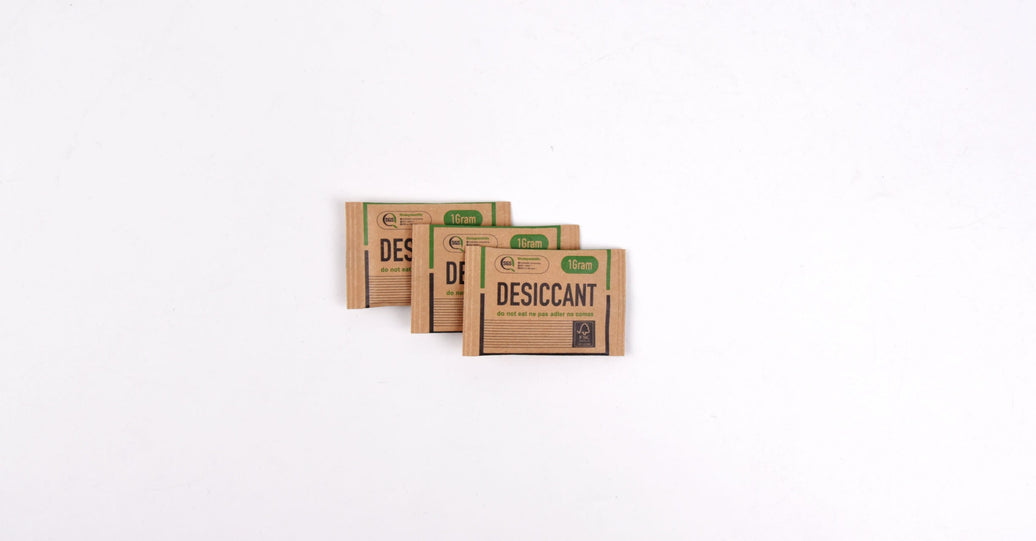
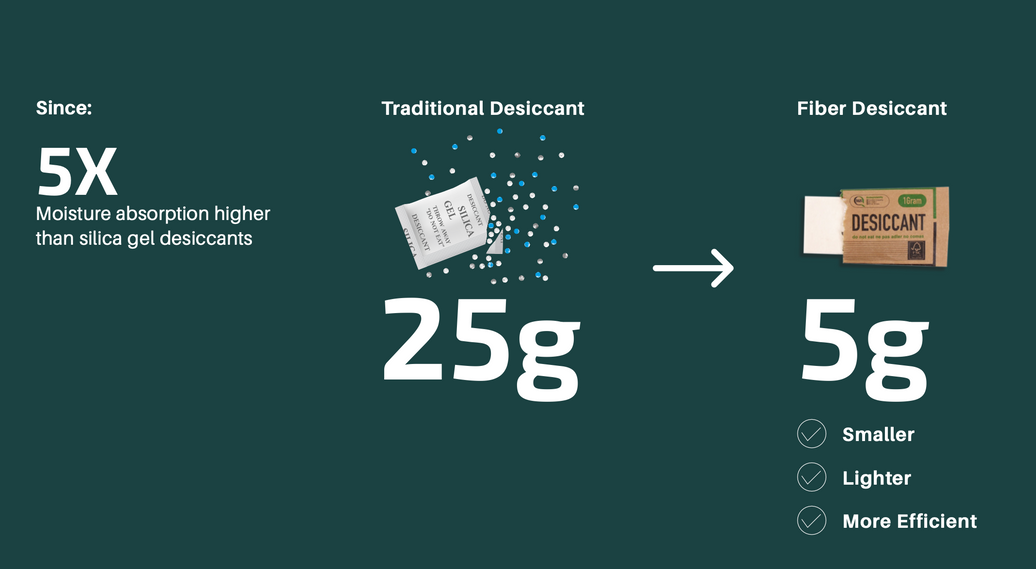
Quick answer: A desiccant "unit" is a performance definition, not a weight. Under MIL-D-3464 one unit is the quantity of desiccant that adsorbs at least 3.0 g of water at 20% RH and at least 6.0 g at 40% RH, both at 25°C. Because materials differ in capacity, one unit is roughly 18 g of fiber desiccant, about 30 g of silica gel or about 35 g of clay. When a drawing, a JEDEC dry-pack instruction or a customer PO calls for "units", it is asking for that adsorption performance — so substituting gram-for-gram between materials will under- or over-dose the pack.
Few specifications cause more confusion in purchasing than the desiccant unit. A drawing says 8 units. A supplier quotes 10 g sachets. Someone divides, someone multiplies, and a moisture-barrier bag ships with less than a third of the protection the print called for.
The confusion is understandable. "Unit" sounds like a count of sachets. It is not. It is a capacity.
The MIL-D-3464 definition
MIL-D-3464 is the US military specification for desiccants used in packaging. Its central contribution is the unit: a defined mass of moisture adsorbed under defined conditions, rather than a defined mass of material. One unit must adsorb
- at least 3.0 g of water at 20% RH, and
- at least 6.0 g of water at 40% RH,
both measured at 25°C. The specification then requires suppliers to declare how many grams of their material deliver one unit.
The consequence is direct. A higher-capacity desiccant needs fewer grams to make a unit. A lower-capacity desiccant needs more.

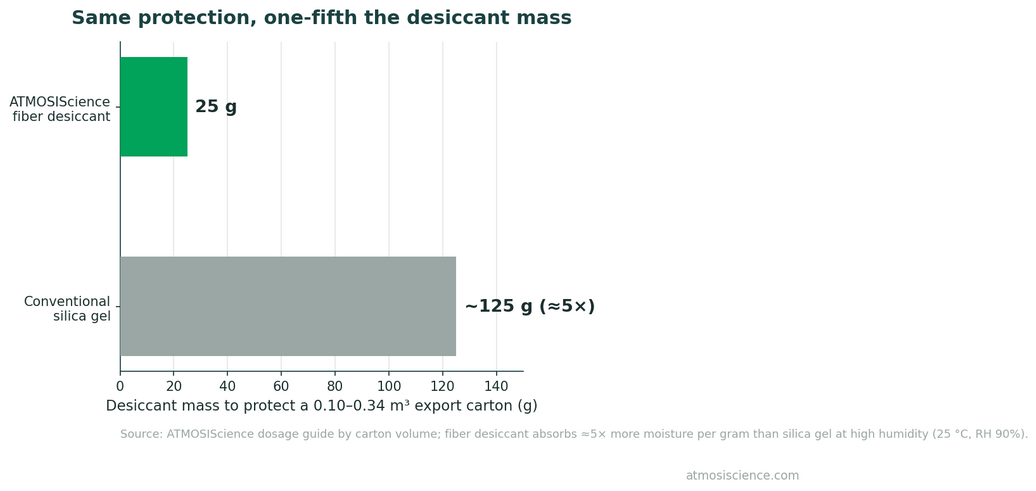
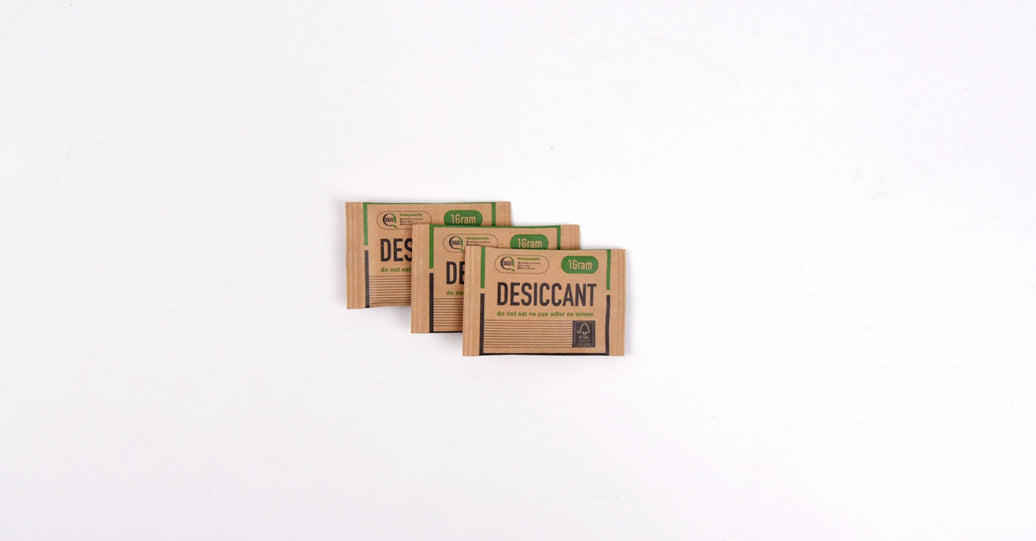
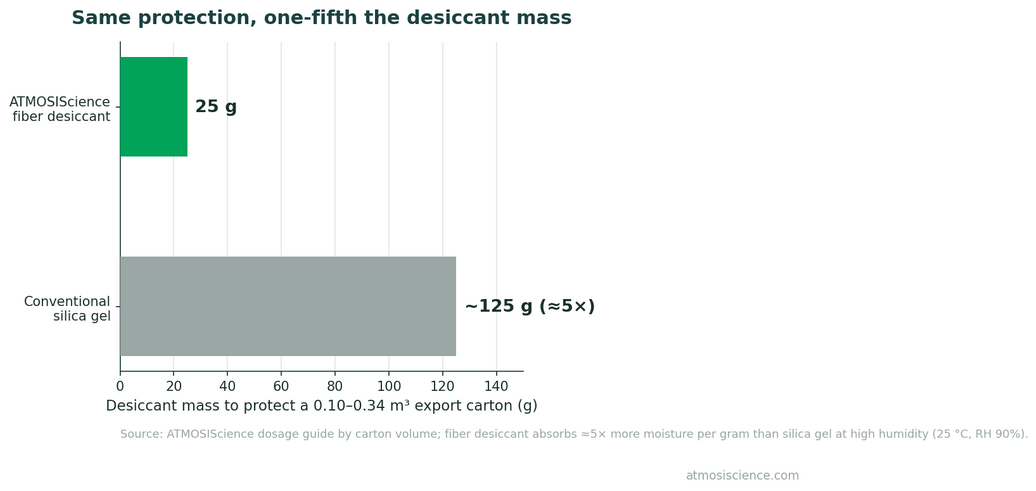
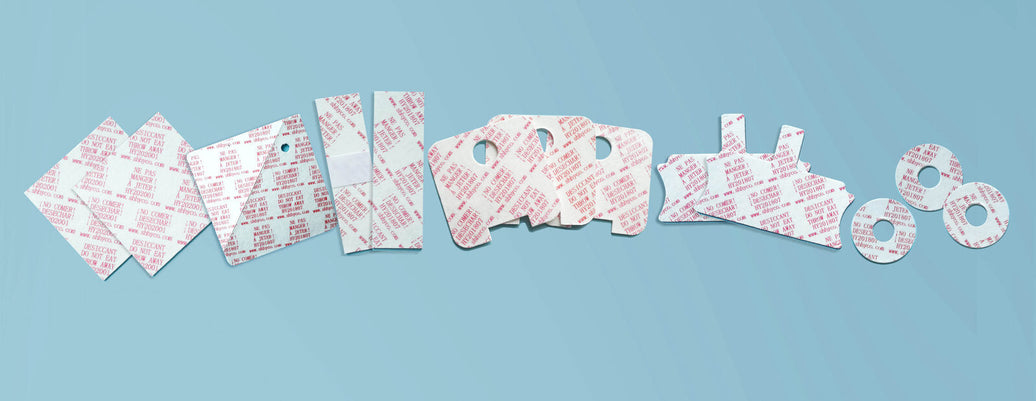
Roughly 18 g of fiber desiccant, 30 g of silica gel and 35 g of clay each deliver one unit. Put another way, a 16-unit requirement is about 288 g of fiber, about 480 g of silica or about 560 g of clay. On a container-load bill of materials that gap is not academic — it is freight, storage volume, packing labour and, in EPR jurisdictions, fee-bearing packaging weight.
How JEDEC dry packing uses units
In electronics, moisture-sensitive devices ship in moisture-barrier bags with desiccant and a humidity indicator card. The governing standard for handling and packing is JEDEC J-STD-033, and the desiccant quantity inside those bags is conventionally expressed in units traceable to the MIL-D-3464 definition.
The practical rule most electronics packers work to is a unit count scaled to the interior surface area of the barrier bag, with adjustments for the bag's own transmission rate and the required floor life after opening. Two things follow:
- Bigger bag, more units. The driver is bag area, not component count.
- Better bag, fewer units. A lower-MVTR barrier bag reduces the ingress the desiccant has to absorb. The same logic in our MVTR dosage guide applies directly.
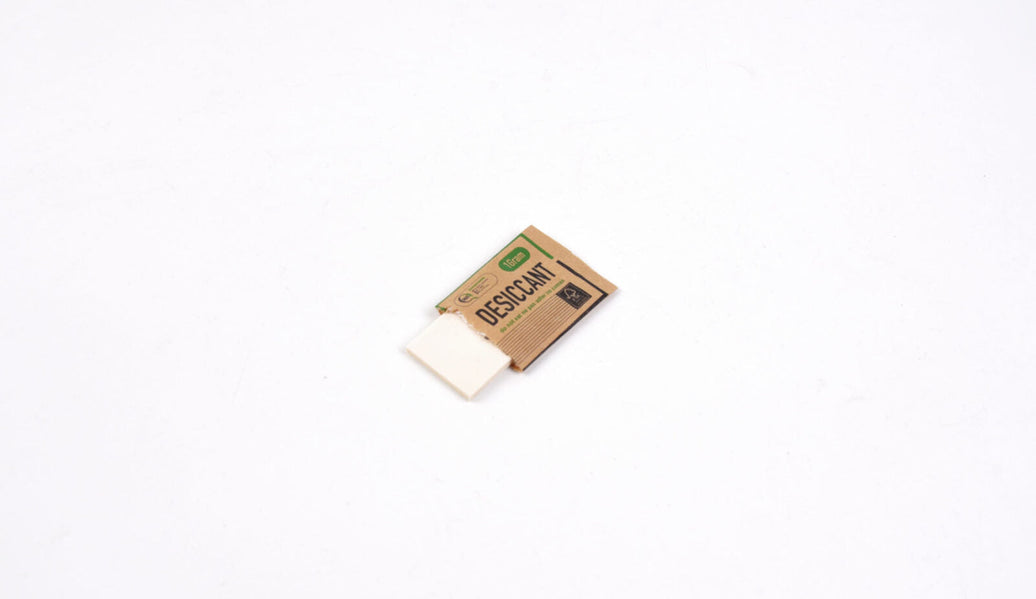
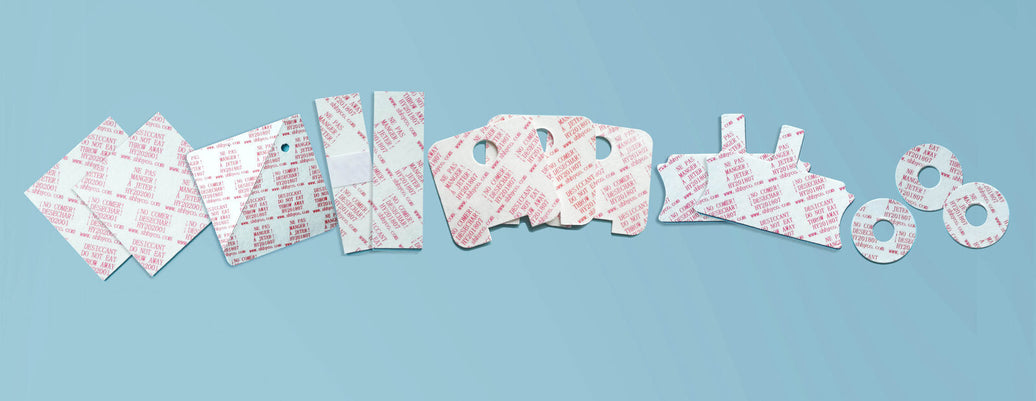
Where fiber desiccant changes the arithmetic is volume. Delivering the same unit count in roughly 60% of the mass frees headspace inside the bag and reduces the physical bulk that packers have to fit around the tray or reel. For high-mix electronics packing, that is often the deciding factor rather than price per gram. Background on the mechanism is in desiccant for electronics and PCB.
Reading a unit call-out on a drawing
When you see a call-out like "desiccant, 8 units per bag, MIL-D-3464 Type II", decode it in this order:
- Units tell you the required adsorption performance. Convert to grams using your material's declared grams-per-unit, not the incumbent's.
- Type distinguishes desiccant classes in the specification. Confirm which type the drawing intends and whether an equivalent-performance substitution is permitted.
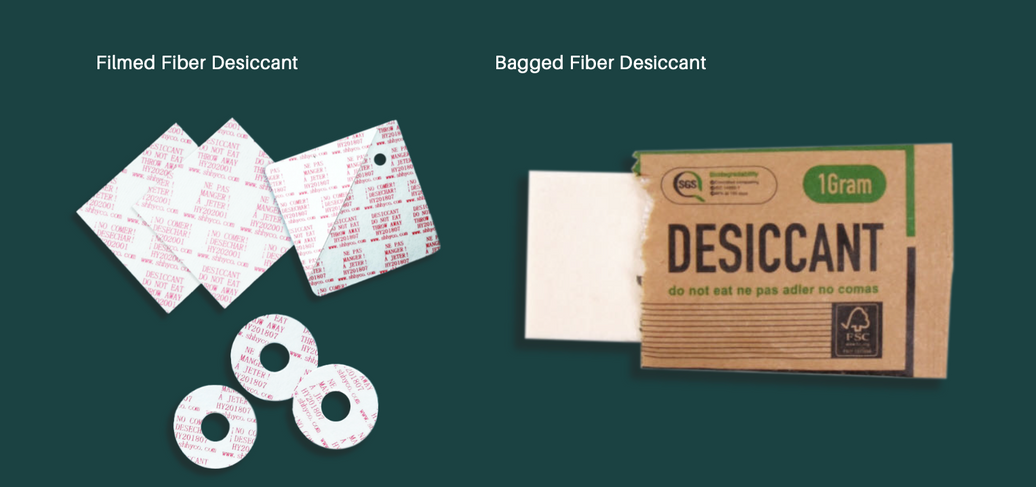
- Bag or sachet material matters for dusting, food contact and line handling. It is a separate decision from unit count.
- Revision matters. Older prints frequently cite superseded revisions; confirm which revision governs before you quote against it.
If a customer print names a competitor's part number and a unit count, the unit count is the transferable requirement. That is the number to hold when proposing an alternative — and the number a buyer should ask for when they suspect they are overpaying for mass rather than performance.
Where units stop being useful
Units describe one-way drying capacity. They say nothing about:
- Two-way control. Products that need a humidity window rather than maximum dryness are not well served by a unit count at all.
- Kinetics. Two materials can hit the same unit rating with very different response speeds.
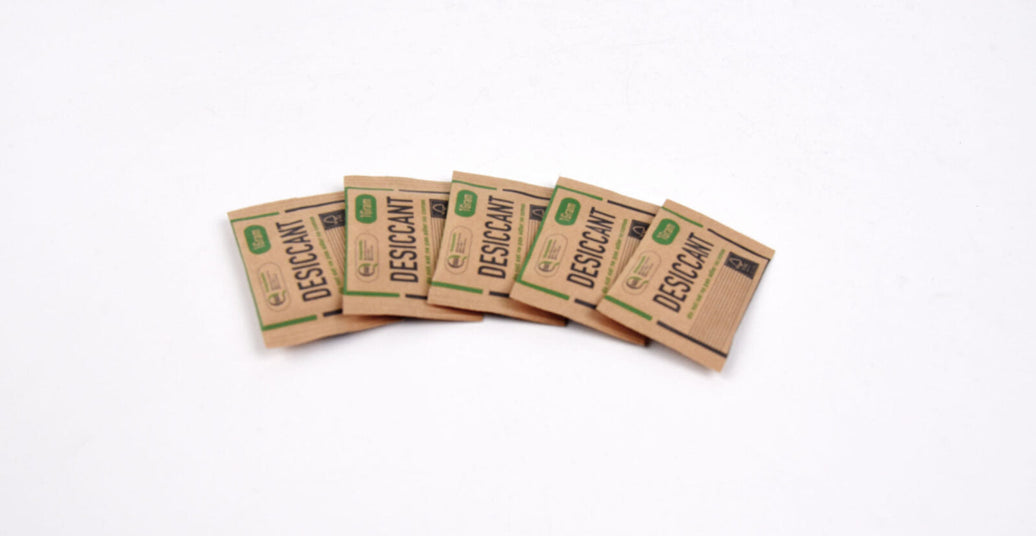
- Dust and particulate risk. A loose-fill sachet and a bonded fiber pad can be identical on units and very different on the line. See powder and loose-fill desiccant risks.
- Food-contact status. Units are a military packaging concept; food and pharma buyers still need the documentation set covered in food-contact desiccants and FDA 21 CFR.
FAQ
Is one unit the same as one sachet?
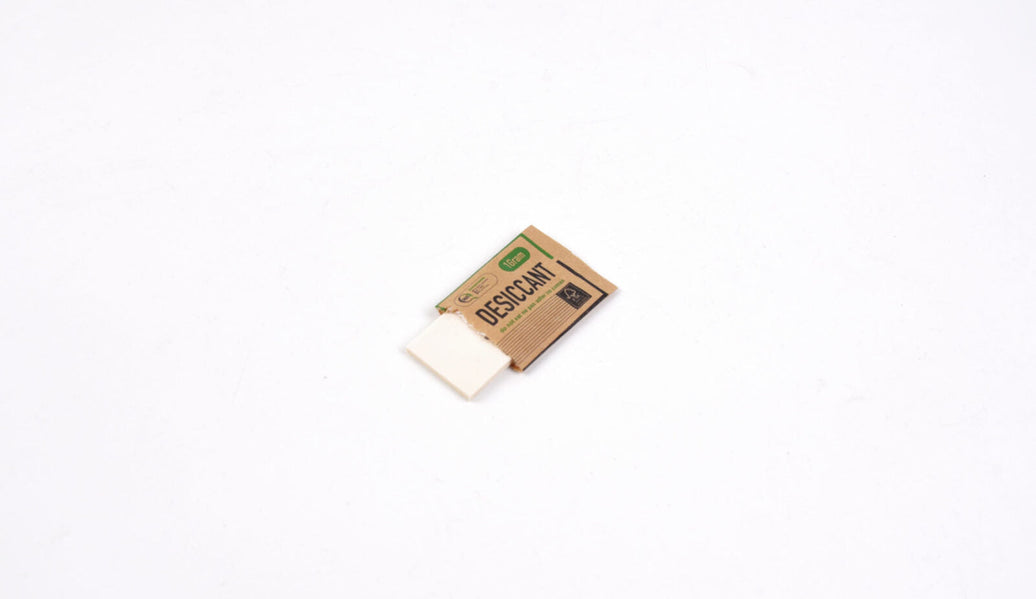
No. A sachet can contain a fraction of a unit or several units. Always convert by mass using the supplier's declared grams-per-unit.
Why do fiber, silica and clay differ so much per unit?
Because adsorption capacity per gram differs. Fiber desiccant adsorbs above 35% of its own weight at 50% RH and above 70% at 90% RH, where common silica gel sits far lower at comparable conditions. Higher capacity means fewer grams per unit.
Can I substitute a different desiccant on a MIL-D-3464 print?
Usually yes if the unit count is met and the customer permits equivalent-performance substitution, but the decision belongs to the print owner. Bring measured capacity data and a written equivalence statement to that conversation.
Does JEDEC specify the desiccant material?
J-STD-033 governs handling, packing and baking of moisture-sensitive devices and points to desiccant performance rather than mandating one chemistry. Confirm the revision your customer applies.
How do units relate to shelf life inside the bag?
Indirectly. Units set the moisture budget; bag MVTR, bag area and storage conditions set the rate at which that budget is consumed. Both sides are needed to state a duration.
Working from a unit call-out? Send us the print
Share the unit count, bag size and revision. ATMOSIScience returns the equivalent fiber desiccant configuration, the mass saved, and documentation for your qualification file.
Prefer email? info@atmosiscience.com