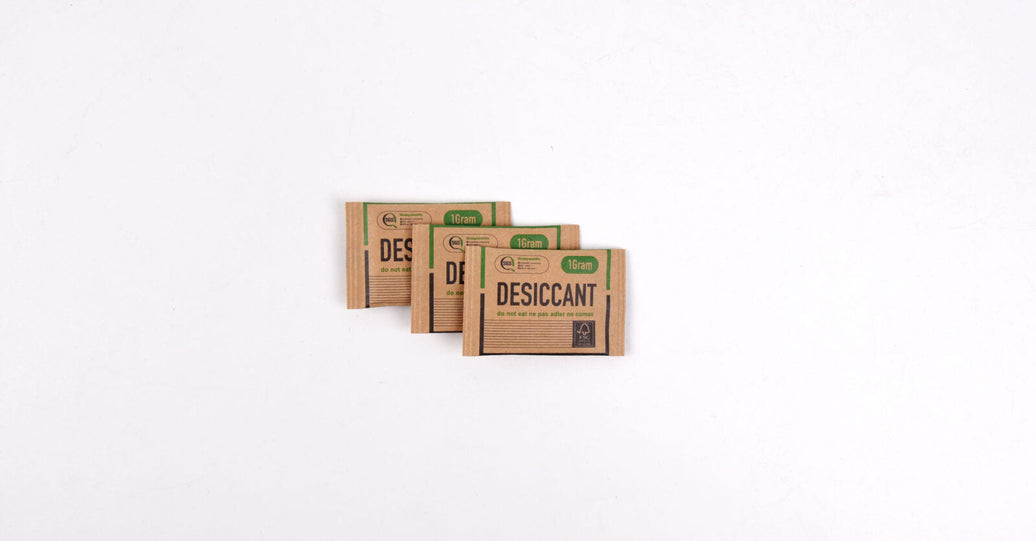
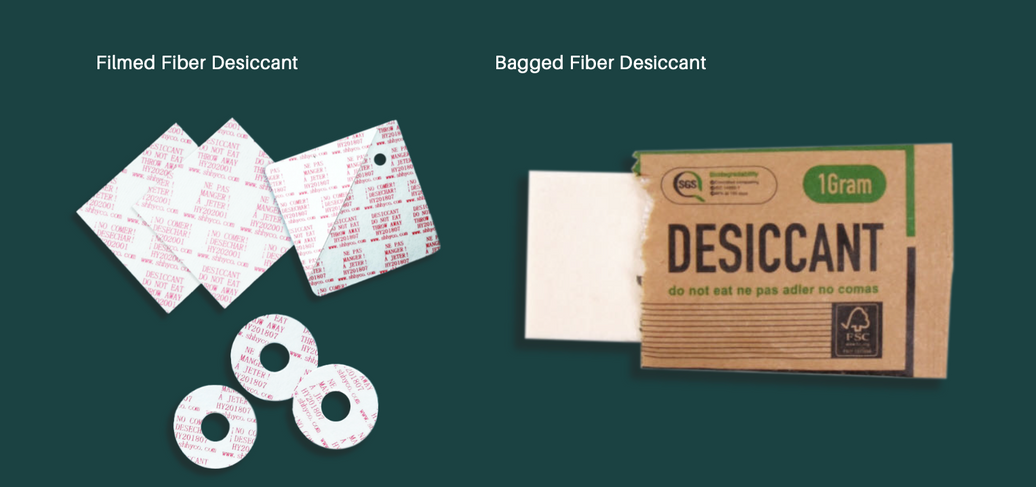
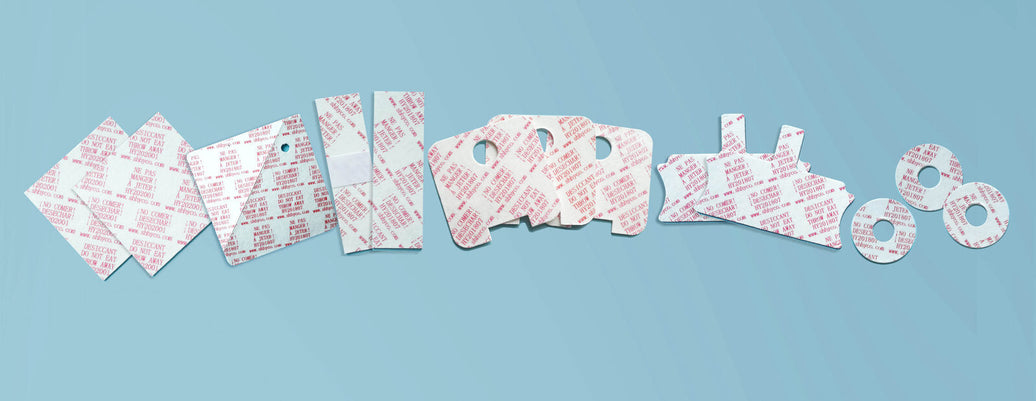
Quick answer: Flat desiccants come in three supply forms. Desiccant sheets are cut pieces placed by hand in cartons, drawers and display boxes. Desiccant paper rolls are continuous webs that you cut and place on your own line, which only pays off at high volume with in-house converting and controls. Die-cut cards are finished pieces, cut to a set shape and often printed, that drop straight into a consumer pack. For food and supplement packs, die-cut cards are usually the simplest to qualify, because cutting, cleanliness and food-contact control stay with the supplier.
Once a buyer decides a sachet is the wrong shape, the next question is which flat format to order. Sheets, rolls and cards can be made from the same material, but they move work, cost and risk to different places in your supply chain. This guide sets out where each one fits.
Three flat formats compared
| Sheets | Rolls | Die-cut cards | |
|---|---|---|---|
| Supplied as | Flat cut pieces in standard sizes | Continuous web on a core | Finished pieces cut to your outline |
| Who converts | Supplier | You, on your line | Supplier |
| Typical use | Cartons, drawers, display cases, garment boxes | High-volume lines with inline cutting | Bottles, pouches, tubs, blisters, kits |
| Possible | Needs print registration on your line | Yes, printed before cutting | |
| Main watch-out | Placement consistency | Exposure, cut-edge dust and food-contact control move to your site | Tooling for custom shapes |
Desiccant sheets
Sheets suit places where a person lays the desiccant in by hand: the bottom of a carton of footwear, the drawer of a display case, a box of wooden toys or instruments. They are simple and forgiving. The main risk is inconsistency, because a sheet that one packer places flat and another folds into a corner will not behave the same way.
Some sheets are sold as reusable for home use. A fiber desiccant can be dried in air and reused in non-food applications. A sheet that has been in a food or supplement pack should not be reused for food. See can you reuse or recharge desiccant.
Desiccant paper rolls
Rolls look attractive on a cost-per-square-metre basis. The catch is that every step a supplier normally controls now happens in your plant:
- Exposure. A roll is open on the line the whole time it runs, adsorbing moisture from the room. A roll that takes a full shift to use arrives in the last pack partly spent. See the 30-minute rule for open desiccant.
- Cut-edge dust. Cutting a fiber web can release fibers at the edge. A supplier controls this with tooling and cleaning; you will have to as well.
- Food-contact control. The cleanliness and traceability of the converted piece becomes part of your own food-safety plan. See adding desiccants to your HACCP plan.
- Placement. You need cutting, pick-and-place and inspection equipment that can handle the web reliably.
Rolls make sense for very high volumes on a line that already converts web materials. For most supplement and food brands, the qualification work outweighs the material saving. ATMOSIScience supplies Fiber Card as die-cut cards and custom shapes; if you need roll stock for a specific line, tell us the volumes and equipment and we will advise.
Die-cut cards
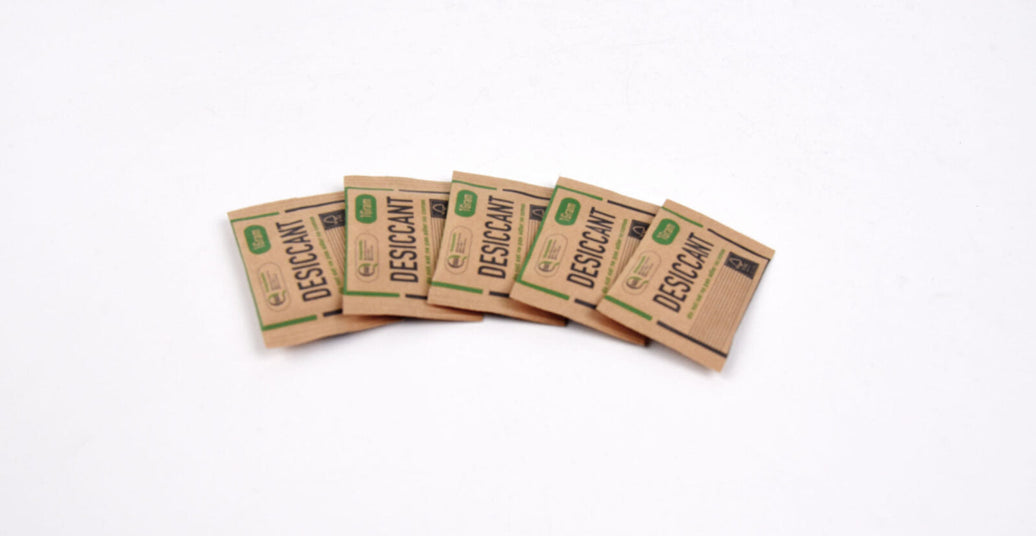
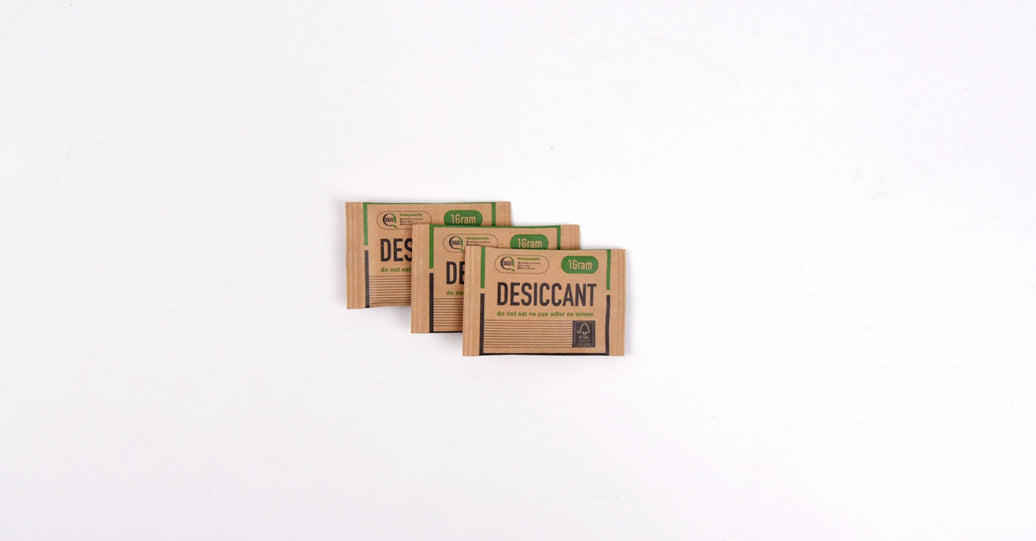
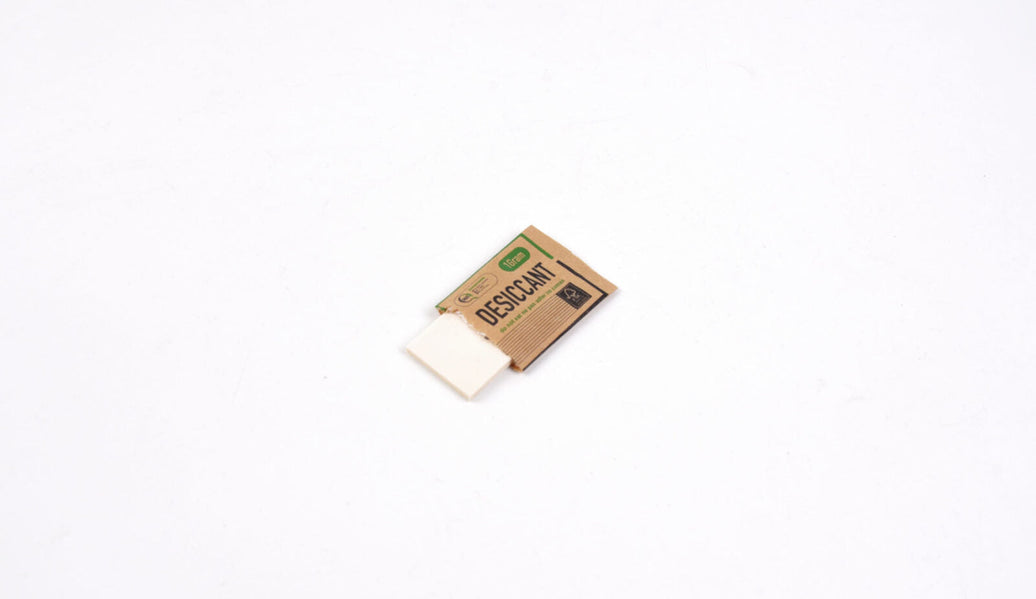
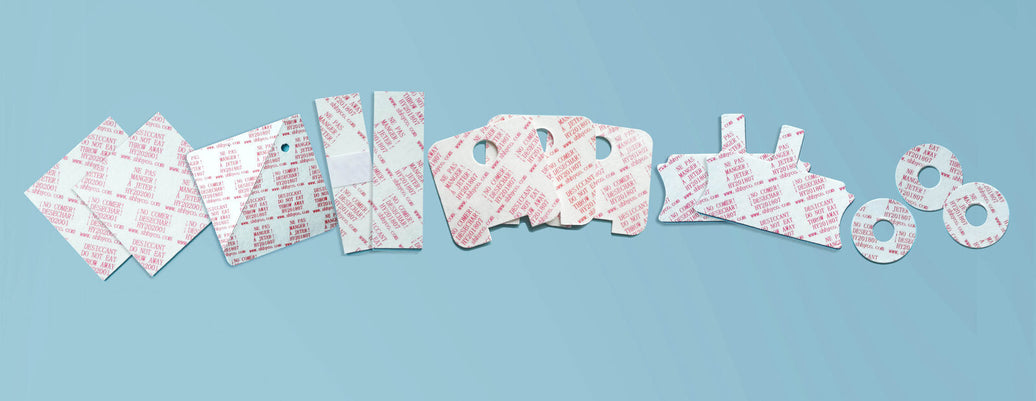
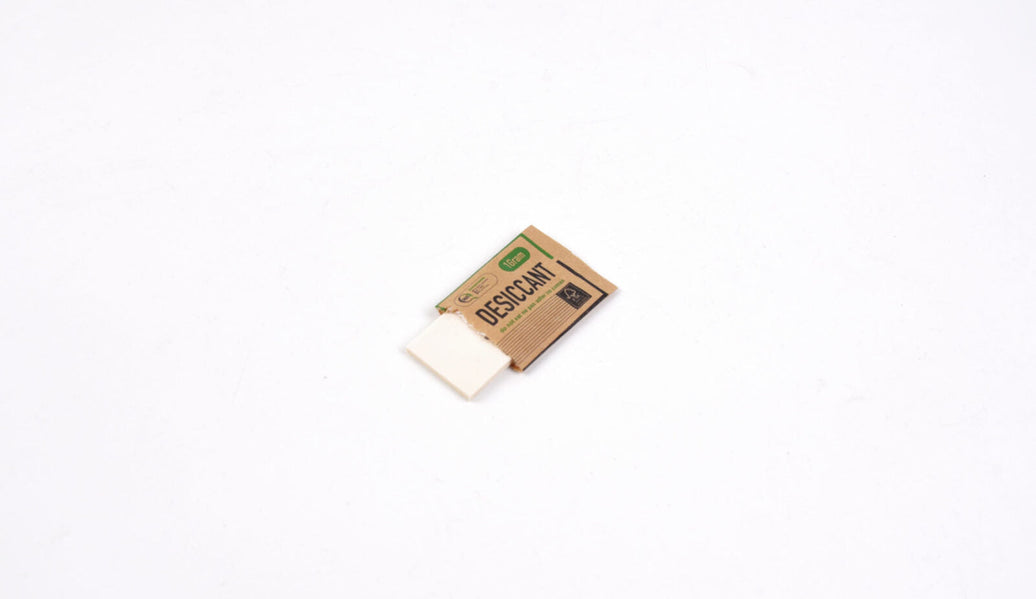
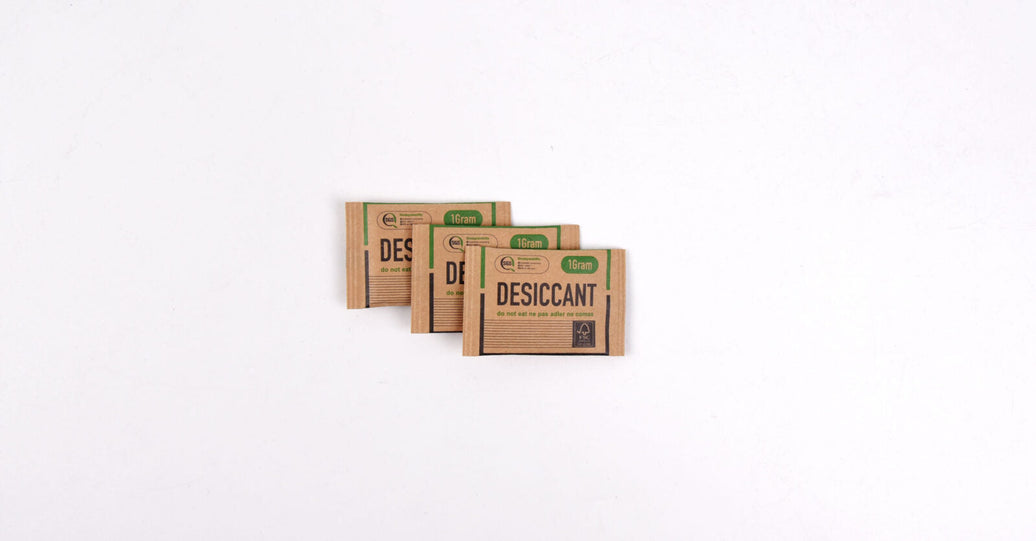
A die-cut card is cut to the exact outline of the space it fills, for example a cap finish, a pouch wall area or a blister cavity. It arrives ready to place, can be printed before cutting, and drops into a pack by hand or by machine. This is the format most consumer packs use.
Fiber Card reference sizes (1.0 mm thick)
FF-3: 25 × 12 mm, about 0.15 g, equivalent to 0.5 g silica gel
FF-6: 30 × 20 mm, about 0.35 g, equivalent to 1 g silica gel
FF-15: 60 × 25 mm, about 1.0 g, equivalent to 2.5 g silica gel
Squares, circles, discs and custom outlines are cut to order.
Construction, adsorption by humidity and documents are in the Fiber Card spec guide. If you are comparing card types, see what is a desiccant card.
What about polymer desiccant sheets and films?
Some flat desiccants are made by mixing desiccant powder into a plastic film or sheet. They can be very thin and precise and suit certain medical and electronics uses. They are plastic parts for end-of-life purposes, and their capacity depends on how much desiccant the plastic carries. A comparison with fiber is in fiber desiccant vs desiccant polymer.
Five questions that decide the format
- How many units a year? Rolls only pay back at high volume.
- Can your line cut, place and inspect a web? If not, choose sheets or cards.
- Does the desiccant touch food or supplements? If yes, keep converting with a qualified supplier unless you are ready to own it.
- Must it sit in one exact place? Cards win for caps, pouch walls and cavities.
- Does it need print? Pre-printed cards are the simplest route. See custom-printed desiccant cards.
What to put in the specification
- Outline dimensions and tolerance, or the cap finish or cavity drawing
- Thickness and mass per piece
- Adsorption at your design humidity, with temperature and test method
- Outer layer material and print requirements
- Food-contact and compostability documents for the finished construction
- Packing: moisture-barrier outer bags, and a count per bag that your line uses within its allowed open time
The last point is often missed. If a bag holds 5,000 cards and your line uses 1,000 an hour, the last cards sit open for five hours. Ask for smaller bags. The full template is in how to write a desiccant specification for an RFQ.
Frequently asked questions
Can I cut desiccant sheets to size myself?
For non-food uses, often yes. For food and supplement packs, cutting on site moves cleanliness and food-contact control to you. Most buyers find supplied die-cut pieces cheaper once qualification is counted.
Do desiccant sheets work in an open drawer or cabinet?
Not for long. A desiccant works in a closed space. In an open or frequently opened space, it saturates quickly from room air.
How should I store unused desiccant sheets or cards?
In the sealed moisture-barrier bag they came in, resealed straight after use, in a cool, dry place. See does desiccant expire.
What thickness should I choose?
Start with the space available, then check that the mass at that thickness covers your moisture load. See desiccant thickness and packaging design.
Is a desiccant sheet the same as a paper desiccant?
Often, but not always. Some sheets are paper with the adsorbent built in; others are polymer films. See what a paper desiccant is.
Tell us the format you need
Sheets, cards or a custom shape: send ATMOSIScience the space, volumes and line setup, and we will recommend a format and send samples.
Prefer email? info@atmosiscience.com