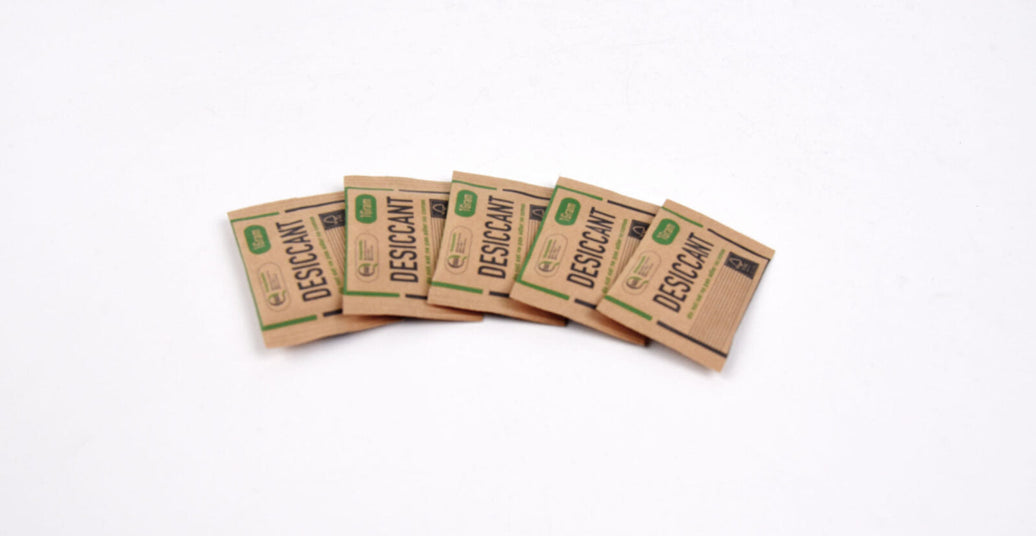
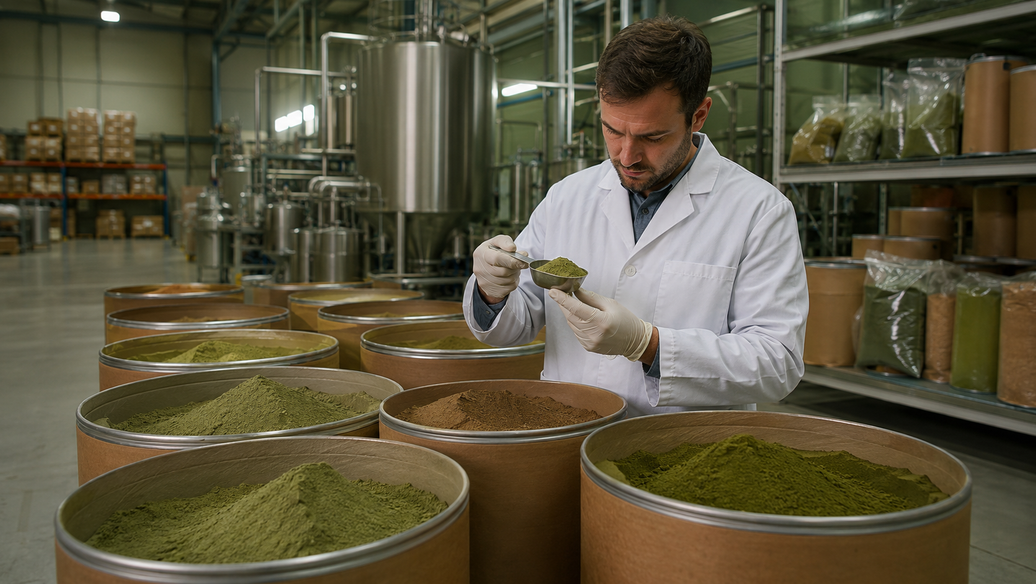
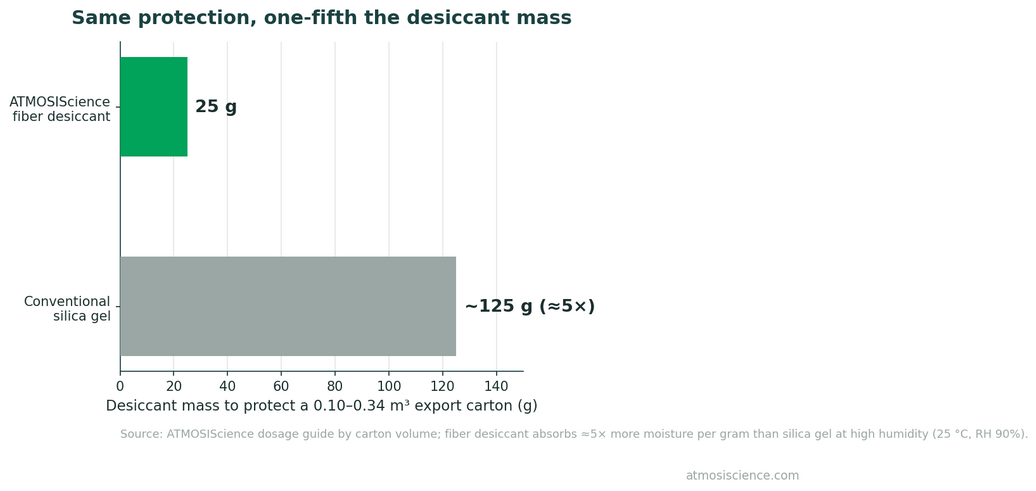
Quick answer: Desiccant does not chemically expire — it saturates. An unopened, well-sealed master bag keeps sachets serviceable for years; an opened master bag starts spending capacity on warehouse air the moment it is opened. The QA question is never the date on the box, it is the moisture already on board — verified by weight gain against the loss-on-drying (LOD) spec on the COA.
Warehouses everywhere hold pallets of desiccant bought eighteen months ago, and someone eventually asks whether it is still good. The concept most teams are missing: expiry is the wrong mental model. A desiccant is a sponge with a rated capacity. Time does not use that capacity up — exposure does.
Expiry vs. saturation
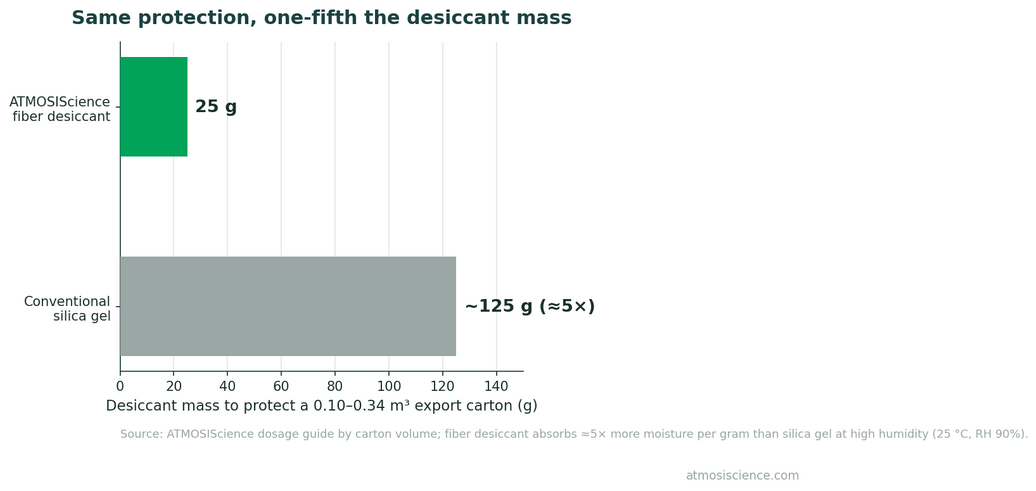
Active ingredients degrade; adsorbents fill. Silica, clay and fiber desiccants all keep their mechanism indefinitely under dry storage — what changes with careless storage is how much of the rated capacity is already consumed before the sachet ever enters a customer package. A sachet that spent a humid summer in an opened master bag may arrive at the line half-full: it will still “work,” just for a fraction of the calculated service life covered in the service-life math.
Pre-use storage rules that protect capacity
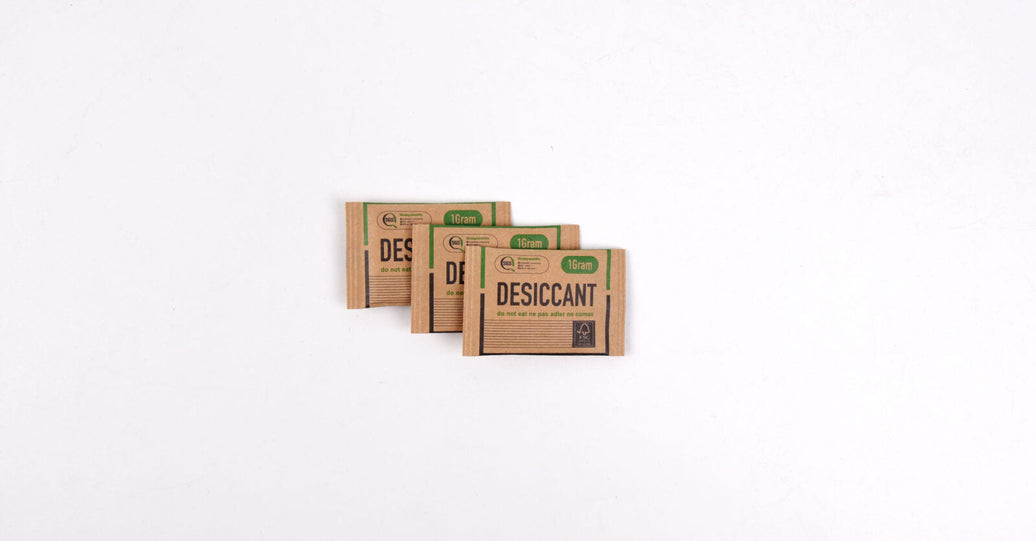
Keep master bags sealed until needed. The barrier bag the sachets ship in is the primary defense — treat opening it as starting a clock.
Reseal fast and fully. Once opened, fold and clip or re-tape the liner after every draw. A loosely folded liner in a humid plant can cost a measurable share of capacity within days.
Draw down in FIFO order, and size withdrawals to a shift, not a week — sachets staged open beside the filler are quietly pre-spending the customer's protection.
Store cool and dry. Not because heat “spoils” the desiccant, but because hot humid air carries more water into every gap in the packaging.
Keep the certificate with the lot. The COA ties the LOD baseline to the batch — without it, verification below has no reference point. What each COA line means is decoded in the COA reading guide.

How to verify stored stock is still good
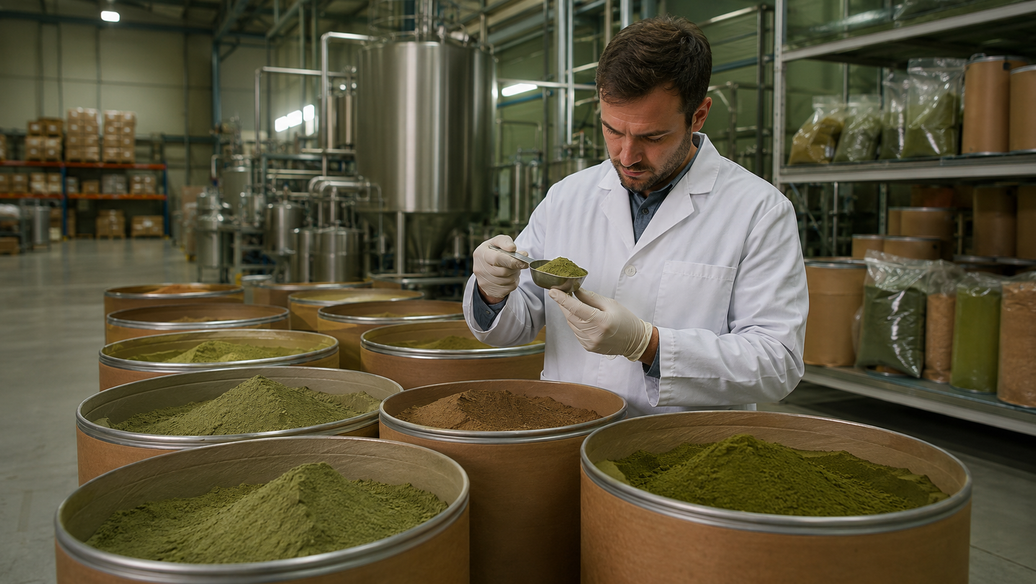
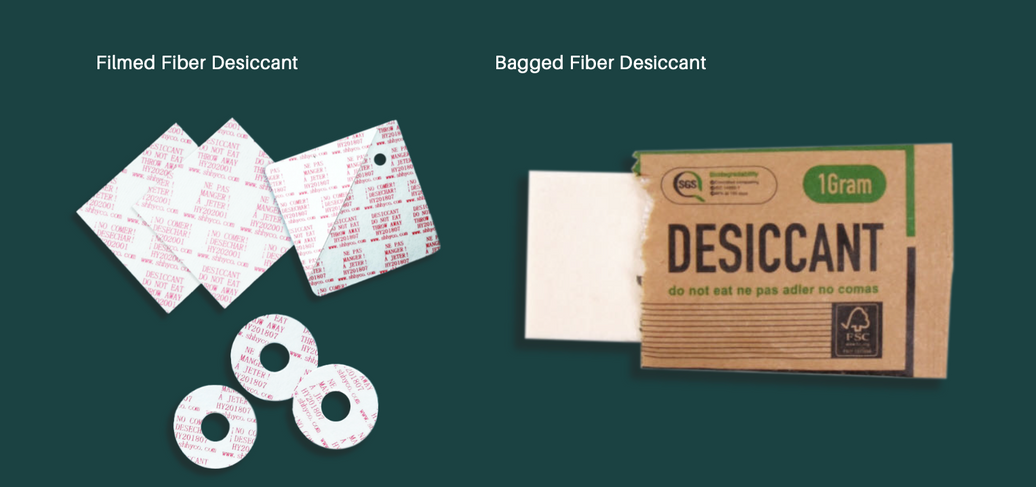
1. Weight check. Weigh a sample of sachets and compare against the nominal unit weight on the spec sheet. Meaningful weight gain is moisture already adsorbed. ATMOSIScience fiber desiccant ships with LOD below 10% — a sample running far above its baseline weight has been feeding on warehouse air.
2. LOD test if equipped. QA labs with a moisture analyzer can run loss-on-drying directly and compare against the COA value for the lot.
3. Indicator-card spot check. Seal a suspect sachet in a small airtight container with a humidity indicator card for a day: a healthy desiccant pulls the enclosed air visibly dry; a saturated one leaves the card unchanged.
4. When in doubt on a regulated line, replace. Desiccant is one of the cheapest components in the bill of materials — accepting degraded protection to save it is the false economy quantified in the caked-batch ROI worksheet.
What about printed expiry dates?
Some suppliers print a “best before” date as shorthand for “we guarantee as-shipped capacity this long in unopened packaging.” Read it as a packaging-integrity warranty, not a chemical countdown. The buying checklist — what the master bag is made of, resealability, COA per lot — belongs in supplier qualification, covered in the qualification document pack.
FAQ
Does silica gel expire?
No. It saturates with exposure and can sit serviceable for years in sealed packaging. Verify by weight or LOD, not by date.
How long can unopened desiccant be stored?
In an intact high-barrier master bag, years — confirm as-shipped LOD on the COA at receipt and store the bags off the floor, cool and dry.
Do indicator sachets (color-changing) expire?
The indicator dye reads current moisture state; if the color already reads humid in storage, that stock has been exposed — the dye is telling you about the past, not failing.
Is a desiccant that gained weight completely useless?
Not completely — it holds whatever capacity remains. But since remaining capacity is unknown per piece, regulated and audited lines replace rather than estimate.
Order current-production stock with the COA attached
Every ATMOSIScience lot ships with its certificate — LOD baseline, adsorption spec and food-contact documentation — so incoming QA has the reference numbers on day one.