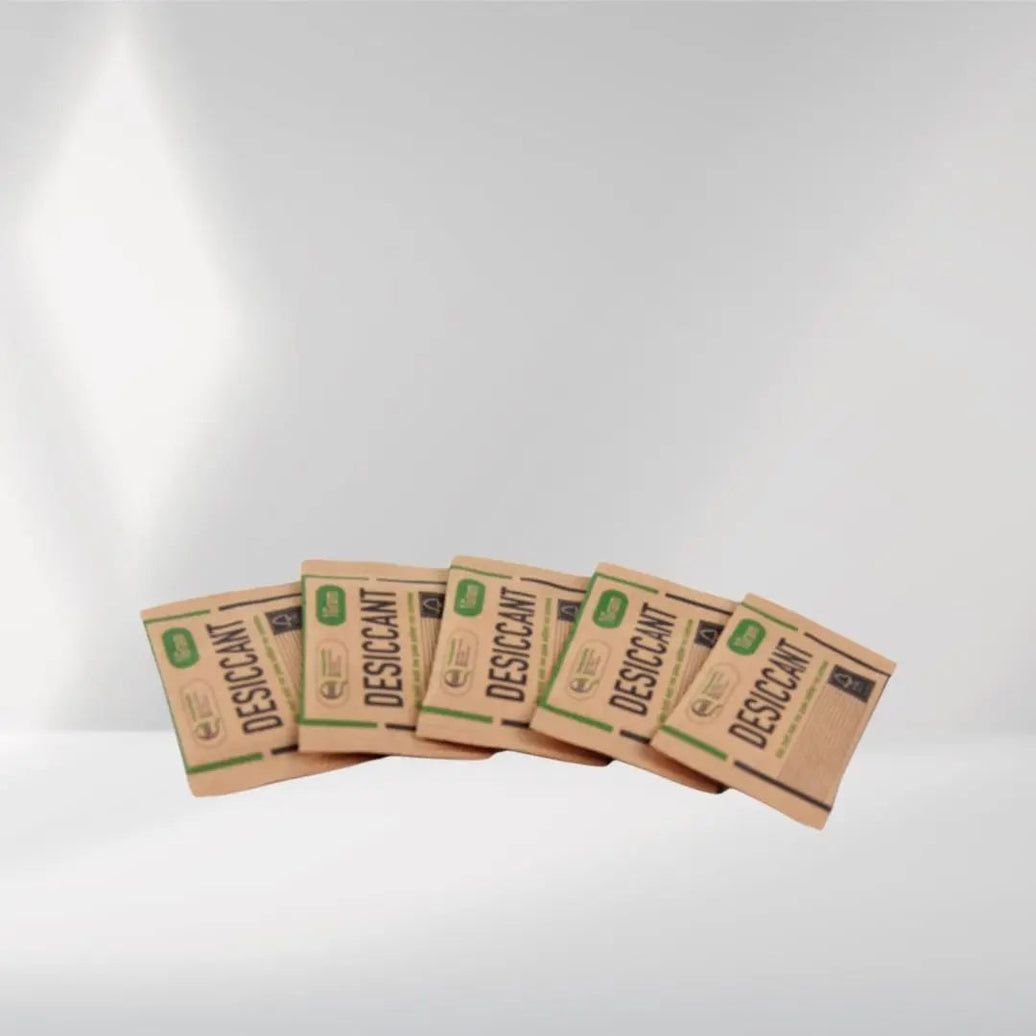
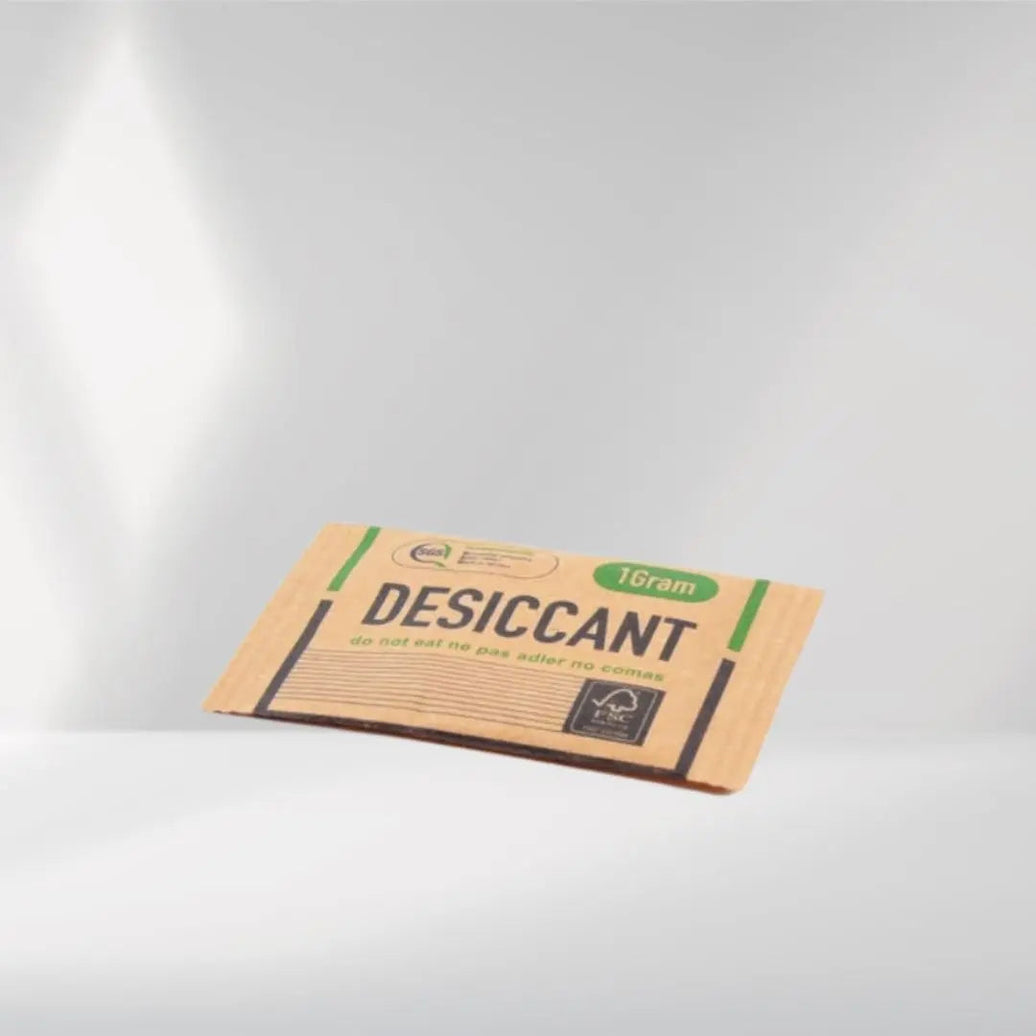
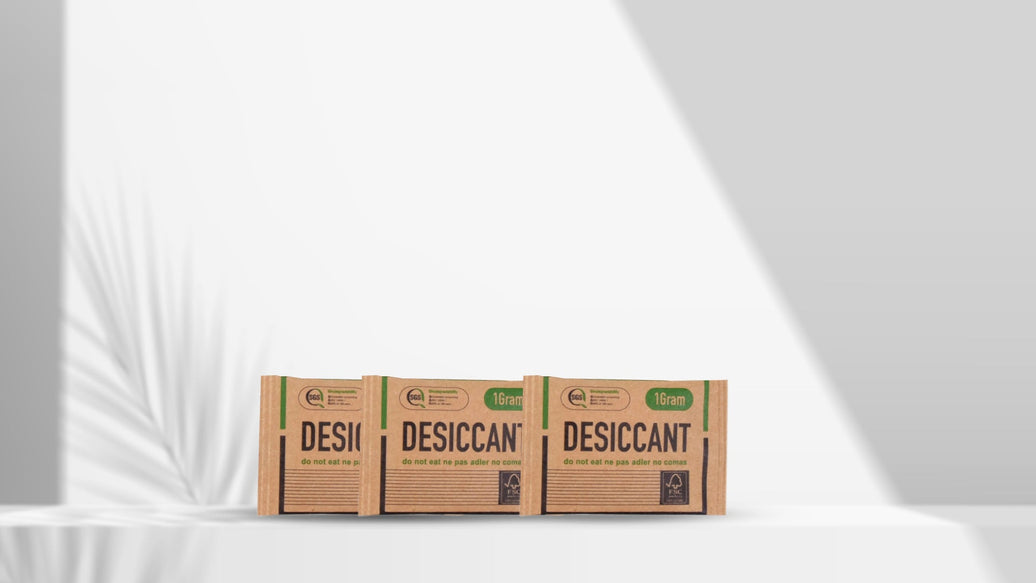
Quick answer: A desiccant certificate of analysis (COA) should tie a specific lot to measured results: identity, loss on drying, adsorption performance at stated humidity conditions, appearance and packaging integrity. If the COA shows only pass/fail with no numbers, no test conditions, or no lot number, that's not a COA — it's a promise. Buyers audit the document because the desiccant is often the least-qualified item inside an otherwise fully qualified package.
Purchasing and QA teams at powder manufacturers increasingly ask desiccant suppliers for proof, not promises. The COA is where proof lives — when it's written properly.
The line items that matter
1. Lot number and traceability
The COA must reference the lot on the cartons received. No lot linkage means no recall path and no way to connect a field failure to production data. This is the first thing an auditor checks and the most common gap in commodity desiccant paperwork.
2. Loss on drying (LOD)
LOD tells you how much moisture the desiccant already carries — capacity spent before the packet ever meets your product. The ATMOSIScience fiber desiccant specification holds LOD below 10%. A missing LOD line means the supplier isn't measuring (or isn't reporting) how fresh the material is.
3. Adsorption performance — with test conditions
Capacity claims mean nothing without conditions. A proper spec states performance by humidity band; for reference, ATMOSIScience fiber desiccant specifies moisture adsorption above 10% of its own weight at RH 20%, above 35% at RH 50%, and above 70% at RH 90%. If a COA reports a single "absorption %" with no RH or temperature stated, treat the number as unverifiable — the full logic is in the spec-sheet comparison guide.

4. Appearance and packet integrity
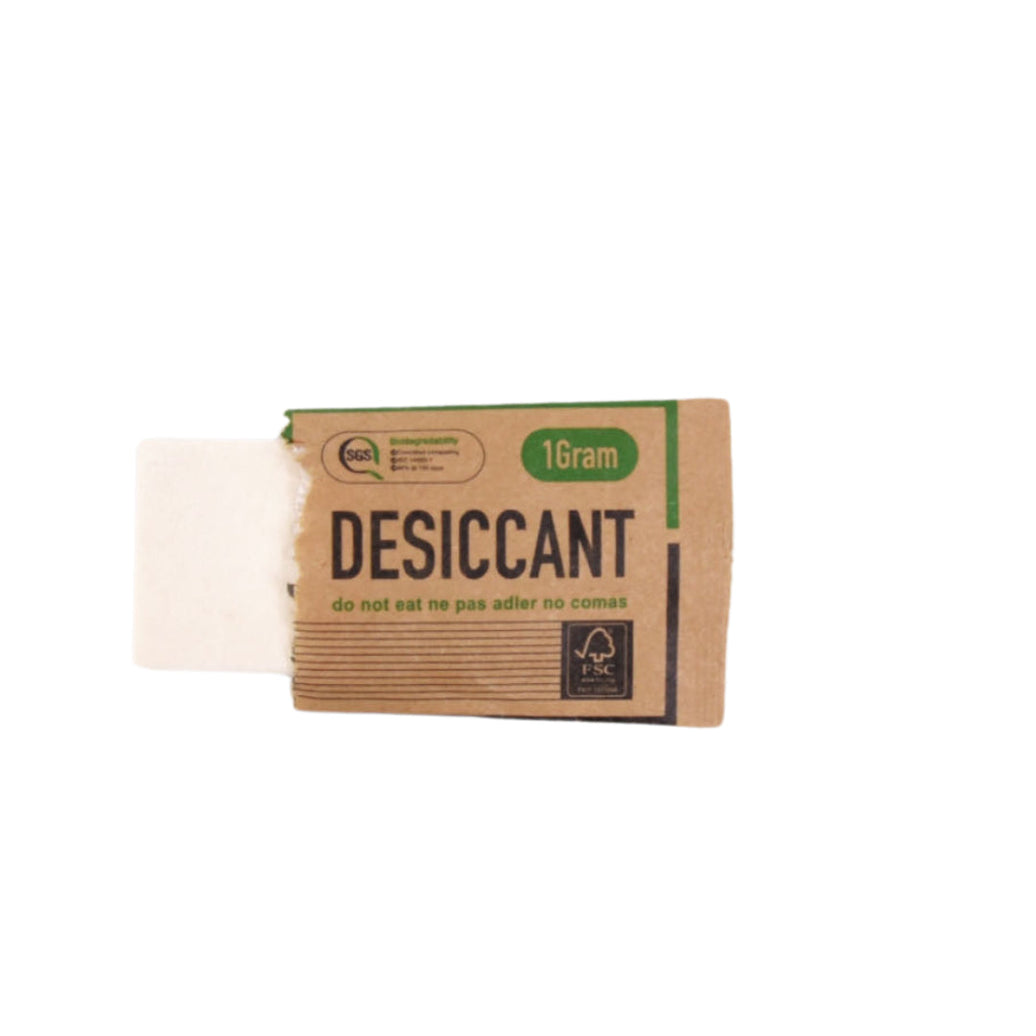
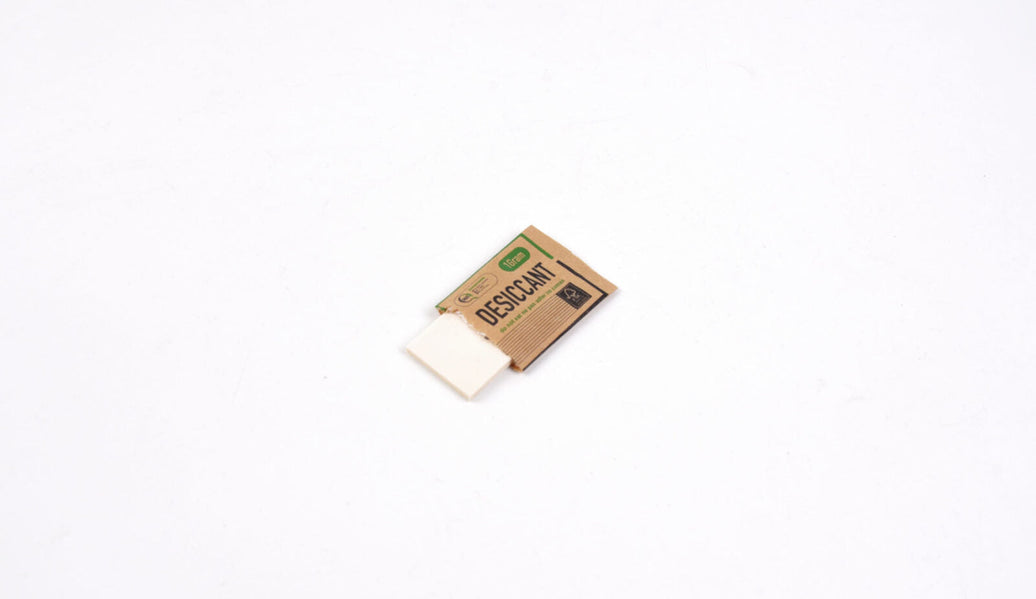
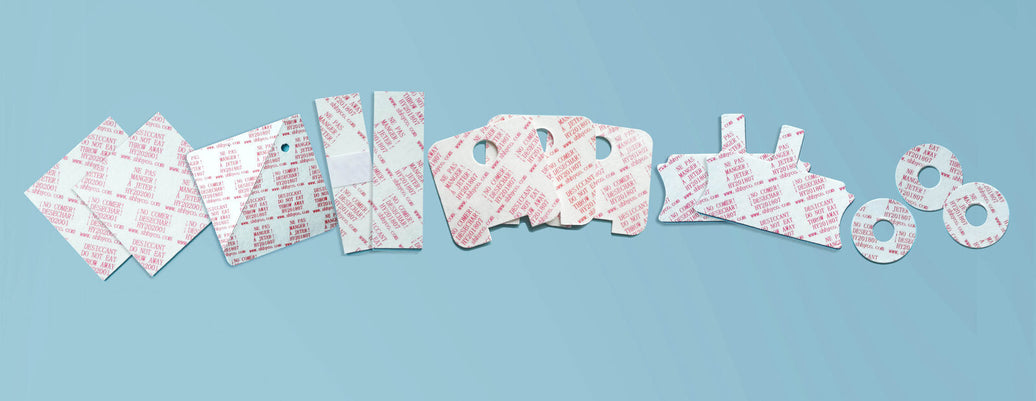
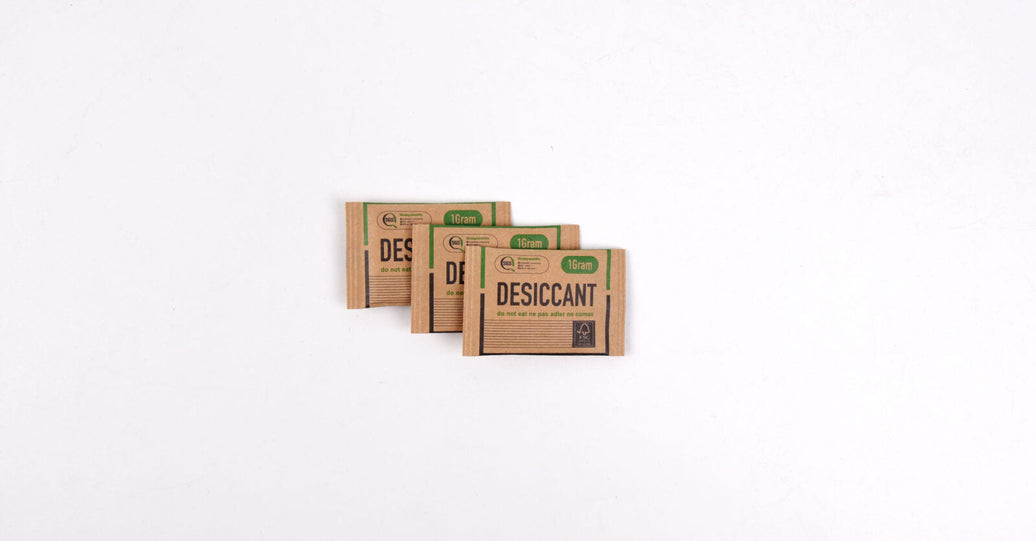
Confirms the lot passed visual checks: sealed seams, no leakage, no staining. For powder plants this matters doubly — a leaking packet is a foreign-matter incident waiting for a sieve. Dust-free construction is a design property (bonded fiber substrate, sealed pouch), but the COA verifies the lot met it.
5. Safety and compliance references
Depending on the application: food-contact statement for in-pack use, ROHS reference for electronics programs, compostability standard reference (ASTM D6400 / EN 13432 for pouch films) where end-of-life claims are made. These usually point to standing documents rather than per-lot tests — which is fine, as long as the standing documents exist and are current. The full stack is described in the supplier qualification pack.
What a missing line tells you
- No lot number: no traceability system behind the paperwork.
- No LOD: no control over shipping/storage freshness; expect seasonal performance drift.
- No test conditions: marketing numbers, not lab numbers.
- No signature/date: the document wasn't issued by a QC function.
One missing item is a follow-up question. Three missing items is a supplier-selection answer.
How to verify a COA is real
Ask for the COA of the lot you actually received — not a "typical" COA — and then spot-check it: weigh incoming packets against nominal mass, and run a simple gain-in-weight test at a controlled humidity against the claimed adsorption band. The worst-case evaluation protocol gives a repeatable procedure a QA tech can run in-house.
FAQ
Is a COA the same as a spec sheet?
No. The spec sheet states what the product should do; the COA states what a specific lot measured. Qualification needs both, plus SDS and compliance declarations.
Should every shipment include a COA?
For food, pharma and audited programs — yes, per lot. ATMOSIScience provides lot documentation with commercial shipments on request, alongside the spec sheet and compliance statements.
What if the supplier can't provide one?
Then the desiccant is the weakest document in your device history record or food-safety file. Auditors find it because it's easy to find; fixing it after a finding costs more than qualifying a documented supplier now.
Get the document pack before the audit asks
Request the ATMOSIScience spec sheet, compliance statements and sample lot documentation — the reviewable stack, same day.