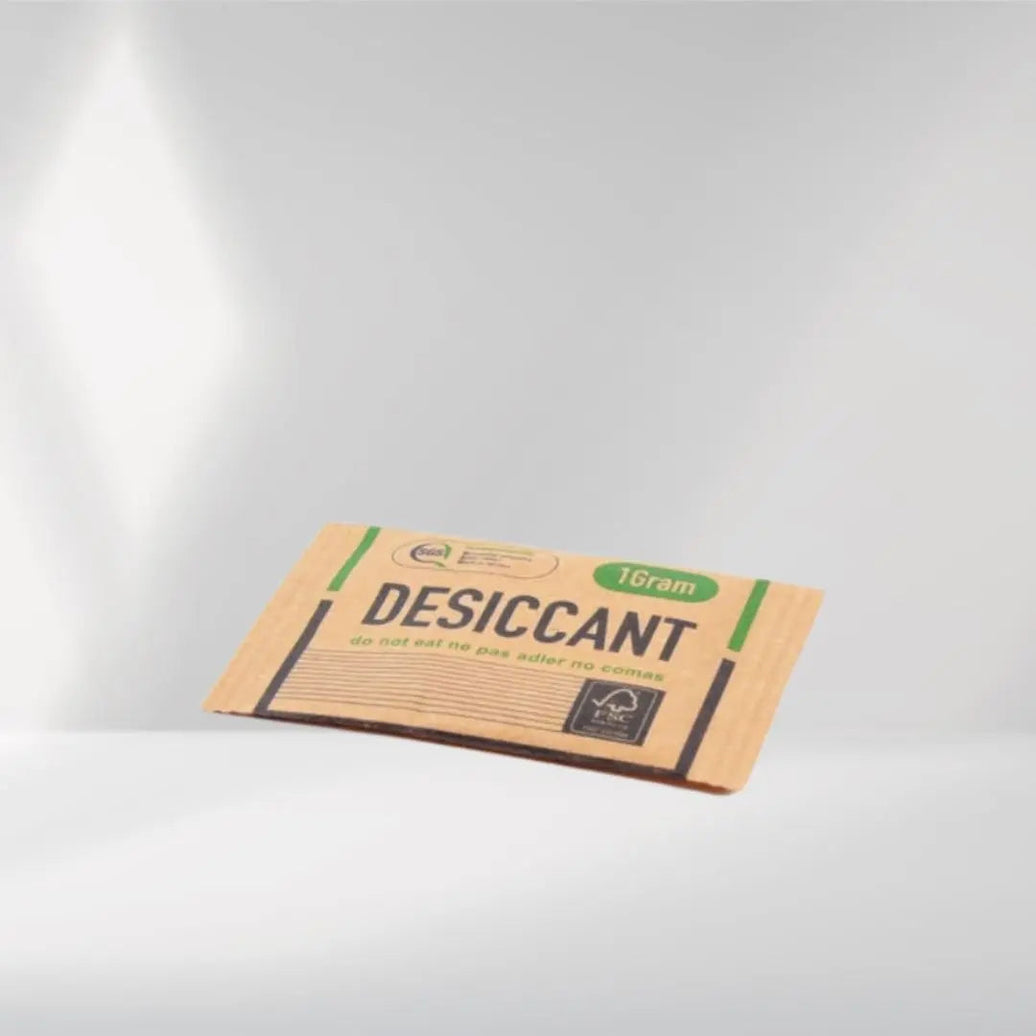
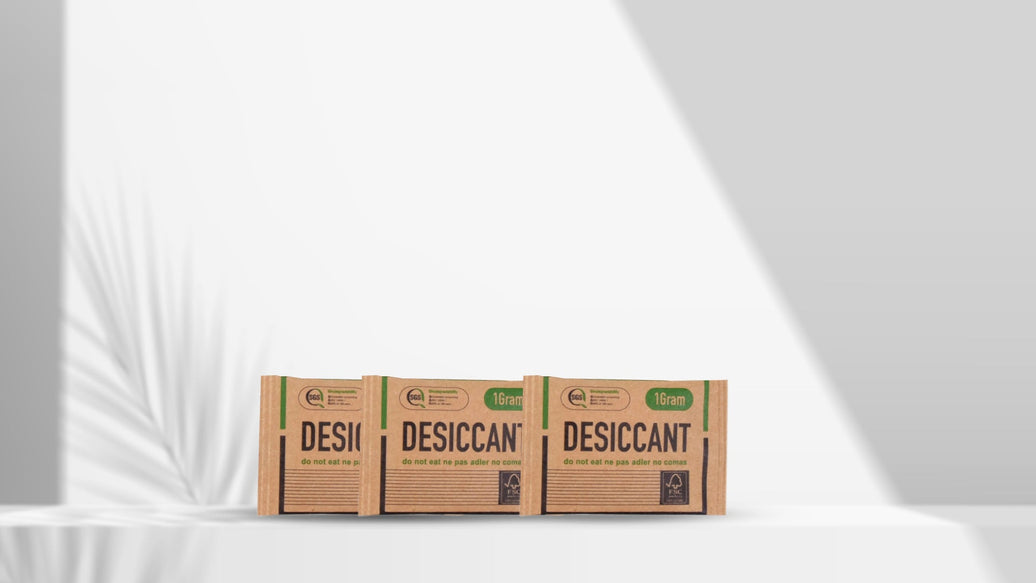
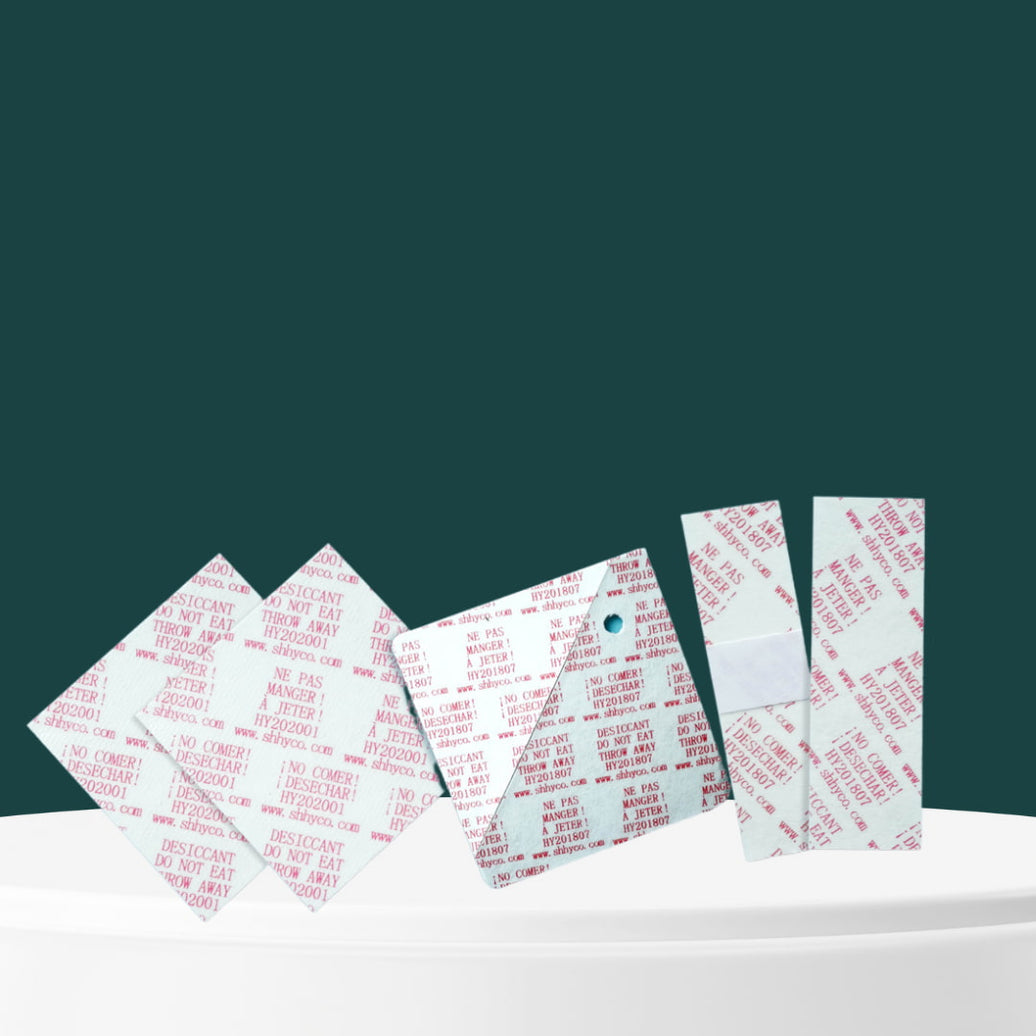
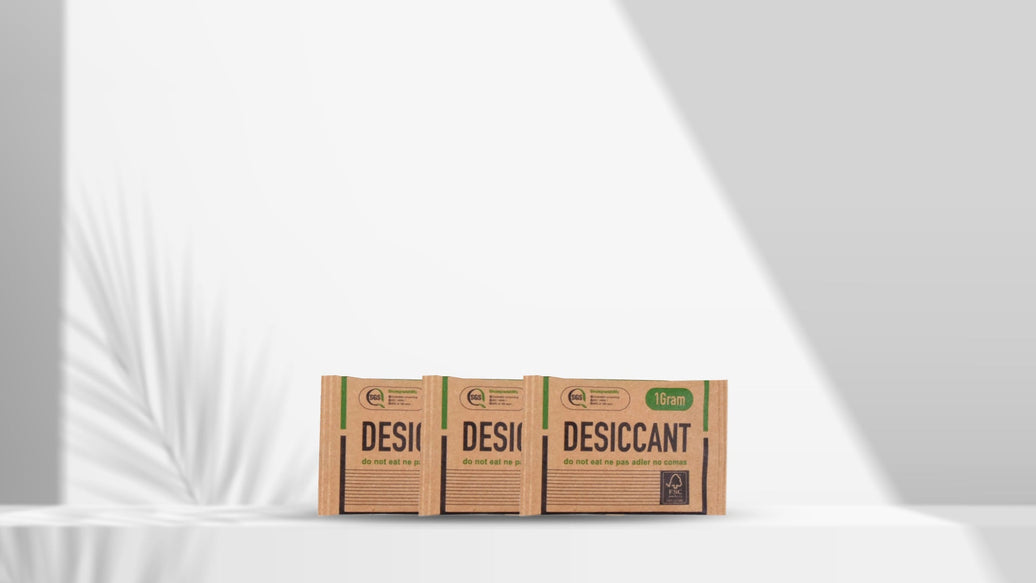
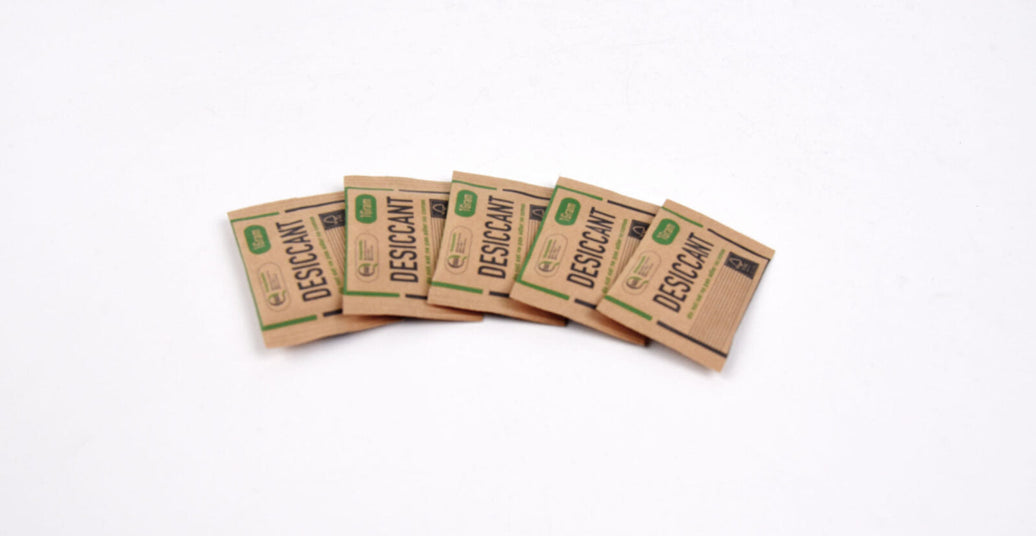
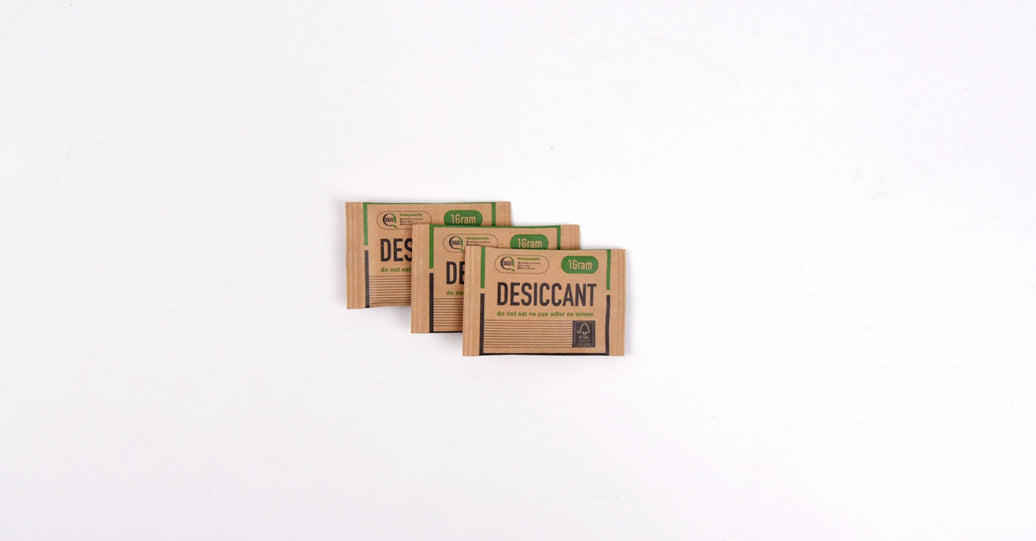
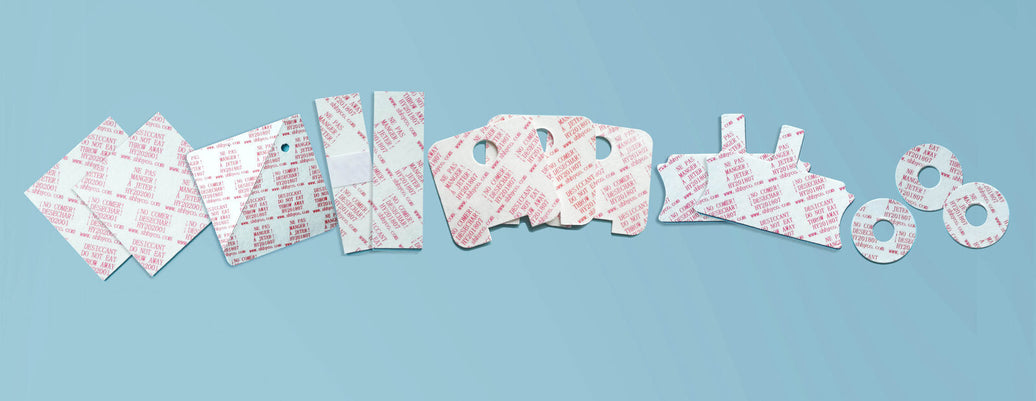
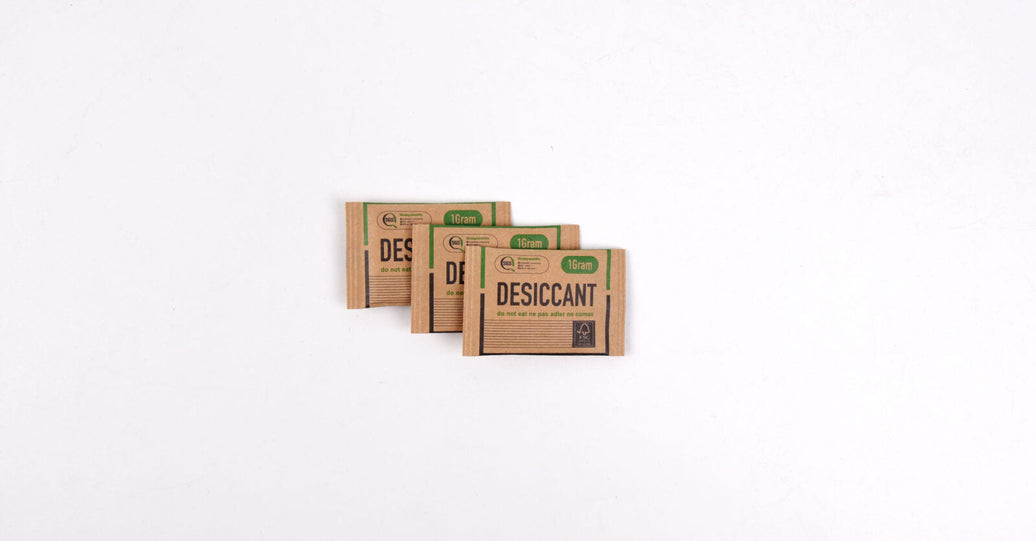
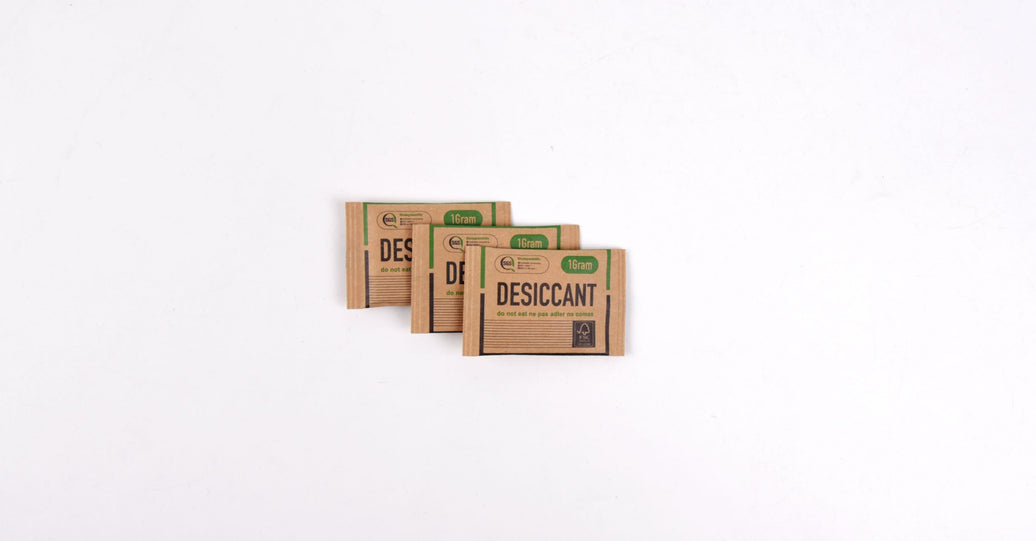
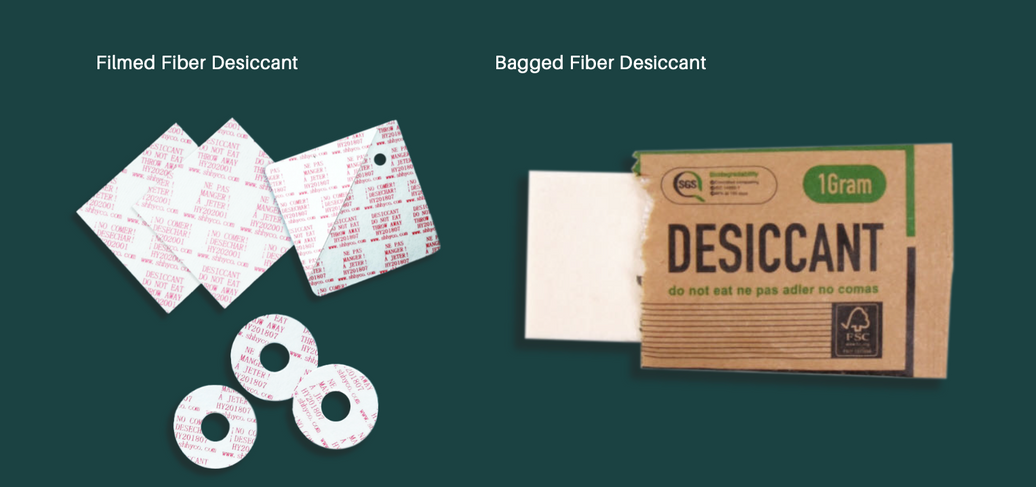
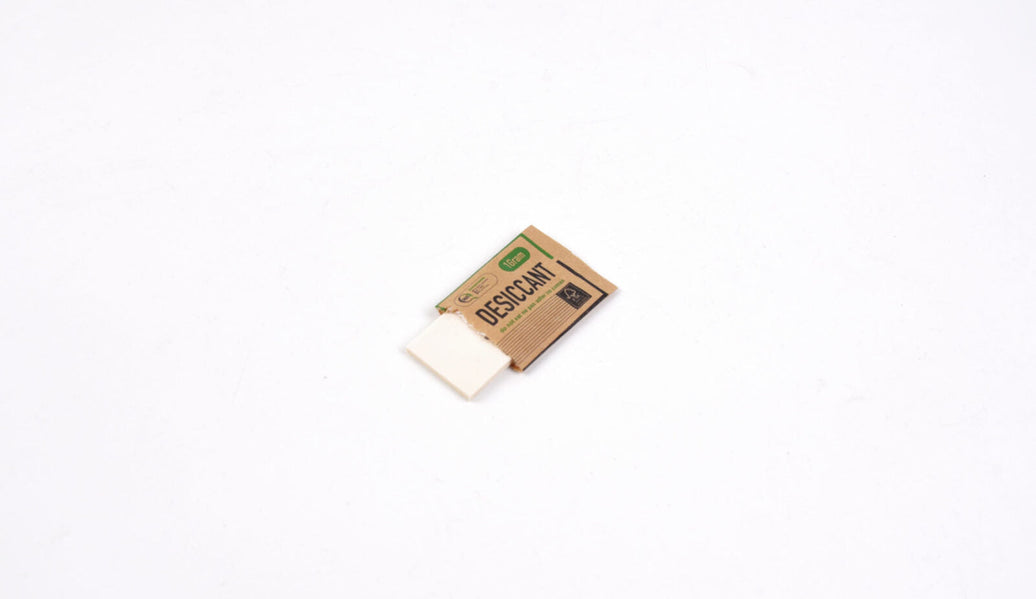
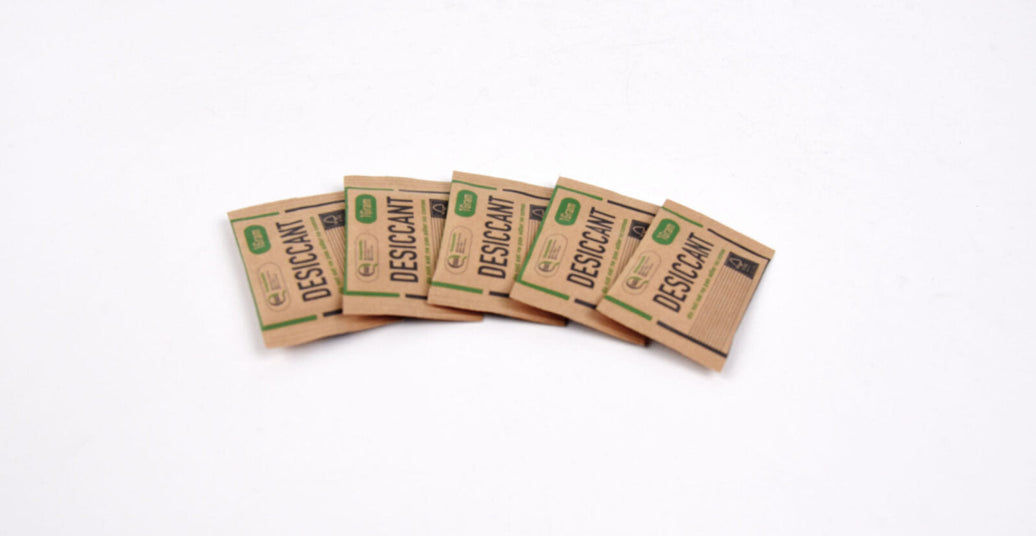
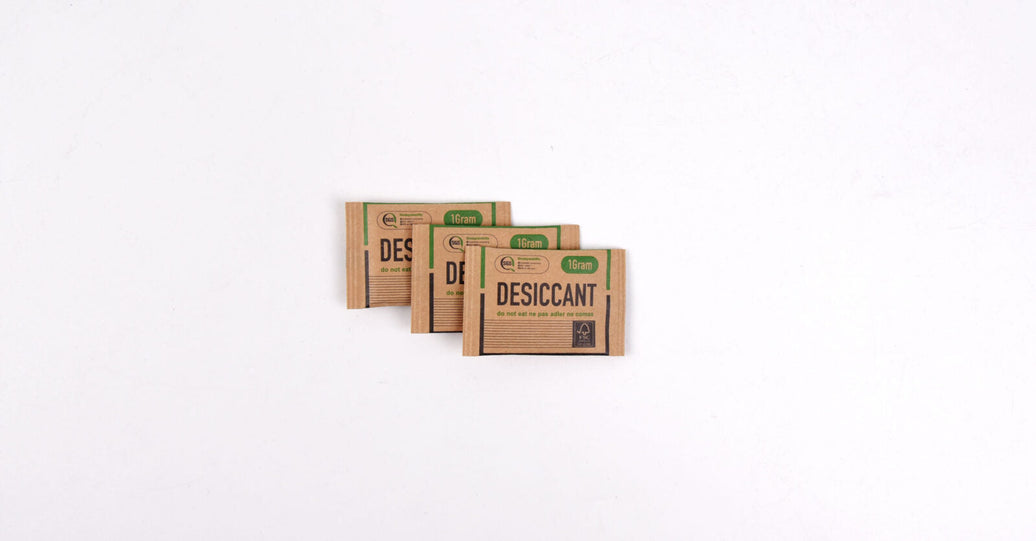
Quick answer: The right desiccant format is decided by four things: package geometry, filling method, available headspace, and whether the desiccant should hide or be seen. Sachets suit cartons, drums and roomy pouches. The thin, die-cut, printable Fiber Card suits slim packs, tubs and automated lines. Cap inserts suit bottles with little headspace. Canisters are mostly chosen to contain loose beads, and a bound fiber sachet removes that reason at the source.
A common failure is not the wrong desiccant. It is the right desiccant in the wrong shape: a bulky canister rattling in a slim pouch, a loose sachet jamming a dosing scoop, a card too floppy to feed an automated line. Choosing a desiccant format is a short decision tree, and it is worth walking before you order.
Question 1: what is the package geometry?
Cartons, drums and gusseted bags have volume to spare, so a sachet drops in without trouble. Slim stick packs, foil kit pouches and shallow trays do not; a flat card lies against the wall and disappears. Rigid bottles have almost no spare headspace, which points to a cap insert. Start here, because geometry rules out options fast.
Question 2: manual or automated filling?
Hand-packed lines can place almost any format. High-speed lines are the constraint: the desiccant must feed reliably, and card stiffness decides line speed. A rigid Fiber Card feeds where a floppy sachet stalls. Details are in the co-packer insertion guide and dispenser compatibility.
Question 3: how much headspace, and how much moisture?
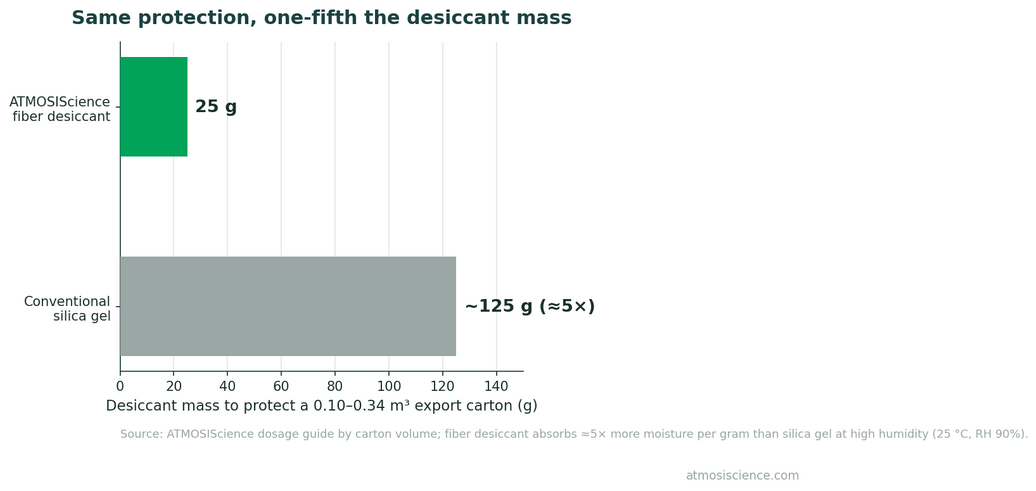
Dose comes first (method in the dosage guide), then the format has to carry that dose in the space available. A higher-capacity fiber unit shrinks the footprint, which matters when headspace is tight. For a large dose in a big carton, several sachets give more even air contact than one oversized unit. Reclosable packs need extra margin, because every opening lets in fresh humid air.
Question 4: hidden or visible?
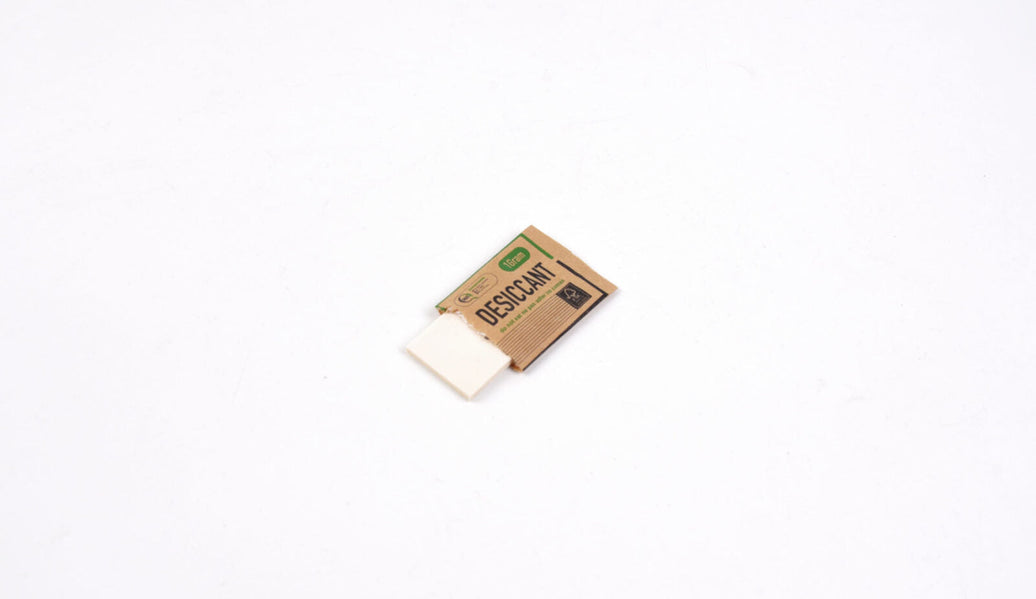
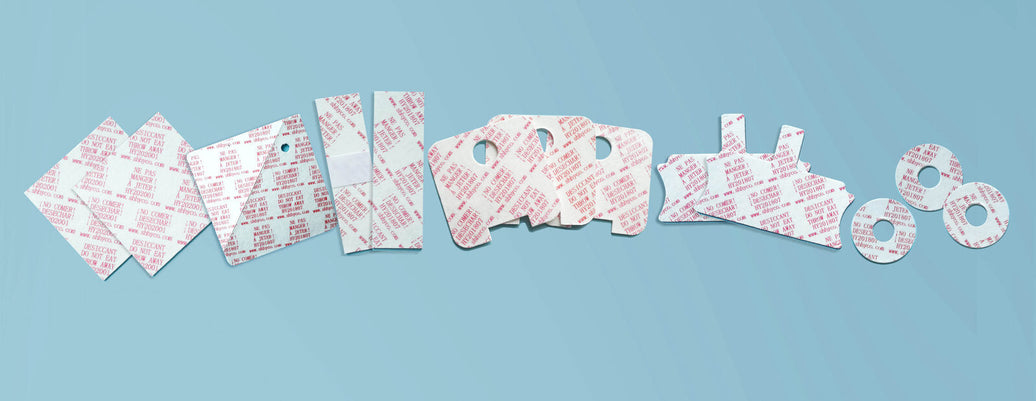
A cap insert hides inside the closure at no headspace cost (see bottle cap inserts). A Fiber Card is paper-wrapped, rigid and printable, so it can carry your logo instead of a generic warning (see custom-printed desiccant cards).

Canister or sachet: the real question
Ask a packaging engineer why they want a canister and the answer is usually one of three: beads are getting into the product, the line is dusty, or a rigid unit is easier to place in a bottle. Only the third is a true format need. The first two come from loose-fill desiccant, and they can be designed out.
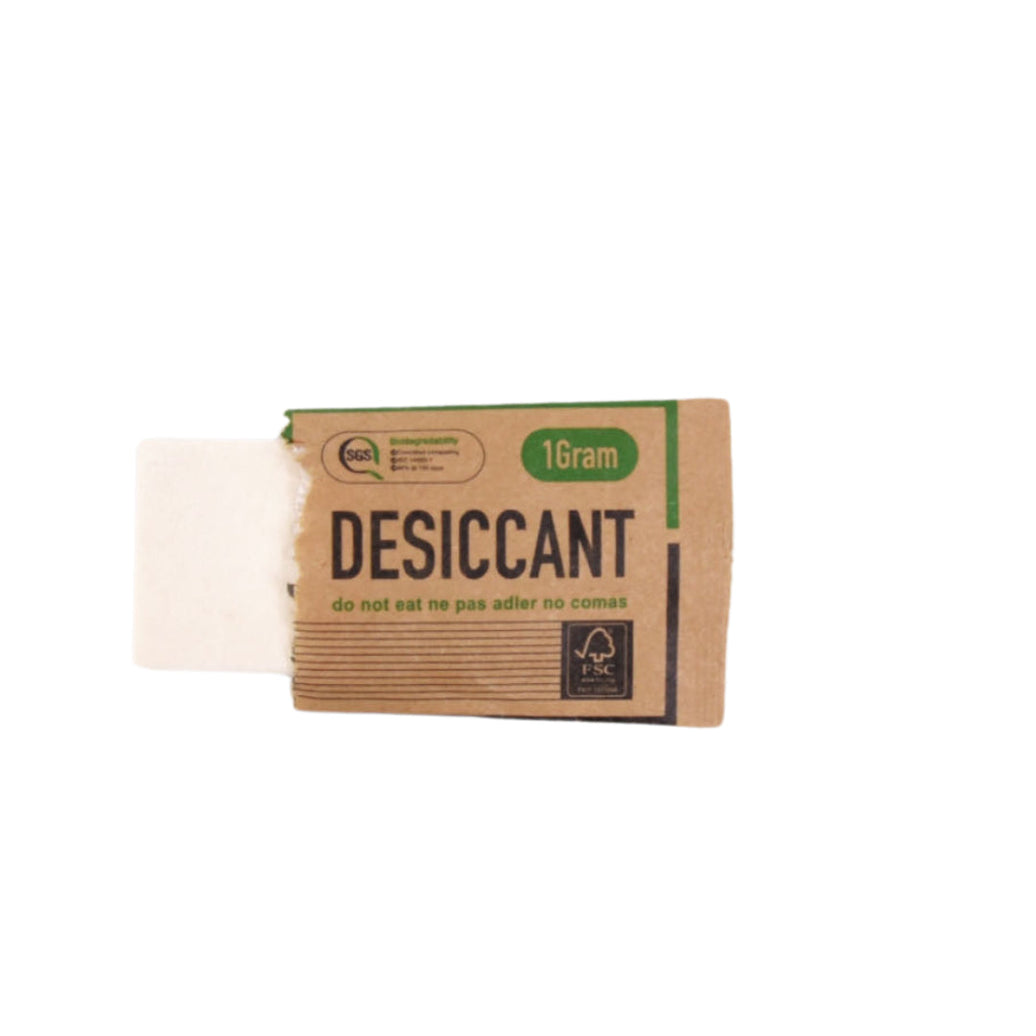
- Dust and foreign material. A loose-fill sachet can shed: beads abrade in transit and a punctured pouch empties into the product. A canister contains that risk behind a rigid wall. A bound fiber pad removes it, because there are no loose particles to escape. Failure modes are in loose-fill desiccant risks.
- Product contact. In a bottle of powder or capsules, the desiccant touches product, so the wrap or canister wall needs food-contact documentation. See direct vs indirect food contact. The do-not-eat marking follows the unit into the pack (desiccant safety and warnings).
- Headspace cost. A canister is the most expensive format in volume. In a slim bottle it can force a bigger container. A card against the cap or wall costs almost nothing.
- Consumer experience. A canister rattles and looks industrial. A printed card looks intentional.

Formats at a glance
| Format | Construction | Best for | Watch-outs |
|---|---|---|---|
| Canister | Rigid tube, vented cap, loose beads | Validated pharma bottles, narrow necks, heavy vibration | Bulky; needs its own hopper |
| Loose-fill sachet | Pouch of beads or granules | Cartons and shippers | Can shed; floppy on automated lines |
| Bound fiber sachet | Solid fiber pad in a wrap, nothing loose | Food, supplements, pharma, electronics | One-way; size for full shelf life |
| Fiber Card | Rigid paper desiccant, about 1 mm, die-cut, printable | Tubs, slim pouches, kits, automated lines, branding | Lower maximum dose per piece |
| Cap insert | Card or pad fitted inside the closure | Bottles with little headspace | Dose limited by cap size |
Fiber Card reference sizes
| Size | Dimensions | Weight | Replaces about |
|---|---|---|---|
| FF-3 | 25 x 12 mm | 0.15 g | 0.5 g silica gel |
| FF-6 | 30 x 20 mm | 0.35 g | 1 g silica gel |
| FF-15 | 60 x 25 mm | 1.0 g | 2.5 g silica gel |
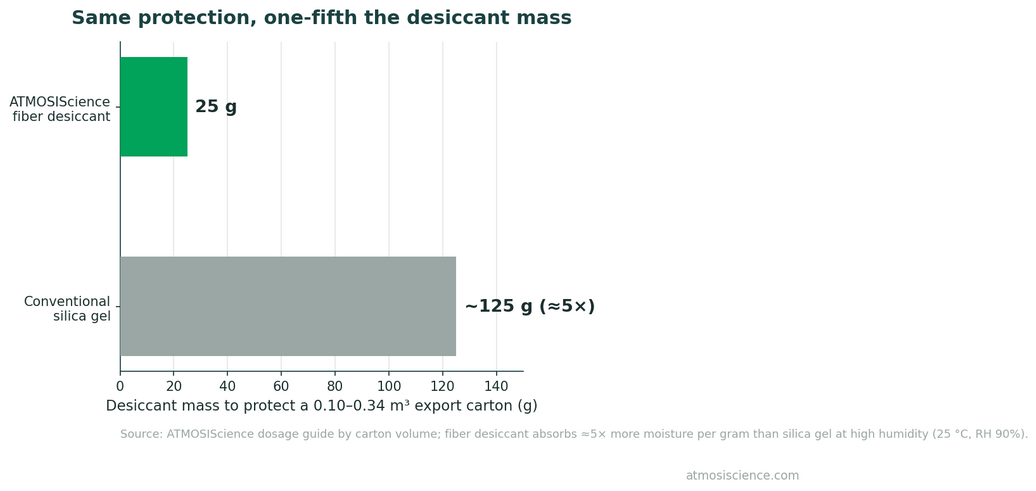
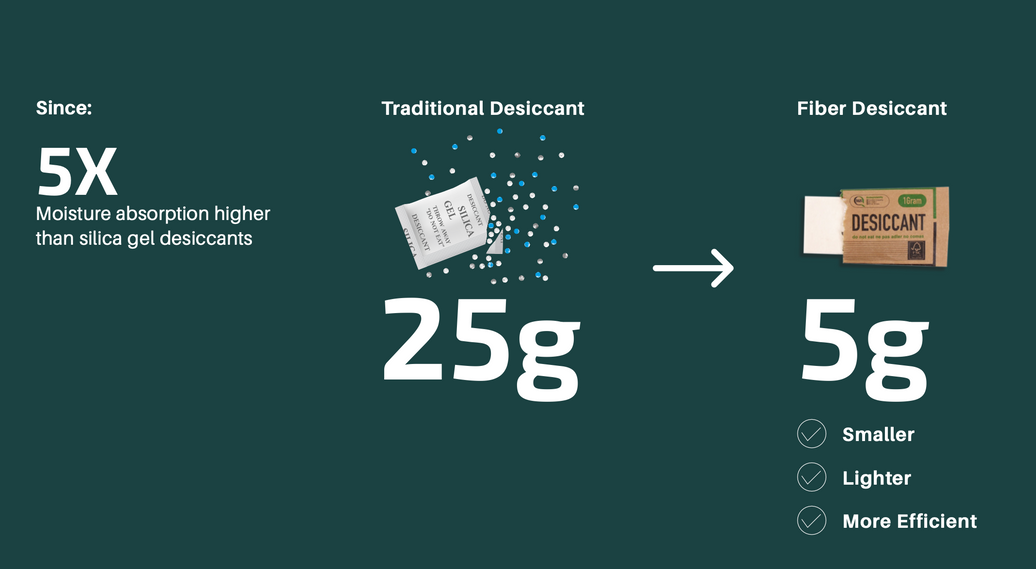
The fiber in both cards and sachets holds over 70% of its own weight at 90% RH, about 2.3 times silica gel. More on the card in what paper desiccant is.
How to choose
- Canister when a rigid body is truly required: a narrow neck, an existing validated pharma format, or heavy vibration with an abrasive product.
- Bound fiber sachet when dust or foreign material drove the question, or for bulk insertion into cartons and shippers.
- Fiber Card when headspace is tight, the pack is thin, the line is automated, or the surface should carry print.
- Cap insert when the product is in a bottle and every millimeter of fill counts.
FAQ
Is a Fiber Card weaker than a sachet?
No. Capacity is set by the fiber mass, not the shape. A card trades some maximum dose per piece for stiffness, printability and a slim profile.
What happened to the film card?
Film card and film desiccant were earlier names for the same format. Fiber Card is the current name.
Will a canister stop dust and line contamination?
It contains loose fill, so it reduces the consequences. It does not remove the loose fill. A bound fiber pad removes it entirely.
Can one product use two formats?
Yes. A card in the closure for the retail unit plus a larger sachet in the shipper is a normal setup, each sized for its own moisture load.
Does changing format change the documentation?
Partly. Documents for the fiber material carry across formats, but the wrap changes. A paper wrap and a Tyvek wrap have different food-contact and compostability files, so check the documents for the exact format (see sachet wrapper materials).
Which format is cheapest?
Per piece, a plain sachet. Per unit of protection, the answer shifts: a higher-capacity material needs fewer grams, which cuts freight and storage. Silica gel equivalency puts formats on the same basis.
Documents
ATMOSIScience fiber desiccant: SGS ISO 9001 certificate (CN05/31171), SGS compostability testing to EN 13432 and ASTM D6400, ISO 14067 carbon footprint, SGS RoHS and SGS REACH SVHC screening. Full list: supplier qualification pack.
Not sure which format fits your line?
Describe the pack and how the desiccant would be placed. We recommend sachet, Fiber Card, cap insert or a mix, sized to your headspace and line speed, and say plainly when a change is not worth the validation effort. Samples of several formats are available.
Prefer email? info@atmosiscience.com