Quick answer: Three chemical-compliance issues recur with desiccants sold into the US. Cobalt chloride — the blue-to-pink moisture indicator — is classified in the EU as a substance of very high concern and is being displaced by cobalt-free indicators. Mineral desiccants such as clay and some silica gels are naturally occurring materials that can carry trace heavy metals, so a batch heavy-metals report matters more than a generic "non-toxic" claim. And California's Proposition 65 is a warning statute, not a ban — the practical defence is documented composition and test data, not a supplier's assurance.
These questions rarely come from packaging. They come from a regulatory affairs reviewer, a retailer onboarding questionnaire, or a customer's chemical-restriction list — and they arrive with a deadline. Here is what to be ready with.
Cobalt chloride: the indicator problem
Cobalt(II) chloride is the classic humidity indicator. Blue when dry, pink when wet, cheap and unmistakable. It is also listed on the EU REACH Candidate List as a substance of very high concern, and it carries reproductive-toxicity classification in the EU CLP framework.
That has driven a broad move to cobalt-free indicators — typically copper-based or organic dye systems — on indicating silica gel, humidity indicator cards and plugs. Two practical consequences:
- If you ship into the EU, a cobalt-chloride indicator card triggers disclosure obligations that a cobalt-free equivalent does not.
- Many retailers and OEM chemical-restriction lists now name cobalt chloride explicitly, independent of any legal requirement.
Specify cobalt-free at the RFQ stage. Which RH point to use, and how to write it into an SOP, is covered in humidity indicator cards.
Heavy metals in mineral desiccants
Bentonite clay and montmorillonite are mined materials. Silica gel is synthesised, but from mineral feedstock. Naturally occurring materials carry naturally occurring trace elements — arsenic, lead, cadmium and mercury among them — at levels that vary by deposit and by batch.
For an industrial pack that is usually irrelevant. For a supplement, food or infant-nutrition pack, where the desiccant sits in direct or near-direct contact with the product, it is not. The question to ask is specific:
"Please provide batch-level heavy metals testing against the limits applicable to our end use, with the test method named."
A supplier who answers with a marketing sheet rather than a report is telling you something. How to read what comes back is set out in how to read a desiccant COA.

Proposition 65, without the folklore
California's Safe Drinking Water and Toxic Enforcement Act requires a clear and reasonable warning before knowingly exposing a person in California to a listed chemical above the applicable safe-harbour level. Three things follow that are commonly misunderstood.
- It is not a ban. A listed chemical can be present; the obligation is to warn if exposure exceeds the safe-harbour level, or to establish that it does not.
- Enforcement is private. Most actions begin as a notice of violation from a private enforcer, not a state agency. The cost is legal, not regulatory.
- Documentation is the defence. The workable position is a composition statement plus test data showing exposure below the relevant level — assembled before you need it, not after a notice arrives.
The chemicals most often at issue for desiccants are the trace heavy metals in mineral materials, and cobalt compounds where an indicator is used.
What a low-risk desiccant file looks like
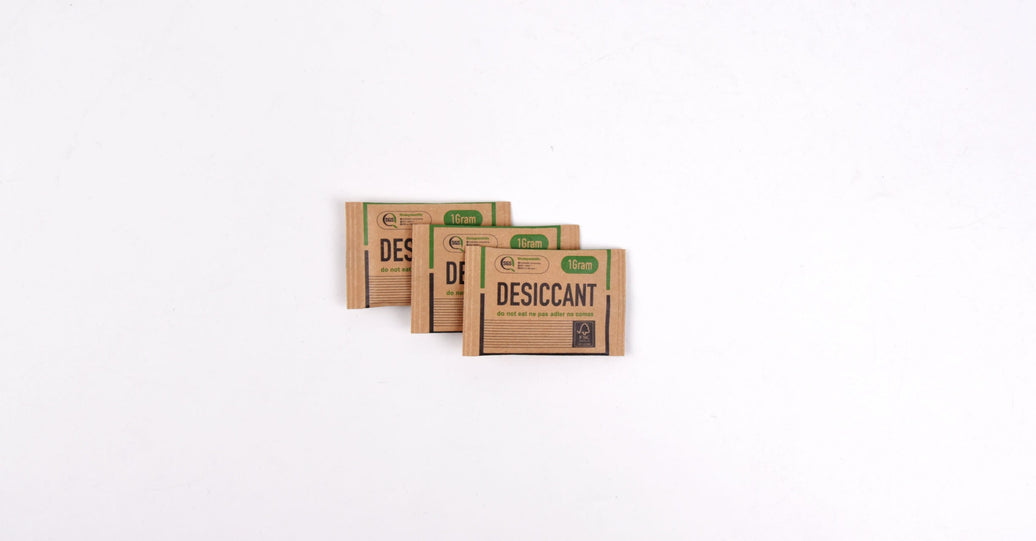
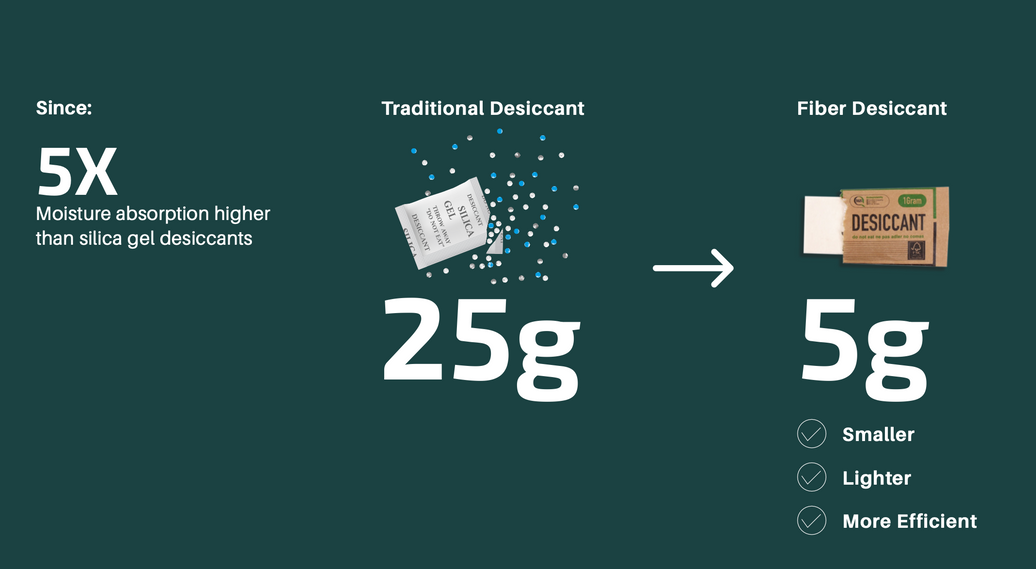
For ATMOSIScience fiber desiccant, the file is:
- Composition: lignocellulose, calcium chloride, PLA, food-grade paper and water. No mined mineral adsorbent, no cobalt indicator in the desiccant itself.
- Food contact: FDA 21 CFR 175.300 documentation for food-contact applications.
- RoHS: testing report on the fiber humidity control pack.
- Compostability: ASTM D6400 and EN 13432 on the pouch materials — note that this certification attaches to the bag, and the scope should be read as written.
- Manufacturing: SGS ISO 9001 certified production.
- Carbon footprint: 1.44 kg CO₂e/kg, verified to ISO 14067.
What each of those certificates actually covers — and what it does not — is unpacked in what a desiccant certificate actually covers.
The three questions to put in your next RFQ
- Is any cobalt compound present in the desiccant or in any indicator supplied with it? If yes, name it and give the concentration.
- Provide batch heavy-metals data against the limits for our end use, with method.
- Provide the full material composition, including the overwrap and any adhesive or ink.
Those three lines belong in the specification itself, not the email thread — see how to write a desiccant specification.
FAQ
Do I need a Prop 65 warning on my desiccant sachet?
Only if a listed chemical is present at an exposure above the safe-harbour level. Establishing that it is not requires composition and test data, which is why the documentation matters more than the label decision.
Is silica gel a Prop 65 chemical?
Amorphous silica used in desiccant gel is not the crystalline silica form associated with respirable-dust concerns. Trace contaminants, not the base material, are the usual issue.
Are cobalt-free indicators as accurate?
Modern copper-based and organic-dye indicators are widely used and specified in regulated packaging. Colour change is less dramatic than cobalt blue-to-pink, so train operators on the actual card.
Does RoHS apply to a desiccant?
RoHS applies to electrical and electronic equipment, and a desiccant shipped inside such a product falls within the assembly's scope. A RoHS test report on the desiccant makes that assessment straightforward.
Who is liable if a supplier's data is wrong?
The brand placing the product on the market carries the consumer-facing exposure. Contractual recourse against a supplier is separate, and slower.
This article is general information for packaging and procurement teams, not legal advice. Chemical-compliance obligations depend on your product, market and end use — confirm with qualified counsel or a regulatory consultant.
Need the chemical-compliance file for a supplier review?
Tell us your end use and the market. Our team will send composition statements, RoHS and food-contact documentation, and the test reports your regulatory reviewer will request.
Prefer email? info@atmosiscience.com