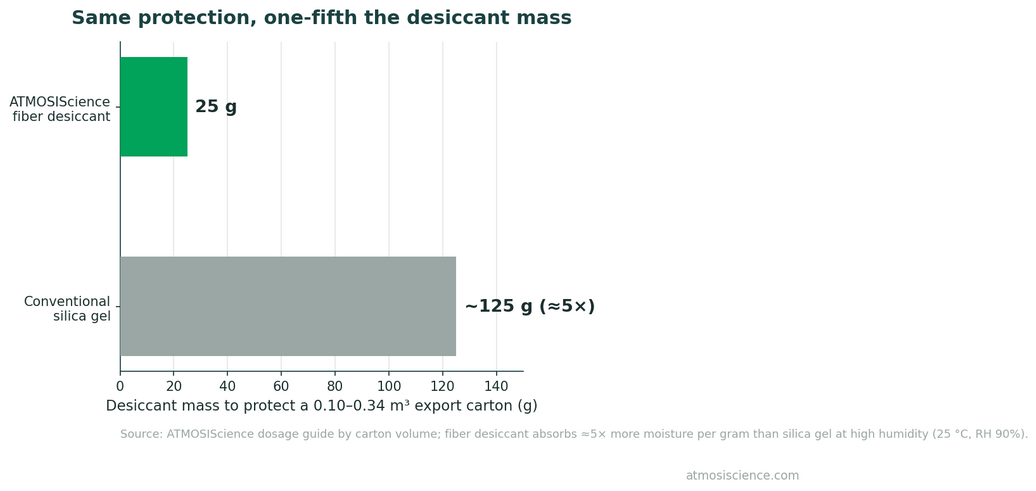
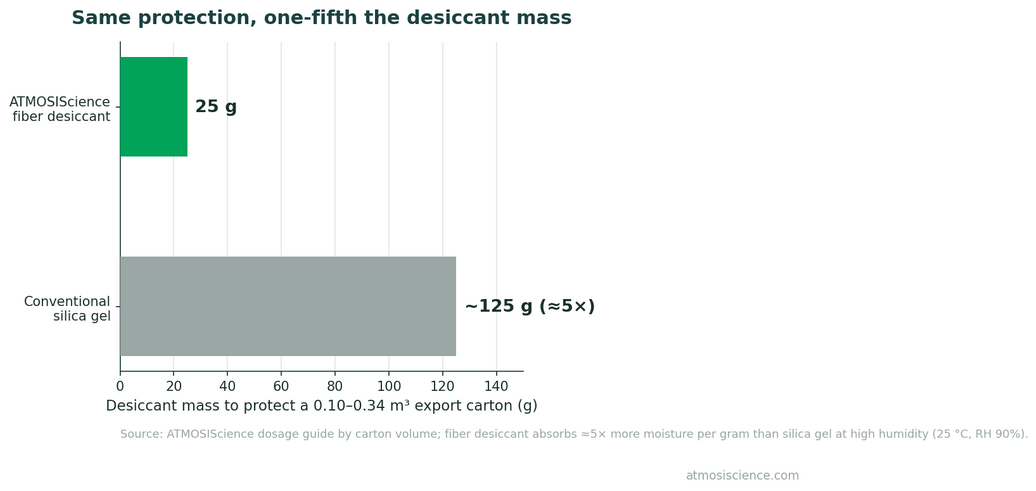
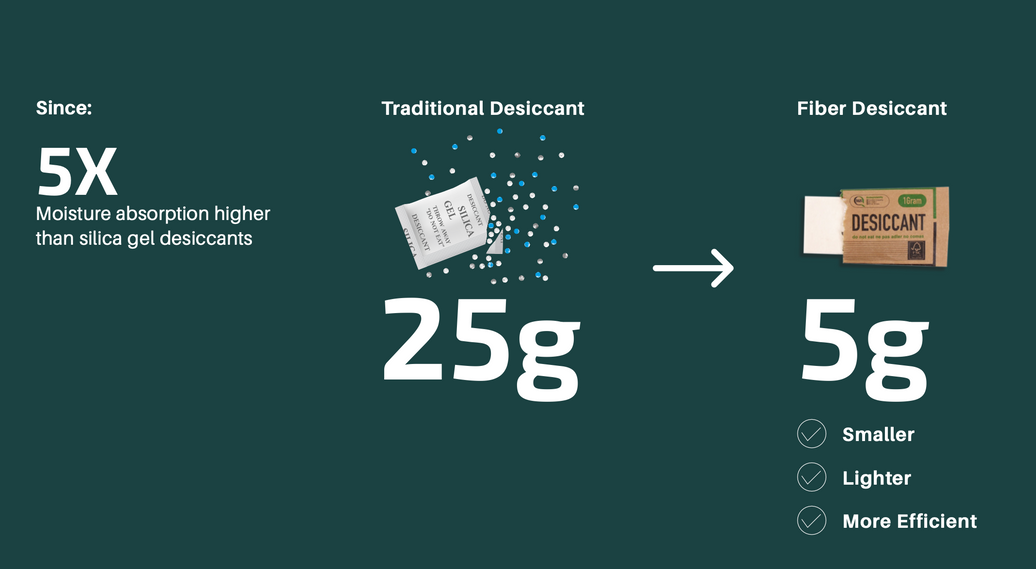
Quick answer: Sea moss, dried fruit and vacuum-packed foods are named applications for Fiber Card, a paper desiccant that is non-toxic and safe for medicine and food use. For food and pharmaceutical grade it absorbs over 70% of its weight in moisture at 25 °C and 90% RH, where common silica gel desiccant absorbs about 30%. The high-humidity end of the curve is what matters here, because these products sit at a much higher internal humidity than a dry powder does. The dust-free construction matters equally — there are no loose beads to migrate into a wet or sticky product.
Most desiccant guidance is written for dry powders: keep the pack below a caking threshold, hold it there for the shelf life, done. High-water-activity foods break that model, because the goal is not to dry the product out. It is to stop the headspace humidity from swinging enough to condense, soften texture or support surface growth.
That changes which end of the adsorption curve you should be reading.
Why the 90% RH figure is the one that counts

A dry powder pack might sit at 20–40% internal RH. A vacuum-packed moist food or a sea moss product sits far higher. Silica gel’s isotherm is comparatively flat at the top end — it does much of its work at lower humidity — which is why a gram-for-gram comparison taken at mid-range conditions misleads badly for these applications.
Fiber desiccant runs the other way. The published minimums rise across the range: more than 10% of own weight at 20% RH, more than 35% at 50% RH, more than 70% at 90% RH, and over 100% when saturated. For a high-humidity pack, that shape is the product feature.
The trade-off, stated plainly: at genuinely low humidity a silica or molecular sieve chemistry may hold more per gram. Match the chemistry to the humidity the pack will actually see — see molecular sieve vs silica gel vs fiber desiccant.
The dust problem is worse in wet products
In a dry powder, a leaked silica bead is a foreign-object complaint. In a moist product, it is that plus a bead that has adhered to the food surface and cannot be brushed off.
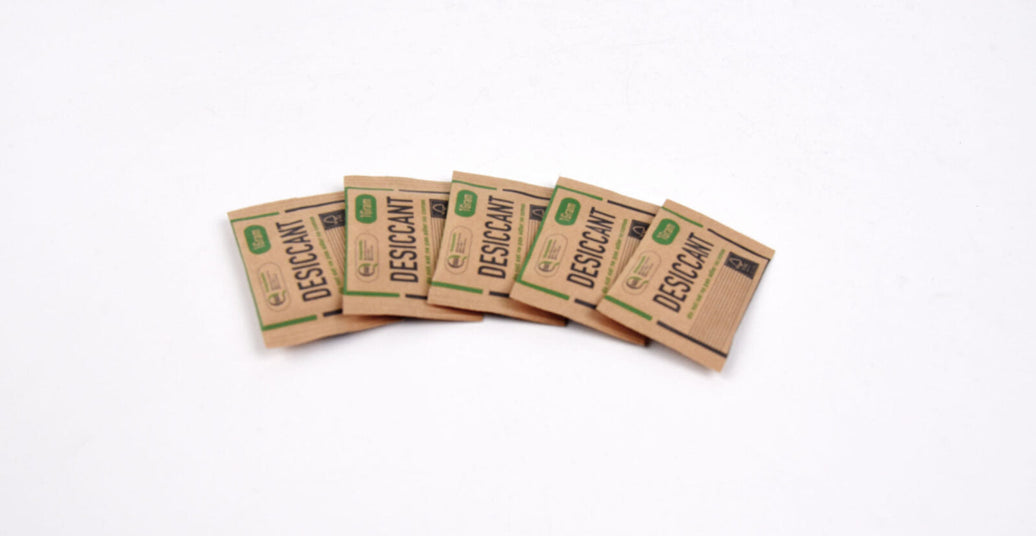
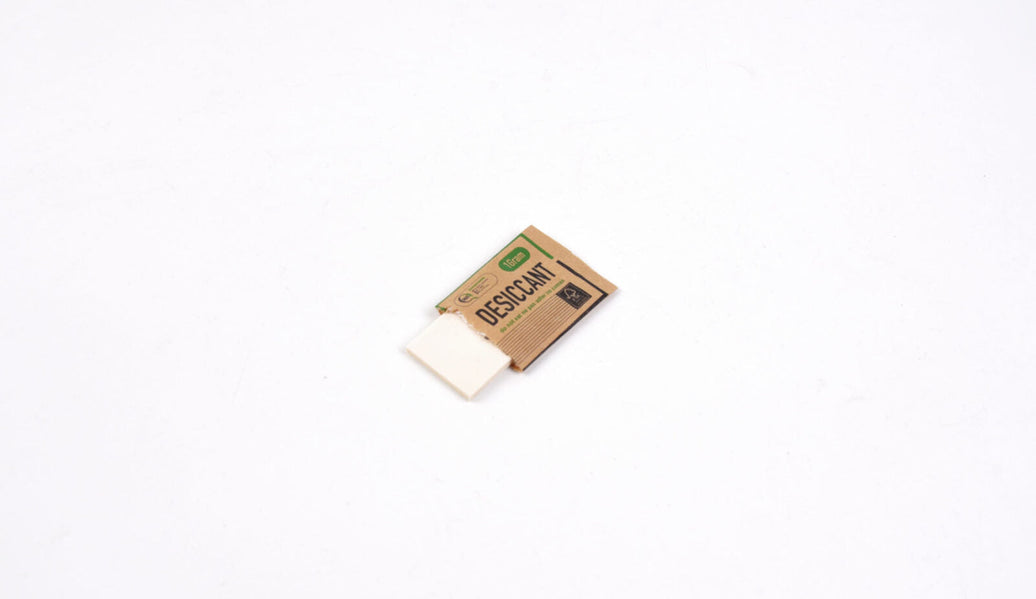
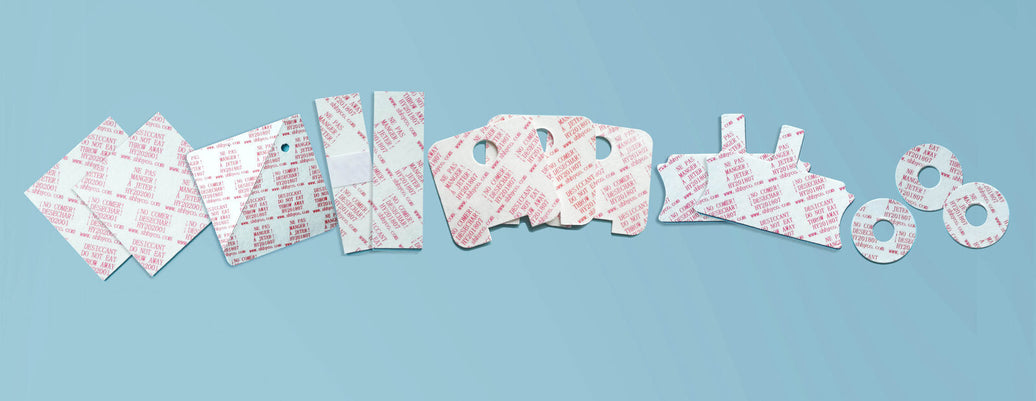
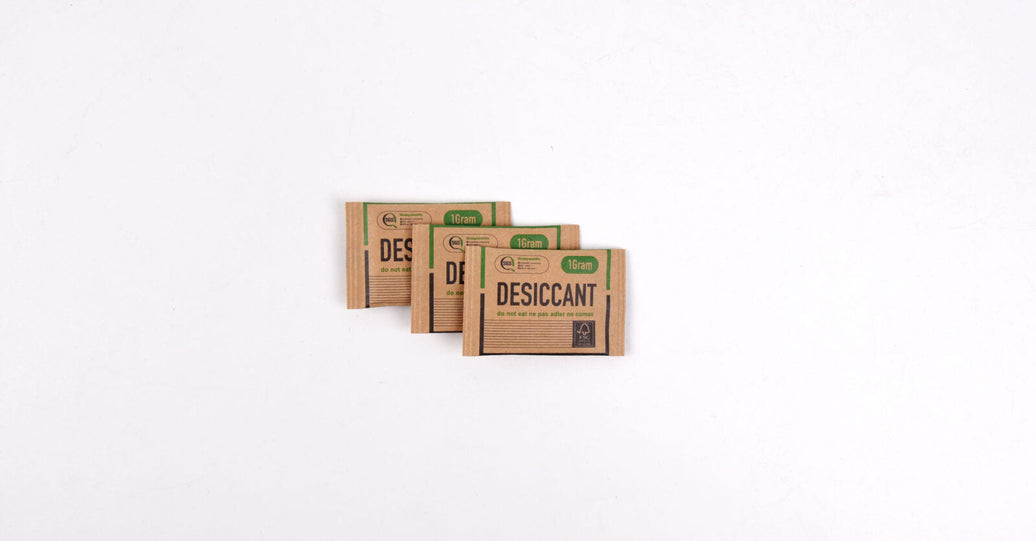
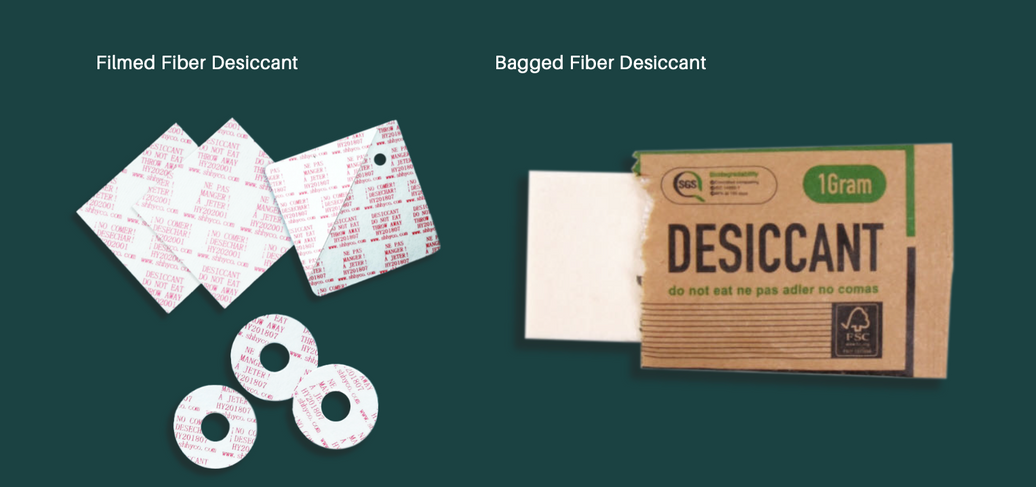
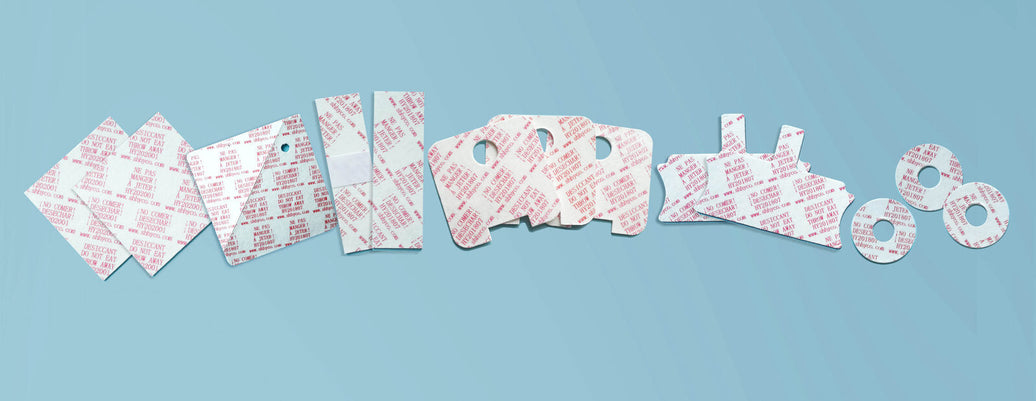
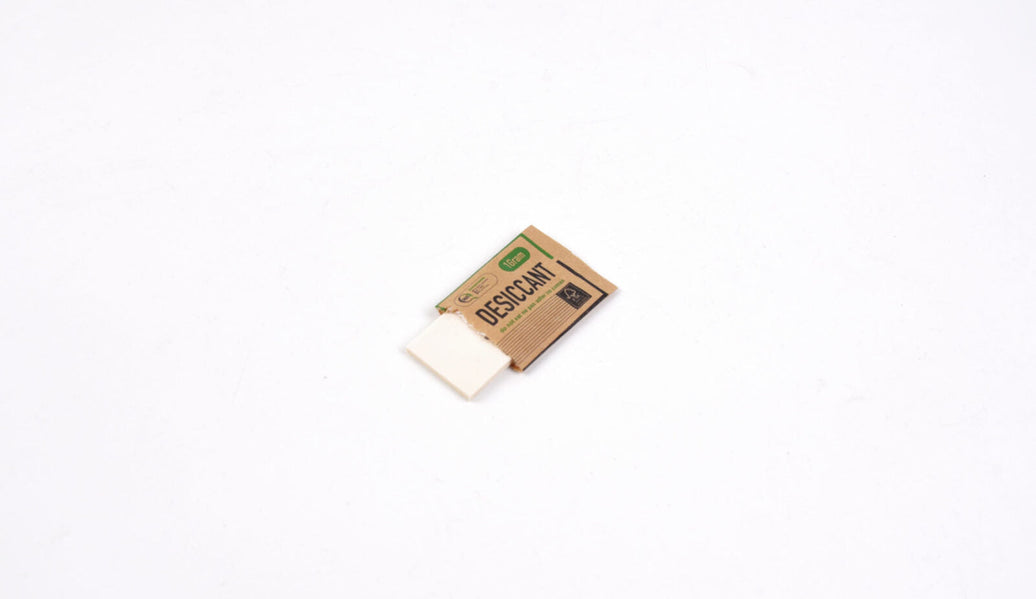
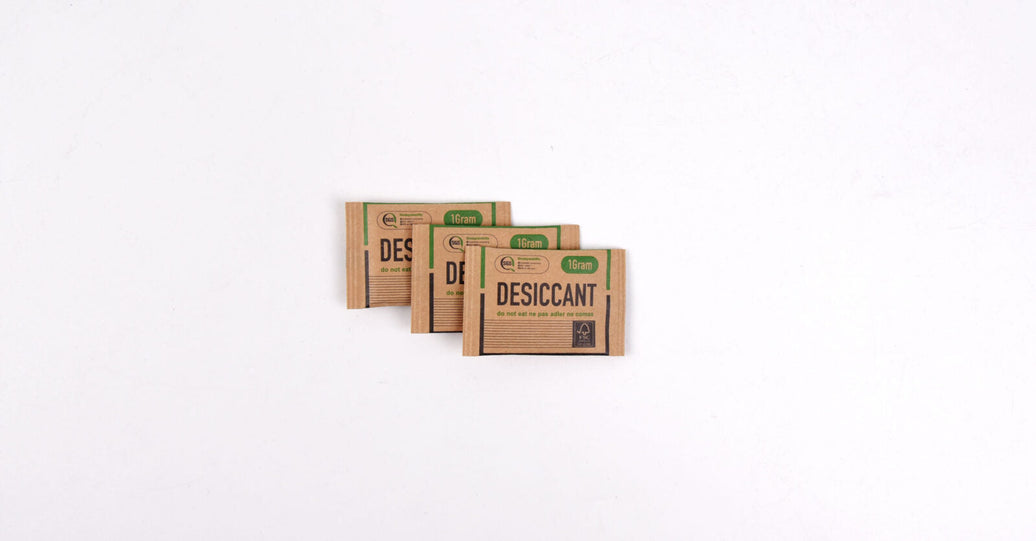
The fiber formats are structurally different. The bagged sachet uses a bonded substrate rather than loose fill, described in the product documentation as dust-free. The Fiber Card is a white adsorption substrate laminated on both sides with compostable film — a sealed card, not a container of granules. Neither format has loose material to release if a seam abrades in transit. Background: powder and loose-fill desiccant risks in food packaging.
Application by application
Sea moss
Sea moss appears explicitly in the Fiber Card application list. Whether raw, dried or in gel form, the challenge is a high-moisture matrix with a texture that customers judge immediately on opening. Card formats work well here because they can be die-cut to the closure or lid footprint rather than sitting loose in a jar.
Dried fruit
Dried fruit is a balancing act rather than a drying job. Over-dry it and you get a hard, unsellable product; under-control it and you get clumping, surface stickiness and spoilage risk. This is where a two-way material earns its place — see the two-way humidity control principle and our note on high-water-activity foods.
Vacuum-packed foods
Vacuum packing removes air, not water. Moisture already in the product redistributes inside the pack and shows up as condensation against the film on any temperature swing — particularly after cold storage. A thin card adds essentially no bulk to a vacuum pack, which matters when the film is drawn tight. See condensation after cold storage.
Format notes for food packs
- Thickness. Fiber Card is available at 0.5 mm and 1.0 mm and is freely cut to square or circular shapes — useful for lid liners and tight cavities. See choosing desiccant thickness.
- Printing. The laminated compostable film is printable, and carries the product name and a do-not-eat instruction in English or another language. For a consumer food pack this is not optional.
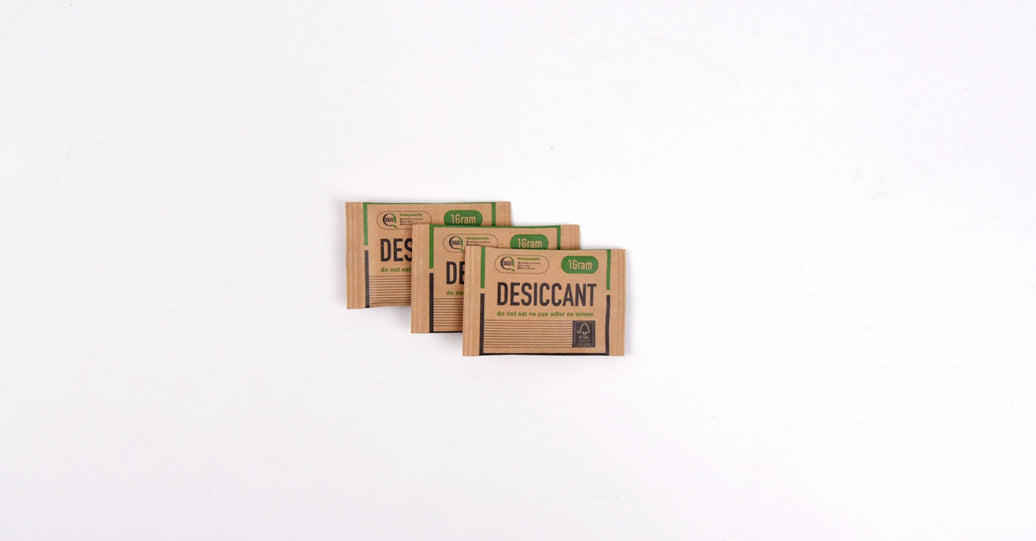
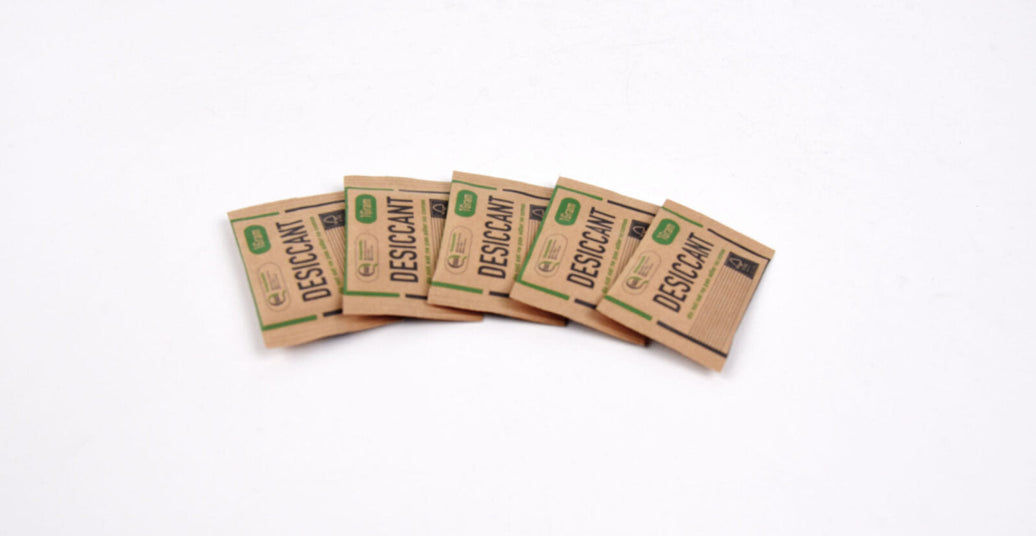
- Sachet sizing. Bagged pouches run from 1 gram to 1,000 grams, customisable.
- Bag material. Compostable, complying with ASTM D6400 and EN 13432.
Documents to request before you commit
- Food-contact documentation for the specific format — see FDA 21 CFR food contact.
- The safety data sheet, specifically the microbiological limits. For a moist food these matter more than for a dry one — see what a desiccant SDS really says.
- Adsorption data at your actual pack humidity, not a headline figure at unspecified conditions.
- A worst-case sample test on your real product, at your real fill weight, at your highest expected transit humidity — see worst-case sample evaluation.
Frequently asked questions
Will a desiccant dry out my sea moss or dried fruit?
An oversized conventional desiccant can pull a product below its target texture. Sizing to the pack’s moisture load, and using a material designed for two-way control, is how that is avoided. Validate on the real product rather than assuming.
Is fiber desiccant safe for direct food contact?
The Fiber Card product documentation states it is non-toxic and safe for medicine and food use. Request the food-contact documentation for your specific format and market before finalising — a general statement is not a compliance record.
Desiccant or oxygen absorber for dried fruit?
They address different failure modes: moisture versus oxidation and mould. Many packs need both. See using an oxygen absorber and desiccant together.
Can the card go in a vacuum pack without puncturing the film?
Card formats have no hard granules and are die-cut without sharp corners, which helps. Validate on your actual film and vacuum level, because film gauge varies widely.
How much do I need?
It depends on the product’s moisture load, the barrier properties of the pack and the shelf life. Send those three inputs and the sizing can be worked properly rather than guessed.
Request samples for your product
Tell us the product, the pack format and the shelf life you need to hold. The ATMOSIScience team will recommend a format and arrange samples for a worst-case test.
Prefer email? info@atmosiscience.com