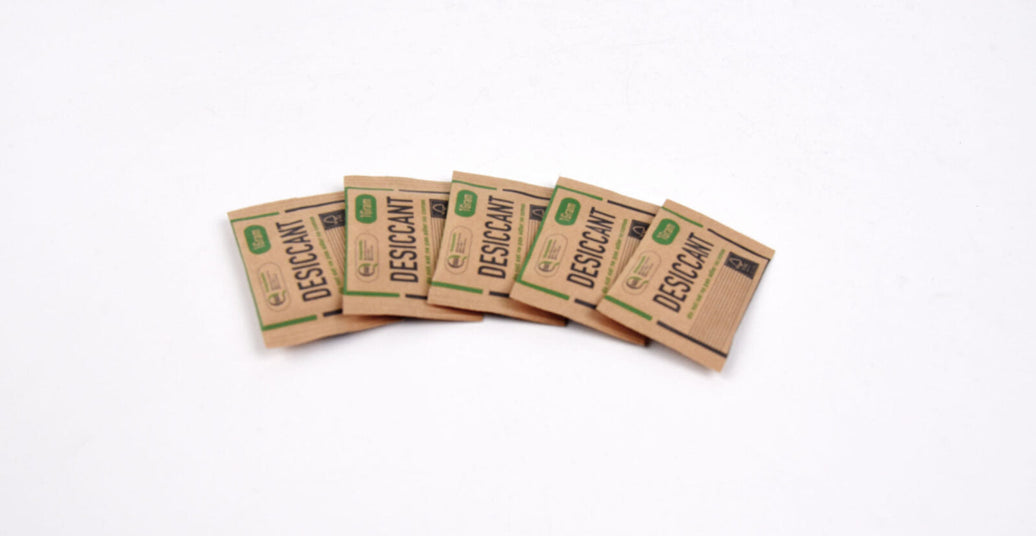
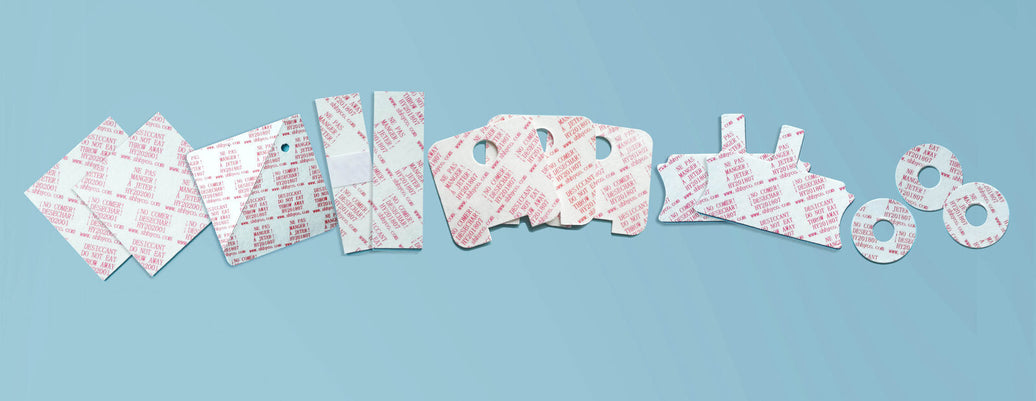
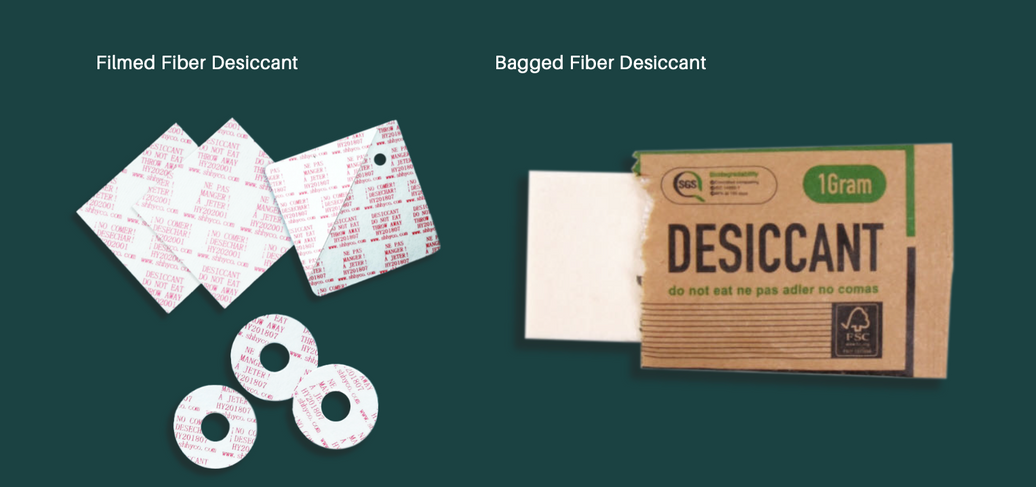
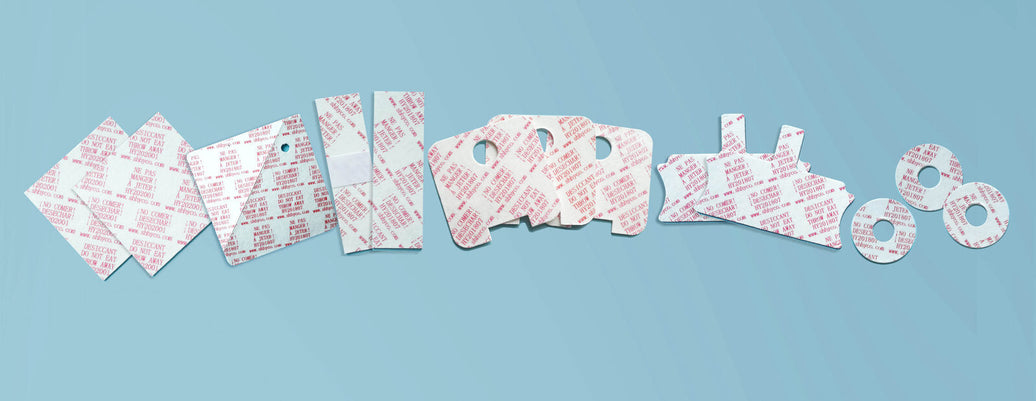
Quick answer: ATMOSIScience fiber desiccant comes in three practical thicknesses. The Fiber Card paper desiccant is available at 0.5 mm and 1.0 mm, is freely cut to square or circular shapes, and is thin enough to sit as a cushion inside a bottle cap or as a functional tag on a garment. The bagged sachet uses a substrate of about 2.5 mm and is filled from 1 gram to 1,000 grams per pouch. Pick the thickness from the cavity you actually have — not from the adsorption number, which can usually be met by more than one format.
Desiccant selection usually runs in the wrong order. A team calculates a moisture load, picks a gram weight, orders sachets, and then discovers on the line that the sachet does not fit under the closure, jams the feeder, or forces the fill height up on a bottle that was designed to a shelf spec.
Thickness is the constraint that decides where a desiccant can physically go. Start there.

0.5 mm: where nothing else fits
At half a millimetre the desiccant stops being an object in the pack and becomes part of the pack’s architecture. The Fiber Card at this thickness is designed for compact packages where headspace is measured rather than assumed.
Typical placements:
- Inside a bottle cap, where the product introduction describes it functioning as a cushion in the closure — occupying the liner position rather than the bottle’s headspace.
- Diagnostic and bio-kit cavities, where the moulded well leaves fractions of a millimetre.
- Slim pouches where a 2.5 mm sachet would show as a lump through the film.
The trade-off is capacity per piece. A thinner card holds less material, so meeting a given moisture load means more surface area — which is fine, because the card is die-cut to whatever square or circular footprint the cavity allows.
1.0 mm: the working default for filmed cards
One millimetre is the standard Fiber Card thickness and the sensible starting point for most card applications. It roughly doubles the material in the same footprint while staying thin enough for bottle liners, sachets-within-sachets and flat cartons.
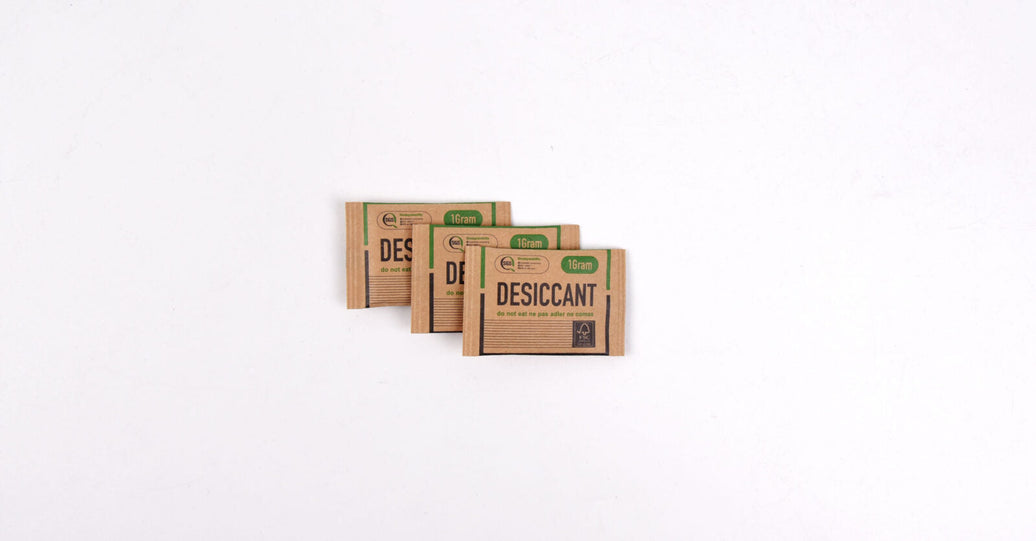
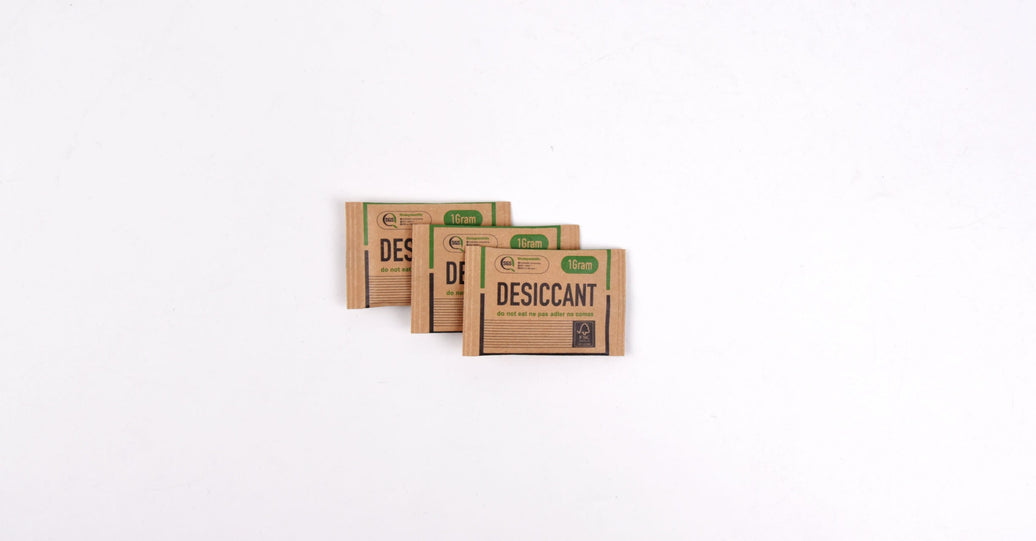
The card is laminated on both sides with compostable film, and that film is printable — product name and a do-not-eat instruction are printed on the surface, in English or another language. For brand owners this matters more than it sounds: a printed card is a component your customer can identify, which is the difference between a reassuring insert and an unexplained object in a food pack. See do-not-eat labelling and custom printed inserts.
2.5 mm: the bagged format
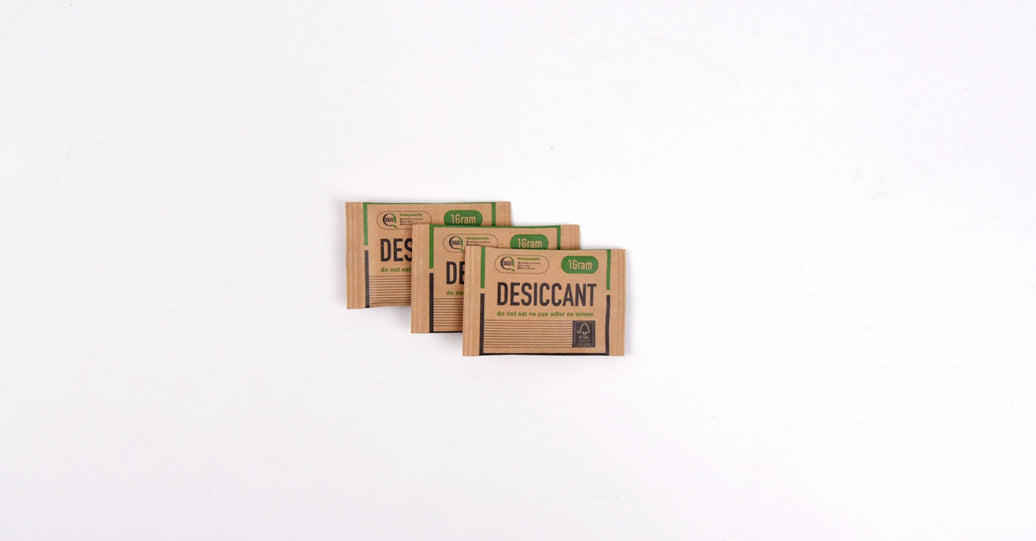
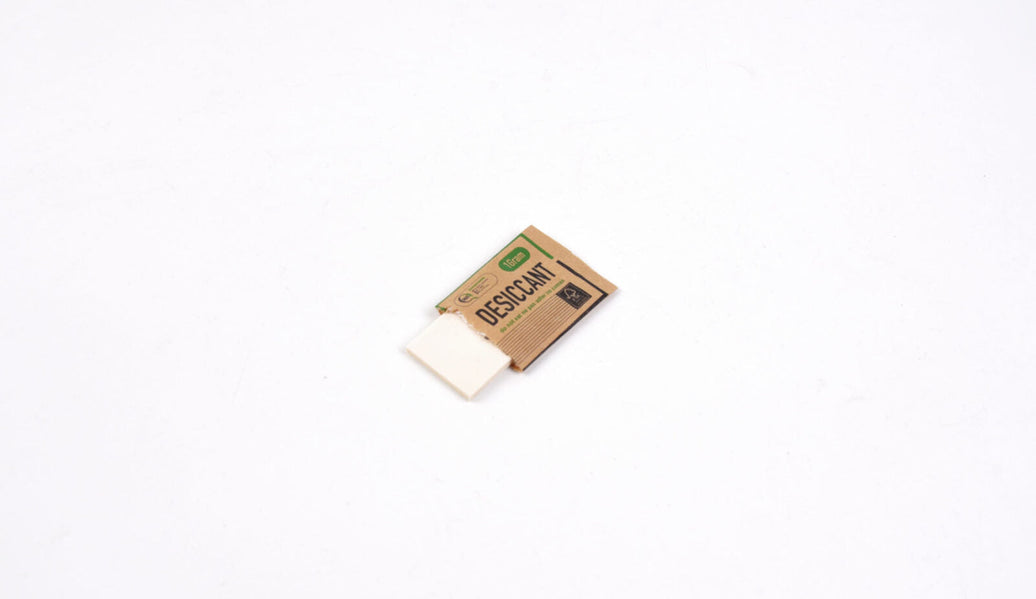
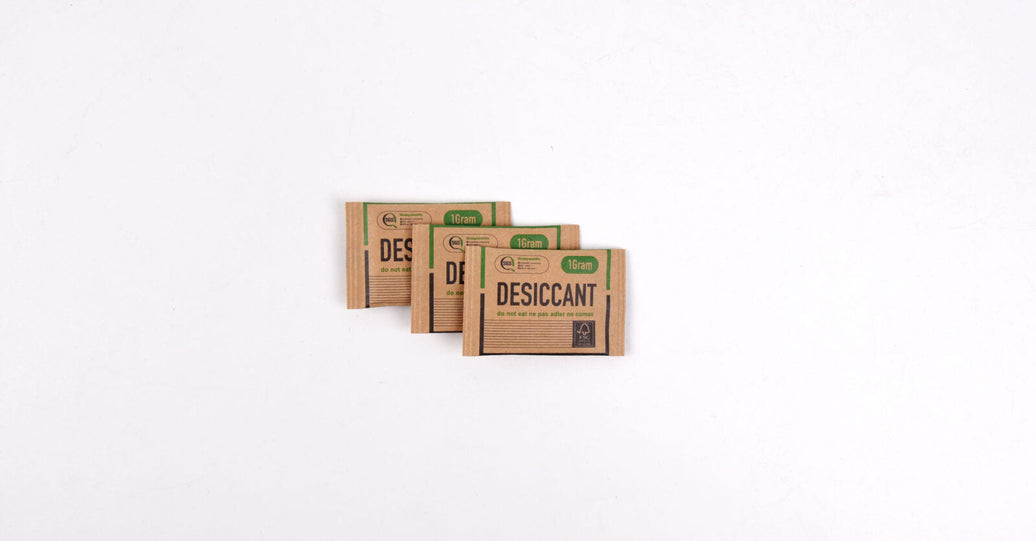
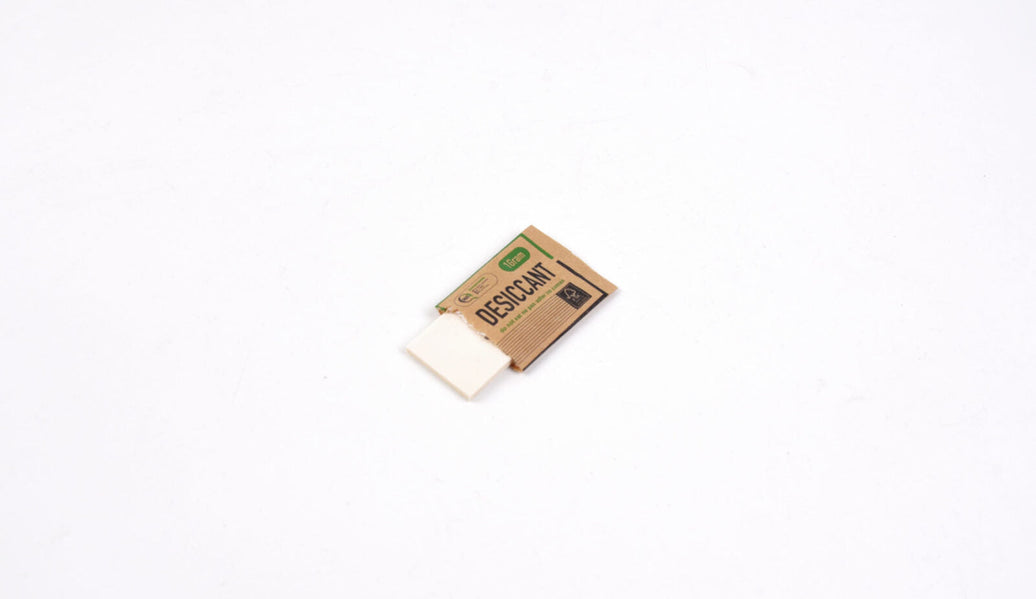
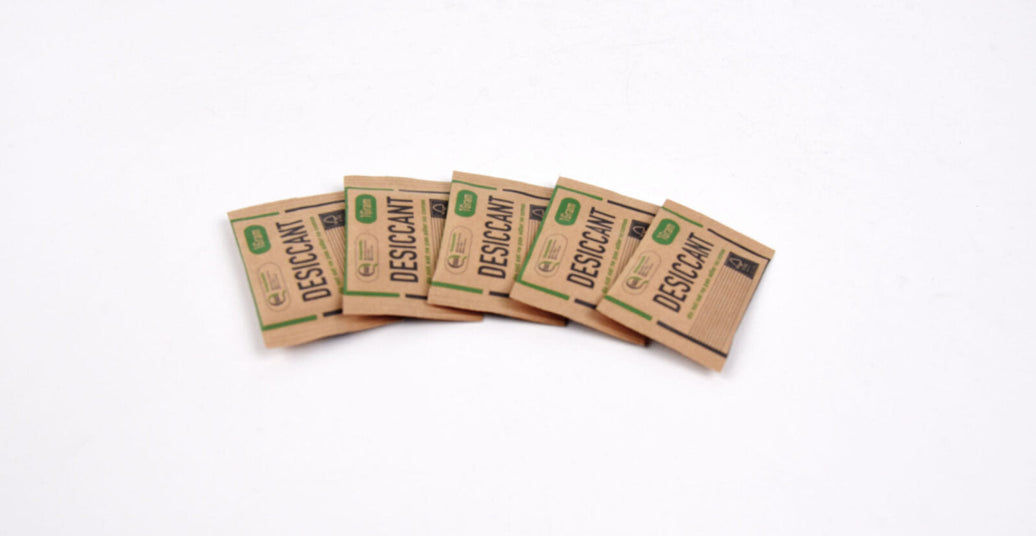
The bagged desiccant uses a substrate of about 2.5 millimetres, held in a pouch. Two properties follow directly from that construction:
- No dust. The adsorbent is a bonded sheet, not loose beads or powder, so there is nothing to migrate through a seam or escape a tear. This is a structural difference from loose-fill formats — see powder and loose-fill risks.
- Saturated adsorption over 100% of its own weight. More substrate per piece means more capacity per piece.
Pouches are filled from 1 gram to 1,000 grams and can be customised to requirement, which covers everything from a single supplement bottle to a shipping container. The bag material is compostable and complies with ASTM D6400 and EN 13432.
A practical selection sequence
- Measure the cavity. Not the package — the specific void where the desiccant will sit, in all three dimensions.
- Decide whether the desiccant can be seen or handled. If a consumer will encounter it, printing and format matter as much as capacity.
- Check the insertion method. Cards and sachets feed differently. Talk to whoever runs the line before finalising — see dispenser compatibility.
- Then size for moisture load. Once format is fixed, meet the load with footprint or count.
- Validate on a real pack. A worst-case sample test catches the interactions a calculation misses.
Adsorption is adjustable, so do not over-constrain on it
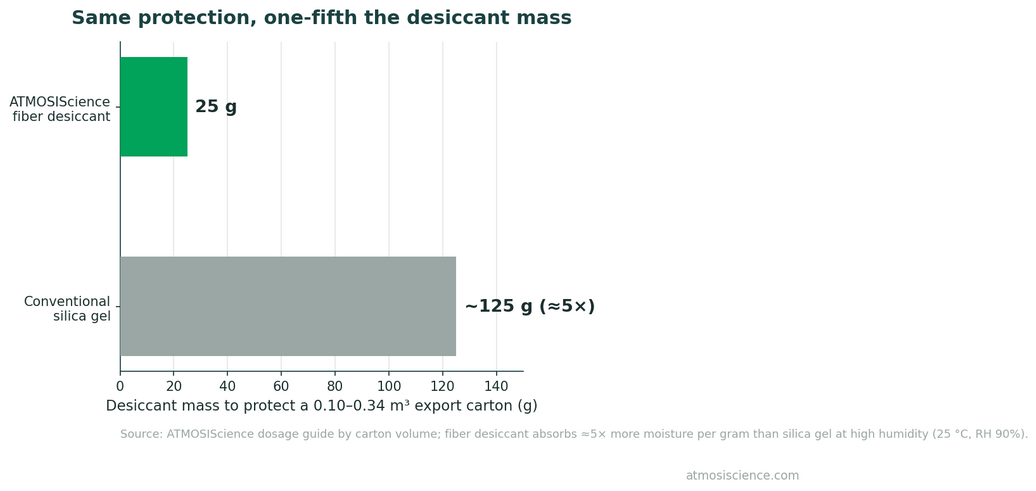
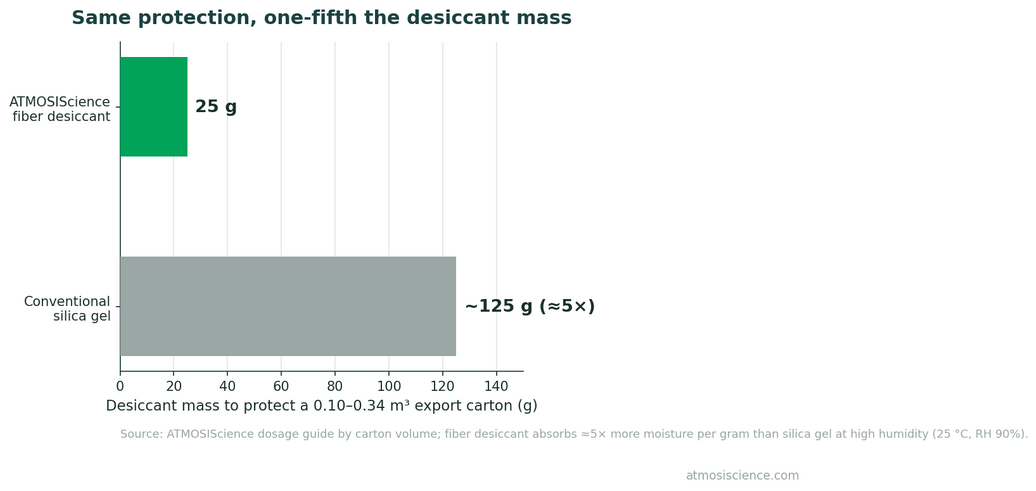
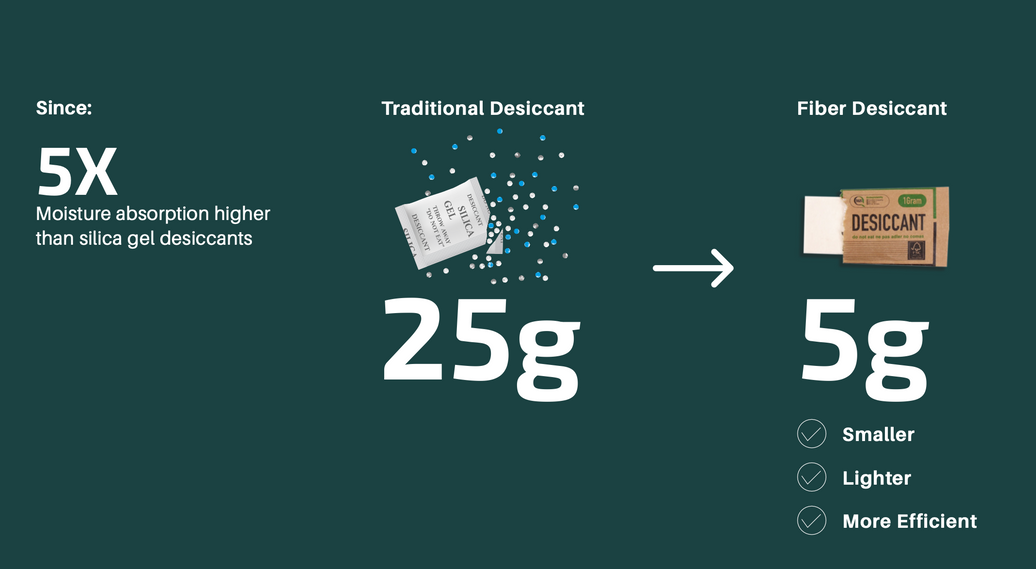
One reason to lead with geometry rather than performance: adsorption capacity and speed are adjustable by application. For food and pharmaceutical use the Fiber Card is specified to absorb over 70% of its weight in moisture at 25 °C and 90% RH, against roughly 30% for common silica gel desiccant.

The practical consequence is that a thin card can often carry a load that a buyer assumed required a bulkier sachet. Give the supplier the cavity dimensions and the moisture load together, and let the format follow.
Frequently asked questions
Can the card be cut to a custom shape?
Yes — the size and shape are freely cut, square or circular. Supply the cavity drawing rather than picking from a standard list.
Is a thinner desiccant weaker?
It holds less per piece, not less per gram. Capacity scales with material present, so meet the load with footprint or quantity.
Which format suits a bottle with an induction seal?
Cap-liner cards are the usual answer where headspace is tight. See desiccant in HDPE bottles with induction seals.
Can we mix formats in one pack?
Yes, and it is sometimes the right answer — a cap card plus an in-pack sachet, for instance. Validate the combination rather than assuming capacities simply add under real conditions.
What is the largest pouch available?
Pouches are filled from 1 gram to 1,000 grams and can be customised to meet various requirements. For container-scale applications, state the volume and transit route and let the sizing be worked from there.
Send us your cavity dimensions
Give us the space you have and the moisture load you need to hold, and the ATMOSIScience team will come back with a format, a footprint and a sample plan.
Prefer email? info@atmosiscience.com