Quick answer: A desiccant that goes inside a food or supplement pack is a food-contact packaging component, so it needs a supplier approval file like any other. The pack an auditor expects is: a letter of continuing guarantee, a composition and material declaration for every layer, the regulatory compliance basis cited specifically, a migration or extractables position, a certificate of analysis per lot, specifications with test conditions, allergen and BSE or TSE statements, a kosher or halal statement if you make those claims, the site's food safety certification, a change notification commitment, and traceability and recall arrangements. One phrase to stop accepting: FDA approved desiccant. FDA does not approve or certify packaging components, so that claim tells you nothing and can leave a gap in your file.
This comes up in two moments. The first is when you want to switch desiccant and your own supplier approval procedure blocks you. The second is three weeks before an audit, when someone checks the folder and finds a product brochure where a letter of guarantee should be. Both are easier if you know the list in advance.
The eleven documents
| Document | What it proves |
|---|---|
| 1. Letter of continuing guarantee | The supplier commits, on letterhead and signed, that the material is suitable for its intended food contact use and will remain so until they notify you otherwise |
| 2. Composition and material declaration | Every layer identified: adsorbent, carrier, overwrap, laminating film, adhesive, ink. This is also the document your EPR reporting needs |
| 3. Regulatory compliance basis | The specific regulation, notification or listing relied on, named. Not a general statement of suitability |
| 4. Migration or extractables position | What can move from the insert into the product, under your conditions of use, including from printing inks |
| 5. Certificate of analysis, per lot | That the lot you received meets the spec, with the fields you verify on receipt |
| 6. Specification with test conditions | Capacity at a stated temperature and RH, caliper, mass, loss on drying. A capacity figure with no conditions is not a specification |
| 7. Allergen and BSE or TSE statements | That nothing in the insert or its handling introduces an allergen or animal-derived risk |
| 8. Kosher or halal statement | Only needed if you carry those claims, but then it is needed for every component. See declarations for desiccant sachets |
| 9. Site certification and audit history | The manufacturing site's management system or food safety certification, in date, with the scope readable |
| 10. Change notification commitment | Written agreement to tell you before material, process or site changes. Without it your approval expires silently |
| 11. Traceability and recall arrangements | Lot coding that lets you tie an insert in the field back to a production batch |
The claim to stop accepting
FDA approved desiccant, and FDA certified desiccant, are not real statuses. FDA does not approve, certify or register packaging components. What can exist is a compliance position: the component is made from substances cleared for the intended food contact use, and the supplier can cite the basis. Anything vaguer than a citation leaves you holding the risk.
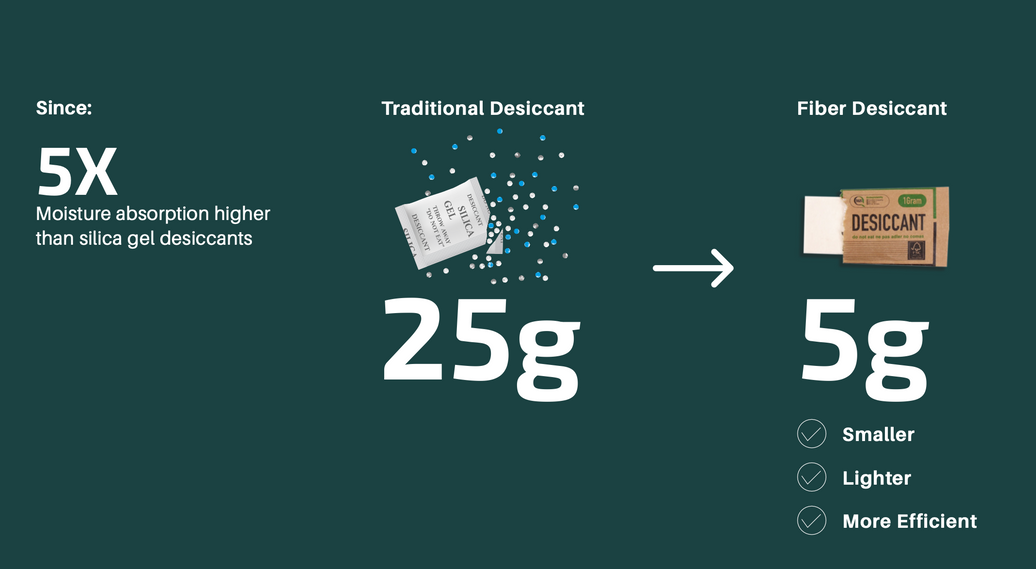
We apply that to ourselves. The ATMOSIScience® fiber desiccant does not hold an FDA certification, and we will not write that it does. What we will put in writing is the composition of each layer, the measured specification with its test conditions, and the compliance basis for the format you are buying. The detail of what the US rules actually say is in 21 CFR food contact for desiccants.
Three things auditors keep finding
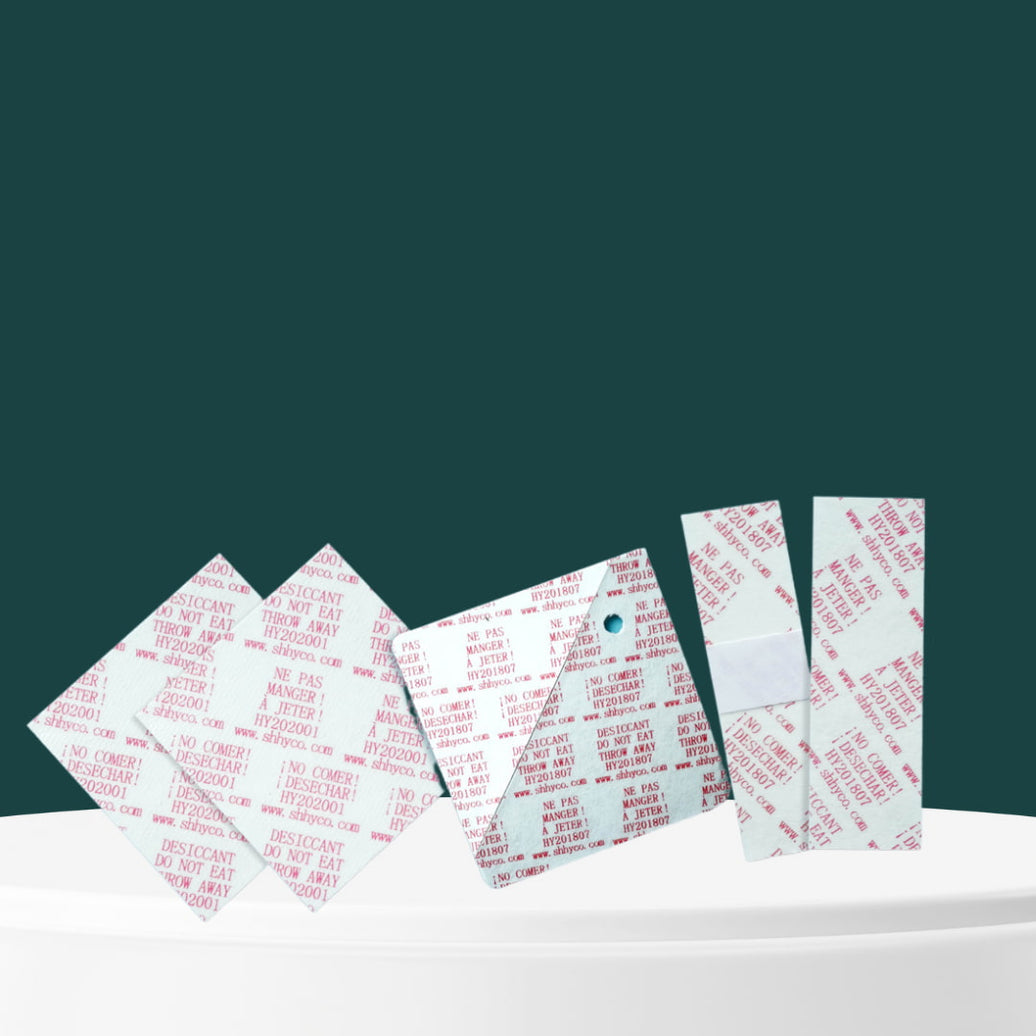
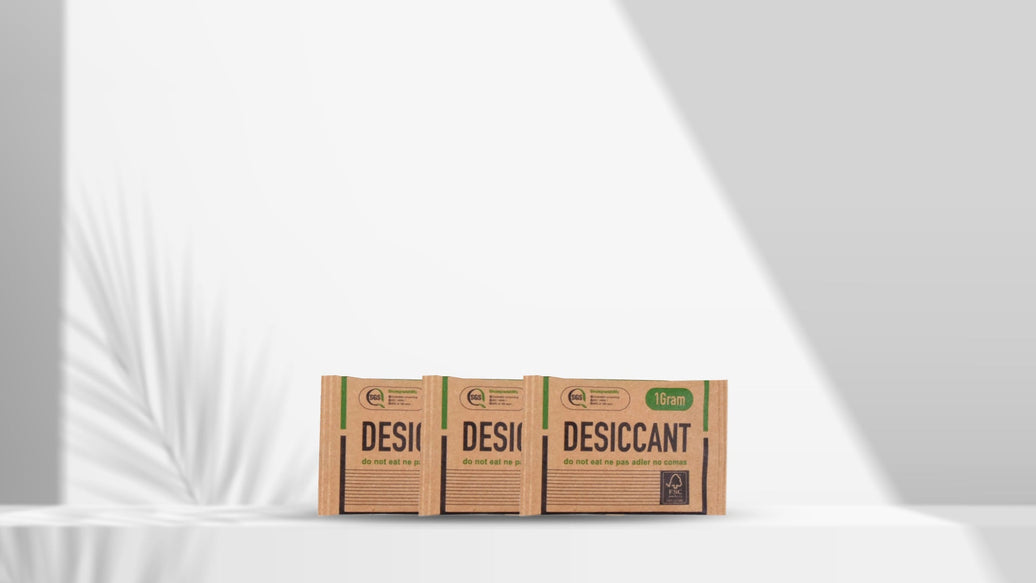
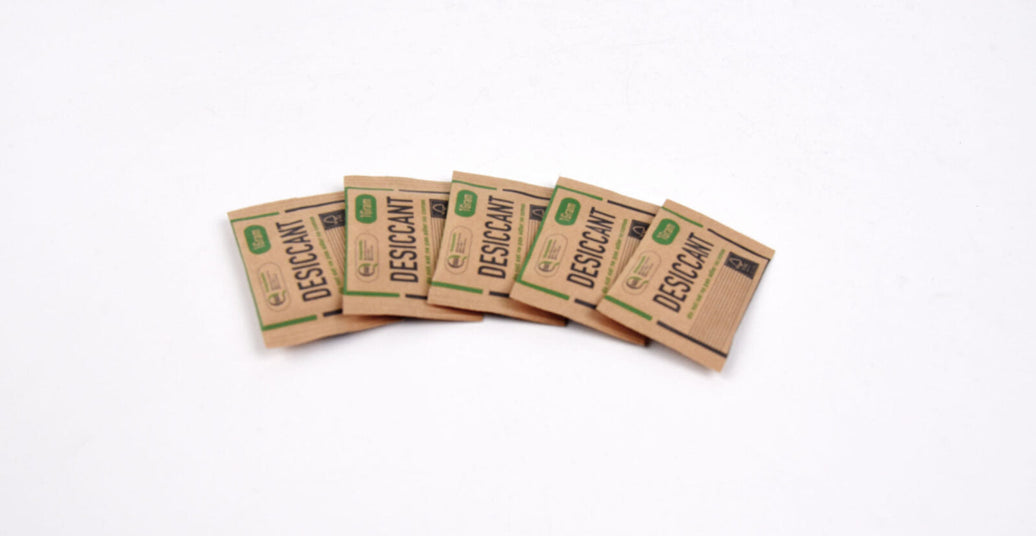
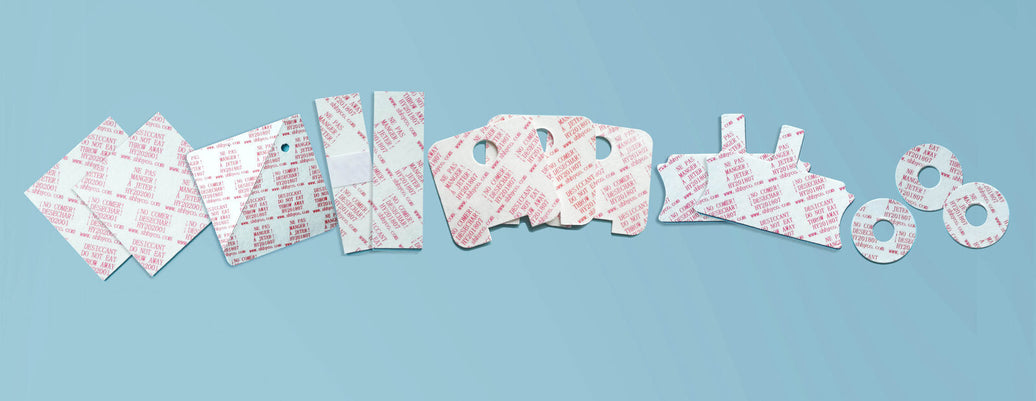
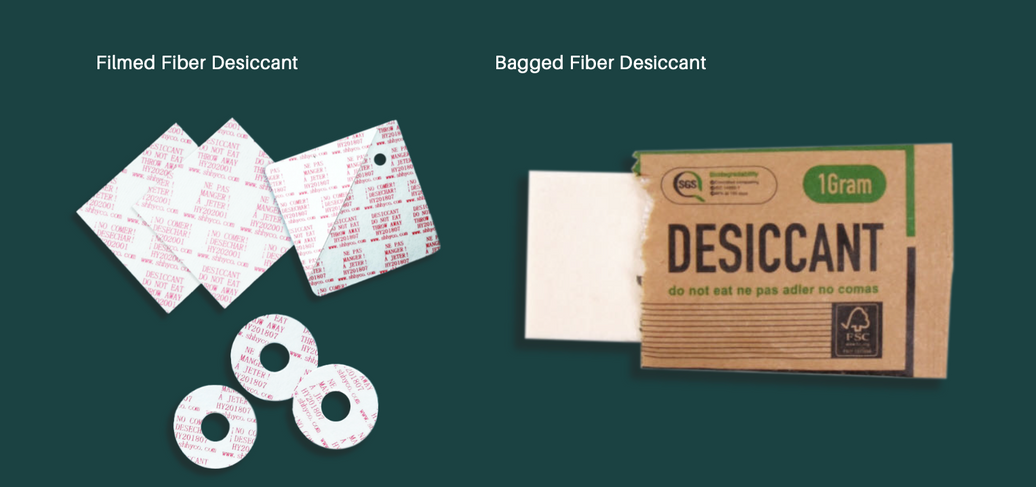
The overwrap was never declared. Buyers collect paperwork on the adsorbent and forget that the product never touches the adsorbent. It touches the pouch. Ask for the overwrap by name and grade, since it may differ between formats of the same product.
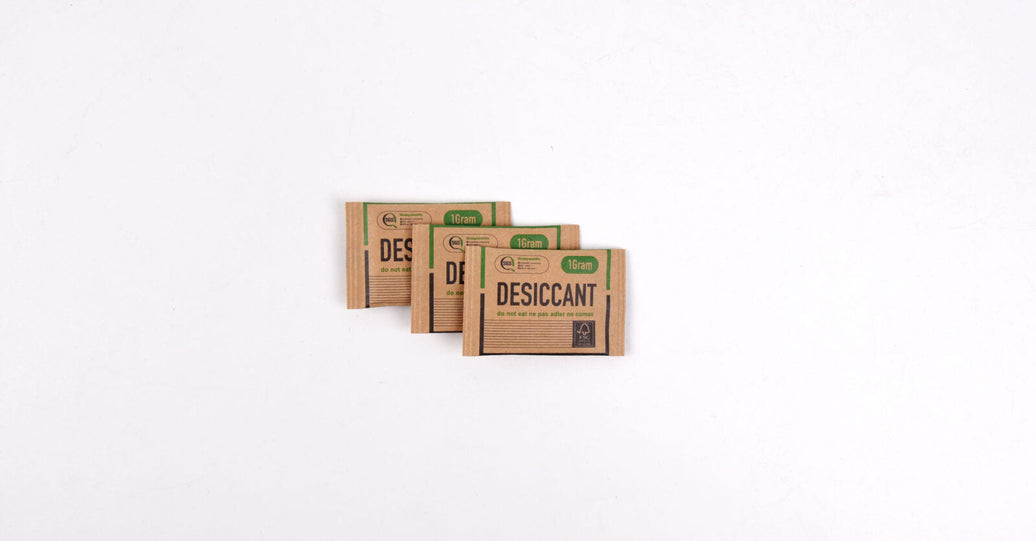
The ink was never assessed. If the insert is printed, the ink is in the pack. Migration risk and the questions to ask are in printing inks on desiccant sachets.
The specification has no test conditions. A great many flat and sachet desiccants are sold with no stated capacity at all, or a capacity with no temperature and no humidity. That cannot be verified on receipt, so it cannot anchor an approval. For contrast, our own criteria at 25 °C are more than 10% of own weight at 20% RH, more than 35% at 50% RH, more than 70% at 90% RH, saturating above 100% in the bagged pouch, with loss on drying under 10%. Those numbers are checkable, which is the point of publishing them.
How this fits your audit
Packaging component approval and validation sit in the same clauses auditors use for any other input. The twelve questions that come up most often are in desiccants in a BRCGS or SQF audit, and if you are changing supplier rather than approving a first one, the change-control path is in the IQ, OQ and PQ protocol. If a customer questionnaire is coming too, the overlap is covered in answering EcoVadis and CDP.
Frequently asked questions
Is a desiccant sachet really a food-contact material?
If it sits inside the sealed pack with the food, treat it as one. It shares the headspace, it can contact the product directly, and in a complaint it will be the first thing examined.
What is required to approve a supplier of food-contact packaging?
At minimum a signed letter of continuing guarantee, a full composition declaration, the compliance basis cited, a specification with test conditions, lot certificates of analysis, and a change notification commitment. Most schemes also expect evidence you assessed the supplier, not just collected paper.
Can a supplier refuse to give the full composition?
They can withhold proprietary ratios, but they should still identify every material class in the construction and provide the compliance basis. If they will not name the overwrap, that is a finding waiting to happen.
Do I need a new file if I change format but keep the supplier?
Usually yes for the parts that changed. A card and a pouch have different contact layers, so the composition declaration, migration position and specification all need to match the format you actually buy.
How often should the letter of guarantee be refreshed?
Annually is the common practice, and immediately on any notified change. Pair it with the change notification clause so refreshes are triggered rather than remembered.
Ask us for the document pack
Tell us the format you are evaluating and the scheme you are audited against, and we will send what exists today, say plainly what does not, and sign the letter of guarantee for the format you buy.
Or email info@atmosiscience.com