Quick answer: Under California's SB 54 regulations, in force since 1 May 2026, a packaging component can be treated as de minimis only if it is not an "independent plastic component", meaning a detachable part that wholly or partly comprises plastic and is not a film or label adhered to another component. A loose desiccant sachet with a plastic wrap or plastic content meets that definition, so it cannot be de minimis and has to be reported. Circular Action Alliance's submitted 2027 schedule then charges small paper or fiber components $0.04 per pound without a plastic component and $0.26 per pound with one. Both rates are preliminary until CalRecycle approves the program plan.
Most supplement and food brands never thought of the desiccant as packaging. California's SB 54 rules make it a reportable component with its own classification, and the classification turns on one question: is there plastic in it, and can it be detached? This article sets out what the adopted text says and what it means for the sachet in your pack. It is general information, not legal advice.
Where the rules stand
CalRecycle states that the permanent SB 54 regulations were approved by the Office of Administrative Law on 1 May 2026 and took effect the same day. Circular Action Alliance (CAA), the producer responsibility organisation, published its 2027 California fee schedule on 1 October 2026 and submitted its final program plan on 13 October 2026. CalRecycle has 75 days to act on the plan, which runs to about the end of December 2026. Until then, the fee figures below are, in CAA's words, preliminary and non-binding.
The de minimis test, and why a loose sachet fails it
Section 18980.2.2 of the regulations allows some small components to be treated as de minimis. The first condition is that the component is not an independent plastic component. The regulation defines that as a component that wholly or partially comprises plastic, is detachable, and is not a coating, film, tape, sticker, label or other sheet-like material adhered to the surface of another component.
Apply that to a desiccant:
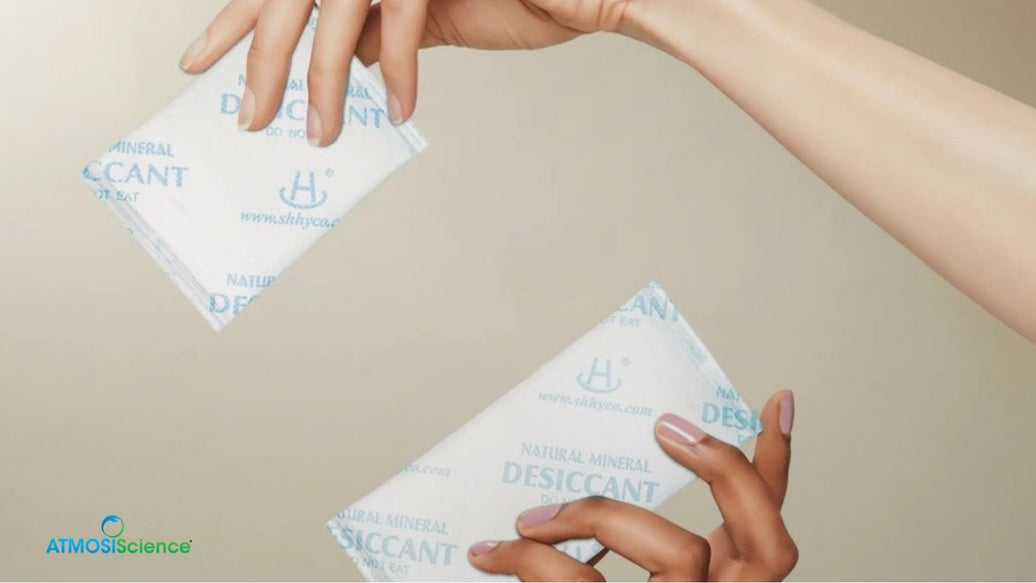
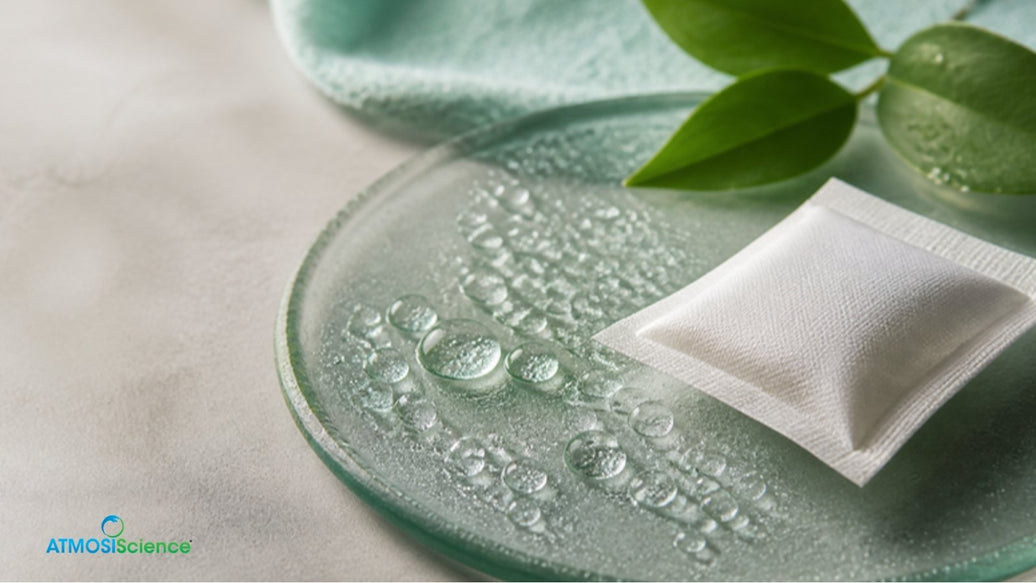
- A silica gel sachet in a PE, nonwoven or Tyvek-type pouch is detachable and partly plastic. It is an independent plastic component, so it is excluded from de minimis treatment.
- A fiber sachet with no plastic in any layer is not excluded on that ground. Whether it actually qualifies still depends on the other criteria and on a determination.
- A fiber sheet with a laminated film partly comprises plastic. Whether it counts as detachable depends on how it sits in the pack, so it needs the same careful look.
Even a component that passes the first condition is not automatically de minimis. The regulation adds further criteria, including that the component does not affect whether the main packaging meets the recyclability criteria and does not make recycling or composting more difficult, and the producer responsibility organisation or an independent producer must request a determination in writing with supporting evidence. CalRecycle publishes the list of components it has determined. Neither a brand nor a desiccant supplier can declare a component de minimis on its own.
The 2027 fee codes for paper and fiber

| CAA code | Description | 2027 rate per lb |
|---|---|---|
| 25_PF16N | Paper/Fiber, small (two or more sides 2 in or less), without plastic component | $0.04 |
| 25_PF16P | Paper/Fiber, small, with plastic component | $0.26 |
| Molded fiber | Without / with plastic component | $0.02 / $0.08 |
| Flexible and film plastics | Range across codes | $0.24 to $0.30 |
The money on a single sachet is tiny. What changes behaviour is classification. A brand has to place every component in a code and defend it, and a 6.5 times gap inside the same material family makes that a question the packaging team will be asked. The gap is format-specific, not universal: cardboard is $0.03 per pound with or without a plastic component. For the per-unit arithmetic across states, see what a 3-gram desiccant costs under US EPR.
The fiber-only route for compostable labelling, and its limit
Section 18980.3.3 gives covered items that comprise fiber and incorporate no plastics or polymers a route to compostable-labelling eligibility without third-party certification. The conditions are strict: documentation held for as long as the item is sold and three years afterwards, proof that no plastics or polymers were incorporated by an intentional process such as lamination, extrusion or mixing, and a list of every substance present or adhered. Laminated fiber formats, including filmed fiber sheets, do not meet the no-polymer condition on its face. This route is a documentation exercise for the producer, not a label a supplier can hand over.
What to ask your desiccant supplier
- Mass by material, by layer. Fiber substrate, active, wrap, film, ink, adhesive, each in grams. Our note on the material declaration to demand lists the fields.
- Whether any layer is plastic or polymer. In plain words, per layer, not "eco" or "natural".
- Dimensions. The small-format codes depend on side lengths of 2 inches or less.
- Third-party evidence with a number. For example, the SGS recyclability assessment CQMR260700043401 (17 July 2026) evaluated the bare ATMOSIScience plant-fiber sheet as paper with a score of 100 out of 100. That result applies to the sheet as tested and not to assembled sachets with other wraps. See what a 100/100 recyclability score means.

Other state programs follow different timetables; see Minnesota and Maryland EPR deadlines. For EU exports the equivalent obligations sit in the PPWR, covered in our PPWR desiccant compliance hub, and the wider sustainability comparison is in natural desiccants compared.
Frequently asked questions
Is a desiccant sachet covered packaging under SB 54?
In general an in-pack desiccant is treated as part of the packaging. Confirm coverage for your specific product with your producer responsibility organisation or counsel.
Can my desiccant sachet be de minimis?
Not if it is detachable and wholly or partly plastic. If it contains no plastic, it may be eligible, but only through a written determination request and CalRecycle's decision.
Are the CAA 2027 rates final?
No. CAA describes them as preliminary and non-binding until CalRecycle approves the program plan, expected around the end of December 2026.
Does a fiber desiccant automatically get the lower rate?
Only if no layer contains plastic and the format fits the code. A fiber core in a plastic wrap is a component with a plastic component.
Who assigns the CAA code?
The producer reports and CAA administers. A desiccant supplier can provide the data, not the classification.
Get the material breakdown for your SB 54 report
Tell ATMOSIScience which desiccant format you use or are considering. We will return mass by material and by layer, the dimensions, and the documents with their report numbers.
Prefer email? info@atmosiscience.com
Sources: CalRecycle, SB 54 regulations (adopted text, 14 CCR 18980.2.2 and 18980.3.3); Circular Action Alliance 2027 California fee schedule, published 1 October 2026. Checked 26 October 2026. General information, not legal advice.