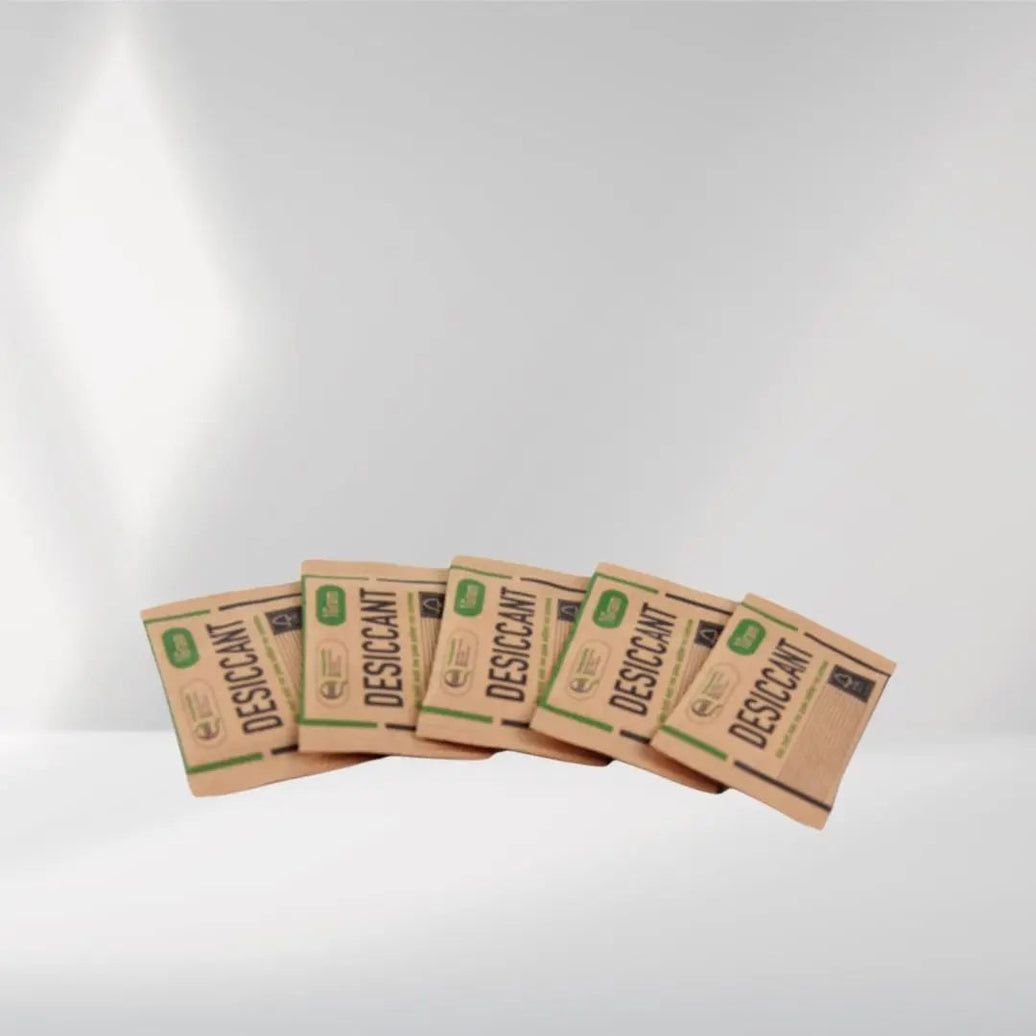
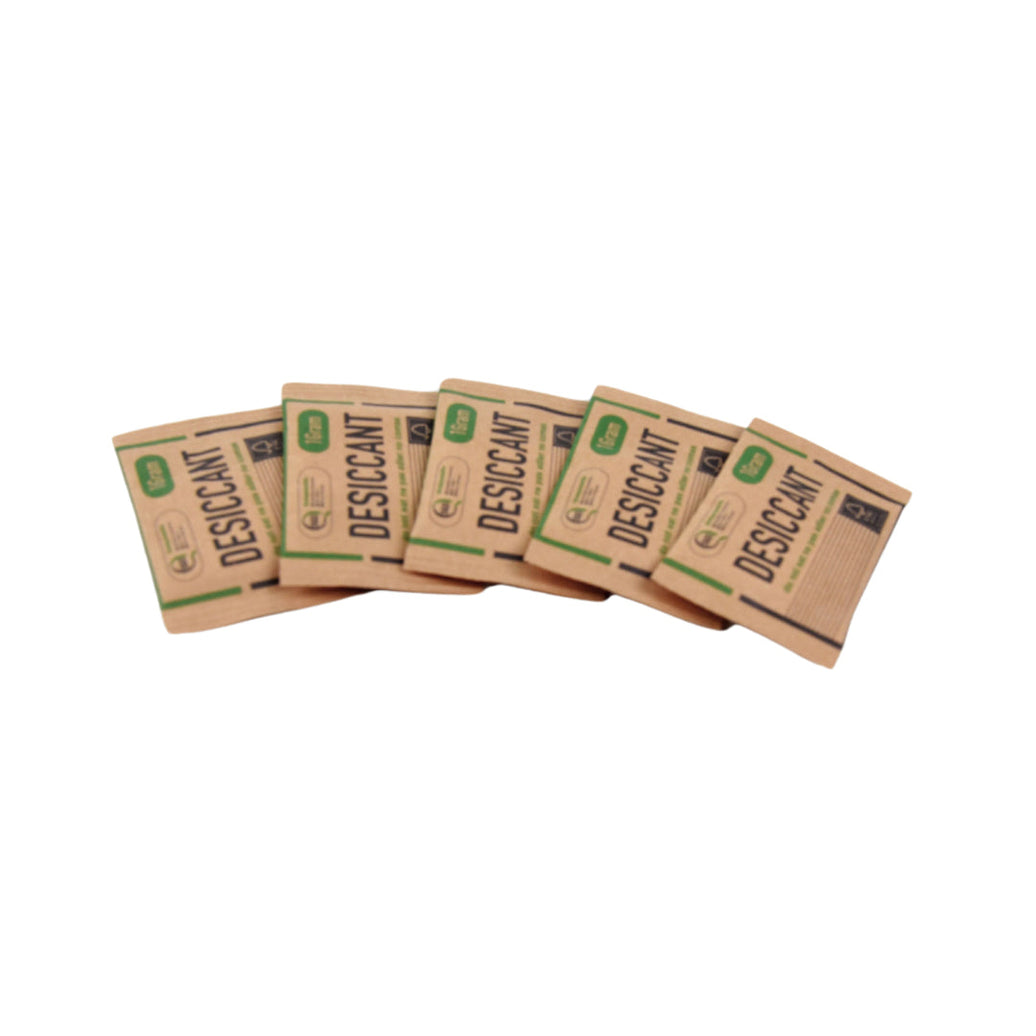
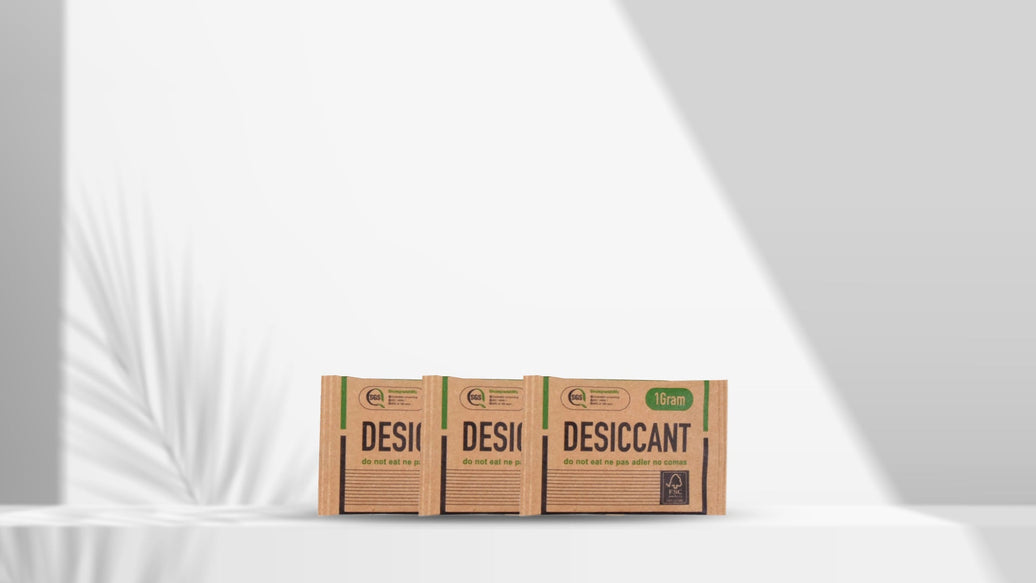
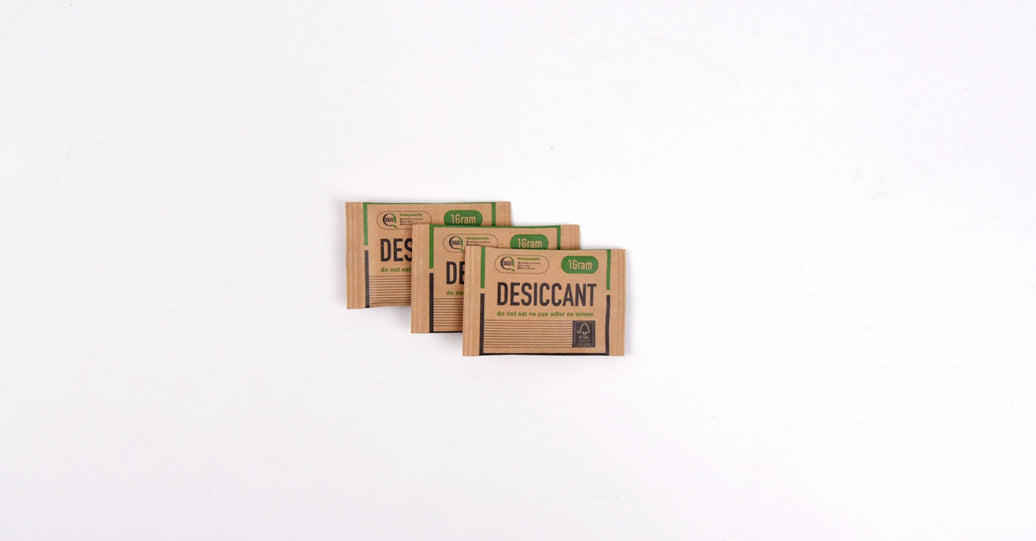
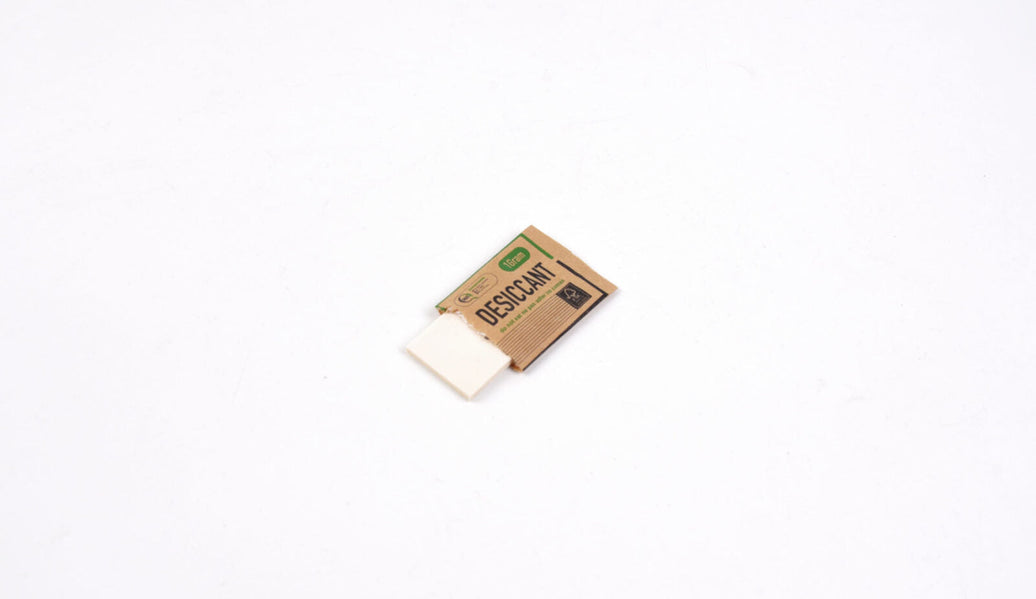
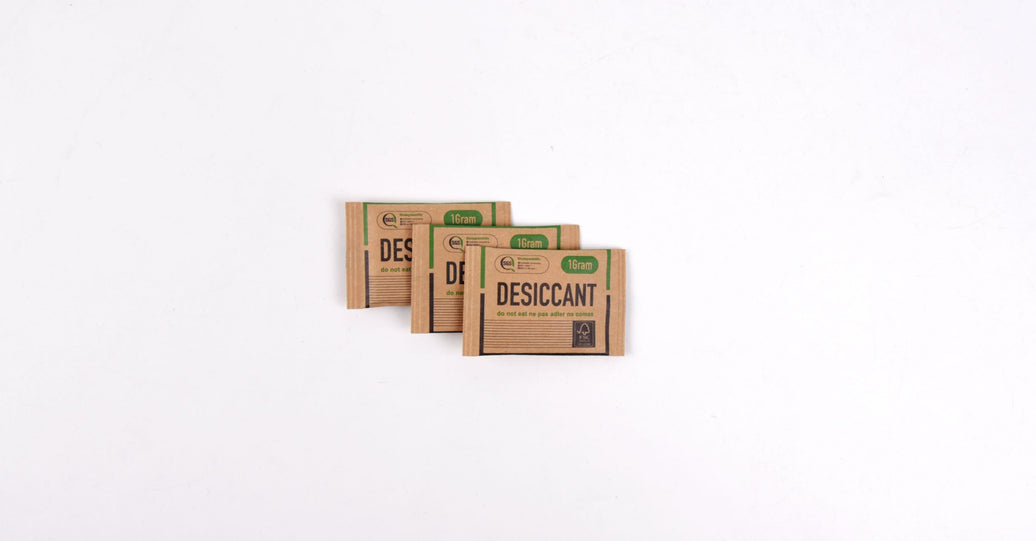
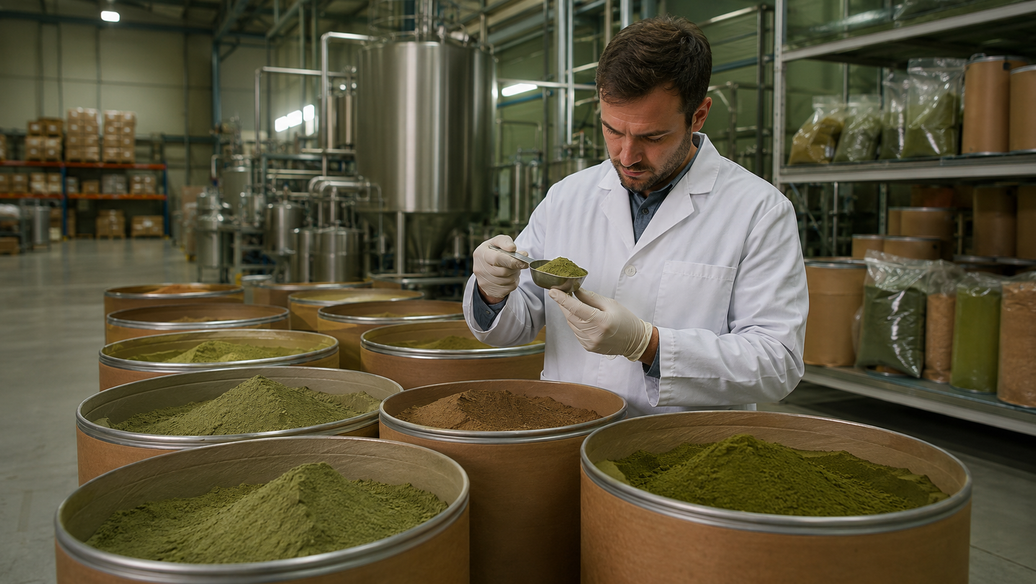
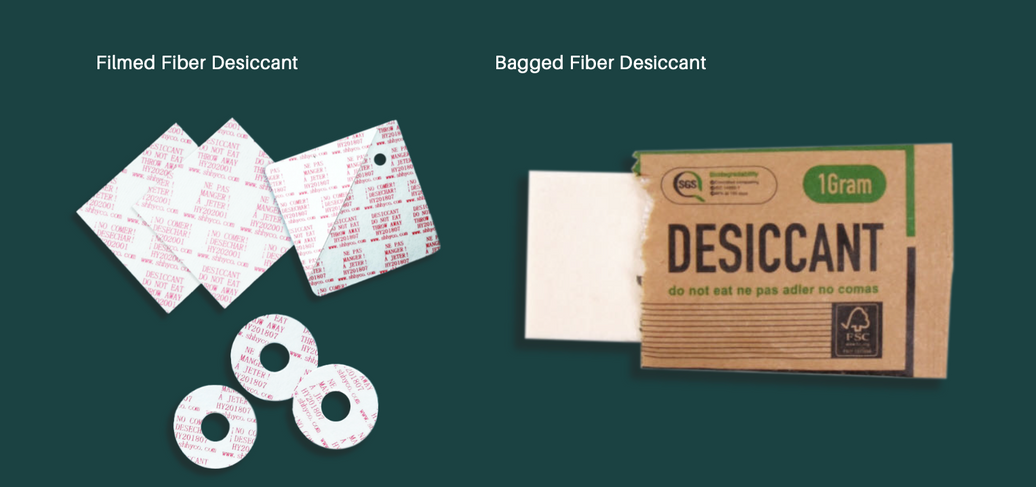
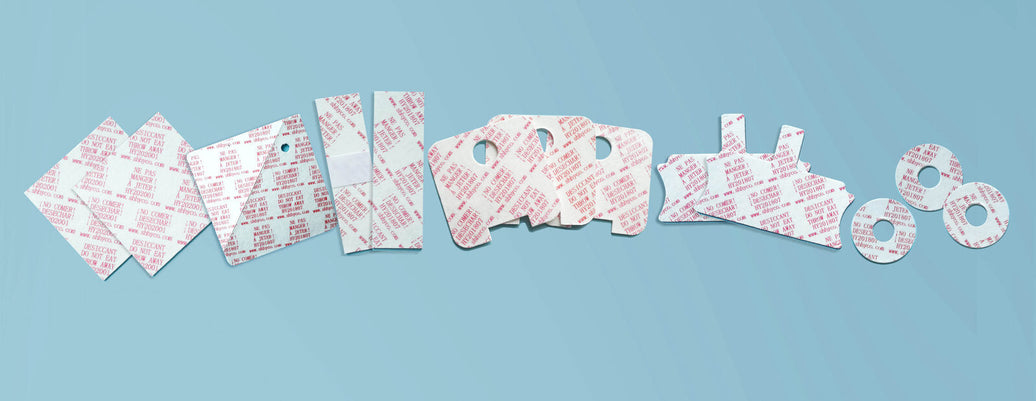
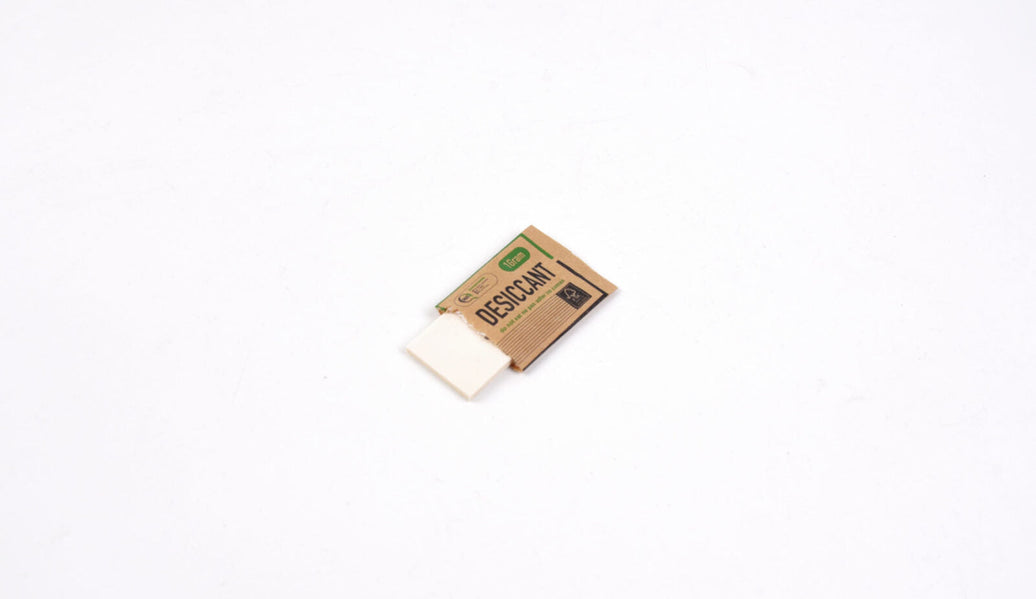
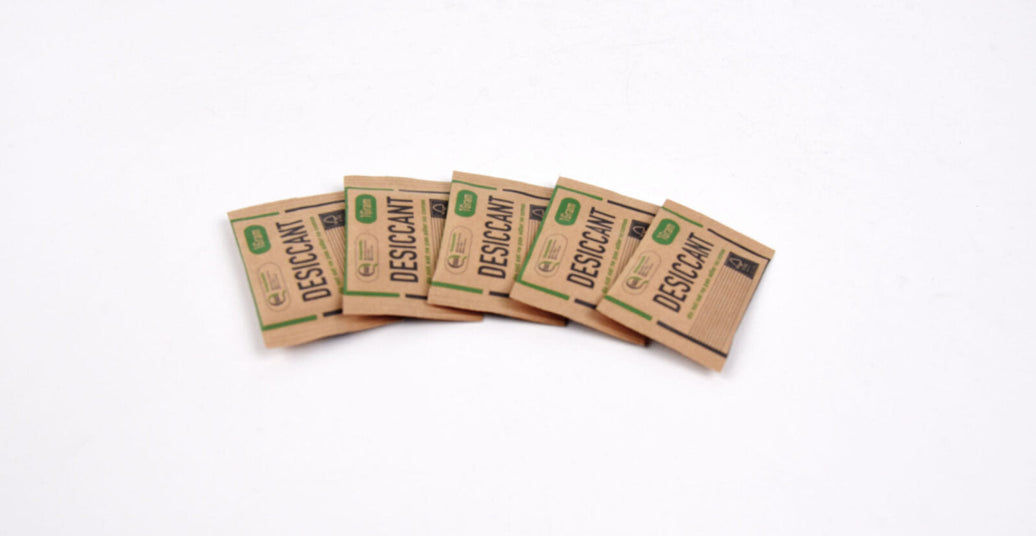
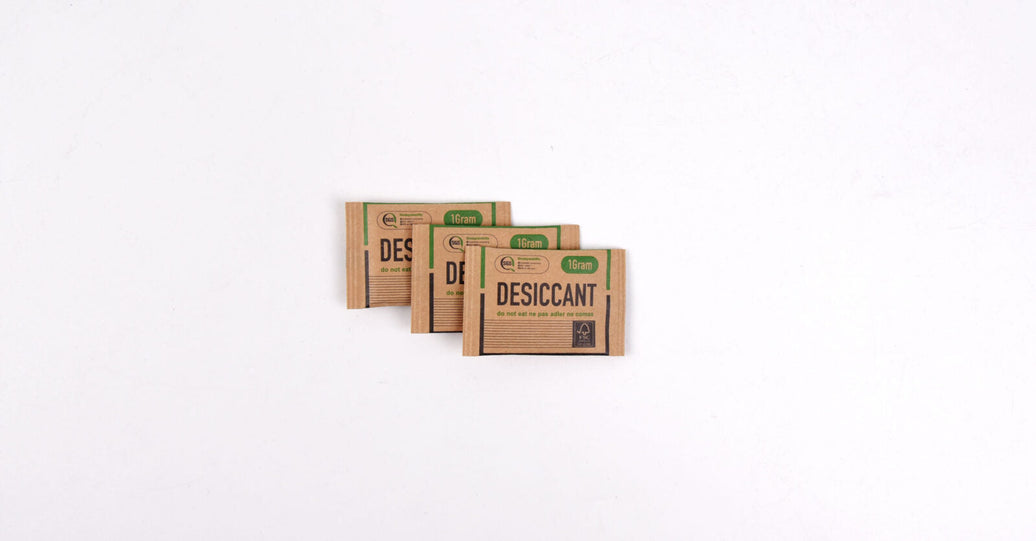
Quick answer: Only two families of natural desiccant reliably dry packaging air: mined clays and engineered plant-fiber desiccants. Bamboo charcoal is an odor sorbent, not a drying agent. Rice is a kitchen fix, not a spec. Loose calcium chloride absorbs aggressively but turns to brine, and buyers do not read it as natural. Plant-fiber desiccant is the option that combines a bio-based fiber, certified industrial compostability and adsorption above 70% of its own weight at 90% RH, about 2.3 times what silica gel holds at the same humidity.
Searches for a natural desiccant or a sustainable desiccant usually carry one signal: the buyer wants the eco story and the performance. The problem is that the word natural covers materials with completely different chemistry. ATMOSIScience reviews packaging programs across food, supplement and industrial powders, and the same confusion appears again and again, so this guide separates the materials by what they actually do.
What counts as natural in a desiccant
Three different claims hide behind one word. Mined-natural materials (bentonite and montmorillonite clay) come out of the ground and adsorb moisture in their pore structure. Bio-based materials (cellulose fiber and plant-derived matrices) are grown, then engineered into a functional format. Marketing-natural materials (bamboo charcoal, rice, salt blends) sound organic but either target odors instead of humidity or lack the capacity and consistency a packaging line needs.
What sustainable has to mean
Natural is about origin. Sustainable is about four things you can measure:
- Substrate: is the active material renewable (plant fiber) or mined and processed (silica, clay)?
- End of life: does the finished unit carry a compostability certificate, or does it default to landfill?
- Carbon: is there a product carbon footprint on file, or only a claim?
- Dose: how many grams must you ship to do the same drying job? Every gram is freight, fees and waste.
The six materials buyers ask about
| Material | Is it natural? | Drying performance | Watch-outs |
|---|---|---|---|
| Bentonite clay | Yes, mined | Moderate; weakens at low RH | Can release moisture when temperature rises; heavy dose (35 g per standard unit) |
| Bamboo charcoal | Yes, plant-derived | Weak for humidity | Built for odor and VOC control, not drying. A common mis-buy |
| Rice or raw starch | Yes | Low and inconsistent | No spec, no COA, attracts pests. Not a packaging option |
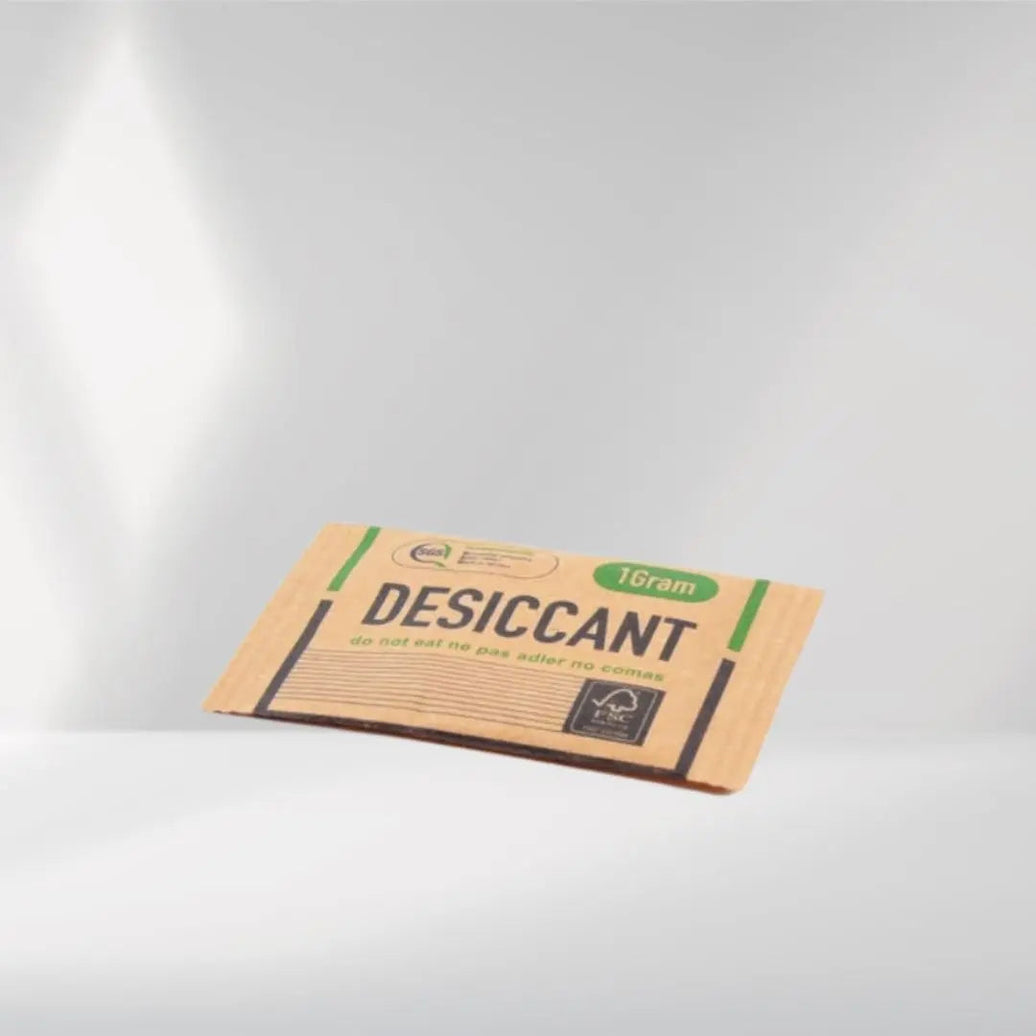
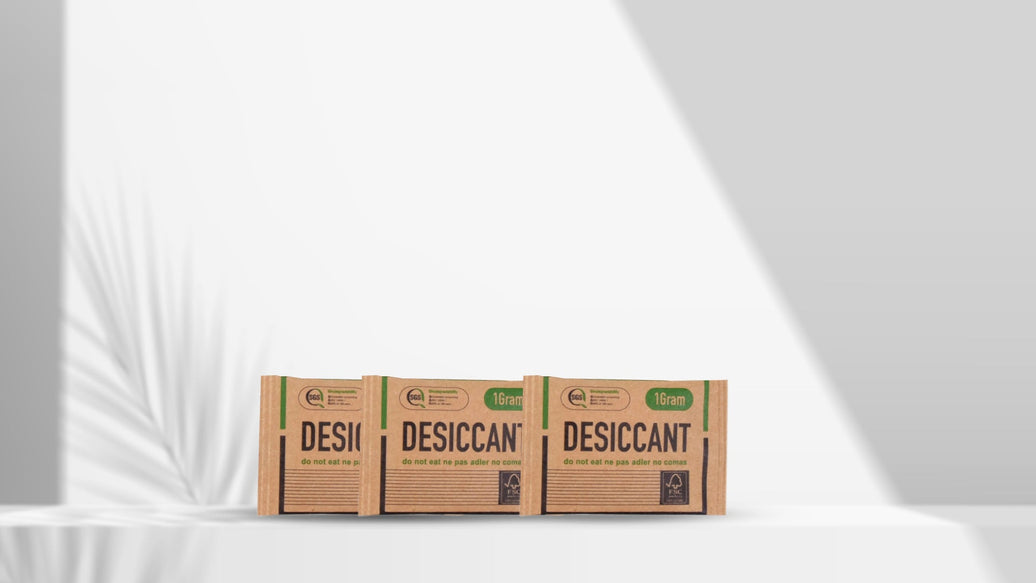
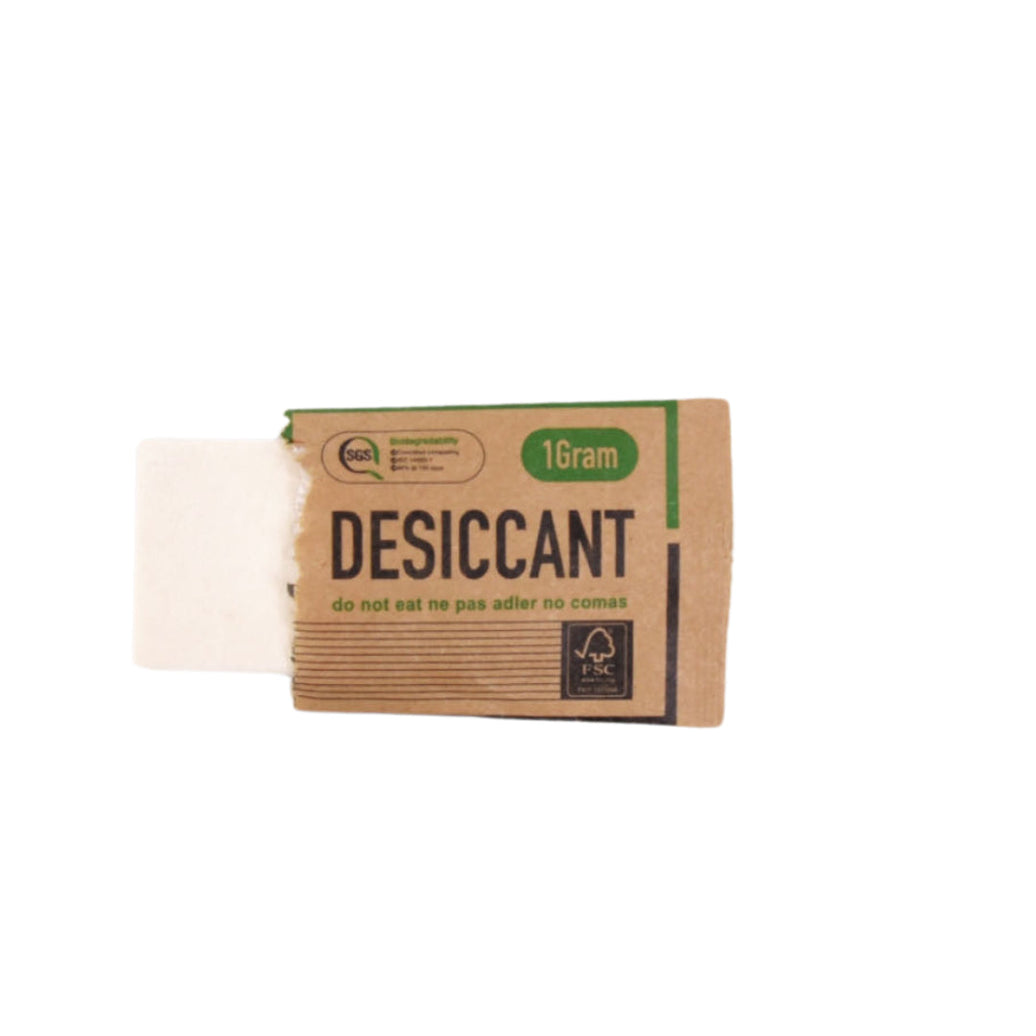
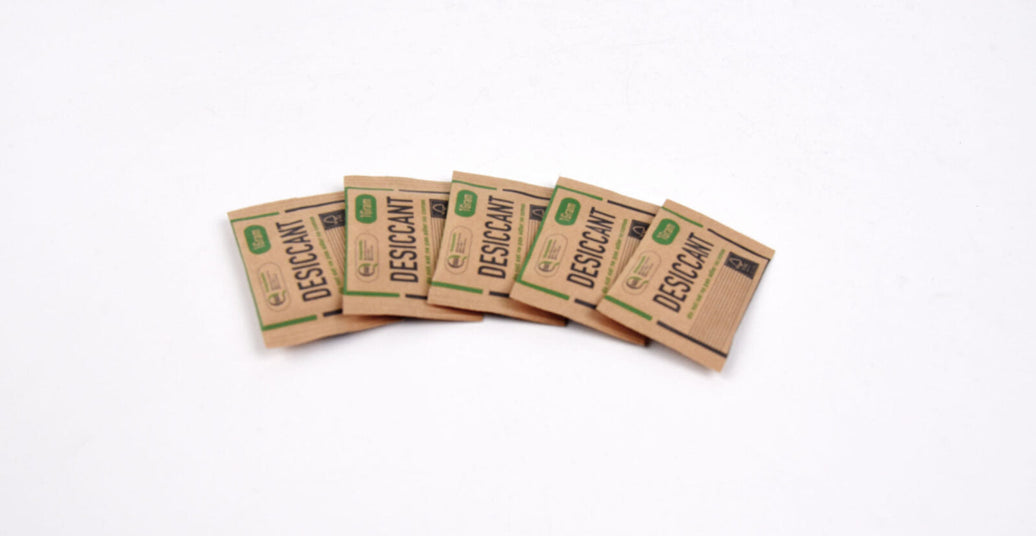
| Plant-fiber desiccant | Bio-based, engineered | High: over 70% of own weight at 90% RH | One-way, not regenerable. Ask which component each certificate covers |
| Silica gel | No, synthetic | Reliable general purpose | Not biodegradable; heavier dose than fiber (30 g per standard unit) |
| Loose calcium chloride | Mineral salt, not natural in buyer language | Very high uptake | Turns to brine; needs leak-proof containment |
Performance: what the adsorption numbers say
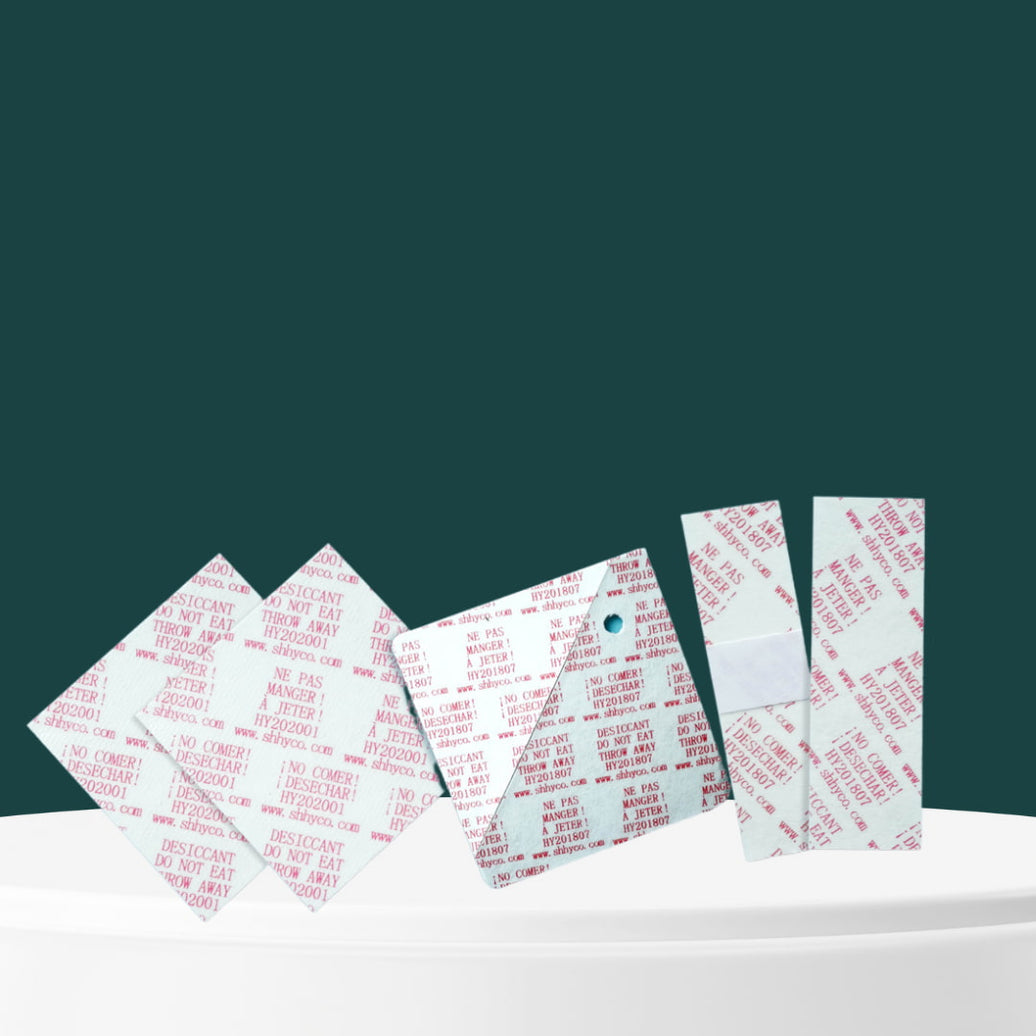
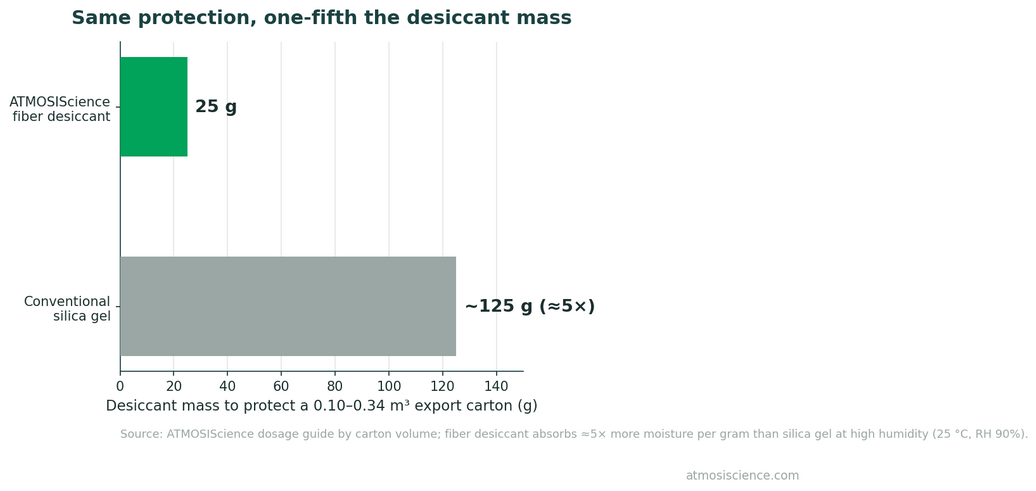
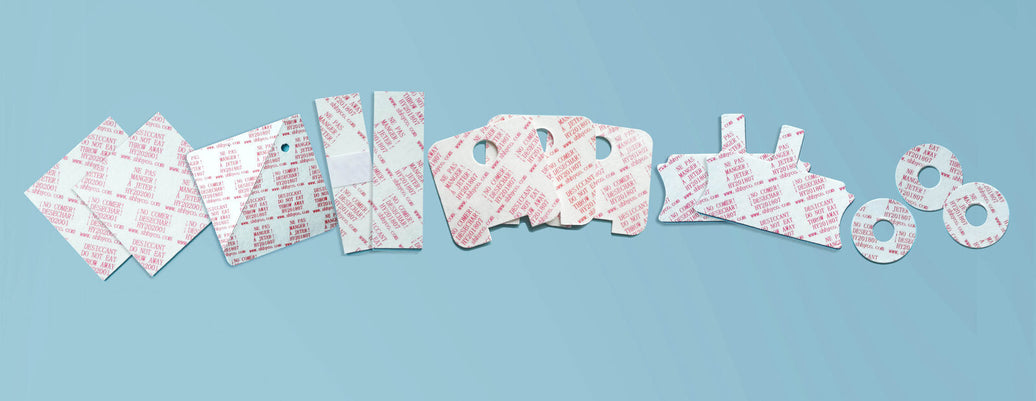
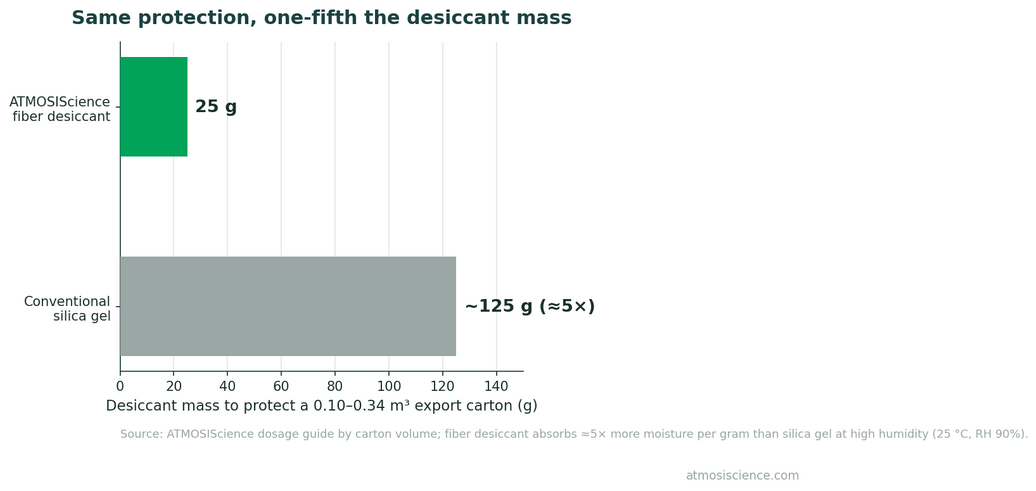
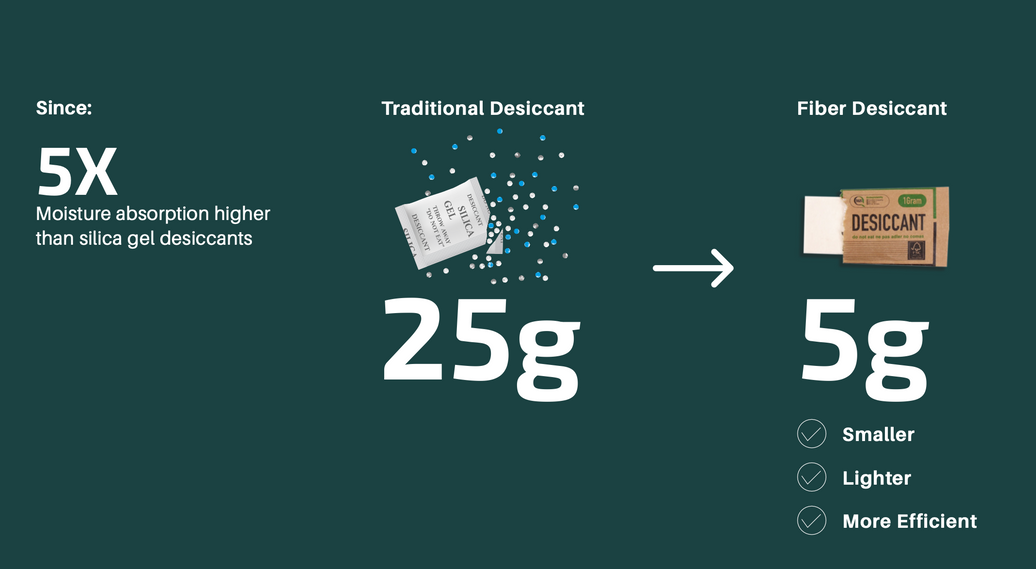
Marketing language aside, a desiccant is a capacity curve. ATMOSIScience fiber desiccant adsorbs more than 10% of its own weight at 20% RH, more than 35% at 50% RH and more than 70% at 90% RH (25°C). Silica gel holds about 30% at 90% RH, so fiber holds about 2.3 times more per gram in humid conditions. In practice, one standard desiccant unit takes about 18 g of fiber, 30 g of silica or 35 g of clay. The fiber core uses food-grade calcium chloride bound inside a plant-fiber matrix, which is how it reaches salt-level capacity without loose salt.
The honest limit: at very low humidity the gap narrows, and fiber desiccant is one-way. It is not dried out and reused like silica gel.

Sustainability receipts, not vibes
A sustainable desiccant claim should survive an audit. The documentation that matters: a product carbon footprint (ATMOSIScience fiber desiccant: 1.44 kg CO₂e per kg under ISO 14067, reported as 31.25% lower than silica gel per unit mass, before counting the smaller dose), a certificate showing the unit is industrially compostable, and food-contact documentation if the sachet sits near food. Clay ships with none of this beyond its mined origin. EU rules on generic environmental claims now hit vague eco language directly, as covered in the green claims update.

How to choose
Match the material to the job. If the pack sees normal warehouse conditions and cost rules everything, clay remains a workable mined-natural option, as long as you accept its temperature sensitivity (compared in Bentonite Clay vs. Fiber Desiccant). If the brand carries a compostable or plastic-reduction commitment, plant-fiber desiccant pairs certified end of life with capacity above silica. If the target is ultra-low RH under heat cycling, no natural material wins; that is molecular-sieve territory, covered in the capacity comparison.
Buyer checklist
- Ask for the compostability certificate itself: number, scope and issuing body. A leaf icon is not a certificate.
- Ask which component each certificate covers: the fiber core, the wrap or the finished unit.
- Ask for the carbon figure in kg CO₂e per kg, then multiply by your dose.
- Confirm food-contact documentation if the sachet goes inside the pack.
- Ask for the dosage equivalence math against your current silica spec. A serious supplier hands you a table, not an adjective.
FAQ
Is silica gel a natural desiccant?
No. Silica gel is synthesized amorphous silicon dioxide. It is inert and widely accepted, but it is not bio-based and not biodegradable.
Does rice really work as a desiccant?
Rice adsorbs small amounts of moisture slowly, which is why the phone-in-rice trick half-works. It has no defined capacity, no certificates and attracts pests. It does not belong in commercial packaging.
Is bamboo charcoal a desiccant?
Functionally, no. Activated charcoal targets odors and VOCs. Its moisture capacity is far below purpose-made desiccants, so specify it for smell control, not drying.
Is a compostable desiccant home compostable?
Not by default. Certified industrially compostable means it breaks down in an industrial composting facility. Home compost is a separate claim that needs its own certificate.
What is the most sustainable desiccant with real performance?
On current documentation: plant-fiber desiccant. Bio-based fiber, certified industrially compostable, an ISO 14067 footprint of 1.44 kg CO₂e per kg, and about 2.3 times the capacity of silica gel per gram at high humidity.
Documents
ATMOSIScience fiber desiccant: SGS compostability testing to EN 13432 and ASTM D6400, ISO 14067 carbon footprint, SGS RoHS, SGS REACH SVHC screening and SGS anti-mould test. The full list is in the supplier qualification pack.
Get the documentation pack
Compostability certificate, carbon data, food-contact documentation and the adsorption spec sheet: the receipts behind every claim on this page, ready for your QA and sustainability team.
Prefer email? info@atmosiscience.com