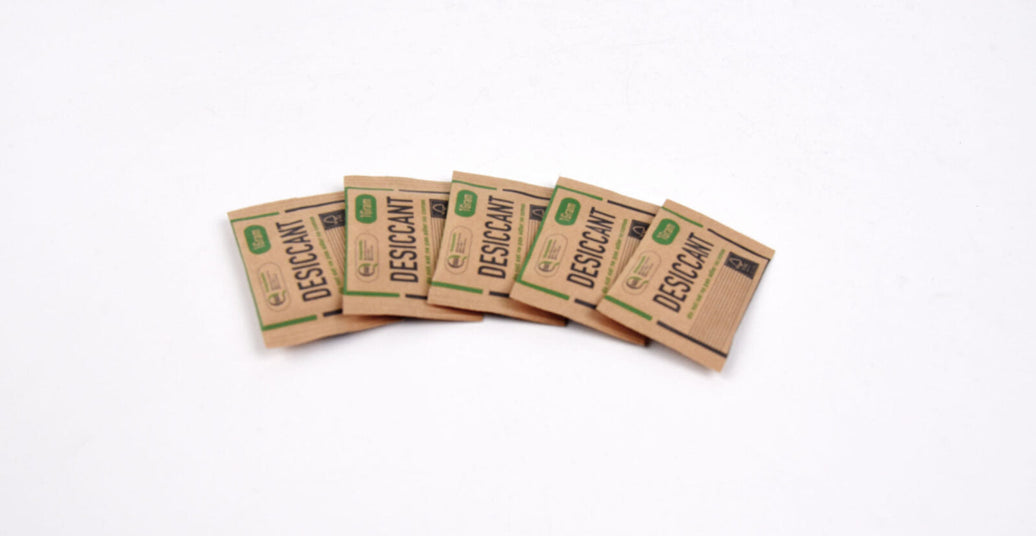
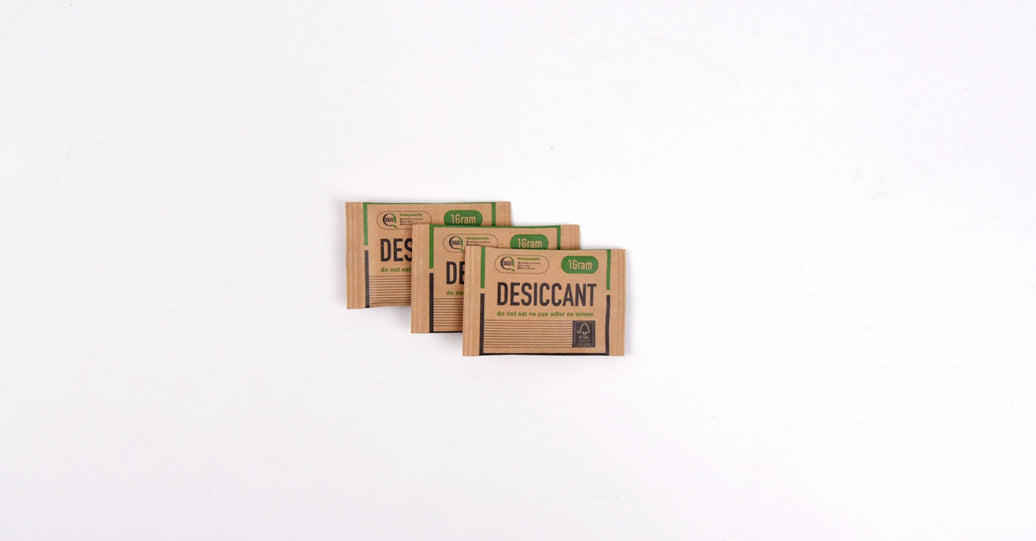
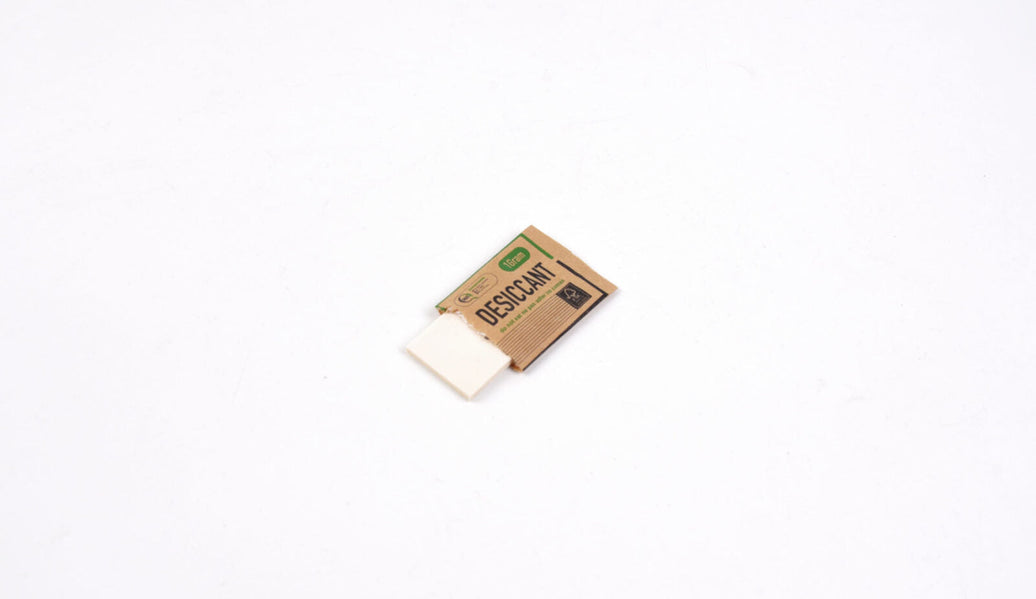
When a buyer specifies a "sustainable desiccant" today, the shortlist they are handed is almost always bentonite clay wrapped in a cellulose bag. The bags differ by brand; the chemistry does not. Clay-based options all deliver roughly the same absorption — around 30% by weight, the same band as silica gel. The buyer thinks they are choosing performance; they are really choosing between brands of the same active.
This article compares bentonite clay vs. fiber desiccant honestly — on the bag, on the active, and on the numbers that actually affect a packaging program.

The "green desiccant" trap: same chemistry, different label
Bentonite clay is a mineral. As a desiccant it works by micropore physical adsorption — water molecules cling to a porous surface — the same basic mechanism as silica gel. That is why its capacity lands in the 25 to 35% by-weight band, essentially silica-gel territory. Wrapping it in a compostable cellulose bag makes the sachet greener at end of life, but it does not change what the active can absorb.
So the sustainability story improves while the performance story stays flat. For many buyers that is an acceptable trade. For anyone fighting moisture at scale, it leaves capacity on the table.
A different chemistry: plant fiber as the active
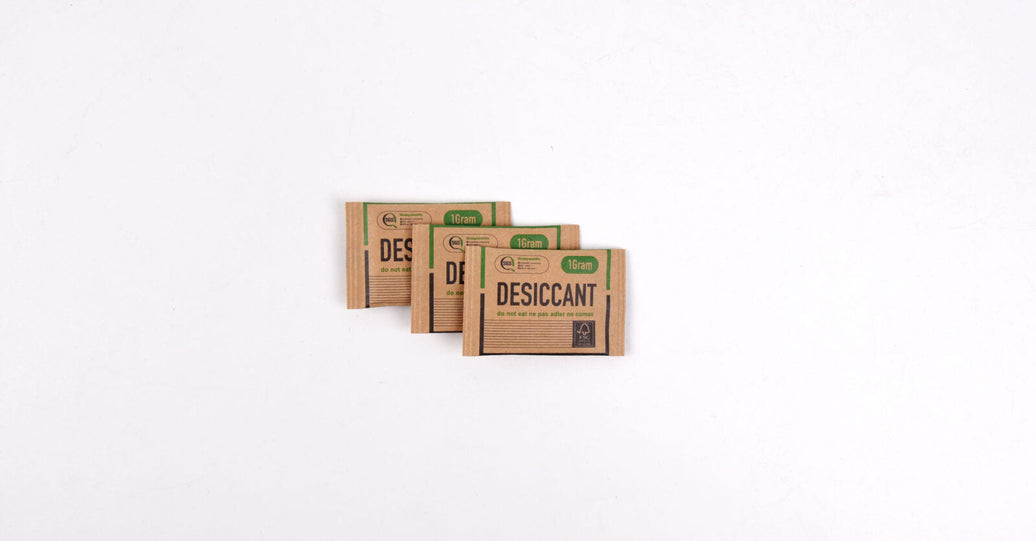
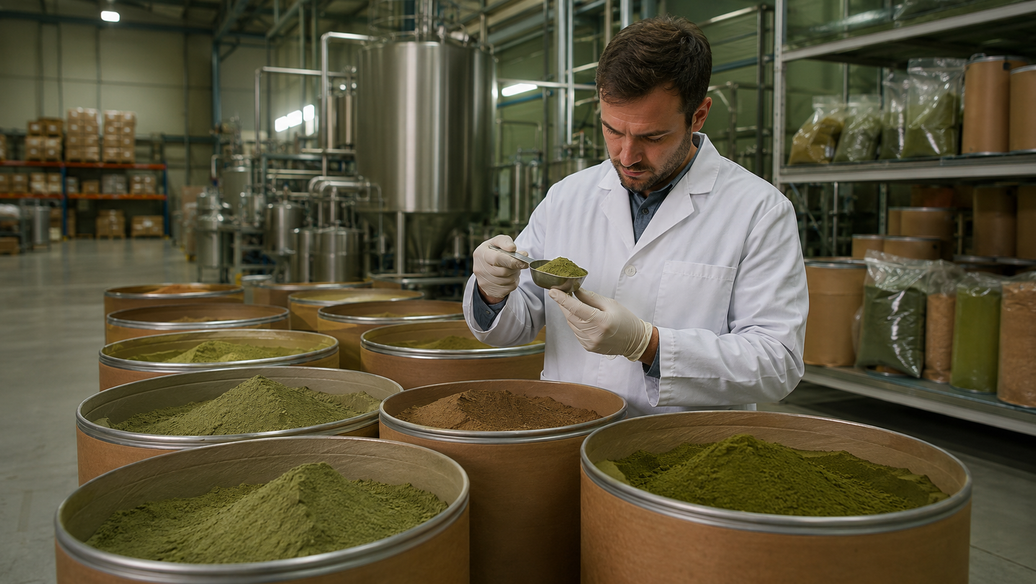
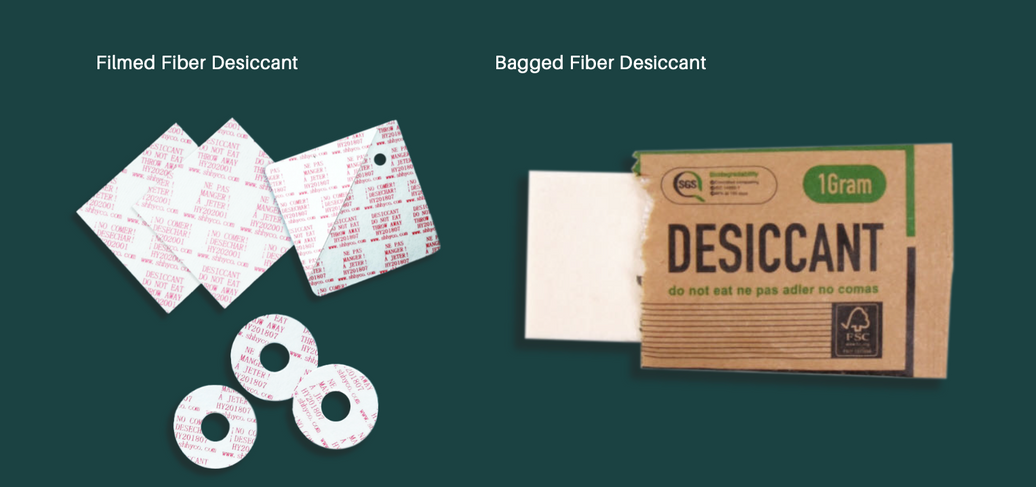
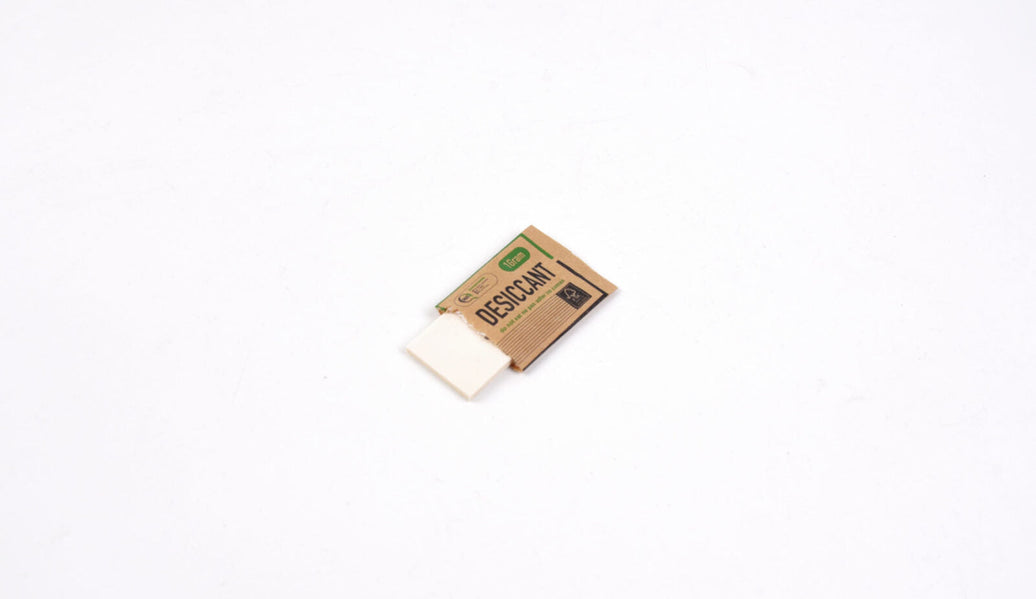
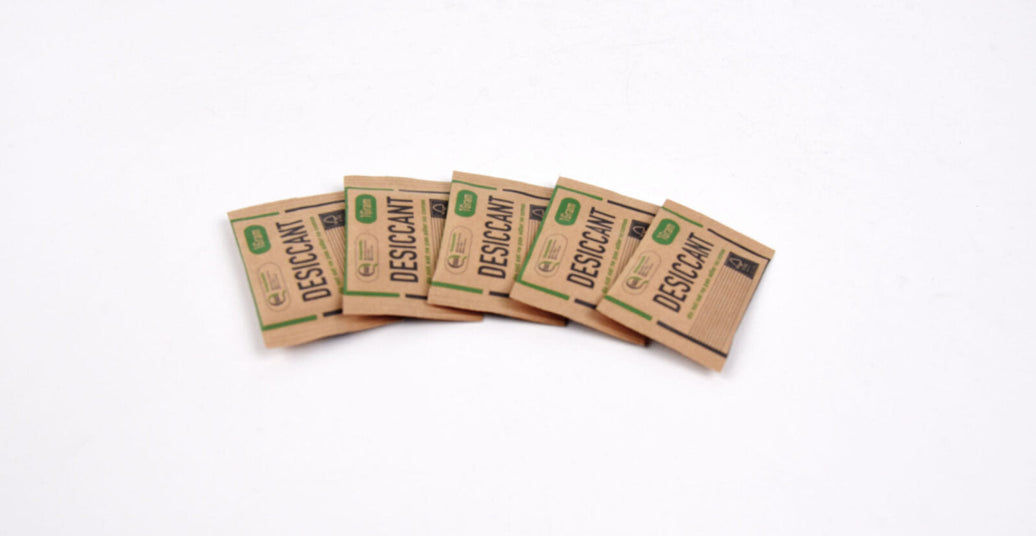
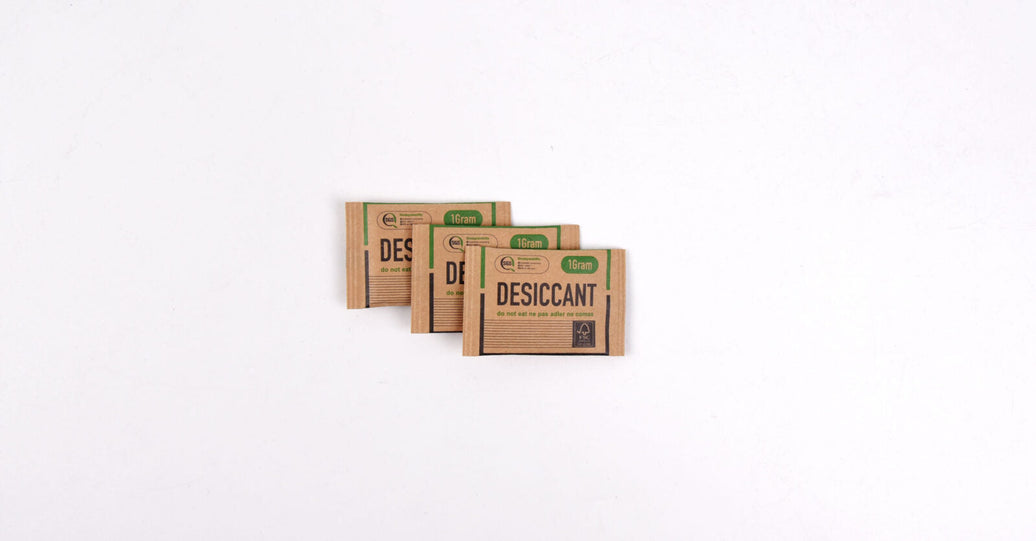
ATMOSIScience fiber desiccant takes a different route. The active is the plant fiber itself — porous lignocellulose — loaded with calcium chloride and bound into a patented composite, then wrapped in a certified-compostable bag. That combination uses two mechanisms at once: capillary physical adsorption draws moisture into the fiber's micro-channels faster than dense clay, and the calcium chloride binds water through hydrogen bonding for high capacity, without the leakage of loose CaCl₂.
The result is a desiccant where the sustainability story and the performance story are, unusually, the same story.
Head-to-head: fiber vs. silica gel vs. bentonite clay
| Attribute | ATMOSIScience FPH-1 | Standard silica gel | Bentonite clay |
|---|---|---|---|
| Max absorption (% of own weight) | >100% | ~30% | ~30% |
| Food-contact safe | Yes — FDA 21CFR175.300 | Restricted | Yes (mineral, inert) |
| Bag compostability | Yes — ASTM D6400 + EN 13432 | Not compostable | Usually paper / cellulose only |
| Substrate biodegradability | 100% biodegradable plant fiber | Mineral — not biodegradable | Mineral — inert, not biodegradable |
| Carbon footprint (kg CO₂e/kg) | 1.44 | ~2.10 | ~1.80 (clay mining + heat) |
| Reusable by air-drying | Yes | Requires oven | Possible but slow |
What the numbers mean for a buyer
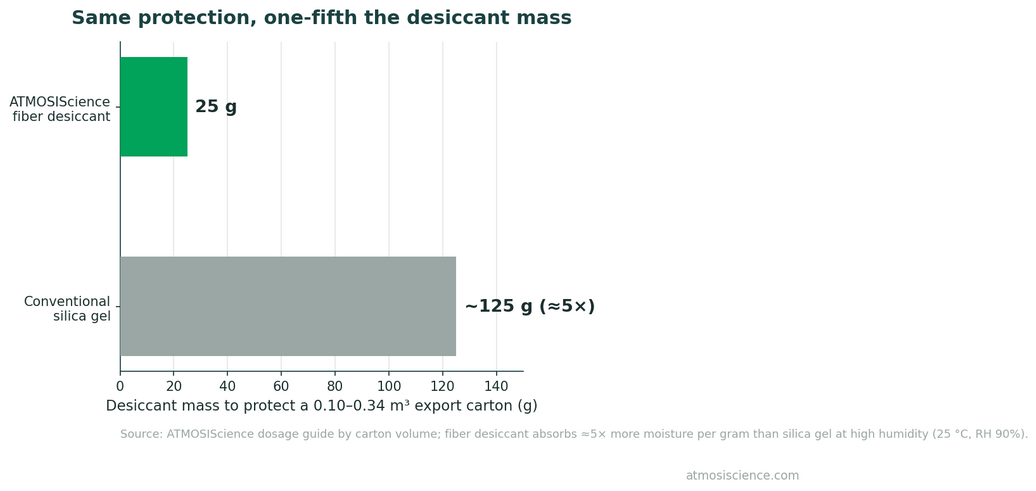
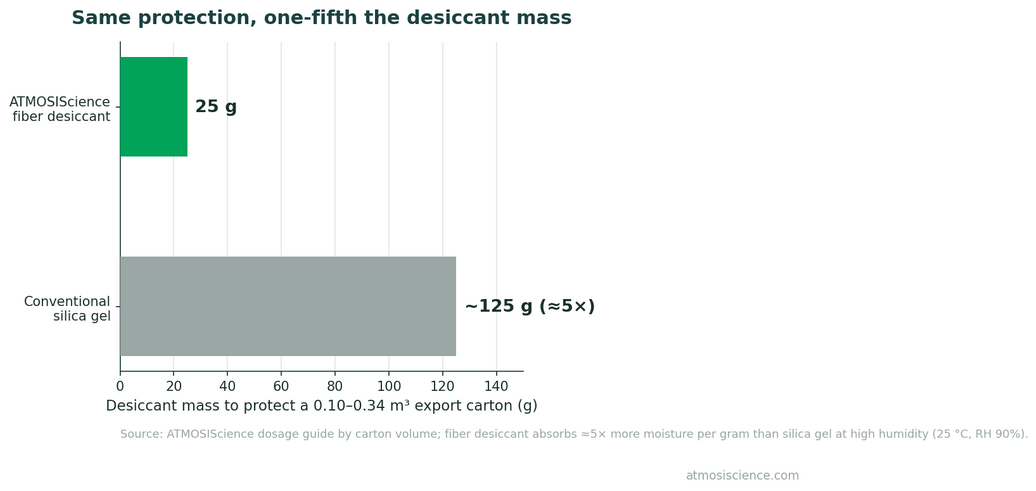
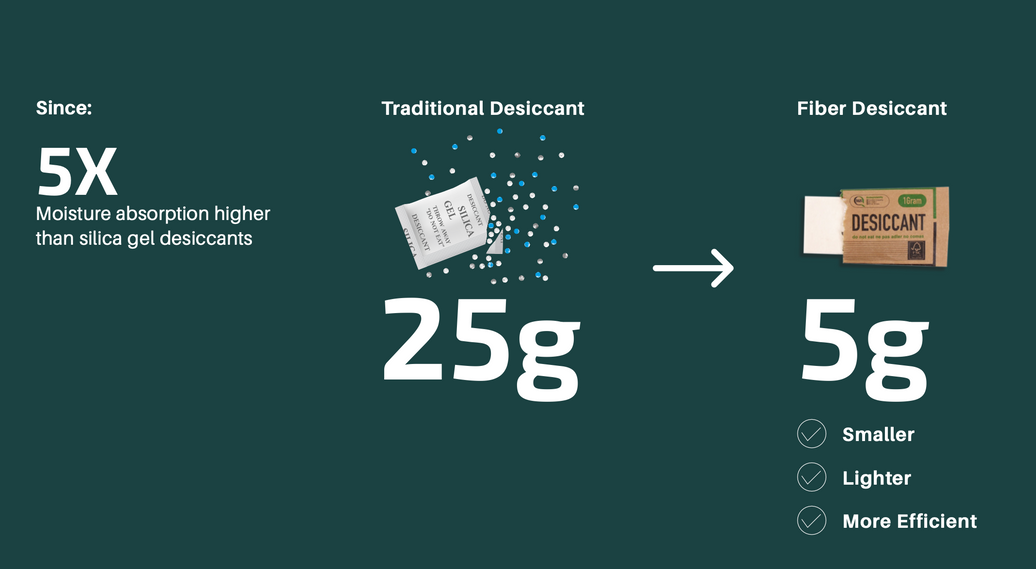
The capacity gap is the headline: above 100% of weight for the bagged fiber versus around 30% for clay means roughly one-third to one-fifth of the mass does the same moisture job. That cascades into lower material cost, lighter freight, and a smaller package footprint. The fiber substrate is also genuinely biodegradable — not just the bag — whereas clay leaves an inert mineral behind. And the carbon footprint is lower than both alternatives, because clay still carries the energy cost of mining and heat-activation.
Clay is not a bad desiccant. It is simply a silica-gel-class active in a nicer bag. The fiber composite is a different class of performance with an equal or better sustainability profile.
Frequently asked questions
Is bentonite clay desiccant better than silica gel?
On sustainability, the compostable bag is better; on absorption, clay is in the same ~30% band as silica gel. The active chemistry is comparable — both rely on physical adsorption.
Why does fiber desiccant absorb more than clay?
It combines capillary physical adsorption in the porous fiber with chemical binding by calcium chloride, delivering above 100% of its weight (bagged) versus around 30% for clay.
Is fiber desiccant as sustainable as clay?
Equal or better: both can use a compostable bag, but the fiber substrate is fully biodegradable while clay is an inert mineral, and the fiber's carbon footprint (1.44 kg CO₂e/kg) is lower than clay's (~1.80).
Can clay desiccant contact food?
Clay is generally inert and food-tolerated, but always verify the specific product's documentation. ATMOSIScience fiber desiccant is documented under FDA 21CFR175.300.
Compare it on capacity, not just the bag
ATMOSIScience supplies plant-fiber desiccant that matches clay on sustainability and beats it on capacity, footprint, and food-contact documentation.
Request the comparison data and bulk pricing on our desiccant solutions page, evaluate the material via the Fiber Desiccant, or contact our team.
Related reading: Calcium Chloride vs. Silica Gel vs. Fiber Desiccant · The Science of Fiber Desiccant
Get a desiccant spec & bulk quote for your product
Tell us about your packaging needs, and our sales team will respond with a customized fiber-desiccant solution, supporting certificates and competitive bulk pricing.