Quick answer: A desiccant RFQ that only says "2 g silica sachet, food grade" will return quotes that cannot be compared. A usable specification states nine things: the moisture duty to be met, adsorption capacity with test conditions, physical format and dimensions, sachet material and its compliance status, dust and foreign-body requirements, packaging and case configuration, documentation required, acceptance criteria with test method, and change-control terms. Write those nine and every quote becomes comparable on the same axis.
Most desiccant RFQs describe a product. The better ones describe a duty. The difference decides whether responses can be evaluated at all.
Describing a product — "1 g silica gel sachet, Tyvek, food grade" — locks in the incumbent's design and invites everyone to bid the same thing at a slightly lower price. Describing a duty — "maintain below 35% RH inside a 250 ml HDPE bottle for 24 months at 30°C/75% RH" — invites suppliers to propose the best configuration and gives procurement a real basis for comparison.
The nine lines
1. Moisture duty
State the enclosure, its volume or surface area, the measured package MVTR if known, the storage condition, the required duration and the target in-pack RH. If the MVTR is unknown, say so — an honest gap is better than a guessed number. Background: desiccant dosage by MVTR.
2. Adsorption capacity with test conditions
Never accept a bare percentage. Require capacity at a stated RH and temperature, and state which point you will evaluate on. A specification line that reads "≥35% of own weight at 50% RH, 25°C, equilibrium" is comparable. "High capacity" is not. Red flags to watch for are collected in how to compare desiccant spec sheets.
3. Format and dimensions
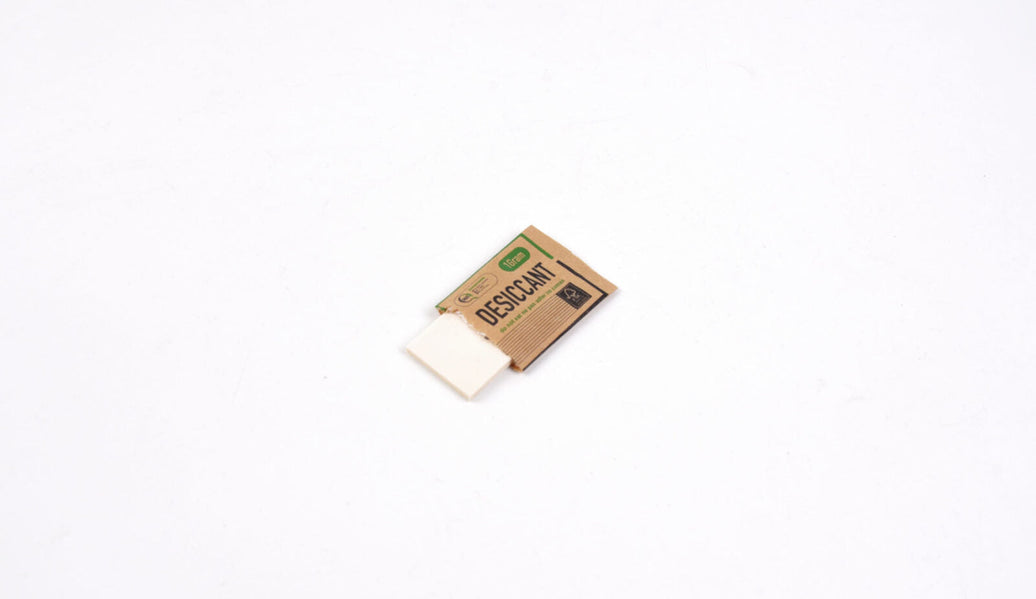
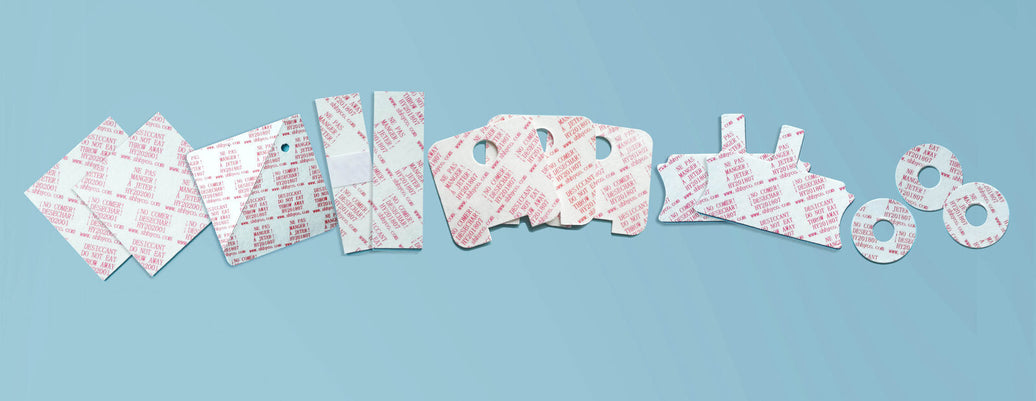
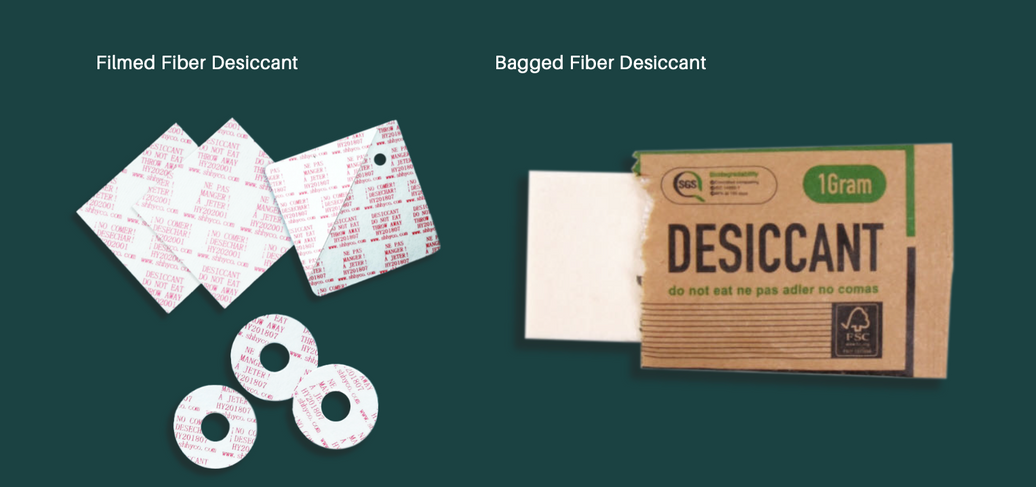
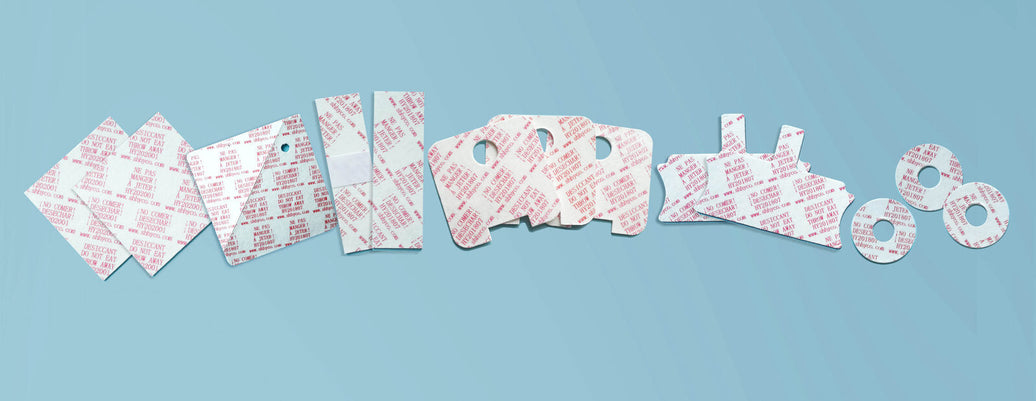
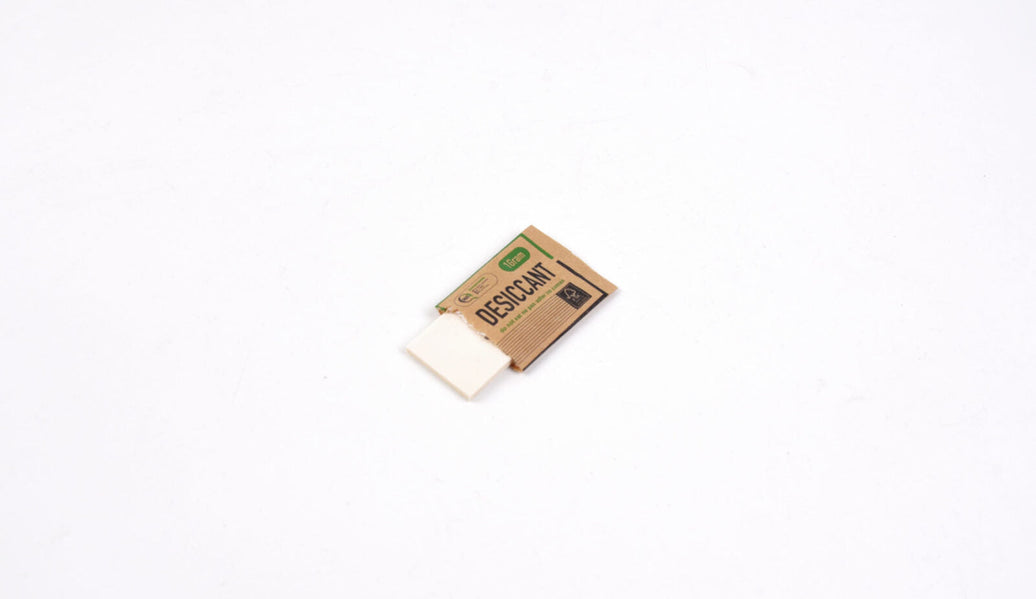
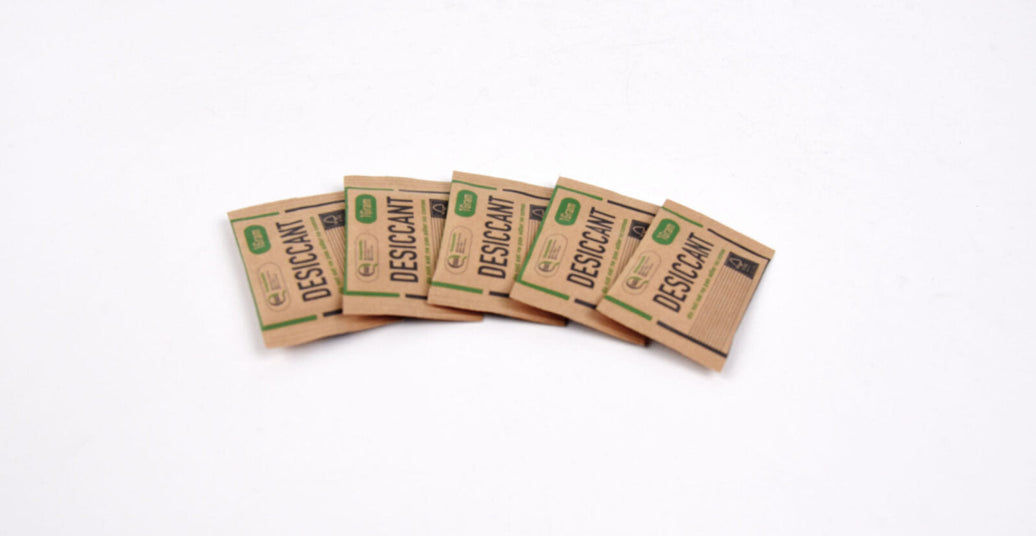
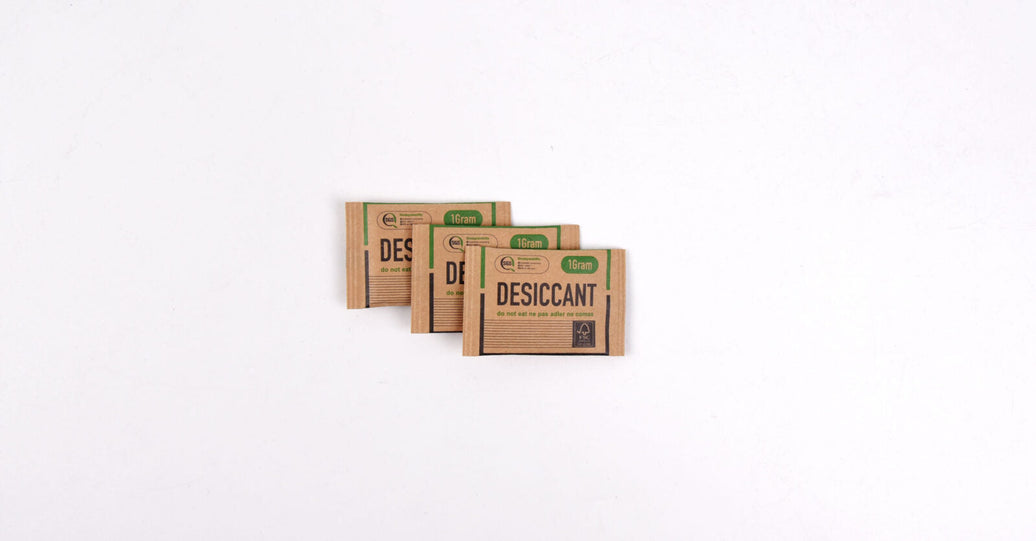
Sachet, canister, film card or die-cut pad, with maximum dimensions and thickness, and the tolerance your line can accept. If a dispenser feeds it, state stiffness and flatness requirements — they decide line speed more often than price does. See dispenser compatibility.
4. Sachet or carrier material and compliance status
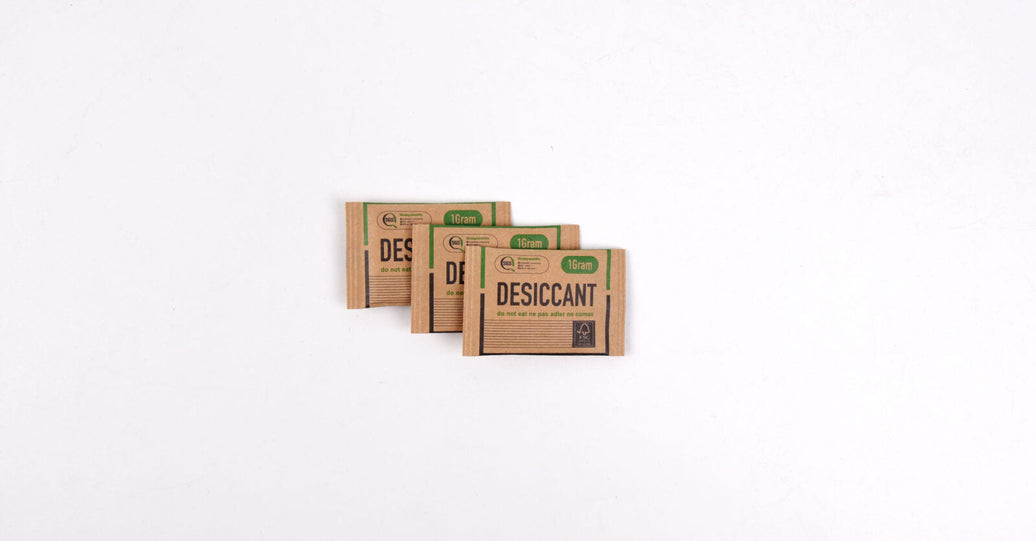
Specify the outer material and the compliance regime it must satisfy: food-contact documentation, compostability certification, recyclability compatibility with your primary pack, or all three. Naming the regime matters more than naming the material. Reference: food-contact desiccants and FDA 21 CFR.
5. Dust and foreign-body requirements
State whether loose-fill granular product is acceptable at all. Many food and pharma lines now exclude it outright. If metal-detectability or X-ray visibility is required, say so here rather than discovering it at line trial.

6. Packaging, case configuration and pre-conditioning
Desiccant arrives dry and starts working immediately on exposure. Specify the inner barrier packaging, units per inner bag, and the maximum open time your line will tolerate. An RFQ that ignores this produces a first delivery that is partly spent before the run starts.
7. Documentation
List exactly what must accompany each shipment and what must be supplied once at qualification. Typical: specification sheet, SDS, per-lot COA, compliance declarations, quality-system certification, and shipping documents for the origin country. The full checklist is in the supplier qualification pack, and export paperwork in desiccant export documentation.
8. Acceptance criteria and test method
State how incoming lots will be judged and by which method — loss on drying, capacity check at a defined condition, dimensional check, seal integrity. Include the sampling plan. Suppliers price risk; a clear acceptance basis lowers their risk and usually your price.
9. Change control
Require written notification before any change to substrate, sachet material, print, dimensions or manufacturing site. This is the single clause most often missing and most often regretted.
What to ask for alongside the quote
- Samples in the exact proposed configuration, not a nearest-available substitute.
- MOQ, lead time and the minimum reorder interval — see desiccant MOQ and lead times.
- Landed cost, not unit price. Freight and volumetric weight can reverse a ranking on their own.
- Named contact for technical questions, separate from the sales contact.
Two clauses worth adding in 2026
- Packaging-fee data. Where you carry EPR obligations, request the desiccant's material composition and unit weight in a reportable format. Fee schedules are weight-based, and desiccant is now assessed as part of the packaging system.
- Product carbon footprint on request. Increasingly asked for by retail customers. A supplier who can produce a verified figure will say so; one who cannot will change the subject.
FAQ
Should the RFQ name a desiccant material?
Only if a regulatory or customer requirement forces it. Specifying duty rather than chemistry keeps competitive options open and often produces a lighter, cheaper answer.
How many suppliers should an RFQ go to?
Enough to get a genuine spread, but the number matters less than the specification. Three good responses to a clear spec beat eight responses to a vague one.
What if we do not know our package MVTR?
Say so and provide the structure description. A capable supplier can estimate a range and propose a measurement, and you will learn something about their engineering depth from the answer.
Can we ask for a trial before committing to MOQ?
Standard practice. Structure it as a defined worst-case evaluation with pass criteria agreed in advance — the protocol is in the worst-case sample evaluation.
Who should own the specification internally?
Packaging engineering usually drafts it, QA approves the compliance and acceptance clauses, and procurement owns commercial terms. Problems arise when one function writes all three.
Send us your draft spec and we will answer it line by line
ATMOSIScience responds to desiccant RFQs with capacity data at your stated conditions, sample configurations and the full documentation set — no placeholder numbers.
Prefer email? info@atmosiscience.com