Quick answer
A clumped-powder ticket is packaging data. Reply in a way that keeps the customer, tag every ticket with five facts (SKU and flavor, lot number, pack format, sealed or opened when the clumps appeared, weeks since delivery), then read the pattern. Clumps found when the seal is first broken point at the fill or the pack. Clumps that show up weeks into use point at the headspace after opening, which is where a desiccant sized for the opened life of the tub does its work.
Send us your most-complained SKU See the fiber desiccant card
Samples ship with the spec sheet. Tell us the tub size and fill weight and we size the card for you.
Every powder brand gets the same ticket. "My tub turned into a brick." Most help centers answer it the same way: powders can take on moisture, give the tub a shake, break it up with a fork. All of that is true. It also closes the conversation without fixing anything, and next week the same ticket arrives from a different customer.
This playbook treats the complaint as what it is: a free field report on how your pack performs in real kitchens and gym bags. It covers what to say, what to record, how to read the pattern, and how to tell when the fix belongs to packaging rather than to support.
What the usual reply tells the customer
Support teams write deflection replies in good faith. Read them from the other side of the screen and they land differently.
| Common reply | What the customer hears | A better line |
|---|---|---|
| "Clumping is normal for this product." | You knew, and shipped it anyway. | "Some of our ingredients attract water, which is why they dissolve well. Here is how to loosen it, and here is what we are doing about it." |
| "Store it in a cool, dry place." | This is my fault. | "Three habits keep it loose: lid on straight after scooping, a dry scoop, and a shelf away from the kettle." |
| "Send it back and we will replace it." | More work for me, for a product I already doubt. | "Send a photo and the lot number from the base of the tub and we will sort it out." |
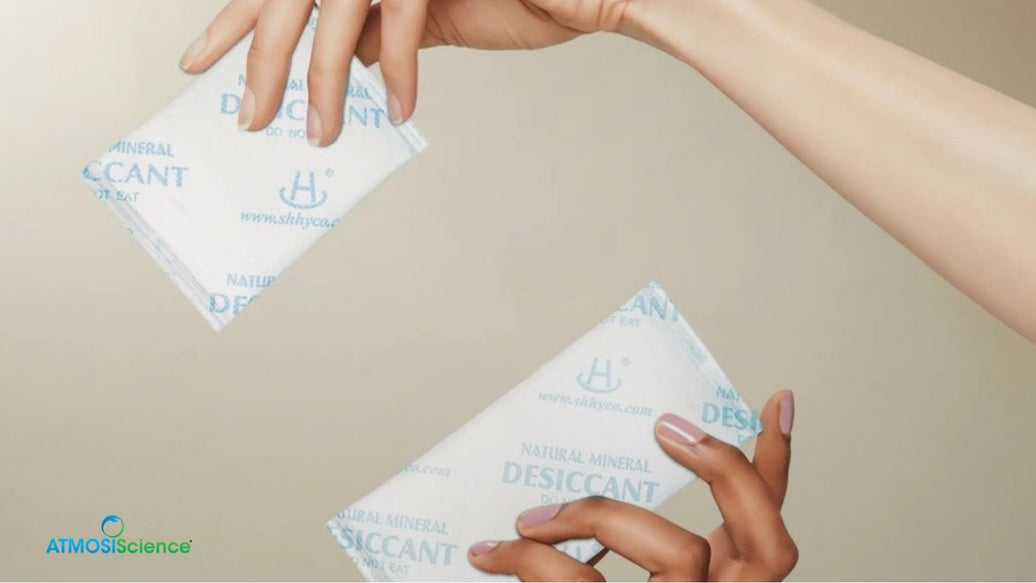
| "Add a desiccant packet saved from another product." | The tub should have come with better protection. | "Keep the desiccant that came in the tub until the powder is finished." |
That last row deserves a second look. When a brand's own help page tells customers to add a desiccant, support has already reached the conclusion that packaging has not acted on. The pack needs a desiccant sized for the job, and it needs to stay in the tub.
A reply template for your help center
Adapt the wording to your voice. Keep the last paragraph, because it is the part that collects the data.
Why is my powder clumpy or hard?
Clumping happens when powder takes on moisture from the air. Several ingredients in this product attract water, which is part of why they mix well.
If the powder looks, smells and tastes as it should, clumping is a change in texture. Shake the closed tub firmly or break the clumps up with a dry spoon. If you notice an unusual smell, a change in color or anything that looks like mold, please stop using it and contact us.
To keep it loose: close the lid firmly straight after scooping, use a dry scoop, keep the tub away from the kettle, the stove and the bathroom, and leave the desiccant in the tub until the powder is finished.
If it keeps happening, send us the lot number printed on the base of the tub and tell us whether the powder was already clumped when you first opened it. That helps us fix the cause.
Tag every ticket with five facts
A spreadsheet is enough. What matters is that every clumping ticket carries the same five fields, so that a month of tickets can be sorted.
- SKU and flavor. Flavor systems differ in how much water they pull in.
- Lot number. It separates a one-run problem from a design problem.
- Pack format and size. Tub, pouch or stick pack, and the fill weight.
- Sealed or opened. Was it clumped when the seal was first broken, or did it harden during use?
- Weeks since delivery. Add the state or region if you have it, and the month.
Read the pattern
Once tickets are tagged, most clumping problems sort themselves into one of six shapes. Each has a different owner.
| What the tickets show | Most likely cause | Who owns the fix |
|---|---|---|
| Clumped when the seal was first broken, across many lots | Moisture reaches the powder during storage and transit, or the desiccant is too small for the shelf life | Packaging, with the contract manufacturer |
| Clumped at first opening, one lot only | That run was blended or filled in humid conditions | Contract manufacturer and QA |
| Fine at opening, hard after a few weeks of use | Room air enters the headspace at every scoop, and the desiccant is spent early or missing | Packaging spec: size the desiccant for the opened life |
| One flavor only | A sweetener or flavor system that attracts more water than the others | Formulation, plus a desiccant size set per flavor |
| Summer months or humid regions | Heat and humidity in transit, at the warehouse or on the doorstep | Pack barrier, desiccant size and the shipper |
| Pouches yes, tubs no | The zipper is not fully re-closed, or the film lets more moisture through than the tub wall | Pack format |
Two of these have their own guides: why the sweetener system decides which flavors clump, and how to protect a pack that is opened thirty times.
When the fix is the pack
If the pattern points at packaging, check three things in order.
- The closure. Is the liner or induction seal intact on arrival, and does the lid close tight again after it is removed?
- The wall. Tub resin and pouch film both let some moisture through over months. Ask your supplier for the figure rather than assuming it is zero.
- The desiccant. Is there one? Was it sized for the weeks the tub spends open in a kitchen, or only for sealed shelf life? Does it stay in the tub, or do customers lift it out with the first scoop and throw it away?

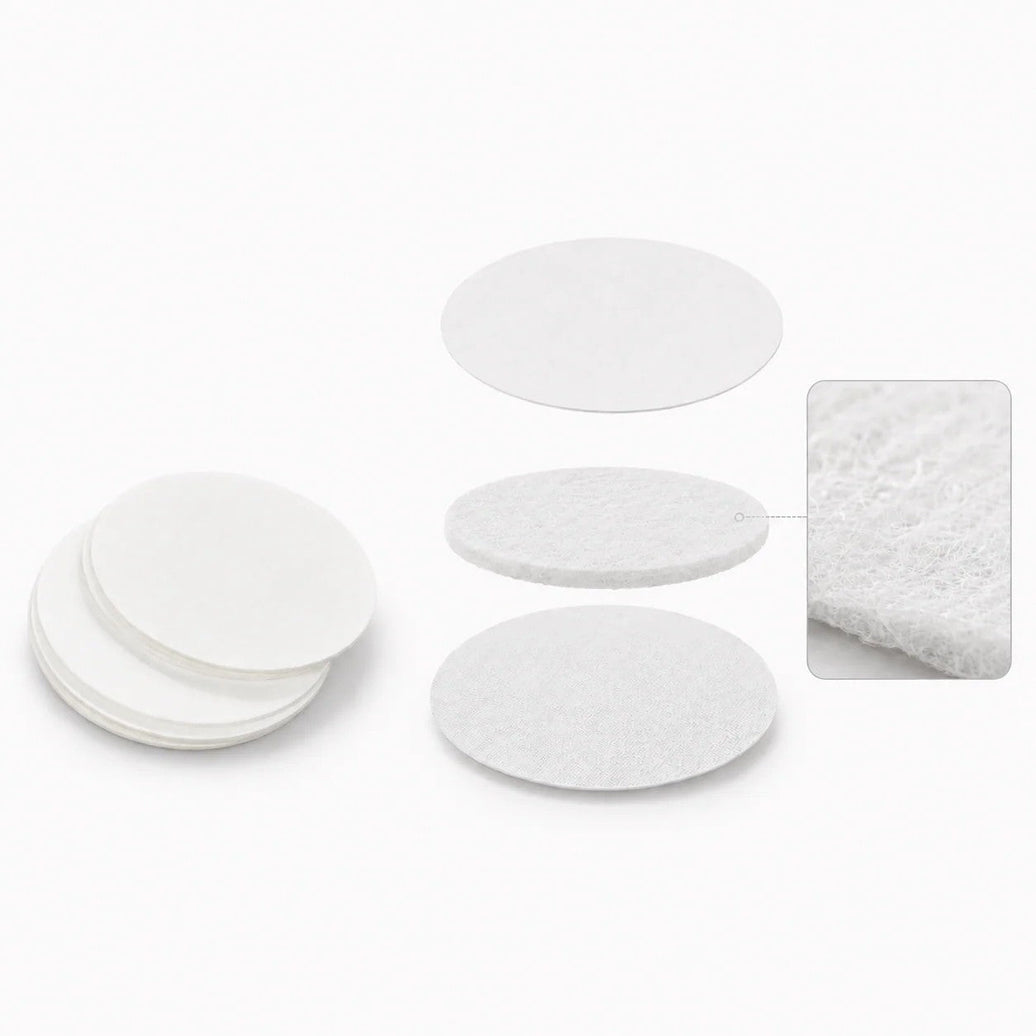
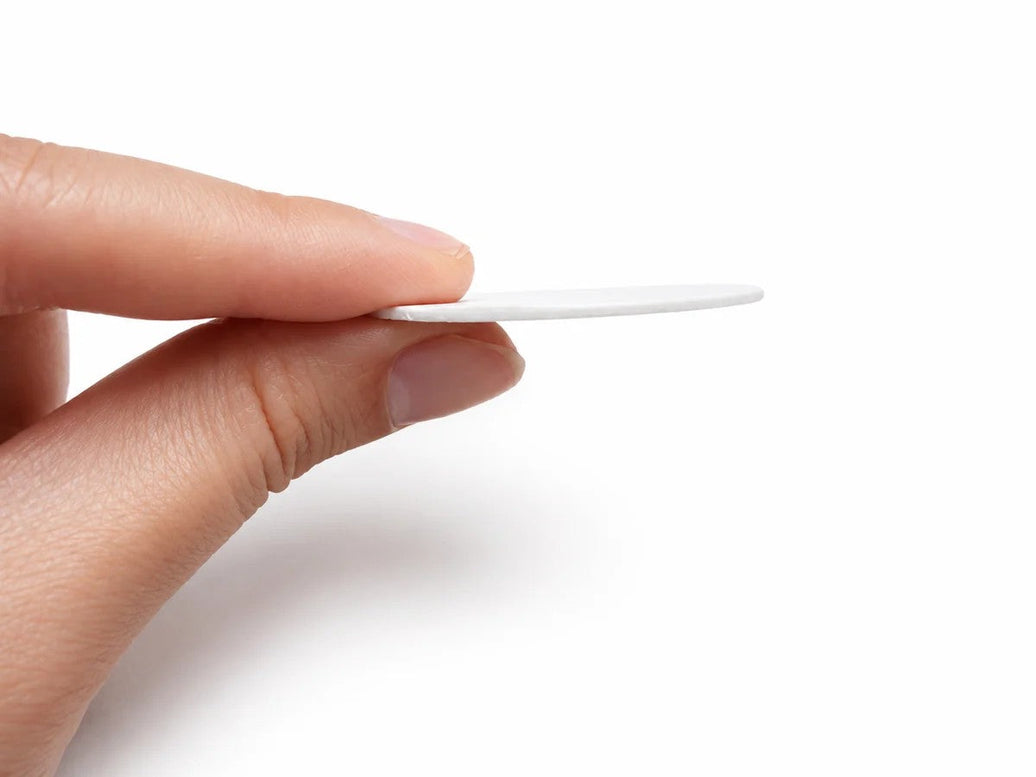
The third check is where a flat card helps. The Fiber Desiccant Card is a rigid plant-fiber disc, 0.7 mm or 1.0 mm thick, with no loose beads to spill into the powder. It can carry your printed logo, and it is harder to lift out with a scoop than a small sachet.
| Relative humidity at 25 °C | 1.0 mm Fiber Desiccant Card absorbs |
|---|---|
| 20% RH | Over 10% of its own weight |
| 50% RH | Over 35% of its own weight |
| 90% RH | Over 70% of its own weight |
At 25 °C and 90% RH, the 1.0 mm card absorbs three times as much moisture as the same weight of silica gel under the same test conditions. Across 20 to 40% RH it holds about twice as much.
Count the cost per ticket, not per card
A desiccant is usually judged on unit price. A clumping ticket is rarely priced at all. Put your own numbers against each line below and compare the total with the cost of the card.
- The replacement tub and its outbound shipping
- The return label, if your policy asks for the product back
- Support time per ticket
- The reorder that does not happen
- The review that stays on the product page
For batch-level losses at the factory, use the caked-batch cost worksheet.
Take it to your contract manufacturer
Bring the tagged tickets, not a general complaint. A table showing that one flavor in one pack format hardens after three weeks of use is something a co-manufacturer can act on. Agree who owns the desiccant line in the spec before you ask for a change: this guide on who owns the desiccant spec covers the gap between brand and co-packer, and this one shows how a co-manufacturer can run one card spec across client SKUs.
Frequently asked questions
Is clumped supplement powder still safe to use?
Clumping caused by moisture is a change in texture, and powder that looks, smells and tastes normal can usually be broken up and used. A customer who notices an unusual smell, a color change or anything that looks like mold should stop using the product and contact you.
Should we ask for the product back before sending a replacement?
That is your policy to set. A photo and the lot number give you the same diagnostic information without return shipping, and they keep the exchange short for the customer.
Should we tell customers to add a desiccant packet from another product?
It is better not to. A saved packet has an unknown amount of capacity left and was not specified for your product. Tell customers to keep the desiccant that came in the tub, and size that one for the weeks the tub is in use.
How do we know the desiccant is too small?
The clearest sign is powder that is loose at first opening and hard a few weeks later. Sizing should account for the headspace, the number of servings, and how long the tub stays open in normal use, as well as the sealed shelf life.
Get a card sized for your most-complained SKU
Tell us the product, the pack and what your tickets show. We reply with a card size, a placement and samples to test.
Prefer email? info@atmosiscience.com
Figures from ATMOSIScience Fiber Desiccant Card product documentation and the measured adsorption curve at 25 °C.