Quick answer: Collagen powder clumps because hydrolysed collagen peptides pull water out of the air very readily. Each time the pouch is opened, the fine powder takes up a little moisture, its surface softens and turns sticky, and particles bond into lumps. Many collagen brands use paper or compostable pouches, which can let more moisture through than foil, so the problem is common. Dry lumps that break up, smell neutral and dissolve normally are usually fine within date. Wet, syrupy, darker or odd-smelling powder should not be used. Collagen that clumps in your drink is a separate mixing issue with an easy fix.
Two questions come up again and again from collagen users: why does my collagen powder clump, and why is it sticky? Both have the same root cause, and both are easier to prevent than to fix.
Why collagen is so moisture-hungry
Collagen supplements are usually hydrolysed: the long collagen protein is broken into short peptides so it dissolves easily. Those peptides carry many chemical groups that bind water. The powder is then spray-dried into very fine particles with a lot of surface area and a non-crystalline structure.
Non-crystalline powders like this behave like hard candy. Dry, they are free-flowing. As they take up water, they soften and turn sticky at the surface, which is why a collagen pouch can go from loose to tacky to clumped over a few weeks of daily use. The general process is explained in why powders cake.
Clumping in the bag vs clumping in your drink
In the bag: a moisture problem. Lumps form over time while the product is stored.
In your drink: a mixing problem. Fine powder hitting liquid forms a wet skin around dry powder inside. Fixes that work:
- Sprinkle the collagen over the surface of the liquid rather than dumping it in one spot.
- Let it sit for 20 to 30 seconds, then stir.
- Warm drinks dissolve collagen faster than cold ones.
- For cold drinks, shake in a closed bottle or use a small frother or blender.
Is sticky or clumped collagen still OK?
| What you notice | What to do |
|---|---|
| Dry lumps that crumble, neutral smell, dissolves normally | Break up and use within date |
| Tacky surface, but dry inside | Moisture is getting in. Use soon and store more carefully |
| Syrupy, wet or glassy patches | Too much water taken up. Contact the brand |
| Darker colour, strong or unusual smell, visible growth | Do not use |
Was it the pouch or the storage?
A quick way to tell where the moisture came from:
- Clumped when you first opened it: moisture got in before it reached you, during filling, shipping or warehousing, or through the pouch wall. That is the brand’s problem to solve.
- Loose at first, clumped after a few weeks: moisture came in with daily opening. Storage habits help, but the pack’s moisture control may also be too small for 30 openings.
- Only the top layer is crusty: humid air is entering at the zip. Check that it closes fully.
If you contact the brand, include the lot number and best-before date, a photo, when you opened it and where you store it. That information helps their quality team find the cause rather than just sending a replacement.
How to keep collagen powder loose
- Press the zip closed along its full length every time. A pouch left partly open takes in moisture all day.
- Use a dry scoop and keep it out of the pouch if your hands are damp.
- Store away from the kettle, coffee machine and sink. Steam from a morning coffee routine goes straight into an open pouch.
- Do not refrigerate unless the label says to. A cold pouch opened in a warm kitchen collects condensation.
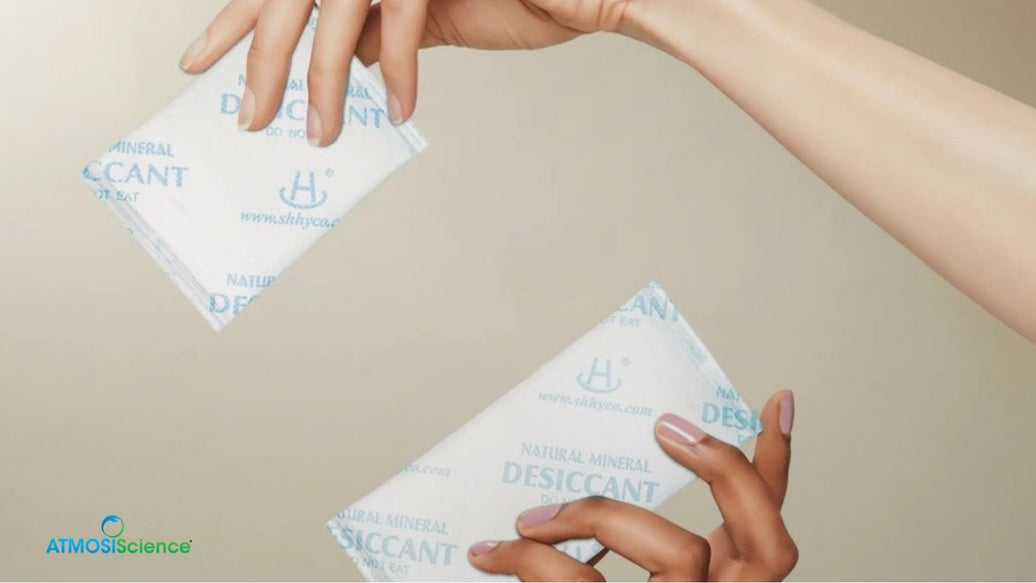
- Leave the desiccant in. If there is a packet or card, it is soaking up the moisture each opening brings. See should you throw away the desiccant.
- Buy the size you will finish in a month or two if you live somewhere humid.
Protein, pre-workout and hydration powders cake for related reasons; see protein powder hardened and electrolyte powder hardened.
If you are the brand: collagen plus compostable pouches
Collagen is one of the products most often sold in paper or compostable pouches, and one of the most sensitive to moisture. That pairing is why sticky collagen is a common review complaint. Three things help:
- Re-size moisture control for the real pack. A paper or compostable pouch often lets more water vapour through than the foil pouch it replaced. See plastic-free supplement packaging and moisture.
- Size for daily opening. A 30-serving pouch is opened 30 times. See desiccant for packs opened 30 times.
- Match the desiccant to the pouch. A plastic sachet in a compostable pouch undercuts the story. A paper desiccant card with compostability certification fits it. See the Fiber Card spec guide.
The manufacturing guide is desiccant for collagen peptide powder, and a worked example is in our collagen brand case study.
Frequently asked questions
Why is my collagen powder sticky?
It has taken up moisture from the air. Collagen peptides soften and turn tacky as they absorb water, even before they visibly clump.
Does clumpy collagen lose its effect?
Dry caking alone does not remove the collagen. If it has turned wet, darker or smells different, stop using it.
Why does collagen clump in cold water?
Fine powder forms a gel-like skin when it hits liquid, trapping dry powder inside. Sprinkle it slowly, let it sit, then stir or shake.
Is marine collagen more prone to clumping than bovine?
Both are hydrolysed peptides and both take up water readily. Differences in clumping usually come more from particle size, added ingredients and packaging than from the source.
Can I put rice in my collagen pouch?
No. Rice is a poor desiccant and a contamination risk. Use only a food-grade desiccant intended for the purpose, and keep it whole.
Collagen brand? Keep the last scoop loose
ATMOSIScience sizes moisture control for pouches opened daily and supplies Fiber Card paper desiccant for compostable packs. Tell us the pouch and the product.
Prefer email? info@atmosiscience.com