Collagen is the fastest-growing powder in the US supplement aisle — and one of the most moisture-sensitive. Hydrolyzed collagen peptides are spray-dried, amorphous, and hygroscopic by design: the same solubility that lets a scoop disperse instantly in coffee also lets the powder pull water out of the air. Leave a pouch reseal open in a Texas summer kitchen and the first sign is a scoop that no longer pours.
This guide covers why collagen powder clumps, why compostable pouches make the problem visible on your brand, and how supplement brands and co-packers spec desiccant protection that survives an 18–24 month shelf life and a QA audit.
Why collagen peptides cake
Hydrolyzed collagen is amorphous, not crystalline. Enzymatic hydrolysis breaks collagen into short peptides that spray-dry into glassy, high-surface-area particles. As they adsorb moisture, their glass-transition temperature falls, the particle surface turns tacky, and neighboring particles fuse into bridges that recrystallize into hard clumps. It is the same moisture cascade described in our pillar on why powders cake, accelerated by collagen's solubility.
The co-formulated actives make it worse. Modern collagen blends rarely ship as peptides alone. Vitamin C, hyaluronic acid, biotin, and — increasingly — magnesium are added for skin, sleep, and absorption claims. Magnesium citrate and glycinate are deliquescent: magnesium citrate can absorb 12–18% of its own weight in water at 75% RH within 48 hours. The most hygroscopic ingredient in the blend sets the caking threshold for the entire tub.
The target is a moisture window, not bone-dry. Internal pack RH generally needs to stay below 40–50% across shelf life to keep collagen free-flowing. Two-way fiber desiccant holds a target humidity band rather than dumping to zero — useful when a blend also contains moisture-sensitive probiotics or actives that dislike an over-dried environment.
The compostable-pouch problem unique to collagen brands
Collagen is a beauty-from-within, clean-label category. A growing share of the segment ships in pouches marketed as compostable, recyclable, or plastic-conscious — and runs take-back programs to prove it. Dropping a plastic silica gel sachet inside a compostable pouch breaks that promise in the customer's hand, and it is the kind of contradiction a reviewer photographs.
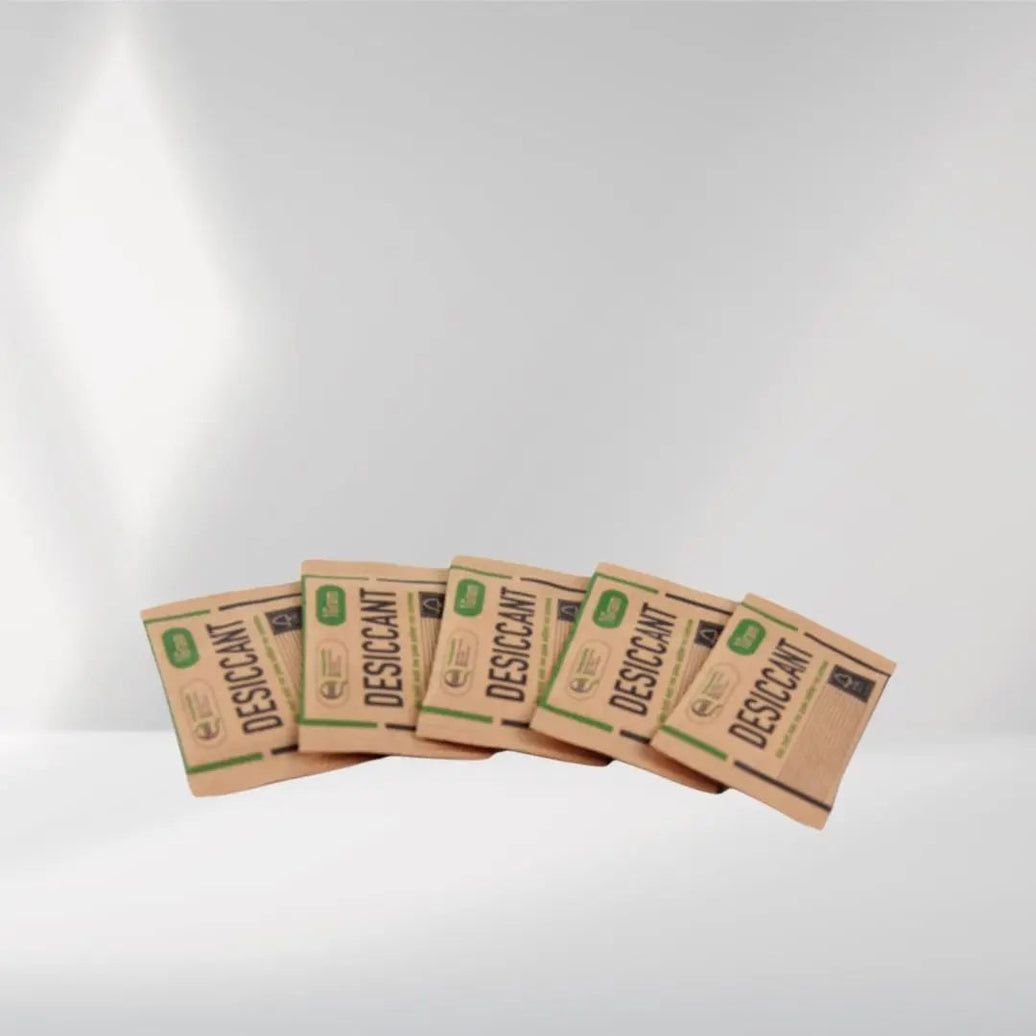
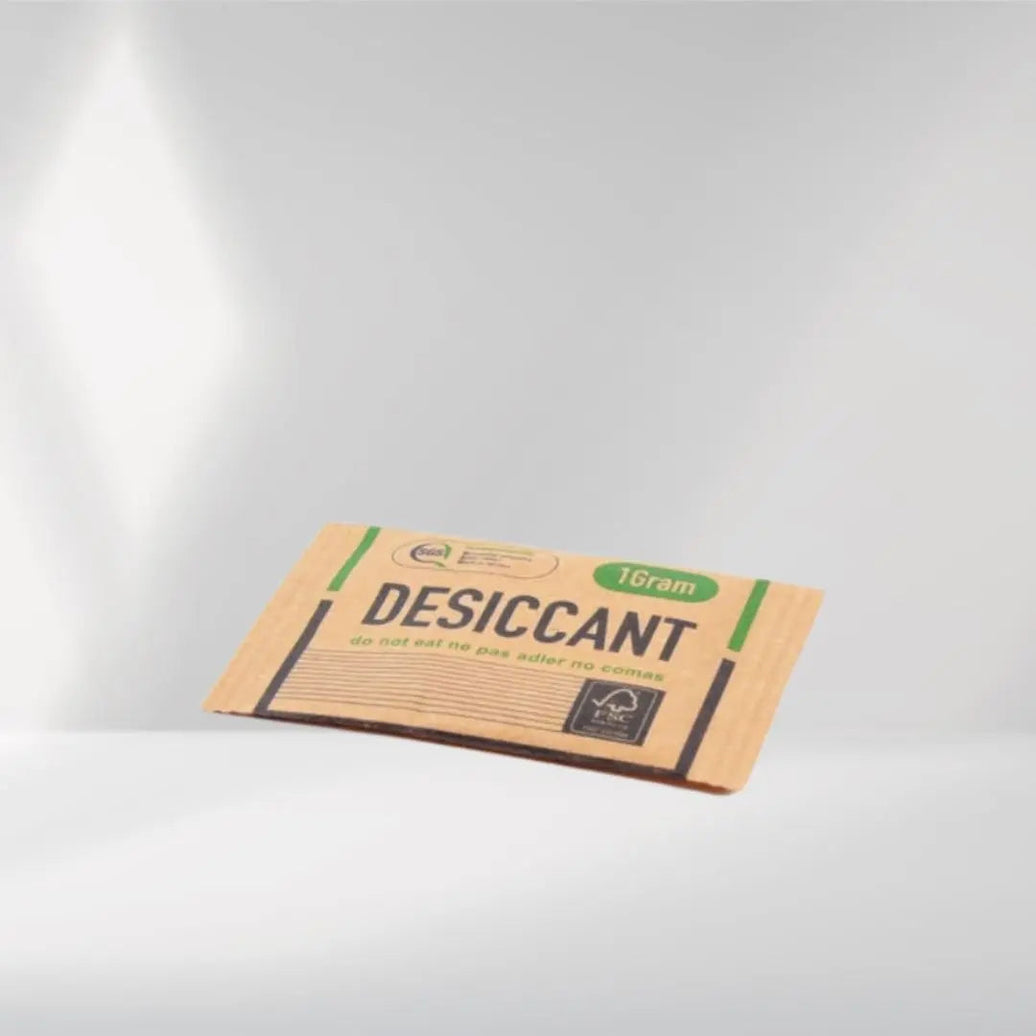
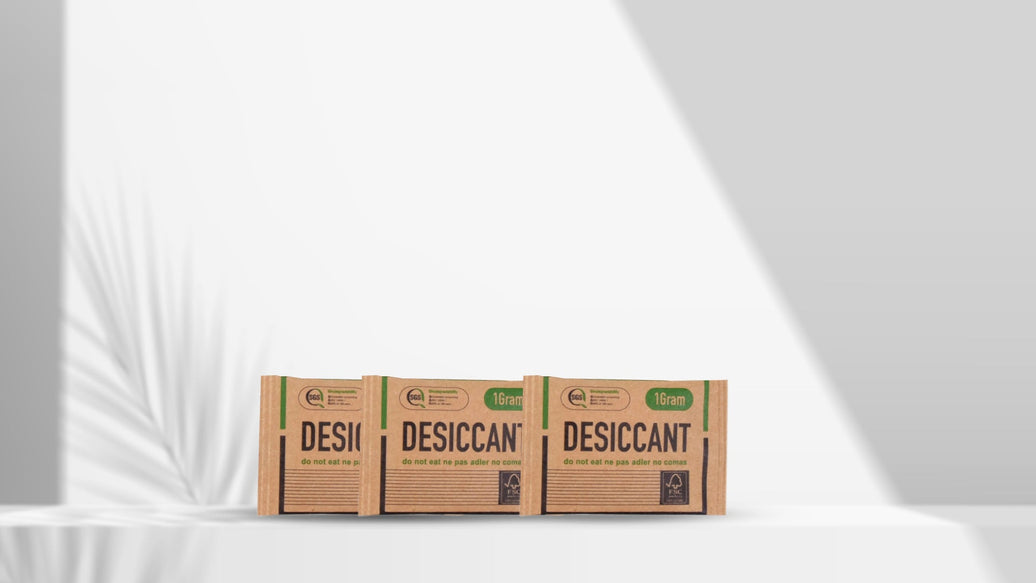
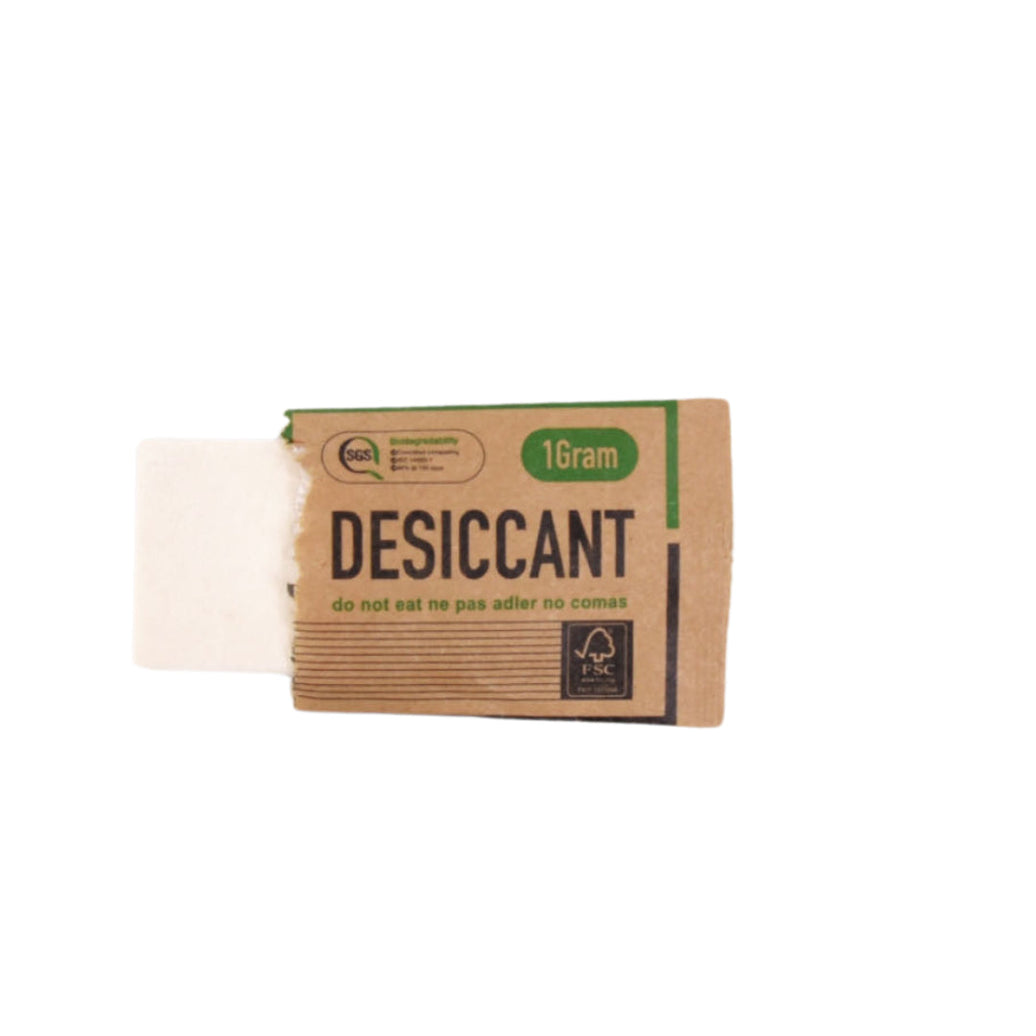
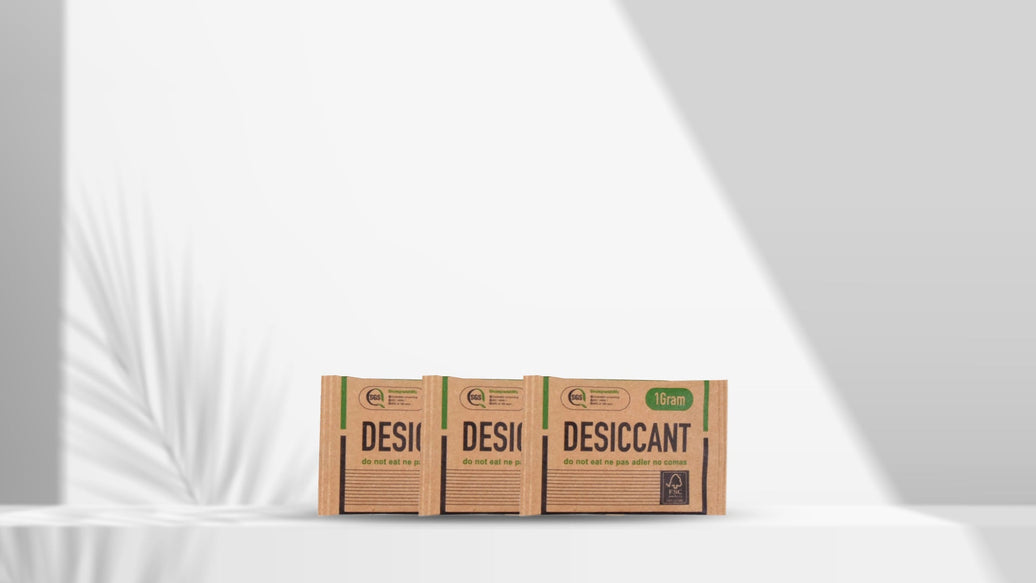
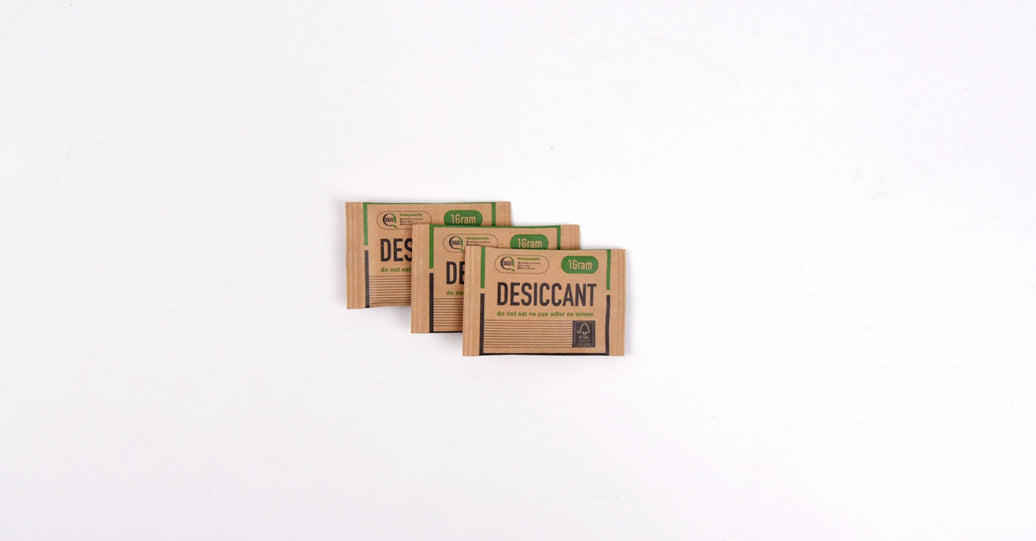
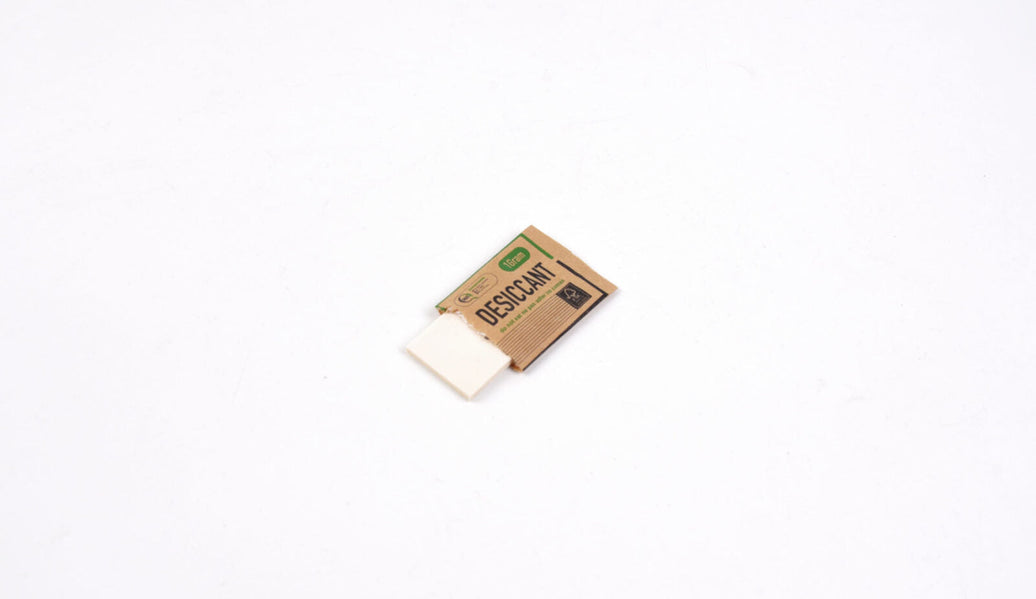
ATMOSIScience fiber desiccant is built for exactly this shelf. The active is plant-based lignocellulose fiber with bound calcium chloride, wrapped in food-grade paper rather than plastic, and certified compostable under ASTM D6400 and EN 13432. It lets the desiccant match the pouch story instead of undermining it. The certification landscape — and which mark you actually need — is broken down in our guide to desiccant compostability certifications.
Format decides whether the line runs — and whether customers trust the pack
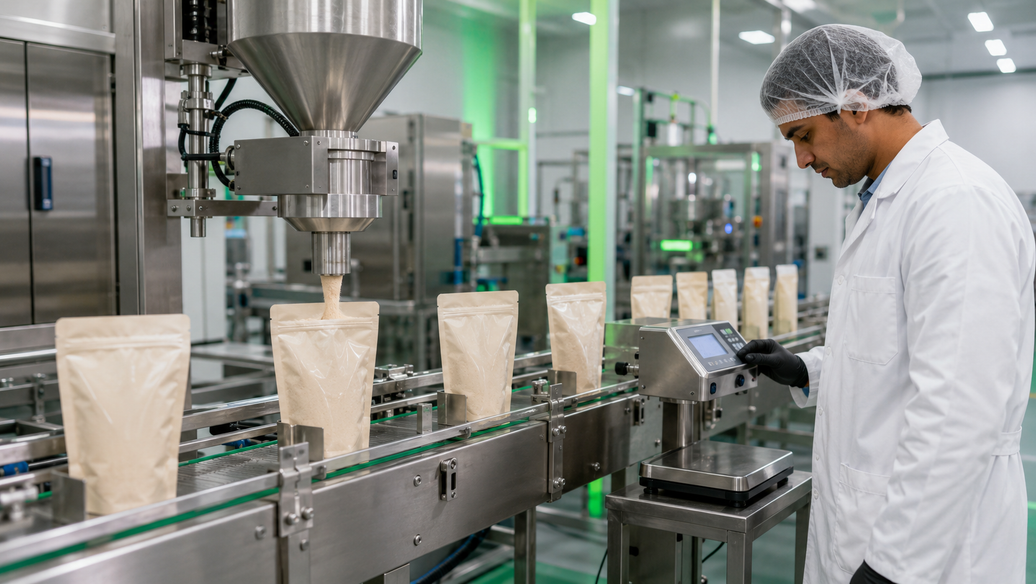
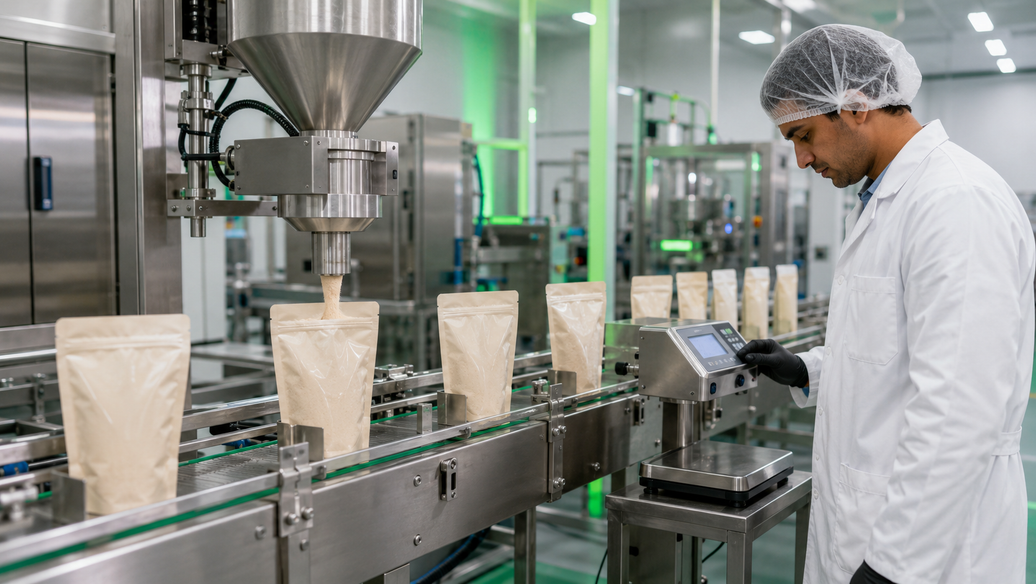
Two failure modes decide collagen desiccant format. First, foreign-matter risk: a bead-filled silica sachet buried in a scooped powder can tear and shed beads into a product people drink — a recall conversation, detailed in our article on loose-fill desiccant risks. Second, dispenser fit: automated pouch lines drop desiccant at speed, and an oversized card jams at the smallest pouch size.
Two dust-free formats solve both:
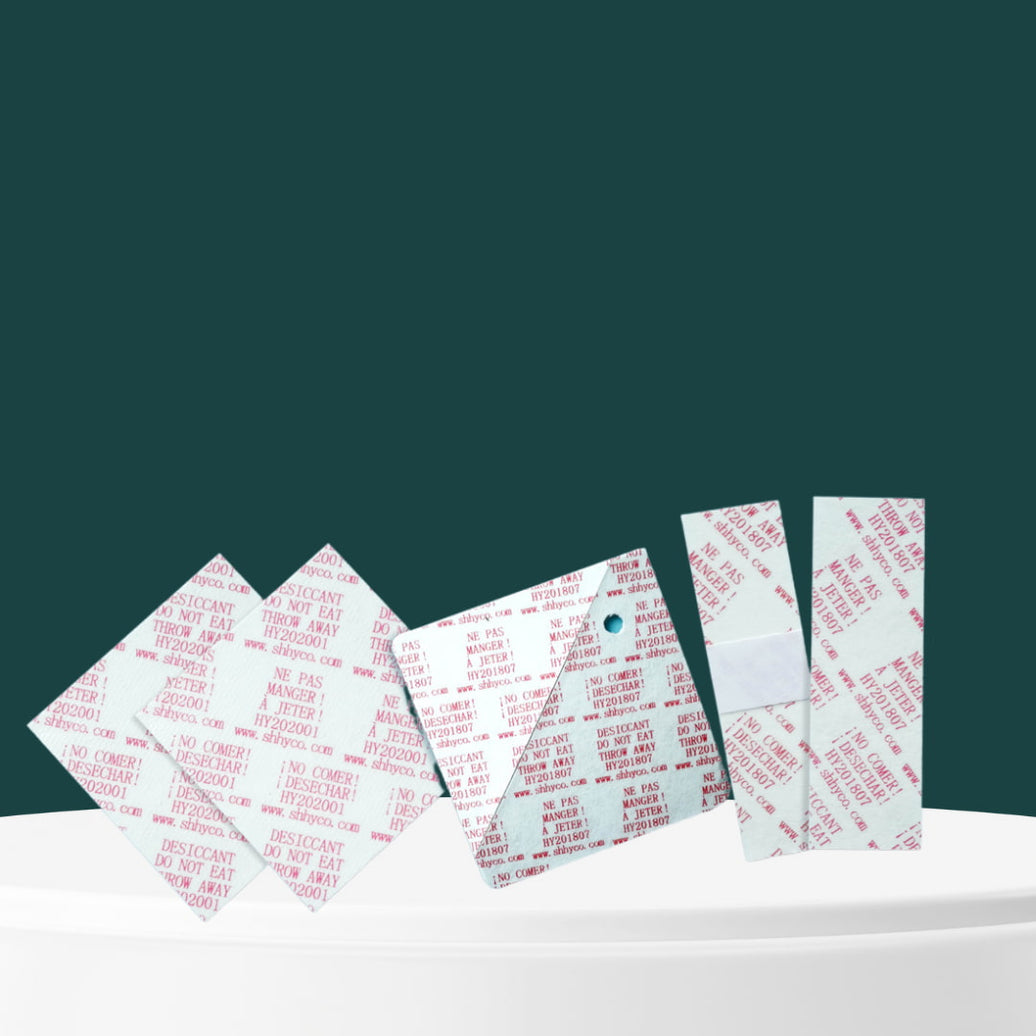
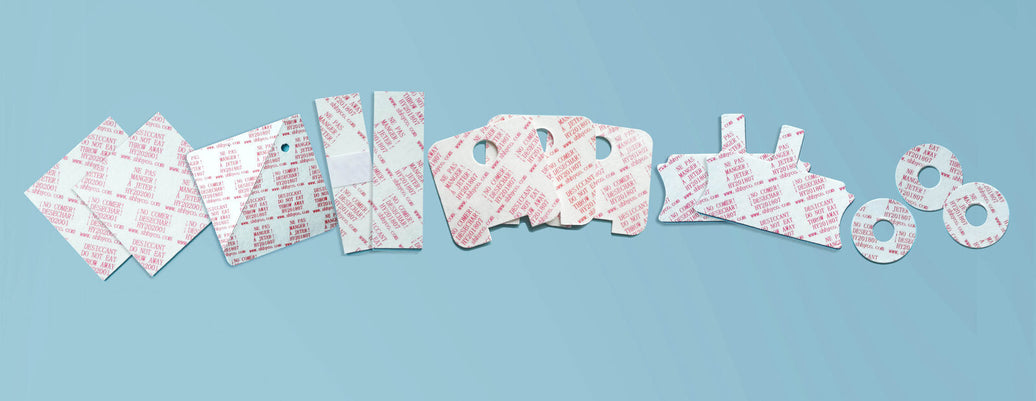
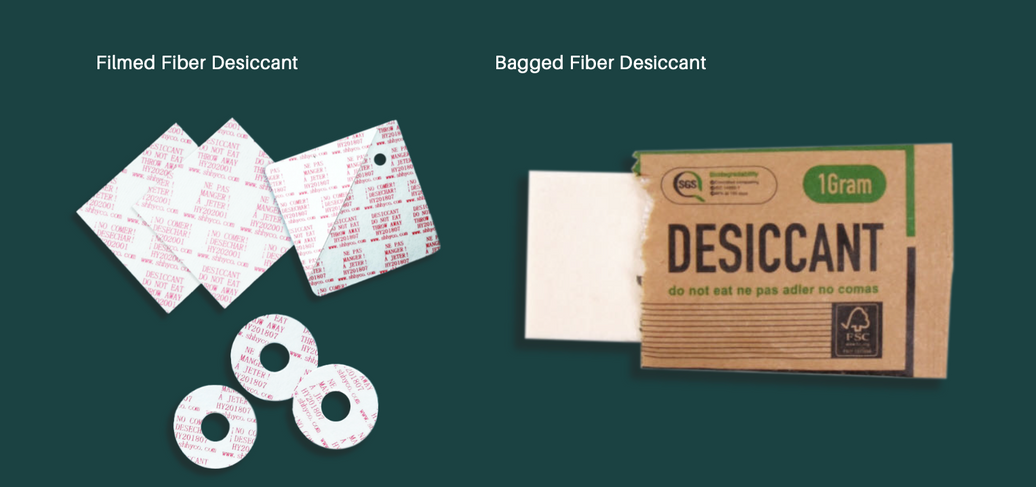
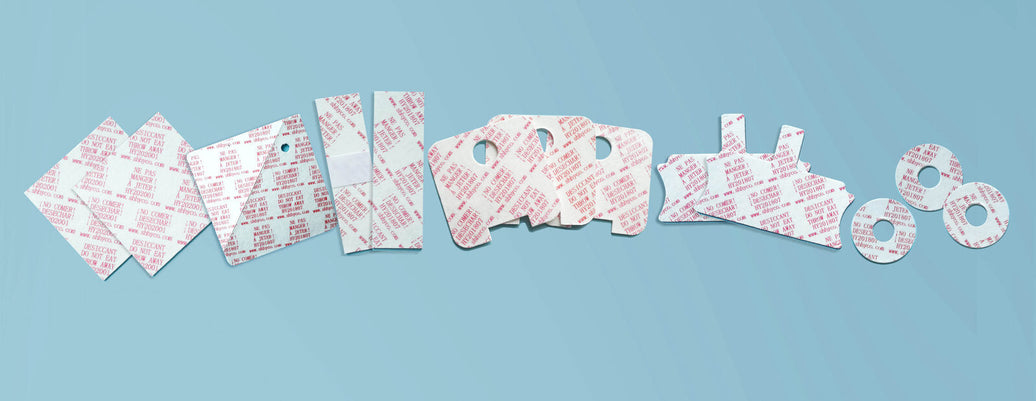
Film desiccant cards — a rigid card stiffer than some credit cards, paper-wrapped, that sits flat under the lid or on the powder bed without burying itself. The center prints in full color, so the first thing a customer sees on opening is your brand, not an anonymous warning sachet. Die-cut to round or square, it feeds cleanly through auto-dispensers; format and print options are in the film desiccant guide.
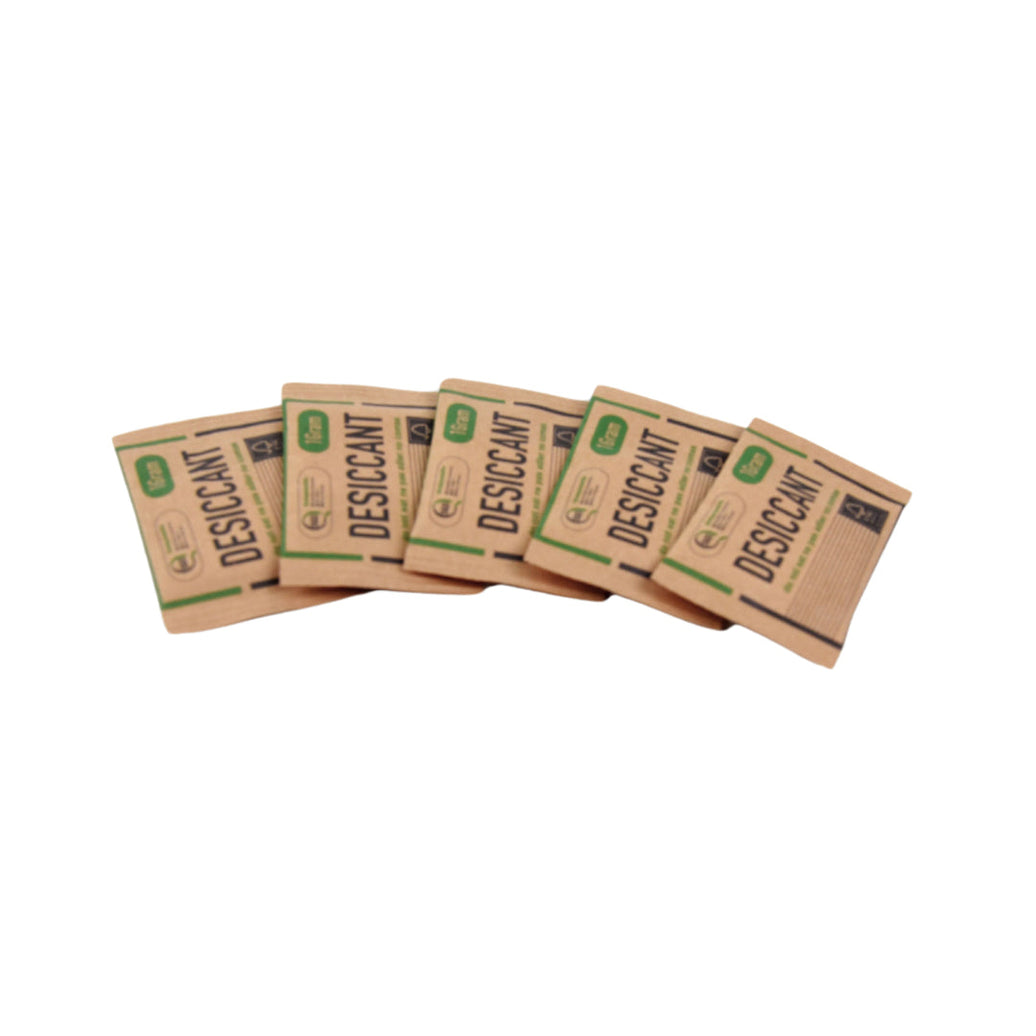
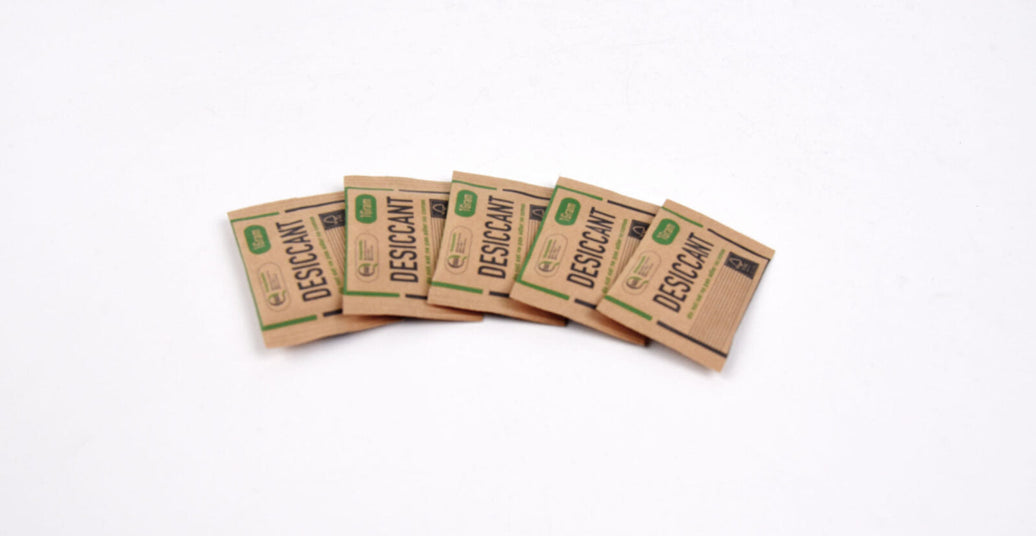
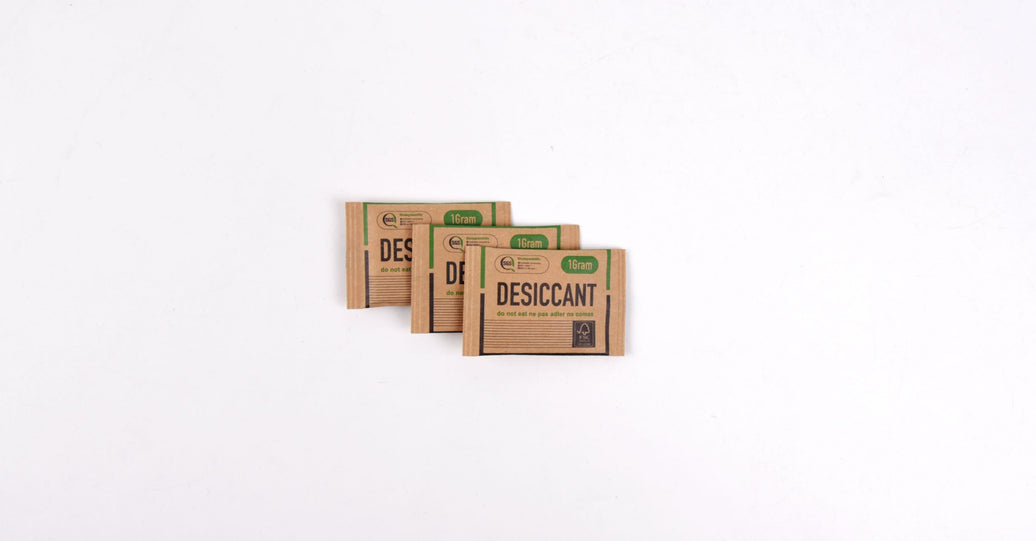
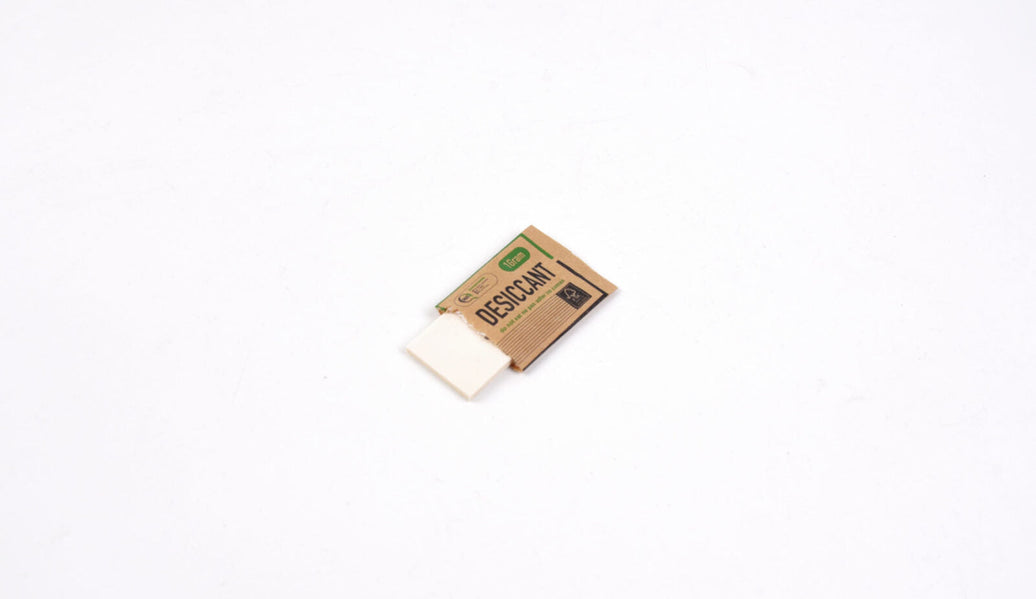
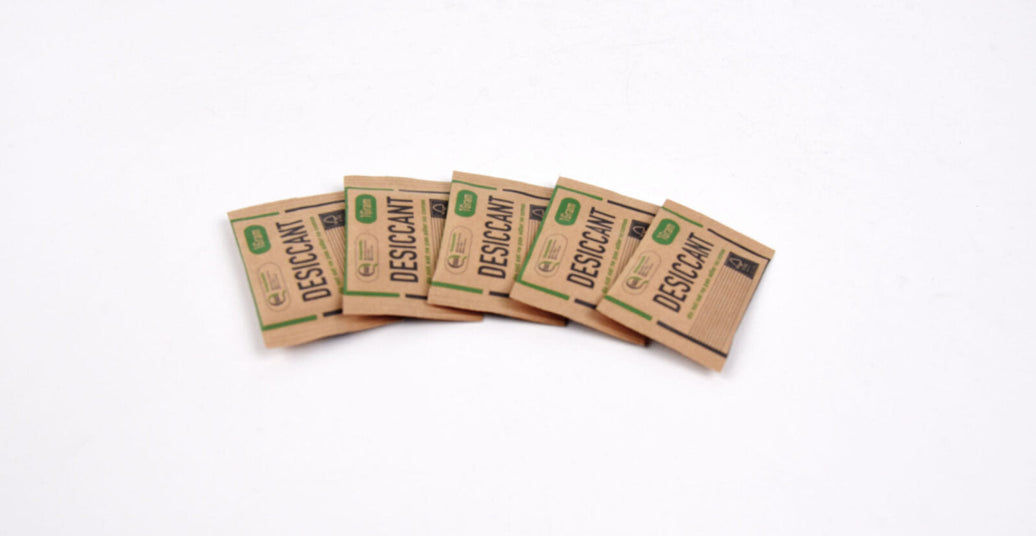
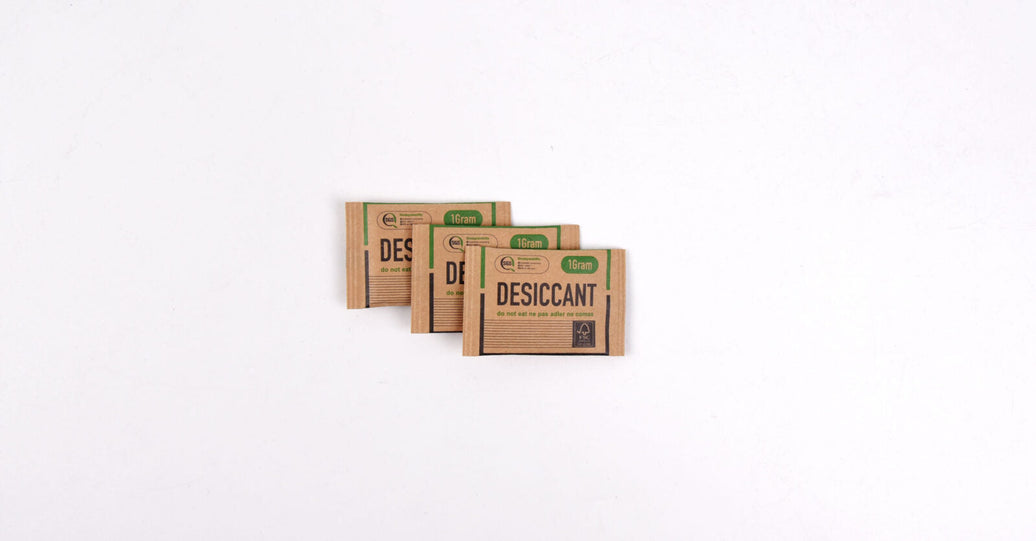
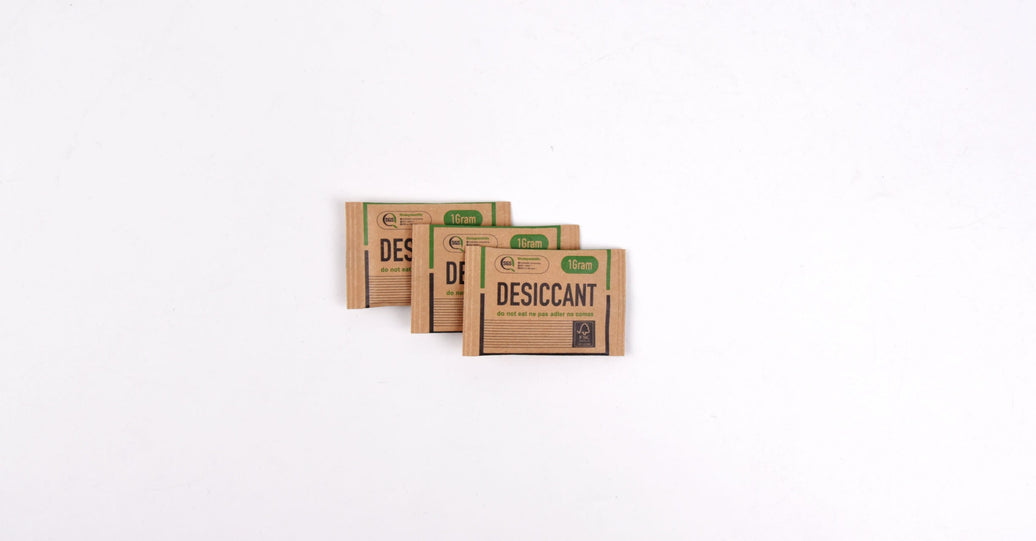
Fiber sachets — dust-free from 1 g to 60 g and custom weights, for resealable pouches and bulk liners where a sachet is preferred.
Capacity: why it matters more for a re-opened tub
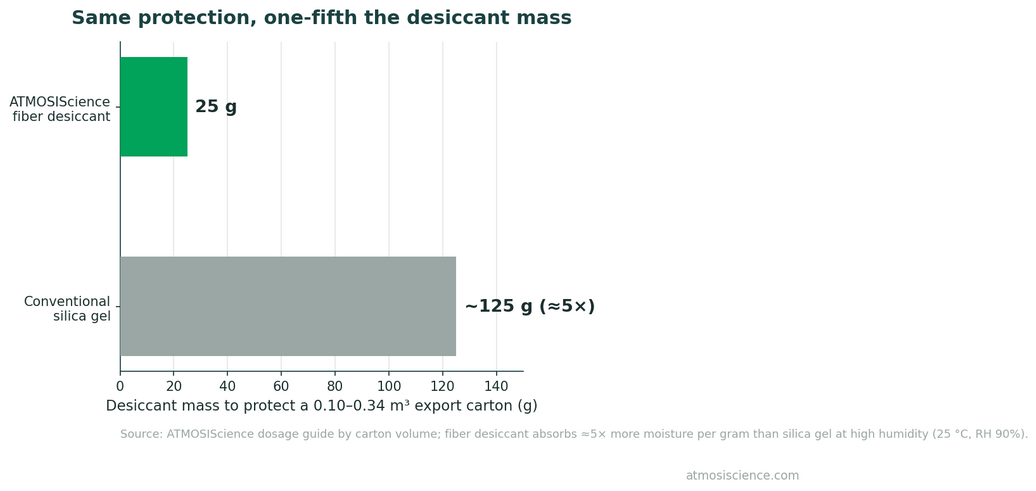
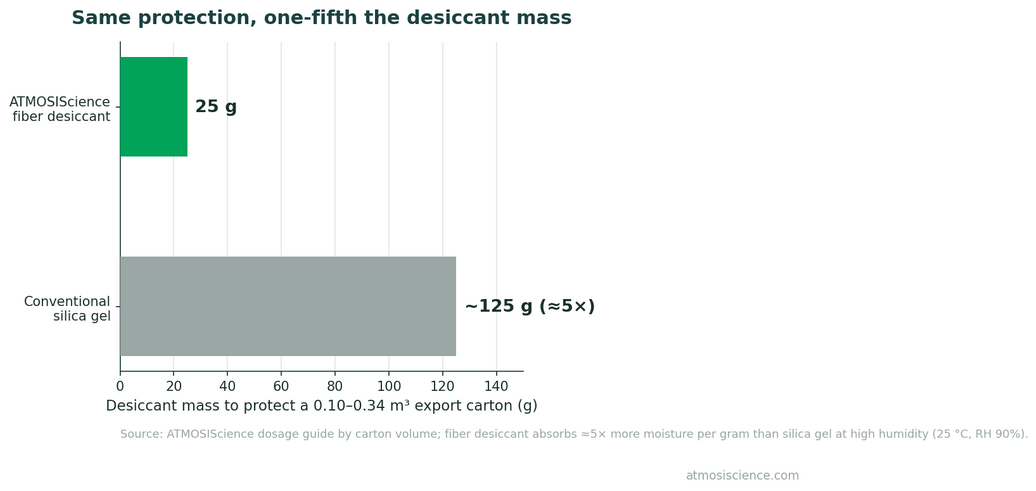
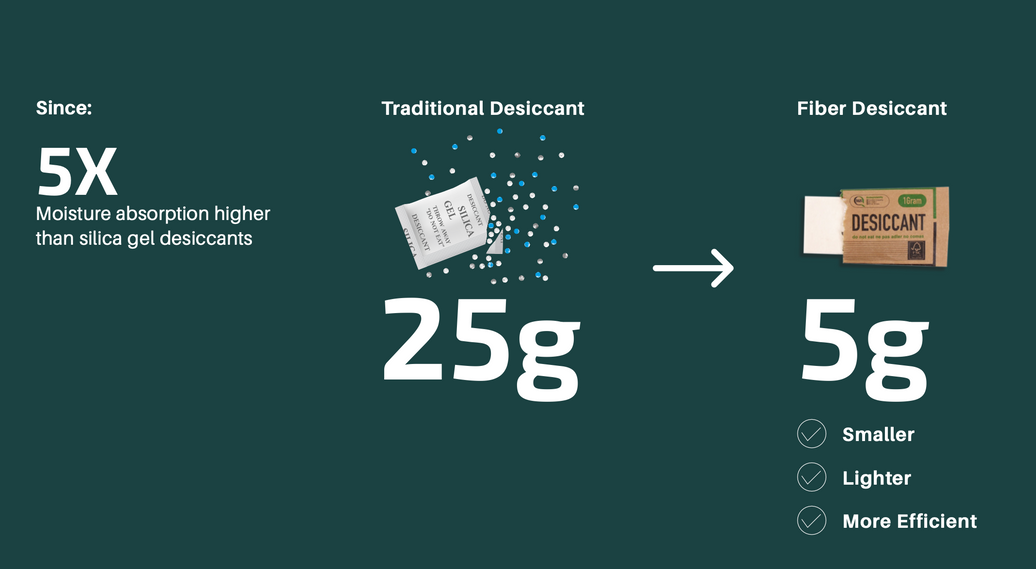
A collagen tub is opened 30–90 times over its use life, each opening exchanging headspace with room air. The desiccant has to absorb a fresh load every time, not just survive transit. Capacity per gram is therefore the deciding spec: fiber desiccant absorbs over 70% of its own weight at 25°C and 90% RH, where conventional silica gel holds roughly 30%. More capacity per gram means protection through the late scoops, when silica is already saturated. The full trade-off across chemistries is in our procurement comparison.
The documentation a collagen QA team will ask for
Collagen supplements are manufactured under 21 CFR Part 111 cGMP, and QA teams document packaging components like ingredients. ATMOSIScience fiber desiccant ships with SGS ISO 9001 manufacturing (Cert. CN05/31171), full raw-material disclosure (lignocellulose fiber, calcium chloride, PLA, food-grade paper, water), and ASTM D6400 / EN 13432 compostability certificates. The exact document pack a supplier questionnaire expects is listed in our supplier qualification pack guide.
Sizing guidance for collagen formats
Single-serve stick packs: usually no desiccant if the film barrier is adequate — confirm with water-activity testing through shelf life.
Resealable pouches (250–500 g): one fiber sachet sized to headspace and reseal frequency.
Tubs and canisters (most clumping complaints): a film desiccant card under the lid, sized to headspace and use life. Dosage math by container volume is in our dosage guide.
Frequently asked questions
Why does collagen clump even in a sealed pouch?
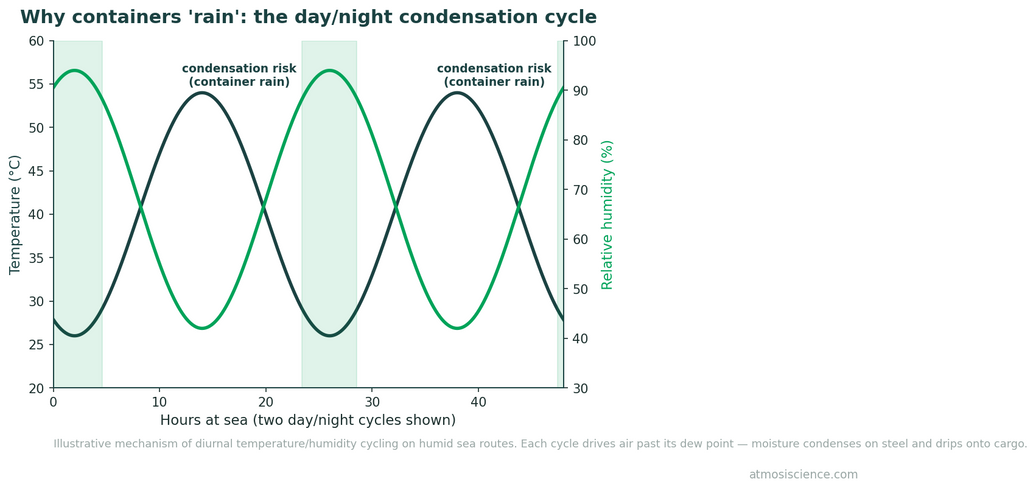
Moisture sealed in at filling, plus slow permeation through the pouch wall, can push amorphous peptides past their sticky point during warm distribution. An in-pack desiccant absorbs that load.
Is a desiccant safe inside a powder people drink?
Yes, when it is food-contact documented and dust-free. ATMOSIScience fiber desiccant contains no loose beads or fines.
Will the desiccant keep our pouch compostable?
The desiccant itself is certified compostable (ASTM D6400 / EN 13432) and paper-wrapped. Confirm your total pack lamination against your target compost stream — our team can help map it.
Can you match a specific target RH?
Yes. Two-way fiber desiccant is customizable to a target humidity band rather than drying to zero, which protects blends that also contain over-dry-sensitive actives.
Protect the scoop — it is the brand experience
ATMOSIScience supplies food-grade fiber and printable film-card desiccant at B2B scale, with the ISO and compostability documentation collagen QA requires. Explore ATMOSIScience desiccant solutions, request a sample of the Fiber Desiccant, or contact our team for a spec, certificates, and a bulk quote for your collagen line.
Related reading: Desiccant for Dietary Supplements & Nutraceuticals · Powdered Vitamins & Mineral Premixes · Case Study: A Collagen Brand's Desiccant Switch
Get a desiccant spec & bulk quote for your collagen line
Tell us your blend, pouch or tub format, and shelf-life target — our team responds with a capacity calculation, a printable film-card mockup with your logo, certificates, and bulk pricing.