Supplements live or die by moisture control. A capsule that absorbs humidity loses potency, a gummy turns tacky and fuses, a protein or greens powder clumps into a brick, and an effervescent tablet starts reacting in the bottle. For supplement and nutraceutical brands, the desiccant inside the package is what protects label-claim potency, texture, and shelf life — and what an auditor will scrutinize.
This guide explains how to spec a desiccant for dietary supplements and nutraceuticals that is dust-free, food-contact-documented, and matched to the dosage form.

How moisture damages supplements
Each format fails in its own way. Hygroscopic actives — many vitamins, probiotics, and botanical extracts — lose potency as they take on water, eroding the label claim before the expiry date. Powders cake and lose flowability. Gummies and soft chews absorb moisture, become sticky, and fuse together. Effervescent and certain mineral tablets begin reacting prematurely. And across every format, elevated humidity invites mold and microbial growth, the fastest route to a recall.
The desiccant's job is to hold the in-bottle humidity low enough, for long enough, that the product is still on-spec when the consumer opens it — often 18 to 24 months later.
Why loose-fill desiccant is a problem for supplements
Supplements are an especially bad fit for powder and loose-fill desiccant formats. Where the product itself is a powder or gummy, a torn or shedding sachet makes desiccant contamination indistinguishable from product — a contamination finding that is nearly impossible to investigate and easy to turn into a recall or a viral complaint.
The requirement is a desiccant that holds its absorbent in a bound matrix, carries documented food-contact standing, and cannot shed or leak into the bottle.
What to specify for supplement packaging
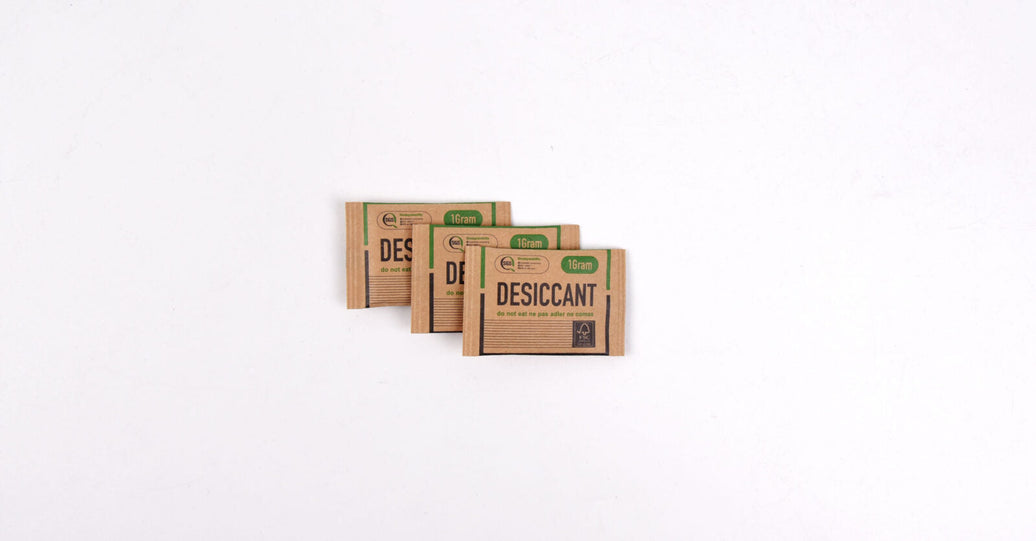
ATMOSIScience fiber desiccant is documented against FDA 21CFR175.300 for food-contact safety (obtained 2022) and manufactured under SGS ISO 9001. Its absorbent — including calcium chloride — is bound in a natural lignocellulose fiber matrix, so the format is dust-free and non-leaking, with the overwrap specified per SKU as compostable nonwoven or food-safe Tyvek®.
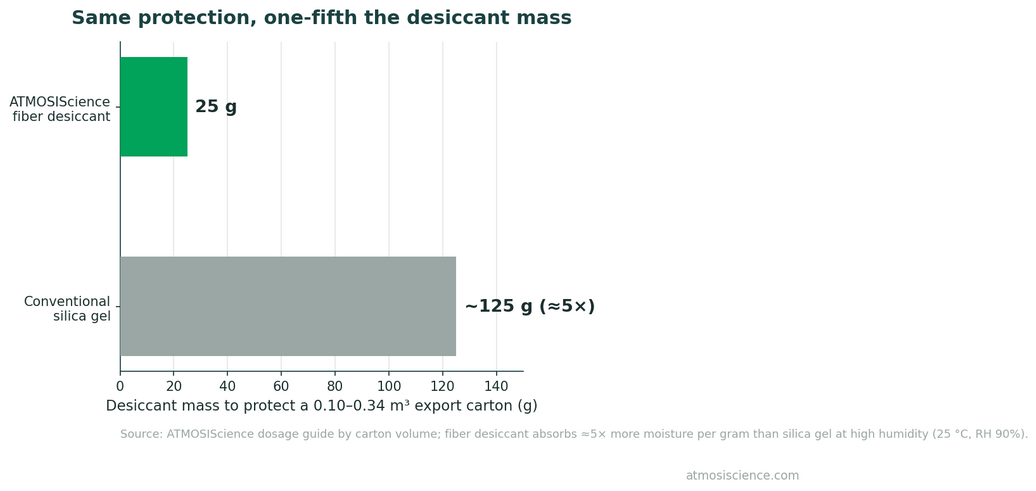
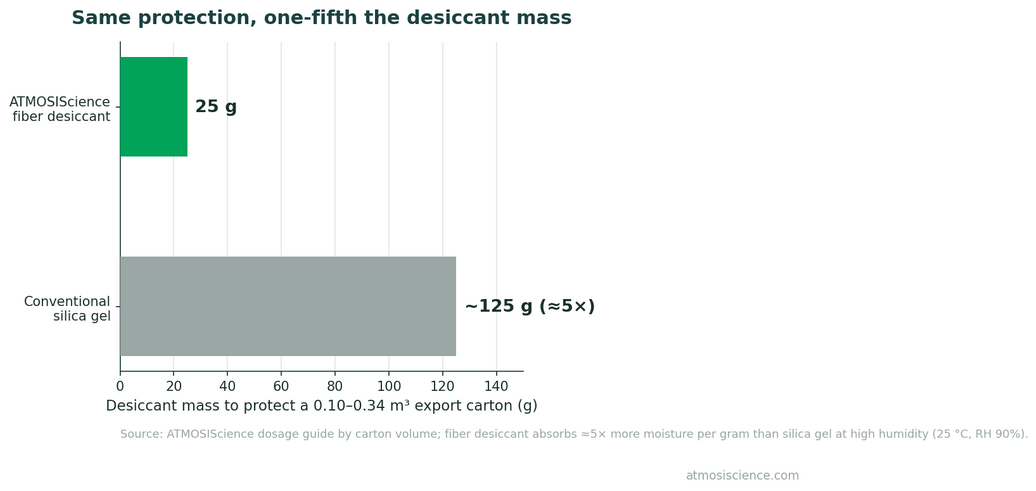
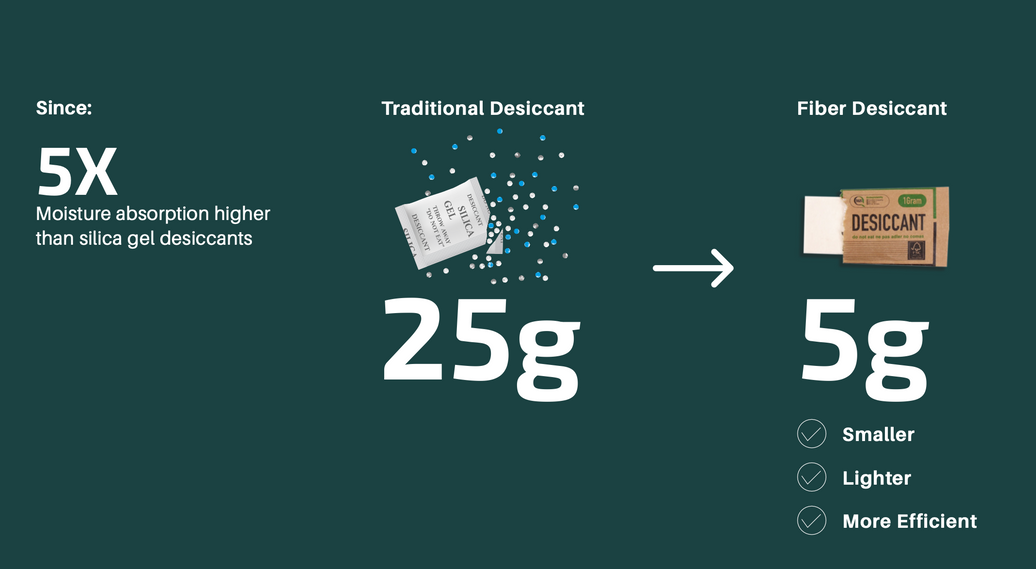
It also outperforms on capacity: over 70% of its own weight absorbed at RH90% and 25°C, versus roughly 30% for silica gel — so a bottle stays drier across a long shelf life with less material inside. Full material disclosure (lignocellulose, calcium chloride, PLA, food-grade paper, water) lets a QA team run a clean stability protocol and answer extractables questions before they arise.
Matching the format to the dosage form
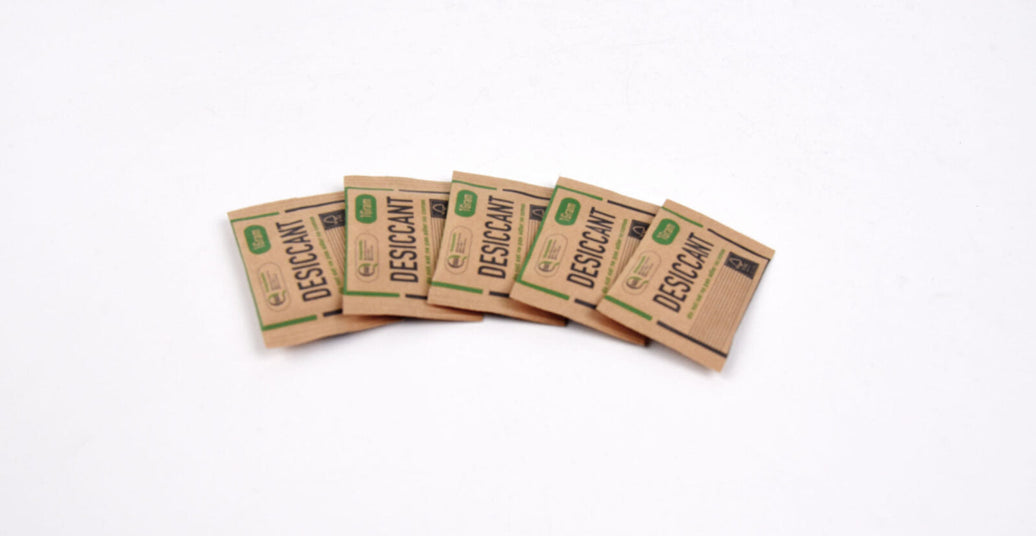
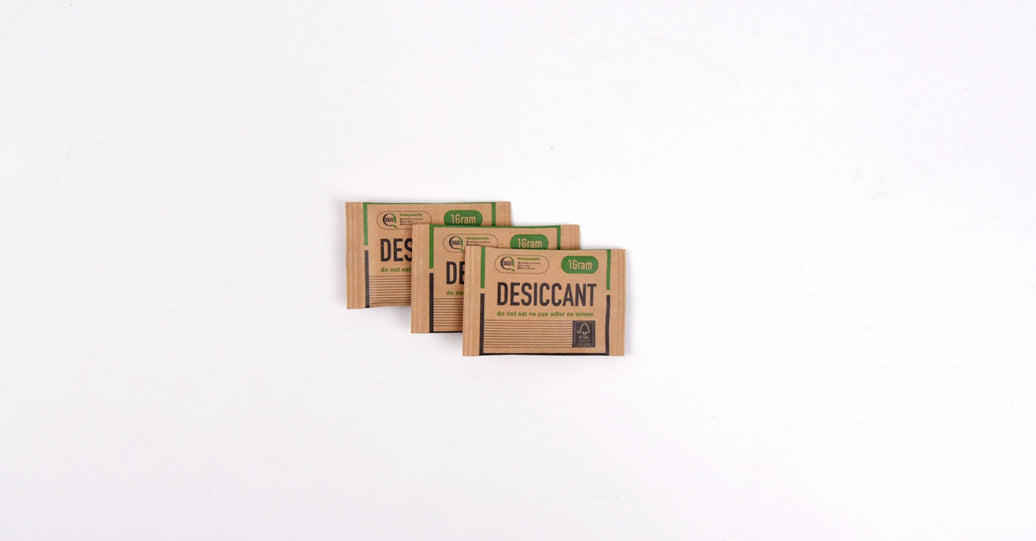
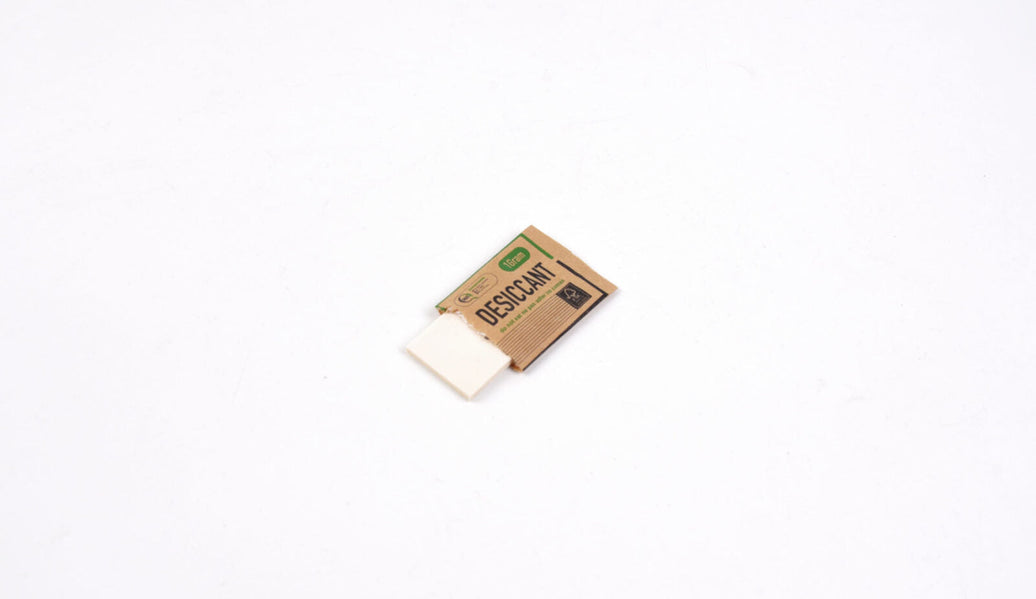
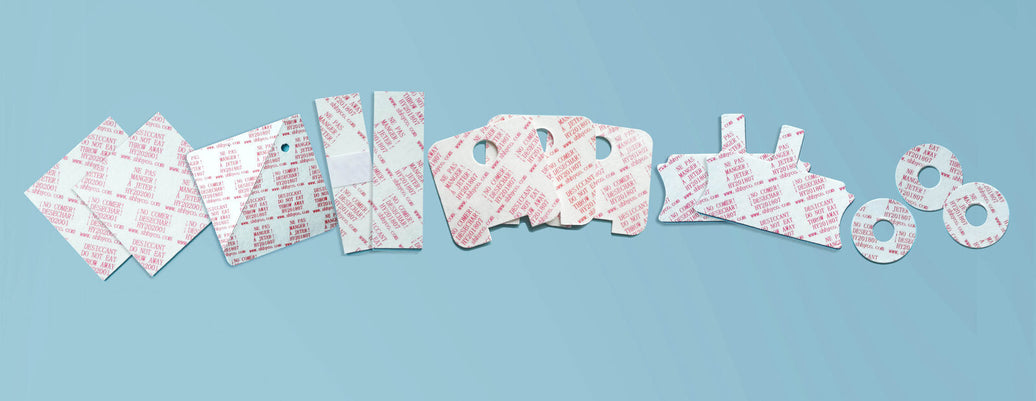
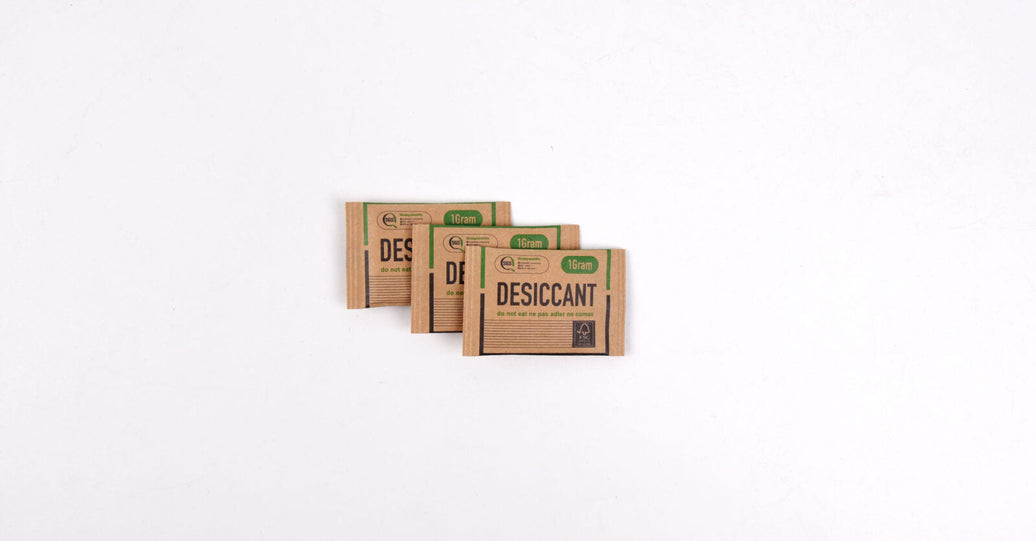
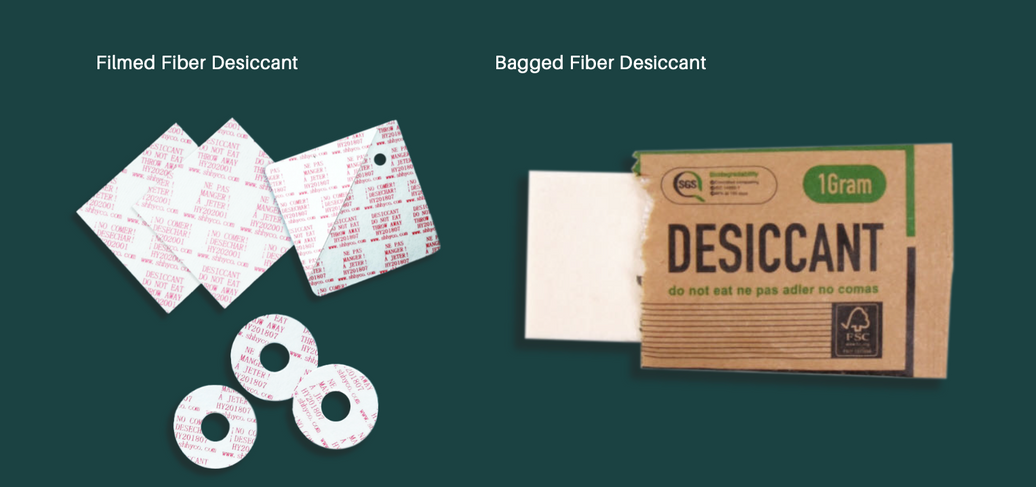
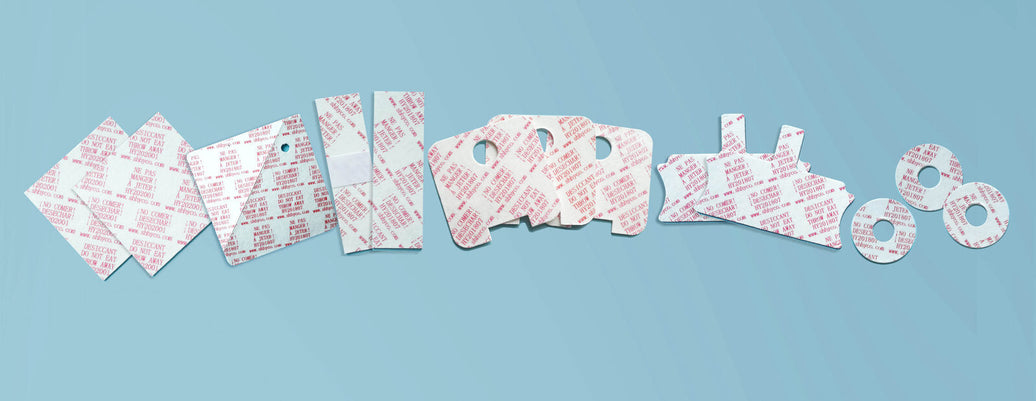
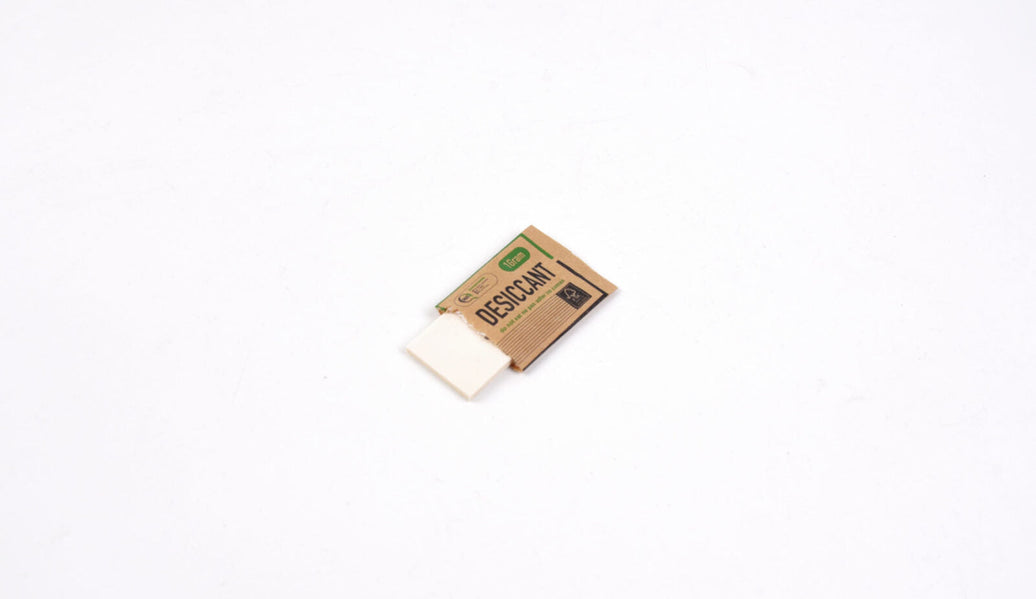
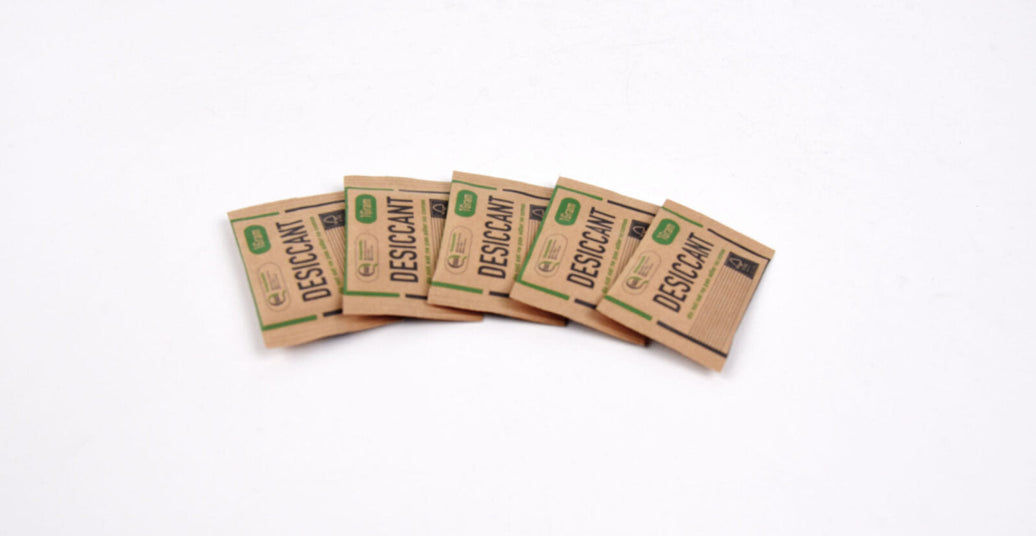
Supplement lines are diverse, and the desiccant should fit each without a redesign. Filmed fiber pads die-cut to 0.5 mm or 1.0 mm tuck into bottle caps and small pouches; bagged sachets across a wide weight range (1 g, 5 g, 9 g, 18 g, 25 g, and custom) suit bottles, jars, and bulk powder containers; and printable laminated, compostable film works as a branded insert. Whatever the format, the contamination risk of loose-fill leaves the line.
Sustainability as a brand asset
Supplement buyers increasingly read the sustainability story on the shelf and in retailer scorecards. A biodegradable, compostable desiccant — certified under ASTM D6400 and EN 13432, with a Product Carbon Footprint of 1.44 kg CO₂e/kg, about 31% lower than silica gel — lets a clean-label brand keep its packaging story consistent all the way down to the desiccant. It also regenerates by air-drying, no heat required.
Frequently asked questions
What desiccant is best for supplement bottles?
A dust-free, food-contact-documented desiccant with high absorption. ATMOSIScience fiber desiccant is documented under FDA 21CFR175.300, ISO 9001-manufactured, non-leaking, and absorbs over 70% of its weight at RH90%/25°C.
Why do my gummies or powders clump or fuse?
They are absorbing in-bottle humidity. A higher-capacity, correctly dosed desiccant holds the humidity low enough to keep gummies separate and powders free-flowing through shelf life.
Is fiber desiccant safe for direct contact with supplements?
It is documented under FDA 21CFR175.300 for food-contact safety and is dust-free and non-leaking. Verify the certificate for the specific SKU before approval.
How much desiccant goes in a supplement bottle?
Dose by the bottle's enclosed air volume and target shelf life, then validate with a humidity indicator card. Fiber desiccant needs fewer grams than silica gel because it absorbs roughly 5x more moisture per gram.

Protect potency — and pass audit
ATMOSIScience supplies dust-free, food-contact-documented fiber desiccant for supplement and nutraceutical packaging, in bottle-cap pads and bagged formats with FDA 21CFR175.300 and ISO 9001 documentation.
Evaluate the material with the Fiber Desiccant, or request certificates and bulk pricing via our desiccant solutions page or contact our team.
This article is general information and is not regulatory or legal advice. Verify all certifications against the specific SKU and your own regulatory requirements before approval.
Get a desiccant spec & bulk quote for your product
Tell us about your packaging needs, and our sales team will respond with a customized fiber-desiccant solution, supporting certificates and competitive bulk pricing.