Quick answer: A desiccant is a material that removes water vapour from the air sealed inside a package, lowering relative humidity so the product inside stays dry, free-flowing and stable. The five formats that dominate commercial packaging are silica gel, bentonite clay, molecular sieve, calcium chloride and plant-fiber desiccant. They differ in how much water they hold, at which humidity they hold it, whether they shed dust, and what they cost to ship and dispose of.
Buyers rarely arrive at this question because they are curious. They arrive because a batch caked, a bottle failed stability, a container arrived with mould on the cartons, or a sustainability team asked what the little sachet is made of. This page is the plain-English version of the answer.
What a desiccant actually does
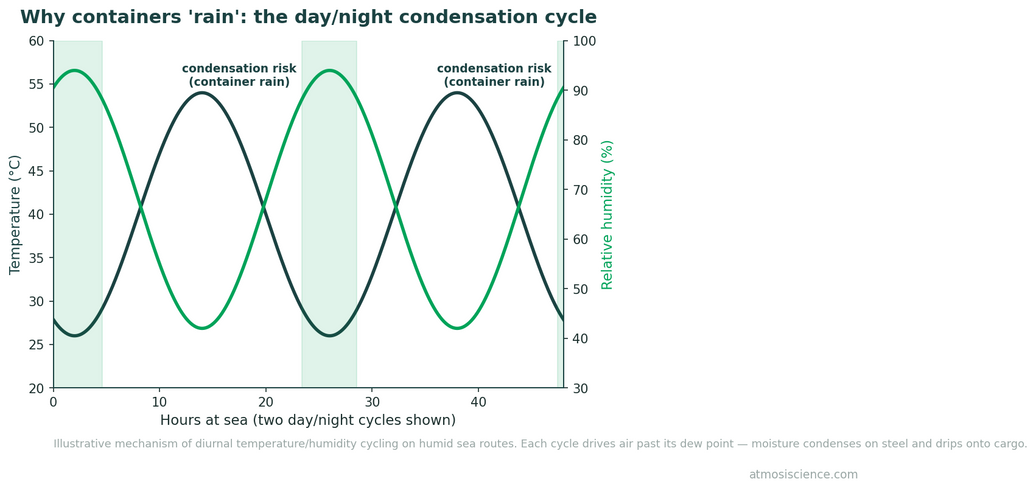
A sealed package contains air. That air contains water vapour. The product inside also carries moisture, and so do the paper inserts, cartons and pallets around it. A desiccant does one job: it pulls water vapour out of that headspace and holds it, so the equilibrium relative humidity in the pack drops and stays down.
The mechanism is adsorption, not absorption in the sponge sense. Water molecules bind to a very large internal surface area — the pore structure of silica gel, the layered plates of clay, the crystalline cages of a molecular sieve, or the fiber matrix in a plant-fiber pad. Chemical desiccants such as calcium chloride go further and deliquesce, dissolving as they take on water.

The five desiccant types, honestly compared
Silica gel
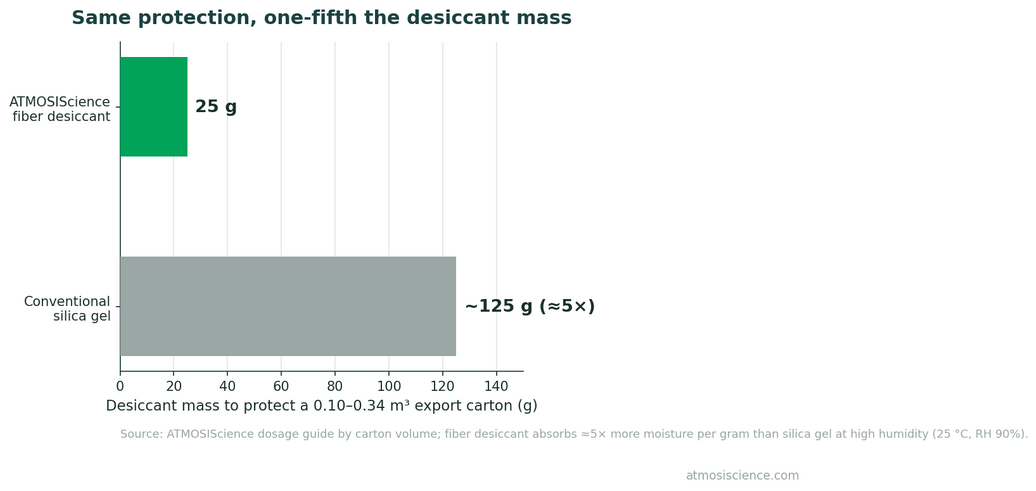
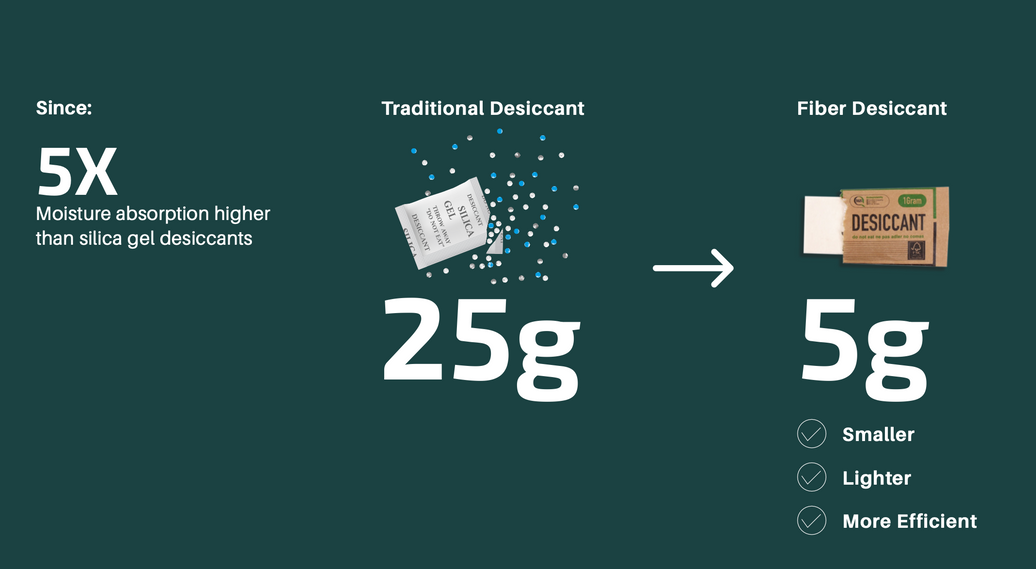
The default. Amorphous silicon dioxide beads, roughly 30% of their own weight in water at RH90 and 25°C. Cheap per kilo, universally available, and heavy: you ship a lot of mass to move a modest amount of water. Beads can escape a torn sachet into a powder.
Bentonite clay
A natural mineral, lower capacity than silica gel, strongest at low humidity. Often chosen because it sounds greener than silica. It is heavier per unit of protection than either silica or fiber, which usually cancels the environmental argument once freight is counted.
Molecular sieve
Synthetic zeolite with a uniform pore size. It drives humidity extremely low and holds water even when hot — the right answer for electronics dry packing, solvent drying and some pharmaceutical applications. It is also the most expensive and can over-dry products that need a little moisture.
Calcium chloride
Very high capacity, used in container dry bags. In its loose form it liquefies as it works, which is why it belongs in engineered containment rather than loose in a food pack.
Plant-fiber desiccant
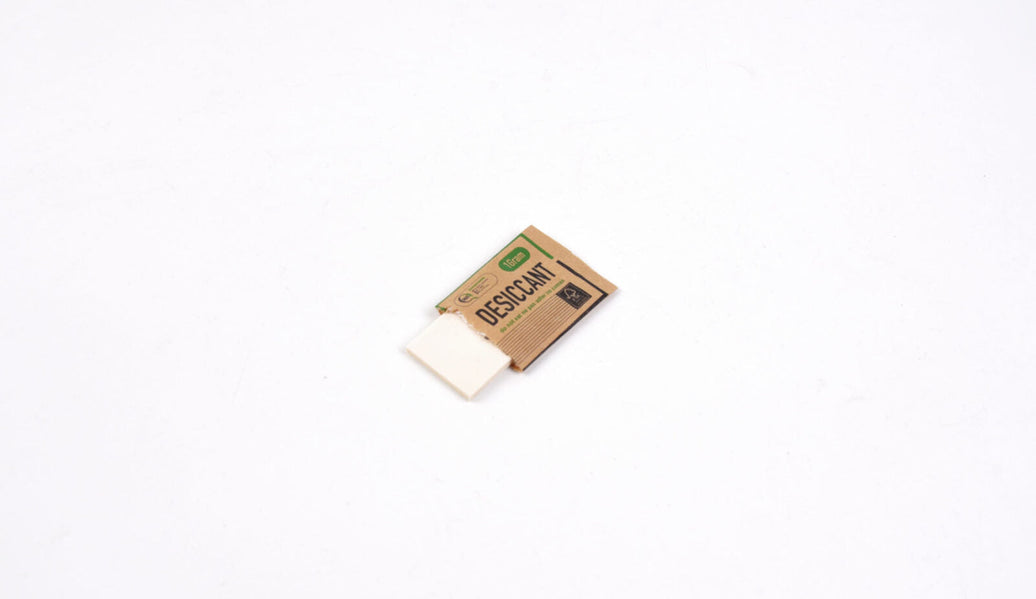
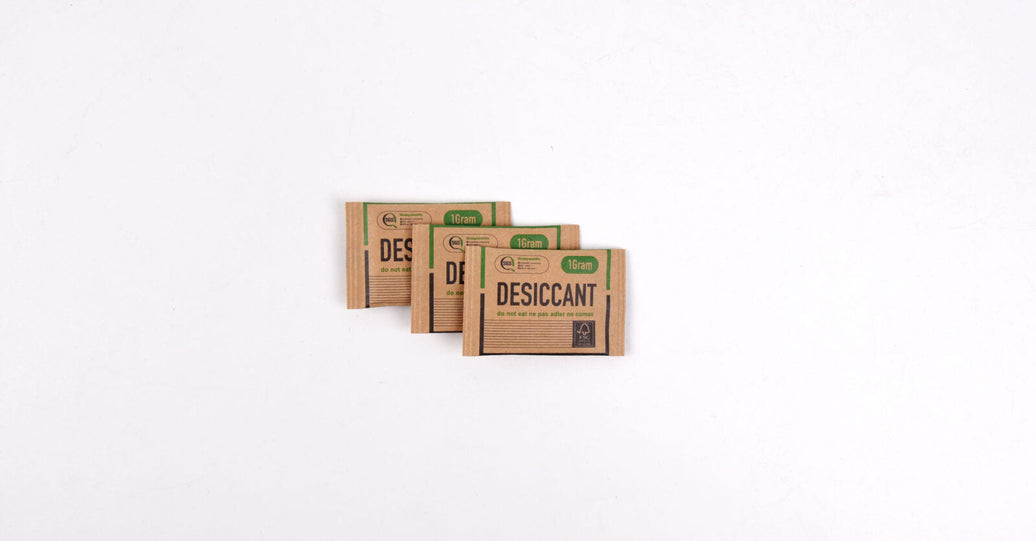
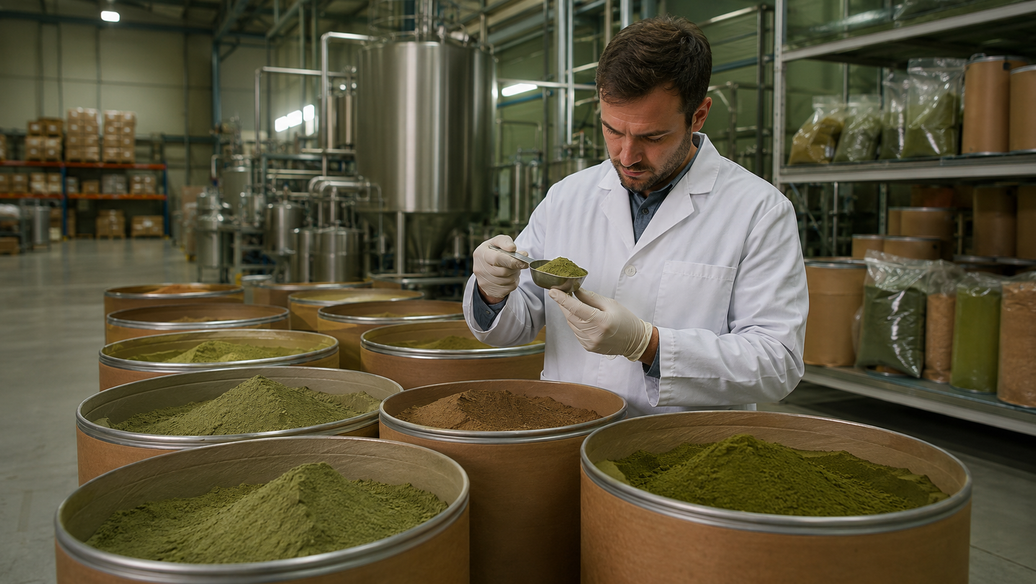
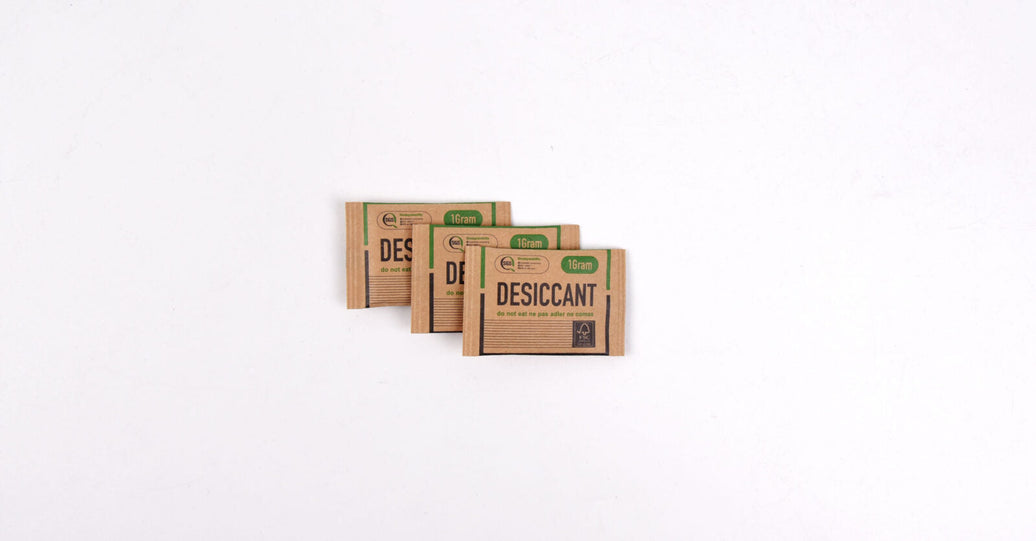
A newer class. ATMOSIScience fiber desiccant uses a natural lignocellulose substrate combined with calcium chloride in a patented composite, so the chemistry is bound into a fiber matrix instead of sitting loose. Measured at 25°C, it adsorbs more than 10% of its own weight at RH20, more than 35% at RH50 and more than 70% at RH90, with saturated capacity above 100% of its own weight. Loss on drying is under 10%. It is dust-free by construction, and the outer pouch materials meet ASTM D6400 and EN 13432.

How to choose without guessing
Four questions narrow the field faster than any comparison table.
- What humidity does your product need? Some products fail dry. Herbs, tobacco leaf, some botanicals and certain wood goods crack or lose weight if driven too low. If that is you, a one-way desiccant is the wrong tool and a two-way humidity control material is the right one.
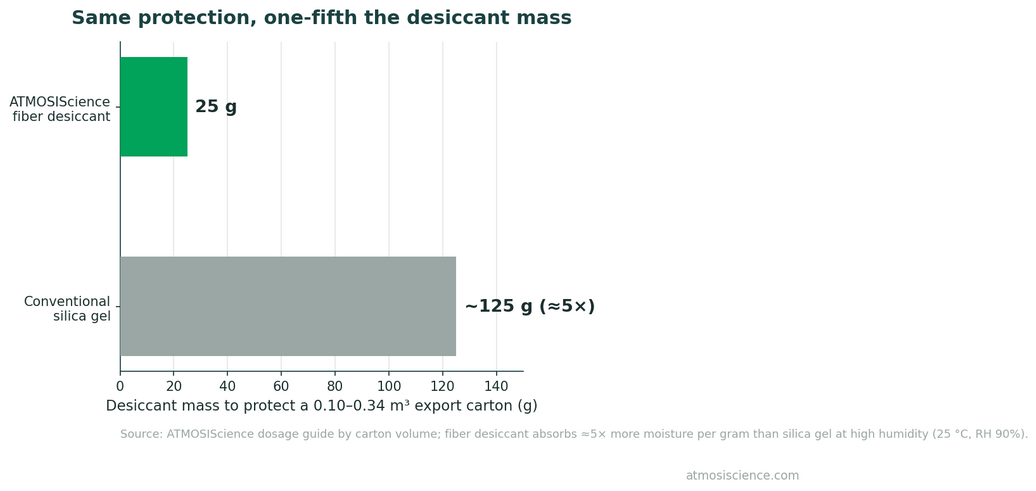
- How much air are you protecting? Dosage starts from enclosed air volume, not product size. Our reference point: a standard 0.10–0.34 m³ carton is served by about 25 g of fiber desiccant. Work through the dosage-by-volume guide before you spec a quantity.
- How leaky is your film? A compostable paper mono-material lets in far more water vapour over 18 months than a foil laminate. The barrier decides the ongoing load.
- Who has to sign off? Food contact, EU market access, EPR fees and disposal all attach to the desiccant, not just the pack.
Format matters as much as material
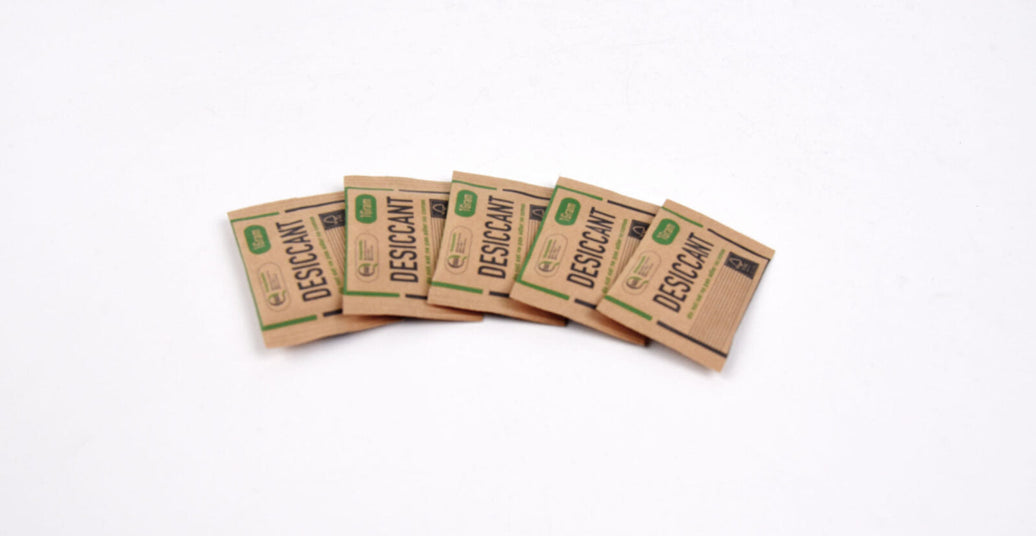
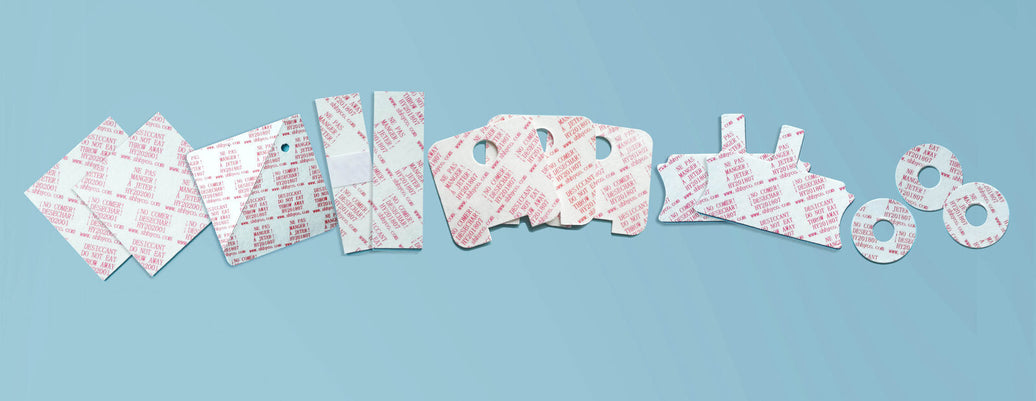
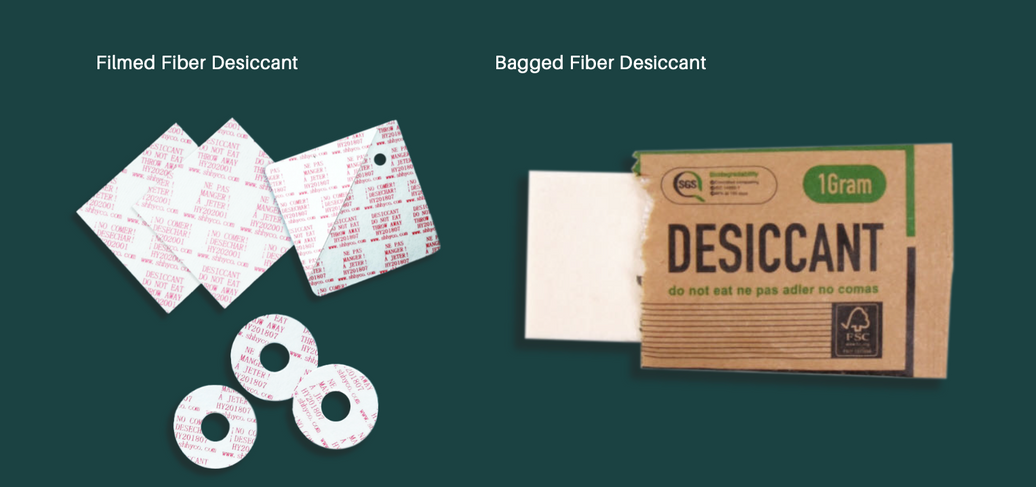
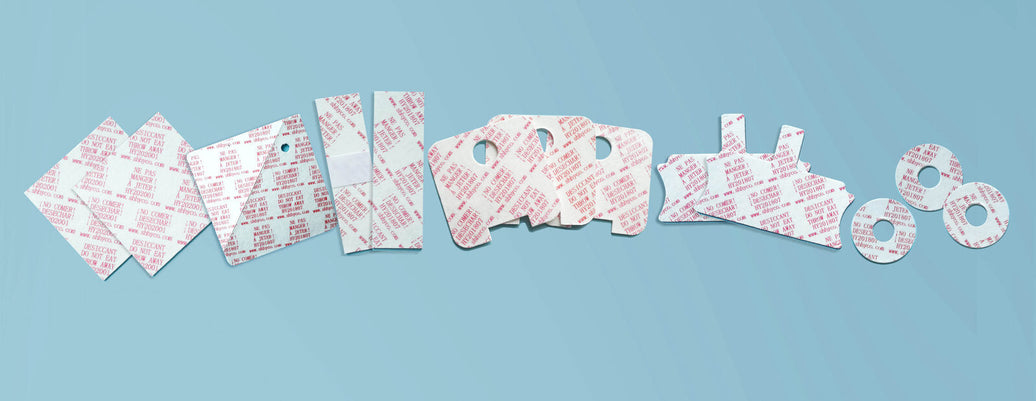
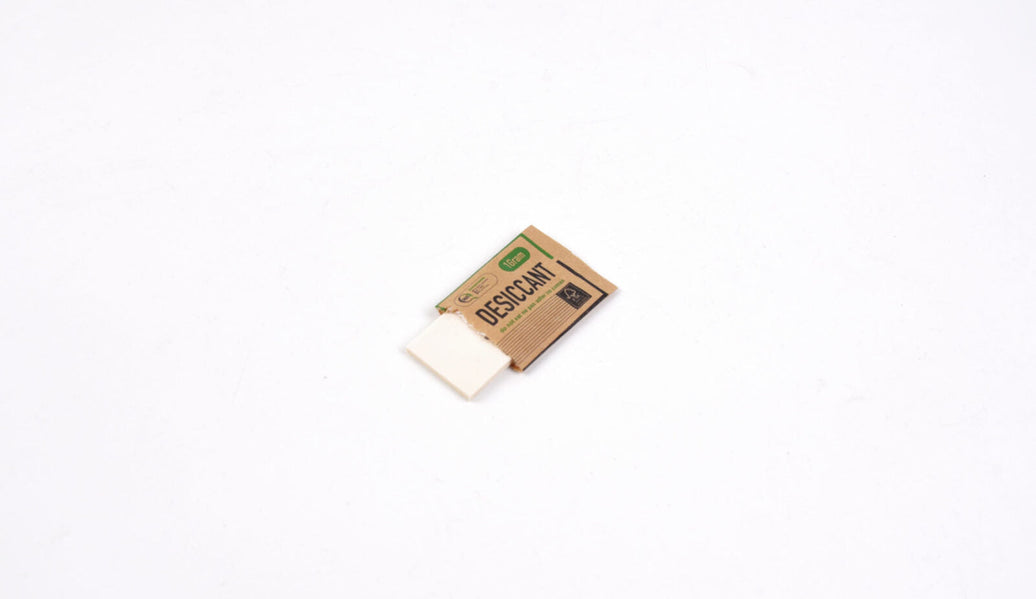
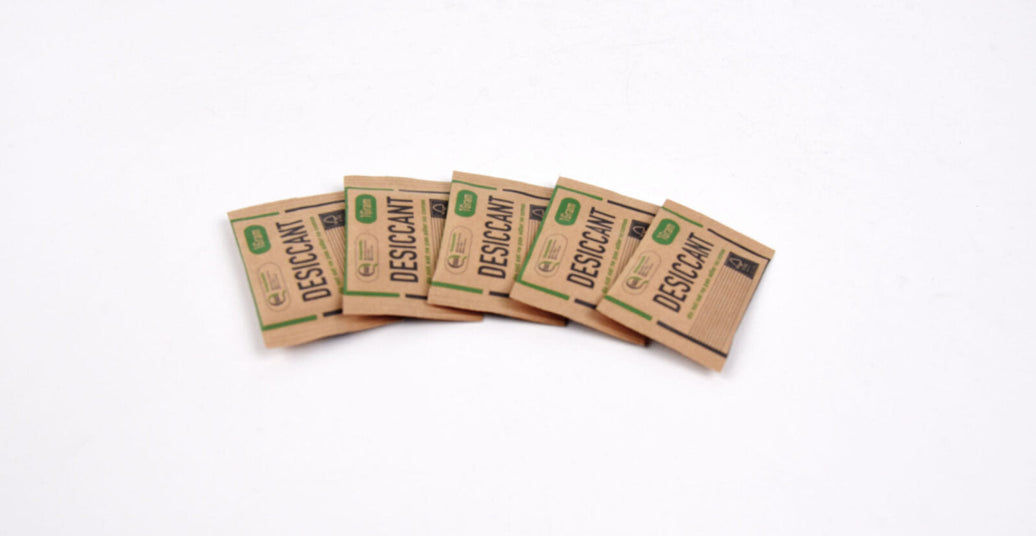
The same fiber can arrive as a sachet from 1 g to 1,000 g, as a die-cut card 0.5 mm or 1.0 mm thick that sits in a bottle cap, or as a printable insert. Capacity, line speed and headspace all change with format — see sachet, film card or cap insert for the trade-offs, and the capacity comparison for the numbers side by side. Teams working to a sustainability brief should start at the sustainable desiccant guide.
FAQ
Is a desiccant the same as an oxygen absorber?
No. A desiccant removes water vapour; an oxygen absorber removes O₂. They solve different failure modes and are often used together in the same pack.
Are desiccants toxic?
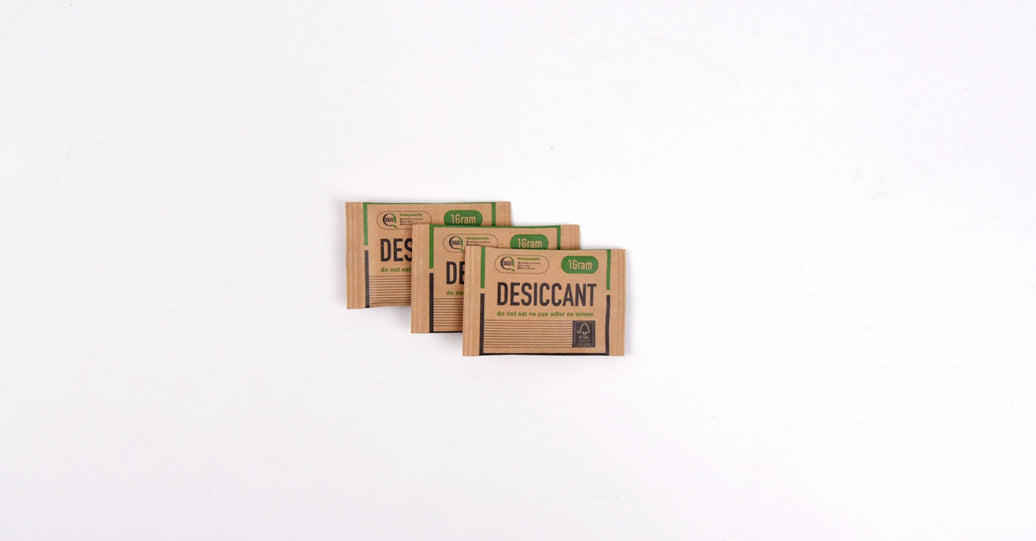
The common types are not intended for ingestion, which is why the "Do not eat" warning is required. ATMOSIScience fiber desiccant holds FDA 21 CFR 175.300 food-contact documentation, but the label warning still applies to every format.
Can a desiccant be reused?
Some can. Fiber desiccant can be air-dried to regenerate without applied heat. Silica gel generally requires oven regeneration, which rarely makes sense in a commercial pack.
How long does a desiccant last inside a package?
Until it reaches equilibrium with the moisture entering through the film. That is a calculation, not a fixed shelf life — it depends on dose, barrier and transit conditions.
Does a desiccant expire before use?
The sealed shelf life of ATMOSIScience fiber desiccant is 12 months stored cool, dry and sealed. Once the inner bag is opened the clock changes entirely: at RH 50% or below, limit air exposure to two hours; at RH 60% or above, one hour; at RH 80% or above, stop the operation.
Not sure which desiccant type fits your pack?
Send the pack format, fill weight and target shelf life. Our team will come back with a dosage figure, a format recommendation and the documents your QA team will ask for.
Prefer email? info@atmosiscience.com