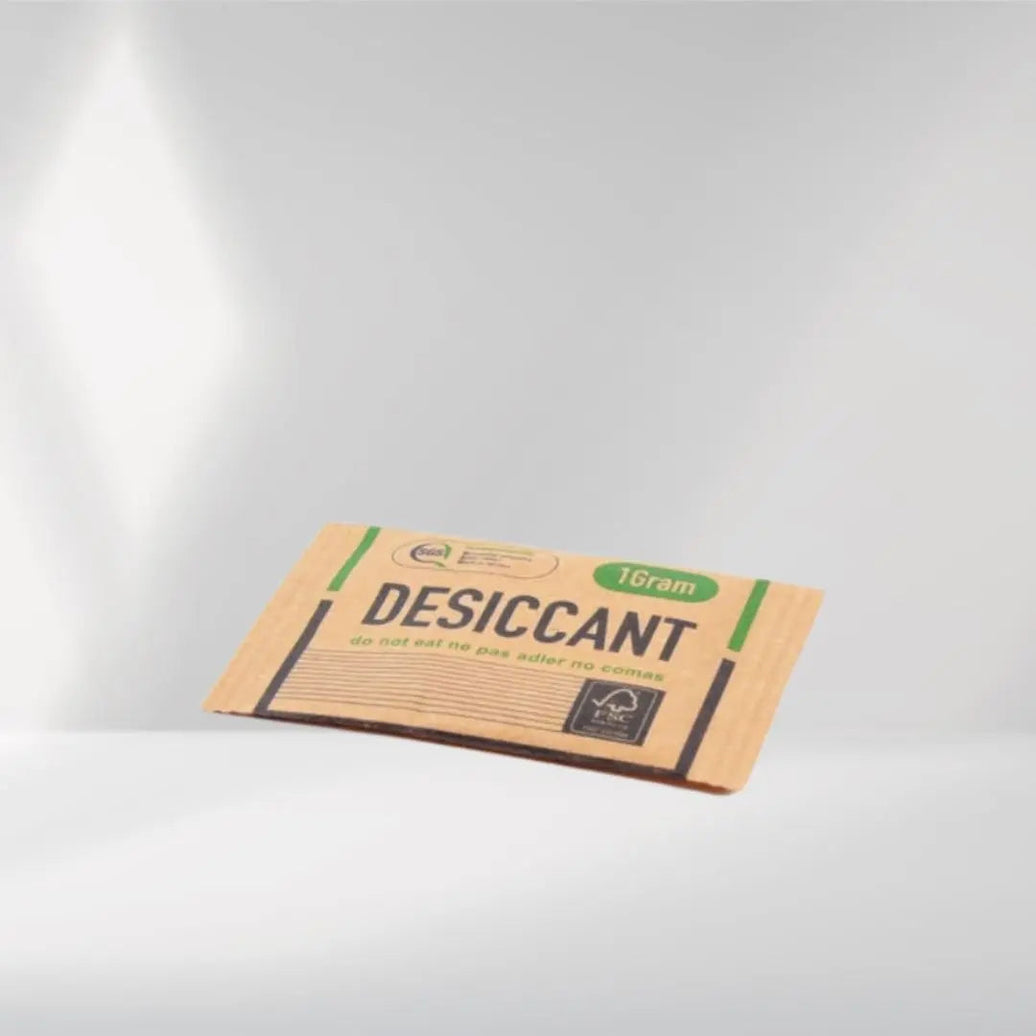
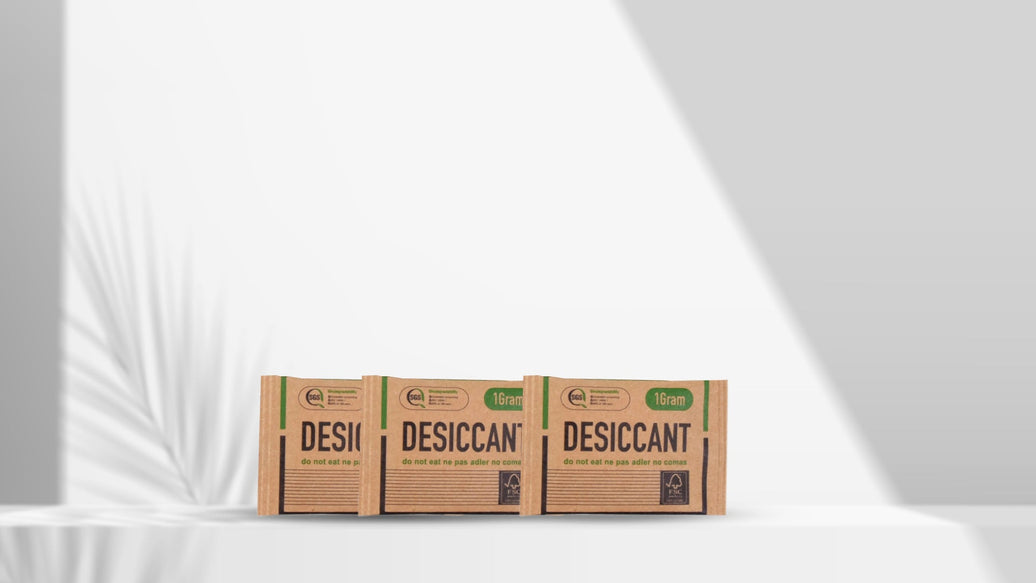
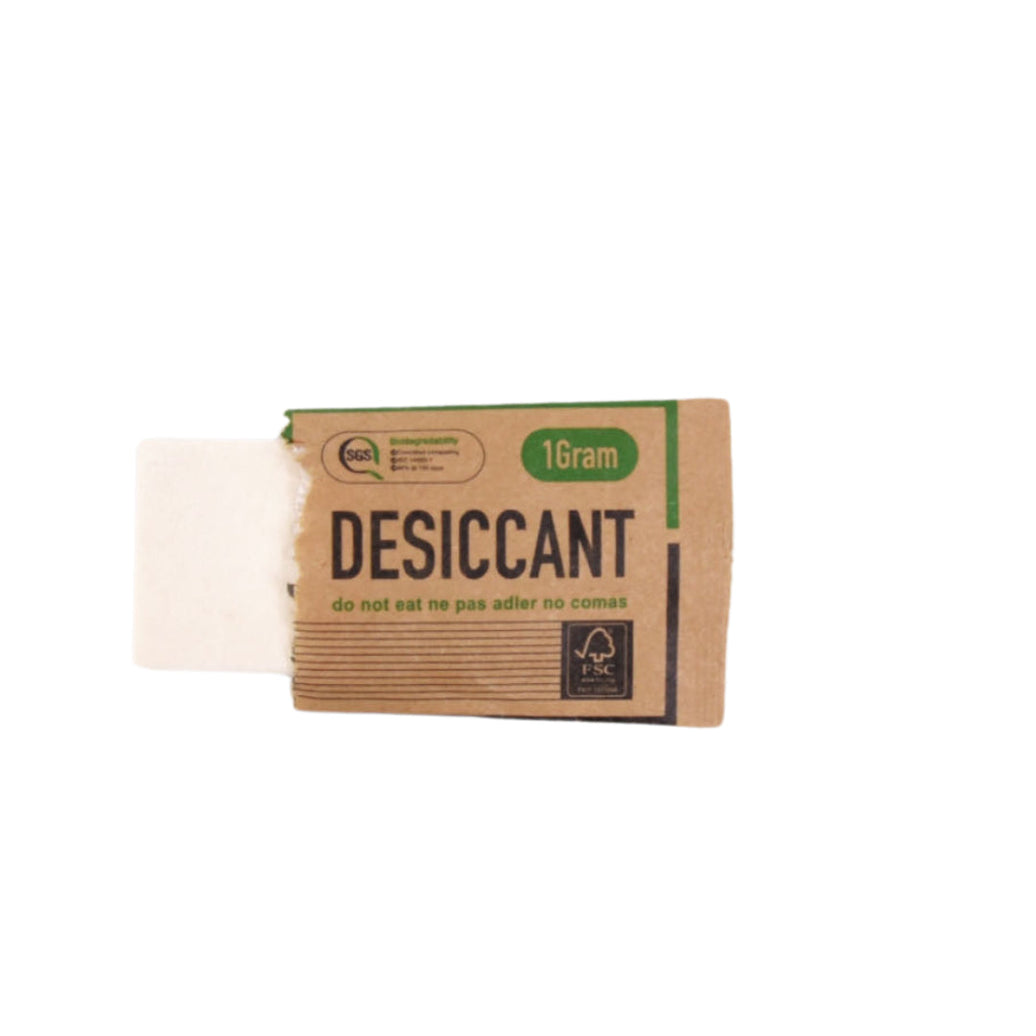
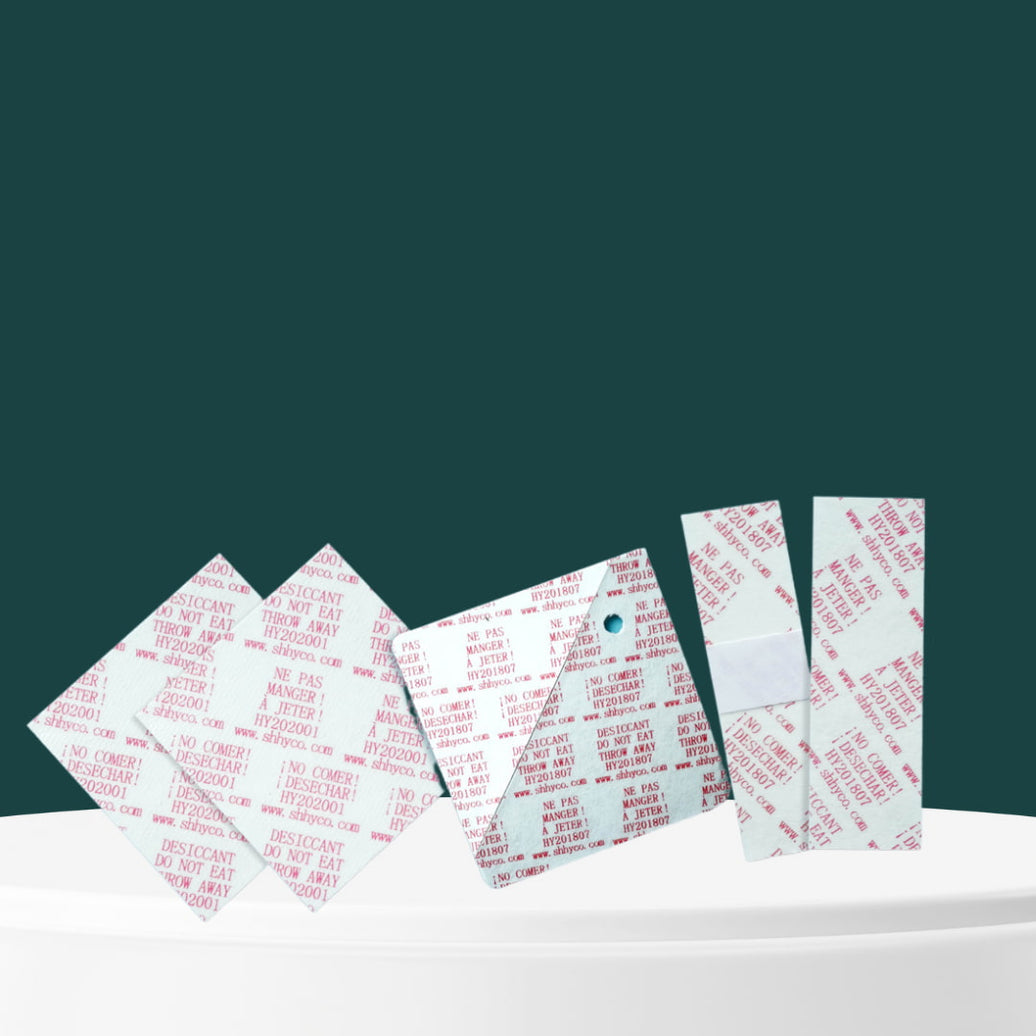
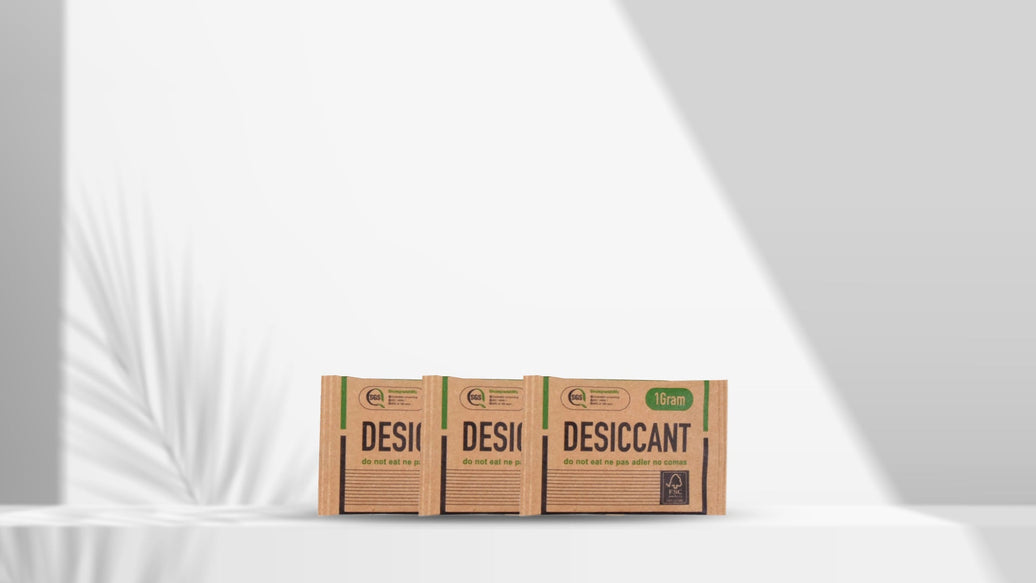
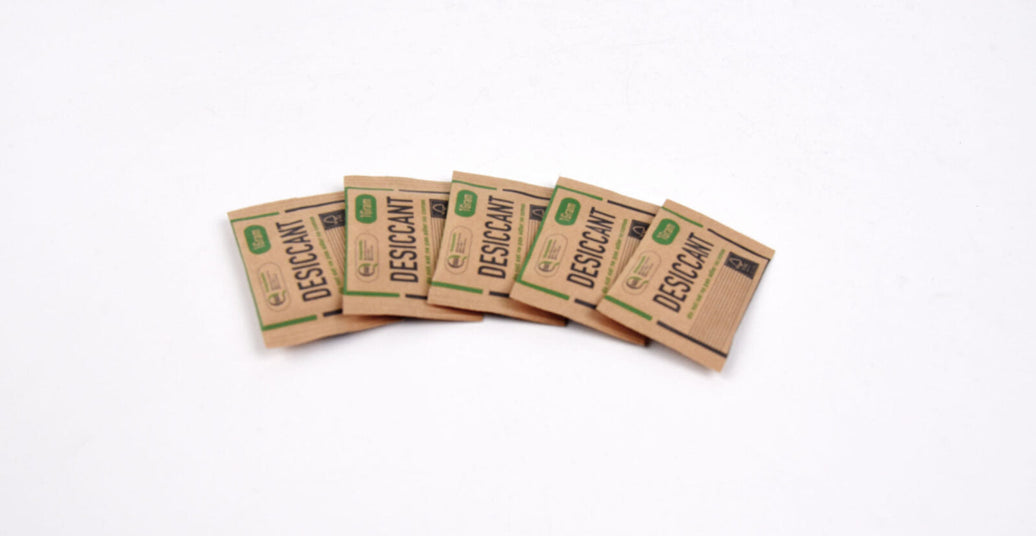
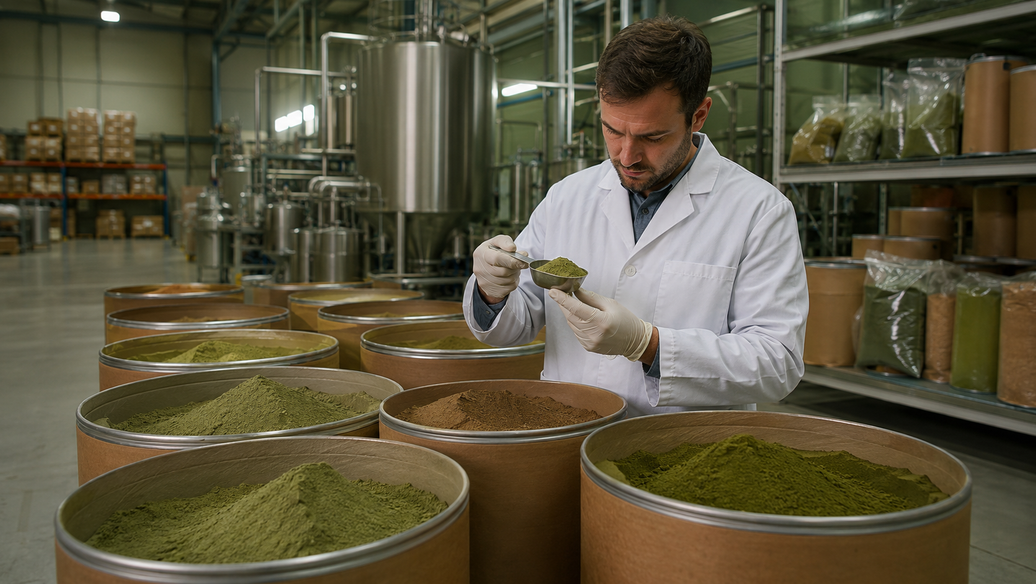
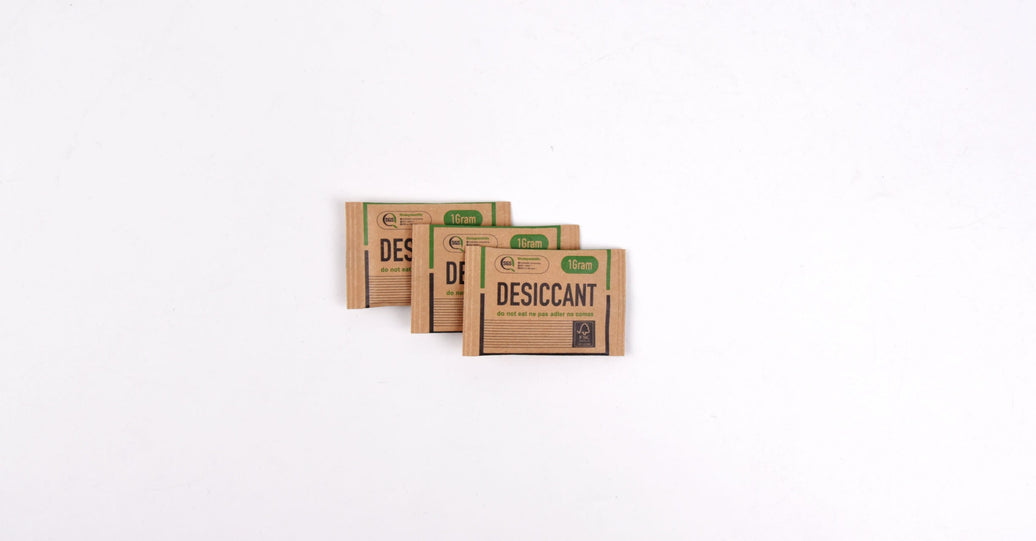
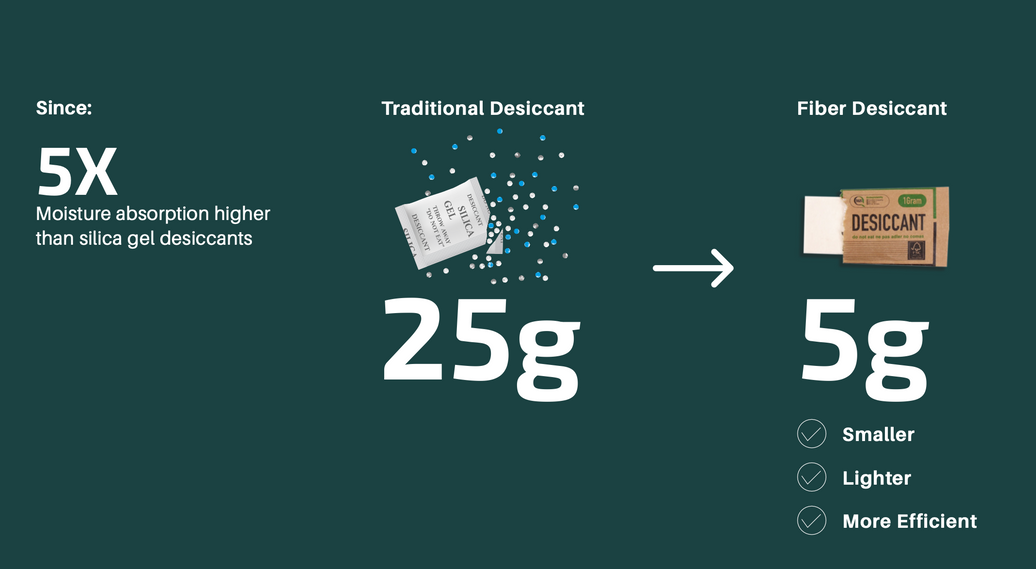
Premium dry-food brands ask us this several times a year: whether we make a combined oxygen-and-humidity product, and if not, how to pair a fibre desiccant with a separate oxygen absorber without giving up a natural, plastic-free pack.
The honest answer has three parts, and only one of them is the answer people expect. We do not make an oxygen absorber. Pairing one with a desiccant is possible but fails silently if you pick the wrong class. And "plastic-free" and "oxygen-scavenging" are, as of today, close to mutually exclusive in the same jar. Here is the engineering behind all three.
The failure most brands never see: iron-based oxygen absorbers need water to react. A desiccant in the same headspace takes that water. The absorber then sits there looking perfectly intact while doing nothing — and there is no visual indicator that it has stalled.
Related: Two-way liner or one-way desiccant? · Fiber desiccant formats
Humidity control and oxygen control are not the same job
A desiccant removes water vapour. An oxygen absorber removes molecular oxygen. Neither substitutes for the other, and the products in a single jar range usually need different amounts of each.
Caking, clumping, hardening and loss of flow are moisture problems. Rancidity, colour fade, vitamin loss and stale off-notes are oxidation problems. A jar family that spans a hygroscopic powder, a whole seed and a high-fat tree nut is looking at three genuinely different risk profiles:
| Product | Dominant risk | What actually helps |
|---|---|---|
| Hygroscopic powder | Caking, driven by water | Moisture control. Oxygen is secondary. |
| Whole seeds, intact seed coat | Low — the coat is the barrier, and the seed carries its own polyphenol antioxidants | Often nothing active at all |
| High-fat tree nuts | Lipid oxidation, driven by oxygen, heat and light | Oxygen control. Aggressive drying makes it worse. |
That last row is the counter-intuitive one and it changes the whole design. Lipid oxidation runs on a U-shaped curve against water activity, with a minimum around aw 0.25–0.35. At that level a monolayer of bound water physically shields the fat surface and hydrates the trace metals that break peroxides down. Below it, oxidation speeds up again. High-fat tree nuts are commercially dried to about 1.5% kernel moisture, already at or under that optimum. A published macadamia storage trial found nitrogen packing gave 180 days at ambient and nitrogen plus a desiccant gave 175 — the desiccant did not help, and directionally it hurt.
The moisture-activation conflict, in detail
Iron-based oxygen absorbers work by controlled corrosion. The summary reaction is 4Fe + 3O₂ + 6H₂O → 4Fe(OH)₃ — note that water sits on the reactant side of every oxygen-consuming step. Unpromoted iron typically needs around 65% relative humidity before rusting proceeds at a useful rate; commercial sachets add an electrolyte to bring that down, but they do not eliminate the dependency.
Manufacturers segment their ranges by exactly this variable. A typical catalogue distinguishes water-dependent iron types rated for foods at aw 0.80–0.99, general-purpose iron types up to aw 0.95, a dry-food iron type rated to aw ≤0.65 (specifically listed for nuts, coffee, tea and spices), and a coffee-grade type for aw ≤0.3. Put a desiccant in with a water-dependent type and you have two components competing for the same finite water in a small headspace. The desiccant wins — that is its entire function — and the absorber stalls.
If you are going to run both, the absorber must be a self-reacting type carrying its own internal moisture reservoir, or a humidity-neutral polymer chemistry that works from 0% to 100% RH. Pharmaceutical-grade absorbers of this kind exist precisely because pharma packs are dry, and some are explicitly documented as safe to mix with desiccants in the same packet. That is a specification line, not a preference. Write it into the purchase spec or you will be shipping a placebo.
And the reverse risk, which is less discussed
A self-reacting absorber brings water into the pack. Some are designed to establish an equilibrium relative humidity in the headspace. In a 250–500 ml jar of hygroscopic powder, that released water has nowhere to go except into the powder. Solving oxidation can create the caking problem you started with. Whichever way you go, this needs measuring, not assuming.
Sizing an oxygen absorber, if you decide to use one
Absorbers are rated in cc of oxygen, and oxygen is about 21% of air. So:
cc rating ≈ free air volume in the pack (ml) × 0.21 × safety factor
Take a 500 ml jar. The absolute worst case — treating the jar as entirely air — is 500 × 0.21 = 105 cc. A realistically filled jar with roughly half its volume as void and headspace holds about 250 ml of air, so 250 × 0.21 ≈ 53 cc. A 150 cc absorber gives comfortable margin even against an empty jar, and covers ingress over shelf life. For reference, 1 g of iron reacts with roughly 300 ml of oxygen.
What target should you aim for? Published work suggests reducing headspace oxygen below about 2% captures most of the oxidative benefit. Chasing 0.01% in a gasketed jar is not a useful goal — the closure will not hold it.
The part nobody wants to hear: a clip-top jar is probably the weak point
Glass is a perfect oxygen barrier, so 100% of ingress happens at the closure. That makes the gasket material the single most important number in the whole build, and clip-top jars are usually specified with silicone.
| Gasket elastomer | Oxygen permeability, relative to butyl rubber = 1 |
|---|---|
| Dimethylsilicone rubber | ~430× |
| Fluorosilicone | ~79× |
| Nitrile | ~61× |
| Natural rubber | ~17× |
| Butyl rubber | 1× (lowest) |
Read across the table: silicone is roughly 7× more permeable than nitrile and roughly 430× more permeable than butyl.
There is a second, structural issue with rigid jars. An absorber removes about a fifth of the gas in the pack. In a flexible pouch that shows up as visible collapse — a free quality signal. In a rigid glass jar the gas cannot collapse, so internal pressure falls to roughly 0.79 atm instead, and that pressure differential drives ambient air inward through the gasket for the entire shelf life. A two-piece canning lid self-tightens under that vacuum; a wire-bail clip-top does not, because its compression is fixed by the bail geometry.
We could find no published oxygen transmission rate for a wire-bail closure, and supplier guidance on containers suitable for oxygen absorbers consistently names canning jars, heat-sealed foil pouches and cans — clip-tops appear on none of those lists. That is not proof of failure, but it is a strong signal that bail-and-gasket closures need measuring on filled production jars before anything else is decided. Changing the gasket specification from silicone to butyl is the highest-return, lowest-cost change available here, and the consumer never sees it.
Plastic-free and oxygen-scavenging: the honest position
An oxygen absorber sachet has to be gas-permeable, powder-tight and heat-sealable at the same time. Those three requirements together are why the industry uses flash-spun HDPE, non-wovens and polymer laminates. We could not find a commercially available certified-compostable oxygen absorber sachet anywhere. The bio-based scavenger chemistries in the literature — glucose oxidase, ascorbic acid, plant-polyphenol systems — are all explicitly water-activated and suited to moisture-rich foods, which is the opposite of a dry-goods jar.
Commercial 2-in-1 oxygen-plus-moisture products do exist, and they work. But every one we could find is a sachet or a rigid canister in flash-spun polyethylene, non-woven or laminate. None is a thin die-cut disc, and none is compostable. If a brand's positioning is that no plastic touches the product, dropping a warning-labelled synthetic sachet into a clear glass jar is a bigger brand problem than the rancidity you were trying to prevent.
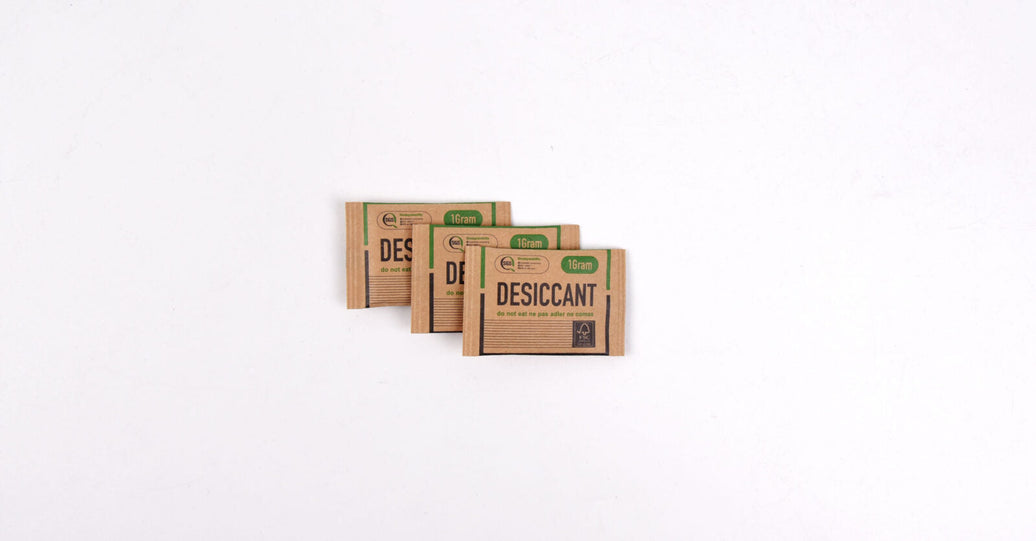
Two operational consequences also land later: iron sachets must be inserted after metal detection, because that jar can never pass a ferrous detector again, and "Do Not Eat" printing is mandatory, with documented pet-poisoning incidents behind the requirement.
What we would actually recommend
- Do not specify one insert across the whole range. Different products, different risk profiles. One universal insert across all of them is the real error. Whole seeds may need nothing.
- Measure the jar first. Residual oxygen on filled, sealed production jars at 0, 30, 90 and 180 days. If a clip-top leaks, no insert fixes it.
- Respecify the gasket. Silicone to butyl. Roughly two and a half orders of magnitude of barrier for almost no cost and no visible change.
- Consider a low-set-point two-way disc rather than a desiccant for a high-fat nut SKU. Powders want to stay under about aw 0.4; nuts want 0.25–0.35. Those windows overlap. A buffer holding roughly 0.30 stops the powders caking and parks the nuts at their oxidation minimum instead of over-drying them — and it keeps the headspace inside the operating range of a dry-food-grade absorber. Sensory panels on nut crunch are mandatory before committing, because 0.35–0.45 is where crispness starts to go.
- If you use an absorber, specify a self-reacting or humidity-neutral type in writing. Not "an oxygen absorber". The class is the spec.
- Accept the trade-off, or change the format. Today you can have plastic-free, or you can have active oxygen scavenging in the jar. If oxygen control is non-negotiable for a high-fat nut SKU, nitrogen flushing at fill moves the plastic out of the pack entirely and performed best in the published storage trial cited above.
Frequently asked questions
Does ATMOSIScience make an oxygen absorber?
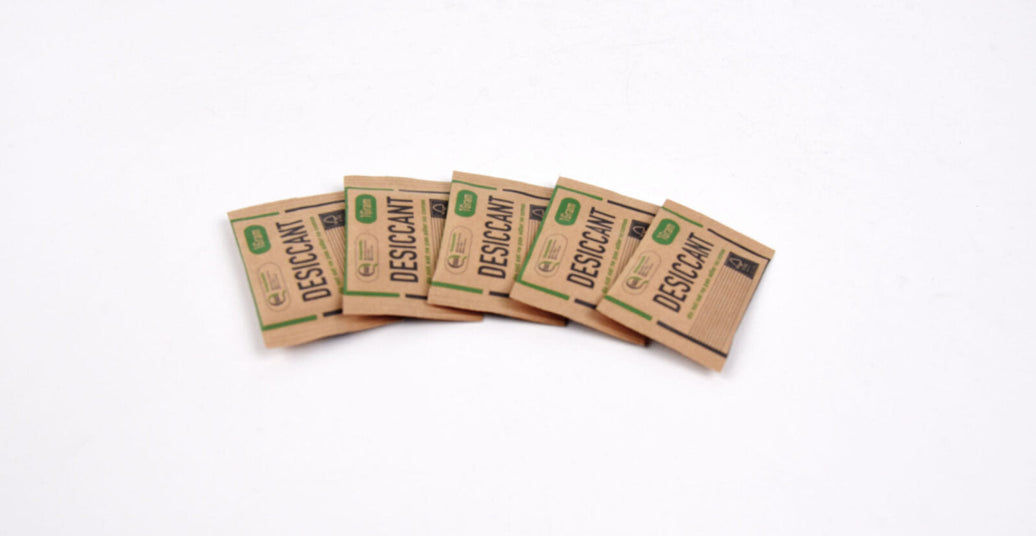
No. Our platform is humidity control — one-way desiccant and two-way buffering, both on a plant-fibre substrate. We would rather tell you that than sell you the wrong part.
Can I just put a desiccant and an oxygen absorber in together?
Only if the absorber is a self-reacting or humidity-neutral type. With a moisture-dependent iron absorber the desiccant will starve it, and the failure is silent.
Will a die-cut fibre disc work in a clip-top jar?
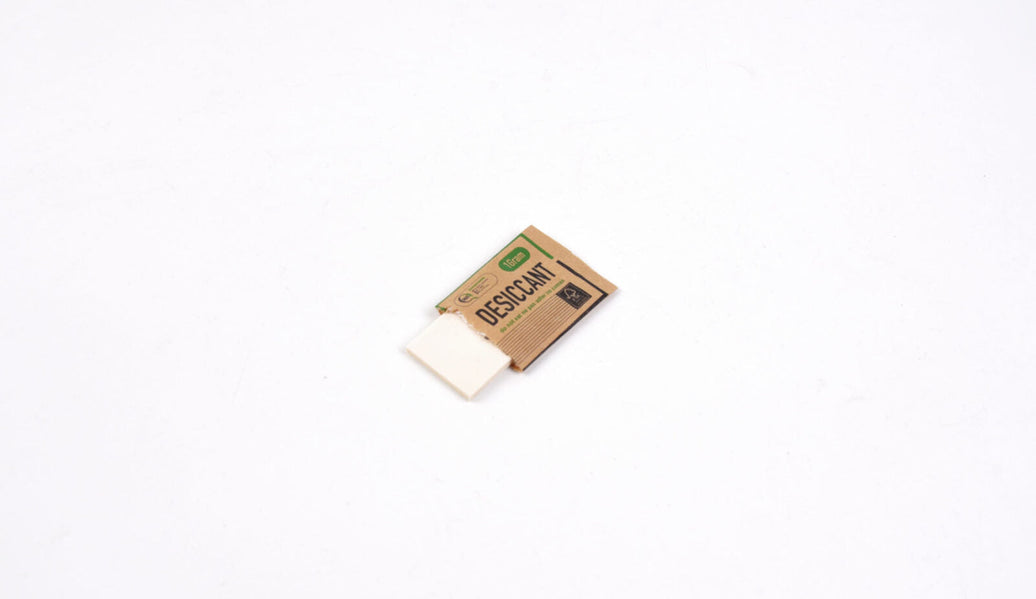
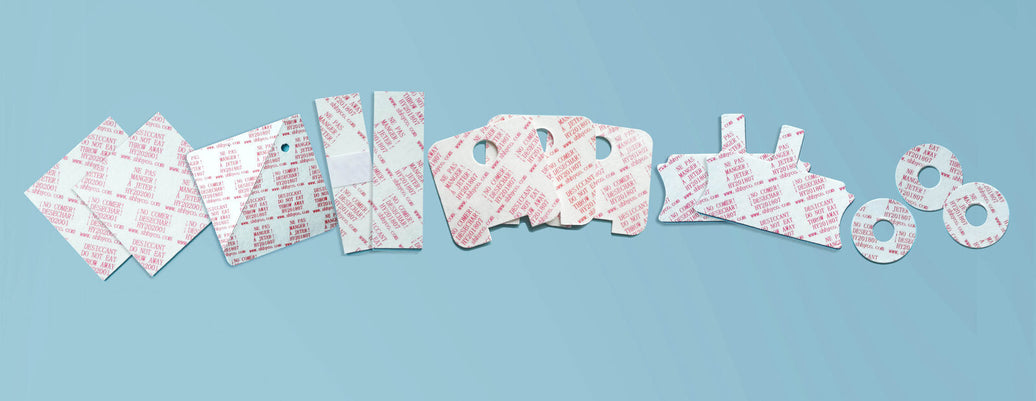
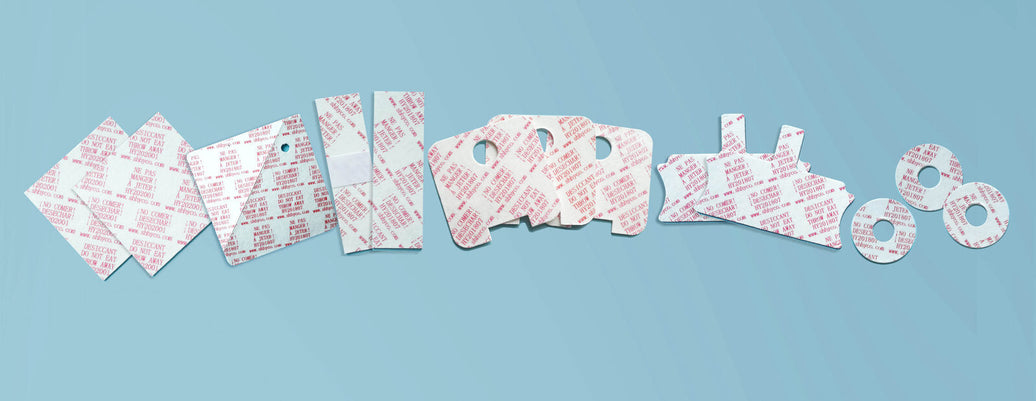
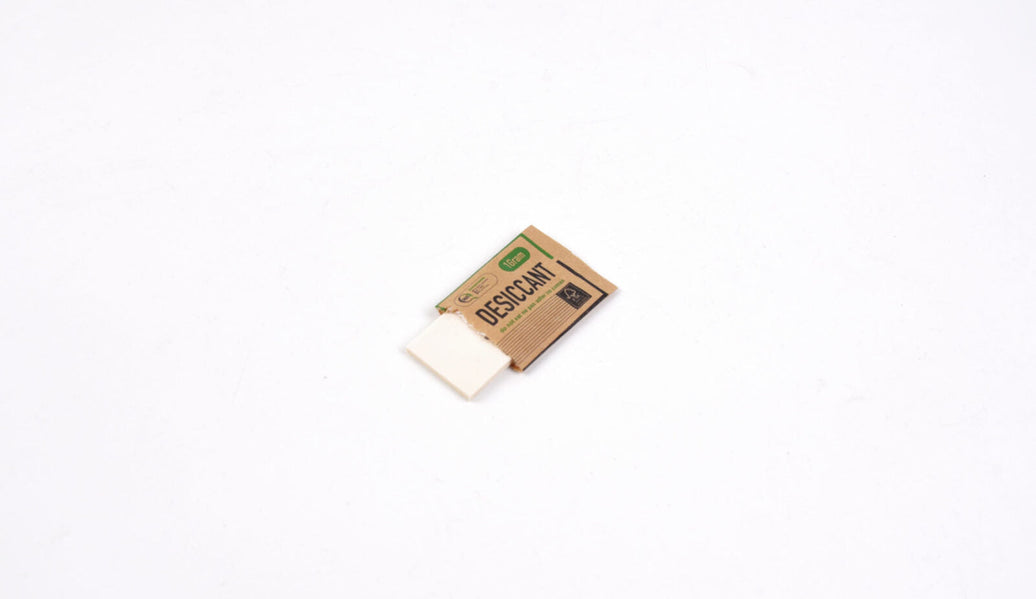
Mechanically yes — it can be die-cut to sit under the lid or on top of the product, printed and branded. Whether a bail-and-gasket closure holds a controlled atmosphere long enough to matter is the question to answer first.
Is there a compostable oxygen absorber?
We could not find one on the market. Compostable outer pouches exist; a certified-compostable absorber sachet does not appear to.
Send us the product, not the part
If you are designing a jar system for powders, seeds or nuts, tell us the SKUs, the jar and closure, and your target shelf life. We will tell you which of them needs a fibre disc, which needs a different set point, and which needs something we do not sell.
Start on the fiber desiccant page or email info@atmosiscience.com.
Related reading: Two-way humidity liner or one-way desiccant? · How to size a desiccant properly
Tell us the product, not just the part number
Send us what you are packing, the pack format and the humidity or shelf-life target. We will come back with a sizing calculation, the matching format and the certificate pack.