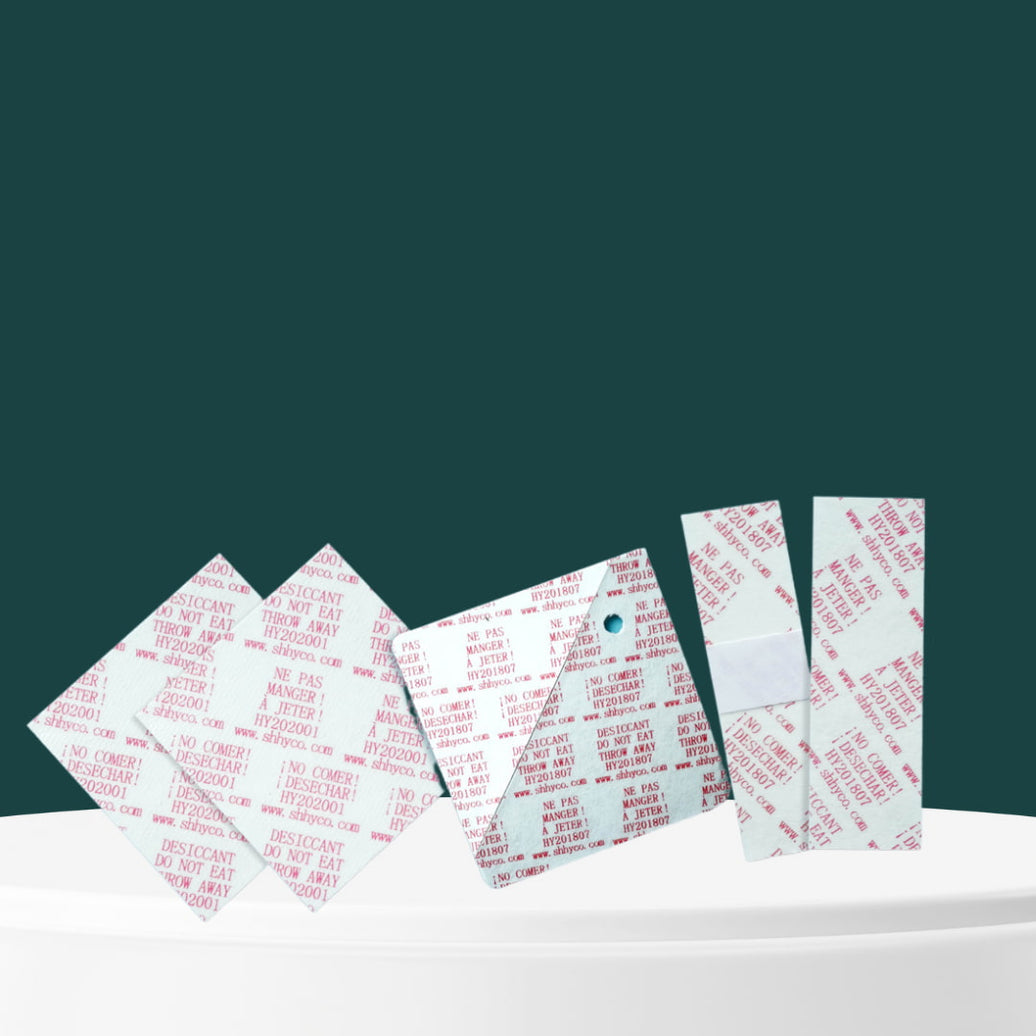
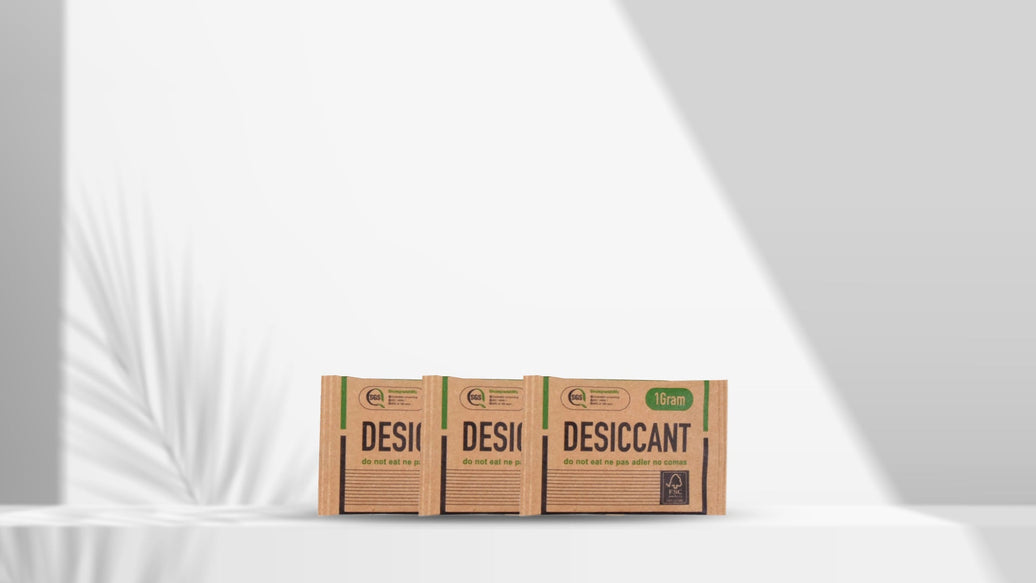
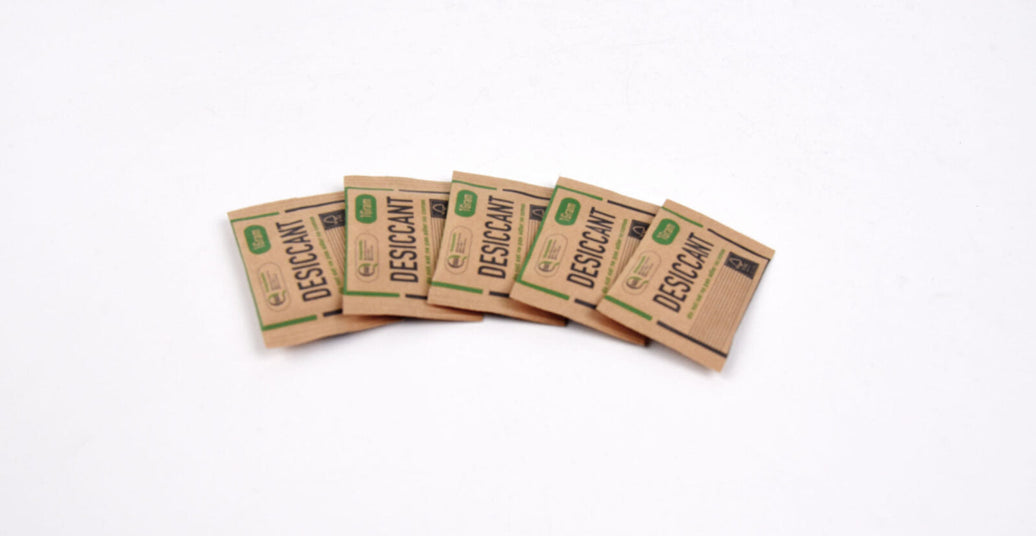
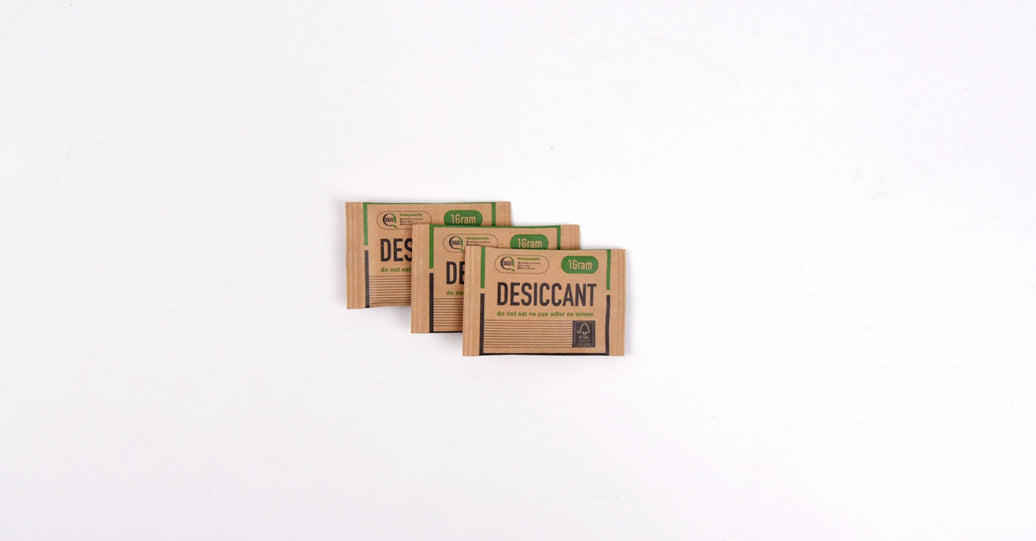
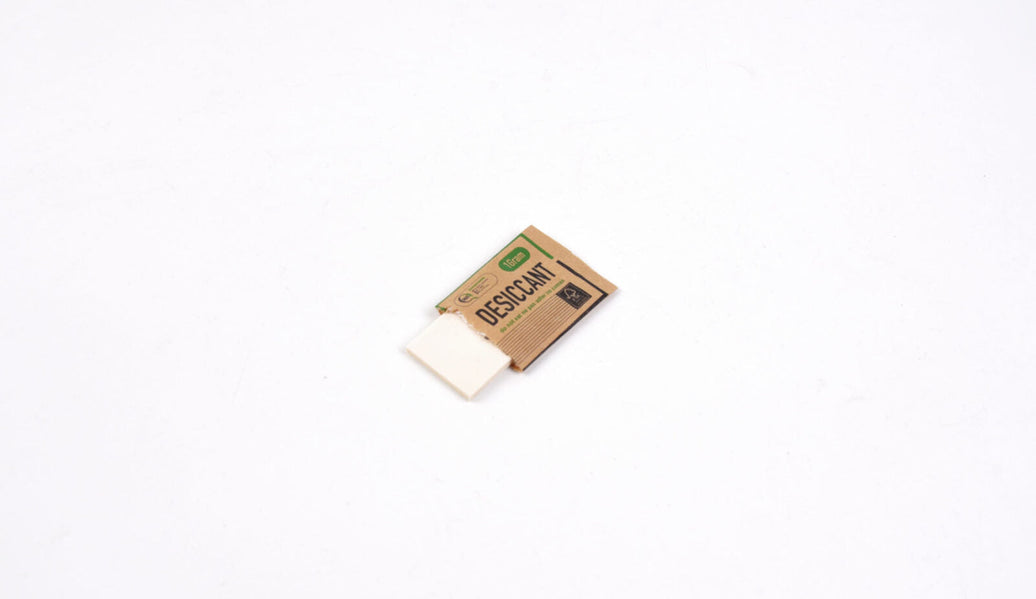
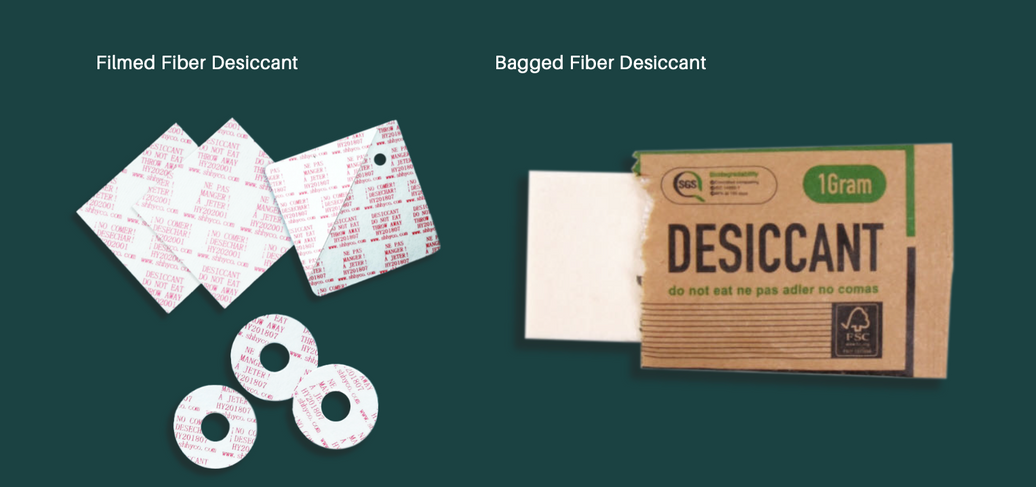
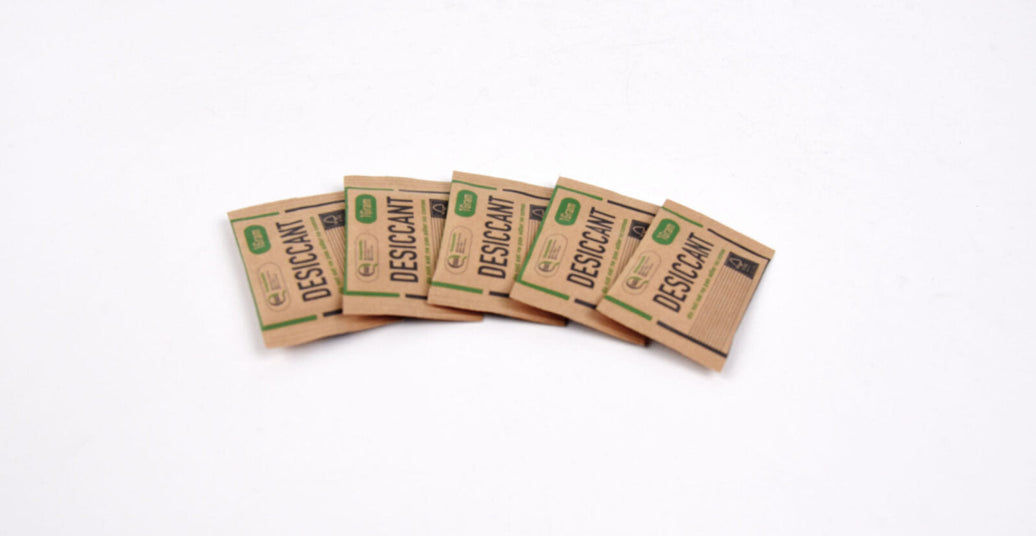
Buyers regularly ask us for the same physical part: a thin, round, plant-fibre disc that sits under a jar lid. Some want it to hold humidity at a set point. Others want it to remove humidity entirely. Same shape, same material family, same drawing — opposite jobs.
That is the most expensive mix-up in jar packaging, and it is almost always invisible until the product fails on shelf. This guide explains the difference between a two-way humidity control liner and a one-way desiccant, how to tell which one your product needs, and what happens when you get it backwards.
The one-line test: if your product would be damaged by being too dry, you need a two-way liner. If it would only ever be damaged by being too wet, you need a desiccant. Almost nothing needs both in the same headspace.
Related: Humidity Control Liner (2-way) · Fiber Desiccant (one-way) · How the fibre platform works
The two devices do genuinely opposite things
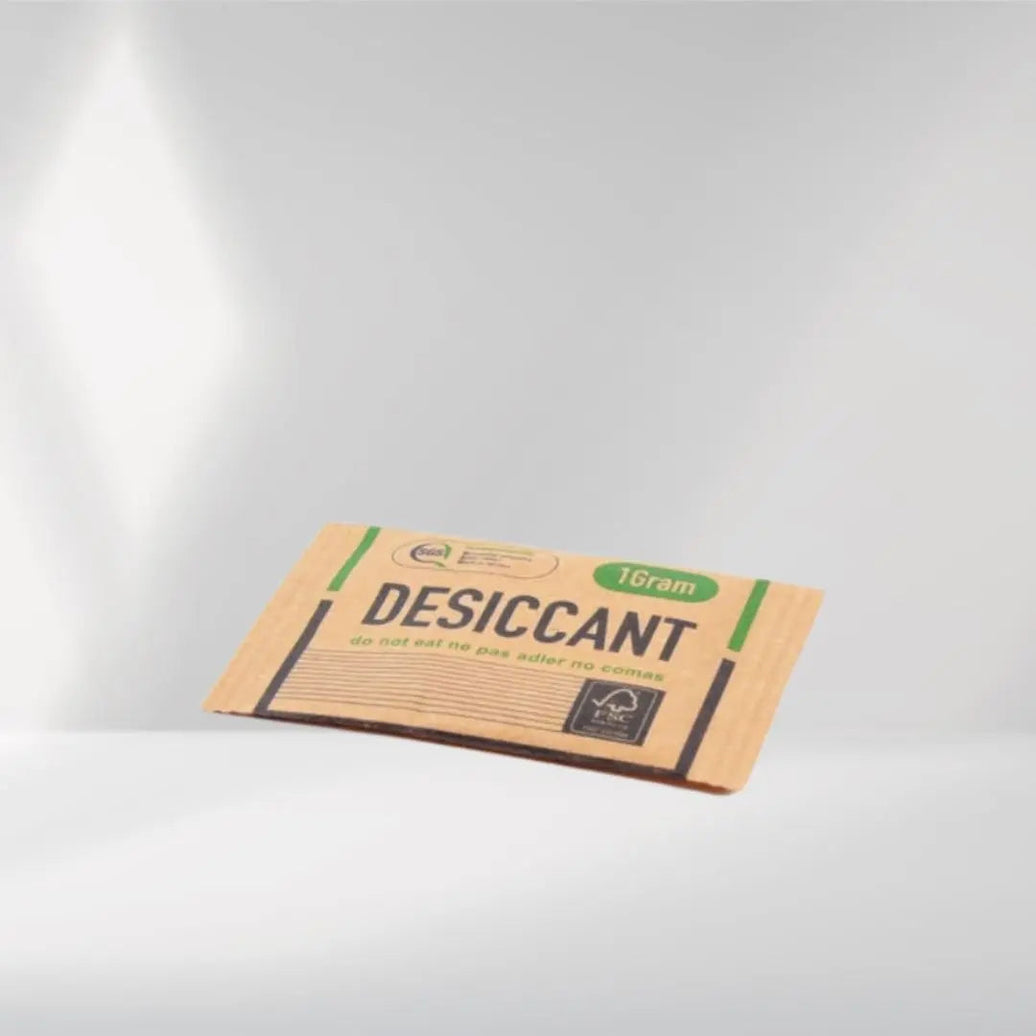
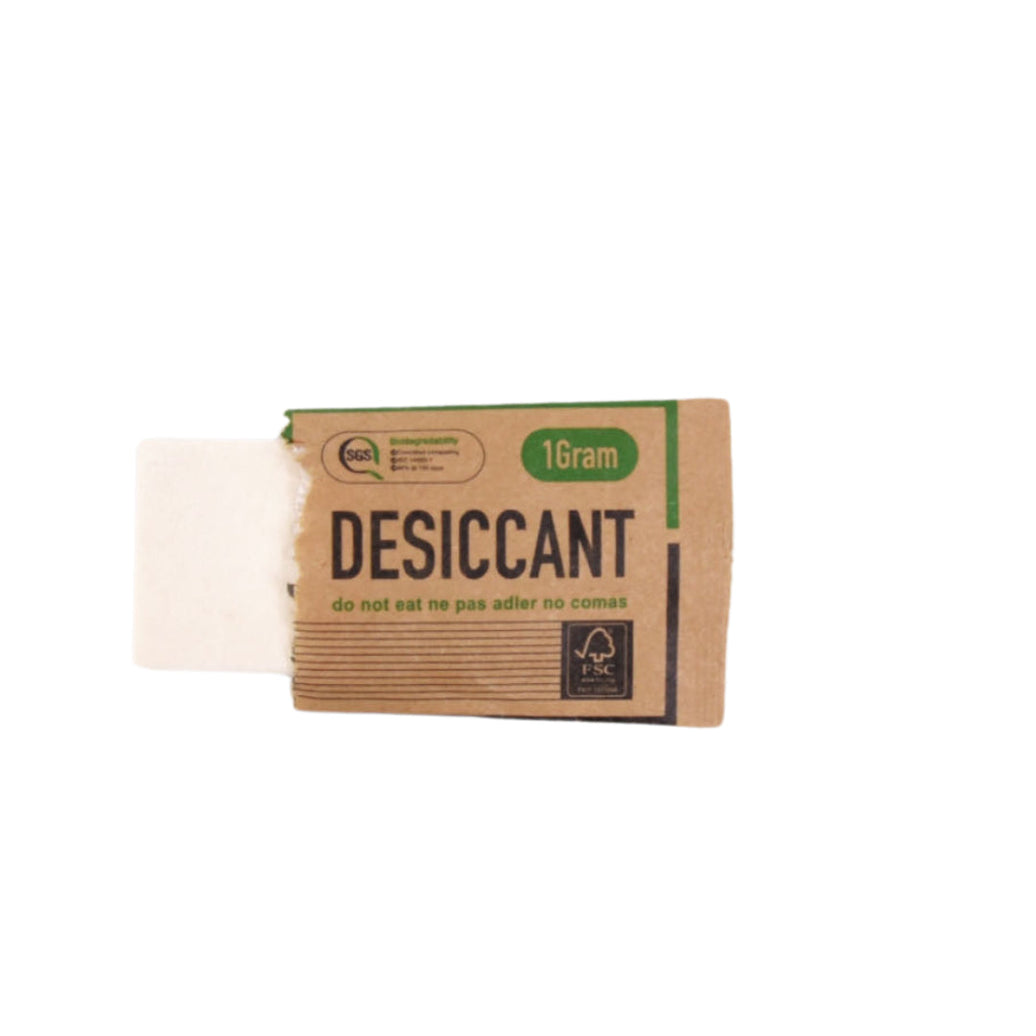
A desiccant is a one-way sink. It pulls water vapour out of the headspace and holds it, and it keeps pulling until it is saturated or the pack reaches equilibrium at a very low humidity. There is no set point. Its target is "as dry as capacity allows".
A two-way humidity control element is a buffer. It absorbs when the headspace rises above its set point and releases when the headspace falls below it. Below a certain relative humidity it gives moisture back to the product. Its target is a number — 49%, 55%, 62% — and it defends that number in both directions.
Both can be made from the same lignocellulose fibre substrate, die-cut to the same disc, printed with the same logo. Nothing on the outside tells you which one you are holding. The difference is entirely in the humidity-control composition loaded into the fibre.
Water activity is the variable, not "moisture"
Every dry product has an equilibrium relative humidity it wants to sit at. Divide that by 100 and you have its water activity (aw) — the number that actually governs caking, microbial growth, enzyme activity and, in fatty products, oxidation. Specifying a humidity control element without knowing your product's target aw is guessing.
Here is why the distinction is not academic. These are published targets for products that all commonly ship in glass jars with a lid liner:
| Product | Target water activity | What it needs |
|---|---|---|
| Freeze-dried probiotics | Below aw 0.15 (viability falls as aw rises) | Desiccant — as dry as achievable |
| Hygroscopic superfood and beverage powders | Below roughly aw 0.4; stickiness and recrystallisation begin in the 0.35–0.45 band | Desiccant or a low-set-point buffer |
| Tree nuts and other high-fat kernels | aw 0.25–0.35 — lipid oxidation is at a minimum here and rises on both sides | Two-way at a low set point, not a desiccant |
| Cured botanical material | aw 0.58–0.62 | Two-way at 58–62% |
| Cigars | aw 0.65–0.72 | Two-way at 65–72% |
| Wooden instruments in cases | aw 0.45–0.55 | Two-way at 45–50% |
Notice the third row. It is the one that catches experienced packaging engineers out. Nuts are usually shipped at 1.4–1.5% kernel moisture, which is already below the aw band where their oxidation rate bottoms out. Lipid oxidation follows a U-shaped curve against water activity: a monolayer of bound water physically shields the fat surface and hydrates the trace metals that catalyse peroxide breakdown. Take that monolayer away and rancidity accelerates. Published trials on peanuts found faster oxidation at aw 0.19 than at 0.60, and a macadamia storage study found that adding a desiccant to a nitrogen-flushed pack made predicted shelf life slightly shorter at every temperature tested, not longer.
So "add a desiccant, it can only help" is wrong for an entire product category. For fatty products, over-drying is a failure mode.
What goes wrong in each direction
Wrong direction 1: a 62% liner in a product that needs drying
This is the more damaging error, because the liner works exactly as designed. A 62% RH element in a jar of probiotic or superfood powder will actively hold the headspace at 62% — it will release moisture into the jar if the powder starts drier than that. At aw 0.62 you are well past the 0.35–0.45 band where amorphous powders go sticky, past the deliquescence point of many salt blends, and roughly four times higher than the aw ceiling for freeze-dried probiotic viability. The powder cakes and the culture count falls, and the packaging component that caused it looks like it is doing its job.
Wrong direction 2: a desiccant in a product that needs a floor
Less catastrophic, usually slower, and just as real: cured botanicals go brittle and lose terpenes, wooden components shrink and crack, nuts oxidise faster, and capsule shells become friable. Capsules are a good example — the practical window is roughly RH 30–50%; too dry and the shell cracks, too wet and it sticks. A desiccant sized for "maximum protection" walks straight past the bottom of that window.
Four questions that settle it before you order tooling
- Does the product have a lower limit? If drying it to near zero would harm it — cracking, brittleness, oxidation, texture loss, flavour loss — you need a two-way element. If it has no lower limit, a desiccant is correct and simpler.
- What is the target aw, and who measured it? If nobody has run a sorption isotherm on your actual formulation, that is the first test to book, not the last. Blends behave worse than their components — measured deliquescence of a three-salt mixture sat almost 9 percentage points below that of sodium chloride alone.
- Is the pack tight enough for either device to matter? Both a desiccant and a two-way element are finite. In a leaky pack a desiccant saturates and a buffer exhausts. Establish the pack's water-vapour transmission rate before sizing anything.
- Are you actually solving a moisture problem? Clumping, caking and hardening are moisture problems. Rancidity, colour fade and off-notes in fatty products are usually oxygen problems, and no humidity control element addresses oxygen. We cover that trap in pairing an oxygen absorber with a desiccant.
What we make in each category
Both of our jar-lid formats start from the same plant-fibre platform — a lignocellulose substrate carrying a humidity-control composition, engineered so the absorption and desorption curves sit close together. The loading is what differentiates them.
| Two-way liner | Fiber Card (one-way paper desiccant) | |
|---|---|---|
| Function | Holds a set point, absorbs and releases | Removes moisture only |
| Published set point | 62% RH, D52 disc | n/a — drives the headspace down |
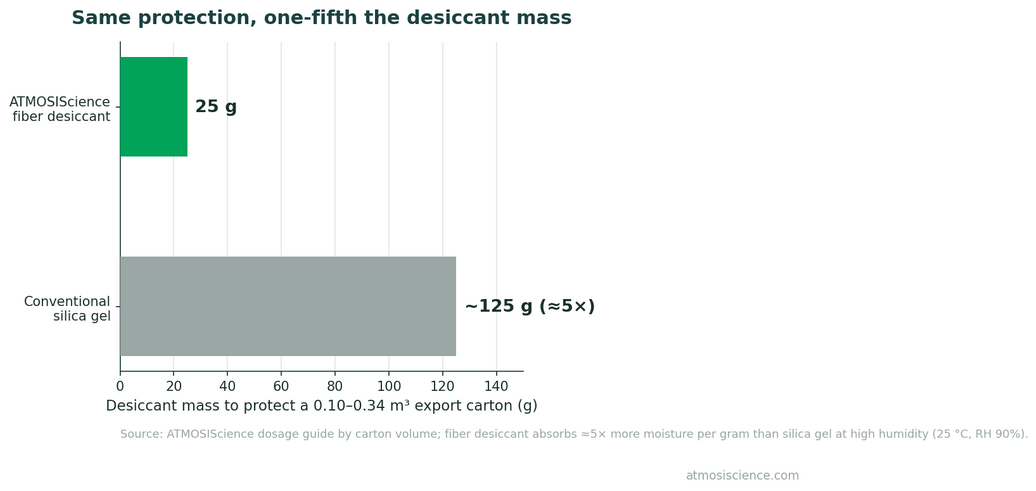
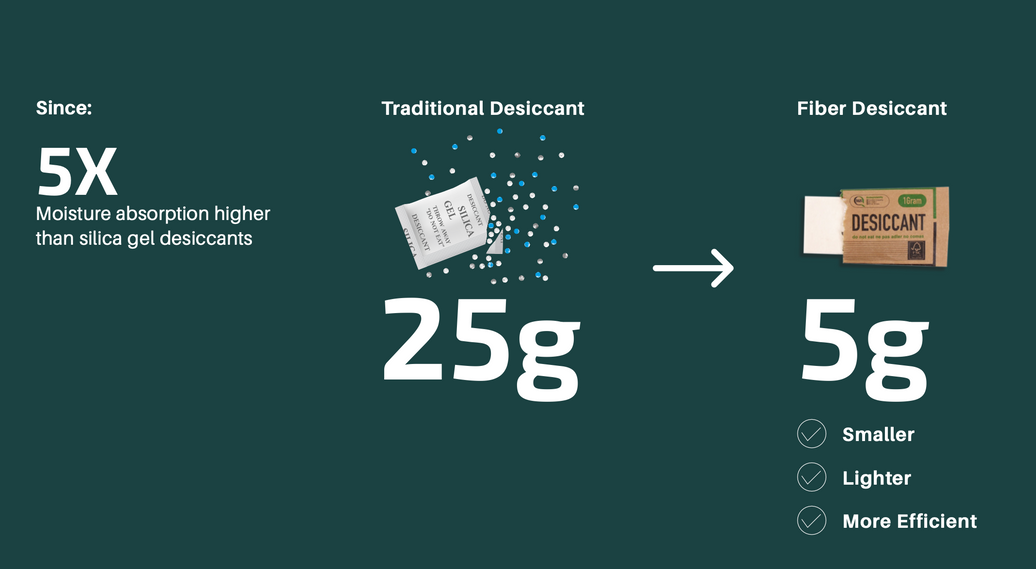
| Capacity | Moisture exchange greater than 10% of own weight within any RH ±5% band | Absorbs more than 70% of own weight at 25 °C / 90% RH |
| Thickness | Liner stock | 0.5 mm (ultra-thin) or 1.0 mm (maximum capacity) |
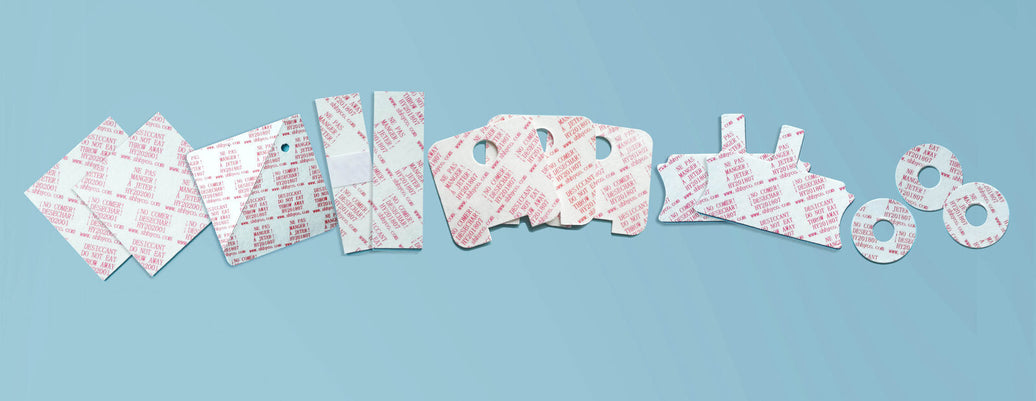
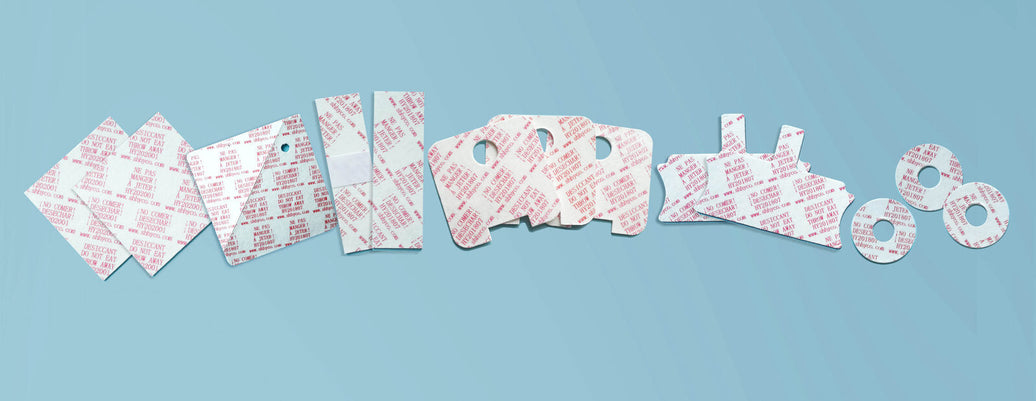
| Shape | Die-cut disc | Freely die-cut — discs, squares, blister inserts, tags |
| Printable | Yes | Yes, laminated film |
The underlying platform covers set points from roughly RH 30% to RH 90%, which is how the same material serves conservation applications at 35% and cured botanicals at 62%. If your target is not 62%, the answer is a different loading, not a different technology — but it is a tooling and qualification conversation, not a catalogue pick.
Frequently asked questions
Can one component do both jobs?
Not well. A two-way element defends a set point; a desiccant has no set point. If you genuinely need both — dry storage first, then a stable holding humidity — that is two components in a sequence, or a two-way element at a low set point that trades peak dryness for stability.
My product is a powder. Isn't a desiccant always right?
Usually, but not automatically. Check whether the powder contains fat, whether it is a blend of hygroscopic salts, and whether it has a texture spec. A very low aw can make some blends dusty and can accelerate oxidation in fat-bearing powders such as nut or seed flours.
How do I know which one a supplier is quoting?
Ask for the isotherm, not the datasheet headline. A two-way element's data will show a set point with absorption above it and desorption below it. A desiccant's data will show capacity against relative humidity with no release branch. If a supplier cannot produce either, they are reselling.
We already ordered the wrong one. Is it recoverable?
Often yes, if you catch it before a full production run. The die and disc diameter usually transfer between formats — it is the composition that changes. Send us the drawing and the product spec and we will tell you whether the tooling survives.
Get the function right before the drawing
If you are specifying a jar-lid disc, send us the product and its target water activity, not just the diameter. We will tell you honestly which of the two you need — including when the answer is neither.
Start on the humidity control liner page or the fiber desiccant page, or email info@atmosiscience.com.
Related reading: How to spec a jar-lid disc: diameter, cap finish and attachment · Can you use an oxygen absorber and a desiccant in the same jar?
Tell us the product, not just the part number
Send us what you are packing, the pack format and the humidity or shelf-life target. We will come back with a sizing calculation, the matching format and the certificate pack.