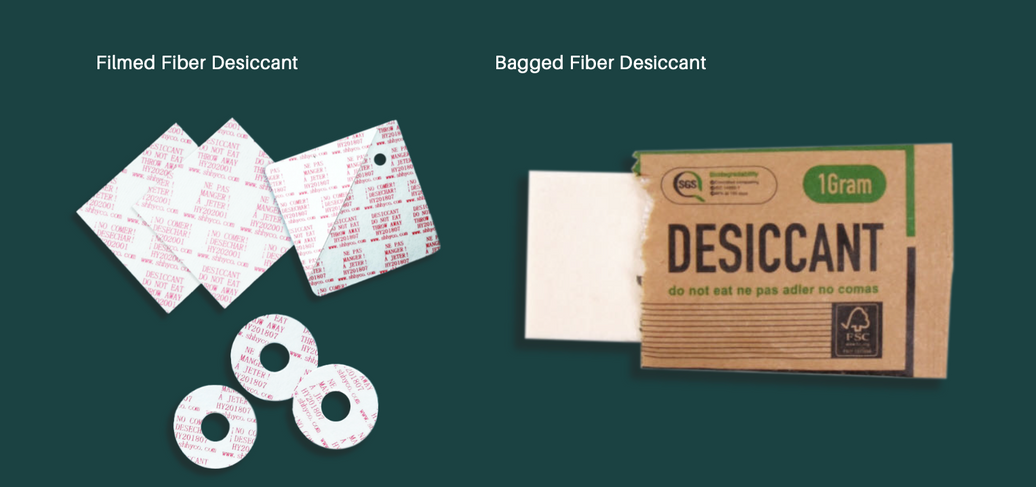
Two messages land in the inbox most weeks. One is a single dimension — "D52" — followed by a request for a price. The other is a lid drawing asking "can you customise the diameter?" A third variant, usually from someone caught out before, asks what the lid attachment method is — heat-seal, friction-fit, or both — and what diameter range is compatible.
None can be answered from a diameter alone. This article sets out what a jar-lid humidity disc has to clear, how to read the closure finish designation that governs it, a derived sizing window for the 400-series finishes, why a "D52" disc fits exactly one family, the four ways liners attach and which one a fibre disc can physically use, and what to send a supplier so the first quote is the right one.
The short answer: a liner disc has to clear two gates — wide enough to cover the sealing land (≥ E) and narrow enough to enter the cap shell (≤ T) — and because a vapour-permeable fibre disc carries neither foil nor a thermoplastic layer, friction fit is the only attachment method physically available to it.
Related: Fiber desiccant · Fiber technology
A diameter is not a spec
A liner disc is a component held between two surfaces it did not design. It has to pass two gates at once.
- Big enough to cover the sealing land — the flat annular top of the container neck, the E dimension. A disc smaller than E max leaves part of the land uncovered, so the closure contacts glass or resin directly there and the seal becomes a function of the cap alone.
- Small enough to enter the cap shell, whose internal cavity is bounded by roughly the T dimension. A disc larger than T max will not seat flat: it dishes, buckles or folds at the rim, and applies uneven pressure to the land.
Both gates come from the closure finish, not from a diameter measured with callipers. That is why a number on its own cannot be quoted against.
How to read a finish designation
A designation such as 38-400 carries two pieces of information. The first number is the nominal diameter in millimetres — nominally the container's T dimension, the outside diameter across the threads. The second is the finish series, describing the thread profile rather than the size:
- 400 — one thread turn. The most common jar and bottle finish.
- 410 — one and a half turns. 415 — two turns, thinner and taller.
- 425 — buttress thread. 430 — deeper thread.
- 2030 / 2035 — lug finishes, for quarter-turn metal caps.
Five letters describe the finish geometry: T thread outside diameter · E neck outside diameter, the outer edge of the sealing land · I bore inside diameter · S top of finish to the start of the first thread · H total finish height.
The point that costs people money: the nominal number is not the actual diameter. A 58-400 finish has a T of 55.60–56.50 mm — it is not 58 mm anywhere. An 89-400 measures 88.30–89.18 mm. Order a 58 mm disc for a 58-400 cap and it will not go in.
| Finish | T, thread OD (mm) | E, neck OD (mm) |
|---|---|---|
| 33-400 | 31.52 – 32.14 | 29.14 – 29.74 |
| 38-400 | 36.88 – 37.50 | 34.50 – 35.10 |
| 43-400 | 41.25 – 42.00 | 38.86 – 39.62 |
| 48-400 | 46.74 – 47.50 | 44.35 – 45.11 |
| 53-400 | 51.61 – 52.50 | 49.23 – 50.11 |
| 58-400 | 55.60 – 56.50 | 53.22 – 54.10 |
| 63-400 | 61.62 – 62.51 | 59.23 – 60.12 |
| 70-400 | 68.60 – 69.50 | 66.22 – 67.00 |
| 89-400 | 88.30 – 89.18 | 85.24 – 86.12 |
The liner window is a derivation, not a standard
Worth stating plainly, because no catalogue says it: no public standard maps closure size to liner disc diameter. Finish dimensions are standardised; liner diameters are not. Every supplier catalogues by closure designation — "liner for 53-400" — and keeps the cut diameter as an internal number. The table below is therefore a derivation, applying the two gates to the published T and E figures: at least E max, at most about T max. It is a starting window for engineering discussion, not a specification to order against.
| Finish | Must cover ≥ E max (mm) | Must enter ≤ ~T max (mm) | Derived liner OD window (mm) |
|---|---|---|---|
| 33-400 | 29.74 | 32.14 | ~30 – 32 |
| 38-400 | 35.10 | 37.50 | ~35 – 37 |
| 43-400 | 39.62 | 42.00 | ~40 – 41.5 |
| 48-400 | 45.11 | 47.50 | ~45 – 47 |
| 53-400 | 50.11 | 52.50 | ~50 – 52 |
| 58-400 | 54.10 | 56.50 | ~54 – 56 |
| 63-400 | 60.12 | 62.51 | ~60 – 62 |
| 70-400 | 67.00 | 69.50 | ~67 – 69 |
| 89-400 | 86.12 | 89.18 | ~86 – 89 |
The rough rule that falls out is nominal minus 1 to 3 mm. A further gap to be honest about: no die-cut tolerance figure for liner discs is published anywhere — not by closure makers, not by liner suppliers, not in any standard. It cannot be looked up; it has to be agreed in the supply specification, in writing, before tooling is cut.
The "D52" question, worked
Apply the two gates to a 52 mm disc and the answer is unambiguous.
| Finish | E max (mm) | T max (mm) | 52 mm disc |
|---|---|---|---|
| 48-400 | 45.11 | 47.50 | Fails. 52 > 47.50 — will not enter the cap shell |
| 53-400 | 50.11 | 52.50 | Fits. 52 > 50.11 covers the land, 52 < 52.50 enters the shell |
| 58-400 | 54.10 | 56.50 | Fails. 52 < 54.10 — leaves the sealing land uncovered |
A 52 mm disc fits the 53-400 family only — with 0.5 mm of clearance at the top of the window, which is where the unpublished die-cut tolerance stops being academic.
The caveat matters as much as the result. Liner seats are cap-tooling-specific: two moulders producing 53-400 caps to the same finish standard can leave measurably different internal seat diameters and depths, because the standard governs the container finish, not the cap's cavity. "D52" is still not a complete specification. Send the cap part number and a physical sample.
Four ways a liner attaches
| Method | How it works | Bonds to | Limits |
|---|---|---|---|
| Pressure-sensitive | Adhesive backing bonds to the land when the cap is torqued; the liner transfers out of the cap onto the container | Glass, metal, most plastics | Not for liquids; single use — once removed it does not reseal; availability is declining |
| Induction heat seal | An induction field heats an aluminium foil layer, melting a polymer seal layer onto the land. Two-piece: pulp, wax, foil, heat-seal polymer. One-piece: foam or paper-backed foil | HDPE, LDPE, PS, PET, PVC, PP and glass (some glass needs treatment) | Requires an aluminium foil layer. Needs a power supply and sealing head; the polymer must match the container resin; metal caps are a hazard; keep a 3 mm gap between foil and coil |
| Conduction / direct heat seal | A heated platen melts a thermoplastic layer onto the land | Thermoplastic-coated liners only | Requires a thermoplastic layer. Untreated paper is unsuitable; cheaper equipment but slower |
| Friction fit | Interference fit in the cap shell plus cap torque holds the disc against the land | Nothing — it is mechanical | Not tamper-evident, not hermetic; reusable and resealable, which is usually the point |
Why you cannot induction-seal a fibre disc
The answer here is a physical constraint, not a product limitation.
Induction sealing heats aluminium. The coil couples to a conductive foil layer, which heats and melts the polymer beneath it. A plant-fibre humidity disc contains no foil, so nothing couples, no heat is generated and no seal forms. Adding foil would work — and would also make the disc a vapour barrier, which is the one thing a humidity element must not be.
Conduction sealing needs a thermoplastic layer. Same trap: that layer is a continuous polymer film across the sealing face — a moisture barrier exactly where vapour has to pass.
Pressure-sensitive works only conditionally. The adhesive face is itself a barrier, so one side of the disc is sealed off — acceptable if the element only has to breathe into the headspace on one face, not if you were counting on both.
Friction fit is the method. The disc is held by interference in the cap shell and by cap torque, and stays vapour-permeable on both faces. It is reusable, which matches how a two-way liner is used — the jar is opened and reclosed many times.
The design principle, stated plainly: a vapour-permeable humidity element and a hermetic inner seal are mutually exclusive functions in one component. If a pack needs both — a tamper-evident seal for distribution and humidity regulation in use — that is two components: a foil induction-seal liner on the land, plus a fibre disc retained above it in the cap. Anyone offering both in one part is describing a foil-backed liner, which is not a humidity element.
Torque, and why it matters more for a fibre disc
Application torque is the rotational force used to apply the cap on the filling line. It converts a loose disc into a functioning seal, and for a compressible fibre element it is a process parameter, not a detail.
| Cap diameter (mm) | Plastic container (in-lb) | Glass container (in-lb) |
|---|---|---|
| 24 | 12 – 15 | 10 – 15 |
| 28 | 13 – 17 | 11 – 17 |
| 33 | 16 – 20 | 13 – 20 |
| 38 | 19 – 23 | 15 – 23 |
| 43 | 21 – 26 | 17 – 26 |
| 48 | 24 – 29 | 19 – 29 |
| 53 | 27 – 32 | 21 – 32 |
| 58 | 29 – 35 | 23 – 35 |
| 63 | 31 – 38 | 25 – 38 |
| 70 | 35 – 42 | 28 – 42 |
| 89 | 44 – 53 | 36 – 53 |
The rule of thumb: application torque in inch-pounds is roughly half the cap diameter in millimetres — a 53 mm cap sits around 27 in-lb, as the table confirms. Two behaviours follow.
Removal torque falls to about 50% of application torque within 24 hours. Whatever grip was measured coming off the line is roughly half that by the next day, so a disc held firmly at time zero can be loose by the time the pack reaches a distributor. Verify retention at 24 hours and beyond, not on the filling line.
Over-torquing causes uneven pressure points and is a common cause of leakage. With a rigid liner that shows up as cap distortion. With a compressible fibre disc there is a second effect: crushing reduces void volume and the exposed surface the disc needs to exchange moisture, so an over-torqued pack can pass a leak test and still under-perform on humidity. Torque belongs in the qualification protocol, with the disc fitted.
A note on clip-top and bail jars
Buyers with bail-and-gasket jars ask how those compare. The honest answer: no packaging-engineering leak or barrier comparison exists. The only published head-to-head is home-canning research, which found the two-piece metal lid system achieved a 100% seal rate with strong vacuum and was developed specifically to improve on the poor sealing rate of bail-and-gasket jars; extension guidance recommends bail jars for pantry storage rather than canning.
For a humidity element the practical issue is simpler: a bail closure's compression is fixed by the wire geometry and cannot be specified, adjusted or measured. A continuous-thread cap lets you specify a torque and verify it. If humidity performance has to be qualified, that difference decides it.
What to send for a correct quote
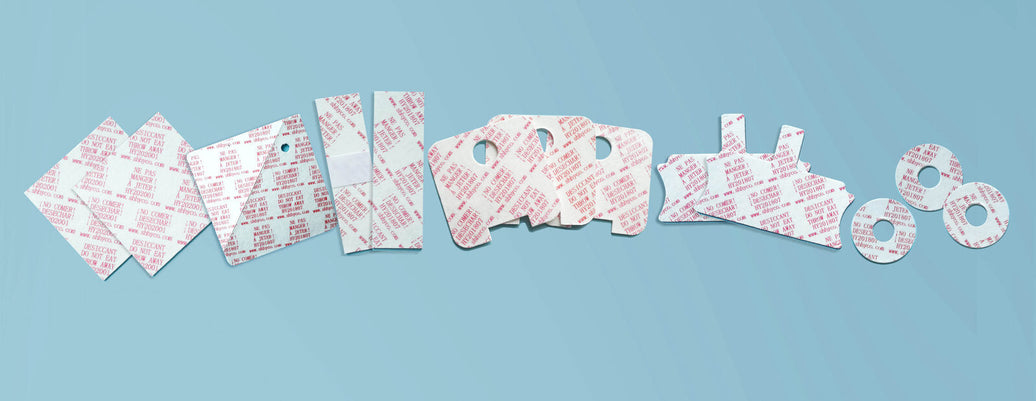
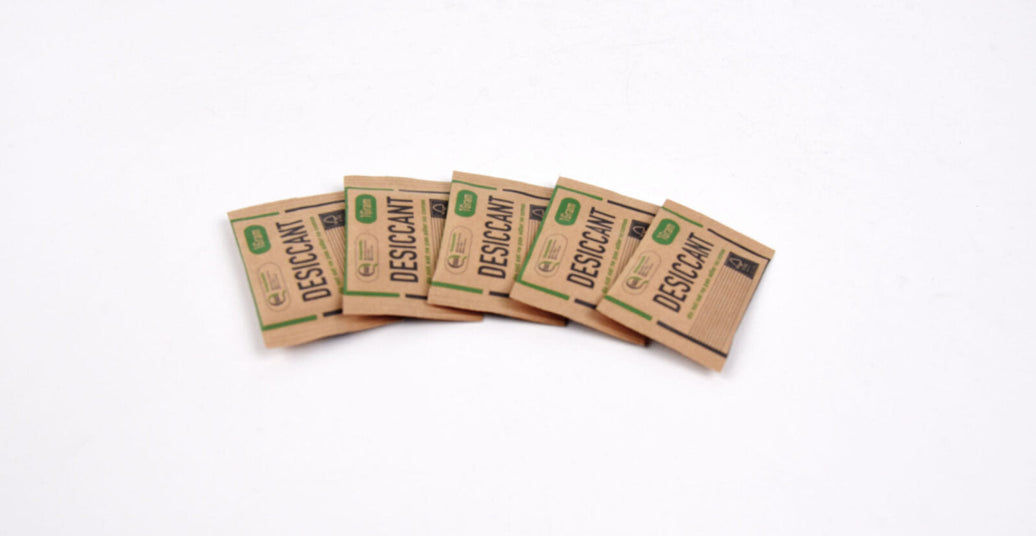
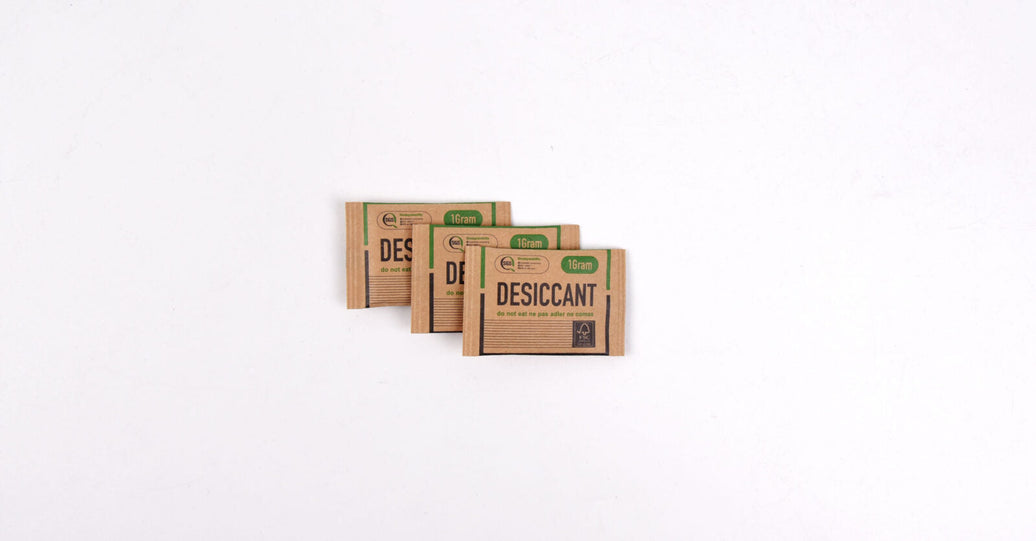
ASI's published humidity control liner is a 62% RH two-way plant-fibre disc at D52 (52 mm), with moisture exchange greater than 10% of its own weight within any RH ±5% band. Desimat sheet is freely die-cut at 0.5 mm or 1.0 mm, so a different diameter is a tooling and qualification question, not an R&D question. To get a real answer rather than a hedge, send:
- The cap part number and the moulder — the single most useful item, because the liner seat is cap-tooling-specific.
- The finish designation (53-400, 89-400, and so on) and the container drawing if you have it.
- A physical cap sample. Two or three, ideally from different production lots.
- The product and its target water activity or RH — this decides the set point, and whether a set point is the right approach at all.
- The function: two-way humidity regulation, or one-way desiccation. They are different products; the distinction is covered in two-way humidity liner versus desiccant.
- Annual volume, so tooling can be amortised sensibly.
- Whether printing is required on the laminated film face.
Frequently asked questions
Q. Can you customise the diameter?
Yes. Desimat is die-cut from sheet, so a new diameter is a die and a qualification run rather than a development project. What is needed is the cap it has to sit in, not just the number.
Q. Will your D52 disc fit my jars?
It fits the 53-400 finish family, and only that family — 48-400 is too small to admit it and 58-400 leaves the sealing land uncovered. Because cap seats vary between moulders at the same finish, confirm with a physical cap sample before committing.
Q. Can the disc be heat-sealed or induction-sealed into the cap?
No. Induction sealing requires an aluminium foil layer and conduction sealing requires a thermoplastic layer, and either one would make the disc a moisture barrier. Friction fit is the method. If a hermetic seal is also required, that is a second component.
Q. What torque should we run?
Start from the table for your cap diameter and container material, then qualify with the disc fitted. Check removal torque at 24 hours as well as at time zero, because it typically falls by half. The material itself holds a food-contact compliance basis under FDA 21 CFR 175.300 and is industrially compostable, tested to EN 13432.
Send the cap, not just the number
A cap part number and two sample caps turn a week of email into a same-day answer. See the humidity control liner page for the published D52 specification, the fibre desiccant range for one-way formats, or send details to info@atmosiscience.com.
Related reading: Two-way humidity liner or desiccant — which does your pack need? · How to size a desiccant: the JEDEC J-STD-033 calculation
Tell us the product, not just the part number
Send us what you are packing, the pack format and the humidity or shelf-life target. We will come back with a sizing calculation, the matching format and the certificate pack.