Quick answer: Buyers specify the desiccant material and let the supplier choose the wrapper. That is backwards for four decisions. The wrapper decides how fast moisture reaches the desiccant, whether the sachet survives a high-speed dispenser without bursting, whether anything can escape into the product if the seal is compromised, and what end-of-life route the pack can claim. Tyvek® gives the best strength-to-permeability combination and is the default for regulated food and pharmaceutical work; non-woven is the cost-effective general-purpose choice; paper is the strongest sustainability story; laminated film is for printed card formats where the desiccant is a visible brand surface.
A desiccant sachet is two products. The adsorbent decides how much water it can hold. The wrapper decides how much of that capacity you actually get, how the sachet behaves on the line, and what the pack can claim.
The four wrapper families
Tyvek®
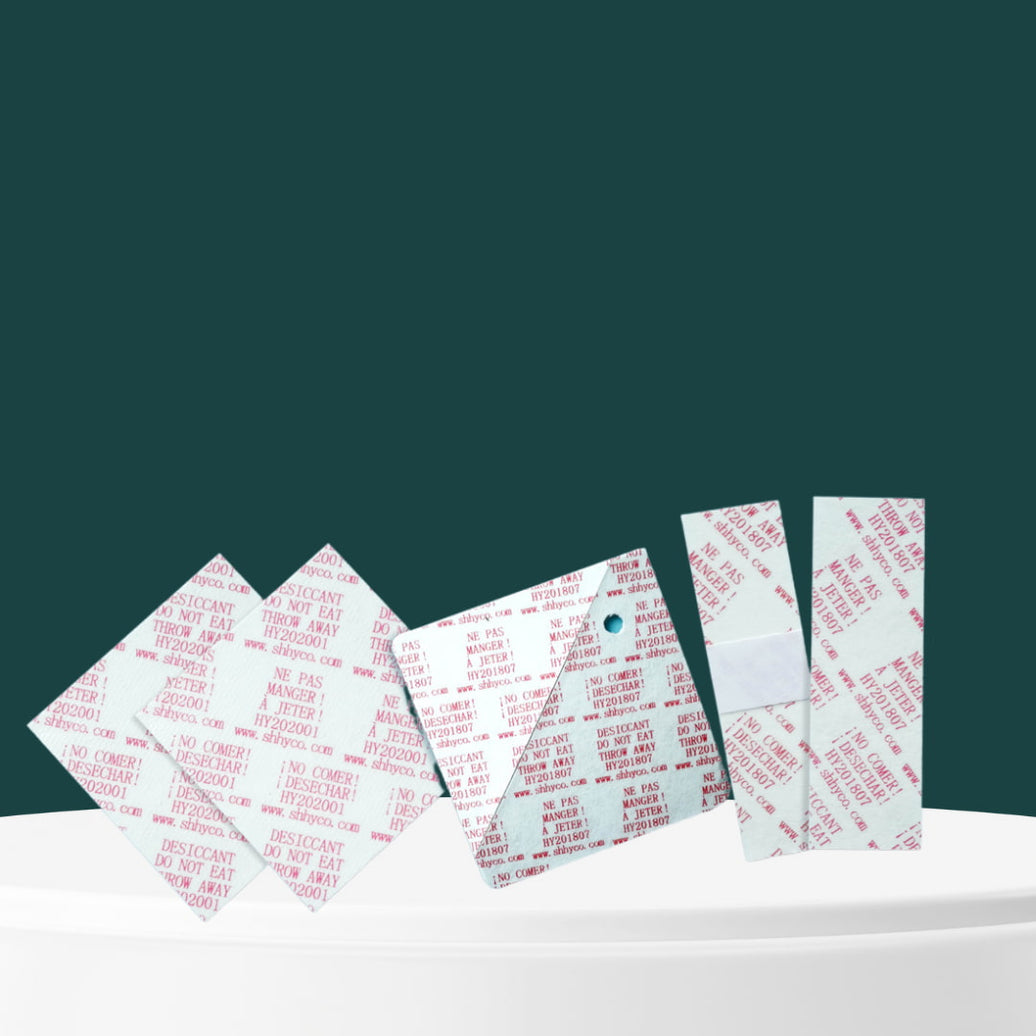
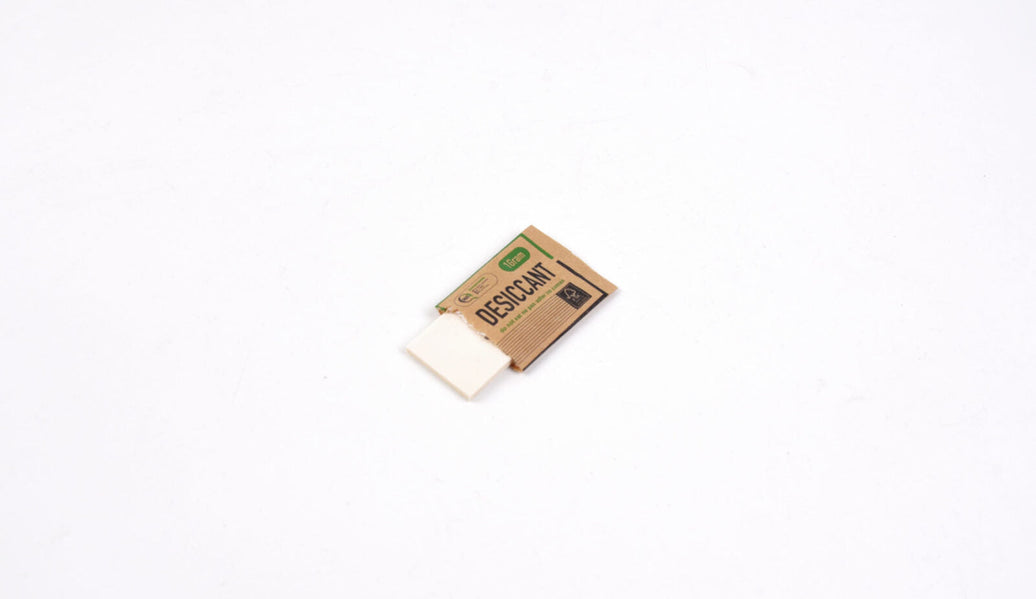
Flash-spun high-density polyethylene. Very high tear and puncture resistance, controlled porosity, no loose fibres shed into the pack, and it heat-seals cleanly. It is the format most often accepted without argument in food-contact and pharmaceutical reviews, and it is why ATMOSIScience specifies food-safe Tyvek® as one of the two standard overwraps.
The trade-offs: cost, and end-of-life. It is a polyethylene material, so it does not carry a compostability claim.
Non-woven
Spunbond polypropylene or a polyester non-woven. High permeability, low cost, good enough strength for most industrial and consumer applications, and readily printable. The general-purpose workhorse. Cheap non-wovens can shed fibres and can tear on aggressive dispensers, so grade matters — a non-woven spec that names only "non-woven" is not a spec.
Paper and paper laminates
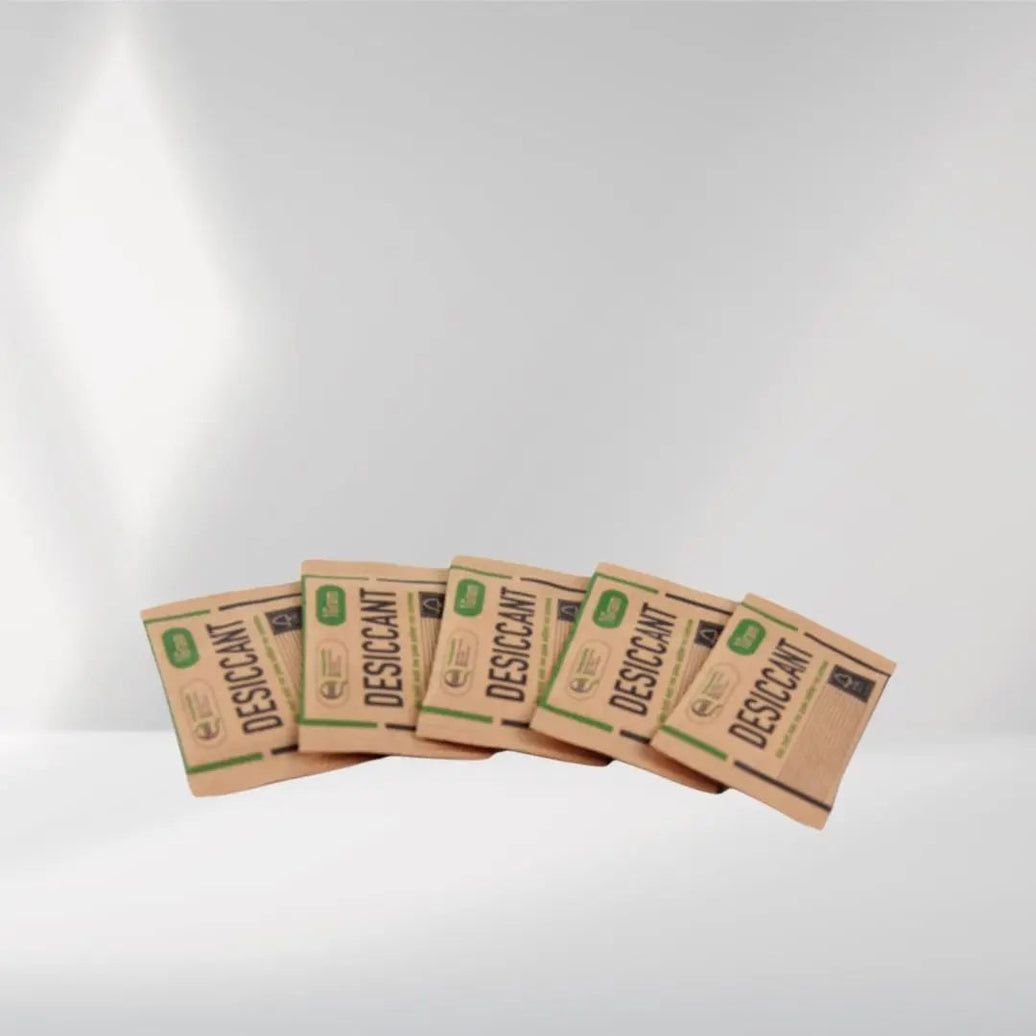
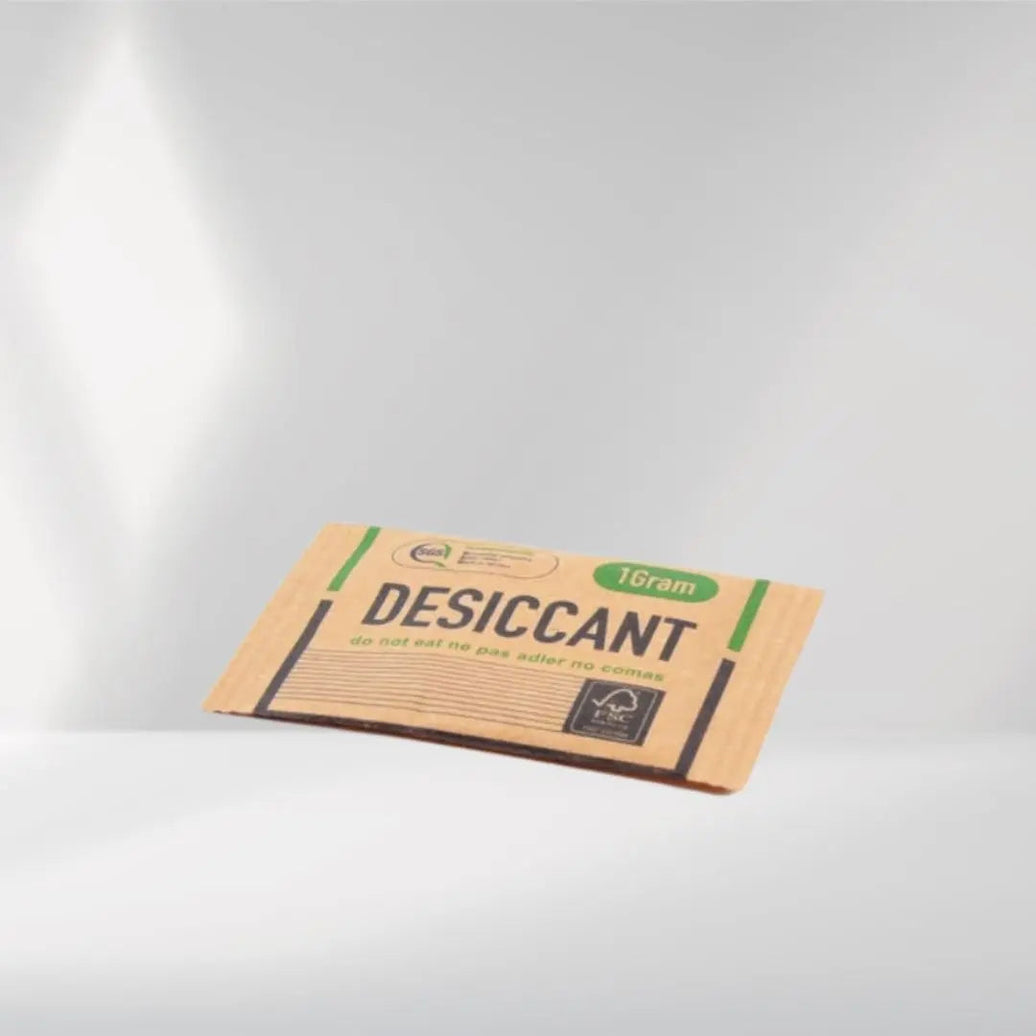
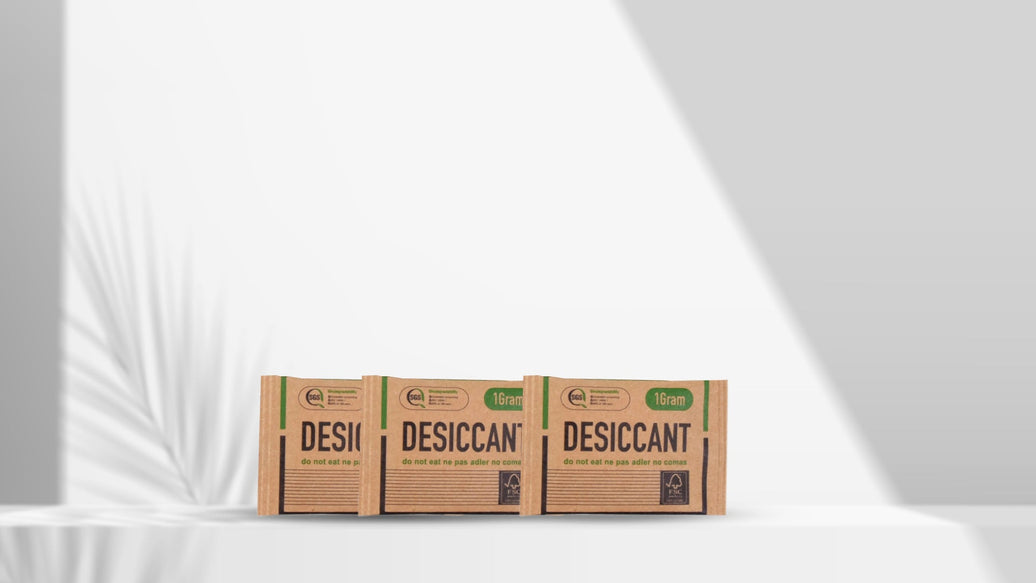
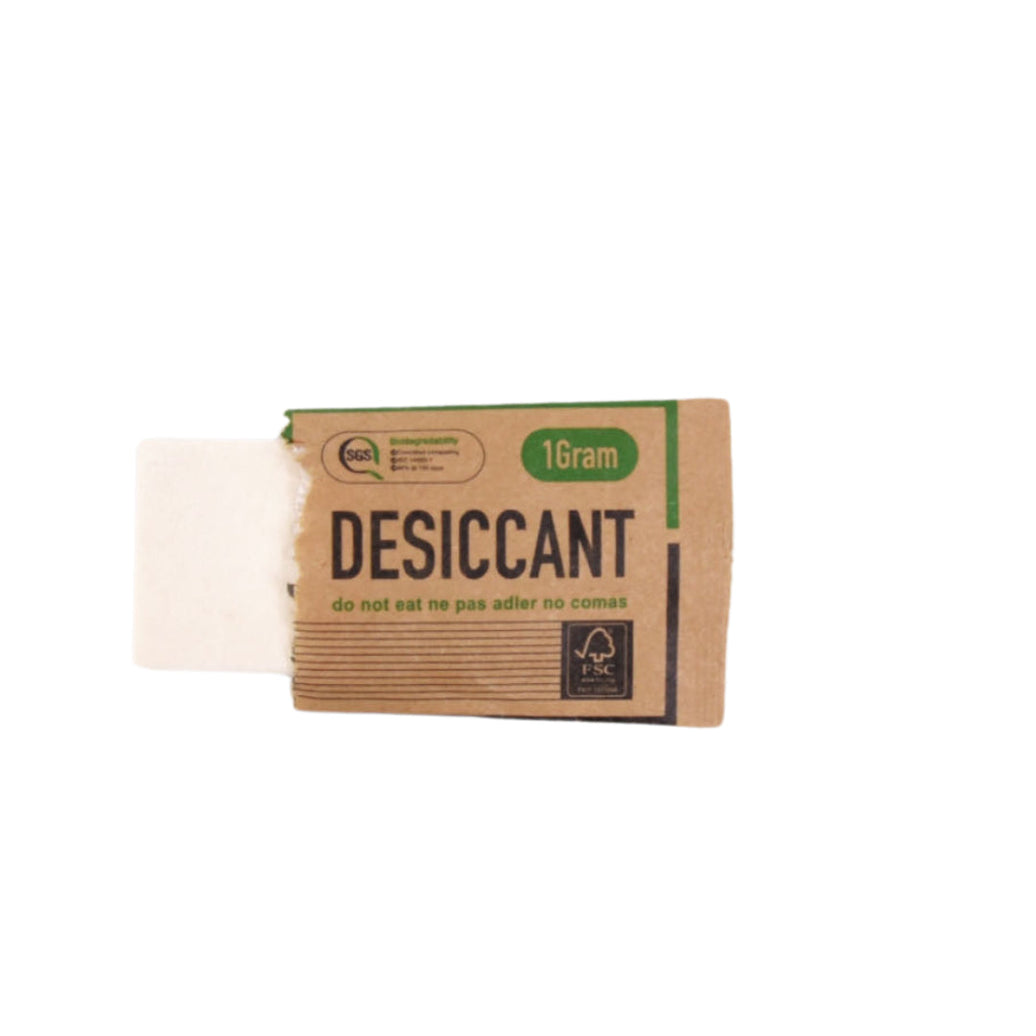
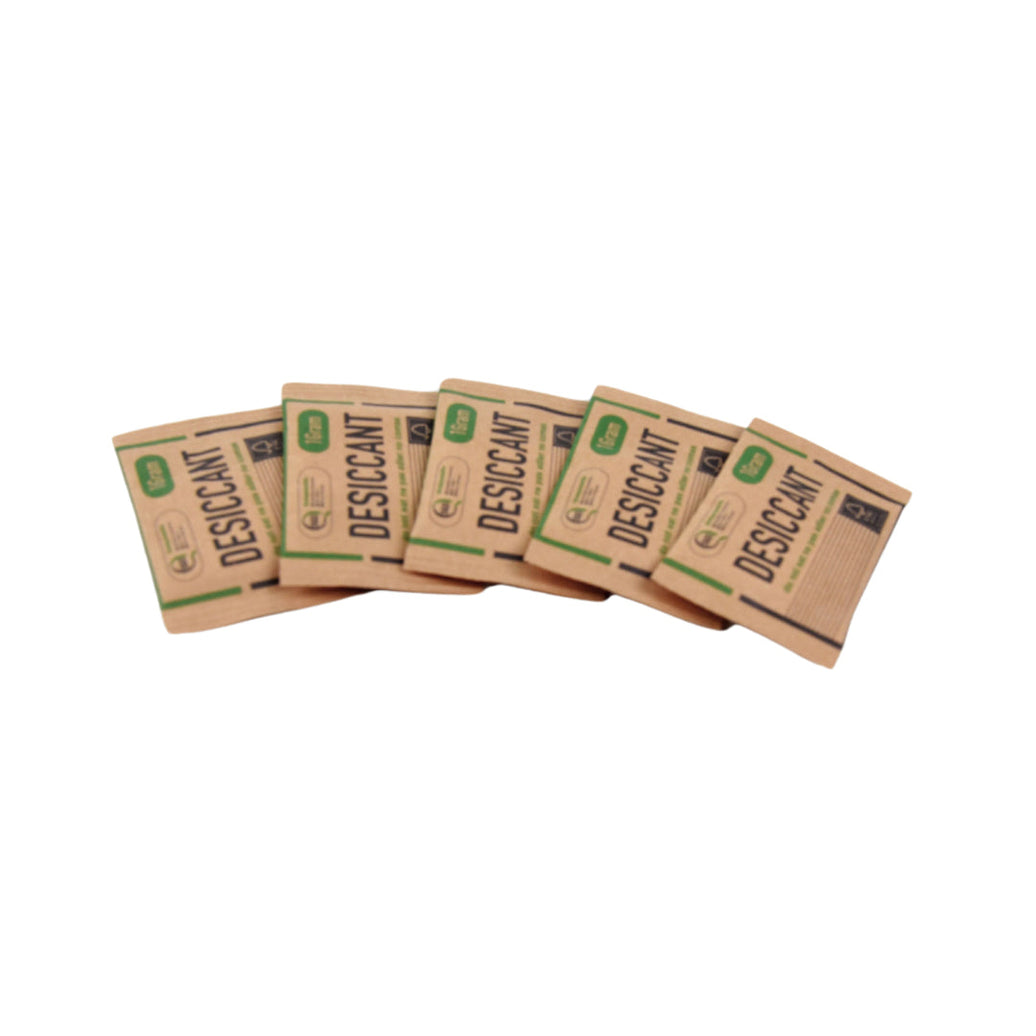
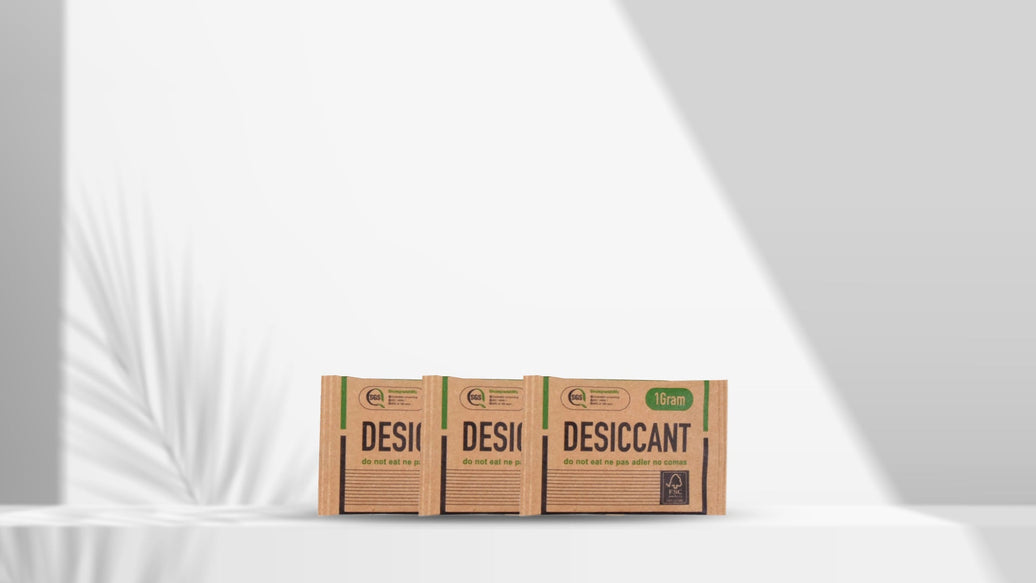
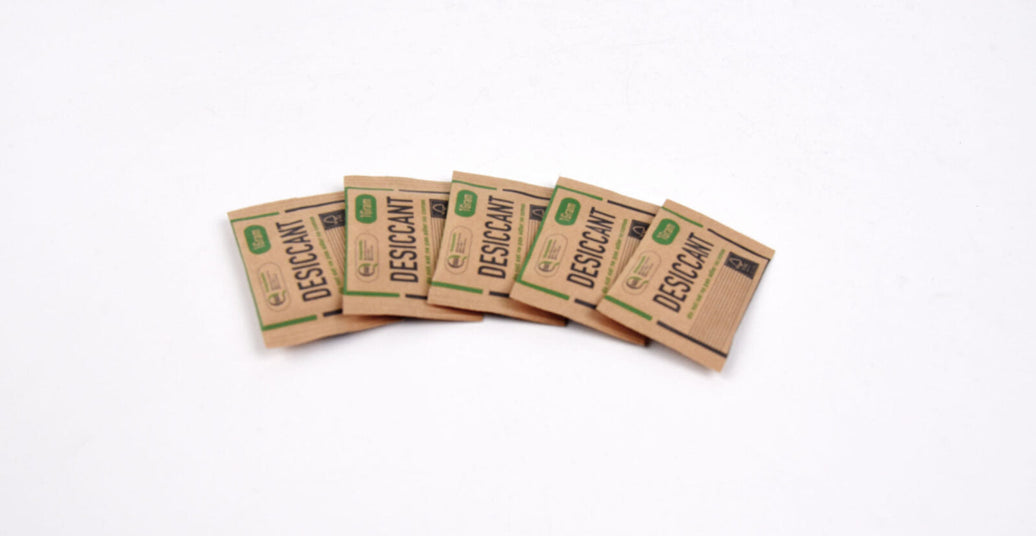
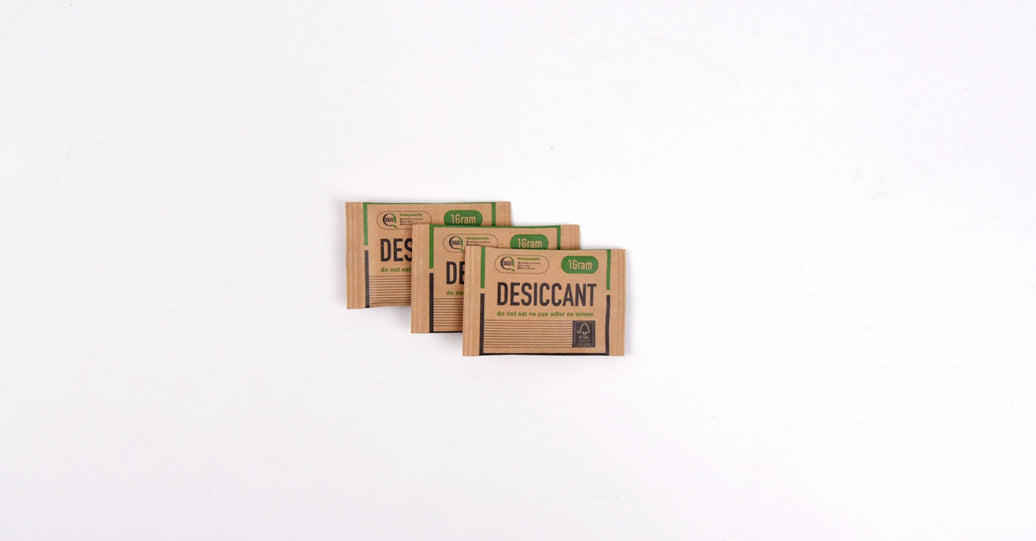
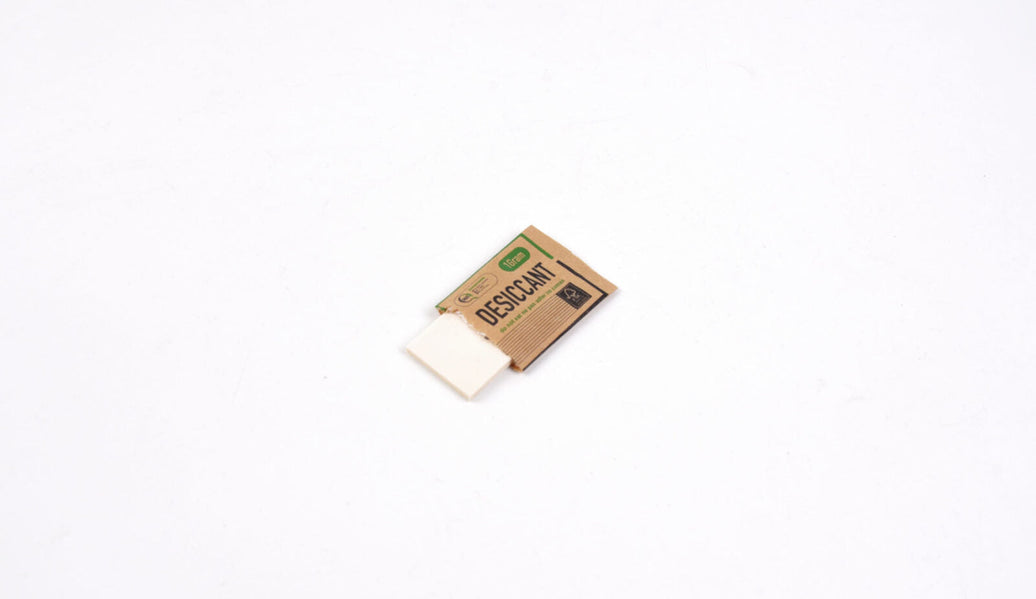
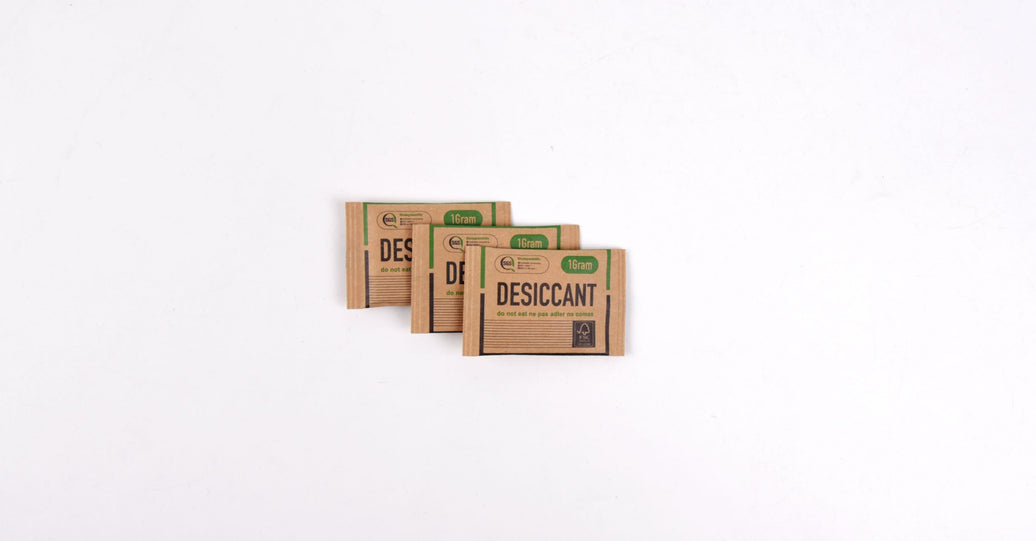
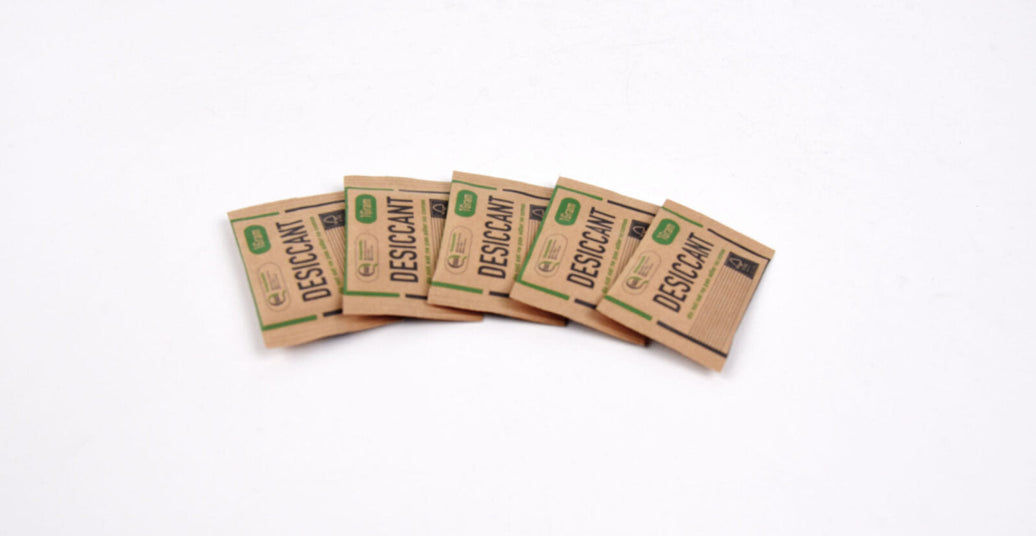
Kraft, often with an FSC claim, sometimes laminated for wet strength. The strongest sustainability position and the easiest to print convincingly. Paper is more moisture-sensitive as a structure and can lose strength if it is handled in a humid plant, and unlaminated grades are the weakest option on a high-speed line.
Laminated compostable film
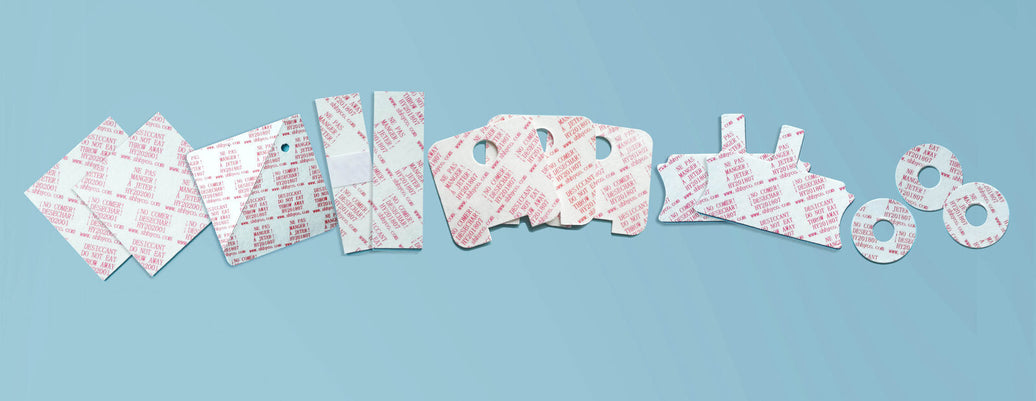
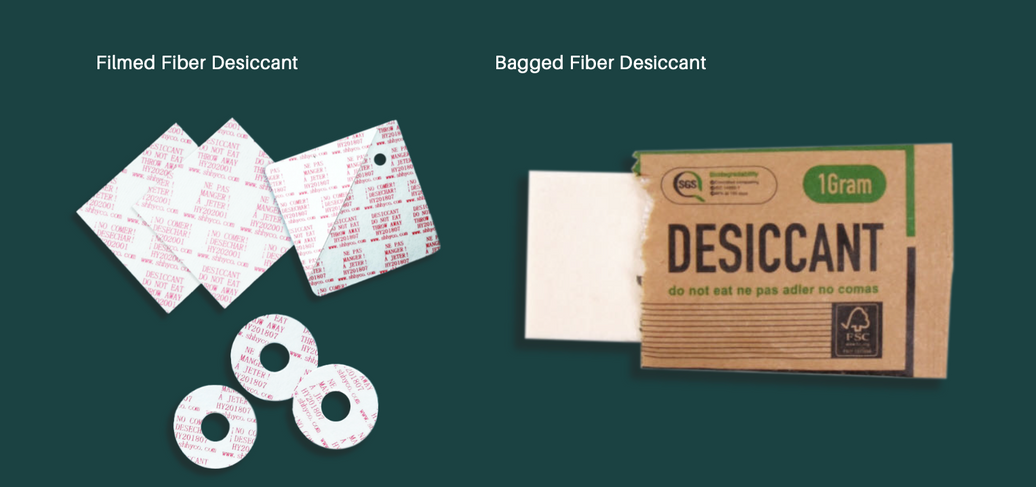
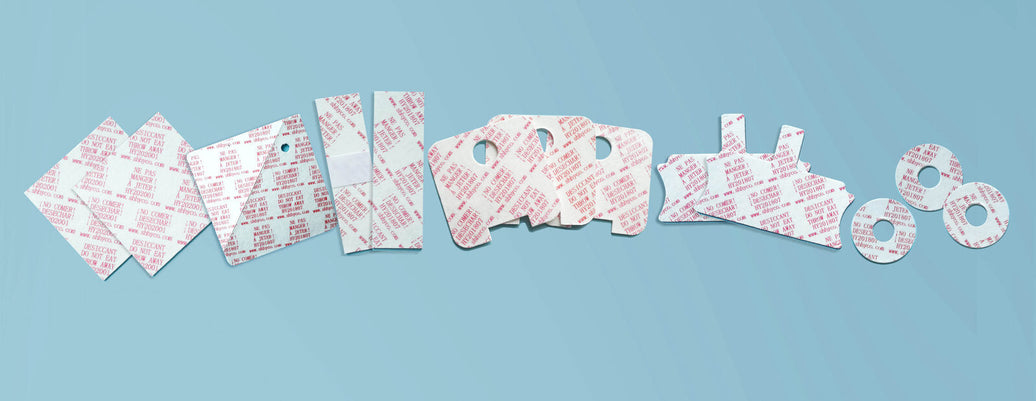
Used on the Fiber Card paper desiccant rather than on a loose sachet. It supports full-surface printing, gives a rigid card that a dispenser can handle reliably, and it is what makes a desiccant a brand surface rather than an insert. ATMOSIScience card formats run at 0.5 mm or 1.0 mm thickness and can be freely die-cut to square, circle or custom shapes.

Four decisions the wrapper actually makes
1. Adsorption speed
Capacity is a property of the adsorbent; rate is a property of the wrapper. A low-permeability wrapper throttles how quickly the sachet can pull down a humidity spike — which matters when a pack is sealed hot, or opened and reclosed repeatedly. If your failure mode is a spike rather than a steady load, permeability is the number to ask for.
2. Line survivability
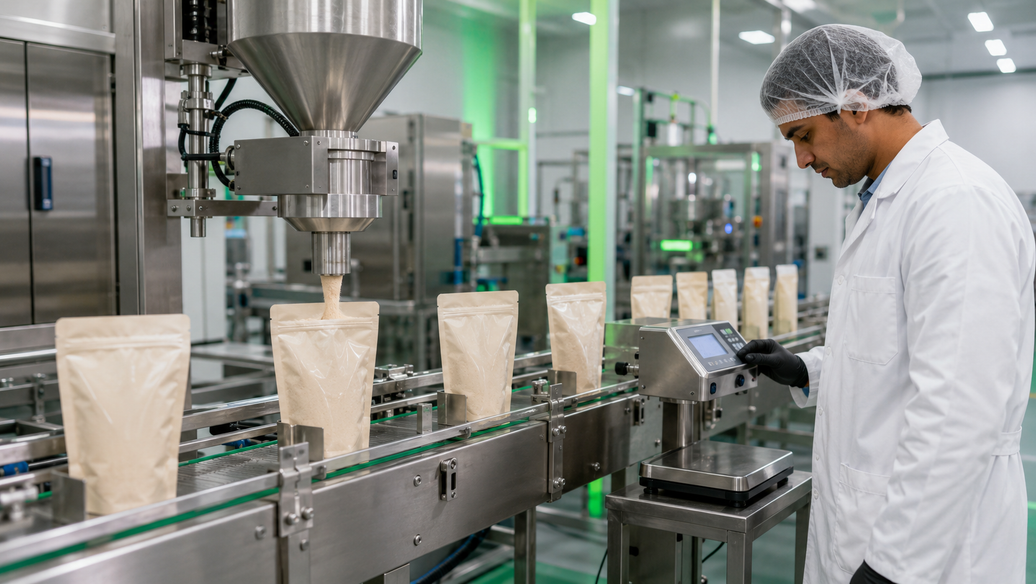
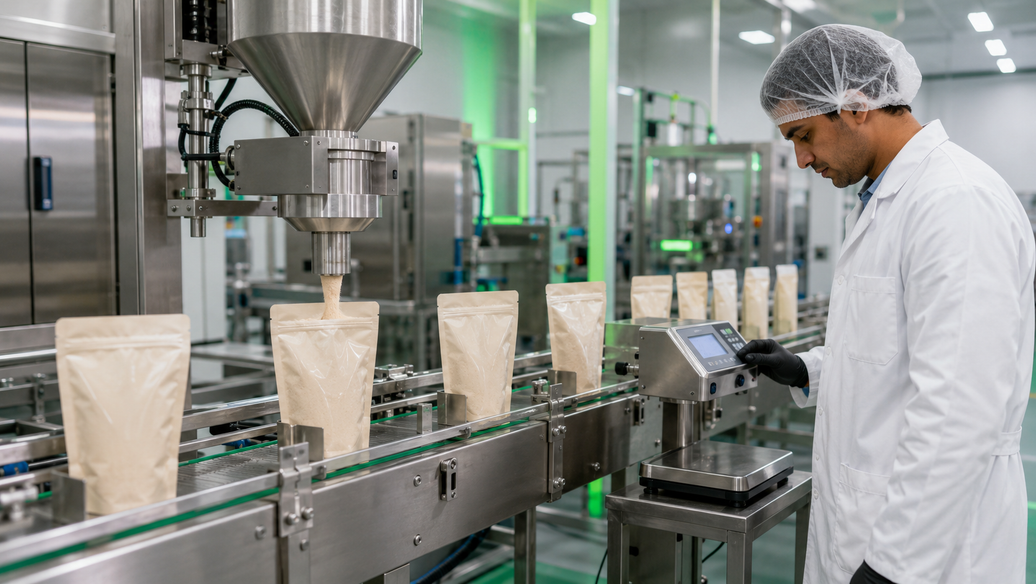
Automated dispensers grip, feed and cut at speed. A wrapper that tears sends desiccant contents into the product and stops the line. Ask for burst strength and confirm the format has run on a dispenser comparable to yours — the mechanics are in desiccant dispenser compatibility, and card stiffness is discussed in a co-packer's guide to automated insertion.
3. Contamination risk if the seal fails
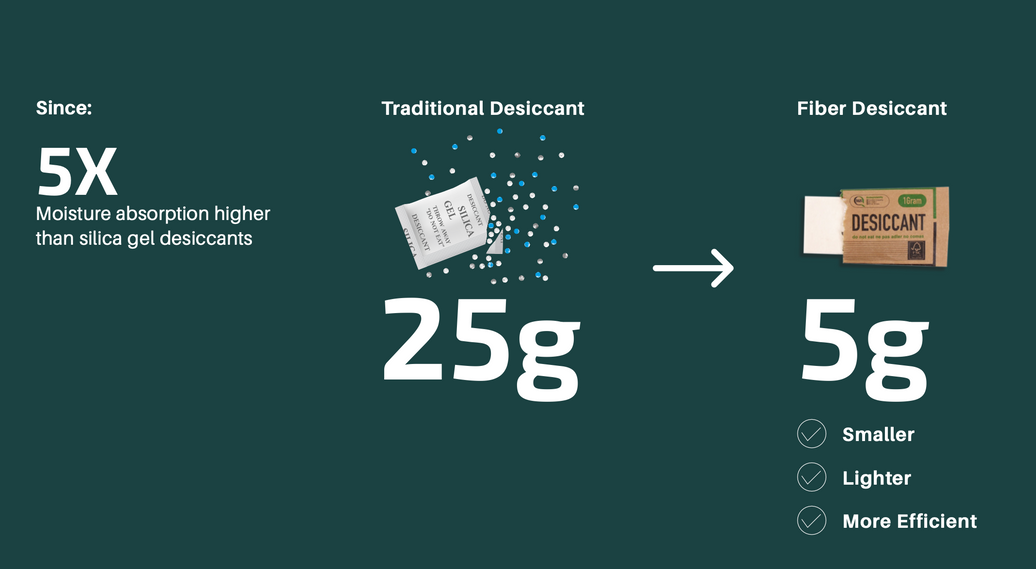
This is where the contents matter more than the wrapper. A torn sachet of silica beads is a foreign-body event with a recall attached. ATMOSIScience fiber desiccant is a bound lignocellulose substrate roughly 2.5 mm thick with calcium chloride held in the composite — there is no loose fill to escape. The risk profile is set out in loose-fill desiccant risks in food packaging.
4. End-of-life and EPR
The wrapper is what a recycler or composter sees. ATMOSIScience compostable pouch materials are certified to ASTM D6400 and EN 13432 — and the certification attaches to the bag, which is exactly how the claim should be worded. A Tyvek® overwrap on the same fiber pad is a different end-of-life story, and both are legitimate choices for different applications. Material selection against a sustainability brief is covered in the sustainable desiccant guide.
How to write the wrapper into a spec
Four lines, and they belong in the specification rather than the quote request:
- Wrapper material and grade, named — not "non-woven".
- Minimum burst or tear strength, with the test method.
- Food-contact status of the wrapper itself, separately from the desiccant. For food-contact applications, FDA 21 CFR 175.300 documentation applies.
- End-of-life claim and the certificate that supports it, including scope.
ATMOSIScience specifies overwrap per SKU — compostable non-woven or food-safe Tyvek® — so the wrapper is a decision to make, not a default to inherit. The rest of the spec structure is in how to write a desiccant specification for an RFQ.
FAQ
Does the wrapper reduce adsorption capacity?
Not the total capacity, but it changes the rate at which capacity is reached. Published capacity figures are measured at equilibrium; a slow wrapper simply takes longer to get there.
Is Tyvek® recyclable?
It is a polyethylene material and is recyclable in principle, though a small sachet inside a mixed pack rarely reaches a stream that captures it. Where end-of-life is the priority, the compostable non-woven route is the better fit.
Can I print on any wrapper?
Non-woven, paper and laminated film print well. Tyvek® prints but with a narrower ink set. Where the print is part of a compostability claim, confirm the inks fall within the certified scope.
Which wrapper for a pharmaceutical bottle?
Tyvek® is the common answer for strength and contamination control. Bottle-cap applications often use a card format instead — see bottle-cap desiccant inserts.
Does the wrapper affect shelf life before use?
Not directly. Sealed shelf life for ATMOSIScience fiber desiccant is 12 months stored cool and dry. What matters more is exposure after opening: at RH 50% or below, limit air exposure to two hours; at RH 60% or above, one hour; at RH 80% or above, stop the operation.
Not sure which overwrap your application needs?
Tell us the product, the line speed and the end-of-life claim you want to make. Our team will recommend an overwrap and send the certificates that back it.
Prefer email? info@atmosiscience.com